COLLINS & STEVENS
Step Up The Ladder
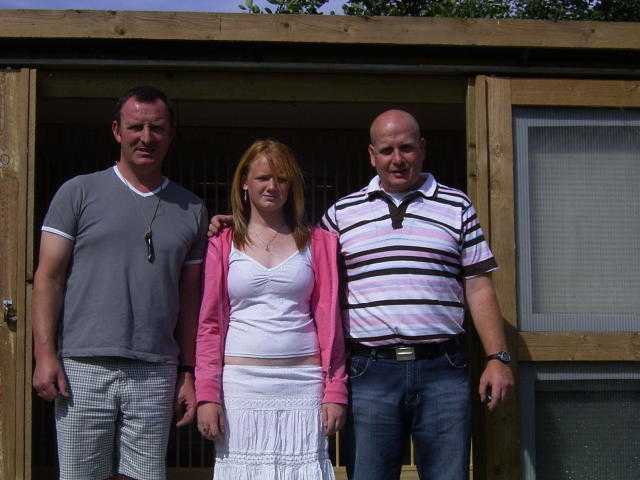
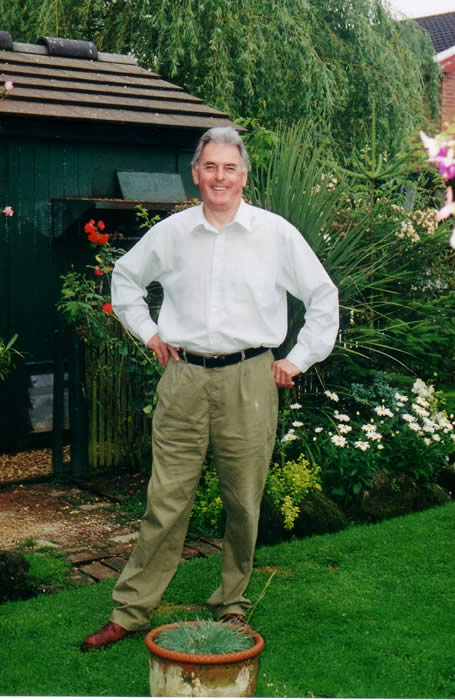
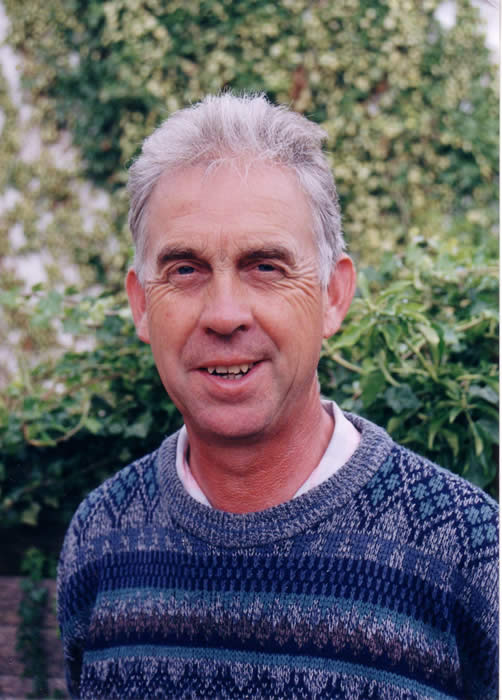
We fly as Collins and Stevens, but our real names are Colin Taylor and Stephen Chapman. Just to clear up why we arrived at the partnership name "Collins and Stevens" it's quite simple really there so many Taylors and Chapman's flying with our club Dukinfield Fc that we decided to come up with a partnership name excluding the surnames hence Collins and Stevens.
Steve has never really been out of the sport, and has flown in various partnerships since 1976 (it's said he taught Paul Beck all he knows whilst in partnership with him!).
Steve and his dad Harry had a successful partnership in the late 70's early 80's and combined the secretarial chores for the club and racing duties with remarkable ease. Steve also flew with Colin's brother Keith and with his wife and daughters.
Colin first came into the sport via a rather abstract direction "ferrets". In 1977 Colin and his brother were both involved in rabbitting with the use of a ferret which was kept caged at home in the back yard. The ferret escaped one day never to return but was replaced by two feral pigeons caught off a local mill, one red pied and one blue pied. The colors on the birds were fabulous and with a bit of coaxing were soon flying the length of the back . 200 yards + straight into their ex-ferret cage.
However a visit from their uncle Barry soon had the 2 ferals on a trainer (never to return) and replaced with 2 unrung racers. As there uncle and granddad Tommy Williams were both local race enthusiasts in Stalybridge Fc the brothers were soon racing as Taylor brothers in the 1979 session. This partnership was cut down in it's infancy though as Colin got married at 16 to Kath his present wife. Colin and Kath raised 5 children over the next 20 years and were quite happy until Steve and Colin formed there partnership in 1999!! (Only joking Colin say's without Kaths help the partnership would struggle). The decision to go into partnership was taken to allow 2 middle aged 30 something's (trapped inside 21 year old bodies) to apply knowledge (Steve) and enthusiasm (Colin) to a hobby both could put all their effort into now the pressure of raising children and providing for the family was out of the way.
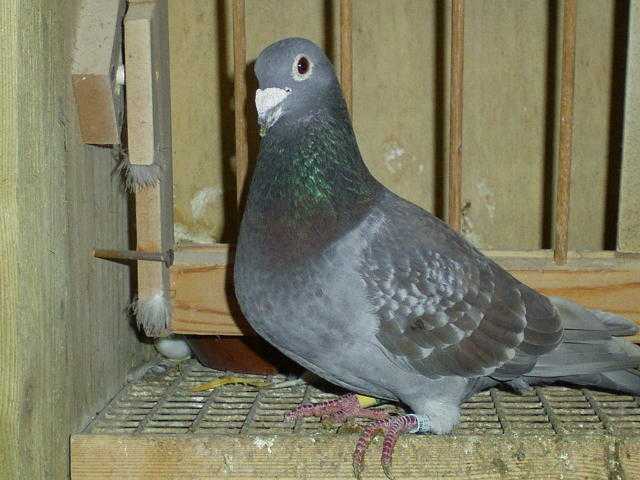
The loft was purchased off D . Farrell of Hyde and erected on the local allotments. Birds were acquired via local fanciers P. beck, T. Lawton and other via Sterland brothers of Redditch. Two lots of 99 pound for 6 were purchased via Louella being Schorrisse and Willy Van Houttes.
The first session arrived and the partnership was successful with a team of 30 young birds (flown naturally) they won 10 out of 12 young bird races taking the first 7 places in their first club race. Racing only young birds the partnership finished up the highest prize winners in a very competitive club and 5 overall point winners in the federation.
Coming to the next season was a bit of a turning point for the partnership and the start of enthusiasm and knowledge blending. Steve wanted to race widowhood but Colin wanted to race hens as well!!. After seeing widowhood hens 2 years previously at another fanciers loft Colin had sworn if he ever raced again ( not knowing about widowhood ) hens would have to race as well as cocks because he felt it was cruel to incarcerate hens in boxes. A decision was made to try the hens which was done and hey presto! First race 1 st four in the club and all hens (lowest fed position 9 th ). The season culminated in the partnership being highest prize winners at club and second highest in the fed (not bad with 27 yearlings).
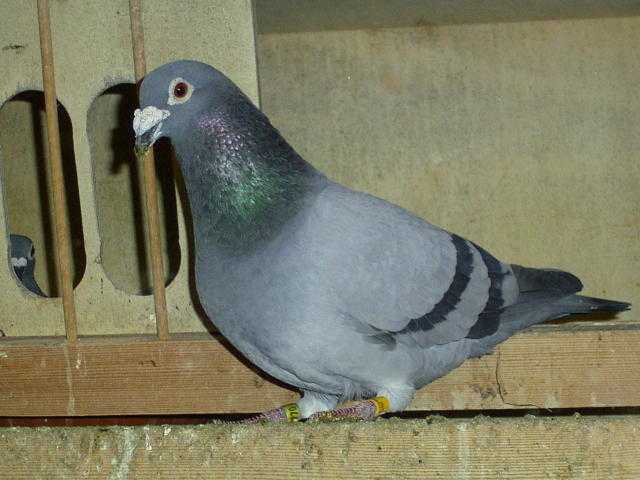
2002 saw Dukinfield join the Staffordshire moorlands federation and once again the team didn't disappoint ending up highest points winners and prize winners at club and fed level with birdage over 3500 per week.
2003 saw the team win nearly all the averages in the Staffordshire moorland federation and runner's up point's winners.
2004 was a quite year for the partnership finishing up 2 nd highest prize winners at club level winning 14 x 1 st between two clubs.
2005 prize winning has continued but the partnership made an early decision to forfeit club channel racing to compete in the north west classic club winning:
Section Open
Portland 5th 9th
Picauville 12th 13th and 16th 14th 15th and 18th
Fourgeres 2nd 8th
Messac 1st 19th 20th and 32nd 1st 32nd 35th and 77th
Picauville 10th and 17th 15th and 26th
Saintes 4th and 27th 4th and 41st
To list individual cards and performances after winning over 50 cards a season would be monotonous, however it must be said that every fancier strives for a level of consistency which the partnership feels they are achieving regularly now due to good honest birds coupled with hard work.
Away from introductions and consistent results the partnership feels the key to consistency and success is based on a simple ladder;
1 st step - Get the right stuff (you'll never win a derby with a donkey)
2 nd step - create the right environment (spend time to get loft right)
3 rd step - get the health right
4 th step - feed pattern, content and regularity
5 th step - motivation!!
Step 1
By this we mean go out of your way to purchase either tried and tested stock or purchase off local top fancier late bred's/young birds off proven stock. A situation we always relate to was realized during our first season the 2 sets of 6 bought off Louella were schorisse and willy van houttes. The young birds arrived at the loft at the same time March/April and were feed and trained to the same loft. However the schorisse only ever won minor cards yet every single willy van houttes was a multiple top prize winner at club and fed level. Remember you don't get up the first rung without sound stock.
Step 2
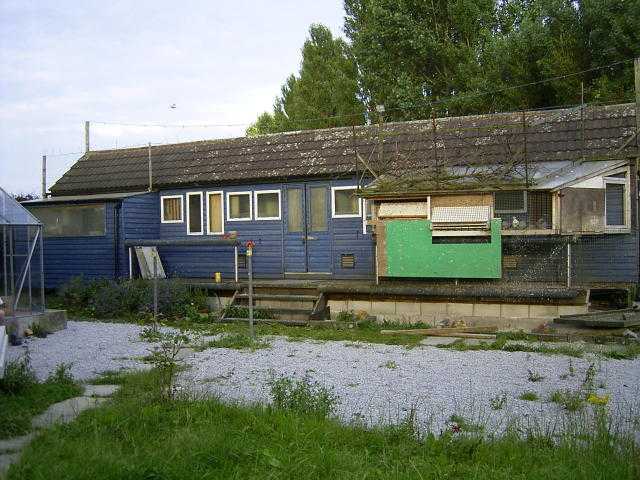
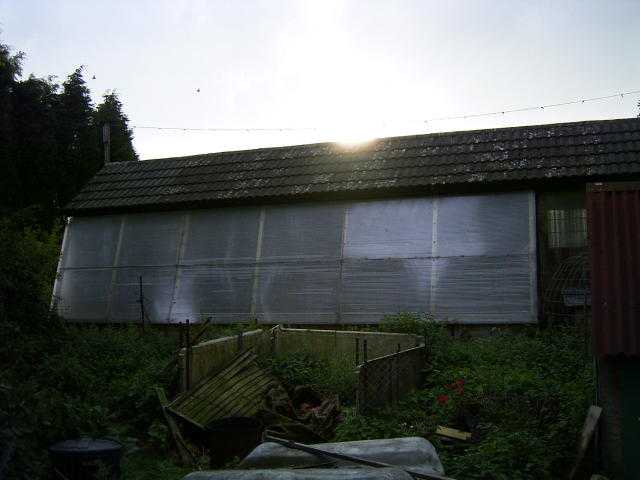
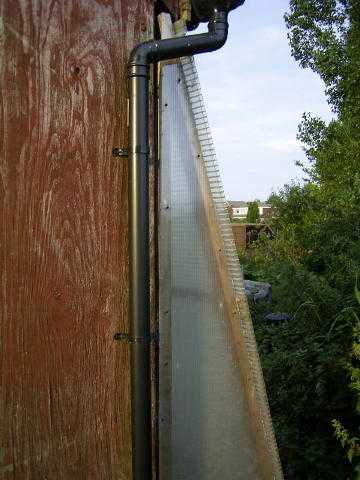
Pol Boston said a loft should be cool in the summer and warm in the winter with temperature changes never being to brisk. With this in mind we designed our loft to be insulated, vented and roomy. The air flow in our loft is via a ventilation system driven by convection and we feel imperative to loft conditions. A sealed Perspex box on the rear of the loft (like a green house) soaks up the sun and makes the air rise, as it rises the box constrict's and makes the air accelerate thus drawing air out of the loft ( see sketch ). Low level vents at the front of the loft allows the air flow to cross vent through the loft cross section. People always put ventilation in lofts for the pigeons first and not humans. This system lens it's self to improving the environment for the fancier as well. Bloom and dust are "sucked" away from the fancier and out the back of the loft. We have found a funny mutation to the vent system in that during those sunny November and December winter mornings we actually get warm air coming into the loft almost as if the system is working in reverse.

Step 3
To get consistent results the birds have got to be at a level of fitness of health at the right time. All our birds are tested pre season by Retford veterinary services in the midlands. The service allows you to choose various test's be it parasitic, gastric or viral and with 30 years experience within the poultry industry their service is invaluable. We worm and canker pre season and then use alternate Sundays "after" racing canker then ornithose treatments. Every forth week for 1 day only we use adeno coli as a tonic. Aviform products are used in the water but we feel it imperative to renew products annually and store products away from warm loft environments.
Step 4
All our race team are raced on 1 and a ¼ oz of van robauey super special corn feed in a trough. We find this amount suits our exercise regime and training levels. However based on visual assessment this can be upped during cold periods to 1 ½ to 1 ¾ oz particularly if a hard race has been partaken or is antcipated. We also feed turbo hydrate on Thursday and Friday mornings in liberal addition to normal quota. All feeds young and old are strictly 40% am and 60%pm respectively weight wise. Feed and exercise times are kept as regular as possible which we feel is "very important". Birds are raced over the channel on exactly the same mix supplemented with a few "human quality" (morrisons) peanuts.
Young birds are weaned onto maple peas with gemthepax added and then moved onto a breed and wean mix. We like to get the young birds on to supper special once through the darkness period which encourages them to fly and aids control especially on the strict 1 ¼ oz regime (fed 40 60).
A little trick we do with young birds and is a by product of regularity is to swap the yb feed on Thursday to a percentage of 60% am and 40% pm then feed 40% on Friday morning the birds think they have gone without but have received the same amounts. Their urgency to trap noticeably increases on Thursday night. Yeast is a big player in our young bird welfare and we feel regular hand feeding two tablets per pigeon per day for seven days helps if young bird sickness is suspected "TOUCH WOOD" it works for us.
Step 5
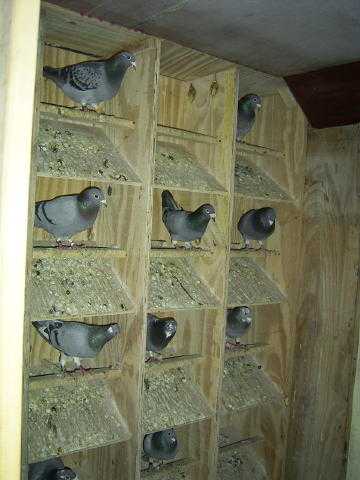
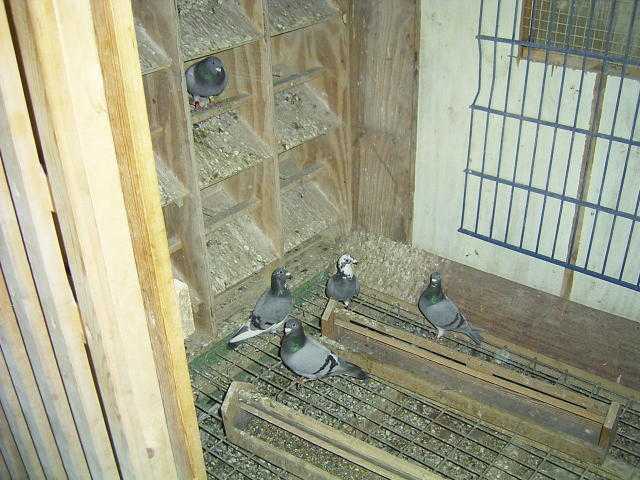
Once all the rungs of the ladder are climbed motivation is the fun part!! We race a system very similar to Mr and Mrs dickens of Leigh (but not copied). Our hens are in a specially designed section with shrowded perches and four inches by two inches meshed steel floor next to the nest box section. Cocks are kept on perches in a sanded section adjacent to the nest box section on the opposite side to the hens. Cocks are released for exercise via the corridor straight from the perches but re-enter the loft after exercise to their box fronts (up and over type) some boxes have two cocks in attendance so jealously rules. The cocks are then ushered back to their perches quickly. Hens are released via the corridor and exercise freely (strictly after 6:30pm) with the young birds. The hens again are allowed to re-enter the loft via the boxes after exercise with some boxes having two hens to them "jealousy rules" they are then ushered back to their perches. Young birds enter via a stall and are raced naturally to a whistle. The trapping on this system is electric and it enables you in theory to race 32 cocks and 32 hens to 16 boxes if used to full potential (16 pairs paired early whilst 16 pairs left on perches then reverse the principle.
For training cocks and hens are basketed separately and liberated together to arrive at loft simultaneously If applying basic one team (16 pairs) cocks and hens system then birds are allowed to enter loft and box from training but are separated as quickly as possible and fed in perch section.
Jealousy can be attached to this simply by liberating 32 cocks only on training back to boxes and separating on arrival from the 16 boxes as you can imagine as quickly as possible . This is applied to the hens 32 number in the same manor. Once away from the boxes we find cock and hens settle very quickly to rest.
On race day returns are allowed to mix and match we find a cock will come for his box and any returning hen will couple with him for comfort. Spare cocks and hens are kept back each week to throw in with "early" returning race birds.
Motivation being the last rung on the ladder is where the culmination and implementation of the other 4 rungs allows you to step off and enjoy this great hobby of ours with enthusiasm hopefully that grows each year
Colin has just introduced his daughter Katie (14yrs) to the sport and although she had a sticky start to young bird racing she is now settling in and will hopefully be an accomplished fancier. The partnership feels everybody within the sport needs to encourage youngsters to get involved.
We hope this article which we are very proud to have been asked to produce makes light reading and must stress the fun is in competing not complaining. Get up the first 4 runs of the ladder steadily and enjoy it when its right.
In their first season the boys quote that great old fancier "George Greenwood" telling them at the federation presentation "anyone can win with young birds lads" alas we all know now "nobody" wins anything "consistently" without hard work and "CLIMBING THE LADDER"
(Only joking George hope you climb the ladder soon were missing your results.)