FLEDGLING DAYS
BY BRIAN STANSFIELD
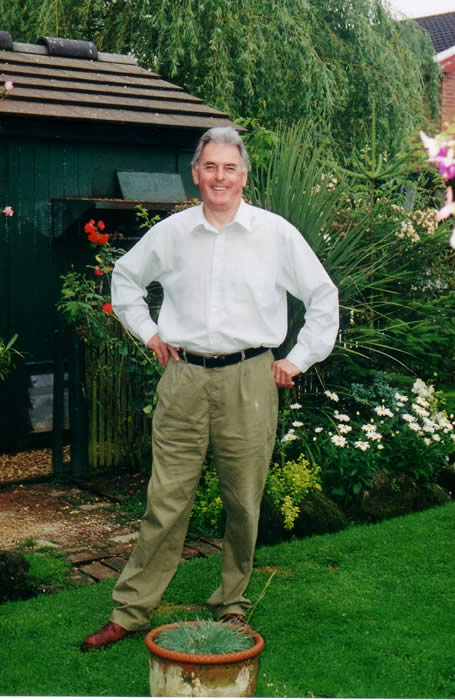
I was born in 1936, and my childhood and teens were spent in Southport, Lancashire. They were very happy times and I treasure the memories.
Because of the war and the subsequent rationing, treats, as we think of them today, were few and far between but we children didn’t miss them because we’d never known anything different. We were unaware of better things so it didn’t matter one iota.Many kids and grown ups wore ironclad wooden clogs which lasted until you grew out of them.As kids we went to the local gas-works to fetch coke back for the fires and tar for the sheds. We went with carts made out of wooden boxes, and many had iron wheels. What with the sound of clogs, iron wheels on cobbled streets, dogs barking and kids shouting it would seem like Bedlam today, but then it didn’t matter, nobody seemed to mind the noise.Neighbours spoke to one another all the way down the street and they looked out for each other, too. I remember lots of laughter and people whistled while they worked. You don’t hear much of that these days. Life was good and there was seldom a dull moment.Some cooking was made from either what you had grown, or what you could get hold of, including things off the ‘Black market’. Food was plain but plentiful. Jamie Oliver would have approved! Fat kids were few and far between, not because they didn’t get the food but because they were always on the go, using up energy, either fighting, footballing or playing hockey street style, with sticks and lumps of stones being bashed from one end of the street to the other. Many cuts and bruises were suffered, iodine and bandages were applied, and then off we’d go again.Football was learnt in the streets using as a ball anything we could kick. The local slaughterhouse nearby gave us pigs’ bladders, which we blew up for the job. Whatever we did, dogs chased us and joined in. Dog dirt in the streets was all around and we learnt the art of weaving and dribbling the ball in between the piles. Any lad that got the ball dirty had the job of cleaning it off. Nearly all the dogs were loose and were mostly mongrels.
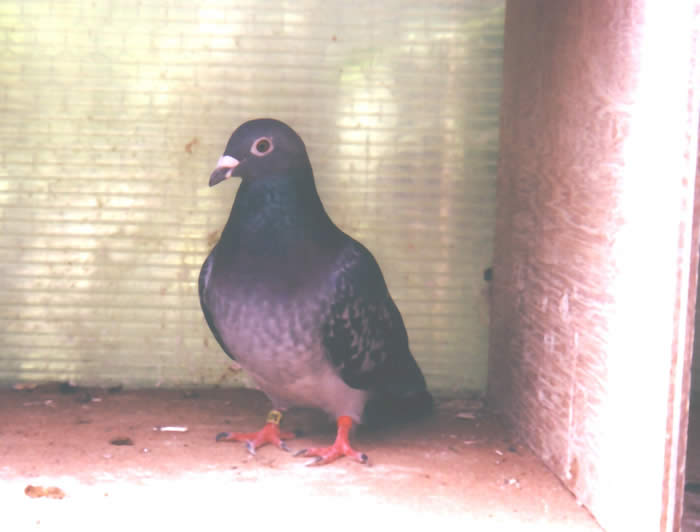
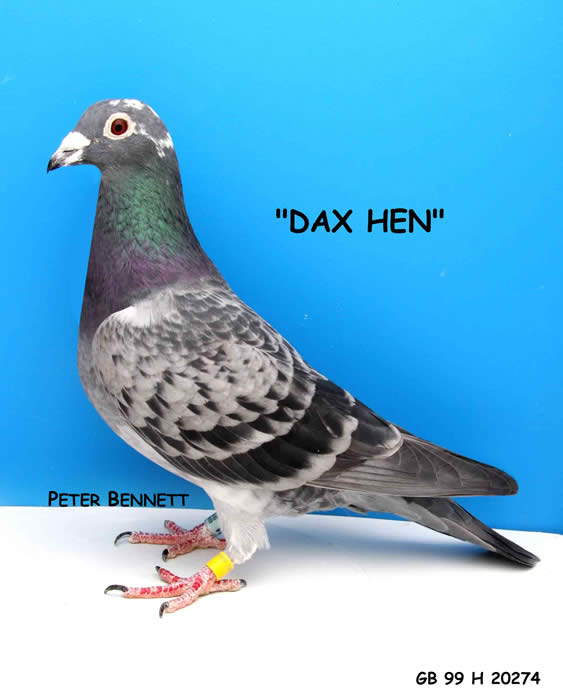
The Dax Hen, winner of 1st Eccles 2B (only bird in race time), 3rd Section L, 78th Open NFC Dax International, 654 miles, in 2005, for B. Stansfield & Son. She is bred from a cheq cock bred by Ian Benstead of Capel, Surrey x a cheq hen on loan from Roy Barton of Whitchurch, Shropshire.
Climbing, bird nesting and fishing, all those and many more things we did, with our parents’ blessing. Today’s computer kids are a far cry from what we were like. There weren’t many “do-gooders” those days. Kids were not molly-coddled and had to stand on their own two feet, which is as it should be.I can remember, down our back garden we caught Starlings, when we where about 7 to 10 years of age. We would, in the winter, put bread on the lawn and catch them in horse-hare snares, which were called ‘pantles’. We would dispatch them quickly, pluck, dress, and cook them, and then put the meat in to Swan Vesta matchboxes with a sprinkle of salt. We took them to school. Some of the teachers liked the taste and looked for more. We got the horsehair from the tails of the cart horses that pulled the dust carts. Every Sunday morning the Boys Brigade would march, bugling, along the streets, and high-stepping girls would come dancing along in their Morris Dancer outfits with symbols clashing. We would sit on the wall as they came past and pick out the girls with the best legs for future reference. Yes even at that age!Catapults, well nearly every kid had one, and some were works of art - carefully chosen forks out of a tree (bark peeled off), sand papered until smooth, with elastic then bound on with waxed string. Pouches were made out of leather shoe tongues. Just after the war American troops convalesced in some of the promenade hotels and they gave us gum. We also got some of their elastic braces (suspenders in America) and used these for our catapults. Some of the lads were crack shots, always practising on washed up cans on the foreshore. Many a pheasant was bagged with those catapults. Summer days seemed to go on forever, and we were seldom to be found indoors.When I was 10 to 11 years of age my father took me “shore lining” in the Southport tide. This meant digging sand worms and baiting up as many as 300 hooks, which were attached to a ground line awaiting the tide to come over them. This was a magic time for me and there were fish aplenty. Often the only hooks that didn’t have a fish on were those where the bait had either come off, or the seagulls had got there before us.I remember those fishing days were bitterly cold. We caught mainly Whiting, Cod and flat fish. Cod came very big in the coldest weather. We nearly lived on fish, fresh cockles and Samphire, which is a fleshy-leaved plant which grows near to the sea. It is very nutritious. Living off the fat of the sea – so to speak - meant we were as fit as fiddles and you felt like you could jump a five-barred gate! The local chip shop had black tripe, white tripe, pigs’ trotters, cockles, shrimps and fresh fish, all caught locally. I can taste it now, what a feast. Lots of fish roe and bread and butter were eaten. The dogs had whatever was left over; they had no canned food those days.Getting back to sea fishing, today you could go out, bait the same number of hooks and not catch a fish. The conservationists could well stop you digging the bait worms. How times have changed.As I got a bit older I was taken ferreting and poaching and taught the craft. We lived close to a game-filled area.We became quite skilled at catching rabbit and game and many times were chased by the keepers. If you were caught you got a good hiding. No police were ever called in. You took your medicine. I’m sure the keepers had a certain liking for us lads, perhaps because that was the way they started out themselves. You learnt not to complain to anyone.I remember one occasion when a certain keeper called Ellis Tomlinson met my dad and told him that if he ever caught me on the job he would give me the hiding of my life. My dad said, “You have to catch him first”. He never did, but I was lucky.A little later I graduated to shooting, mostly Pink feet geese, Widgeon, Mallard, Pintail, Teal, etc. We went shooting at night under the moon - wonderful times and some of the best days of my life.Out there on the mud flats we often saw the Northern Lights when the atmospheric conditions were favourable. Sometimes the effects were so intense the flashing lit up most of the sky. I remember before pollution on some nights the stars were so vivid they seemed to bear down on you. Not now. These things linger with you. The smells of the salt marshes and foreshore you never forget. Sometimes the cold was so bad you could cry but as cold as it was, it never stopped us.You had to know the mud flats and how the tide came in down the gutters otherwise you could be cut off and be in big trouble. Over the years some inexperienced shooters got drowned so tragically. Fortunately I went with some of the best old wildfowlers who took no chances and had deep respect for the elements.It never was about how many wildfowl you could shoot, it was about being close to nature, with friends, in the environment you loved.About that time because of the abundance of natural food in the fields, weed seeds, insects, water voles and the like, large numbers of owls thrived. Corncrakes (now extinct in the area and much of the British Isles) were plentiful and we would sit in the fields listening to their distinctive sound.About 1947, along with a couple of school pals, we caught a few feral pigeons near the town centre. We took them home and installed them in orange boxes. So we started into pigeons. Before long local fanciers bred us a few which we trained up to 10 miles on our bikes. Then we started sending them in the clubs as ‘extras’ – called trainers today. We learnt the basics and local flyers were very helpful to us lads.The club I eventually joined had 48 flying members and every one was measured within the same mile. Only yards separated the lofts. Our club was bordered by other clubs equally as strong, and again they all measured much the same.Nearly everyone flew to the open door and to blink when a bird arrived was to be behind in the race. Fierce excitement!Lofts were spotlessly clean compared with many today; a dressing of seashore sand was sprinkled on floors and perches after each scraping out. Hot lime was mixed and applied to the interior, and cracks and crevices were well covered. Any insect life would be seen to, and some lofts were done two or three times a year.In the summer on Saturday mornings we would go for a haircut. Saturdays were for the kids. Our barber was called Pop Hayes and the front room of his house was the salon, though it wasn’t called that in those days. It was known as the torture chamber. A lot of the kids had boils on their necks and some boils were massive. Pop Hayes, who also kept pigeons, was an impatient man. All the boys waiting for a haircut would sit round the edge of the room. When a lad with a boil on his neck was in the chair Pop would order him to keep still then he would start working around the boil with his clippers. Now and then he would nip a boil and I can tell you the lad yelled. He’d be told to keep quiet or it would be worse! Some of the lads would be scared to death but daren’t go back home without their hair cut. So it was in our formative years.Back at school there was very little bullying. The older lads looked out for the younger ones. If ever any of the older boys got too big for their boots then Geoff Harper, a huge lad, was brought in. He was massive and could only do remedial P.T. A couple of minutes with him sat on you were all that were needed.As pigeons became more important, visits were made to the best lofts in town. Those early visits remain clear in my mind and the most fashionable breeds of the day were Barkers and Gits.Little or nothing was used in the water. “Condy’s crystals” (permanganate of potash) went into the bath. Epsom salts were widely used and the ‘Croston Bottle’ mixture came into play, otherwise little else.
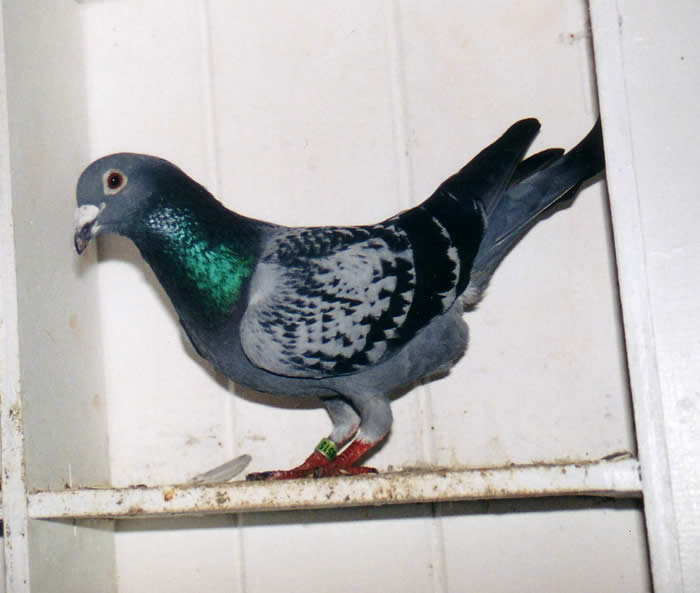
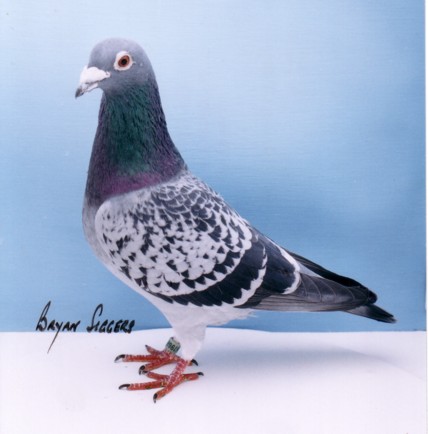
The Pau Cock, winner of 1st Section L, 17th Open NFC Pau, 684 miles, in year 2000, for Brian Stansfield & Son of Tattenhall. He is bred from a grandson of Keith Bush of Cossall’s Lerwick Gold Award winner x a cheq hen who was a gift from the late Kenny Hogg of Hesketh Bank.
Fewer birds were kept back then and as far as stock birds were concerned these were invariably racers which had won out of turn, and were getting a bit older. Birds over 5 years of age were considered to be getting too slow. Most of those good old fanciers would laugh (or cry) to know what goes on today.A lot of corn, especially maize, travelled badly and was prone to falling off the backs of lorries coming out of Liverpool docks. Good maize it was too.Any birds not coming up to scratch would become ferret food and there were lots of ferrets about.I remember a semi-professional cat-catcher doing the rounds; he did quite well and was never unemployed. I recall he used valerian root and was like the Pied Piper of Hamlyn.The marking of race birds sticks in my mind. Marking was done at the end of the railway station platform, and I remember the first race marking of the season when everyone was expected to play a part. All baskets had been repaired and re-varnished during the winter months. The metal nameplates on top were re-painted and re-written. All spic and span as apposed to many of today’s rough-and-ready containers. There was a lot of pride amongst fanciers sixty years ago and standards were set and adhered to.Progeny testing, survival of the fittest and natural selection were the bedrock from which pigeons evolved. Perhaps today it’s different, and not considered that important?Putting rubber race rings on the birds meant making sure none twisted. On the metal ring leg, the rubber went on top of the ring, never below or above the ring. A box of French chalk was on the tabletop and the ringer would dip his hands in it to avoid them becoming sweaty. You don’t see that today. Perhaps we don’t sweat the same!Well, this little glimpse down memory lane may have interested some readers. Just a bit of nostalgia on my part and I hope you have enjoyed reading it.