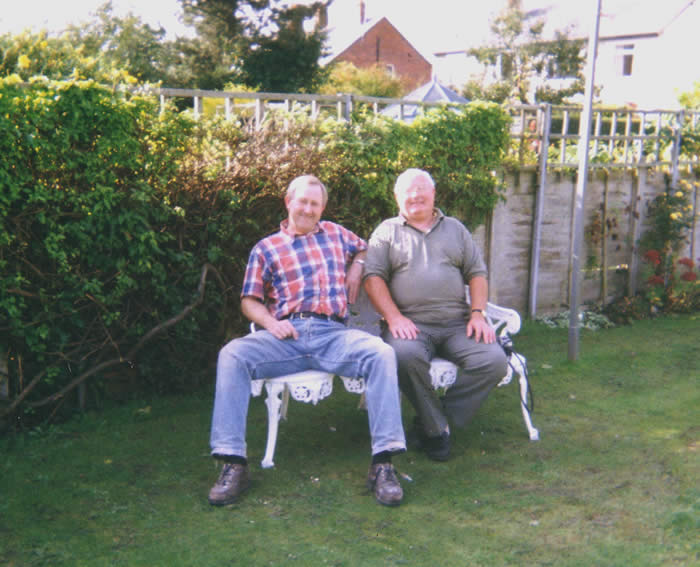
JOHN WILLS
1st Open BICC Biarritz 2004
I've sat down and given a lot of thought to what I might write about and there are things I'd like to say about the way the sport has gone, but can't, because they wouldn't be printable! I'll simply say I don't like the way the sport has been taken away from the back-garden fancier. All my life I've lived for pigeons so I'll start off with when I was a child.
I was born in Acton, West London, on the same estate as Kenny Hine, George Burgess and 'Tubby' Tate - a real hotbed. When the council knocked down the estate they wiped out a complete community of pigeon fanciers. At one time, in just my family, there were my dad, uncles Reg, Ern and John, four cousins, our in-laws and myself, who all raced pigeons. The Acton South Road Club had 96 members - and it wasn't the only club in Acton. My dad was pigeon mad so we never had holidays. Even later, when I first started working, I used to have three weeks' holiday and I'd use one week for pairing up, one week to start off the old birds and one week to start the youngters. Down my road there were nine flyers, which meant that I was late every morning finishing my paper round. I went to school on the same estate and in the garden next to my classroom there was a pigeon loft belonging to Mr Burrows, who ran the local fish and chip shop. I had my seat by the window and would watch his pigeons all day long. The teacher would say, 'Wills, recite what I have just said', and of course I couldn't, which meant a clip around the ear...or worse! There was no contest between pigeons and schoolwork and consequently I left school with a limited education. No one had a better childhood with pigeons and animals, though. I met Mr Burrows, who's about 88 now, only this year for the first time since those schooldays and I told him how many times he and his birds had got me the stick back then!
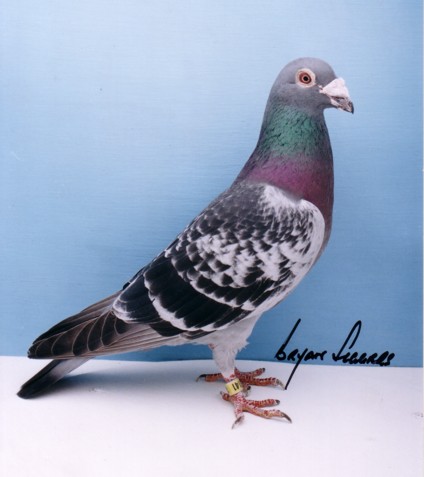
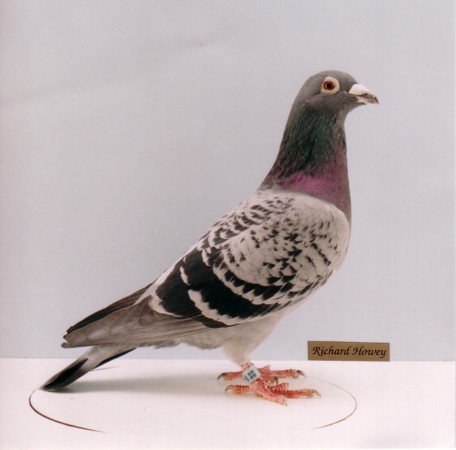
Ian's Way
2nd BICC Barcelona
In Acton and Brentford everything was on the trap. You might take 1st, 3rd and 4th but not the first four because it was so tight. If a pigeon flew around just once you were behind so the birds were raced to the corn tin, which meant by the time they were yearlings they didn't win much. My Dad never grew out of the corn tin and, as a result, when it came to the longest old bird race I had years of sitting there with a broken heart. That's what's made me the way I am now - other races mean nothing to me if I can't get birds from the longest ones. Incidentally, in those days George Burgess won the longest old bird race nearly every year.
My dad's and my winter Saturday afternoons were spent at the Frank Hall Auctions in London. It was a day out. I can remember going to one auction (I think it was for John Banks's funny-coloured 'uns) and when Frank came to a chequer hen he put his hand in her pen. She jumped on it, he took her out of the pen and held her like this while he sold her, then when she had been sold he calmly put his hand back in the pen and she jumped off! I was about 12 and it was one of my earliest magical moments with pigeons. Five years on I was at another auction when Frank said, 'John, come and have a look at this pigeon'. I went beetroot red and when I gave it my approval he said to the crowd, 'John knows a good pigeon when he sees one'. Twenty years later I was at a BICC show in Molesley when a fancier by the name of Tony Twyman came up to me and, recalling the incident, said, 'I remember you', and we have been friends ever since. It was at a Frank Hall auction for 'Tubby' Tate that I bought a mealy cock that was to go on to breed my first-ever Channel winner. Frank was a talker and could go back 50 years into the breeding of a pigeon he was selling, sometimes being able to say, 'I remember selling this one's grandsire'. It was magical!
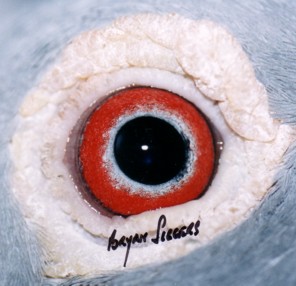
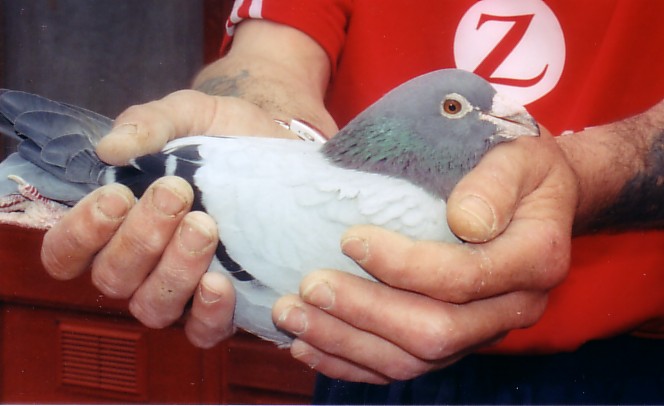
The eye of Ian's Way
Later I moved to Brentford, where Dad was Secretary of the local club, then to Feltham where I first flew on my own, enjoying a fair amount of success. Another magic moment came when, after I'd started to fly on my own, I sent to the longest old bird race and won it. Les Kidd, who now races on the south coast, was there to enjoy it with me.
One day in 1982 I arranged to take Rose out. We got on well so the next time I took her out I gave her a basket and asked her to go training, to which she didn't object. I thought, I'm 37 and it's time to settle down! I have to say that Rose has been the best introduction into my loft I've ever made! When she and I married and then had our son Billy, for quite a few years she worked and I stayed at home to look after him. Back then we were flying in the East of England CC and to get the birds ready I used to train them from Beachy Head. I have memories of feeding Billy, wiping his bum and singling up the pigeons more or less at the same time! It paid off because that year we won five of the seven EoECC races.
Because I wasn't working, we couldn't afford to pool and I enjoyed racing the birds so much without having to think about what they had on them that I have never pooled a pigeon since. These days I want to know people who race their pigeons for the fun of it, as they are the real pigeon men. To me, once you start relying on money from pigeons you are a different sort of person. I have no qualms about people selling pigeons but when they exploit it they are fooling everyone. In the same way, I could never fiddle a race because the only people I talk to are flyers so if I did and was thrown out of the sport, I would end up sitting at home on my own with no one to talk to. Not that I'd ever fiddle, of course, but you know what I'm trying to say!
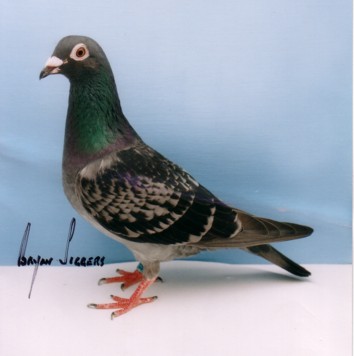
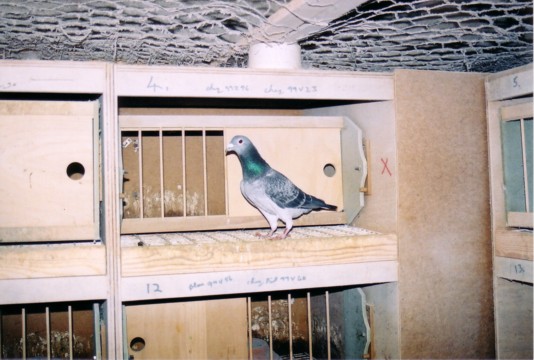
Britannia
1st BICC Perpignan, 620 miles
In 1984 we joined the BICC and sent our good red chequer cock, Rollercoaster, to Pau. He won it and after that day there was no turning back. Since then we've evolved a family of pigeons for hard days and our latest win makes it 6 x 1sts BICC for our loft in International races. Ours is also one of only about a dozen lofts to have recorded Open positions in each of the last 15 Pau Nationals, even though our pigeons go to the Pau National 'under raced' because we use it as a stepping stone for the Internationals, which we prefer because the degree of difficuly is so much greater.
In the early days of flying with the BICC I remember putting through Mike Young's pigeons once, when he was in his prime, and they were magnificent, with eyes like jewels. I put Fear Bros' through twice and they were pigeons to die for: red chequers with ghost faces and just the right amount of wattle, something I think is important for distance pigeons in a hard race as it helps them keep the wind out of their eyes. My birds carry quite a bit of wattle, even the hens. I've also had the pleasure of putting through Jimmy Shepherd's birds and if I was restarting tomorrow from scratch he would be the man to whom I would go for long-distance pigeons. He has a family that has stood the test of time and a type that stamps its mark; you can't breed it out of them. In recent years, in different ways, I've been impressed by the blues of Brian Leadbeater - his '48' is a perfect pigeon; Richard Withall's Lerwick winner Gemma; the old original Fear Bros' red chequer cocks in Eric Cannon's stock shed, which were just out of this world; Graham Baker's Meritman, five times in the top 10 in the Section in NFC Pau; Keith Bush of Cossall's stock team and retired racers - very impressive - and Brian Long's Barcelona winner, a mealy cock that was just perfect, being fine boned, good looking and the right length. Everything I wanted in a pigeon, he had. When he won from Barcelona he was probably the longest-flying pigeon in the race and was the only bird on the day - a tremendous performance.
I've come to the conclusion that the most important things in pigeons are blood and type, both being of equal importance. There's no point in having the blood but not the type, nor the type but not the blood, because you will be competing in National races against pigeons that have both. However, I can't describe what I mean by type; it's just a feeling I get. If I see I pigeon I like, it nearly always handles the way I think it will. I like little hens with tusks and the way I would describe a hen I like is, she has to be a 'lady', in other words, have finesse. Also, most of my best hens have a certain honesty about them.
Our family has evolved since I first bought the 72 Cock off Ian Benstead in 1975 and I've built them up to suit my mind's eye. I could never sell any of our good pigeons because they mean so much to me. I should correct myself: I once sold a pigeon for £1,000 and I've regretted it ever since. The chap kept badgering me so, to put him off, I said, 'You can have him for £1,000', at which point he put his hand into his pocket and pulled out the cash! The cock in question was 30th Open Pau National the year Mr Chant of Luton won it.
Type is everything. I won't keep pigeons that aren't my type. I don't think I'm making a mistake; after all, the same type of human keeps winning the marathons! You have to believe in blood. It will throw good pigeons now and again. The proof of a family's quality is in its consistency over a span of time. My initial young bird team numbers 28 and I believe that to increase the percentage of good ones you get for the distance you should breed around a family. I concede that you can get good distance pigeons out of sprinters but a back-garden loft can't afford to breed 200 just to find one.
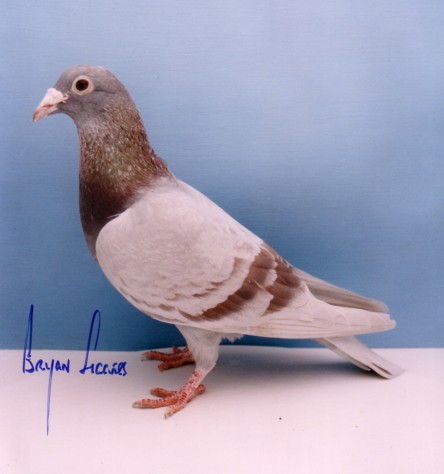
Violet Lady
4th Open NFC Pau
The ideal race for my pigeons is around about 900ypm, with the weather hot and probably nowadays they need 600 miles. In other words, the harder the better. When I won from Biarritz with Tommy's Girl it was just about the hottest day of the year. In my breeding I have been concentrating on the ones that have done it out of Barcelona, because my main aim is to win from Barcelona. Why does Barcelona hold such attraction for me? Because ever since I was young it's been a name with stars around it. However, this now probably means I'll have to breed out of the faster pigeons in my family, or find a cross that works, if I'm to breed the speed into them to be able to win the Pau National. The trouble is, every cross we've tried in the last few years has been totally useless. The pigeons we've tried have been off good pigeons but they just haven't hit with our own.
Here I'd like to make a point about the Palamos race but this is not meant to run down the British Barcelona Club in any way. I just feel that for the number of pigeons the club enters for Palamos there should be more arrivals on the winning day than there are. The fanciers who send are all capable and I honour them and their pigeons - such fanciers and pigeons are up on a pedestal for me - so there should be more home. The BBC should have a midday liberation so that those in the north of England could time on the winning day, doing 800 miles. As it is now, it's too much to ask pigeons to fly one full day, then get up and fly another. I stress again that I'm not knocking the club, the race or the race controller; it's just how I feel. I'd travel miles to handle Palamos pigeons, just as I would to handle Barcelona pigeons. Similarly, people keep going on about early or late liberations from Pau. The only way to make it 'fair' is for every pigeon to have a night out in France in order to get the correct hours of darkness. It's a National race and not one for just the south of England!
I usually blame myself if I don't do any good, never the pigeons, simply because I believe in them. This year I wasn't confident in the Pau International or Barcelona and was let down both times but I was confident at Biarritz. You know in yourself when when they are right. You don't need to handle them, just look and they will jump out at you. Twelve months ago I took the hopper of beans out of the shed but I was so annoyed by my performance in the Pau National that I put it back in and then we went on to win Biarritz. It will never come out again! If someone comes around and finds no hopper he can take all my pigeons. All my best performances have come with a hopper of beans in the shed. For the distance you want them to be carrying weight without it feeling as if they are, if you know what I mean. By inbreeding you produce fine-boned pigeons, which are what you want for the long distance. Cross them and you invariably get heavy-boned pigeons, which is what you don't want. Fine-boned pigeons, when right, are light.
The grandam of Tommy's Girl was Rose's Choice, a hen bred by Freddy Elliott, which won 1st BICC, 8th International Hens Lourdes for us. I paired her to the 87 Cock, an Ian Benstead pigeon that won three times from Pau for us, and they bred her dam, a chequer pied hen that was 95th Open NFC Pau (in the third race of her life). The next year she came from Pau without turning a hair so I earmarked her as a future Barcelona candidate. When I sent her to Barcelona the following season she was having her first race of the year and took 12 days to return. I decided on a different approach for the following season, giving her a 'training' race, then sending her to Barcelona. In a gale-force west wind and rain she was 5th Open, the most westerly pigeon to be timed. The next year I timed her from Palamos and christened her Ever Loyal. I paired her to a cock from Ian Benstead and they bred Tommy's Girl. When Ian gave me the cock as a youngster, he said that every good pigeon he had ever owned was in its pedigree. Tommy's Girl was unraced as a youngster and as a yearling was hawked in training, returning minus a tail and limping (which she still does). At 2y she was sent to Pau but the birds were brought back to Saintes, from where she won 137th Open. This year she went to the Pau National and was my third bird on the clock, making the Open result, then was sent to Biarritz.
I don't believe in pairing winner to winner. If it worked everyone would be doing it and the sport would be simple. When I read an advertisement and see claims for 'winners in every nest' I view the advertiser with suspicion. I take a lot of notice of Ian Benstead, who once told me that in horse racing no one had ever managed to pair a Derby winner to an Oaks winner to breed a Derby winner and if the race-horse breeders can't do it, what chance have we? Another thing I learnt from Ian is not to overwork pigeons. He would say, 'You can leave the race on the gallop'. I remember one day having a visitor from the West Country and, on stepping back outside my loft, he said to me, 'If you raced properly you could win the Pau National', to which I replied, 'If I raced pigeons how you want me to race them I wouldn't time in'.
When I was 2nd and 3rd Open BICC Barcelona in 2002 those two birds were only trained down to the coast beforehand. The pigeon that was 2nd Open was a latebred that never moulted. He was only trained as a yearling, at 2y he went to a 149-mile Channel race, as a 3y he flew 260 miles, then went to Pau, being my fifth pigeon on the clock, and at 4y he was jumped straight into Barcelona! The 3rd Open pigeon was 60th Open Young Bird National and still went on to win at 700 miles in due course. Her sire was a full brother to the cock that was 2nd Open. Again, it shows what I said earlier, that blood will tell.
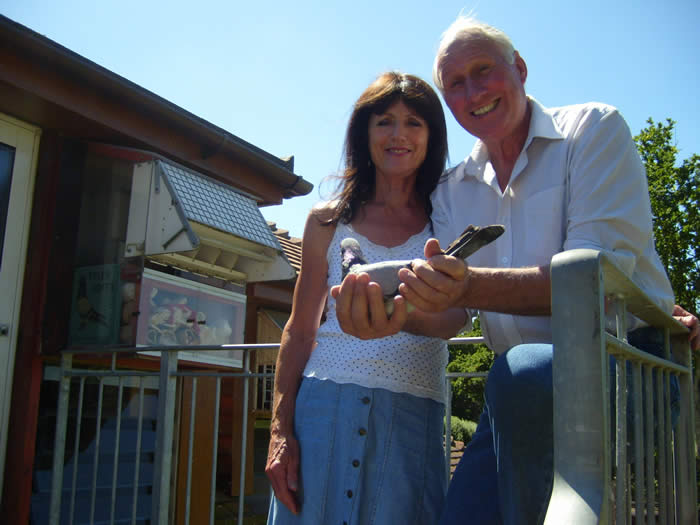
Rose and I live for pigeons. We don't care about the house, the cooking or the garden - all we think about is pigeons! Without Rose I don't think I could have carried on properly over the last few years, particularly with having asthma. She has recently been flying her own team of sprinters, as well as helping me with our distance birds, and has more than held her own. Last year she topped the UBI Combine from Guernsey and won about 12 x 1sts, flying natural against all the good widowhood flyers in the area, and this year she's flown just as well again. I'm proud of her and what she has done. Mind, these sprinters are still secondary to our distance birds and if they were in my loft they'd be used only as feeders! Here I'll hand you over to Rose...
Rose: I've had a lot of enjoyment out of my sprinters. It's been fun and it's nice to be doing something in the early part of the season (although it's made the season longer!) I like the short Channel races more than the inland events and I put my success down to having a few pigeons and spending a lot of time with them. When you can observe them you know when they're right, when to send them and when to leave them at home. I fly natural but several of the pigeons are really paired up to me and this is what motivates them. You have to have the right birds to be able to do it with, though, and I was very lucky in this respect. Here I would like to thank the people who bred them to get me started, namely Brian Long, Tony Hayward and Brian Leadbeater.
This year I had a lot more young birds and I didn't like it at all; as a result, I didn't have the same enthusiasm. My 2003 young birds did just as well as yearlings in 2004 and all I did with them really was have them out early, then they'd be on open hole all day. They were very contented, which is the main thing. I didn't set them up for any particular races: if well, they went; if not, they didn't. I just looked at them at the time. I've been very lucky in that I've not had to rely on one pigeon. They are fed a very basic mixture, plus beans, and have nothing in the water. They also have a lot peanuts because I like to sit there and play about with them. My loft is south facing and I think this helps to keep them in good nick. I'm very laid back and don't do what most normal people would with their sprinters. I should, in theory, fly widowhood but I won't. I might consider roundabout because getting hens to race on natural is more difficult. Next year I might fly one or two of the short BICC races and my target will be the Nantes National. I've a nice Braakhuis hen, bred for me by Jimmy Bulger of Kirby, which, all being well, will go to the Pau National. I've really enjoyed flying some sprinters and it's been fun but I have to admit I have more enjoyment out of seeing our distance birds come - they are completely different!
I'll hand you back to John now for the final word...
John: I used to run down sprinting, saying it was boys' racing, which would really wind up the local sprint men. When Rose started winning the sprints I was talking to these same sprint men and said, 'I was wrong, it's not boys' racing', and just when they were starting to smile, thinking I'd come round to their way of thinking, I added, 'It's women's racing!' Only joking.