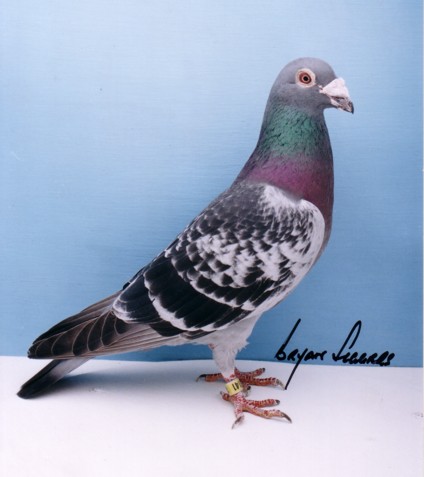
CONSISTENTLY CLOCKING MULTIPLE PERFORMERS AT THE DISTANCE
A LOFT PROFILE OF SR & WH KNOX of KENT
1st & 2 x 2nd Open BICC BARCELONA
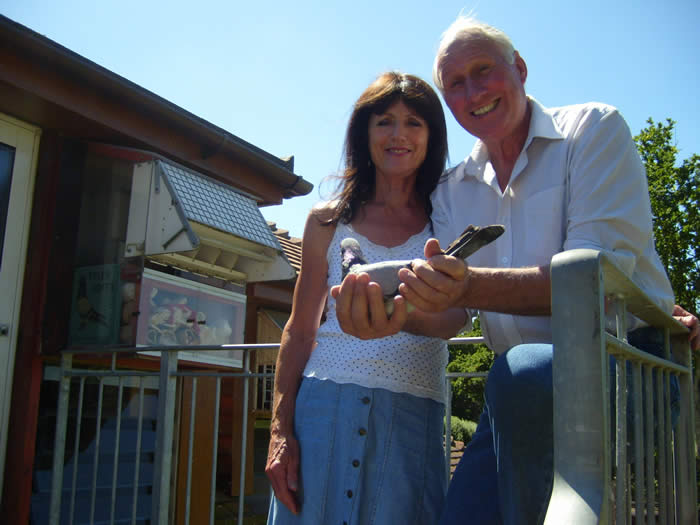
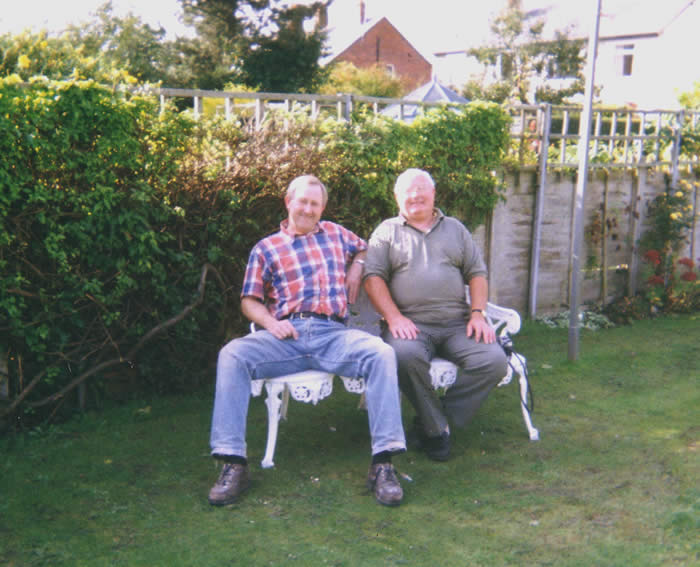
Bill & Tricia Knox
I have studied the results of the BICC for some years now and the name of SR & WH Knox of Tyler’s Hill in Kent has appeared high up in the results with monotonous regularity when the race is hard and the distance long. As a result of this consistent success in getting pigeons to repeatedly fly and compete at the highest level in National and International Long Distance races, I decided it was high time that I approached Bill Knox to see if I could put together a loft report on this highly successful team of long distance racers. The following report is the result of that request.
Bill Knox first became interested in racing pigeons in l958, although his father had previously raced pigeons in London and brought a few birds down to Kent when the family moved out of the smoke in l953. Although Bill’s Dad was a fairly serious man, his obvious love of pigeons enabled Bill to see the other side of his father’s character.
The initial loft that housed the Knox team of nine pigeons measured just 8ft x 4ft. Unfortunately, soon after the move to Kent, a cat entered the loft and killed eight of the nine. However, a local fancier was packing up, and the loft and ten pigeons were duly purchased to replace those killed by the cat. These were raced natural and the father and son combination had a spell of good successful racing.
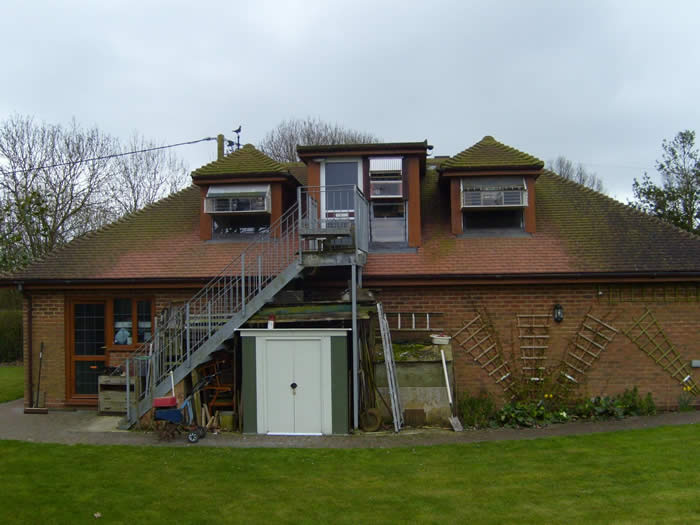
Outside view of the loft
Bill’s involvement declined in l968 due to his work in financial services which demanded much of his time, leaving very little time for the hobby of pigeon racing. It was not until l999 when the opportunity for early retirement beckoned that he was once again able seriously to apply himself to racing pigeons. Prior to his retirement Bill had bought a number of Kirkpatricks in the late eighties/early nineties, which his Dad had been racing, and these were to become the base of the present day team of long distance lion hearts.
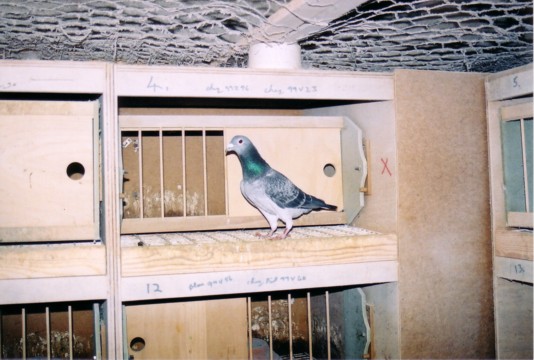
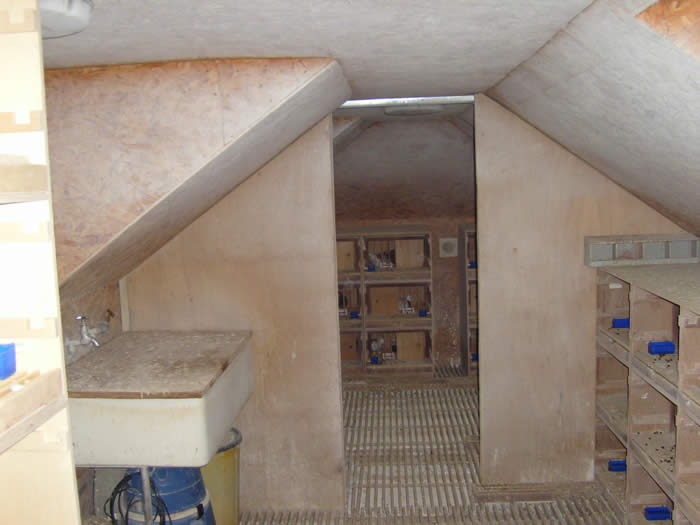
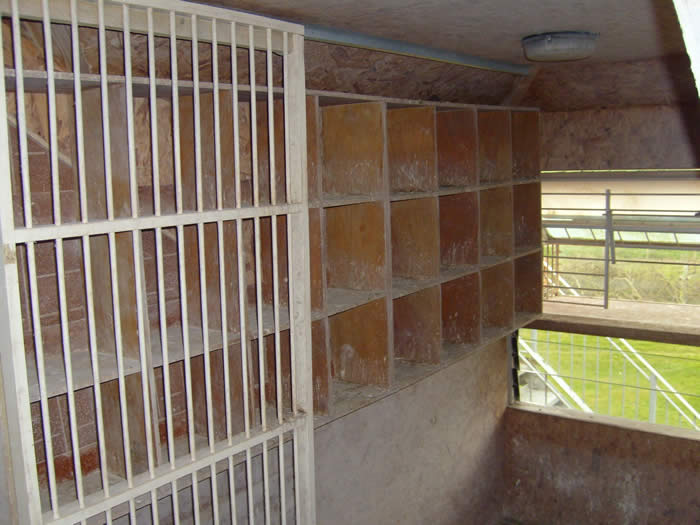
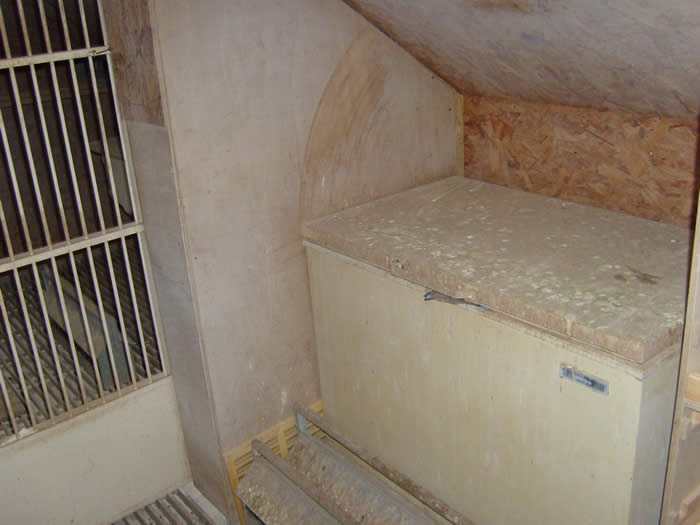
The present loft is built into the roof of the garage and the internal floor dimensions are 30ft long x 9ft wide. The rear wall is 4ft high and has nest boxes three high built in; the roof then starts to slope at 35 degrees and there is a 2ft walkway running down the centre of the floor space. The birds are usually caught up on the top of the boxes as the confined space caused by the sloping ceiling seems to reduce their room to manoeuvre and keeps them tame. Three Velux windows in this roof area allow plenty of light to enter the loft, creating a pleasant internal environment. The 42 nest boxes are sited along the side walls beneath the sloping ceiling. There are three bays set in the loft front; the two each end measure 5ft x 4ft and are fitted with 24 box perches and sputnik traps with glass louvres under these. The centre bay measures 6ft x 5ft 6" with the entrance door and a stall trap with glass louvres underneath also fitted with 24 box perches. This area is used to store the training crates and is fitted out with two Butler sinks and a chest freezer, which is used to store the corn. Additionally, there are also three doors leading into the eaves, which allow for extra storage space. All in all, a very professional and well thought out set up, combining adequate ventilation, light and a snuff dry internal loft environment.
The floor of the loft is constructed from 1" ply sealed with 1 1/2" x 1" roofing batten running front to back with wooden grills. Under the nest boxes and box perches the battens are doubled up and a layer of chalk covers the floor beneath the grills. Two small fans at either end of the loft, one drawing in air, the other expelling air along with four vented ridge tiles, ensures a good flow of air within the loft.
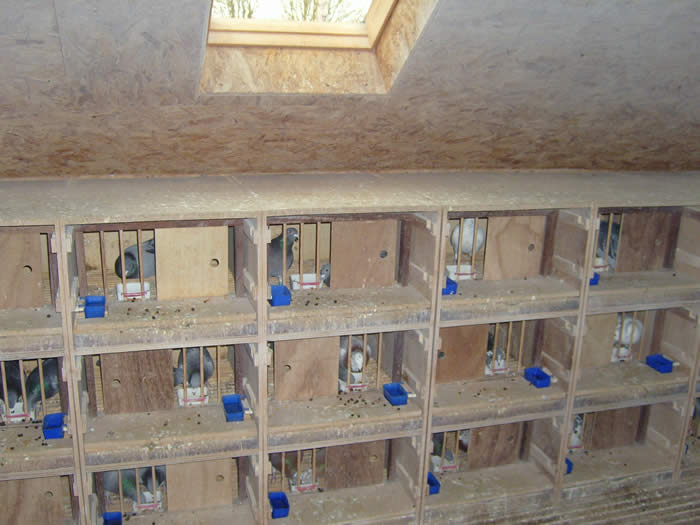
Although the loft is fitted with 42 boxes not all the inmates will be raced in 2011 as seven pairs are retired racers. Bill likes all pairs to rear one youngster so in 2011 he will breed forty two youngsters by floating the babies from established stock under yearlings.
The birds have always been raced on the natural system and as a result, bearing in mind Bill’s dedication to extreme distance racing, all old birds are usually mated on or around 23rd March. Nevertheless, in the past, despite this late mating date, the final race of the season from Perpignan in early August has had to be missed as the birds were too far gone in the wing moult.
Once the birds are nicely settled on their first round of eggs, Bill starts training with two or three tosses at l5miles, 30 miles and 60 miles. The birds are allowed an open loft for two to three hours daily throughout the year so that by the time early season preparation for racing arrives the whole team are already pretty close to the mark. One interesting point that I think I should mention here is that Bill only separates the birds for a short while from mid February to late March. However the nest boxes have been closed all winter and the hens rarely lay. All birds are vaccinated during this short period of separation and that is the sum total of the Knox medication programme – full stop.
Despite the attentions of the local sparrowhawk population, the birds are given an open loft once mated and it is up to them to take suitable precautions against the aerial bandits – they soon learn to be “street wise”.
Training during the racing season depends on when they had their last race, how far, how hard, whether they are exercising well around home - but as a general rule the birds get very little training once the season has started. However, any training given during the racing season is normally with the local club and usually from around 60 miles. Bill prefers to train on the line of flight so any further than 60 miles takes the birds in a more westerly direction due to the proximity of the English Channel.
As stated at the beginning of this article, Bill Knox is absolutely besotted with long distance racing and he has the opportunity via the BICC and NFC to compete in eight 500+ mile races each season. In the build up to these races he likes the birds to have had a couple of 200/300 mile races beforehand. Very often, if the birds show that they are up for the challenge, Bill will double up on these 500 mile races in the same season – but only if he thinks the birds are ready for it.
The birds are fed by hopper with a measured amount of food daily during the winter, but are allowed as much as they want in the summer months when their workload increases dramatically. Currently, Bucktons “Light Speed” mixture is fed with the addition of farm beans plus Hormoform whilst rearing. The only other addition to the birds’ diet is a conditioning seed mixture plus a few peanuts for each pigeon in the final days build up for a marathon race.
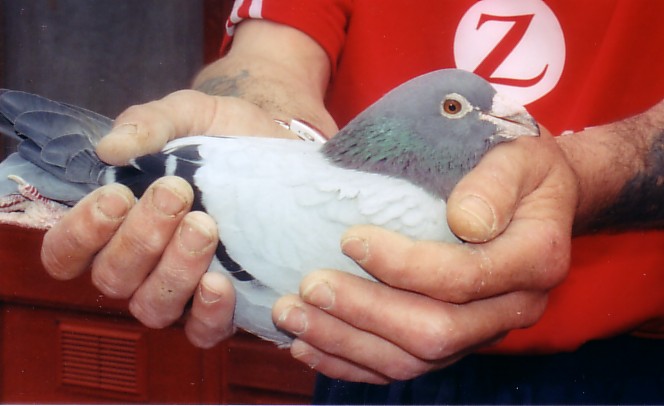
The family of pigeons raced are predominantly Kirkpatricks that have been blended over the last twenty odd years by line breeding and inbreeding to top performers both on the road and in the stock loft. Occasional crosses have been brought in but invariably the best results have come from inbred subjects. The original stock came from Louella Lofts, Fountainhead Stud and Firtree Lofts. All the principal birds of this family are traceable, and have been tested generation after generation and have improved over time. However, the odd quality distance bred pigeon has been introduced as and when Bill thought that there was the need for one. As a result of this strictly applied breeding programme allied to continuous testing of the resultant progeny at the distance Bill has arrived at his ideal type of pigeon which is small to medium sized, well balanced and buoyant that sits nicely in the hand.
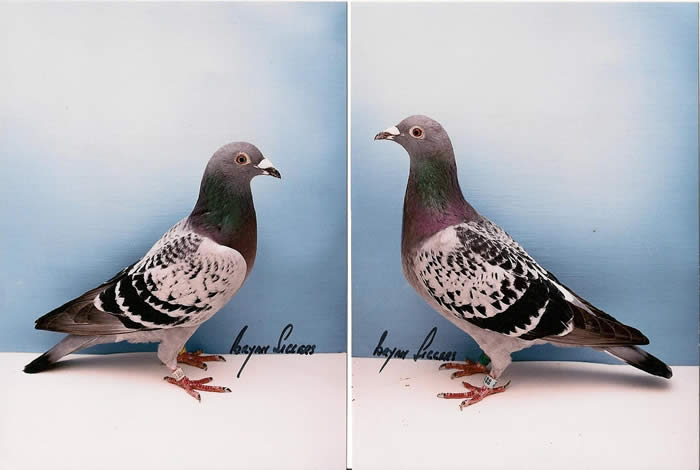
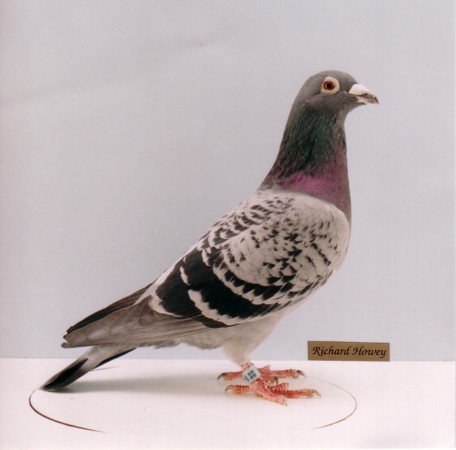
Chequer hens - 1st & 2nd Barcelona
When asked what was the single most memorable result achieved over the years Bill stated that without any doubt it was the winning of the 2004 BICC Barcelona race. I’ll let Bill tell you in his own words: “I had calculated that the winning time would need to be around 12 noon. My wife had taken my young birds to a 30 mile toss and had included seven possibles for the Dax National amongst the babies. I watched three old birds circle and as they dropped one of these was my Barcelona Hen. She was quickly clocked to record a velocity of 9l9ypm.”
The following are some of the results achieved by the Knox pigeons competing with the BICC since Bill’s retirement in 1999 - only top ten positions quoted:-
Barcelona (685 miles) - 1st section 1st Open; 2nd Section 2nd Open (twice); 3rd Section 4th open; 5th Open; 6th Open; 7th Open; 8th Open; 9th Open twice; 10th Open.
Marseille (590 miles) - 1st section 4th Open; 2nd section 5th open; 6th open; l0th open (twice).
Pau (554 miles) - 1st section 2nd open; 2nd section 6th open; 10th open.
Tarbes (559 miles) - 3rd section 6th open.
Biarritz (561 miles) - 1st section 4th open.
In addition I have included the racing records of some of the loft’s top distance performers:-
“22” Chequer Hen:- 1st section 1st open Barcelona; 7th section 7th open Barcelona; flown channel 17 times including 3 times Barcelona.
“6l0”:- 2nd section 2nd Open Barcelona.
“69”:- 1st section 4th Open Biarittz; flown channel 28 times including Pau, Tarbes and Dax.
“606” Blue:- 2nd section 2nd Open Barcelona; 14th Open Marseilles; flown channel 17 times including Pau twice.
“647” Blue Grizzle cock:- 1st GDSBNFC Barcelona; 4th GDSBNFC Barcelona; flown channel 2 3 TIMES including Barcelona, Tarbes and Pau.
“641” Dark Chequer:- 2010 11th Open Pau & 33rd Open Perpignan; 2009 49th Open Pau & 25th Open Marseilles; flown channel 16 times including Tarbes.
“457” Red Grizzle Cock:- 1st Section 2nd Open Pau; flown channel 23 times including Dax and Tarbes twice.
“904” Chequer Cock:- 2nd Section 10th Open Dax LSECC; flown Channel 22 times including Pau (three times) Tarbes and Perpignan.
“595”:- 2010 1st section 5th Open Tarbes LSECC; 2009 2nd section 14th open Tarbes LSECC; flown channel 11 times.
So, as can be seen from the above list of performers and their multiple cross Channel trips, these Knox pigeons are as much at home over salt water as they are in their home loft.
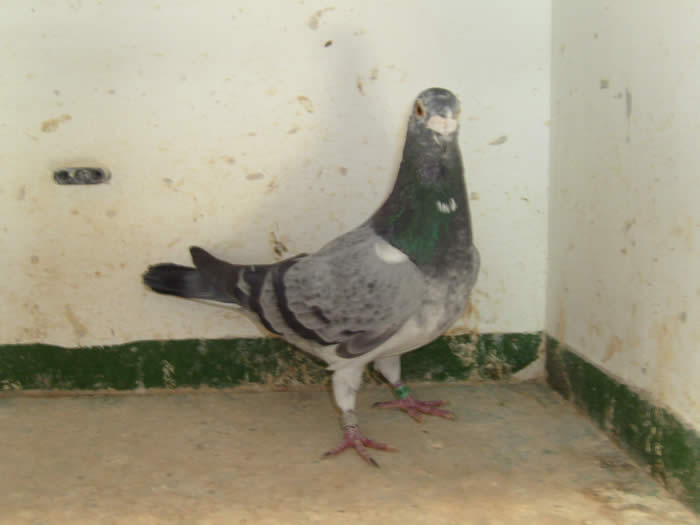
Blue grizzle cock "647"
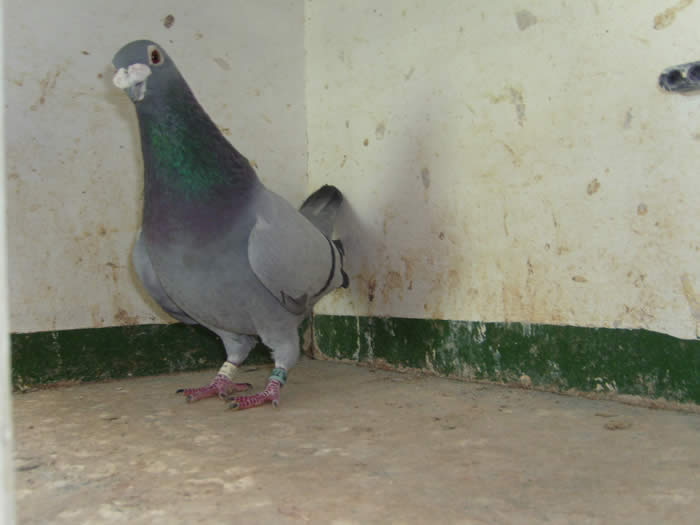
Blue cock "769"
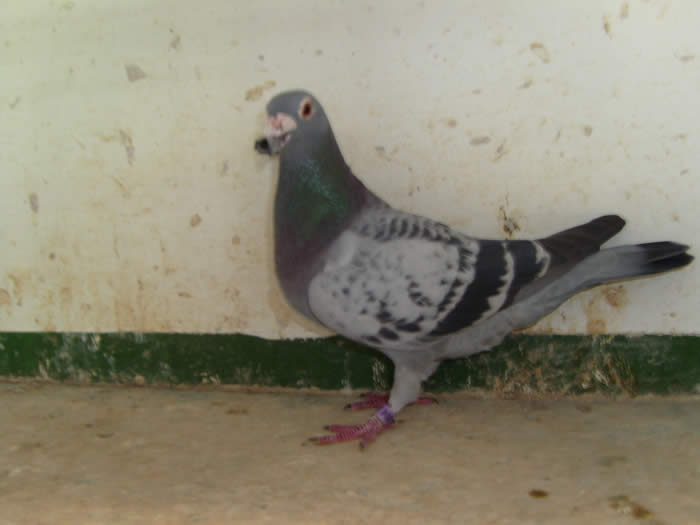
Chequer cock "04"
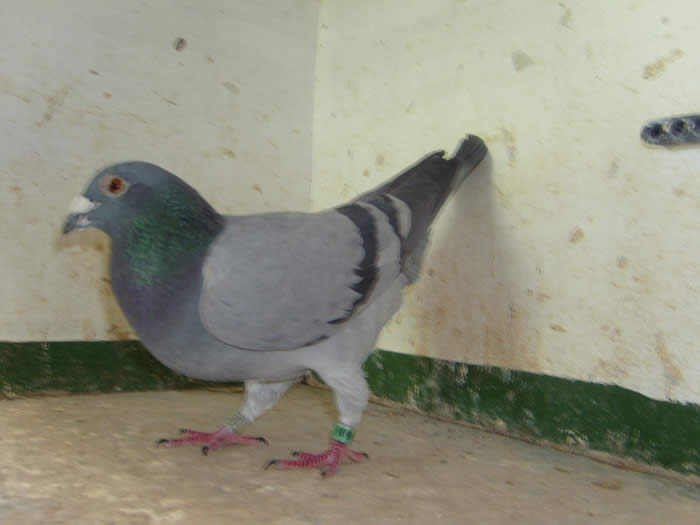
Blue cock "06"
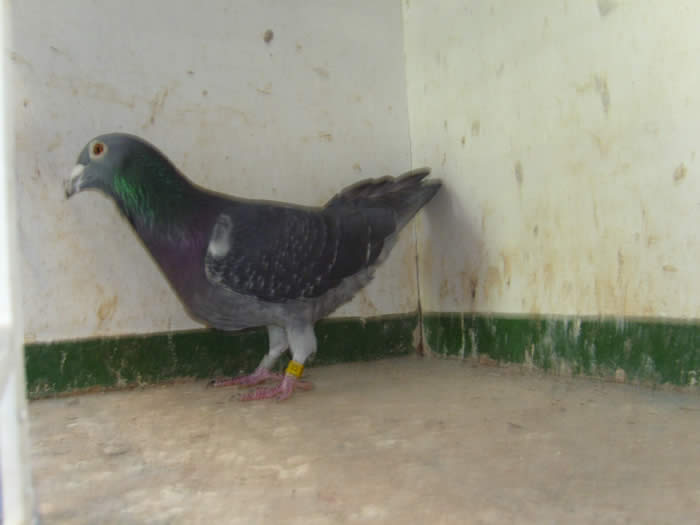
Chequer cock "641"
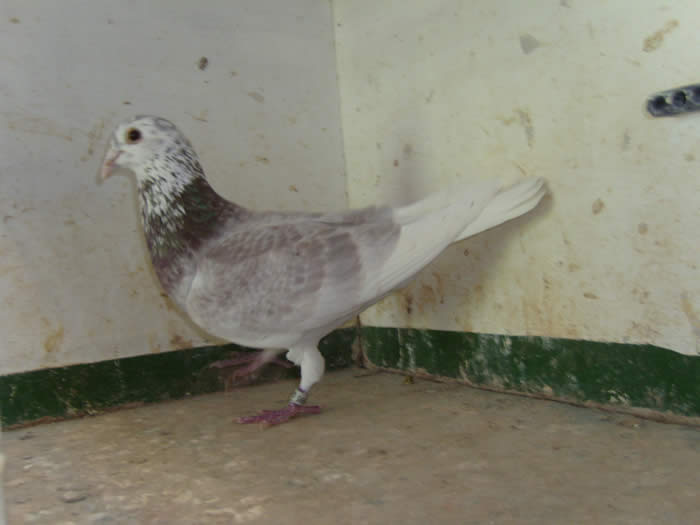
Red Grizzle cock "595"
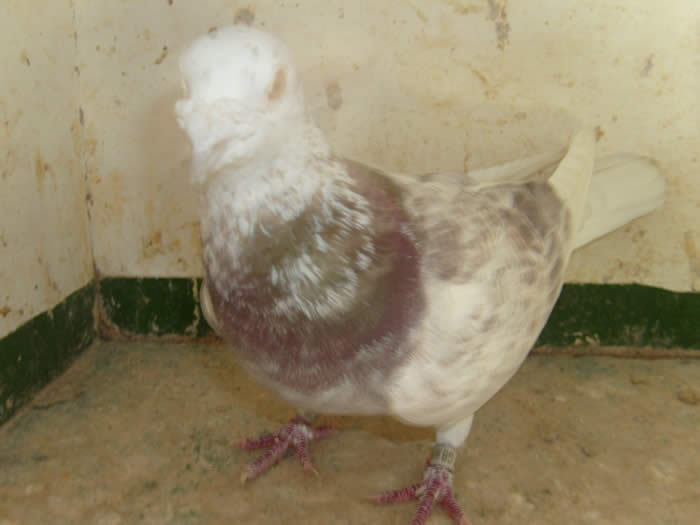
Red Grizzle Cock "457"
Once again it has been a pleasure for me to highlight the pigeons and performances of one of the UK’s top long distance fanciers. Fanciers of the calibre of Bill Knox, along with “the band of brothers” of present day long distance stalwarts, have taken on the challenge and tradition of the founding fathers of British International long distance pigeon racing and are continuing to compete at the highest level against the best that Continental Europe can provide.