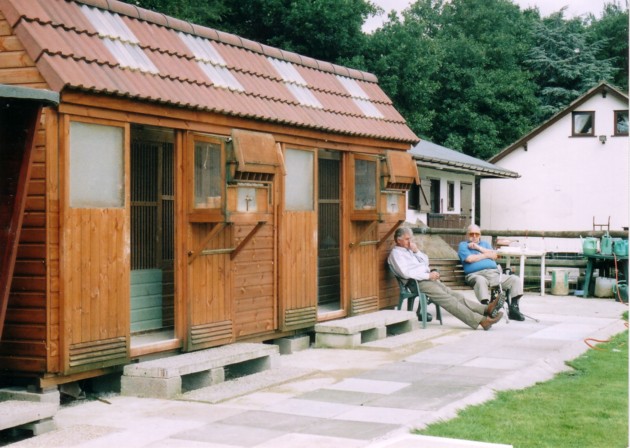
DOUG NESBITT & SONS OF RUGELEY
Winners of the 2006 Langstone Gold Cup in the NFC & the 2002 Combined Averages in the MNFC
Interviewed by Cameron Stansfield
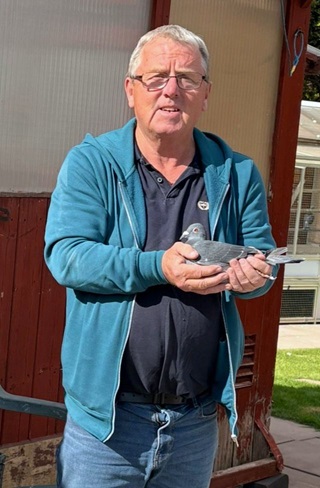
‘There were that many tears in my eyes I could have filled a bucket of water! We are both over the moon. It’s brilliant.’ These are the words of Doug Nesbitt in describing to me what it felt like when he found out that he and his family had won the National Flying Club’s 2006 Langstone Gold Cup. This cup may only be small but it is one of the most coveted trophies in the pigeon world, bearing the names of some of the sport’s greats. That fact was not lost on Doug.
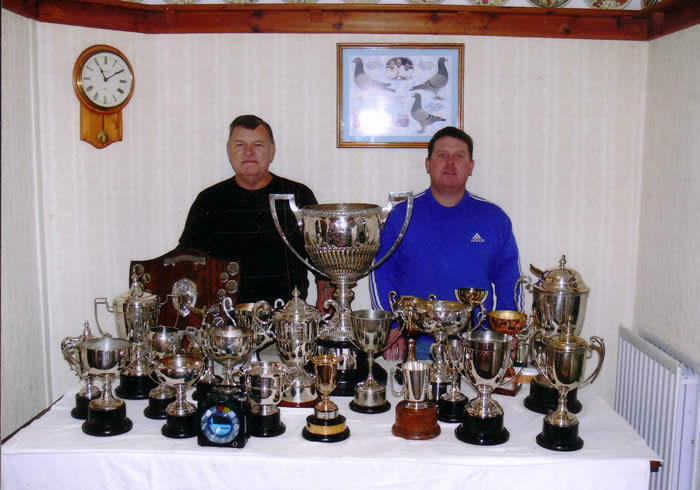
The Nesbitts with their 2006 trophy haul.
In 2006 the Langstone Gold Cup was awarded to the loft with the Best Average from Sennen Cove, the Bordeaux Grand National and the Chale Young Bird National. The Nesbitts recorded: 5th Section I, 19th Open NFC Sennen Cove, 246 miles, 5350 birds. 1st Section I, 16th Open NFC Bordeaux, 546 miles, 2810 birds. 3rd Section I, 325th Open NFC Chale YB, 151 miles, 3894 birds.
Doug continued: ‘It was the first year that we concentrated on the National Flying Club; we had frequently sent but never to all the races. Over the years we have raced widowhood cocks, and in 2006 we decided to race some hens, which proved successful. We raced half of the young bird team on the darkness system.’
The partnership comprises Doug and son Mark, assisted by Chris Batt. Another son, Alan, doesn’t get involved but does enjoy watching the birds home on race days. Doug has been racing since 1980. He originates from Ystraddnymach in South Wales where his cousins, Court Bros of Gelligaer, used to race, and he moved to Rugeley in 1953 aged eleven.
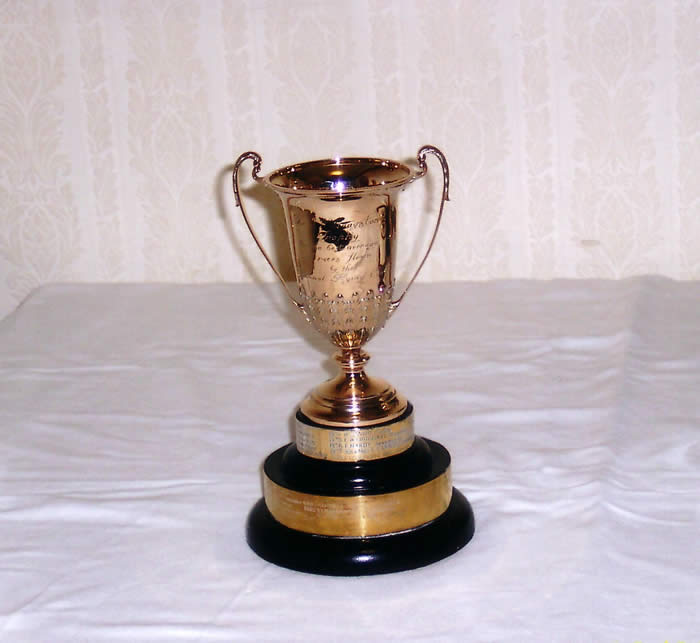
The Langstone Gold Cup.
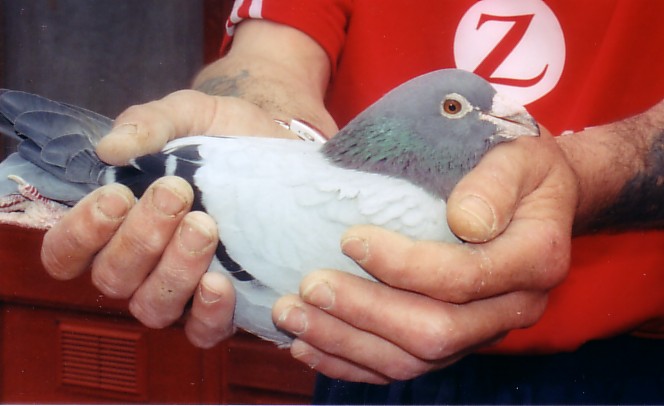
The first of their trio of pigeons which won them the Cup was a three-year-old blue hen, a half-sister to the cock they were to later time first from Bordeaux. Their common sire is a direct Robert Venus stock cock and her dam is also direct from Robert Venus. From Sennen Cove she finished 5th Section I, 19th Open. She had scored before without being spectacular and in 2006 was raced on roundabout. This was Doug and Mark’s first stab at the system as they normally just race widowhood. Concerned that they were wasting good hens, at the start of the season they put 16 pairs on roundabout in a separate loft. Unlike their widowhood team (which numbers 40, split evenly between sprinters and distance birds) who were sent locally each week in the Brereton club which flies with the Worcester Fed, their roundabout team went with the Hill Ridware in the Burton & Derby Fed, which kept them to the east of their normal line. The roundabout cocks were trained by Doug whilst the hens were sent on a private transporter. The partners have always been hard trainers but in 2006 their team was given just one Worcester toss of 48 miles and after that they were kept at Bromsgrove, 20 miles, four days a week, Monday through to Friday. On basketing day, the sexes were allowed to run together for one hour. During the week they placed a piece of board in front of each nestbox so that the boxes could not be accessed.
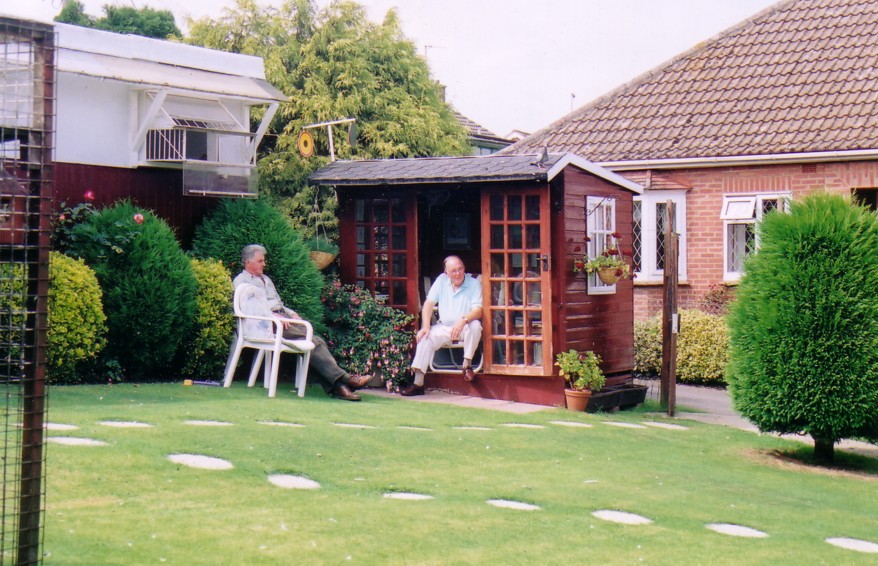
The stock loft.
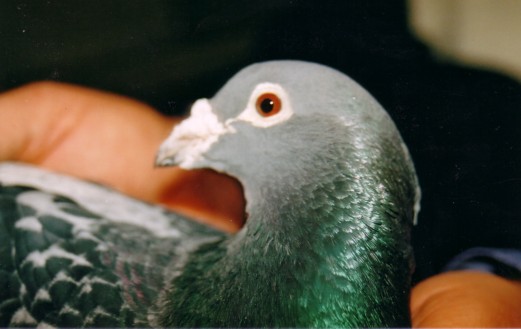
The second leg of the Langstone Gold Cup was the Bordeaux Grand National, the number one race on the calendar. In the lead up to this event their cocks were in particularly good order and one stood out above all the others. At the end of one exercise period all bar this one cock dropped, which led them to think he must have been hawked. It was whilst scanning the skies for hawk activity that they noticed this cock bird sky high. Doug said: ‘I have never seen a pigeon flying so high up – it was simply unbelievable.’ This cock repeated these antics over the next two nights, flying on his own for up to an hour and a half. Worried that he might fly himself out, in the three days prior to basketing for Bordeaux they decided to let him take his normal morning exercise with the other cocks (as in the mornings he was not going off on his own), but in the evening they kept him in. Doug said all their team were well but he was the one they expected first from Bordeaux and he did not disappoint. When he arrived he did two broad sweeps around the lofts with his throat out before landing. He then became so wound up trying to locate his hen (who had also been sent to Bordeaux) that Mark had to put a trapper in his box to calm him down.
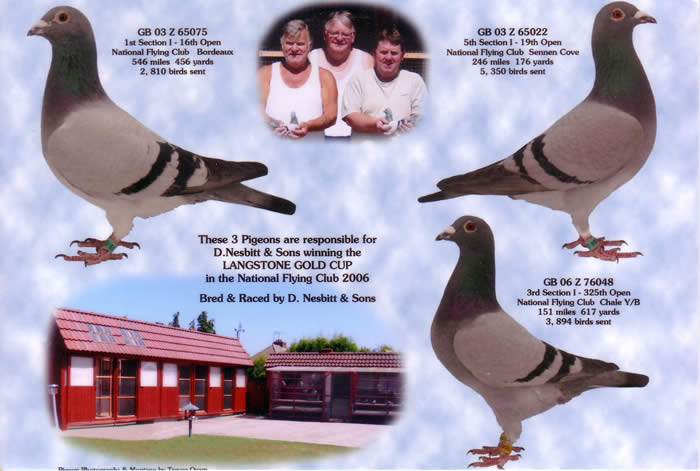
The 2006 Langstone Gold Cup winning trio. Montage by Trevor Owen.
Doug said the feeling of seeing him drop was brilliant and that he knew they wouldn’t be far away because their good friends the Leadbeaters, whose loft they can see, hadn’t timed. He remarked: ‘In my opinion the Leadbeaters are the finest fanciers in the country and we knew that if we had beaten them we would not be far away.’ That’s how it turned out as their cock was to win 1st Section I, 16th Open. As said earlier, the sire of this pigeon is the same direct Robert Venus cock which bred their timer from Sennen Cove. The dam was a Haelterman, a line which has served the Nesbitts very well right through to 500 miles plus. These trace back to just one cock and two hens which they introduced in 1983. It was because they felt this line was becoming too closely bred that they brought in 3 direct Venus birds in 1999. Asked to compare the Haeltermans and the Venus, Doug said they compliment each other very well as physically they are very similar, being broad chested, strong backed and not too big. He added that they are more or less the same in terms of speed and stamina too.
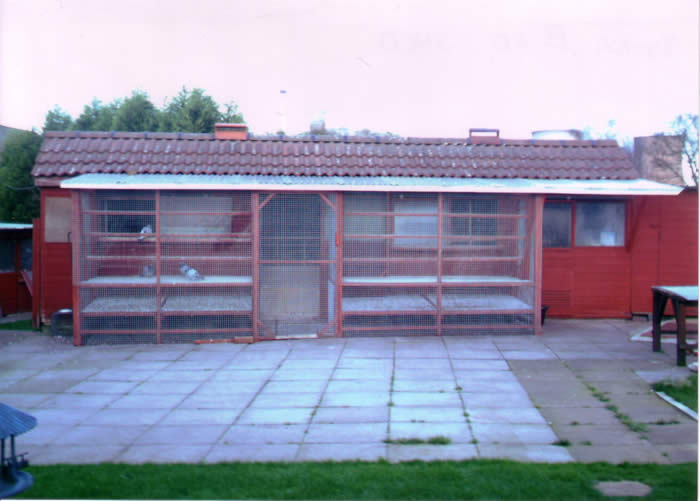
The young bird loft.
Despite having put up two excellent performances the idea of going for the Langstone Gold Cup did not form in their minds until a friend suggested they must be bang in contention for it. They had to acknowledge this and so they decided to have a good crack at the third and final leg, the Young Bird National from Chale. The only thing was, none of their youngsters carried a NFC ring, which meant they would have to pay a surcharge of £5 per pigeon to enter, which meant their bill for entering 25 pigeons, when added to pools, came to £250! Doug said they were about 80% confident of getting a good bird as their youngsters had been arriving in batches of four or five at a time in local club racing, proving they were well. However, Mark told me what when the day came and the birds were liberated in a strong west wind, they didn’t think they would see a pigeon. After what seemed an interminable wait they clocked a blue cock, who was to finish 3rd Section I, 325th Open. He was the first of 17 youngsters that they recorded on the day yet their feeling was initially one of disappointment. Indeed they thought they were so far behind the south coast pigeons that they didn’t bother to go on the Internet to find out how they had done. As we now know, their pessimism was misplaced.The pigeon which secured them the Langstone Gold Cup was a Vandenabeele x Soontjen, the former from Jack Walker of Cannock and the latter from Graham and Dave Wright of Blyth.
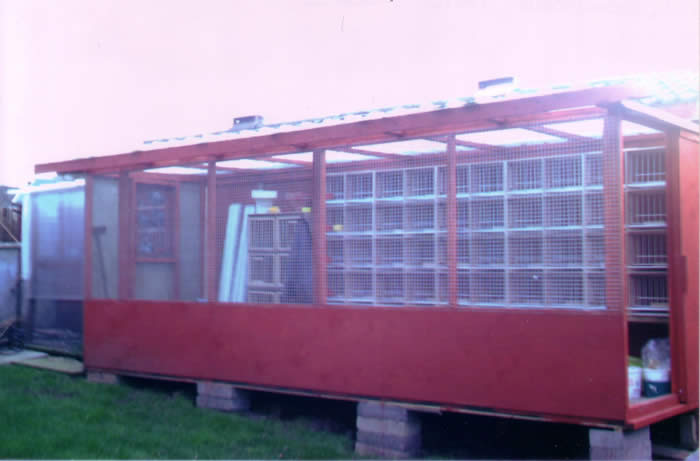
The widowhood hens’ loft with individual boxes.
This was a darkness youngster, their darkness system being similar to their roundabout one in so much as the sexes are parted all week and allowed to run together on basketing day. Their feeding system is also similar for youngsters and old birds, whether sprinting or long distance, in that they build up to a race. The youngsters have barley and best all round followed by a build up on Versele Laga Young Bird. The old birds have barley then Versele Laga Super Widowhood. The variation on this theme comes with the distance pigeons, which miss a race the week before a long one and are on the widowhood mix for longer.
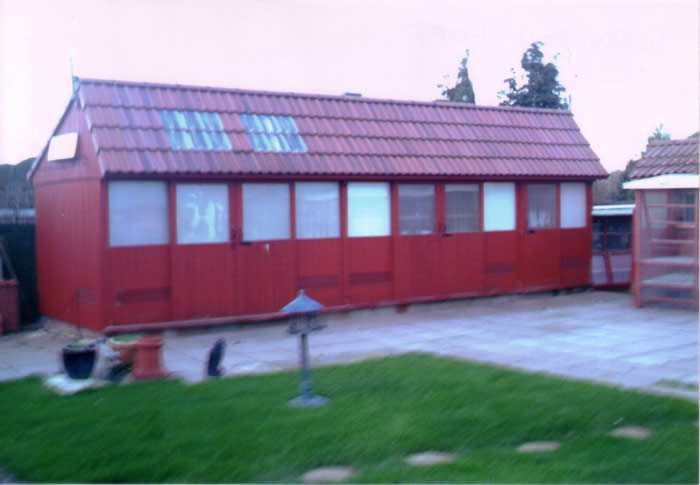
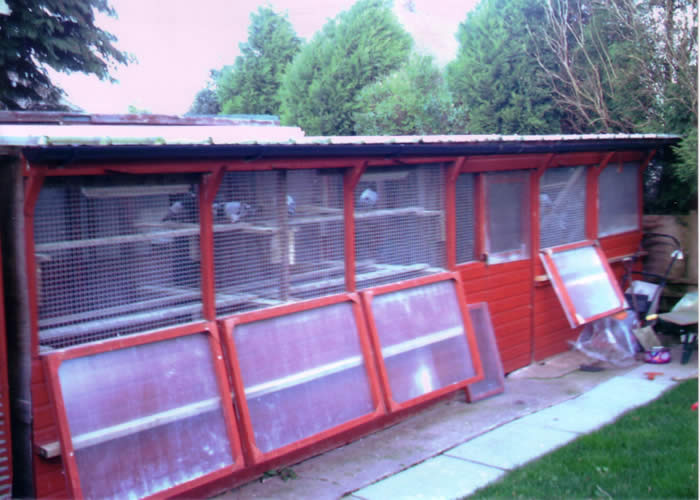
The widowhood loft.
All their corn is supplied by Stan Prince from Prince’s Farm, King’s Bromley. Mark told me that no titbits are fed but he did add that the old birds are fed the maize before the rest of the mix, this having been picked out from the general mix by his dad, mum, Chris and Mark’s wife Lynne. Apparently each of them sits there with their own bucket into which they place the maize! It goes without saying that to win the Langtone Gold Cup their birds must have been in top form all season, which means they must have been in tip-top health. Evidence of this is the fact that they began the season with 90 youngsters to race and finished up with 76. These youngster were on Orego-Stim daily. The old birds on the other hand received a twice-weekly tonic of Vitaprocombo which, according to the description on the bottle, contains probiotics, electrolytes, amino acids and essential vitamins. This was the first year they used it and this came about through the recommendation of a friend in the north-east. Other than that, the birds were treated pre-season for the normal things but not during the season except with a Panacur tablet for worms.
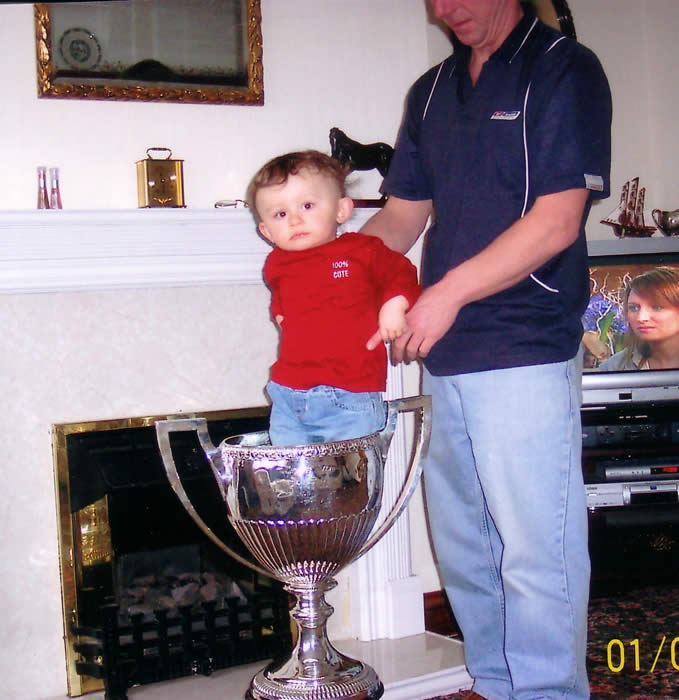
The next generation of flyers – grandson Liam.
Plans for their winning trio are likely to be Tarbes for the Bordeaux cock, St Nazaire for the Sennen Cove hen, and wherever they think seems suitable at the time for their Chale cock.
It was a wonderful achievement to win the Langstone Gold Cup flying up into the Midlands, and it is all the more remarkable that this follows on from them having previously won the Combined Averages in the Midlands National. Their target now is to win a National – any National – as they have so far won every open position in the top 20 except 1st & 2nd. Should they one day fulfil their dream, it won’t be a bucket Doug needs, more like a bath tub!
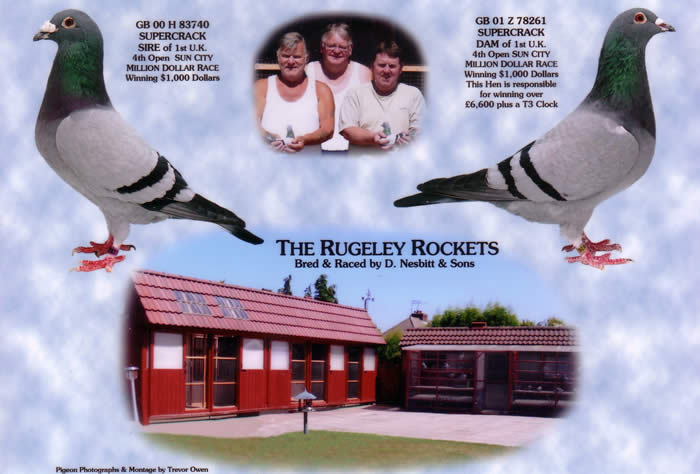
The sire & dam of the Nesbitts’ Grove Lassie, 1st UK, 4th Open Sun City Million Dollar Race plus $1,000 in 2006. Montage by Trevor Owen.
AVERAGES & TROPHIES WON
Runner up Combined Averages 2000 Midlands National; Winner South West Section Averages 2001 Midlands National; Winner South West Section Averages 2002 Midlands National; Winner Combined Averages 2002 Midlands National; Winner of the National Flying Club’s Langstone Gold Cup 2006 plus the Oliver Dix Memorial Trophy, the Eric Cannon Memorial Trophy, The Lol Farmer Trophy, the Barlow Trophy and the N. J. Rhead Trophy.
Brereton District Trophies: Old Bird Average Trophy, Channel Average Trophy, Combined Average Trophy, Young Bird Average Trophy, Picauville & Fougeres Trophy, Longest Race Trophy, Ron Stackhouse Trophy, Ted Cope Cup.
Also won: 1st United Kingdom & 4th Open in the Sun City Million Dollar Pigeon Race in South Africa; Seven T3 clocks have been won over the last few years.
My thanks to Lee Madgin for providing the photos for this article.
25/5/07