Four Master Pigeoners
(Part 1)
By Liam O Comain
In this article I present insights into four masters of the sport of pigeon racing. Their impact upon the sport in its early years is incalculable.
Hansenne
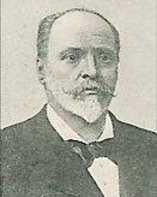
When I was just entering my teens in the 1950s I first became aware of the name of Hansenne, for within a valley of the Sperrin Mountains some members of the two local pigeon clubs which included my father, had representatives of this pigeon strain. Little did I know then that this was considered one of the great distance strains. In fact I was ignorant of the meaning of the word 'strain' and of the country of its origins, Belgium. In my recall of a period of time long gone I wonder how the Hansennes managed to play a part in the sport in a small valley beyond the foothills of the Sperrins. Where did they come from? Who brought them? Yet they succeeded in channel races from Milford Haven, Bude and Penzance. So in researching this article I am now more informed about the strain although still ignorant of their origins beside the Roe in County Derry, in Ireland. For, alas, generations of local fanciers from the area have since gone to that big loft in the sky and I am bereft of their knowledge.
Alexander Hansenne was from Verviers in Belgium and before he died in 1903 he had moulded a strain of outstanding racing pigeons. In fact the late A.H. Osman attributed the Hansennes as being the primary base of the then emerging English strains at the beginning of the last century. In his writings the same authority believed that Hansenne was the greatest long distance racer of his day.
Some of Hansenne's best birds included 'Le Criquet', hatched in 1877, and as a racer was 1st National from Paris, 1st from St. Benoit and 3rd from Tolosa. There was also an outstanding racer known as 'Calvi' who amongst other successes was 1st from Calvi. There was also the great 'Le St. Vincent ' which was 2nd St.Vincent and 1st St. Benoit and Agen respectively.
Alexander Hansenne was known to have bought up more than one loft in his pursuit of a particular bird or birds, culling the others in the process. Where breeding was concerned he had a policy of never breeding off a cock until it was raced hard at the longer races. As a family they were composed mostly of dark chequers with traces of bronze and short in legs and necks. Chest wise they were not so broad as other families of the time. His commitment to the long distance races was extreme by reputation and there is no doubt although he would not have been aware of it, that this contributed to the advancement of the long distance and marathon type of pigeon racing which we are witnessing today.
The Hansenne bloodlines lies at the base of many of the old Belgian, British and other world strains. Indeed this maestro was a pivotal figure in our sport and Wanroy, and Aarden, etc, and others of today owe much to this outstanding pioneer.
Gurnay
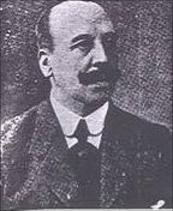
Renier Gurnay of Verviers, Belgium, began in the sport as a runner for the great Mons Hansenne of world wide pigeon fame. A teenager in the time of no timing clocks in the 1870s he relished the tasks that he had to do for Hansenne. For his love of pigeons had started early in life and this was stimulated by Hansenne whose own sons had no interest in the sport.
In due course Gurnay received pigeons from his mentor and as Hansenne died in 1903 he purchased some very good stock of the latter's lofts because of his inside knowledge and began a journey which saw him, in the eyes of others, eclipse his mentor. His foundation hen, called the 'Old Blue Hen', whose progeny won over 500,000 dollars, was the base of a wonderful and prosperous pigeon career although he was a successful business man in his own right as a merchant in tailor linings.
It is estimated that since he started racing pigeons in 1886 until 1936 Gurnay had won 600,000 dollars in prize money. A phenomenal sum in those day at the beginning of the 20th century. In fact in his first season his birds won 160 prizes in one of the largest pigeon bodies in Europe and we should bear in mind that his successes were achieved when Bricoux and other giants of the sport were at their best.
One could say that fate had dealt a very good hand to Renier Gurnay for as some believe he had everything handed to him on a plate because of the genius of Hansenne and their relationship. Yes, I have no doubt that Gurnay was a good pupil and because of his role as a runner he was constantly taking in what Hansenne was freely giving and of course the obtaining of the best of stock. However there is something born within oneself which is a necessary prerequisite to possess in order to form a loft of winning pigeons at the distance especially if one wants to reach the heights of Hansenne and Gurnay. Of that Renier Gurnay definitely possessed.
And I believe that this was reflected in the fact that he was a hard culler based upon a very strong love for and commitment too the sport. And this involved a loft of about 20 to 30 inmates and no matter what the bloodlines if one had to be culled it was culled. This was necessary for he was also a very close inbreeder who in the main kept his birds until they were 2 years before they went to the races. Again like many maestros of the fancy acknowledging the need for maturity.
Gurnay was acknowledged as the official champion in Belgium for over 30 years which is testimony to how he was thought of and to how brilliant he was as a pigeon fancier, breeder, and racer. And I know that myths can be created or grow up around the exploits of any fancier but the evidence available would suggest that Renier Gurnay was an outstanding participant in the sport.
In other insights into various strain makers, I have outlined some results but in the case of this master it is not I think a necessary practice. In fact I knew of one deceased fancier of my youth who was nicknamed 'Gurnay' and this was in the 50s of the last century which would imply that in the consciousness of the ordinary fancier Gurnay is a legend otherwise why use his name to describe the achievements of another?
Bricoux
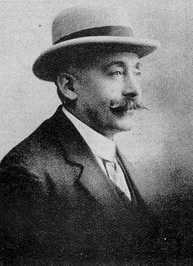
The strain to be looked at in this piece is the Bricoux strain which reigned supreme in Belgium in particular between the two world wars i.e. approximately 1919 and 1939. During that time Bricoux was unbeatable based upon the truth that he was an outstanding breeder of racing pigeons. The base of which arose from the exchanging of young birds with the great French champion Paul Sion. And as time passed the intelligent Doctor won 14 Nationals, was 2nd in Nationals twelve times and scored in the top twenty on approximately 125 occasions.
Being a Doctor however Bricoux had his critics arising from the phenomenal results of his pigeons even to the extent of being accused of using drugs to increase his lofts potential. His superiority however arose from the fact that he was a maestro at the widowhood method and held the reputation of being one of the first to use it in Belgium. As for his young birds they were never raced but well trained and given time to mature. The yearlings were raced from the nest whereas those two years and older were sent as widowers to the long distance races, for he was of the belief that there were horses for courses and that one had to specialize.
Inbreeding was his preferred breeding method although he acknowledged that a cross had to be brought in at sometime. The out cross had to be from an inbred or line bred family. In general preferring well built pigeons with sound constitutions coupled with broad and rounded backs and rigid vents. This was the standard of what he required in a pigeon nevertheless he would not adhere to it rigidly for there was always room for pragmatism in Bricoux's thinking.
When one looks at the results obtained by this great strain under the tutelage of its founder then one realizes that this was a master of his art for he produced champions like the great 'Kleine Geschelpte' which was sent on five occasions to the Pau National and won on the five occasions. A super pigeon! Then there was the famous ' Rode Libourne' which was 4th National from Angouleme in 1930 followed in 1932 and 1933 with National wins from Angouleme and Bordeaux respectively. Another of his great birds was the 'Goede Rode Bricoux' which scored a 2nd and a 4th National. Of course the master breeder was the world famous 'Jules Caesar', a red cock of magnificent physique. Red was one of Bricoux's favourite colours because quite a number of the strains winners were of this hue and as such were nicknamed 'The Red Locomotives'.
What the reader may not know about Dr. Bricoux is that apparently all of his pigeons were killed during the war in a charge of the French Army and although other fanciers like Nestor Tremmery, whose loft were mostly of the Bricoux strain, provided other birds in substitution the good Doctor never got over the apparent shock and died a few months later. Thus the Doctor who created one of the pivotal strains in the history of the sport like all mortals could not escape the shadow of the cross inspite of the fact that he had previously shared in the glory. It was then left to his son Arthur to continue with the work but he lacked the genius of his father and in 1952 what was left came under the hammer. But rest assured that the name of Bricoux is amongst the bright lights of the greats of the sport of pigeon breeding and racing.
Sion
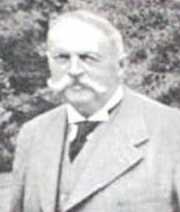
The Sion strain of long distance racing pigeons holds a hallowed place in the pantheon of the world's greatest families of the thoroughbreds of the sky. And like much that is good in Europe came out of the culture of France. Paul Sion, its originator, started in the sport in approximately 1895 and in due course set his mark. In fact what he produced crossed more national boundaries throughout the world and became the source of much joy and reward to countless fanciers. To quote one eminent authority, A. H. Osman: 'This man has won more prizes in one season than many fanciers win in a lifetime'. Yes, Paul Sion who was later to be assisted by his son, Robert, truly exceeded (perhaps) his expectations when after becoming a fancier he adopted Luis Salembier as his teacher, the latter being one of the great French distance pigeoners for over 50 years at that time. Sion admitted in 1935 that he belonged to the Luis Salembier school.
Upon following the advice of his mentor Sion obtained the best of distance bloodlines including representatives of the old Verviers strain and for decades cultivated what he referred to as his old Gris (grey) strain. So called because of its origins from a son of a famous French distance racer named Gris Dugniol. Sion had purchased a champion mealy cock from M. Gris Dugniol. On the dam side his family went back to the Vekemans Red of the Wegge strain. The latter pigeon being one of the greatest in the history of the sport in Europe.The Mealy cock was bred with a mealy hen and produced a blue hen with black eyes. This hen proved to be a champion in all of her races. She was later mated to a cock of Pynen/Delathouwer bloodlines. It was from this mating that Rouge Sion, one of Sion's pivotal pigeons, was produced.The Rouge Sion went on to be a great racer and also bred many winners.
When once asked what were the requirements for success in long distance and marathon racing Paul Sion replied - strain and constitution. A reply which was in the form of an article in which the author took, as an example, there were horses good in soft and other horses good in hard conditions. Opining that there were pigeons or strains good in clear, weather conditions and others good in tough cloudy conditions. The latter strains being the best for the ultra distances. Thus according to Sion only those birds whose forebears distinguished themselves in difficult races were in turn capable of doing the same. Whatever is ones response to Sion's position in that article there is one notable fact and that is - he was not an advocate of inbreeding. Like his master Salembier, Sion, participated in out crossing, which was based upon much thought and research into the pedigree and the background of the potential cross. The fruit of which was a strain that was almost identical in appearance. Apparently this great pigeoner had perfected his out crossing approach to the level of a science.
Today, there are those who claim to have representatives of the Sion strain especially in the U.S.A., where they impacted upon that fancy. How pure they are I do not know. But there is a wide agreement that when one sees a Sion one knows that it is a Sion, which is but a reflection of the genius of their founder.