NORTH LIVERPOOL FED
NEWS FROM DARREN SMITH
Loft Profile on Jimmy Foley, Pirrie FC
Season Highlights 2013: 1st North Liverpool Federation Niort
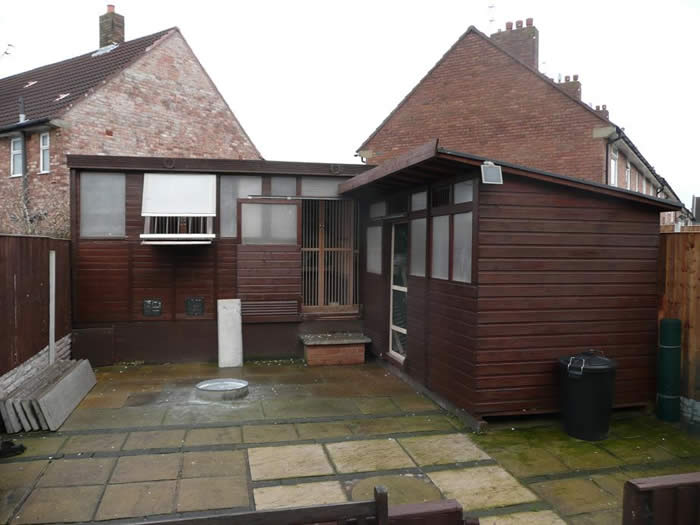
A compact, very tidy set up
Can you tell me a little about yourself and how you became involved in the sport?
A lot of people when you read loft profiles say they started off with pigeons as a kid but I never, I picked it up when I was about 20/21. John & Gary Hartless got me into it as they had four or five pairs of stock birds in a shed in my back, they then bred me a team of young birds and it went from there.
What was your first club and what club/s do you fly in now?
My first and only club is the Pirrie. Ive only ever raced in one Saturday club and 35 years down the line Im still here.
Who were your mentors in your early years in the sport?
John Hartless put me on the right lines when I first started, I got good pigeons off him and although I wasnt winning a lot when I first started I just enjoyed the sport in itself.
Have they taught you anything which you still practice today?
I think patience is the thing, you know. You have a good result then you have a bad result and what Johns taught me is to never get disheartened with them, dont go changing a lot of stuff around just keep to your routine and the results will come around.
Can you tell me what preparation goes into your breeders prior to pairing up?
Probably the same as most. Ill leave them alone throughout the winter, let them out maybe once a week during this period to get a bath and prior to pairing up, which I do around the Blackpool weekend, Ill get them on a light feed to take any excess weight off them so that the hens can lay without any complications.
Do you fly widowhood, roundabout, natural, celibate?
I started off racing them paired up and I was reluctant at first to race widowhood as I enjoyed racing the cocks and the hens, but about ten years ago I discovered a way of racing both the cocks and the hens and this is the way it is now, total widowhood. The cocks stay in the nest box compartment and the hens are housed next door in a section that they always trap to during the week and then they are run together on a Friday. I always basket the cocks first and then after a couple of minutes basket the hens and off to the club.
Do you believe you must stick rigidly to your management routine once your racing season kicks into swing, or do you adapt it as situations arise?
If youre racing short distances from say 70 miles I think you have to look carefully at the way you feed them. Im a heavy feeder by nature, which probably accounts for me doing better at the longer races. When I say that I dont mean that I feed heavier types of corn, more-so Ill always be giving them a bit of seed or what have you and as we approach the channel Ill then up the feed amount according to how I see it panning out.
Describe in as much detail as possible your Friday preparations, from feeding and at what time, through to basketing for the club?
Ill put down a full feed and they can have whatever they want to eat between 8am-9am and then around 2pm Ill give them a bit of seed which I obtain from Dennis corn shop. Ill basket them about quarter past 4 to be down the club for 5pm. In terms of how long they are run together, it depends on the pigeon. You get to know through observation which cocks are happier spending a little bit longer with the hen.
The yearlings I tend not to leave too long and will always basket them first. My way of thinking is I dont want to over excite them too much. It normally takes 2 or 3 races for the yearlings to get into their stride and I think they take their lead from the response of the older cocks to the various stimulus of a Friday.
As they return they get a light feed and Ill leave them until I go to the club at which point Ill feed them again with a light feed and on return, say an hour and a half later, Ill give them a more substantial mix and I dont think it matters which brand as there are so many good corns out there these days, its just what you fancy. The time the birds are allowed together upon return depends a lot on the race.
I will use a small drop of iodine in the water which will kill anything and Ill leave that in until Sunday and that is the only thing I ever give them in terms of a supplement. I do know a couple of people who give them a very small dash of the thin household bleach and I believe its very good but Ive always used the iodine.
Can you describe to me one motivational trick that usually brings about a good racing result?
Ive tried and failed with so many ways of motivating them but I think the one that you can always rely on is just introducing a hen to a cock but again as in the case of a yearling cock, they can go over the top. As I say Ive tried anything and everything and I cant say a specific thing has worked with a certain bird over the years.
Do you prefer sprint racing, the channel, or do you enjoy racing at all distances?
The channel, definitely the channel. I think over the years Ive had more placings and wins over the water and I think as I explained before that I tend to give my birds a little too much to eat early on, I get them later in the year. Now if you ask me how to race young birds Im absolutely rubbish so if anyones got any tips!?
What is your criteria for getting another season at your lofts?
I dont think I have any, I take each year as it comes. This year Ive had a couple of wins, last year I had an exceptional season, the best season Ive ever had since Ive been racing pigeons and thats over 30 odd years. I think some years it just clicks and as I explained to you before I changed me shed around to add a few more cocks and it just never worked.
I normally send around 14-15 cocks and 10 hens. What I was trying to do was pinch a few more cocks and was concentrating more on quantity than quality and it just never happened so Ive changed my shed back to the way it was, but I feel you have to try these things and find out for yourself if it works - or not as in my case this year.
Do you stock your best racers and when do you do this, e.g. when they reach a certain age, or if they win a major race or produce a number of top prizes?
I give them a good run in the race team and Ive just put a good 5 year old cock over to stock recently. He topped the fed in 2012 and I raced him again last year but he never won any races but he took a couple of prizes. But usually yeah if Ive got a pigeon and hes won a couple of races and hes through good stock, I will put him over.
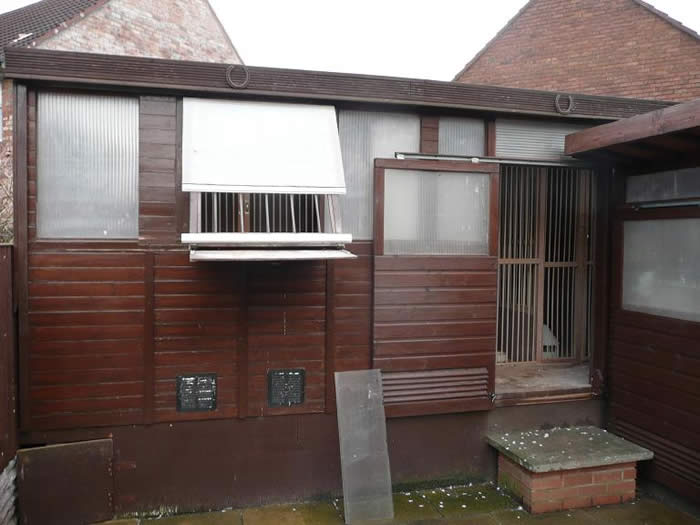
ETS trap over the cock section, hen section next door, young birds far right as the door opens
What do you prefer, a good racing cock or a hen?
I used to love racing paired and I think over the channel it was beneficial but not for sprint racing. So what Ive done over the last 10-12 years is race what could be termed total widowhood, incorporating both cocks and hens but I will only race a certain amount of hens, say 10. Weve got a 30 bird limit in the club so I could send the whole team out but I normally race around 24 in total.
Can you tell me your health schedule during the race season?
Im not a medicine man but if need be I will treat them. Ill treat them before pairing up. Ill go down to Dennis and get that 3 in 1 which does the job. I may treat them again just before the channel and sometimes if I need to beforehand, you know if they pick something up, or if the birds are not right. I usually seek advice from John Hartless, you know hes like an expert on stuff like that and can tell you what to use and when to use it, but otherwise no I dont treat every week. I dont have anything in the water when they come home from a race other than iodine and other than multi-vits thats all I give.
What corns/feedstuffs do you use?
Ive never bought corn from anywhere other than Dennis, he has a good variety of brands there and I think most of them are as good as each other. Preference wise Ill use Versele Laga or Marimans, I dont think it really makes a lot of difference. I think if your birds are right and youre feeding them right I dont think theres a problem.
Earlier on in the week I feed them a bit light with something like Gerry Plus and later on Ill start introducing the widowhood mix and a bit of seed Thursday-Friday. Its something Ive done over the last 5 or 6 years so Ive just stuck to whats worked for me. Im happy with it and the birds seem to be happy with it as well.
There might be ways of adapting what I do to perform better in the sprint races, but do you then lose out in the later races? I dont know and Im not prepared to try it. As we do get further out I will add a handful of breed and wean to the mix to stiffen it up. I know fliers whove raced through the inland programme feeding nothing but Gerry Plus and done well on it but its not for me.
Do you feed ad-lib or believe in feeding measured amounts?
I feed ad lib. Ive tried feeding measured amounts and to a certain degree I do so say I feed half an ounce in the morning and three quarters of an ounce in the evening. I tend to go back and throw in some seed and a little bit more corn in. Im probably doing both myself and the birds an injustice but I dont think it does them any harm when it comes to the channel. I might not stand a chance at topping the fed at Hereford but I think the birds enjoy the longer races, certainly I do and Im happy with that.
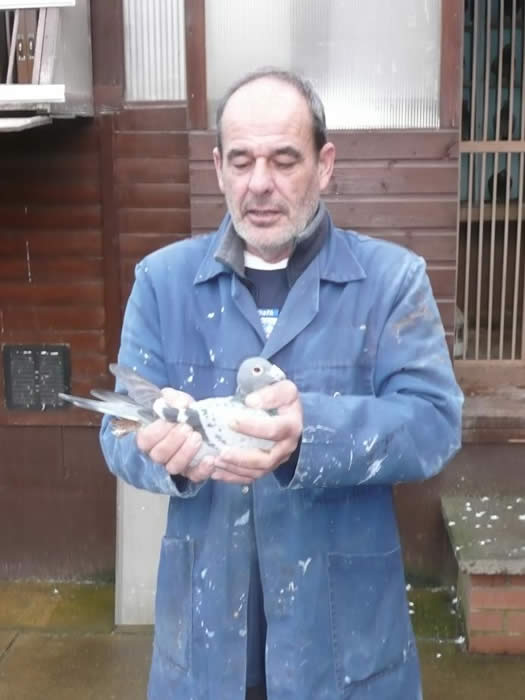
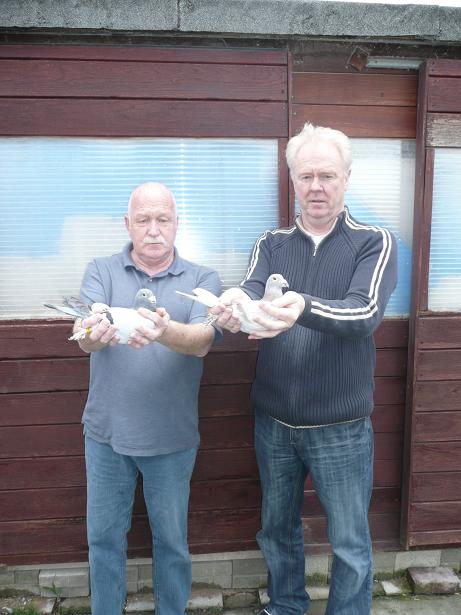
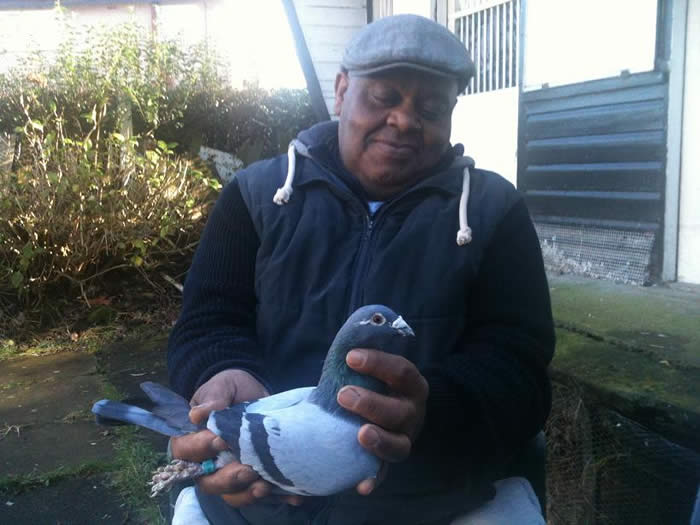
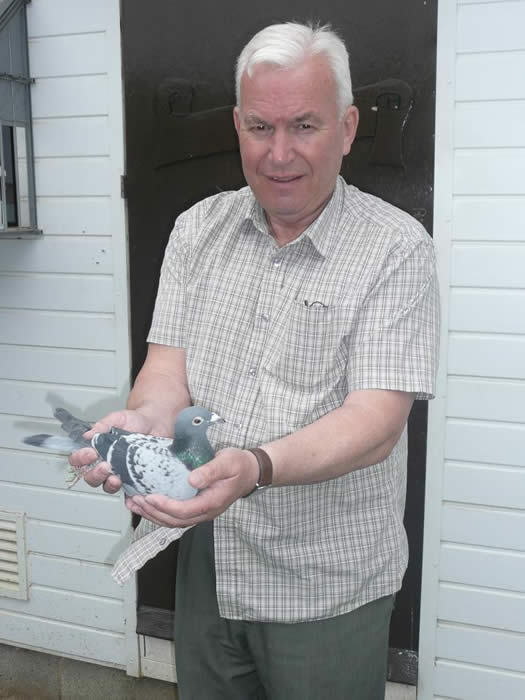
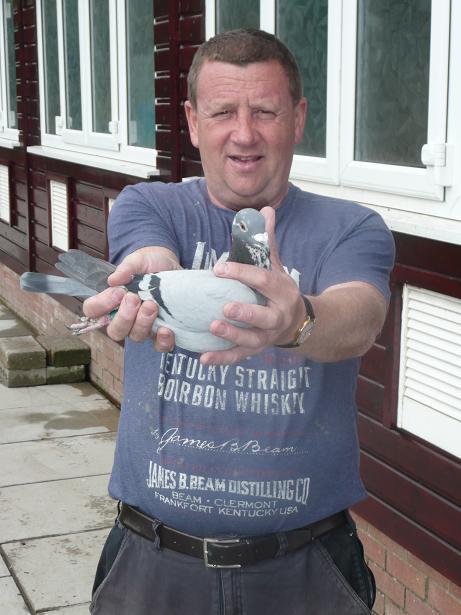
Jimmy holding 1st North Liverpool Federation Niort 2013
Is there any difference in the way you feed old and young birds when racing?
What I tend to do with the babies is if I train of a morning, Ill train then feed them and then Ill feed them to appetite later. Like I said earlier, I cant get my head around young birds and the feeding regime is probably part of it, also the management. It seems to me a lot harder and I think you have to put a lot of time in with them as well which sometimes I dont have. Give me an old bird any day!
Do you feed your cocks the same as you feed your hens, if not what are the differences?
I think based on the size of the birds, probably a bit less for the hens. Its like feeding a heavyweight boxer, you wouldnt give him the same as a bantamweight would you. Youve got to work out what you need to feed and when to feed it. I work on the same principle with my hens and as we approach the channel Ill give them as much as they want and when they want it and it seems to have worked.
I changed that a little in 2013 and Im sorry I did. I think you try to get a balance between the two which is very hard to do but once you come across a feeding system that suits you I think you should stick to it and unfortunately in 2013 I never, so its back to the way I did things previously.
How much time do you devote to your pigeons both at the loft and while away from the loft?
If you spoke to me wife shed say I spend too much time with them! I used to spend hours and hours outside, going in and out the sheds, handling them and I think what I was doing years ago was disturbing them too much. I was going in and out the lofts for no reason at all. And I think what were trying to do is be a bit more regimented here. If youre going in the shed the birds have got to know what youre going in for.
If youre out of a morning and they get their exercise at 7am, then youre back in the loft at 8am, 9am and 10am, the birds are wondering wbhy youre in the loft again and it disturbs them too much so what I do now is let them have a fly of a morning, give them their feed, change the water and then come away and then Ill only go back in of a night when I let them out again. I try to put less time into them, but more effort.
If the birds are back from a race and youve been up the club and then come back, why would you want to be in there when they are trying to settle down and build themselves up again? Theyve just raced home over many miles and done everything youve asked of them and then youre going in disturbing them. If you work nights you dont want someone coming upstairs and walking in the bedroom talking to you while youre trying to get some sleep do you? Thats the way I look at it anyway.
Other than through observing your own pigeons, how do you further your knowledge?
John as I explained was probably my mentor in as much as he started me off with the pigeons and if theres anything I need to know or Im not sure of I will ask him. Otherwise I dont visit any other lofts, I tend to keep myself to myself in as much as this is my bubble, this is what I like. I dont drink so I dont go out associating with other pigeon fliers, if there are lads come around I havent got a problem with that and I have a few good friends in the pigeon game whose company I do enjoy but overall I just do my own thing.
What are your aims for the future as a pigeon fancier?
Just to keep enjoying the sport for as long as I can and its not all about winning. I went for years and years and never won a carrot, I think the first time I topped the fed was 2005 you know so its not about the winning or topping the fed, its about enjoying the sport. From a personal point of view yeah its great when you get a card, or when you win but its also nice to someone else win.
The Pirrie is a fantastic club with some genuinely great fliers, so it is very competitive anyway and if I can compete at a certain level within me own club Im happy with that. To me federation or combine honours come second and third.
What do you look for when introducing new stock?
Ive had many pigeons off John & Gary over the years and I like a nice looking pigeon and that may sound stupid or slightly simplistic but I do like a pigeon that comes nice to the hand and is of a medium size. I dont tend to go for colours, Ive got no reds or mealies, I prefer blues, cheqs and dark chequers. But you know, I dont think it really matters racing wise as it takes all sorts.
Bloodlines are important within the context of what youve got in your own shed. I had a cheq hen who recently died who was responsible for 5 x 1st prize winners and there are 2 sons of her out there which are virtually identical, so Id always be looking for that same type of pigeon coming from that hen in the hope that they would perform similarly to their brothers but it obviously doesnt always pan out that way.
I think we get perceptions in our head of what a certain family of pigeons are gonna do in our own hands but there are good and bad in all lines or families of pigeons whatever you want to call it and one thing I do know is that there are more bad ones than gooduns, so bloodlines in that respect I dont really bother with and any new introductions I make are usually pigeons I have bought in sales from local fliers such as Willo & Johnny or Teddy Davin and Ive done really well with them.
I dont think you can beat whats here in this city, weve got some of the greatest fliers in the country and dont get me wrong theres loads of good fliers around but why would you want to go to outsiders when you dont know what youre buying and there are some cracking pigeons right here on your doorstep?
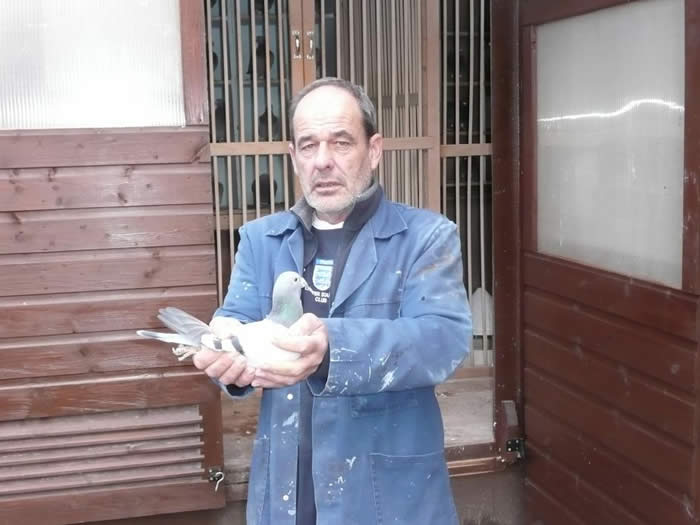
Jimmy holding 1st North Liverpool Federation Carentan 2012
How many old and young birds do you house?
Over the last 10-15 years, 15 cocks a week, 10 hens although Ill start the season with 15 pairs for racing, I usually end up with around 20-22 as I dont lose many and again I think it all comes down to them being looked after nutritionally. I have between 8 and 10 pairs of stock and I take 2 round from them as I only breed off selected pairs of racers. My young bird team usually numbers between 35 and 40 youngsters.
Do you train your old birds once racing starts if so, how much and why do you feel it improves your chances of victory as opposed to giving them home exercise only?
Over the last 5 or 6 years what Ive tried to do is leave them alone from the Saturday to the Monday and let them get as much rest as possible. Come Tuesday or Wednesday if I want to throw them on a trainer, thats what I do. Theyll go out for the first time after a race on a Sunday evening or if the weathers not good itll be Monday and then Ill try get them out twice a day.
Im not an advocate of regular road training, I dont train a lot. If I get in one training toss a week, Im happy with that. If I can get between 40 minutes and an hours flying each time they go out, that will do me. I think with the young birds to be competitive youve got to be training every day which Ive tried, but was still no good, so in future I might just breed me young birds and leave them in the shed until next year.
What has been your best achievement in the pigeon sport?
I think topping the North Liverpool Fed for the first time. I think its an ambition for everyone entering the sport to win a race and then once that ambition has been achieved the next thing is to do well in the fed.
What advice can you give that would help improve the management/results for a novice/new starter?
Get pigeons from a half decent flier that you know and who wont rip you off, there are plenty of people around like that who are selling because theyd rather pass on birds that havent made the grade for them as they try to recoup their own outlays and its wrong.
Seek advice from your peers and over time, experience will tell you which parts of that advice you can discard, and try and be consistent with the way you feed and when you feed.
Dont get disheartened early on and start chopping and changing the feed and enjoy the sport for what it is, a way of unwinding and fulfilment, which as I said doesnt always come from winning races, its time spent with your birds where you can forget the other stuff going on in your life.
I feel that if youre just going in the shed and grabbing pigeons and throwing them in the basket just for the sake of sending thats not right and I firmly believe that if you are enjoying what youre doing and it shows, the pigeons feel that as well.
Who do you admire in the pigeon sport?
I admire the people who do the jobs in the clubs, the secretaries, the treasurers, clock setters, basket chaffers, the people who always stay to load the wagon as they are the ones showing their commitment and willingness to give to the sport and the fliers who are perhaps not as successful but who are always there helping out. More often than not these are the fliers that do the lions share of the club work.
What is it you love about the pigeon sport that keeps you involved?
The uncertainty as each new season begins and the not knowing what is around the corner. We were talking earlier about the good year I had in 2012 and a lot of expectations were on me going into Niort and then I dont get any home over the three days of the race.
Pigeon racing is so varied and so different and were relying on the elements a lot of the time and on other people re the care of the birds and I think it is part and parcel of what makes us as pigeon fanciers tick. Like if I was to get a win with the young birds Id be like were did that come from and it would gee me up and thats what keeps me going.
It is hard, you can put a lot of time and effort in and often you dont get a lot out, but if you persist at it I think somewhere along the line youre gonna get what you deserve and thats why I admire the fliers who are there week in week out, who are sending and for whatever treason are not hitting the top six to get a card, but theyre there every single week.
If it was the premier league youd get relegated but to their immense credit they keep coming back and they get win or a crad or the pools and I get a lot out of that as Ive been there meself and yeah there are the fliers who get the 7, 8, 9 or 10 club wins a year but we tend to forget about the fliers who are the keystone to any club who are there every single week and probably without any or little reward.
What drives you mad about the pigeon sport?
Probably most of what Ive said above! Expectations with pigeons, you know. Youll have 2 or 3 good weeks and youre all geared up and thinking itll be another good week and then what happens? Your ten minutes behind the winner and bottom of the sheet thinking oh my word what went wrong? And the worst thing you can do is start changing stuff.
We all have a bad day, we all take the wrong turn on the motorway and it does do your head in but as pigeon fliers we have no right to be in the top 4 or 6, or top the fed every week. Thats why I love it when someone comes from nowhere and tops the fed as I know what it feels like and Im not saying it becomes blasé when you top it more than once, but there are people out there who are of the mindset Im gonna top the fed 3 or 4 times this year and fair enough you get out what you put in, but its attitudes like that I dont have time for.
What is racing in your club like?
From a personal point of view, very competitive. You cant pinpoint any one loft as being dominant and until youve been down the clubhouse and the result is on paper its anybodies. To mme thats a good thing as it keeps everybody on their toes, the banter is friendly and most of the lads will go down and have a drink after the race.
Who is the one to watch out for in 2014?
I wouldnt like to single any one out as it can come back and slap you in the face and there are 6 or 7 lofts who could be premier prize winner next season. Its been very tight with those fanciers being very consistent all season and its often come down to a bit of luck with trapping but thats what racing is all about.
Do you have a message for your club-mates?
I honestly believe we have the best club in Liverpool. Its a great club to be in and long may it continue.
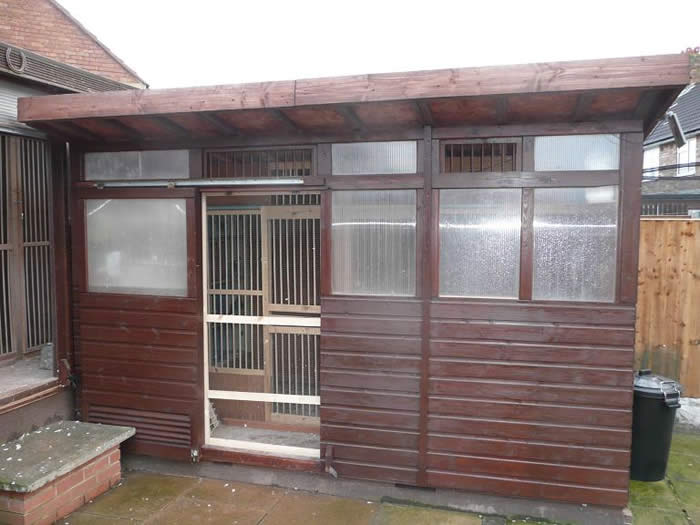
The stock loft
---
Id like to thank Jimmy for giving of his time at such short notice for what was a long overdue report. It was a refreshingly open interview and I believe this shines through in the responses provided. Jimmy allowed us to handle a few pigeons and they were like peas in a pod: perfect balance, thickset across the front and very showy looking. Good lookers indeed, but with performance to back it up.
Jimmy has a great reputation as a conditioner of middle-long distance winners and anybody reading with desires of success in this field could do far worse than seek out his advice. Best of luck for 2014 Jim, I hope it is a case of normal service resumed after your alterations and that you get a few handy timers once the young bird melee begins!
By the time you are reading this, we will be into the New Year. I wish you and your families a fantastic 2014.
Thanks for reading.
Darren Smith
---
Elimar January 2014