“ON THE ROAD” WITH KEITH MOTT.
LOFT VISITS TO SCOTLAND (PART 7.)
Billy Jamieson of Annan.
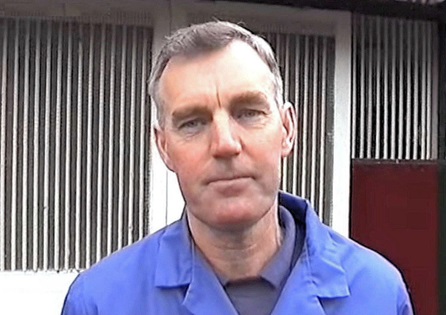
This time we are going to Scotland, the land of the long distance doos to visit the premier long distance loft of Billy Jamieson of Annan. Bill says he is only interested in SNFC Channel racing from 410 miles through to Niort 600 miles, and since starting upon his own at his present address in 1982 has been highly successful. The name Jamieson of Annan has been famous in Scottish long distance pigeon racing for many years as his father, John, and his uncle Matt were the brilliant Jamieson Brothers. Bill entered the sport in 1959 as partner to his father and flew as Jamieson & Son, with outstanding success, winning their SNFC section eight times and 1st open Nantes SNFC (543 miles). When starting on his own in 1982 six pigeons came from the old loft and of these two became significant in his present day set-up, being mealy cock '9096' and the grizzle cock. '09299'. These two cocks were sire and grandsire to many outstanding national racers and their bloodlines were mostly Kirkpatrick/Sion and Proctor Smith. Bill introduced birds from Eric Fox of Bakewell in - 1985 and these proved to be an excellent cross, in particular a bad cheque hen bred in 1985. Another important pigeon brought in when forming his present loft of long distance pigeons was a red cheque cock bred by his uncle Matt, direct from his 1986 1st section Nantes SNFC winner. A blue cheque cock that Bill purchased at a local clearance sale bred winners for him up to when he was 13 years of age.
Some of the SNFC trophies won by Billy are: Cameron Trophy – 2nd open Rennes in 1971, the Tom Buck Trophy in 1991 and again in 1994 for Best Average Rennes and Sartilly Nationals, South Section Average Trophy in 1995 and was Scotland's Own Fancier of the Year in 1991. On my visit to the Annan loft Billy made us very welcome and showed us some of his best racers, including a handsome red cheq cock that had been over the English Channel four times and had scored in the SNFC four times. This game pigeon raced best to ten day old eggs and had won in 1993: 75th open Rennes SNFC; 1994: 31st open Rennes SNFC; 1995: 10th open Niort (600 miles) SNFC; 1996: 18th open Niort SNFC - a brilliant racer. Bill says his good friends Ray & Marion Seaton of Annan have bred some good pigeons for him including blue cheq hen '10181', winner of 9th sect, 14th open Rennes SNFC; 2nd sect, 2nd open Rennes SNFC. Blue hen '10155' winner of 96th open Rennes, 84th open Rennes SNFC, also bred a cock to win 10th open Sartilly SNFC. Two wonderful blue pied hens bred by Tom Gilbertson of Carlisle have bred some excellent long distance racers for the Jamieson loft including: 18th open Rennes SNFC; 67th open Sartilly SNFC; 8th open SNFC and 161st open Rennes SNFC.

Billy races on the natural system with Channel National racing in mind and keeps 28 pairs including stock birds. The yearlings are paired up in the middle of February and they race up to 300 miles, with the old bird racers being paired up a month later. The birds are fed on a first-class mixture of beans, peas and maize and Bill says he is very proud that he has won 47 open positions in the SNFC since starting on his own in 1983. His very smart loft is 24ft long, with clear plastic sheets inserted in the roof to let in extra light. Trapping is through drop holes off a land board which runs the full length of the loft. He keeps about 12 stock birds, but some of these are paired to the best racers, to give them a safe mate for racing. Billy keeps about 36 young birds each season and these are raced natural to the perch. They are given regular training tosses from 45 miles, but Bill maintains he is not a great lover of young bird racing. The youngsters are' never hammered as they are the future of this loft, racing depends on the weather and if racing is too hard, the young bird team will be stopped in mid-programme. Bill's father, John, knew the late great John Kirkpatrick and some excellent birds were bred down from the 'master's' bloodlines. He says when he was a kid he was raised in the pigeon loft, but this has stood him in good stead all his pigeon racing career. Bill is convinced that success is mainly brought about by friendship, when fanciers exchange birds. He likes his birds to be medium in size, with the breeding hens being a little bit bigger, although he has known plenty good long distance racers to be small. He maintains that feeding is an art and he is not bothered if his mixture is polished or not, as long as it is sound. He feeds the birds well and about two weeks before the first National race peanuts are added to the birds' feeding. Condition seed is not given as this is not favoured at the Jamieson loft, although a little linseed is given with the moulting mixture. The youngsters are weaned on maple peas, going over to the main mixture as they start to fly. The birds are flagged around the loft for exercise and are given a lot of training to get them fit for the National events. Most of the training is from Appleby (45 miles) and the old birds usually get three or four races from about 100 miles before the first National races. Billy only sends a small team to the SNFC races, with normally about four birds being sent to the longest race from Nantes or Niort. Although he doesn't send his yearlings past the 300 miles stage, he expects all his old bird racers to have a National position by the time they are three years old, or they are got rid of.
He says his birds have a quick natural recovery rate after a hard race and are not given any special treatment to aid their recovery, just allowed to rest. He is not into the eyesign method, although he never pairs together birds with the same eyes and when looking at the wing, he likes to see a good space between the last three flights. When selecting breeders Bill looks at the bird's throat and likes to see a nice pink throat, with an open slit in the roof of the mouth. Bill doesn't favour the closed in type loft and maintains good ventilation in the loft is vital to maintain good health in the birds and' one third of the front of his garden loft is open. Bill's loft has quality in great depth, with many premier prize-winning pigeons living in it. Some of the best were: grizzle hen '9214' winner of 3rd open Sartilly SNFC; 206th open Sartilly SNFC. Grizzle cock '9220' winner of 167th open Sartilly SNFC; 27th open Sartilly SNFC; 114th open Sartilly SNFC; 27th open Nantes SNFC and The Pied Hen, 168th open Sartilly SNFC; 59th open Sartilly SNFC; 9th open Solway Federation Sartilly; 10th open Rennes SNFC. Brilliant pigeons and a great fancier!
The late, Mat Jamieson of Annan.
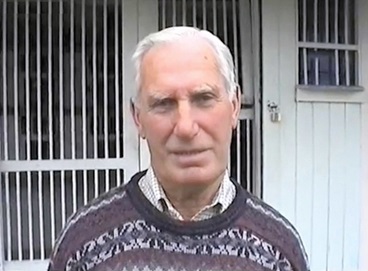
This week I have the very great pleasure of featuring one of Scotland's all time 'greats' of long distance National racing, the late, great Matt Jamieson of Annan. He started up in the sport in 1937 as a 15-year-old lad and he was brother to John Jamieson and uncle to Billy Jamieson of Annan. The name Jamieson has been at the top of long distance racing in Scotland for many years and must rate as one of the premier families of National racing in Scotland of all time. Matt's uncle raced pigeons in the 1920s, packing up in 1930 and the Jamieson Brothers re-stocked him with gift pigeons in 1946. Matt bred his uncle a blue hen in 1948 and he won the S.N.F.C. with her in 1950. Matt's own record in long distance national racing is fantastic with the following open positions: 1st (three times), 2nd, 4th, 5th, 6th (twice), 7th, 8th (three times), 9th, 10th, 11th, 12th (twice). A brilliant record! Matt's three national winners were: Champion ‘Border Prince’, mealy cock, 1st open Sartilly S.N.F.C, Champion ‘Border Princess’, red cheque hen, 1st open Nantes (540 miles) S.N.F.C, Champion ‘Border Star’, mealy cock, 1st open Nantes S.N.F.C. This mealy cock is the grandsire of the other two national winners ‘Prince’ and ‘Princess’.
The base of Matt's loft was the Logan, Osman and Barkers, which were obtained just after the Second World War and with the odd cross obtained through the years, were the pigeons he raced with outstanding success. Matt said on my loft visit, that one of the pillars of the present day family is the blue cheque white flight cock, 52 S 641, and he also had a wonderful racing record winning - 1954: 143rd open Rennes S.N.F.C, 1955: 1st sect, 6th open Nantes S.N.F.C, 1956: flew Nantes smash race; 1957: 49th open Nantes S.N.F.C, 1958: 47th open Nantes S.N.F.C, 1959: 29th open Nantes S.N.F.C. The Jamieson set up never included a stock loft and Matt told me he paired his several stock birds to racers to give them a safe mate.
On my visit to Annan I had a nice chat with Matt's brother John, and he told me he was John Kirkpatrick's milkman and he purchased a youngster from him, which turned out to be a goldmine. John started up in pigeons in 1935 and on joining the Royal Marines in 1938 had a layoff, to re-start again in 1946. His first pigeons were the Putmans, but he could not get them from over the Channel, so he purchased the youngsters from John Kirkpatrick in 1949 and she was the mother of John's loft. He says he is a great believer in racing hens on the long distance and his record in the S.N.F.C. is brilliant, winning 1st Section eight times; 1971: 1st open Nantes (540 miles); 1972: 2nd open Nantes; 1973: 6th open Nantes. A brilliant fancier, who was only interested in long distance National racing.
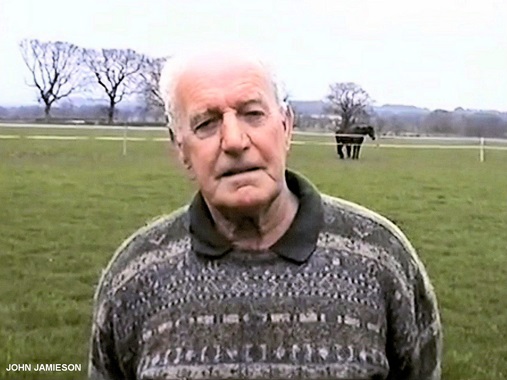
Matt raced on the natural system and paired up the first weekend in March, breeding 30 youngsters for himself each season. His 24ft loft was sited in a horse field and it has three sections, with open door trapping. Matt said after a long winter off the racers have cobwebs in their heads and need a few training tosses to clear their brains and get back in the swing of racing again. His old birds were given several 40 miles training tosses and about four short races for their preparation for the first national races. He told me training is very hard with so many hawks and falcons in the local hills, and he had lost over 30 birds to hawks, including two of his national winners. He fed a heavy mixture of 35% peas, 35% maize, 15% .beans, 15% wheat, which he said was far too heavy for club racing, but suited him for national long distance racing. On looking in Mat’s wonderful old loft I noticed how contented the inmates looked in their nice enclosed nest boxes.
Matt showed me one of his best racers, a blue hen, granddaughter of Champion ‘Border Princess’, and she had won - 1994: 2nd open Nantes S.N.F.C. (by 40 miles), 1995: 11th open Niort (612 miles) S.N.F.C, 1996: 20th open Niort S.N.F.C, winning the Best two bird Average with her brother for two years on the trot. Her brother, a handsome red cheq cock, had flown the English Channel just three times recording -1994: .62nd open Nantes (only 68 clocked in race time in the S.N.F.C.), 1995: 19th open Niort S.N.F.C. (612 miles). Brilliant pigeons!
Matt was very hard on his young birds and liked them to race the programme up to 200 miles. They were given six training tosses up to 45 miles, then, during the racing season they got a chuck mid-week. The youngsters were fed on the same mixture as the old birds and were raced natural to the perch. If they want to pair up he let them, but maintains that he had never done any good with paired up young birds.
Robert Nesbit of Cockburnspath.
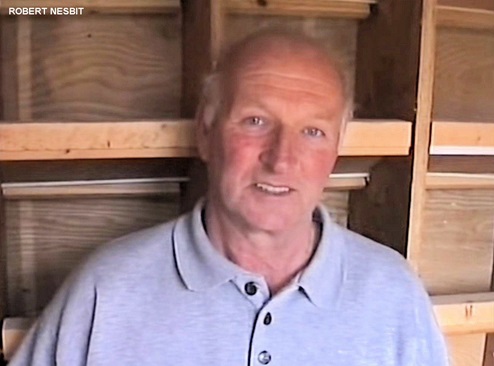
A family that has been in the Scottish pigeon fancy for over 100 years is the Nesbit family and their involvement in the sport spans over four generations I visited the S.N.F.C. ace, Robert Nesbit, who had just recently moved in to his new Cockburnspath home, right on the east coast of Scotland. His father is the long distance fancier, John Nesbit, who had recorded many premier performances in the S.N.F.C., including 3rd open Rennes and in turn John’s father was an outstanding fancier. Robert’s daughter, June, was secretary of the Scottish National Flying Club at that time and had held the post for six years. Robert told me she works very hard at the very demanding secretary job, but had a lot of good help from her husband, Gordon, who is a computer buff.
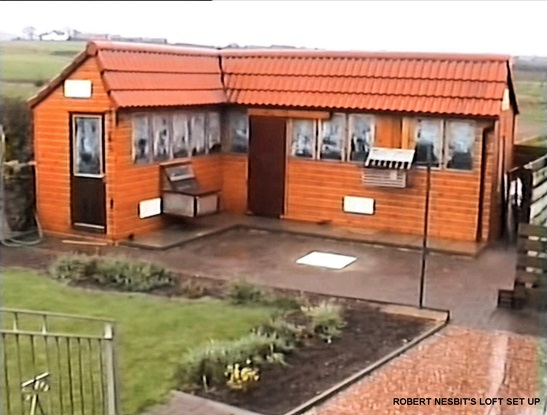
Robert had won over 100 S.N.F.C. diplomas at his previous address including 3rd, 5th, 6th, 7th, 9th. and 11th open and is only interested in the long distance racing. He has tried widowhood, but has had all his outstanding success racing on the natural system with about 25 pairs, which he pairs up on February 15th. every season. The team is only trained lightly at the start of the season, but this is stepped up before the long distance National events. His main racing loft is 32ft. long, four sections, with open door trapping and faces right out on the North Sea. The loft is closed in to keep out the sea winds, which once blew the loft over, so it is now anchored down with half inch trawler wire cables.
Robert’s best pigeon is a blue hen and she had three major S.N.F.C. prizes in races over 500 miles, including 20th open Rennes. He usually flew this great hen unpaired in the club races, then paired her up and sent her to Rennes on chipping eggs. Another outstanding racer in Robert’s loft was a handsome blue chequer cock and he had recorded 30th open S.N.F.C. Rennes (541 miles) in 1996 and 25th open S.N.F.C. Nantes (601 miles) in the 1997 season.
Robert races pigeons which he has for many years, which he calls the ‘Nesbit’ family and crosses good birds in from time to time. He only keeps three pairs of stock birds and says all the pigeons have to race. The stock birds are paired up the same time as the racers in February and he feeds a sound mixture of peas, beans, maize and wheat. His 40 youngsters were housed in a new 35ft ‘L’ shaped brick loft, which was well ventilated with a pantiled roof. In 1997 he raced 26 youngsters on the darkness system and 16 on the natural and he told me, the darkness birds were brilliant, thrashing the others every week. The loft won the Young Bird Average in 1997 and all the birds were raced to the perch, but are allowed to pair up if they want to. Robert trains his young birds very lightly as they fly around the loft well.
On one of my video tours north of the border, in Scotland we stopped off at Cleghorn in Lanarkshire to spend a day with my good late friends David Jamieson and Bruce Simpson. The Jamieson & Simpson partnership recorded some good performances in the S.N.F.C. when the lofts were sited in the City of Glasgow, but after moving to Cleghorn in the countryside, five miles outside Lanark, it had been almost impossible to race their birds with the birds of prey attacking nearly every time the team is let out of the loft. I spoke to Davey and Bruce regularly on the phone and they were always telling me about their birds being killed, but if I'm honest I didn't know how really bad the situation was. Peregrines were attacking the birds flying over the lofts the day we were at Cleghorn, and what appears to be the perfect spot to race pigeons is really no good at all. The birds of prey problem is generally very bad right across Scotland, and fanciers can't train on the line of flight, because of what they call `Bandit Country', pockets of hawk-breeding country, and have to toss in towns and cities in the opposite direction, so the birds get a clear run to the loft. When will it all end?
While in Lanarkshire, Bruce Simpson took us out for the day and we dropped in on George Brownlie of Carluke. He is down from a long line of pigeon fanciers, with his father and grandfather being successful long-distance racers and his grandfather's brother won 1st open Rennes S.N.F.C. in 1925 with a red Putman cock. George first became interested in the pigeons at the age of 11 when he helped his grandfather carry the race panniers across the fields and along the railway lines to the local station to race mark the birds. George's first birds were the old Putmans from his grandfather, and these were originally purchased at great expense from Ireland in 1916, where they were sent for safe keeping from Belgium. The young George raced in the Carluke FC, which was 40 lofts strong, and said the Putmans were excellent on the distance, but in the early days he did not have the knowledge to be consistent.
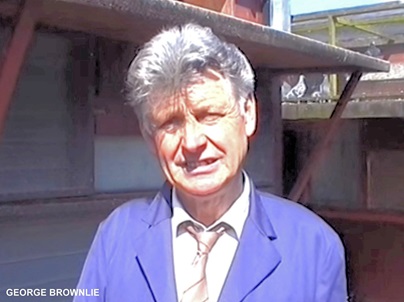
George had several lofts at his Carluke home and the main factor behind their design was good ventilation. He raced 40 pairs on the old Natural system with long distance races in mind, and raced his 45 young birds on the ‘Dark’ system in 1996 with outstanding results. George was a retired construction contracts manager, and he gave the Natural pairs their liberty all day, saying happy at home means successful results. In 1977 he had a team of Nash of Cray pigeons and a few pairs of Jim Biss Dordins which were doing very well. On advice from Jim Biss he purchased six pairs of Vanhees and their youngsters were raced very hard, and by 1983 were winning out of turn. They won the Federation Averages and outstanding results in S.N.F.C. including 2nd sect, 6th open Rennes S.N.F.C., 4th and 5th sect Avranches, 1st, 2nd and 4th open Dorchester S.N.F.C., 2nd open Falaise S.N.F.C., and so on. These pigeons were still the base family when I visited the loft, with some odd crosses, which all had a Stichelbaut base. George said his family of Vanhees were outstanding up to Rennes (535 miles). When he brought the birds to his present address he started to feed similar to the Belgian system with more carbohydrate, no beans and maximum 25% peas in the race mixture.
On his first Channel race on the system he clocked at 5.25 am, with no day birds clocked in the race, and recorded 5th open Federation. Through the years the loft has won countless prizes in the S.N.F.C., and some of the premier pigeons were: ‘Day Lady’ blue hen, 2nd West Sect, 6th open Rennes (north east wind): ‘Day Dream’ blue chequer hen, 1st West Sect, 51st open Rennes; ‘The Mealy Pied Hen', 2nd West Sect, 18th open Falaise, 23rd Sect West Section Rennes: ‘The Vanhee Cock’, 1st West Sect Dorchester: ‘Mr Vanhee’ blue cock, 2nd West Sect Dorchester.
The racers got short training tosses from 25 miles owing to the hawk problem, and went every day prior to a big race. He liked cocks feeding a big youngster and looking at the hen or hens on chipping eggs on the day of basketing for the main long distance races. George had concentrated very heavily on breeding over several years, and several Scottish National winners have been bred from his lines including the 1995 S.N.F.C. Rennes (479 miles) winner for N. McCulloch & son of Dalbeattie. He said he has been very fortunate with stock pigeons and had a dream pair of breeders from the Nash family which kept him going for years. His blue pieds during the 1960’s were outstanding in the SNFC results. When he paired his number one pair of Vanhees together, someone upstairs must have guided him as they started a dynasty. He concentrated on their offspring and that was the base of his very successful team. George kept 30 pairs, including feeders, in his very big stock loft, and the breeding pigeons were fed on 75% maples and 25% home farm Dutch pellets.
Well that’s it for this week! I hope my readers have enjoyed this look back at these Scottish winning champions of yester year. We will be looking at some more very soon. To view some old video footage of some of these fanciers and their birds go on to my YouTube channel. I can be contacted with any pigeon matters on telephone number: 07535 484584 or email me on:
TEXT & PHOTOS BY KEITH MOTT (www.keithmott.com).