“ON THE ROAD” WITH KEITH MOTT.
LOFT VISITS TO SCOTLAND (PART 6.)
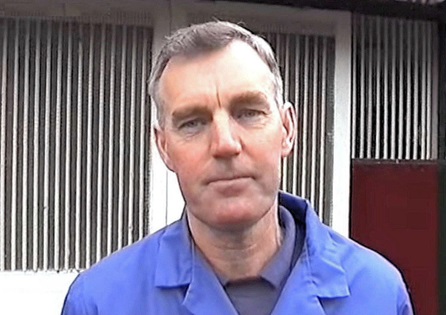
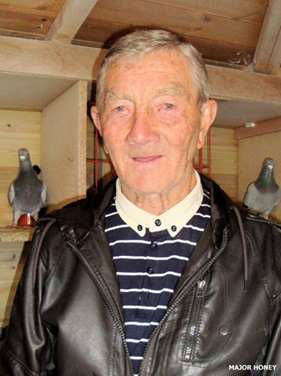
The late Bob McDonald of Fraserburgh.
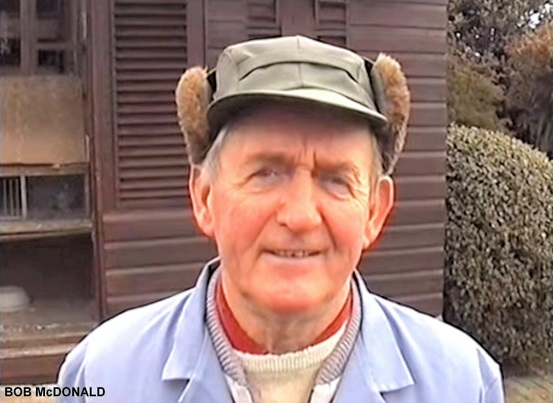
I was very sad to hear of the passing of Bob McDonald on that weekend in September 2017. Bob was one of the all-time ‘legends’ of pigeon racing in Scotland and was such a nice man. The sport of pigeon racing has lost another one of its great champions! Although I have admired Bob McDonald's Ko Nipius pigeons for many years, I only met him for the first time on my video tour of Scotland in April, 1997. Bob had been in the sport for 75 years at that time, starting up with a gift pair of fantails at the age of seven. He told me some of his friends had racing pigeons and he soon caught the bug. Through the years the McDonald loft had won countless 1st Federation prizes and Federation averages. Bob said his biggest thrill was when he recorded the first bird to be clocked from the Rennes SNFC race (660 miles) on the day to win 1st section and the same bird was 4th North section the previous year, doing 700y.p.m. He liked to race at all distances but maintains that, if he could win every race up to 500 miles and didn't get a bird from 600 miles, he would be very disappointed. The furthest he had flown is Niort (784 miles) and says the more you put into pigeon racing, the more you can take out.
Bob had a wonderful set-up in Fraserburgh with the pigeons being raced on both widowhood and on the natural system. The 30 widowhood cocks were housed in a very smart 36ft long loft, with three sections, grille floors and open door trapping. Although Bob races natural pigeons in the SNFC races, he maintains that most of the time they couldn't compete with the widowhood cocks. The widowhood pigeons were paired up in mid-February and race from 60 miles through to 600 miles, with outstanding success. The cocks were broken down for two days only on the early races and their corn is beefed up with peanuts for the longer races. Bob was a heavy feeder at all times and always showed the hens on marking nights. The cocks were given the hens for one hour on their return from the race, unless it is a hard race and they were left overnight. Vitamins were added to the drinking water once a month.
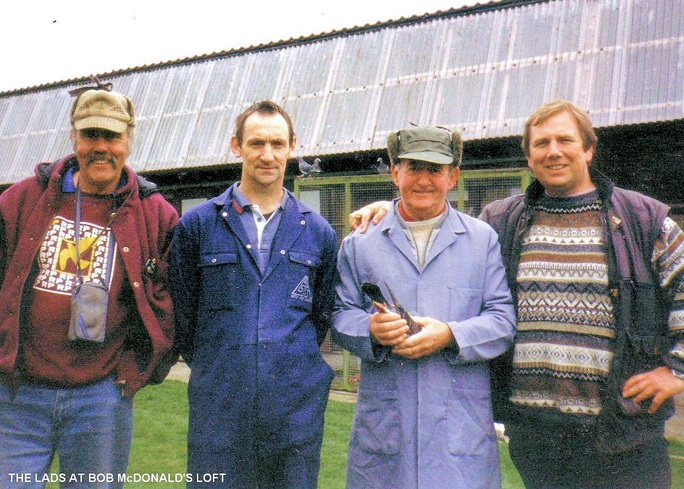
Natural pigeons were housed in a three-section loft, fitted with 12 German-style nest boxes in each section, and the inmates were trapped through sputniks. These were also paired up in February and were only sent training in the local club, being set up for the SNFC events. Bob told me he was a pigeon lover and kept about 140 pairs of stock birds in a big, old, stone barn. These were paired up the same time as the racing team so eggs can be floated. When selecting stock birds, Bob liked performance birds with good physique and eye sign.
Two families of pigeons were kept, one of which went back to 1947 and was still winning to that day. He purchased the ‘Old Crippled Cock’ from the late James Mill in 1956 and this family had filled the loft with winner 'for many years, including only bird on the day from 600 miles. Bob first saw the Ko Nipius pigeons at the 1965 Olympiad and went straight over to Holland to purchase a few pairs. They were Jan Aarden based and flown on the widowhood system, won the short distance and were outstanding in the long-distance events. The Ko Nipius were still bred pure in the McDonald loft and had won everything in Federation racing for Bob. They were wonderful looking pigeons and had won at many classic shows, including ‘Best in Show’ at Edinburgh and ‘Best in Show’ at the RP Old Comrades.

The loft housed about 200 youngsters each season and these were raced through to the Young Bird National (360 miles). The youngsters were trained every day but were not raced every week. Bob maintained that, if baby pigeons are overworked, they never make good old birds. He was a heavy feeder and never saved young cocks for the widowhood system, with the whole team having to race. The box perches in the young bird loft had litter trays filled with sawdust to keep the inmates clean and sweet. Bob said the droppings in the litter trays indicate the health of the loft.
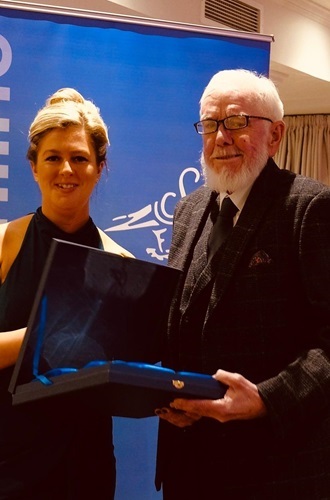
Peter Virtue of Cockburnspath
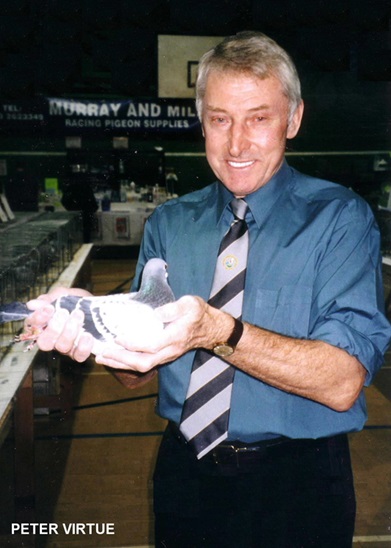
We are going to Berwickshire this week to look at the performances of a very special fancier, who has been at the top of the Scottish National results for many years. Peter Virtue has won many premier National prizes through the years, including several times 1st open in recent seasons and my original article was written in 2006.
To say, the Virtue loft had a good season in 2005 would be an understatement, winning: 2nd, 5th, 10th, 36th, 37th, 41st and 86th open S.N.R.P.C. Newbury, 40th open S.N.R.P.C. Alencon, 14th, 15th and 35th open S.N.R.P.C. Falaise, 12th, 28th, 29th, 37th, 47th, 49th, 58th and 59th open S.N.R.P.C. Leicester. Peter Virtue also had a great season racing in the Federation, winning 11 club firsts and 4 firsts in the Federation, including: 1st, 2nd, 5th, 12th,15th, 25th and 26th open Maidstone. A fantastic performance! The star pigeon of the 2005 season was the blue chequer pied hen, “The Newbury Hen”, and she recorded 2nd open S.N.R.P.C. Newbury. This game hen is down from Peter’s Champion “Peter Thorpe” / Busschaert bloodlines and her grandmother won 13th. open S.N.F.C. Clermont.
Peter Virtue first became interested in pigeons at the age or eight, but was too young to race so kept a pair in a tea box in his back garden until he obtained his first racers at the age of 15. In 1957 he obtained his first pigeons from Reg Barker who, Peter says, at that time had the best all-round loft in Britain, with a brilliant team of birds that won right through to 600 miles. His first winner, at the age of 17, was from Nantwich (220 miles), when he scored 1st. club, 14th. Federation with a “Heinz 57”, dark chequer cock and that good old pigeon went on to win lots of top honours for the Virtue loft. Peter says, that John Kirkpatrick was at the top at that time and, like the great old master, he is only interested in long distance racing, although he’s been very successful at Federation racing. Peter has been in the sport over 50 years and has belonged to only one club all those years and that is the Cockburnspath H.S. He lives near the sea and his first loft was made of old fish boxes off the beach, covered with felt to keep the weather out. I asked Peter what his early mistakes were and his reply was, “I have made mistakes all through my time in pigeon racing, everybody has, but I hope I’ve learn from them.
Peter’s present racing loft is 30ft x 10ft with a full length corridor, four sections and a piano trap. His loft has air vents at floor and roof level to maintain good fresh air flow and he says the main thing is that a loft must be dry. Peter has had a health problem with his chest, and the loft is fitted out with grids, so that the pigeon dust is kept to a minimum. His 20 pairs of racers are raced on the natural system, being mated on the first Friday in March, with the long distance nationals in mind. The birds are not trained a lot because of the hawk and falcon problem in Scotland, but get the open hole all day and two 10 mile training tosses before the first race. He uses the short races as training, but if these are easy blow homes, he will give them a few 30 mile tosses, as the pigeons need a certain time on the wing to be fit enough for the long distance events. If the pigeons are fit, all the two year olds have to fly 500 miles and the yearlings and latebreds go to 360 miles. The old bird team are fed with the long distance in mind, on a good mixture with 50% beans and they are never given any seeds. The basic build up for his pigeons is about four club races up to 230 miles, then into the national and his best condition for sending to the long races is sitting 12 to 14 day old eggs. Peter has still got the same basic family of Reg Barker pigeons, that he obtained in 1957 and he says in those years he has had five crosses which have been successful. Most of his best crosses have come his good friend, Bobby Carruthers, including one off Bobby’s “Money Maker”. One of the best crosses for the Reg Barker pigeons was a dark chequer cock that he purchased from a local fancier in 1965 for £5 and this game pigeon had scored twice in the Rennes National. He was the Dr. Anderson bloodlines and bred one of his S.N.F.C. winners. Peter says that was the best fiver he has ever spent.
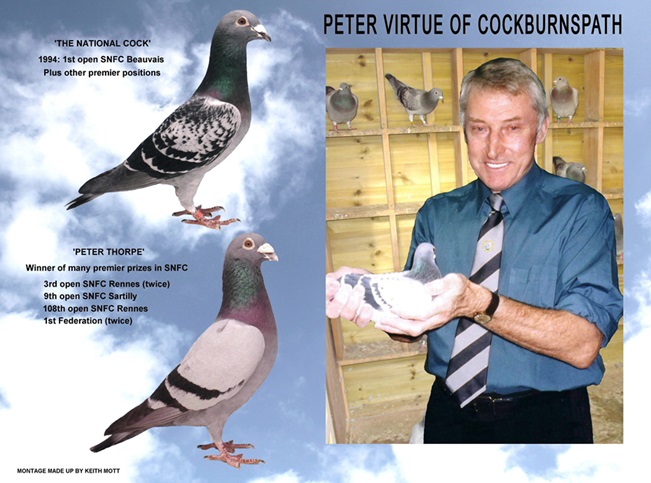
He keeps about five pairs of stock birds which he houses in a 12ft x 10ft loft. Peter pairs them up the same time as the racers, so the yearling can rear the first round off the breeders. He feeds them the same corn as the race team with a big content of beans and when he brings in a new breeder it must off premier winning lines and must also have good eye sign. Peter has 40 youngsters to race each season and their training never starts until the last old bird National race is out of the way. They get about five 20 mile training tosses before their first race and are fed on the same mixture as the old birds. The only difference is they get maples instead of beans and as the racing season goes on the mixture gets lighter. The young birds are raced natural to the perch and Peter says that because they are later bred, they never want to pair up. He is very much against the darkness system and most of his young bird team race through to the national ( 235 miles). Peter Virtue’s performances in the S.N.F.C. over the years have been brilliant, recording: 18 times in the first ten open positions over the channel, winning three times 1st open, 4th open Niort (670 miles), 6th open Nantes (603 miles), 8th. open Avranches and many more premier positions in the National races. Two of his National wins were from Beauvais and Avranches. He won the Beauvais National in 1994, with an unpaired blue chequer cock, which was just flying to his nest box, after his hen got killed. Peter says he has owned many top-class pigeons through the years, but one of the best was his Busschaert blue cock, “Peter Thorpe”. This game cock had a wonderful record on the road recording the following: 1993: 9th open S.N.F.C. Sartilly, 1994: 108th open S.N.F.C. Rennes, 1995: 3rd open S.N.F.C. Rennes, 1996: 3rd open S.N.F.C. Rennes and he won eleven times 1st club, twice 1st open Federation. A brilliant pigeon!
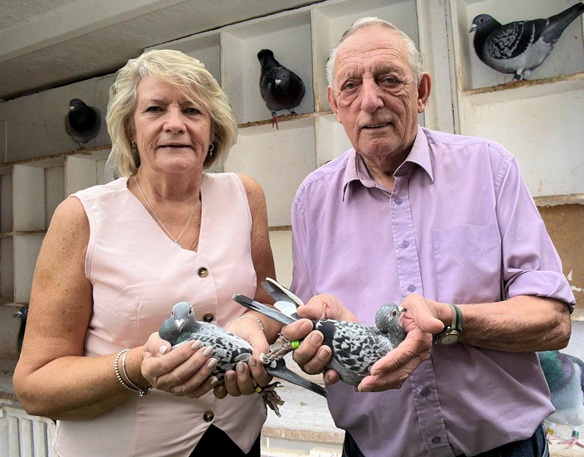
Peter is a retired railwayman and says his wife, Jean, has played a big part in his pigeon success as she always looked after the birds in the winter months when he had to work 12 hour days and she has clocked many times in National races, when he had to work. He says, when he was a lad he was crazy on Federation racing, winning the old bird average cup when he was 18 years of age, but now is only interested in long distance National events. Peter maintains that all the pigeons have to be tried and tested, and he likes latebreds, but even these have to go to 360 miles as yearlings, sometimes carrying four or five nest flights. He is very keen on eye sign, but only in the stock loft. He told me he thought the sport was badly run and something must be done about the hawk problem soon, or it will kill off pigeon racing. I hope you have enjoyed this week’s article on these great Scottish fanciers.
Well that’s it for this week! I hope my readers have enjoyed this look back at these Scottish winning champions of yester year. We will be looking at some more very soon. To view some old video footage of some of these fanciers and their birds go on to my YouTube channel. I can be contacted with any pigeon matters on telephone number: 07535 484584 or email me on:
TEXT & PHOTOS BY KEITH MOTT (www.keithmott.com).