PAGES FROM THE PAST - Part 5
MIKE YOUNG
of Timsbury, near Bath
5 x winner of the BICC in International races
by Gareth Watkins
In this, the fifth article in the series, I intend to highlight the performances of the great West Country fancier Mike Young of Timsbury near Bath. Mike was a poultry farmer who enjoyed great success in the 1980, 90s and early 2000s with his family of long distance racers which was based to a large extent on the old English Spangle strain.
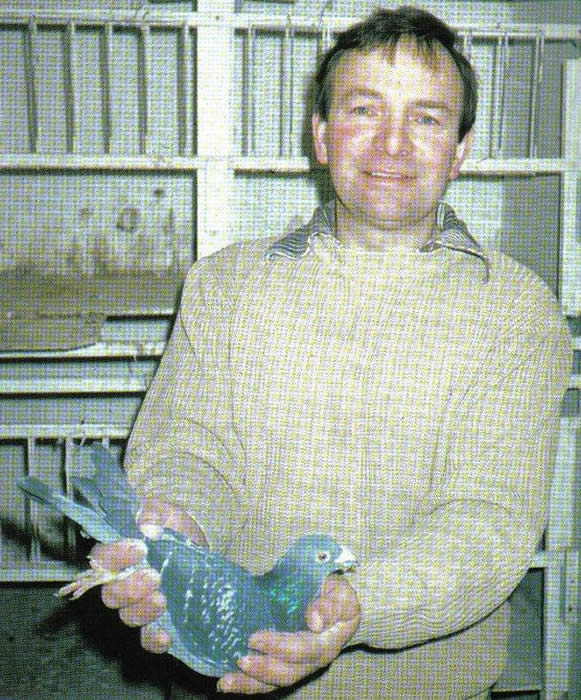
Mike Young - long distance maestro
THE SPANGLES
This was a family of long distance pigeons was developed by Oliver Dix of Pensford in Somerset. The family was a combination of the old Welsh Hansennes, J. W. Toft Osmans and Plentinx. The Hansennes were obtained through birds originally imported from Belgium in the late 19th century by J. P. Jones of Penarth near Cardiff. Some of these early imports found their way to J. D. Phillips of Pontypridd who supplied birds to the great Jack Vernal also of Pontypridd, who in turn went on to found his own family known throughout Wales as the Vernal Hansennes. This family was made up of predominantly dark chequers which carried a lot of bronze colouring in the feathering and these have produced multiple long distance winners for many fanciers here in Wales for the best part of 70 years.
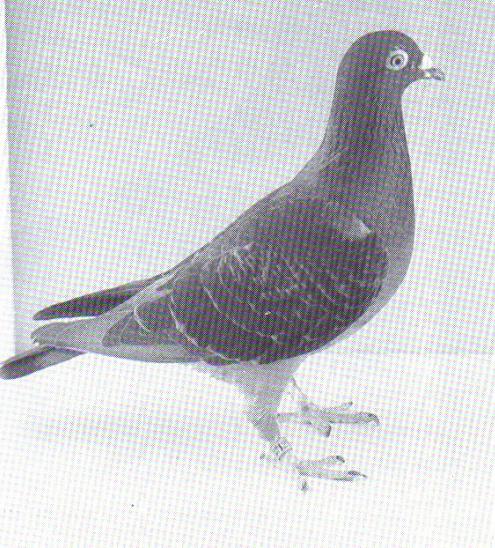
Mike's Perpignan Hen - 8th BICC Perpignan 647 miles in 1985 and 17th Perpignan in 1986.
I well remember a s a young lad in the late 1950s, my father weaning over some of these Vernal Hansenne squeakers and they were dark chequers that on first glance looked like reds being absolutely plastered with bronze feathering and covered with down.
Oliver Dix obtained some of these Welsh Hansennes and one cock in particular was to prove an absolute goldmine at stock. This was a blue chequer obtained from J. D. Phillips and bred from a Hansenne cock which in turn was bred by J. P. Jones from an imported pair of direct Hansennes whilst the dam was bred from J. D. Phillips’ Rennes Cock when mated to a red Logan hen. One of the characteristics of the Phillips chequer cock was his ability to produce mosaic or spangle coloured pigeons hence the origin of the strain name. Oliver Dix continued to develop his family with the addition of the aforementioned Tofts and Clays plus some Captain E. E. Jackson pigeons along with some of the Belgian strain of Plentinx.
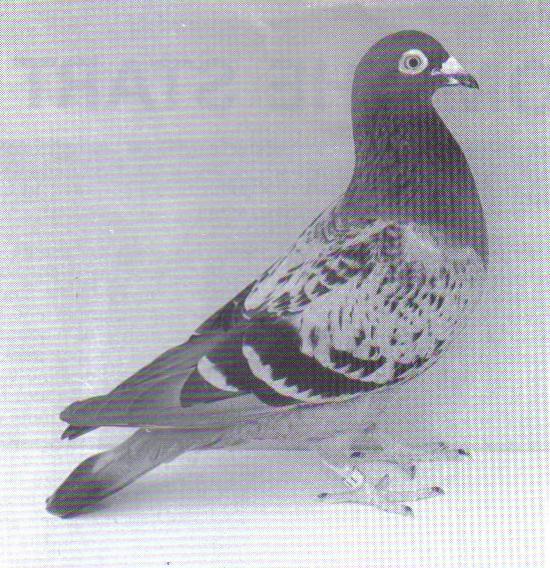
The great Channel Queen - 1st club, 3rd West of England Dax 530 miles in 1984; 12th Pau 558 miles in 1986; 1st Perpignan 647 miles in 1986; 1st BICC Pau in 1987.
Many fanciers enjoyed great success at the distance with the Spangles none more so than the great Jack Brain of Timsbury who excelled from Lerwick at more than 620 miles to his Timsbury loft. Another fancier who introduced the Spangles from Oliver Dix was Bert Bryant of Basingstoke and it was these two top class long distance fanciers that Mike Young approached in order to obtain his foundation stock.
Jack Brain lived a short distance from the farm where Mike lived and not only did he supply Mike with good sound stock he also imparted a great deal of knowledge on how to produce and condition birds to fly long distances successfully.
Over the years Mike introduced the occasional bird from other top long distance fanciers and these were usually bred from that loft’s top long distance performers. Pigeons such as “Knightsdale Lady”, six times Palamos for Reg Churchill of Weymouth. The Fear Brothers, Sam and Roly, also supplied Mike with pigeons from their top performers and these introductions were blended into the Spangles and the progeny severely tested on the road.
With such a sound base of long distance bloodlines it was no surprise that Mike Young should soon be making a name for himself in long distance International races.
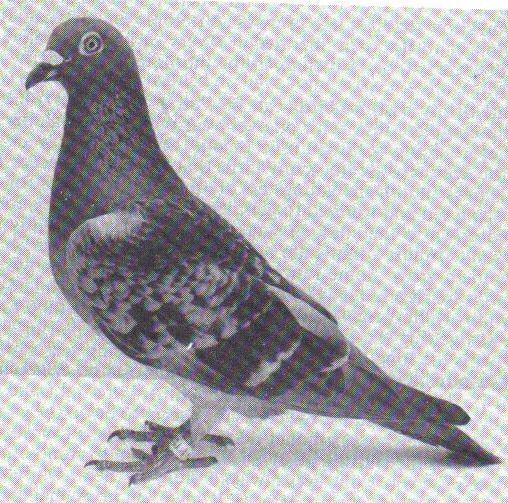
1st Open BICC Lourdes
THE LOFT
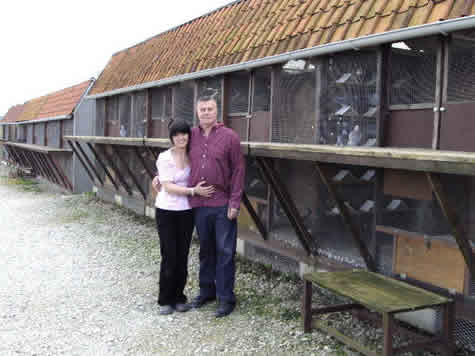
The loft to which Mike raced his pigeons was self built and a really imposing structure. Set in the field behind his home, it faced south and enjoyed panoramic views over the surrounding farmland. Measuring 70 ft in length and 15 ft in depth, it was a two-storey affair with racers in the top sections and stock birds housed beneath.
In the top floor racing sections, nest boxes were fitted along the back wall and the floor of each section was made up entirely of weld mesh allowing the droppings to fall through to the ground floor section. Ventilation was achieved by incorporating large wire covered sections in both the front, back and side walls and these were covered by sloping canopies thus allowing air to enter from which ever way the wind was blowing but keeping rain out.
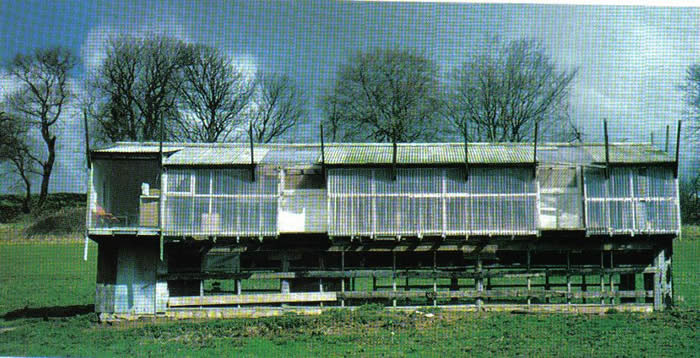
Mike's loft
FEEDING
A high protein diet of mainly large horse beans along with tic beans and peas was fed to the birds throughout the year. When racing and in the build up to a long distance race the candidates were fed a seed mixture to which Mike added wheat germ oil. This was fed in the individual nest boxes so that Mike had control over which birds he was “bringing on” for a specific race. The only other addition to the food was the application of cod liver oil to the feed once per week.
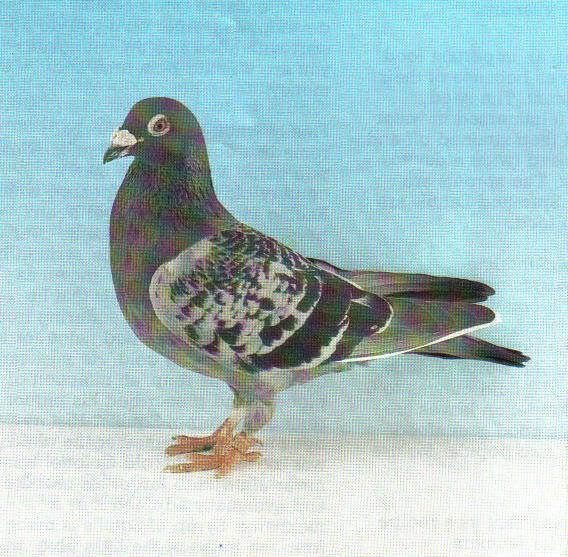
Mike Young's 'Rome Boy' - 17th Rome 954 miles in 1986
MANAGEMENT
Because of the idyllic rural setting and the location of the loft in a field away from houses and other buildings, Mike was able to allow his birds the luxury of an open loft 24 hours a day as the loft was so designed as to be cat and vermin proof.
Yearlings were mated first in early March, followed by the older more experienced birds later in the month. All were allowed to rear youngsters in the first nest but not necessarily their own. Once Mike was happy with their condition then the season’s training would begin with a few 50 mile spins from the south coast around Weymouth and Portland. This training always took place in the early morning as Mike was up at 2.30 – 3.00 am so that he could be on the coast at first light ready to liberate. The training took place in any weather because as Mike reasoned if he was prepared to get up in the middle of the night in order to drive the 50 miles to the coast then the birds must be prepared to do their bit – he was not known to take birds home due to bad weather at the liberation point!
The loft’s yearlings were divided into three teams. One team received extensive training but very little if any racing. The second team was trained and raced in just a few races to 250 miles and then set aside for the year. The third team was “given the gun” so to speak and was trained hard and raced to 500 miles. This method of “not putting all his eggs in one basket” and yet giving each group a sound education on the road ensured that Mike Young always had back up with plenty of reserves to call on for each season’s testing International race programme.
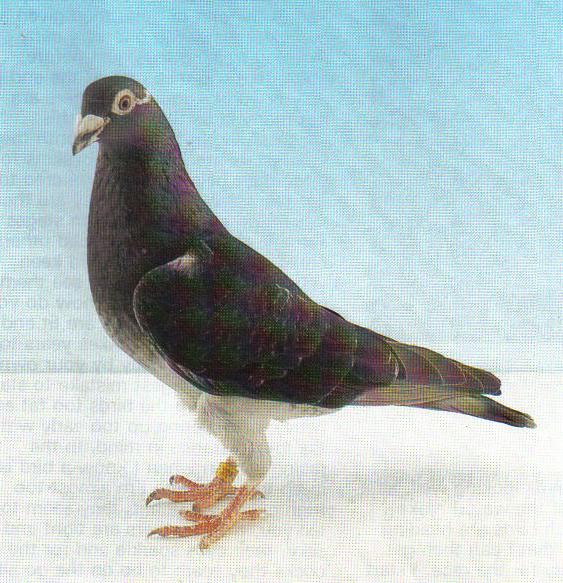
Dark hen - 24th BICC Perpignan 647 miles in 1985 and 11th Barcelona 721 miles in 1986.
YOUNGSTERS
Youngsters in particular were treated hard as Mike firmly believed that a fancier should try to lose the duffers early. However, on the other hand he quite liked a young bird which returned home on its own late in the day as these were usually the ones that seemed to excel at the distance later in life. He was always looking for the ones with strong character or, as he referred to them, “the lonely breed”. Top International performers had to break away from the main convoy early in the race if they were to succeed and to achieve this they had to fly many hundreds of miles on their own. Hence Mike’s insistence on sorting the “wheat from the chaff” early in a pigeon’s racing career.
By employing these methods along with his steely determination not to be deflected from his goal of attaining consistent success in long distance International races, Mike Young and his family of Spangles won the following prizes whilst racing with the BICC during a twenty year period:
1st Open BICC Lourdes 1982.
1st Open BICC Perpignan International 1986.
1st Open BICC Pau International 1987.
1st Open BICC Marseille 1994.
1st Open Marseille International 1995.
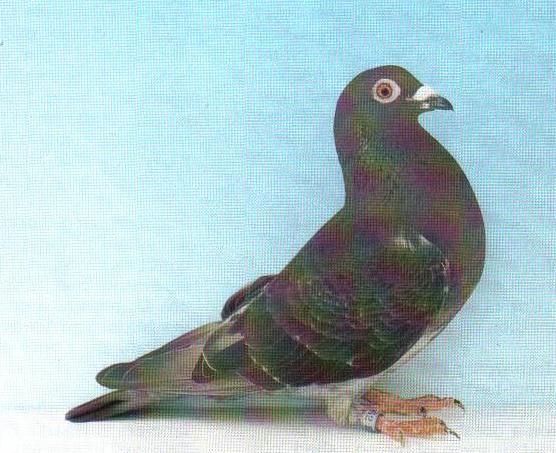
Dark cheq hen - 3rd BICC Lourdes 579 miles in 1986.
In addition to the above outright wins I have found by looking back through old Squills Year Books, Mike Young’s Spangles won the BICC Points Trophy in 1980/81/82/86/89 and was R/U for this same trophy in 1979/88/91/93/&95. He also won the Old Bird Average in 1979/80/81/82&89 and was runner up for this trophy in 1984/85/86/88/91 & 93.
In 2003 Mike Young won the following prizes with the BICC:
1st & 2nd section 9th & 47th Open Dax 509 miles.
1st & 2nd section 6th & 11th Open Perpignan 647 miles.
1st section 4th Open Marseille 668 miles.
1st & 2nd section 9th & 32nd Open Barcelona 719 miles.
A truly outstanding record of success when the reader considers that the Young loft at Timsbury was one of the furthest west in the BICC at that time.
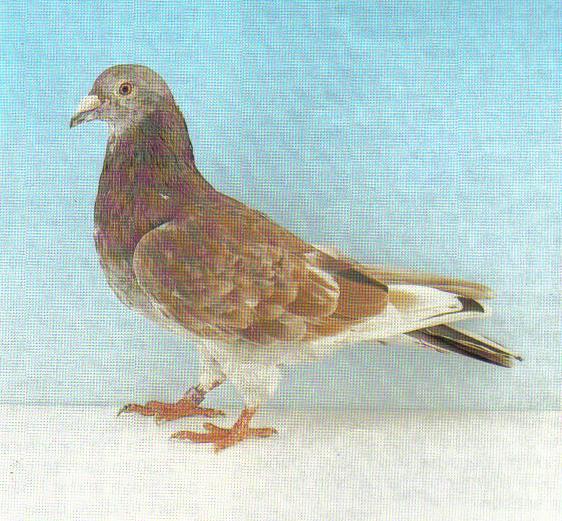
Red cheq cock - 6th Marseilles 666 miles in 1985 & 1986.
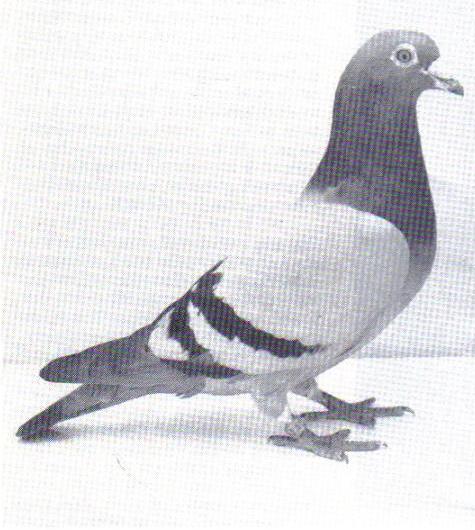
Blue cock bred in 1978, winner of 20th open BICC Pau 1982 flying 558 miles.
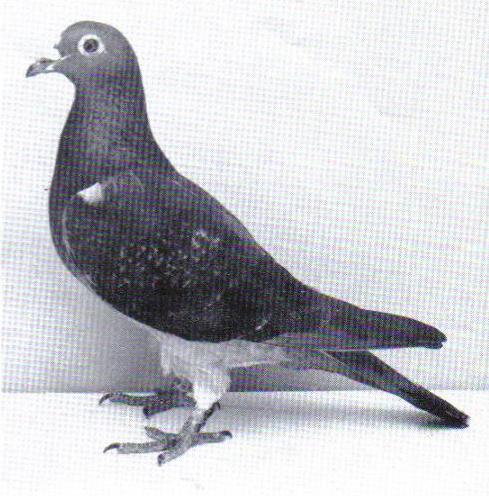
Dark hen bred in 1977, winner of 3rd open BICC Marseilles 1982 flying 666 miles.
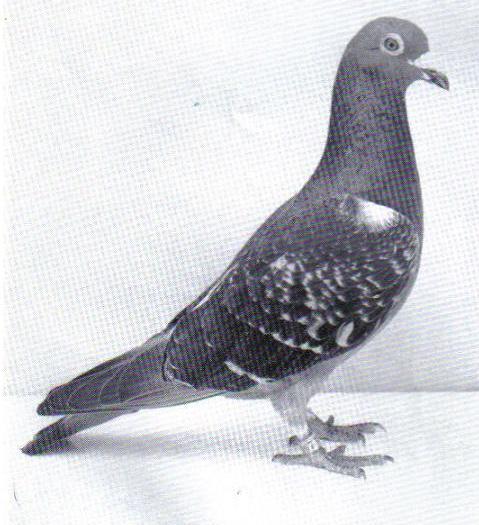
Cheq hen bred in 1976, winner of 20th open BICC Perpignan 1982 flying 647 miles.
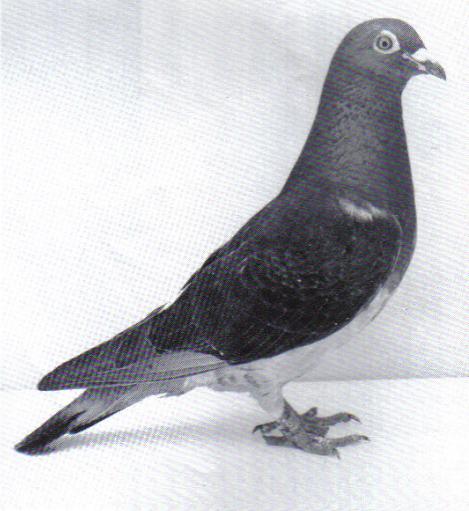
Dark hen bred in 1979, winner of 3rd open BICC Lourdes 1982 flying 579 miles.
In finishing this article I must thank all at the Racing Pigeon especially Steven Ricketts for all his help and for the editorial staff at the RP for their kind permission to reproduce some of the photos that appear with this and other articles in the series.
Copyright Gareth Watkins 2013