Four Master Pigeoners - Part 3
By Liam O Comain
A. H. Osman
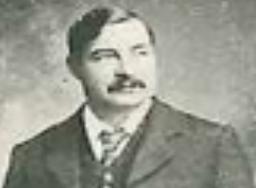
The Osman surname has been associated with the sport of racing pigeons since the birth of the sport in Britain, not only with its practical aspects including racing, administration, and so on but from this family came the oldest racing pigeon publication in the world, still going strong today, The Racing Pigeon. The Osmans have other publications to their credit, including the monthly magazine the Racing Pigeon Pictorial International and books on the sport. Then, of course, there is the association with the annual Old Comrades Show. However, in this article I'd like to recall the origins and some feats of this carefully bred strain founded by A. H. Osman.
The Osmans from which the famous Old Billy came were a strain whose members were of medium size and whose colours were mainly red chequer and mealy. They descended initially from birds obtained from fanciers such as Oliver, Cottell, Stanhope, Harris and J.W. Barker. They were carefully bred to the line via the sire but crosses were introduced via well- tried hens of impeccable long distance bloodlines. Osmans would cross well with other strains, especially the Logans and the Gits. In fact, in the creation of his strain the founder carefully bought for many years the best representatives of Gits, Rey and Vassart from Belgium, plus, as a good friend of Logan, he obtained fine specimens from the latter's family. One of those was a dam of Revived Hope, a famous Osman pigeon.
Now Old Billy (who was less well known as '59') was a mealy cock whose genes permeated, I believe, every bird of the Osman family for generations. His sire was bred in 1885 and was a blue chequer cock known as 'No. 35', bred by James Harris and derived from the Belgian bloodlines of a Mr. Pescher, whereas his dam was a J.W. Barker mealy hen born in 1886. Old Billy in due course fathered Mumpy, Mortification, and Blue Bell among others, the latter three being winners from Arbroath, Thurso, and Lerwick respectively.
It was then in due course that Old Billy's blood- via his grandsons Wanstead Wonder and Forlorn Hope- progressed the family. These grandsons being landmark pigeons in the history of British strains, Forlorn Hope as a breeder being responsible for many winners world-wide and as a racer winning 2nd Perth, 1st Thurso, 23rd Thurso, 8th Lerwick, etc. He was approximately 18 years old when he died and the passing of this dark red chequer cock was a cause of much sadness in the Osmans' circle. Wanstead Wonder also won many races including 1st Thurso, and a pigeon from Forlorn Hope, named Revived Hope won 1st Federation from Lerwick in 1913 and again in 1914. It was a very hard race and Revived Hope reflected the strain's example in hard, bad- weather races. Yes, the Osman strain, for its founders and hundreds of fanciers worldwide, got going when the going got tough, so to speak.
In America, as in Britain and indeed in Ireland, there are still fanciers who claim to have Osman bloodlines today and who race well, especially showing a consistency when the odds are terribly opposed to them, weather- wise. In the meantime, I hope my article, however modest, recalls if not for the younger, at least for the older generation, the memory of a pivotal strain moulded by a master in the history of the sport in the United Kingdom.
Huyskens-Van Riel
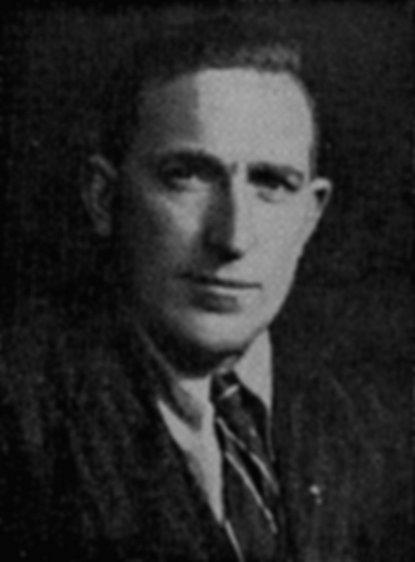
Jef Van Riel
The strain under consideration is one that has left its mark upon the history of pigeon racing world wide, and that is the Huyskens - Van Riel. Upon coming together as a partnership Cois Huyskens and Jef Van Riel set the pigeon racing world alight even to the extent of allegedly destroying the great Union of Antwerp. For since the end of the 2nd World War and the liberation of Belgium, for approximately 11 years their accomplishments at national and international level were phenomenal. With many great prizes from Barcelona and Limoges etc.
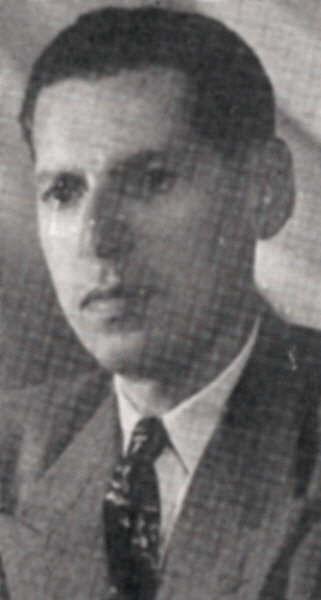
Cois Huyskens
From lofts situated in the garden of Frank Huyskens at Kapelse Steenweg in Ekeren-Donk, Belgium, there arose a family of pigeons shrouded in mystery for the owners were considered secretive in relation to the origin of their stock. Apparently their lofts started with pigeons of different strains purchased from fanciers known only to the partnership.Of course the mangerial ability of the partners forged from pure pigeon gold the final strain of a type which they called their own.
Some sources suggest that Joseph Van den Bosch of Berlaar, Lier, had a letter which confirmed that the foundation birds of the Huyskens- Van Riel family were purchased from Van den Bosch. Others opined that there was no foundation for this claim, although there is evidence that a round of eggs were purchased from Van den Bosch in 1946 by Jef van Riel, eventually resulting in some outstanding racing successes after crosses with others. Another source supports the theory that the origins of the strain arose from birds purchased from Henri Verwimp of Ekere and Georges De Jaegher of Melden, suggesting that within their bloodlines were the 'Old Light One' of the former and the 'Blue Grey Eye' of the latter. Whatever the origins there is no doubt that the strain developed led where many others failed and that the partnership was a unique one in the history of European pigeon racing.
Jef Van Riel obtained his love of the sport from his father and from about 1920 onwards had many successes, but decided in 1936 to try his birds against the members of the Antwerp Union. Upon his successes however the union changed its boundaries and excluded Van Riel from participating. Disgusted with this non sportsmanship Van Riel sold approximately 60 of his best to De Scheemaker Brothers of Schoten and the rest went to Huyskens of Ekeren. The left were disposed of. Thus Van Riel had got rid of the bug of pigeon racing or so he thought but it was only for a short time for he returned to the sport in 1939 through the friendship of Cois Huyskens. The war of course intervened in the meantime but it was inevitable that the growing friendship of the eventual partners would ensure the emergence of a sporting legend. The key element was Huyskens who was in pigeons since 1929 and who was in the position of retaining some pigeons during the war although under occupation.
When liberation came, the new partnership was forged with their stock containing the bloodlines of Vincent Marien, via Van Wetteren, for that was the old Van Riel family as sold to Huyskens in the late 1930s. The latter also included the blood of Fierens of Deurne and the Nuyens strain. So can we assume inspite of the mystery of purchases after the war that we have some knowledge of what lay at the base of the Huyskens- Van Riel? I believe we can but it would be ill advised to ignore the above reference to the purchase of eggs from Van den Bosch. Van Riel and his friend Rene Stijnen according to an important source bought eggs from Van den Bosch. That source being Ad Schaerlaeckens, one of pigeondom's most reputable commentators. Well perhaps beyond the apparent secretive nature of the post war partnership the latter family and those referred too earlier all formed the foundation. Whatever the facts there is no doubt that the strain has become a part of the gallery of outstanding long distance and marathon pigeon racing. The alleged mystery surrounding its origins cannot deny this truth.
As stated, the partnership's bloodlines won at home and abroad with triumphs too numerous to record in the space available but alas in 1957 on the dates of the 13th & 20th of January this strain of outstanding pigeons were sold in Brussels and in Antwerp. Sadness for an end to a partnership but an opportunity for the harnessing of pure pigeon gold by those who purchased. For today throughout the world there are many outstanding lofts of pigeons at whose base the Huyskens-Van Riels are as strong as cement!
Pol Bostyn
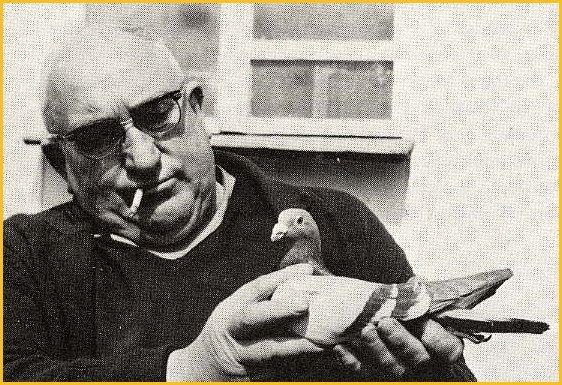
This is an insight into one of the greatest of European pigeoners and by all accounts a man bigger than life itself. Sadly he died in 1985 but for decades his genius prevailed in the top most level of the Belgium pigeon racing fraternity. His name Leopold 'Pol' Bostyn. The pigeon sport historian, Jules Gallez, once wrote that Pol Bostyn had overshadowed everyone in the 1940s. In fact, Bostyn, who had started in the sport in 1932 appears a dominant figure over the next three or four decades inspite of being absent from the sport on a number of occasions. However upon each return to the fancy he came back as strong as ever.
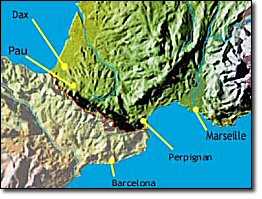
To take a few of his many National successes Pol Bostyn scored 1st, 2nd, 3rd and 14th positions from Pau. Also 1st National Ruffec and again from Pau in 1970 the lofts were 1st and 3rd National.He also won an Internationals from Biarritz and also Pau. Further research revealed 1st National Narbonne, 1st National Argenton, 1st National Brive, 1st National St.Vincent as well as 1st National Marathon in 1978. In total Bostyn won about 14 Nationals in the home of the sports origins. Thus who can deny his genius, a genius of the sport who could not read or write.
As a pigeoner, Bostyn, had the reputation of being a strict manager and by all accounts he was an excellent judge of a pigeon. Based upon this judgement he started in the 1930s with four pigeons containing Marien, Julian Matthys, Vandevelde, and Commines bloodlines. From their matings one of the young was to become the famous Bleken and another Oude Zwarte Bordeaux, the latter winning seven first prizes from Bordeaux. Eventually a Stichelbaut cross was introduced to the fledgling strain. This was confirmation of the owners genius for the key to many of his successes arose from it. In truth Stichelbaut and Bostyn became good friends and swapped and loaned stock which contributed to the success of both families, a happening which has helped many other strain founders in their stock enterprises and ambitions over the years. In fact it was reported, arising from their mutual benefiting venture, that Bostyn and Stichelbaut were once on the verge of signing a legal contract. It must also be noted that via the Stichelbaut crosses Bostyn had contributed to the birth of the Cattrysse dynasty. But that is another story.
To conclude, Pol Bostyn played a pivotal role in the development of the world's modern distance and marathon racing pigeons, that's the opinion of many historians of the sport.It is an opinion of which I am firmly in accord.
Andre Vanbruaene
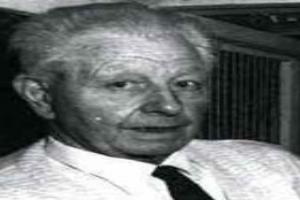
Many fanciers in Europe carry the hope that they will win a National pigeon race and some that they will win an International. In fact, the stock purchased, the careful mating, the good management, the best of training and feeding are all geared to accomplish their dream of glory at National and International level. Some make it and others fail despite a lifetime of trying . However, the architect of the strain being sketched won not only at National level but also at International level from various racepoints into Belgium, including being twice Barcelona international winner. His name? Andre Vanbruaene.
Andre was born on April 4th 1910 and died on March 8th 1999. He was approximately 17 years old when he has his first pigeons and participated in the short, or speed, races. In due course, because of success at that distance, he was excluded from certain clubs which prompted him to try the distance. It wasn't long before he was winning from racepoints such as Pau, Angouleme and Libourne with his famous pigeon, Stier. One of his greatest achievements, however, was his win from San Sebastian in 1952 with the great Tarzan. In fact, this bird flew from Spain to his home loft in one day winning the International classic, an astounding piece of pigeon racing ability. Of course, these were just a few amongst many wins by this master of the sport, for in 1966 he won the International Barcelona Classic with the aptly named Barcelona 1; then to prove that this accomplishment was not a fluke he won the Barcelona International in 1984 with Barcelona 2. Surely this would have been the creme de la creme for any loft? But it wasn't for Vanbruaene who scored at other nationals during his lifetime.
In addition he produced breeders like Electriek, who bred winners at Perpignan, St.Vincent and Pau (for an English loft in 1982) and was also in the bloodlines of Barcelona 2. It is recorded that he won 12 Belgium Nationals as well as other top National positions in his career. In addition, this master of the pigeon racing sport recorded four International wins which included the two from Barcelona plus Pau 1951and San Sebastian 1953. Even in tough flights from Barcelona, Vanbruaene timed 8 out of 8 sent and on another occasion 10 out of 10 sent. Some flying!
Upon my introduction to the sport I was shown photographs of the birds of this great master of the sport. Still, today they give the impression that they were made of steel. In fact, if I look at my own stock I feel uplifted if one of them (especially the youngsters) reflects a steel- like appearance by sight or by handling. This behaviour, I believe, descends from my past encounter many years ago with images of the Vanbruaene winners. They placed a compelling factor in my concept of the phenotype of the ideal long distance pigeon.
Vanbruaene had a loft full of excellent breeders and as his record shows, fantastic racers. This was the fruit of his labours at Lauwe in Belgium- and I emphasize the term 'labours' for his making of his strain was a labour of love based upon good management, and nothing left to chance, the result being rewarded over a thousand times by the successes for himself and others.
It was a strain based upon the careful crossings of pigeons from the lofts of others and one in particular the west Flemish loft of Remi Molein of Ieper who had very good pigeons based upon the strains of Commine and Vandevelde and Andre had made a shrewd choice when he obtained the latter stock.This was not the only input into his foundation, however, for he also purchased stock from the Stichelbaut lofts of Daniel Labeeuw and Marcel Desmet, as well as stock from the lofts of two of Alois Stichelbaut's brothers, namely Remi and Emiel. Thus the historic Stichelbaut strain made a major contribution to the evolution of the Vanbrauenes.
In conclusion, the strain of the late Andre Vanbruaene occupies the same level of historical esteem as the Aardens, the Catrysse, the Stichelbauts and the Van Hees and, in the opinion of many, are number one in the annals of long- distance pigeon racing.