NORTH LIVERPOOL FED
NEWS FROM DARREN SMITH
Just a Bit of Luck!
An interview with Edgehill’s resident old hand, Mr Brian Snagg, commemorating 40 years as a pigeon fancier.

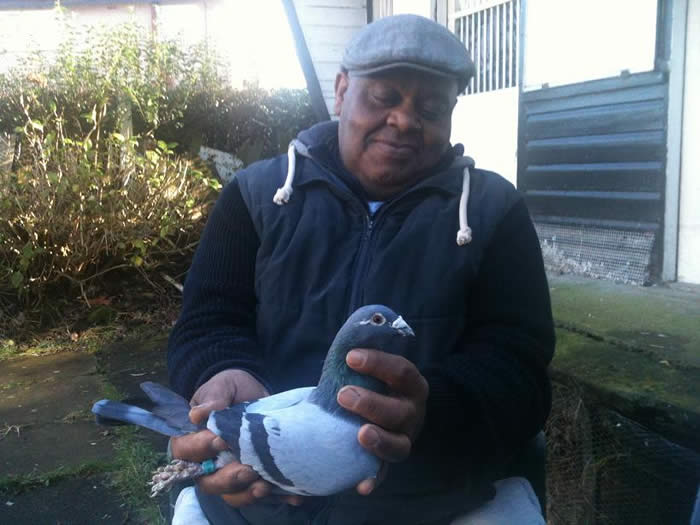
Brian and Beryl.
It was brought to my attention at the start of the 2012 season that the club’s longest serving and probably most successful ever fancier, Brian Snagg, was entering into his 40th year in the sport of pigeon racing and I thought it would be a good idea to visit the man himself and have a little chat.
If you have flown pigeons in the Liverpool area during this period, you will no doubt be well aware of the prowess of Brian & his nephew Terry Snagg, proper pigeon men whose racing achievements over the past 20 years will bare the closest of scrutiny whenever talk turns to top drawer pigeon fanciers.
A bold statement yes, flattering, perhaps. But having witnessed their dominance first hand since becoming a member of the Edge Hill HS in my late teens and having got to know both men very well during this time, it is a statement I have no fear or hesitation in making.
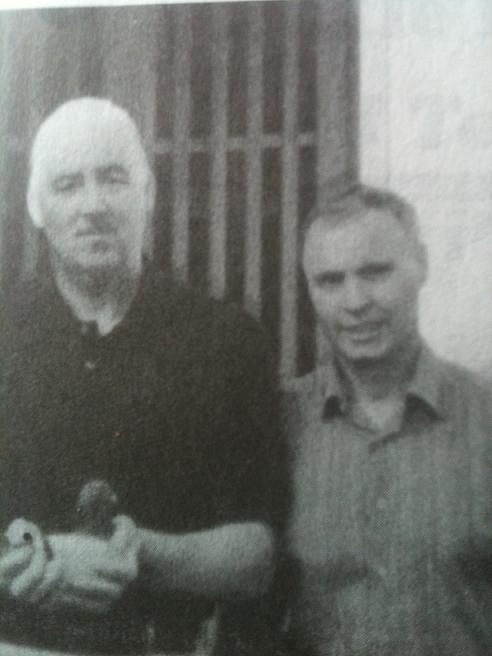
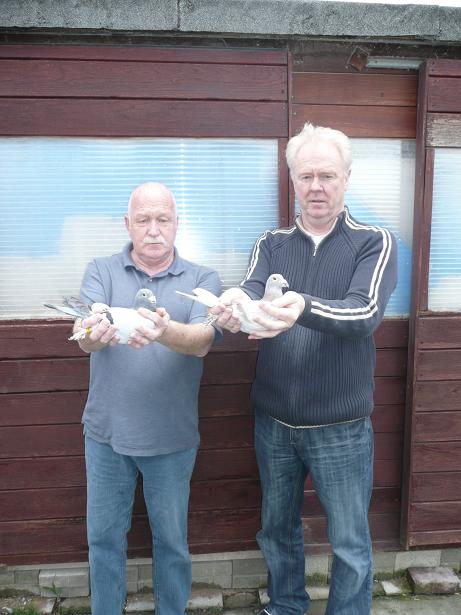
Terry and Brian.
It was during the mid Autumn that I paid a visit to Brian’s home to try and get a snapshot of his time in the sport. I hope you enjoy.
Can you tell me where you were born and what year?
I was born in 1938, in Elm Street, not far from Harrison Jones School. Round the corner from where I lived was a area known as the Seven Dodgers, where 7 streets met together.
Do you have any brothers and sisters?
Yes, I have 2 brothers, one of whom was adopted and I also have a sister.
What did your parents do for a living?
My old man was a merchant seaman and he hailed from an island in the Caribbean called St Vincent and my mum came to these shores from her birth place of Dublin.
Did any of your family have an interest in pigeons ?
Yes, my eldest brother had them in our aunties backyard in Benthill Street, which was by Hall Lane overlooking Liverpool city centre.
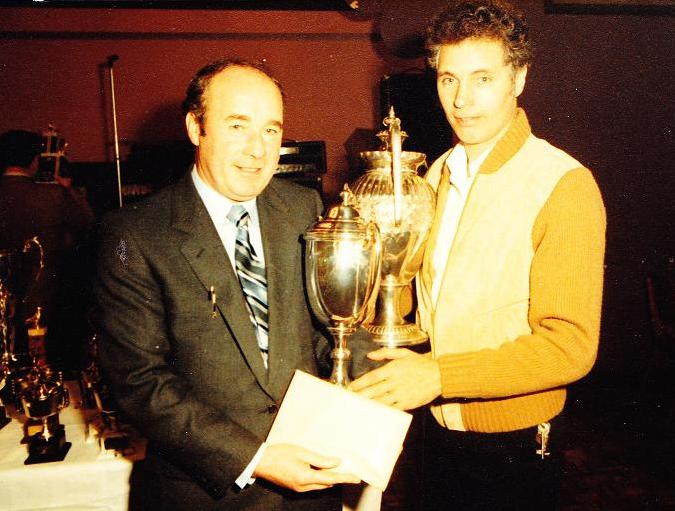
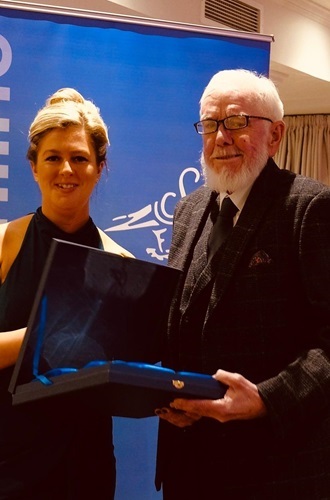
Brian receiving trophies from the great Albert Tarleton.
Did you or family have any other interests growing up?
Only boxing - every one of the lads in my family boxed.
How old were you when you first started racing pigeons and can you describe how you housed them?
I was about 11 or 12 and I kept them in the back yard of the tenements where we grew up in Paddington Gardens. There were loads of people who had pigeons in Paddy Gardens, the Kenwrights, the Devines, there were loads of fliers back then.
When did you meet your wife Beryl and how long was it before you were married?
I met Beryl in the ‘Le-Carnot‘. It was the only time I went. It looked like she was sitting on her own under the clock and I felt sorry for her! Look at that poor girl on her own, I thought. Was I kidded? She looked like butter wouldn’t melt in her mouth (laughs). We were courting 6 months then we got engaged and 11 months after that we were married. Not long after I got called up and was in the Army for 2 years.
Do you have any children?
Yes we have 3 lads, 13 grandchildren and 3 great grandchildren. My eldest lad Stephen boxed in the RAF for the ABA title. He had over 200 fights and won about 180 of them. Alan and Brian both boxed for the Army.
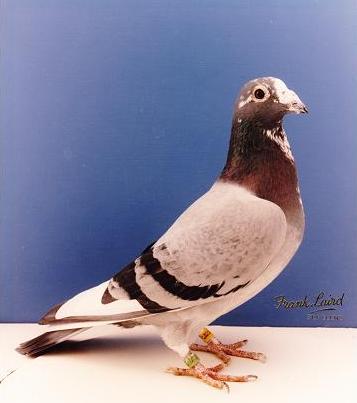
Jimbo - Edgehill HS Bird of the Year. 1st Rennes, 1st Nantes, 3rd North Liverpool Fed.
Did the lads have an interest in the pigeons?
Not really, they would clean out when I asked them too but they were not really interested.
Can you tell me a little about your working life?
I started in Cammell Lairds as a ship builder in 1953. I was there up until 1995 when the yard closed due to Margaret Thatcher. I also did National Service in Cameroon, West Africa for 9 months.
Have you always lived in Edge Hill area?
Yes I have, all my life.
How long was it before you joined your first pigeon club?
Quite a while to be honest, I even packed in pigeons for a while and got married before I decided to get started again and join a pigeon club. It was 1972 when I first dipped my toe in the water.
Can you describe when your nephew Terry joined the partnership and how it came about?
We started together in 1972, he left the partnership in ‘77 and came back in 1984.
Describe the racing pigeon scene at the time you took up the sport
When I joined it was fantastic! There was about 35 members in the Edgehill. I also joined the Wavertree HS which had around 25 members and the Sefton Park HS which had about 15-20 members.
By the 80s the Edgehill membership had swollen to about 50 lofts and the club felt the need to put a limit on new starters. The Wavertree numbers also rose to about 35 and the Sefton Park had around 25 members. That was at its peak.
In the Edgehill we used to run a raffle and it was amazing; we would pay half out and keep half back and we would end up with £240 a week off the raffle. We never paid more than £100 out in prizes and the rest went on racing. We bought all sorts, including cups and trophies and we still raced for £100 per week and that was in 1982/83. Unbelievable and they were a great crowd of people as well.
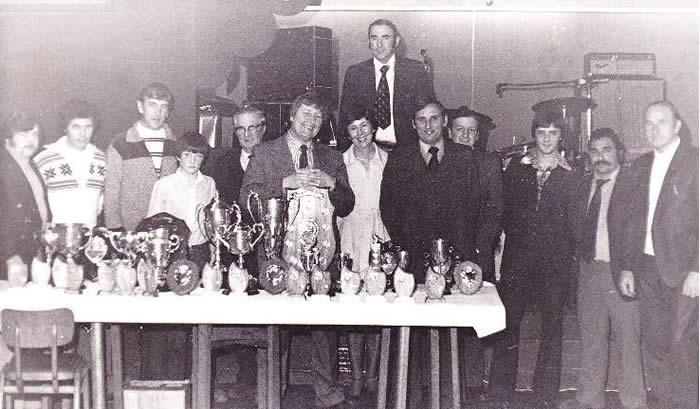
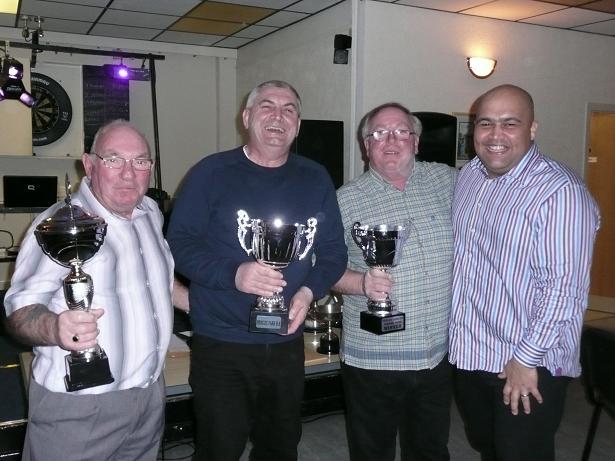
Edgehill HS Prize Presentation 1976.
Can you tell me a little about who influenced you at the time?
I used to be a tramp for Franner Brown, taking his shorts. I was great mates with Franner for years. Then there was Billy Moss and his old man, who was a great short flyer. I never had a place of my own to do it until I moved to Woodcroft Road and then when I moved here to Shanklin Road I decided it was time to race. I asked our Terry if he wanted to become partners and that’s where it started.
Did these fanciers instil any beliefs or values that you still hold dear to today?
I wouldn’t say that they gave me any of my present values really. I picked up a lot of my values and beliefs from the likes of Jim Barton of Birkdale; he was a great influence on me and I used to go to his lofts pretty often. He is the ideal person for any young person coming into the sport to visit.
Joe Simmo was another fella, he was always interested in the feeding. If he ever came here and there was a pigeon on the roof he would tut his discontent and then he would say ‘I bet that would a make a good show pigeon!’ meaning it was too bloody heavy! Yeah old Joe was a case!
I also remember Billy Elmer who flew on the next plot to Simmo, they flew on the university grounds down South End. Great characters.
What method did you fly in the early years?
Natural, and the favourite nesting positions were hens racing to chipping eggs, especially over the water.
How long did you have to wait for success to arrive?
First season me and our Terry flew, we had a first and a second with young birds and we were runners up in the young bird averages, that’s 1972. Our first winner was a pigeon that became known as the Sion Cock. He was a glorious red cock and he was a gift pigeon. He went on to win about 8 firsts for us.
Did you make many mistakes in the early years?
(Laughs) Yes, loads!
How have you ensured you don’t make the same mistakes?
Well I suppose we have always learned from our experiences and over the course of time the things that haven’t quite paid off have been ironed out. A big mistake we made in the early years was overfeeding, so I made sure we got that right. Too much food is like feeding them poison!
Have you ever been one for taking/making notes? Or do you keep everything in your head?
Our Terry’s the one who was always making notes, I’ve always kept it all in my head, just out of habit really.
Starting off in the 70s, what were the origins of your pigeons?
We had a mixture of all sorts back then, it wasn't the strain obsession of today that‘s for sure.
When would you say your own type of pigeon started to take shape?
In the early 80s I got some of Roy Mundy’s pigeons and they flew well for us over the water and we thought we‘ll have some of this and that was probably the start of our own family forming.
I’ve got a little story here. Beryl and I took a basket of pigeons to Chester for a training toss and we let them go. The next thing the heavens opened and it started pouring down. We got home and were dismayed that we never got a pigeon on the night. What have I done? Is all I kept thinking all night. The following day was Thursday, this was the first race of the season by the way, there was 2 out of 20 back early doors and later on in the day about a dozen were home. Even after I got home they were still coming in. So the following day, Friday, I didn’t know whether to send but in the end, I did send and on the Saturday I came home and I said to Beryl what time are they up? She told me 11 o’clock and I said well they should be home! Half 12 came and I walked out to check and there were 2 on the roof and so I called them in and we finished 1st and 4th in the Edge Hill and 2nd and 4th in the Wavertree. Just goes to show you doesn’t it, how resilient they are. This was in about 1981.
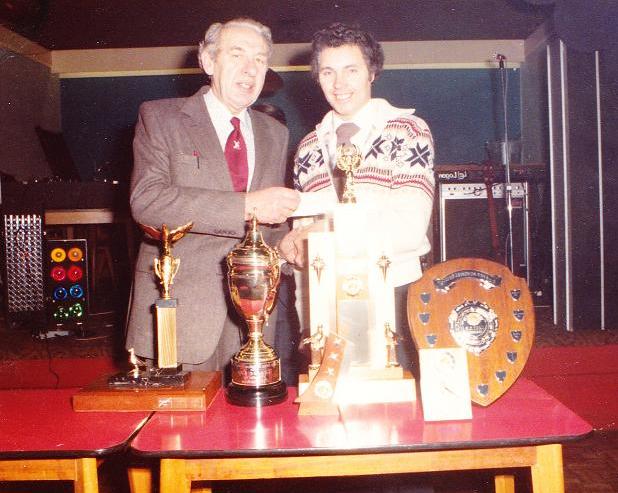
Brian and the Master, Les Kilshaw.
How about the 90s?
We introduced the Staf Van Reets from Dean Pallat in the early 90s and at this time we also purchased a hen from Billy Holt who always had cracking pigeons around him. I went up there with a club-mate, Steve Backhouse to see Billy as I heard he had pigeons for sale. I saw this cock with a German ring on and I liked it and asked how much and Billy said £300. I thought, Jesus Christ, that’s a lot of money! Then I saw this hen and I asked what price she was and he said, ‘she’s not for sale! there’s no way you can have this pigeon’. So I said I’ll let you know and we left.
10 days later roughly, Steve and I went back to Billy’s as I really wanted to buy that cock. I had another look around and I picked up the cock. He was in a heavy moult and I said he’s in pieces now, look at him and he said give us £250 for it. I said I don’t think so, so Billy said give us £200 and I’ll give you the cock and you can have a daughter off the hen you liked. So I said let’s have a look at the daughter and her eye was unbelievable. So I said okay I’ll take your offer and I took that hen and the daughter of that original hen was a pigeon we named the ‘upside down ring’ hen. I think she bred about 8 federation winners when paired to ‘86 which was a cock off the Staf Van Reets. He was a late bred and he was the only decent pigeon we bred off the Dean Pallat pigeons.
Them 2 pigeons though, bred all sorts. Our current family of pigeons, 14, all of them originate from them and we loaned the original Billy Holt hen to a pigeon flyer with a cock as we told him we would do him a favour. But when she was returned to us, she died within 2 days. We hadn’t even bred off her properly. I think we bred about 3 pigeons off her and every one was a cracker.
Can you recall any of your past great pigeons and performances that stick in the memory?
The Sion Cock and 14 who topped the North Liverpool Federation 4 times before being put to stock, were probably our most successful pigeons.
What have been your most memorable achievements?
Topping the North Liverpool Federation at Nantes. I always remember it was raining and we took the first 3 in the Edgehill as well. Another result that I’ll always remember was in 2009 when we took the first 7 in the Edgehill and first, second, third and fifth in the North Liverpool Federation. You could only have 4 pigeons on the result otherwise all 7 would have made the fed sheet. Another couple of results that stand out are when we took the first 4 positions in the Edgehill Breeder / Buyer and the weekend we took 5 firsts. We topped the North Liverpool Federation with a pigeon bred by yourselves which also won the Edgehill. We also won the Sefton Park and Wavertree clubs racing with the Liverpool Amalgamation, the Spellow Breeder / Buyer and the Leigh Arms.
When did you make the changeover to widowhood and why?
It was about ‘86, we just thought it would be easier to race as me and our Terry were both working and nobody was at home. I could let them out before I went to work, then I’d come home from work, we’d let the hens out and then we would have the cocks out after them.
Did your results improve noticeably after the changeover?
I would say so yes, almost immediately.
Prior to the changeover to widowhood, did you set your stall out for sprinting the channel or did you like to have a go at everything?
We had a go at everything. At the time we were not sure as we had pigeons that were of middle distance origins so we just had a go at everything right through.
Were there any influential figures during the second decade of your pigeon career?
The person that brought widowhood into our consciousness was Albert Tarleton. His performances in the Liverpool area were just electric and he convinced a lot of people to make the change to widowhood. Another influential person as I explained earlier was Jim Barton. He was also a widowhood man.
Can you give me an insight into your beliefs on feeding?
I firmly believe you should never give a pigeon more than an ounce and a quarter of feed per day. All year round. Give them less, but never more.
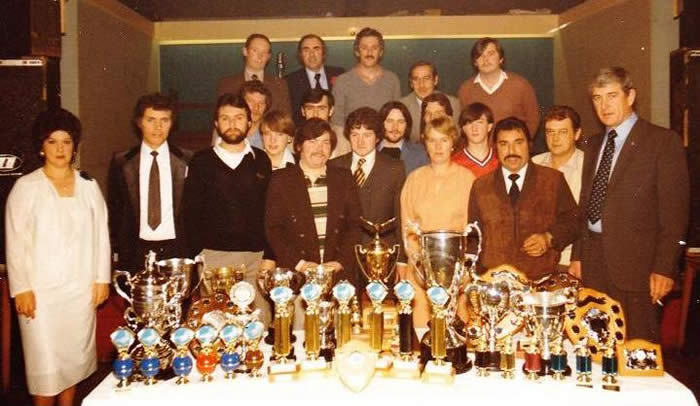
An Edgehill Prize Presentation from the 70s.
What about basketing day?
The most our pigeons ever receive on basketing day is half an ounce.
What type of feed do you use and how many times a day?
Young birds I feed four times a day if I can, old birds are fed twice a day. We feed them heavy protein of a Saturday evening and then it changes to a light carbohydrate mixture of a Sunday, becoming more energy rich as the week progresses by adding in fats on a Wednesday. We used to feed Versele Laga, but our Terry buys the corn now.
We add Marimans maize to the mix we use and sometimes I give a few sunflower seeds because of their high vitamin and mineral content.
A few years back we used to feed what we called the four whites which were equal parts of sunflower hearts, safflower, rice and white dari. We used to always feed that to them during the inland racing. I used to swear by that.
How do you administer your protein? What type of grains?
Versele Laga young bird as there is a lot of protein in that, we always add peas to it.
Do you use beans?
No we don’t use beans, they are marginally higher in protein content than peas but the birds will eat the peas far more readily so we don’t see the need to feed beans at all.
What is your opinion on use of barley?
I think it’s a really good grain if used in the right way and at the right time.
How are your hens kept during the week and how do you race them?
They only go out once a day and they are fed a little over 3 quarters of an ounce a day which will stop them pairing up, this is from Sunday to Wednesday. They are fed one and a quarter ounce on a Thursday and half an ounce on a Friday, with all they want on a Saturday.
We leave the hens with the cocks until about 7pm, depending on the type of race they have had.
The widowhood cocks are fed half an ounce am and 3 quarters of an ounce pm Sunday-Thursday then half an ounce on a Friday and all they want on a Saturday, just like the hens.
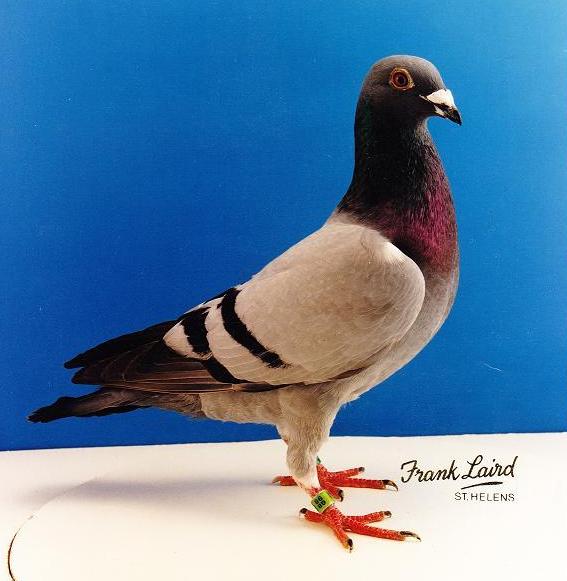
Champion 14, winner of 4 x 1st North Liverpool Fed.
What are your thoughts about having corn down in front of widowhood pigeons all day i.e. a hopper of barley or peas and giving the cocks a measure of mixture in their box of an evening?
Each to their own but I wouldn’t do it, there is no need for it.
You have been flying in the Midlands National for a number of years, what are your thoughts on the type of pigeons you need?
I don’t think it’s a different type of pigeon you need, you just have to use a different method as its not quite the same as club racing. I think the people who race only from the club have the advantage. A lot of thought has to go into adapting your management when you are also racing in the Midlands National. The pigeons need a rest between races. Better preparation and more rest are key. In my opinion, I think it would be better if the National was flown fortnightly and not every 3 weeks.
What ambitions do you have remaining in the sport?
It would be nice to win the Midlands National.
During your time in the sport what have you come to love the most?
The camaraderie between the fliers, it’s one of the best things, if they are all in the right mood! (laughs)
Has Beryl ever taken an interest in pigeons?
Yes she has clocked them in for me once or twice.
If you could give 5 pieces of advice to a new starter what would they be?
1. Obtain pigeons from a decent flier.
2. Don’t over train.
3. Don’t over feed.
4. Don’t keep too many pigeons.
5. Train them to come in from the sky, don’t let them pick up bad habits by letting them sit on the roof too long.
Who do you admire in the pigeon sport?
Without any shadow of a doubt, Albert Tarleton. He’s always flown a good pigeon for as long as I can recall, in the best of company and he has been in the sport for years. He is a real genuine fella, who has done well and never been over the top as a result of his success. Jim Barton is another I admire. He travels all over Europe visiting top fanciers still trying to better himself. Neither of them are ever too busy to talk pigeons with you, that’s what I like about them. I’d also like to say our Terry, he’s a walking talking book on pigeons, he’s a great competitor and has always been there giving me a gee-up when needed!
In closing, what would you like to say to Beryl?
I’d like to say thanks for giving me a good life, I’d be lost without her. She’s been very good to me and has given me a beautiful family, all of whom I am immensely proud of.
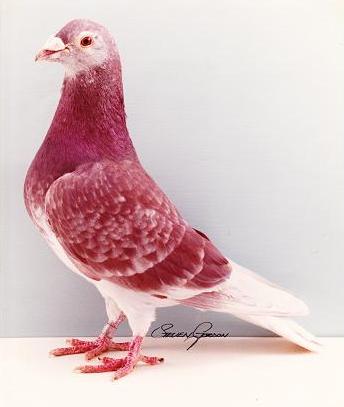
The Sion Cock. Brian & Terry's first winner who went on to win 8 x 1st.
Well folks there you have it, wise words from a very wise man. I remember many times during a youth misspent, being up the club on marking night and Brian would have the likes of Mick Ellis, me and the other congregated novices captivated as he teased our grey matter into action.
Every week Brian would feed us a little snippet of advice and just as our questioning would approach fever pitch, we came to learn the glint in his eye and the attached wry smile was the signal that he’d told us enough and he was off home! Good times.
While I was at Brian’s I had a look through his files and was amazed to learn that since 1998, he and Terry had won a staggering 280 x first prizes and the counts for 2nd, 3rd, 4th, 5th and 6th positions were of similar numbers with memberships ranging from 25 to 12 members.
These results were flying across 3 domestic clubs and the Leigh Arms, but don’t take into count the great success they have achieved at Federation and Amalgamation level and the various breeder buyer races that they have won.
I think every time I have ever shaken Brian’s hand congratulating him on his latest victory, his humble response has been, ‘It’s just a bit of luck!’. Lend us a pair of your lucky undies this year please Bri!
I’d like to thank Brian and his wife Beryl for making me feel so welcome on my visit. I wish you both the very best for the new year in everything you do and I hope that you do indeed get that bit of luck in the National and soon!
May I also wish each and every one of our readership a fantastic 2013 and I hope you realise many of your hopes and ambitions. Have a good one!
Our results as always can be viewed online by visiting:
www.elimarpigeons and www.fancierchat.com
Darren