NORTH LIVERPOOL FED
NEWS FROM DARREN SMITH
Loft profile on Thomas Robinson, Princes Park HS
Season 2012 highlights:
1st club, 1st North Liverpool Federation, 1st North West Combine Poole
1st club, 1st North Liverpool Federation, 4th North West Combine Niort
1st club, 2nd North Liverpool Federation, 4th North West Combine Fougeres
2nd & 3rd Liverpool 2 Bird Messac

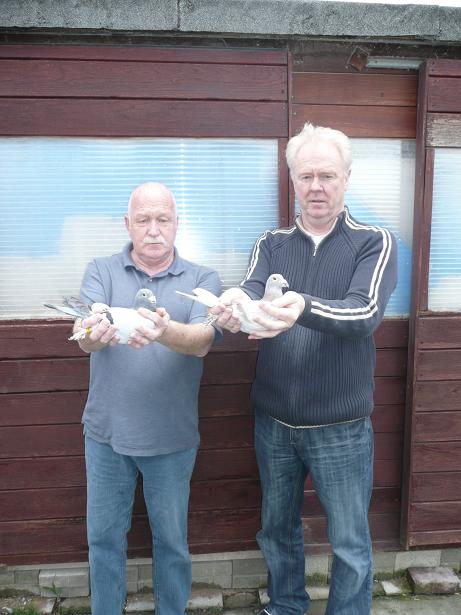
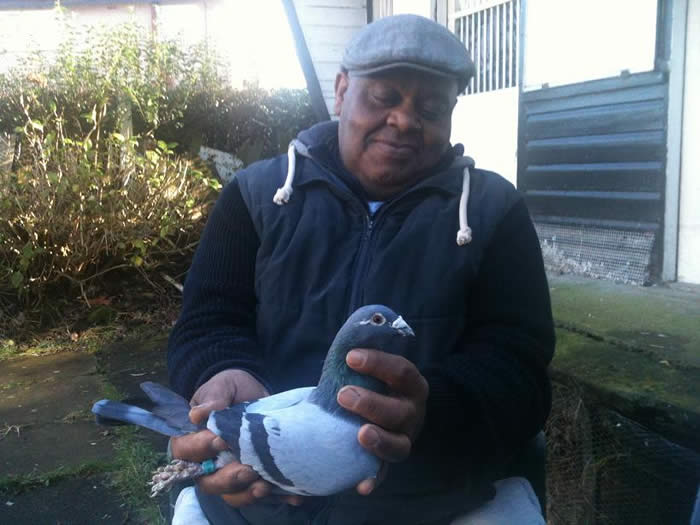
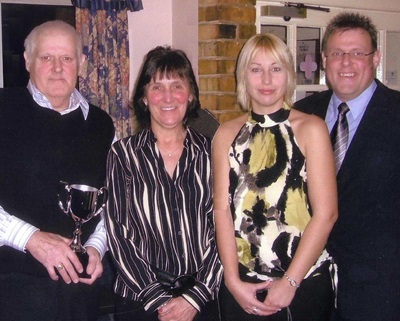
Tom holding Broken Toe, winner of 9 x 2nd and an ace breeder
Can you tell me a little about yourself and how you became involved in the sport?
The partnership started off under the name of Miller Brothers and at the age of 4 I started to become interested in the birds, mainly because of the flashy pigeons my dad Les and uncle Graham had in the team especially the whites & grizzles which always catch the eye of a youngster. And now 17 years later at the age of 21, I have never been able to get rid of the so called ‘pigeon bug’ and cannot see my future consisting without them. I eventually took over the Miller Brothers partnership after my dad and uncle lost interest in the sport and it then seemed only fair to change the name to Miller & Sons.
What was your first club and what club/s do you fly in now?
My first club was and still is the Princes Park HS which we have been members of since the partnership of Miller Bros was formed, but at the time it was part of the Liverpool Amal. Nowadays you can find us competing in the likes of the Liverpool 2-bird, the Taylor’s Arms Breeder/Buyer, the Pirrie Gold Ring and in the coming season we will be giving the Liverpool Classic Club a shot, which seems to be very well organised. We are also members of the Midland National Flying Club, but we have never really got around to taking part in any of the races.
Who were your mentors in your early years in the sport?
Obviously with me joining the sport at a young age alongside my dad and uncle they were my main mentors, starting with them teaching me how to handle a pigeon correctly, but that must have been Graham bearing in mind my dad, still to this day, cannot handle one without it getting away. Also, the majority of the Princes Park club members helped me a lot especially on a Friday and Saturday and also when I approached them for some advice.
Have they taught you anything which you still practise today?
I would love to say no and take all the credit, but other than my own little ideas and tricks that I have picked up over the years, I like to refer back and if suitable include parts of the system they used in the Miller Brothers days. My dad still says ‘have you done this and that?’ on a Friday afternoon prior to basketing because he loves to try and take the credit if a good result comes our way on a Saturday!
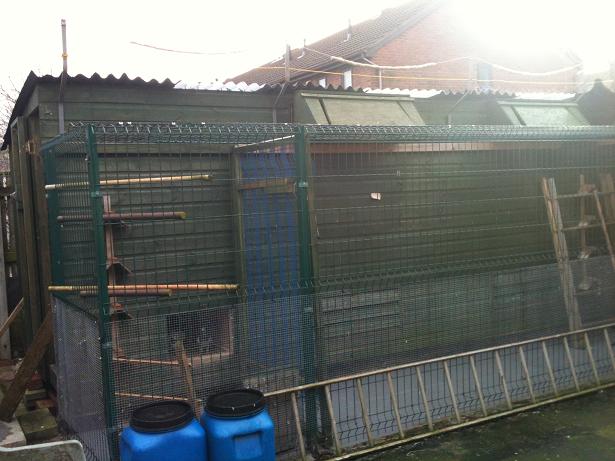
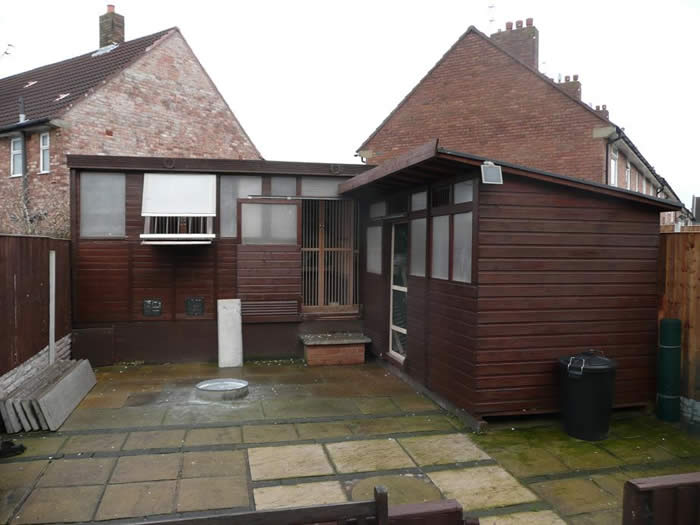
A small section for stock next to the main young bird section
Can you tell me what preparation goes into your breeders prior to pairing up?
Before breeding, as most will know, it is vital to get them through a stress free moult as much as possible. Whilst the moulting period is taking place I like to keep an eye on them to see how well they can handle the stress they are under, especially the yearlings which have been on the darkness with this being their first main moult. When pairing the racers I tend to look through their racing results as well as at their origin and pair up that way. The best racers normally get one pair of youngsters taken off them and the rest get eggs floated under them from the stock loft.
As for the stock birds, in the main they get paired solely on the results of their previous offspring, but I also like to try new matings out to see what they can produce with different partners. Once their first round of eggs have been floated I tend to switch the pairs around. Before pairing up I treat for canker, respiratory and worms and I also send the droppings off to ensure that there is no other unwanted bacteria knocking about. Whilst the birds are sitting eggs they are then cankered again.
Whilst the birds are fighting through their moult they get fresh grit daily and have a variety of electrolytes, multi vitamins, natural tea and garlic in their water from day to day and on their corn they get cod liver oil, buttermilk and brewer’s yeast.
About 4 weeks before they are due to be paired, the birds are introduced to their partners where they will spend 1 week only. This is done so that when it comes to the breeding period there is no messing about or fighting.
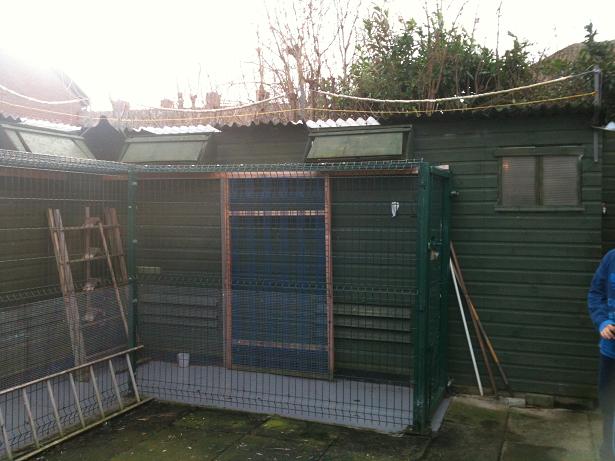
Old bird racing section
Do you fly widowhood, roundabout, natural, celibate?
Inland we fly widowhood and on the channel, natural.
Can you outline your system from the time you pair up, to once racing commences?
Once the birds are paired up like already mentioned whilst sitting eggs they are due to be treated for canker so this is when this course of treatment is carried out. The race birds are allowed to breed one round of young birds but under certain circumstances they may be allowed to rear 2 rounds.
Whilst rearing the youngsters, they are given fresh grit daily and cod liver oil on their corn 2-3 times a week and have Orego-Stim in the water daily. After they have finished breeding the cocks are allowed to fly morning and evening and the hens only of an evening and I do not force them to fly.
2-3 weeks prior to the racing commencing, dependent upon the weather, the training will proceed. Starting with a week at Hale, they are then sent further out to Chester for a week. I take them every morning at the same time dependant again on the weather, with me leaving home around 6.30 in order for me to get to Chester and back to Liverpool in order for me to get into university for 9am, which is hard work but if it pays off on a Saturday it’s well worth losing out on that extra hour in bed.
Once the week at Chester is complete this will take me to the weekend before the first race, which allows me to give them 2 tosses at Wrexham due to no university. They will then be brought back to Hale until racing commences.
Do you believe you must stick rigidly to your management routine once your racing season kicks into swing, or do you adapt it as situations arise?
I do try to stick to my management routine as much as possible from week to week but if situations arise then things can change slightly but I wouldn’t class them as drastic changes
Describe in as much detail as possible your Friday preparations, from feeding and at what time, through to basketing for the club?
On a Friday I start off by ensuring the birds have fresh water, then their feed (super widowhood mix) will be put in front of them at about 10am and it is left there until around 11:30am and then whatever is left will be taken away. The birds are then left to rest with no disturbance until around 2:30 pm when the cocks will be locked in the back of their boxes with a nest bowl and they will be left like this for half hour. Once the half hour is up the hens will then be allowed to enter the relevant sections and will only have access to the front of the boxes, and must not be allowed to touch the cocks. Half hour later the hens which are being entered into the race will be put into the basket at 3:30pm and the box fronts will be brought forward so that the cocks have the full box to themselves. Any hens which are not being raced will be removed and put back into the hen compartment, so at this point the race hens are locked in the basket and all they can see is the cocks driving in the boxes, which gets the hens worked up. At roughly 4pm the cocks will then be put into the basket and off to the marking station we go.

Karel Herman cock, winner of 1st North Liverpool Fed 2nd North West Combine and breeder of 3 x 1st prizewinners.
Can you describe one motivational trick that usually brings about a good racing result?
As mentioned above, putting the hens into the baskets and leaving them in the cocks' section so that all they can see is each other. This usually works a hen up and makes her want to get to her mate, so that when she is released on race day all that is in her head is that her mate is in the box waiting for her.
Do you prefer sprint racing, the channel or do you enjoy racing at all distances?
Well although I enjoyed the channel racing this year, sprint racing is what I prefer.
Do you stock your best racers and when do you do this, e.g. when they reach a certain age or if they win a major race or produce a number of top club/federation/combine honours?
Yes, in the past I have stocked some of my best racers but only once they have reached a certain age or when they have proven that they can breed the goods, for example Broken Toe, who had 9 x2nd clubs. He was put to stock at the age of 4 and went on to breed good pigeons and still does at the age of 14.
What do you prefer, a good racing cock or a hen?
I don’t prefer any sex, if they are good winning birds, why choose? A good hen is treasured just as much as a good cock here at my loft, but with cocks you tend to get more racing out of them as you do your hens.

Cheq cock, 1st club 2nd North Liverpool Fed 4th NW Combine Fougeres.
Can you tell me your health schedule during the race season?
It is important to keep your birds as healthy as possible, not only during the racing season but all year round. Ensure you have plenty of ventilation throughout your lofts and that your loft is not overcrowded. Also ensure that your birds get fresh water and grit daily. Whilst racing my birds get treated for canker and respiratory every 4 weeks.
Do you use supplements?
Yes I use supplements but they are not necessarily specific to pigeons. I use the likes of natural tea, multi-vits, brewer’s yeast and Orego-Stim, but I also use cod liver oil, garlic and even lemon juice which are not specific pigeon products.
How/when do you use these products?
On a Saturday when the birds have returned from the race, and Sunday they are given brewer’s yeast and lemon juice on the corn. The lemon juice is used so that the brewer’s yeast powder sticks to the corn and doesn’t just fall to the bottom of the feeding trough, which ensures that the birds all get an intake of it. They also get the tea and multivits in the water on these days too.
The garlic is added to the water a couple of days a week throughout the year except for breeding periods, but mainly in the moulting period. The Orego-Stim is used whilst breeding but can be used all throughout the year too and is also administered in the water.

Cheq white flight cock, 1st North Liverpool Fed Niort.
What corns/feedstuffs do you use?
Whilst racing old birds they get Versele Laga Super Widowhood mix and as the races get further Gerry Plus will then be introduced and they will then get 50% Super Widowhood and 50% Gerry Plus, 5 days a week. This is required for both the race cocks and hens. On the other 2 days they will get depurative.
Can you provide a breakdown of how and when in the week you feed regarding the different corns?
Monday–Friday the birds will receive the Super Widowhood mix and this is also the same when the Gerry Plus is added and on return from the race they will be given depurative with the lemon juice and brewer's yeast added to it. This will also be carried out on the Sunday.
The birds are given half a belly at around 11am Monday–Thursday and a full feed in the evening after their evening outing. On a Friday they will receive a full feed around 10am. On a Saturday the feed will be put down around an hour after the first bird has arrived and they will have corn in front of them at all times up until Sunday night.
Do you feed ad-lib or believe in feeding measured amounts?
No, I don’t believe in feeding measured amounts, my birds eat as much as they like and when they start to leave bits of corn in the trough, at that point it is taken away from them. My birds get exercised well so therefore I don’t really worry that much about them being too heavy and putting weight on.
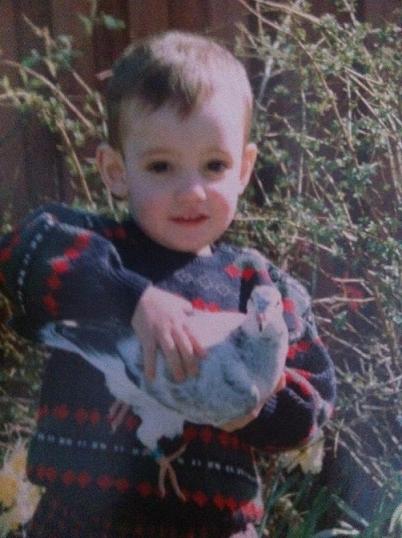
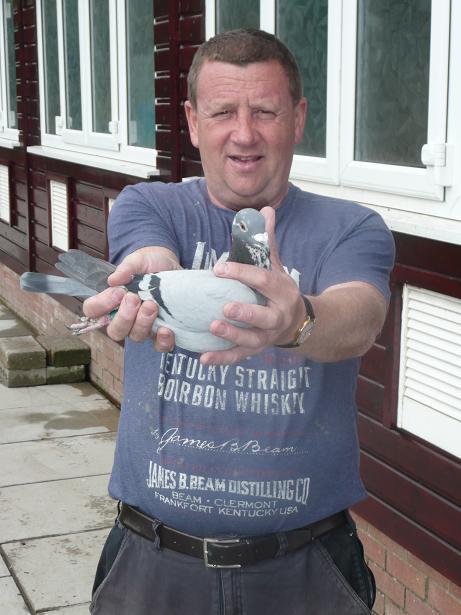
Tommo aged 4
Is there any difference in the way you feed old and young birds when racing?
In terms of times, no: they are fed at the same times as I would my old birds, but when it comes to corn then there is a slight change, they get 75% Gerry Plus and 25% young bird mix.
Do you feed your cocks the same as you feed your hens, if not what are the differences?
My cocks and hens are fed exactly the same.
How much time do you devote to your pigeons both at the loft and while away from the loft?
I spend as much time at my loft as possible. People say the less time you spend in the loft the better the outcome will be, but I disagree. Pigeons can be a full time job, as many will agree, and I think it is important to devote as much time as possible to your pigeons in order to keep on top of them and get the best out of them. When I am not at the loft, in a way, I still am, because the pigeons constantly run through my mind. Things like what needs doing? and what could be done in order to improve? I suppose I do have the pigeon bug, there is no escaping them. I see more of the pigeons than I do my parents!
You need to keep on top of the birds at all times, in order to maintain good health etc. Like the saying, a women’s work is never done, neither is a pigeon man's. You can always find something to do around the loft.

Pair of Belgian pigeons bred by Hugo Moons. Cheq w/f cock 1st Hereford YB 2012.
Other than through observing your own pigeons, how do you further your knowledge?
Well, I like to read a few different pigeon books and DVDs and I go on pigeon chat. There is always someone on that website who can help you with any problems which may arise. But a more practical way is visiting the lofts of Early Bros (Vauxhall HS). Whenever I visit that loft I always walk away with an insight on something else. Billy is full of helpful tips and he is a genuine pigeon flier who is always willing to help. He is a top man.
Do you visit other fanciers and observe their methods / share their ideas?
Yes, I enjoy going to visit other lofts. It's nice to see what other set ups are like and what methods they are using to beat their opposition. Over the years some tips that I have picked up from fellow fanciers have worked a treat and I would be willing to help anyone out to the best of my ability.
What are your aims for the future as a pigeon fancier?
Well before this season, one of my main aims was to win a channel race and now I have succeeded with that one, I would quite like to win the likes of the Liverpool 2-bird or the Taylors Arms breeder-buyer. Either of them would be nice.

Tom holding 1st North West Combine Poole 6,841 pigeons
What do you look for when introducing new stock?
Firstly, I like to see that the sale is an entire clearance sale. I would then look through the lots and check out the age, achievements, strain, background and whether they are proven breeders.
Does the balance and impression of/feel for the pigeon in your hand play more of a factor in your selection than the performance or bloodline of the pigeons you introduce, or are they of equal importance?
Well, I don’t like a pigeon which is on the small side or got a deep keel. I prefer a nice bold round body, but it's not about looks is it, ugly pigeons win too! Just like the saying don’t judge a book by its cover. I mainly introduce by the bloodline, performances and offspring mainly.
Do you tend to introduce good cocks or hens more?
I would like to think I have some top quality stock cocks at the minute which I would like to stick with, so if I was to introduce some new birds it would probably be good hens at this moment in time.
Do you house a related family of pigeons or do they come from various sources?
I don’t house a particular family of pigeons but they are mainly based around Staf Van Reets from Mr & Mrs Dickens and Karel Hermans from Smith Brothers.
How many old birds / young birds do you race?
The old bird team consist of 24 cocks and 24 hens, but I don’t send all the hens to every race, I pick and choose come Thursday evening which hens will be entered into the following race. I tend to send around 30 old birds per race if possible. I house around 60 young birds and send about 40 per race, also if the numbers are possible. Don’t put all your eggs in the one basket!
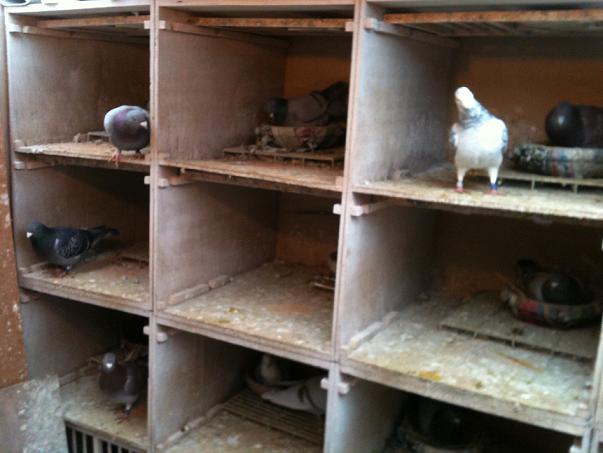
Inside one of the race sections
How many pairs of stock do you house?
I house 20 pairs of stock birds.
Have you ever stocked young birds you have bred based solely on their conformation and if so, what kind of success have you had from the resultant offspring?
Yes I have done. I have a 2009 mealy cock which was put straight into the stock loft. In his first nest he bred a pair of reds (now stocked and who are also breeding winners). One was 1st, 2nd (beaten by loft mate), 4th and 5th club and the other won 2nd, 3rd, 4th, 5th club, then in his second nest he bred a cheq cock who went on to win 1st club, 2nd fed 4th NW Combine Fougeres this year. In his third nest he produced a check cock who has got 3 prizes in the top 4 and in 2012 he bred one of Billy Early’s club winners which also won him a 1st gold ring prize. He is now treasured in our loft.
Do you train your old birds once racing starts and if so, how much and why do you feel it improves your chances of victory as opposed to giving them home exercise only ?
Once the racing commences they will be trained solely on their performances. If they are coming well in the races, then I don’t feel a need to train, but if they are not performing well, they will be given a couple of tosses a week to improve on this.
How do you train your young birds and how often before and once racing starts?
The training regime for the young birds is the same as it if for the old birds.
What has been your best achievement in the pigeon sport?
I feel my best achievement is when I won the North West Combine from Poole last year! That’s the highlight of the sport so far for me. Also another achievement I am proud of is the 7 x 1st North Liverpool Federation I have won.
Can you tell us a little about some of your best pigeons?
Broken Toe, a 99 bred cheq cock of Geveart bloodlines, still filling his eggs at 14 years old. He won 9x2nd and recorded many other club and fed positions too. He is also sire and grand sire to club winners.
The combine winner is another. She is a 2011 bred blue pied hen of Karel Herman bloodlines. She won 1st club 1st fed 1st Combine 6,841 birds.
Blue cock ‘Number 82’, a 2001 bred Janssen. He's the winner of 3x1st club plus many other prizes including 5th fed. He is the sire to the pigeon mentioned earlier when asked have you ever stocked young birds.
Blue Karel Herman cock bred in 2005, a winner of 1st club, 1st fed, 2nd NW Combine plus 2 x 2nd club and sire of 3 x 1st club winners.
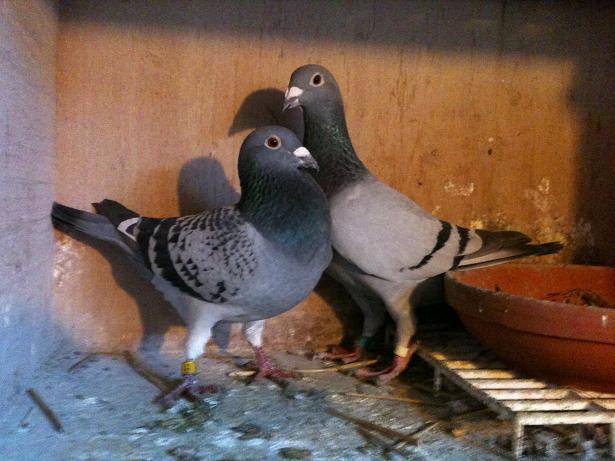
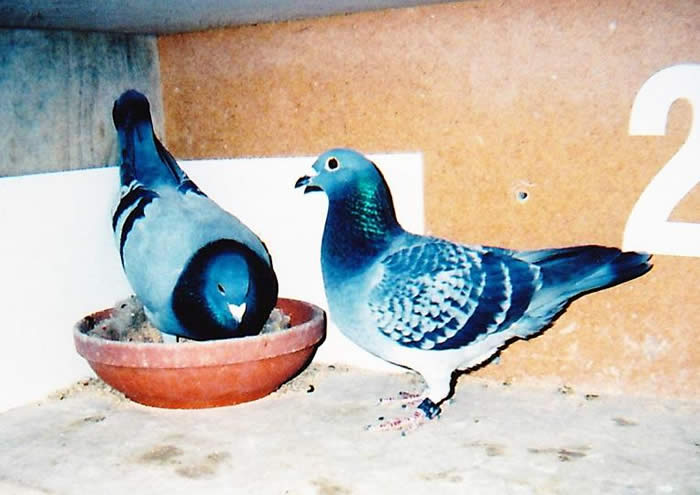
Niort cock with his hen

Mealy cock and blue white flight hen, 2nd and 3rd Liverpool 2 Bird Messac 2012. Both pigeons are multiple prize winners.
Can you give 5 pieces of advice that would help improve the management/results for a novice/new starter?
1. You need to start off by obtaining the best pigeons possible. There is no point in starting with inferior stock.
2. Get to know the best fliers and get as much advice and tips as possible.
3. Ensure the ventilation within your shed is as good as it can be, but don’t make it so the birds are sat in a cold draft.
4. Don’t overcrowd your shed with pigeons.
5. Make sure the cleanliness of your loft is good at all times! USE A SCRAPER!
Who do you admire in the pigeon sport?
My fellow club members and Billy Early, as well as everyone who has helped me over the years.
What is it you love about the pigeon sport that keeps you involved?
The opposition!
What drives you mad about the pigeon sport?
People who feel the need to break into people’s lofts and steal or kill their pigeons out of spite! Pure jealousy.
What is racing in your club like?
HARD! In my opinion we have one of the strongest clubs in the fed and in order to win a race you need to give it everything including the kitchen sink! You can’t afford to slack for even a day, you have got to be on the ball at all times.
Who is the one to watch out for in 2013?
In our club you have to watch out for every single one of them as they are all capable of winning a few races. But within the fed I will be looking out for the likes of Billy Early, Williams & Murphy and Vinny Maguire.
Do you have a message for your clubmates?
Yes, firstly I would like to say well done to Rigby & Clarke for their young bird performances in 2012, great flying. Also I would like to wish all Princes Park members the best of luck for 2013!
---
Well folks, I hope you enjoyed the first of this year’s profiles as much as I did compiling it. Tom’s a really great lad as anybody who knows him will vouch for and it’s probably safe to predict he is going to be a major player in the Liverpool pigeon racing scene if he continues along his current trajectory. Simply put, he is a true talent, a natural born stockman and I'd like to thank him for having me over, answering the questions put to him at such length and on behalf of all or members wish him all the best for 2013.
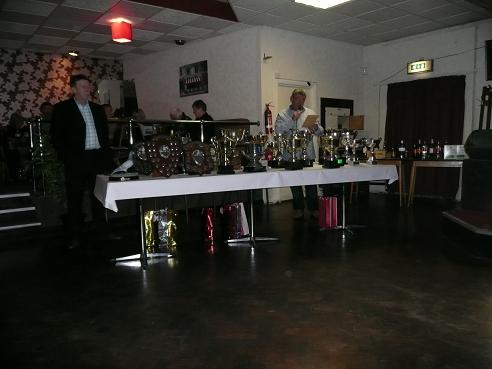
The North Liverpool Federation 2012 Prize Presentation will be held on Friday 8th February at the British Railway Club, Melling Road, Aintree L9 0LQ. Doors open at 7.30pm and tickets cost £7.50 and are available by contacting Irene Hartless on 07505 232 783. Apologies for the lateness of this reminder. Don't forget our column can be viewed online at: www.elimarpigeons.com and www.fancierchat.com.
Thanks for reading.
Darren