Parkinson L.J.
Many years ago, I wrote a piece about changing pigeons and for whatever reason it did not appear in the BHW. I only came across it because Kim was clearing some old articles from the system and this was one of them, I have touched on the subject but not too much. The point about this article was, do we change our pigeons without really persevering with them when they are so well bred. We must all wonder at times why we parted with certain pigeons when they were either well on their way towards making the grade and not given that extra year. We very often have fanciers call here so I am forever talking about what we do with the pigeons. Some fanciers stick to the same basic strain for most of their lives and only bring in the odd addition for whatever reason. When it comes to pigeons we all have our own idea and we can all reflect on whether or not we did the right thing with some of the pigeons that we have had over the years. We are also approaching the time of year when fanciers want to change.
When I first started I had pigeons from the late Tommy Richards that were the old blood red Putmans and what nice pigeons they were. I first took an interest in those pigeons when we were at the clubs, then headquarters the White Bear in Middlewich for a show and Tommy had brought some along. To me those pigeons stood out and because I took such an interest in them I had a good team when Tommy parted with them and moved in with his son Arthur. Those pigeons were never given a chance to prove themselves with me for one reason or another. In fact, this was where I first started making the mistake of never being satisfied with the pigeons that I had in the loft at the time and this mistake lasted for many years.
I also had a few from the late Tom Smallwood who had the only bird on the day out of Nantes in the first year I joined the club, it was a very light chequer cock, he had a good nest pair 05 & 06. I really did have some good well-bred pigeons but when I went to other lofts I still brought more in and a few were from Frank Gough at Marston who supplied a lot of good pigeons to fanciers in the Mid Cheshire area and they did do some winning. Frank was a really good fancier and when you went to see his bird’s that is if you were one of the lucky ones who got into his garden, they were well worth seeing.
I don’t know how it came about but I then came into contact with Les Potts at Beverley and he was winning most before him at the time and Les really had a good place to fly pigeons. His lofts were in the middle of Beverley but the lofts were built into the roof of some terraced houses that he owned. This was the first time I saw racing lofts built above what would normally be living accommodation. This was a cracking place to have pigeons and near enough as good as them being out in a field because you could see a good way and the clock on the market square was only a few hundred yards away and a very good landmark.
These were top class pigeons and this was reflected by the fanciers who had these pigeons off me and won well with them. One such fancier was the late Roy Smith who took to a couple of pairs so I presented him with a nest off each pair in fact there were only three that put up some good performances. Roy’s son Mark is following in his dad’s footsteps and has not disgraced him at all because he is one of the most consistent fanciers around and keeps the name at or around the top of the results mind you he like everyone else is left wondering at times what happened in a particular race. Roy had what he called the old red cock that was a really good pigeon but he like many more quality pigeons has long since gone. Mark has moved with the times and does have different pigeons than his father had but they have one thing in common Roy was a winner and now Mark is as well.
Back to bringing new pigeons in and yes, I then came across the Dordins and oddly enough they are still with us in small numbers until 2014. There have been some good distance pigeons from these over the years and when we used to show they more than held their own. The other pigeons in the mid 70’s that I took a shine to were the Krauths and they were very good pigeon. We had some good pigeons out of those and I was more than surprised when the late Denis Gleave came and purchased three straight from the nest. From those three Denis lost one off the loft, another won him many prize’s while the other was a top stock bird. In fact, some of our best pigeons came from the Krauths with “Joe 90” being one of them, he won many prizes he had two brothers that also won and I wish I had those three cocks now. The sire was the “North Road Cock” that was bred and raced by Dave Johnson of Buerton and Elizabeth bought it for me as a present. This cock was a really good racer winning many 1st prizes on both the north and south routes. He later went to Stan Laing of Glossop caravans and a fancier who I thought would have come back into the sport as a break from his very successful business. The blue hen that the North Road Cock was paired to came from Malcolm Hewitt who had the best of the Aubrey Adamson Krauths and they were a real cracking team that put many fanciers on a winning streak.
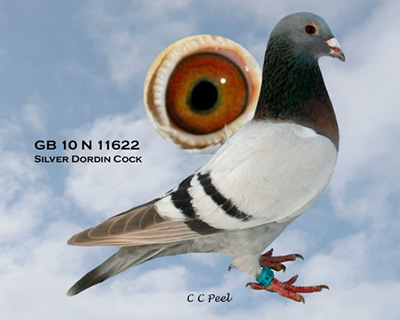
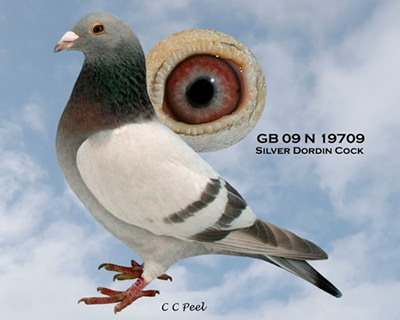
At times, I wish I had stuck to the Krauths in much the same way that I stuck to the Dordins because they were top class pigeons. The problem with the Dordin’s was they ended up being closely bred and started to breed quite a few silver’s, the old lines unless crossed mostly faded away. You don’t see many silver cocks about but those that I had seen have bred good pigeons, I still have a photo or two of them now. The late Dick Baldwin was known for his fantastic team of Barkers with many Silver cocks and hens amongst them. The Dordins continued to be a favourite because they are Elizabeth’s choice but they are still good pigeons when it comes to the distances races. I have included two photos of the silver cocks that I bred down too and as I have said they are probably breeding so many silver’s because they were so inbred. I do think looking at families of pigeon’s long term inbreeding takes the shine off their performances, they need to have a cross but finding one is never easy. Dick Baldwin was one for mainly sticking to his family so I am left wondering if that is why he bred so many silver’s.
Going back to the new Millennium I was in Belgium where I was introduced to the birds of Frans Rigole and Gust Taveirne. These were a new choice for me and they have been good winners for many fanciers all over the country winning up to 1st Nationals here in the UK. Then through research I found out that their pigeons were in the breeding of many top pigeons on the continent, it was at this point that I knew I had made another good choice. The main base of their pigeons is the Golden Triangle of “Witslager Descender” “Blauwe Angouleme” and “Een Witpen” whose descendants can be seen in the breeding of many winners around Europe. As I am always looking, I then took to the pigeons of Ferdi Vandersanden who at the time was buying 1st National winners and breeds off them on the artificial insemination system. Again, this system has produced many winners to 1st National level so for many years I stuck to them and they did well.
No matter what pigeons you bring in they are never always going to breed winners. We had some 50prs of direct children of 1st National winners or bred around National winners. They were never all going to breed winners but they are as close to the tree as they come so somewhere along the line they were going to breed good pigeons and they did. You can go to most lofts and have a good chance of finding good pigeons even where the present owner does not win and you could quite easily.
I have some very good friends in pigeon racing who do a lot of winning but I have never had pigeons off them even though I have had good offers to test them. I always felt I did not want to let friends down if they did not suit my system and there are pigeons that don’t. With my preference being the national racing not all pigeons appear to cope with the numbers spread across the country. We very often see fanciers winning in the clubs out of turn but they don’t cope with Nationals too well. I believe a lot of this is down to the breeding with some pigeons racing fast and in the process leading in a straight line while others are followers.
When bringing pigeons in we need to look at the races we want to compete in and when families have done the job we are looking at over many years. Whether it’s sprint, middle distance, long distance or National racing not many families are going to cope with them all unless you do have a big set up where you can have a wide range of pigeons.
To finish off what I will say is that I think we expect too much of our new introductions too soon after they have been brought into the lofts. What we should be doing is giving them time to acclimatise to our lofts and systems instead of pressuring them into a new way of life too quickly. I am certain that many fanciers throw what could be good old birds away through chasing a few young bird prizes. Yes, there are many good monetary prizes to be won in young bird races but at what expense. We must always remember that young bird racing is only for one season while old birds have a further number of years in the race team depending on how far you want to race them. With the young bird racing now in its early stages fanciers need to think before they burn them out before they have had chance to get some age behind then and then show you what they can do.
Les J Parkinson.
11 Rushton Drive,
Middlewich,
Cheshire,
CW10 0NJ.
Tel: 01606836036 or Mobile: 07871701585.
Email:
website www.elimarpigeons.com