“ON THE ROAD” WITH KEITH MOTT.
North Road Championship Club Lerwick winners!
This week we are going to visit some North Road Championship Club Lerwick ‘Kings Cup’ winning lofts. The NRCC was founded in 1901, basically to fly Lerwick, and the Kings Cup was presented to the club by King George V. Fanciers had to fly over 475 miles from Lerwick to get in the NRCC which had a very strong membership of 2,000 lofts, with nine sections, 60 clock stations and four marking stations, the main one being in Grantham. The club raced a four-race programme each season, with the highlight being the Lerwick National.
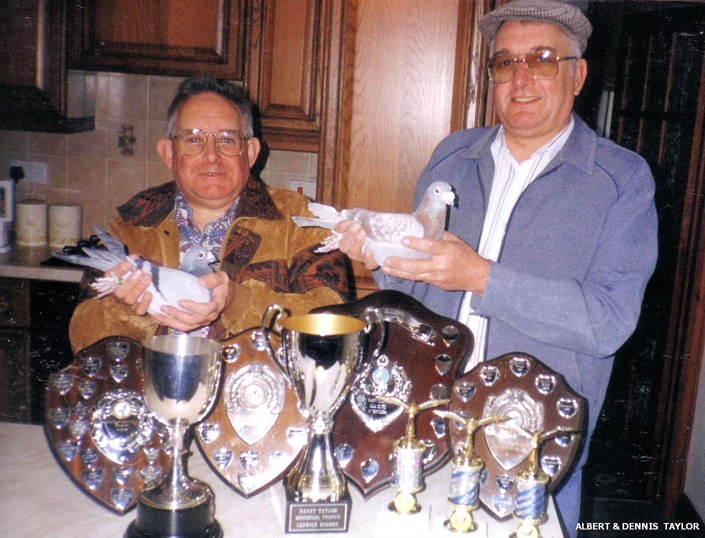
Albert and Dennis Taylor of Eastwood.
One of highlights of the 2008 racing season for me was when I saw my late mate, Dennis Taylor, in the BHW and to read the news that he had won 1st and 2nd open NRCC Perth with 3,374 birds competing. We go back a lot of years and to read that news was just brilliant! In recent years Dennis has raced his pigeons on his own after his brother, pigeon partner and best friend, Albert, passed away. In recent seasons Dennis has won many 1st Federations and has been premier prize winner several times, but to win the North Road Championship Club for the second time is the icing on the success cake. It would have been great if our Albert was here for the win and it’s nice that Dennis has named his latest NRCC National winner ‘Albi’ after his late brother.

Dennis had never looked back, winning everything in front of him with his widowhood pigeons, since he took early retirement from his shop fitting job in the mid 1990’s. The two Perth pigeons came together, but Dennis wasn’t impressed with their time, expecting them faster in a strong North East wind and was happily surprised they were well up in the reckoning on his phone verification. The three year old blue cock, ‘Albi’, has had some good previous form winning 1st Midlands Two Bird Club Thurso as a yearling and was bred down from Frans Van Wildermeersch bloodlines, originally obtained from Sid and Kitty Reeves of Swadlincotes in the mid 1990’s. I visited Sid and Kitty, with Albert Taylor, when we were making a ‘Many Miles with Mott’ video and Albi liked their birds and obtained some stock from them, which the Perth National winner was bred down from.
Albert Taylor was a good friend and we travelled great distances together around UK, whilst making my 'Many Miles with Mott' pigeon videos. I first met him in 1995 when he rang to congratulate me on my first two 'Many Miles with Mott' videos, saying in his blunt way, that they were the best pigeon tapes he had seen. He said they had one thing wrong with them; they didn't feature any north road fanciers. My reply was that, if he could arrange some premier Midlands north road loft visits, I would come up to Nottingham for a week and feature them on our No. 3 video. The result was Albert arranging that video tour plus several other 'Many Miles with Mott' video projects and we became great friends. We had some great times together, going on several long video tours of Cumbria, Scotland and the Up North Combine areas together and we enjoyed every minute, of them. He had a big influence on the production of several of the videos and, when I finished after video Number 18, I know he really wanted us to carry on and produce even more.
He worked at a Nottingham brewery, as a clerk, all his working life and on taking early retirement several years ago, started writing for the Nottinghamshire & Derbyshire Borders in the British Homing World. Albert and his brother Dennis had been in the sport since 1956 and before them, their father was also a pigeon fancier, from 1927 until the Second World War. Albert became interested in pigeons at the age of 15 when his father brought some fantails home and, with help from local fanciers, he started to race with gift birds. The brothers joined Eastwood & District FC and won their first race in 1958 from Lerwick (500 miles). The pigeon that won their first race was a cock that cost 15/- (75p) and it raced to a loft made of orange boxes and fish boxes, with lino on the roof! Dennis said that Larry & Michael Gaunt of Heage, their great friends, have been an enormous help through the years and a lot of their best bloodlines came from the Gaunt loft. An early mistake made by the Taylor Brothers was to send good birds to races they should never have gone to, just to keep in club averages. The 1990 season saw Albert & Dennis win one of the greatest races in north road racing, the North Road Championship Club Lerwick King's Cup event. The brothers were new members of the NRCC in 1990 and their winning pigeon, which they called ‘Tame Red’, won the King's Cup at their first attempt. This was after one of the longest holdovers since the early 1930s from this race point, some 10 days in the basket ‘Tame Red’, one of a. batch of 28 young birds bred for the brothers by .Larry & Michael Gaunt of Heage, was clocked after just over 13 hours on the wing. This champion cock was quite a character and was so tame he walked up Albert's arm and stood on his shoulder. ‘Tame Red’ bred many premier winners and only died a few years ago at 14 years of age.
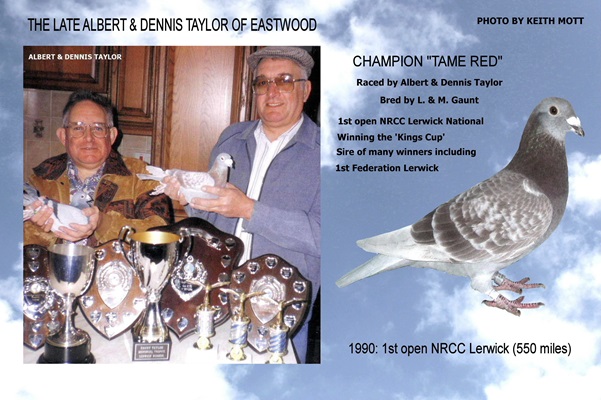
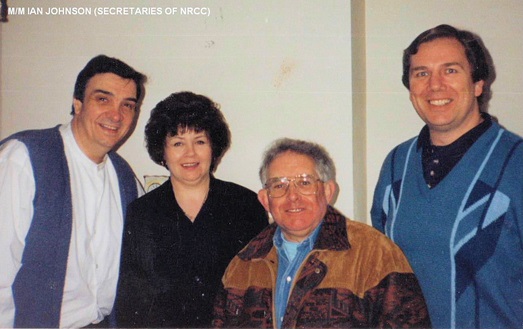
Albert always said his biggest thrill in his time in the sport was seeing the NRCC secretaries, Ian & Marie Johnson, walking up the garden to verify ‘Tame Red’ as he was probably going to be the out right King's Cup winner. ‘Tame Red’ proved to be a champion at stock, breeding countless premier racers, including the blue cock 03040, which won in 1997: 72nd Open Lerwick NRCC and in 1998: 18th Open Lerwick NRCC, 1st Federation Lerwick, winning over £1,200 - a wonderful pigeon.
Dennis Taylor’s main racing loft was 32ft long, with open-door trapping and four sections, all for widowhood cocks. I was very impressed with how light and roomy the sections were: Loft white was used on the floor, which was cleaned every day. Dennis raced both widowhood and natural systems and maintained that the widowhood cocks won more prizes for him each season. Dennis was a retired shop fitter and was the main loft manager when the brothers raced together and really enjoys pottering around and cleaning out. Albert always told me he thought old birds start racing too early and young birds finish too late, in the year. Dennis insisted that young birds should have more short races and fewer long ones, as they are still on the learning path.
The second racing loft housed the natural racers, stock birds and young bird team. Most of the Taylors' pigeons originate from Larry & Michael Gaunt, but there were also Verheyes, Lefebre Dhaenens, Jan Aardens and Bras Penning, which have been highly successful. The old birds were paired up in February and Dennis bred about 70 youngsters each season. The two lofts were built well off the ground, which he thought was very important in good loft design, to ensure that they stay dry and well ventilated. The widowhood cocks got only four training tosses before the first race then were flown out around the loft twice a day. The young birds got about 10 training pitches up to 50 miles before the first race, then one midweek toss during the season. The Taylor brothers tried the darkness system for one season but didn't like it. Back in the mid 1990’s Albert told me his favourite condition for birds was for them to be sent natural to the long-distance races, sitting 12-day-old eggs. Dennis mixed several Belgian corn mixtures together to form his own racing corn and maintains that the birds benefit from every single thing in the mix, rather than feeding them just one grain. He used more maize as the distance increased. The lofts were scraped out 365 days of the year and Dennis said that deep litter may be alright for some fanciers but was not really for him.
Albert was a great lad and a 100% pigeon man. He was a great friend and is being sorely missed. Dennis has now also passed away but after Alberts passing several years earlier, still racing with outstanding success, recording many firsts in the club and Federation every season, and has won the NRCC for the second time. Two wonderful fanciers and good friends!
The late John Lovell of Lincoln.
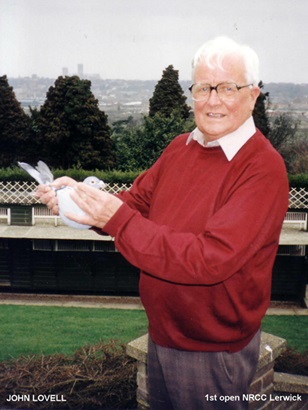
One loft that I had great pleasure in visiting was that of the late, great John Lovell, a fancier I had admired for many years. John must have been the greatest long distance north roader of all time, winning five times 1st open and three times 2nd open in the mighty North Road Championship Club. John won the N.R.C.C. “King’s Cup” from Lerwick three times, the last time in 1989 with his good blue chequer hen, “Shetland Ede”. This Albert Bennett / Van Bruaene hen was raced on the natural system and won £3,057 when she lifted the “King’s Cup” from Lerwick. John also won the N.R.C.C. from Perth (twice) and 2nd open Lerwick (twice), plus 2nd open Perth. He hadn’t really raced in the Federation since 1989, flying only in the N.R.C.C., but previous to that was top prize winner in the Peterborough Federation for nine years on the trot.
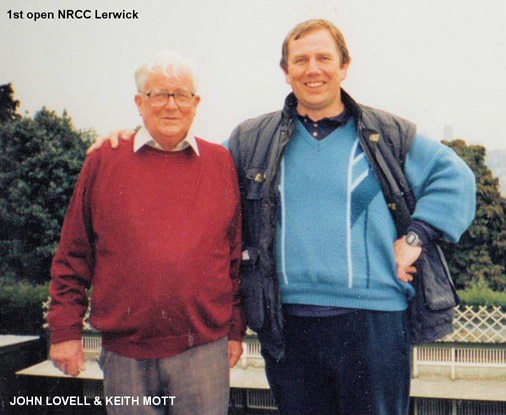
John was in the sport for over 60 years, only breaking for five years to do air crew duty in the R.A.F. and always raced North Road. He raced only the natural system and liked hens for the long distance races. His 48ft. racing loft was set on a hillside overlooking the wonderful city of Lincoln and had seven sections, four for old birds and three for youngsters. John kept 40 natural racing pairs and paired them up on 26th February, to ensure that his birds were on their first set of eggs for Perth and the second set for the “King’s Cup” event from Lerwick. He fed his own mixture and increased the maize content just before Lerwick. The old birds had only one training toss per week, but flew well around the loft, which had open hole trapping, and sand on the floors. John’s stock loft was 18ft.x 6ft. with a wire flight, and the nest boxes inside were the size of race crates. This small loft housed six pairs of stock birds, which were mostly outstanding retired racers. John’s main families were Albert Bennett / Van Bruaene and Geoff Kirkland, which were crossed together with phenomenal success. He paired his birds on the eyesign method and had his first insight into the method from his friends, Jack Humphrey and Hugh Ambler. He kept about 40 young birds each season and started training at ten miles, going through stages up to the Humber, 33 miles, before the first race. All the youngsters raced through to the N.R.C.C. Berwick race, which was a flight of 186 miles to the Lincoln loft. John Lovell, one of our greatest fanciers!
The late Frank Bristow of Horbling.
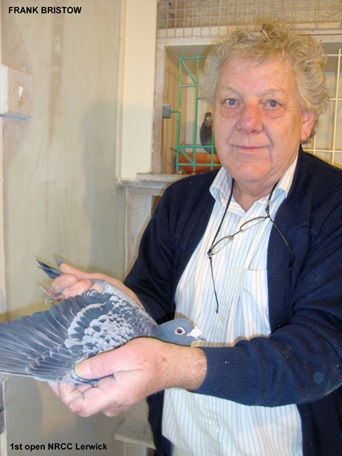
It was no surprise to read the news in the BHW that season that Frank Bristow had won the biggest prize in north road racing, when he recorded 1st open North Road Championship Club Lerwick (1,699 birds), lifting the prestigious ‘King George Cup’. I visited his brilliant loft in the little village of Horbling in Lincolnshire with the ‘Many Miles with Mott’ video camera a few years ago and was very impressed with fancier and his pigeons. To win this wonderful 500 miles race had always been on Frank’s pigeon agenda since starting up in the sport over 50 years ago. The 2008 NRCC Lerwick National was a hard push home in a south west wind, with 39 game pigeons being verified on the day and Frank’s winning velocity was 1100 ypm. Frank Bristow’s winning pigeon, a four year old blue chequer cock now named ‘Kezie’, was bred by Brian Barnes of Lytham St Annes and was raced on the widowhood system. This champion cock had won several times previously and Frank named him ‘Kezie’, as it was his late grandfather’s nick name many years ago. It was great to hear of his wonderful Lerwick win!
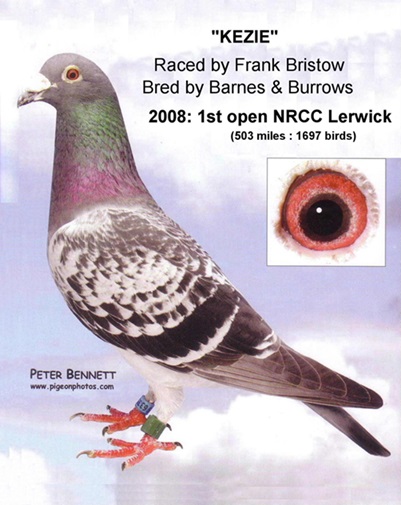
I think Frank's loft set-up was probably one of the best I've ever seen. The lofts were not only excellent but were full of pigeons of the highest quality. Frank's L-shaped, brick double-storey loft was built in 1976 and was not only very pleasing to look at, but was very practical, with a lot of thought put into the design. One half of the top floor was for the widowhood cocks, which were housed in four sections and the other half was taken up with young birds and widowhood hens. The 55 pairs of stock birds were kept on the ground floor. The racing sections had grating floors with the widowhood racers being trapped through open doors and the young birds through sputniks. The stock birds had a very spacious living quarters and could get out in a big wire flight in the summer months.
Frank had been in the sport for over 50 years and when it came to breeding winners he never relied on so-called individual strains. He paired the best to the best regardless of origin, but the main base strains that formed his impressive family were Janssen, Wildemeersch, Haelterman and the super line from Albert De Groote which was mainly of the famous D'Hondt family. When he found a certain breeding pair were producing above-average race birds, they remained together; others were given different mates for a couple of seasons. Frank was adamant that in today's fierce competition only the best will keep you at the top. While we were in his stock sections, he showed me many top breeders, including the retired racer 'Sammy', a wonderful Wildemeersch pencil pied cock which had won 1st Northallerton (110 miles), 1st Morpeth (166 miles), 1st Berwick (209 miles), 1st Fraserburgh (337 miles) and 1st Lerwick (563 miles). This old cock took my eye as soon as I walked into the loft. The Wildemeersch hen he was paired to had also won many 1st prizes racing. The breeders were usually mated around Christmas time and Frank spent several days making sure the pairs were suited to each other. His breeding birds normally rear two or three rounds of youngsters, but all the pairs were separated towards the middle of June.
Frank liked racing at all distances and had won the Federation from every race point on the north road, including Lerwick. He had won 268 first prizes between 1990 and 1998 and had won the section in the North Road Championship Club from Perth and Berwick. One of the top birds in the race loft was a Staf Van Reet pencil pied cock which in the 1998 season won 1st Perth, 1st Thurso and positions from Morpeth and Berwick, to win the East Midlands RPRA Region Middle-Distance award. Another ace in the racing section was the D'Hondt blue chequer cock 'Prince Albert', 1st Section North Road Championship Club, Berwick, when raced paired up as a young bird, and winner of many prizes as an old bird on the widowhood system.
Brian and Angela Garnham of Butterwick.
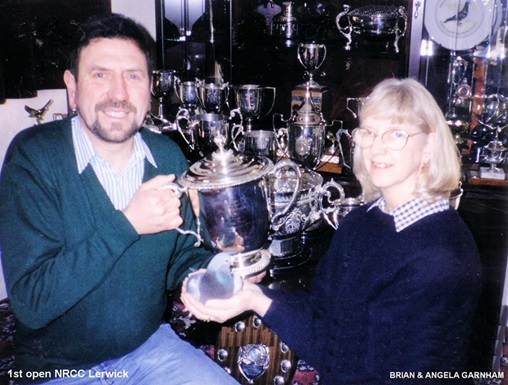
The first loft that we are going to feature is the 1998 North Road Championship Club King's Cup winning loft of Brian and Angela Garnham of Butterwick, near Boston in Lincolnshire. This partnership has enjoyed many outstanding seasons since starting up in the sport in 1974, but say the 1998 season was one of their best. Brian has had pigeons all his life and as a lad had races with the other children, with him being the convoyer, because his racing bike had three saddlebags to carry the racers. Great times!
Angela likes long-distance racing and to win the King's Cup from Lerwick was a dream come true. The 1998 North Road Championship Club race was held over until the Monday, when the convoy was liberated at 9.40a.m. The race turned out very hard with .no day birds but the Tuesday morning blossomed with bright sunshine and the partners clocked their winner 'Butterwick Bon- Ami' flying 498 miles at 7.48a.m. This champion four-year-old cock is of the Frans Van Wildemeersch strain and raced on the widowhood system. This was his third time at Lerwick, having been clocked late on the day coming in from the south on his two previous Lerwick events, so Brian gave him three short training tosses before the 1998 race and he came in from the north to win 1st open.
Angela is the main manager of their 27 widowhood cocks which are paired up in late January and trained well before the first federation race. Once racing starts the cocks are rarely trained, but fly out around the loft twice a day. The partners never race the hens and the cocks are broken down from Sunday to Tuesday during the racing season. They have a wonderful tiled-roof loft built by local fancier Alex Legget, who is a joiner. Alex was 3rd Open Lerwick North Road Championship Club in 1998. The widowhood sections have nine nest boxes in each and heaters for winter breeding. All trapping is through open doors into a corridor which runs the length of the loft. Brian and Angela have one other small tiled loft which is used for widowhood; 'Butterwick Bon- Ami' raced to that one. Angela's favourite pigeon is a handsome Staf Van Reet mealy cock bred by the Royal Lofts, which has won many top prizes including 1st Club Morpeth (twice) and flown Lerwick.
The Garnhams keep 20 pairs of stock birds, mainly Wildemeersch from Porter and Richardson of Newark and direct from Frans Wildemeersch. These are paired in late January, their eggs floated under the widowhood racers. When selecting breeders, Brian likes the very best winning lines and pigeons with character. The partners breed about 50 young birds each season. These are put on the darkness system on weaning at 24 days old and are trained up to the Humber Bridge, 60 miles. All race through to Berwick, 210 miles, with the North Road Championship Club and no young cocks are saved for widowhood, as Brian says he had found it to be a waste of time. He maintains the darkness system is excellent and isn't detrimental to the birds in later life. He won Fraserburgh in 1998 with a yearling cock that was on the 'darkness' the year previous.
Mel Waller of Norwich.
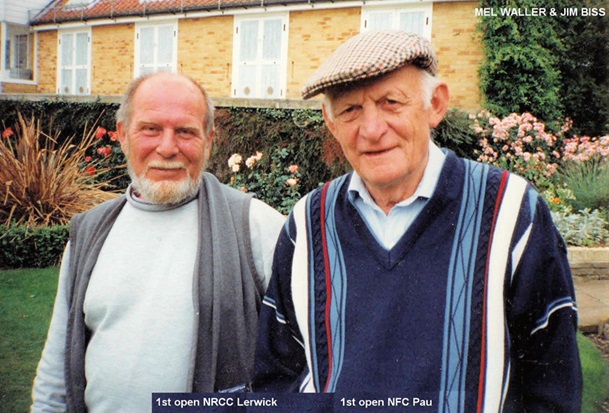
The members of the North Road Championship Club sent 3,574 birds to Lerwick in 1996 to compete for the greatest prize in North Road racing, the King's Cup. That year the birds were liberated in a north-west wind so it was the east side of the country to host the winner in the form of Mel Waller of Norwich. When I met Mel he was over the moon and couldn't believe that he had won, saying the cup had never been won in the city of Norwich before. His 'King's Cup' winner was a blue chequer widowhood cock of Mel's own blended family, a game champion which had previously won many good prizes in club races.
Mel only raced north road in the local Lakenham Club (Norfolk North Road Federation and Great North Road Championship Club). The loft had won the Federation many times, including from Elgin and Lerwick race points. The main families raced were Janssen, Busschaert, Grondelaers and Van Loons which won from 76 to 530 miles in Club, Federation and National races. He bred his families pure and crossed, and always paired winners to winners, only breeding from the best performance pigeons. As he said, if you want to keep up with the best, you must have birds that will score in Nationals, not just Club winners. Mel had had pigeons on and off all his life and had been racing with outstanding success for 26 years. He obtained his first birds from Mr Ellis of Droylsden, near Manchester, after Mel reported one of his stray birds. After a few years Mel decided to have a go at racing and obtained some stock from Barrett Brothers who were at the top in the Federation racing at the time, winning 1st Federation three weeks on the trot. Mel's first birds were Stassarts and he won the first race he entered, also winning the Federation from Lerwick at his first attempt.
The birds were paired up on the nearest weekend to February 14th if the weather was good, and 30 cocks were raced on the widowhood system. Mel had a 40ft 'L'-shaped loft with five sections and open-door trapping for the old birds, and a sputnik for the youngsters. He used to re-mate the widowhood cocks after the 300-mile stage, but in later seasons raced the whole season on widowhood. Near the end of the season he brought in the hens to race, as he found them fresher for the long distance events, quite often beating the cocks. He only kept three pairs of stock birds and bred about 35 young birds each season. These he raced to three sections on widowhood, each section having 12 nest boxes, and found that each section came into form at different times. When picking out pool birds, he threw twigs on the loft floor and watched which cocks carry them up to their nest boxes. Mel hopper fed a breeding mixture as he found the normal widowhood mixture went through the birds too quickly. He put garlic in the drinking water twice a week and gave the widowhood cocks glucose the night before basketing, along with as much canary seed as they wanted. He had several little tricks to get them going, but he didn’t show the hen on Friday night, as he thought they got too excited before going into the race basket. When picking out birds for the long-distance races, he watched them after the Perth (330 miles) race to see if they were fresh, and the ones that still look and act well were his main candidates. Mel said his area in Norfolk had several ace fanciers who regularly score well in National races, and in his opinion it was the top area for North Road National winners.
The late John Norris of Grantham.
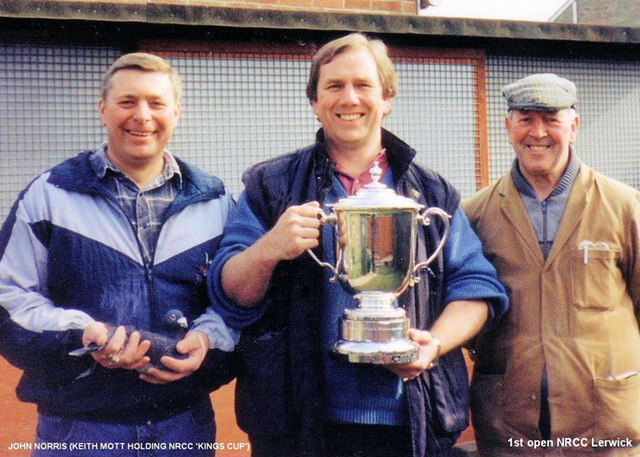
I was very sad to receive a message informing me of the passing in February 2025 of my good friend, John Norris of Grantham. John was one of the nicest people you could ever hope to meet and would help anyone in trouble! He was a premier pigeon racing man, winning many major races and was also one of the sport’s best workers over many years. He was the convoyer of the North Road Championship Club, so we had a lot in common and John and I always had our annual little meet ups at the marking stations and at the premier winter shows. What a great lad he was!
A few years ago on one my video tours, we went to the east side of the Midlands, to Grantham to visit loft of John Norris. John was a convoyer with the North Road Championship Club, which he said he enjoyed very much. He had been convoying off and on since the late 1970s. John won the Lerwick North Road Championship Club King's Cup race in 1995 with his champion Busschaerts dark chequer cock 'Naylor's Pride'. This above medium sized widowhood cock was bred by J. Naylor and Son of Murton, Co. Durham and was down from Mitchell Brothers of Bilsthorpe Busschaert bloodlines. John and his son, Peter, purchased 'Naylor's Pride' as a squeaker for £50 at the Murton Charity Auction and he had proved to be the best money they have ever spent on a pigeon. John had a silent partner and loft manager in Len Hart, previously of the Hardy and Hart partnership of Grantham. It was Len who clocked 'Naylor's Pride' in from the North Road Championship Club Lerwick and won the King's Cup, as John was at the Lerwick race point as chief convoyer for the North Road Championship Club. John and Len spent a considerable time selecting four pigeons for their race entry. They chose three Mattheeuws and one Busschaert and their small team recorded 1st, 4th, 25th and 228th Open Lerwick North Road Championship Club, with a convoy of 2,970 birds taking part in this 500 mile race. A brilliant performance!
At the age of 15 John joined his first pigeon club, Grantham Invitation Flying Club where members included D. H. Templeman, J. Wallwork, Graves Brothers, K. Meadows and John's great friend Bernard Charles. That year he left school to undertake an engineering apprenticeship as a plater, with a firm called Aveling Barfords. Where, his first tutor was Peter Collishaw, a pigeon man from Sleaford, who at that time was a very successful long-distance flier on the south road, flying Westcotts from Wally Grantham of Ipswich. Over the next few years John made many trips to see Wally Grantham and spent many hours listening to his wealth of knowledge of pigeon racing. John had come a long way since those early days and had been in the sport over 60 years but he said his fascination with distance pigeon racing, especially Lerwick, started in those days working with Peter Collishaw.
John's main racing loft was self-designed and features open door trapping, with sections for widowhood cocks and young birds. The loft raced only the widowhood system, never hens, and the partners were only interested in the long distance events. John thought the nest bowl as the main factor behind successful widowhood racing, and showed the hens on marking nights but never for sprint races. The cocks were never broken down, being fed a standard widowhood mixture all week and they were given the hen for anything up to five hours on their return home from the race. John and Len had a wonderful brick built stock loft which was full of quality. The ten pairs housed in this loft were mainly Busschaerts and Maurice Mattheeuws which were paired up on February 18th. The inmates were kept in perfect condition with plenty of space and good ventilation. The late John Norris, the NRCC ‘Kings Cup’ winner.
Mitchell Bothers of Bilsthorpe.
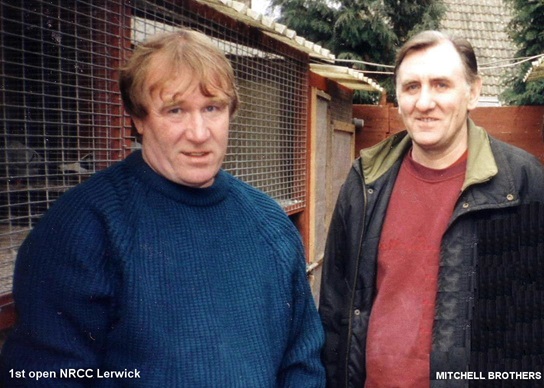
John & Gary Mitchell are masters at the art of breeding and racing pigeons. John is the stock man, and the stock lofts, Maid Marion Lofts, are at his Bilsthorpe home. The racing lofts are at Gary's home as he is the racing man. The brothers won the NRCC Lerwick King's Cup race in 1993 with their champion Wildemeersch blue chequer cock ‘Number 7’. This game cock was raced on the widowhood system and after six days in the basket, took 14 hours to fly the 480 miles from Lerwick and lift the King's Cup.
The main old bird racing team is made up of 36 widowhood cocks. The system is very straight forward; they are paired up the third week in January and races over 200 miles are preferred. The brothers have three racing lofts. Widowhood cocks are housed in the main racing loft which is 22 feet long and faces north. The 16-foot loft holds old birds and youngsters, and all trapping is through the open doors.
The brothers' race record in recent seasons has been fantastic, winning, as they have, countless top positions in the federation and national. John & Gary breed 100 youngsters each year to race the programme through to 200 miles. The widowhood cocks are shown the hens on Friday night only on the shortest races and are given the hen for up to an hour on their return from the race on Saturday. They are fed on Spillers Breeders' Mixture and the widowhood cocks are only broken down on the short races. We looked at many of the brothers' ace racers on our visit, but one which was rather unusual was the red chequer Frans Van Wildemeersch cock which won, in 1995, 1st section, 4th open Lerwick NRCC. John says the red Wildemeersch are very rare and this cock was a bit special in the hand. Another Wildemeersch we inspected at the race loft was a nice blue chequer cock that had won 1st federation Perth.
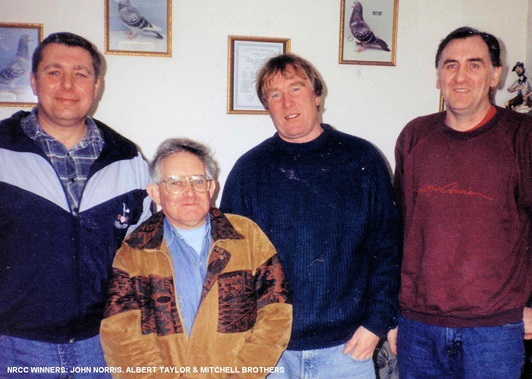
The Mitchell Brothers started keeping pigeons with the boy next door, when they were only lads. Their first birds came from Bilsthorpe Church and they used to go up the belfry when it was dark and catch the feral birds that lived there but the birds kept going back to the church every time they tried to settle them. Subsequently they went in for Birmingham Rollers and when Gary got married, he started with racers and John went into canaries, budgies and British birds. Gary started with gift birds from Harold Snowball and Bill and Alfie Armin, all of Spennymoor, and joined the Ollerton and Dist NR Club. The partnership was formed in 1975 and in 1976 John went to Belgium with Reg Haldron who took John to visit Georges Busschaert, where he bought some good birds. Over the years, Mitchell Bros have purchased 66 birds from M. Busschaert from all the champions. On their return to the ferry, Reg told John he knew of a good flier called Frans Van Wildemersch whom they called in on. Frans only had six spare birds, which John purchased for £7 each. In 1977, the offspring of the Busschaerts and Van Wildemeersch won everything in front of them, including the first seven positions in one race (586 birds), twice first six positions, and first five positions in another race. Right up to 1988 the brothers used to go to Belgium every six weeks in the winter months to buy more stock and they eventually purchased over 80 birds from Frans Van Wildemeersch.
After winning so much with the Van Wildemeersch birds, John and Gary decided to visit Jerome Kellens, where most of Fran’s best birds originated from. They bought some very good birds including the ‘Held Hen’, dam of the ‘Old Hen’, and she bred ‘Number.7’, the Mitchell Bros' Lerwick King's Cup winner, when paired to a half brother of Frans Van Wildemeersch's champion racer ‘Kleine Bliksem’. In 1988 the brothers decided to concentrate on the Frans Van Wildemeersch and Kellens, so they sold all the Busschaerts. Although they have tried several different families of pigeons, none are equal to the Wildemeersch and Kellens.
The late Jake Cotterill of Boughton.
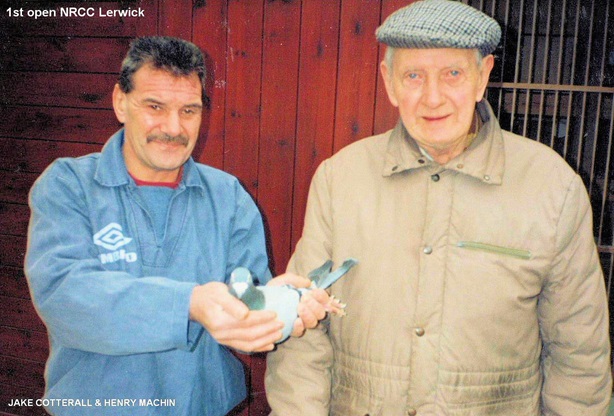
Miner Jake Cotterill worked in Bilsthorpe Colliery, near Ollerton. He started racing in 1981 and has won the NRCC twice, including the King's Cup Lerwick race in 1991. His winning pigeon was the Wi1demeerschwidowhood blue cock 'Jake's Dream' which finished up in the stock loft breeding winners. This handsome pigeon handled big in the hand, with nice silky feathers, and did not race again after his King's Cup win.
Jake worked shifts and had a great loft manager in Henry Machin, who kept the wonderful loft in great shape. Jake's very smart loft had four sections with two flights and the birds were trapped through open doors. Widowhood hens were housed in one flight and the stock birds went in the other for sunshine and a bath. Henry liked to see good hygiene and ventilation in a loft. The grille-floor young bird section housed about 50 youngsters each season. Jake raced 24 widowhood cocks and seven natural pairs which were put together at the end of January. The Cotterill team raced well from the shortest to the longest race and Jake enjoyed all races but he did say one of his biggest mistakes in the early days was falling asleep after coming off night shift while waiting for long-distance NRCC pigeons. The widowhood cocks were shown the hens on Friday nights and were given them for about half an hour on their return from the race. The cocks were fed on a standard widowhood mixture and were broken down in mid-week.
Although Jake had a few natural pairs he told me he prefers the widowhood system as he thinks it got the best out of the birds. On of his best natural pigeons was the Lefebre Dhaenen blue chequer hen which won 1st Open Midlands Championship Club in 1988. The 1991 season was a fairy tale for Jake because as well as winning the King's Cup from Lerwick, he also recorded 1st Section, 3rd Open Thurso NRCC. Jake's loft was mainly made up from Frans Van Wildemeersch pigeons and he also introduced Janssens to try out. His management was very simple, with plenty of training, good corn, clean water and lots of attention. The birds were trained several times a week in any weather except fog. Jake's motto was quality and not quantity and he rated Charlie Wooff as the best local fancier as he was at the top of the result sheet every week.
Gorge Dobb of Sutton-in-Ashfield.
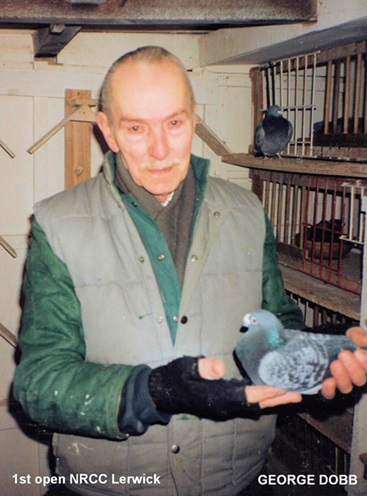
For our next loft visit we stay in the Midlands and the NRCC Lerwick King's Cup winning loft of George Dobb. George has been a fancier for 75 years and in that time has won just about everything there is to be won in club, federation, combine and National pigeon races. The Dobb loft won the supreme north road prize, the NRCC Lerwick King's Cup race in 1992. George's winner was a 2 year old natural blue chequer Busschaert cock feeding a l4-day-old youngster. This excellent cock's hen was sold to a fancier in Scotland three days before the Lerwick race, so he won the King's Cup unpaired, but feeding a big youngster. George races on the natural system, but plays around with a few widowhood cocks, with all birds on both systems flying out around the loft together. He keeps his pigeons to suit himself and has no set time for pairing up, but it's mostly done in mid-February.
George thinks feeding is the most important component of successful pigeon racing and feeds his own light mixture twice a day. The birds are let out twice a day for one hour and he maintains his mixture helps to keep them flying well around the loft. He said going up and down the motorway training is a waste of time and likes to get the team fit with good flies around the loft. George likes the long-distance races and in the Lerwick King's Cup race has won 1st, 3rd,7th, 10th, 11th and 21st open, as well as countless other top prizes at other race points. His best hen is a Busschaert, a cousin to the King's Cup winner, and she has won over £2,000 in north road races. George had been top prize winner in the E.K.M.W., with a membership of 36 lofts, for the past 20-odd years when he won the Lerwick King's Cup in 1992 against what was then a record entry of 4,450 birds (liberated in a west wind, with high humidity and dead calm to follow). He won 1st open by a big margin. George also won the NRCC Perth race in 1971 with a hen of his old family and recorded the lowest winning velocity at that time.
George has wonderful, old, double-decker loft with the pigeons in the top and the bottom used for storage and a workshop. He built the five section loft himself and traps the birds through open doors into a corridor. The loft is very 'old worlde' and houses two sections for old birds and three for the youngsters. He breeds about 60 babies every year and races them right through to Perth, which is a 242-milefly – the Dobb loft, but has sent young birds up to 323 miles and clocked them. He trains the young birds up to Leeds, 48 miles and then jumps them into Berwick, 185 miles. George used to go to the odd show and had a Kirkpatrick cock which won 28 times 1st in eyesign shows, but he said that it never bred anything any good, which sums up his idea of eyesign in pigeons. He sometimes breeds the odd latebred. In fact, the sire of his King's Cup winner was bred in July. He doesn't like deep litter and maintains a lot can be learned by cleaning out every day, which he enjoys doing.
Well that’s it for this week! I hope my readers have enjoyed this look back at these North Road Championship Club Lerwick ‘Kings Cup’ champions of yester year. To view some old video footage of some of these fanciers and their birds go on to my YouTube channel. I can be contacted with any pigeon matters on telephone number: 07535 484584 or email me on:
TEXT & PHOTOS BY KEITH MOTT (www.keithmott.com)