Peter Houben from Dilsen - 
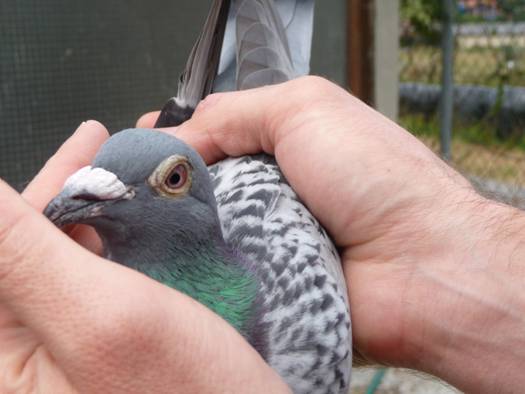
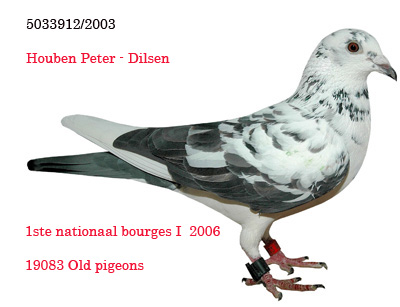
wins the first national race of 2006. Bourges I, 19.083 old pigeons.
Text: Martin Degrave, Edited : Martin Degrave
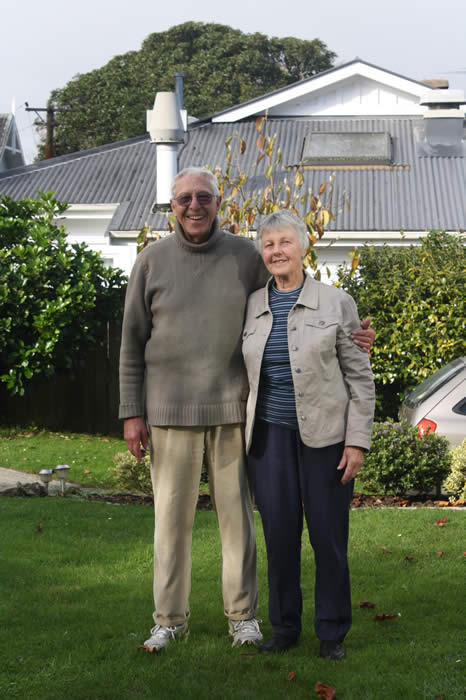
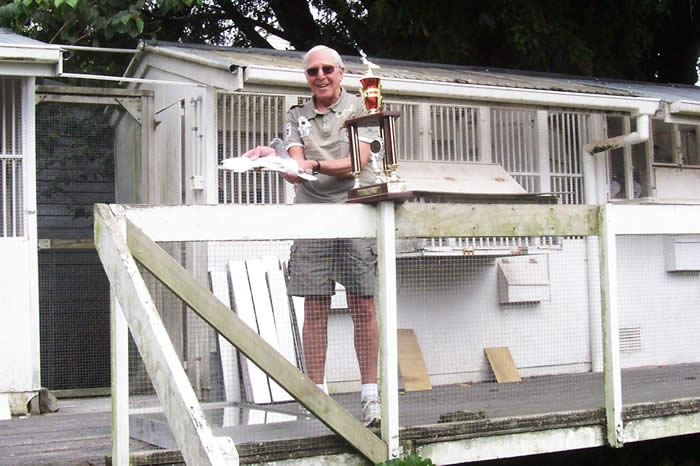
Peter Houben from Dilsen won the first national race from Bourges, timing at 5:59pm for a distance of 496km with a speed of 1275,56 mpm. This deserved national winner is 44 years old and married to Yolande Boutsen, and they have a 14-year-old son.
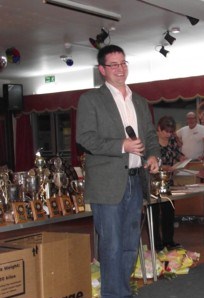 Peter works for a Dutch chemical concern (DSM) right across the Dutch border in Gelen.
When he was nine years old, Peter took care of a stray pigeon in a rabbit hutch for a couple of days. His uncle, Chris Ramakers from Eisden, insisted on releasing the pigeon and exchanging it for a basket of youngsters.
The loft his father had once built on top of the garage had never served as a pigeon home before but now it was being prepared in great haste. From the age of 12 up until he got married, Peter helped his father with taking care of the pigeons. Once he got married, he only had some time left on Saturdays to help when the pigeons returned home.
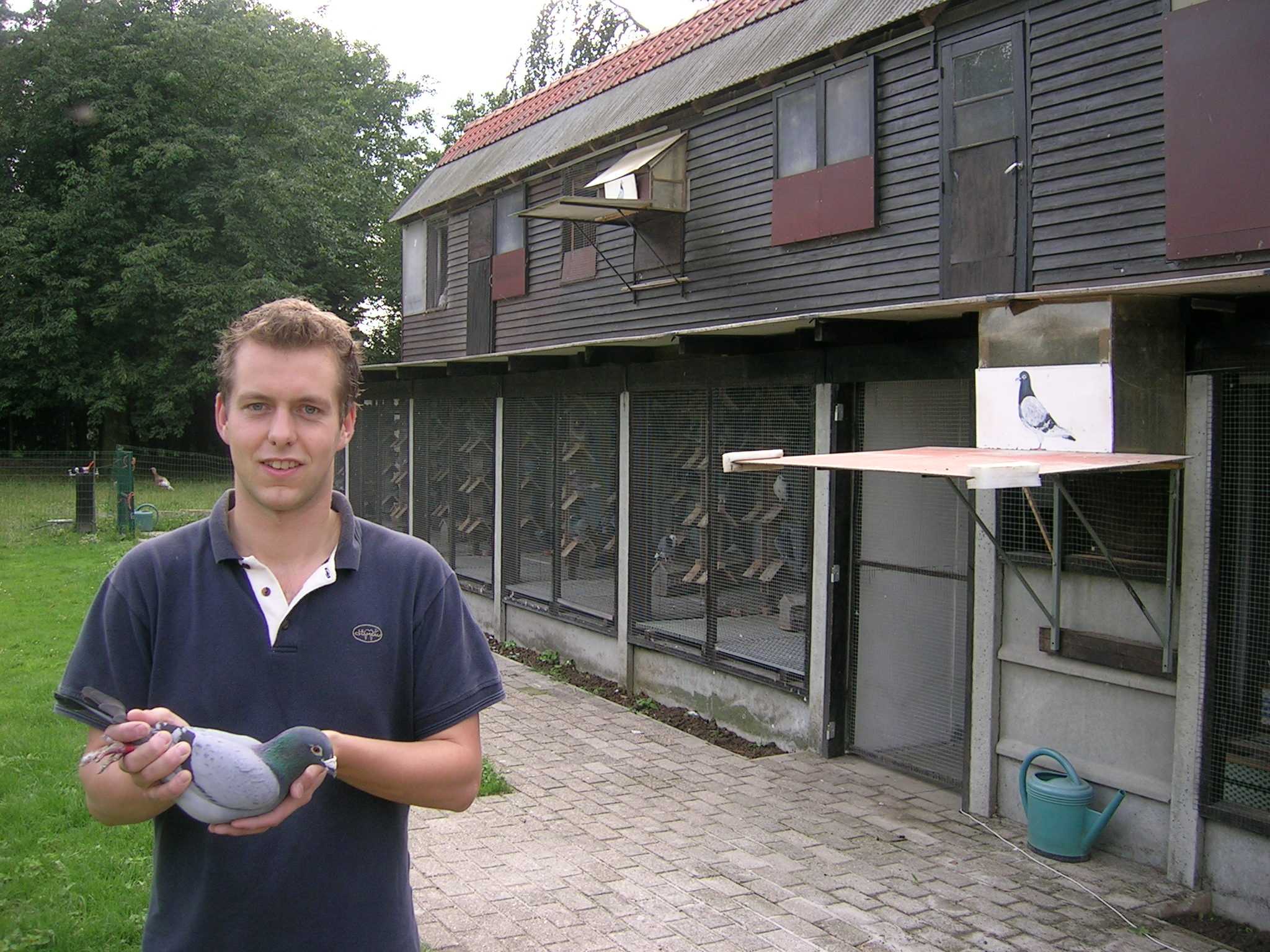
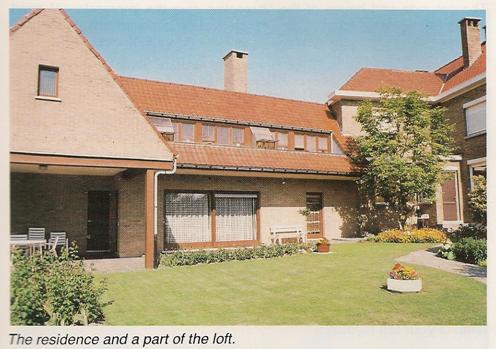
In 1993 he built a house in the “Veenmos” street in Dilsen and it only took a couple of months before a first pigeon loft was put together. Peter started with some pigeons he got from here and there… In spite of all the good intentions he was no more than an average fancier. The real motivation from the time he raced together with his father was gone.
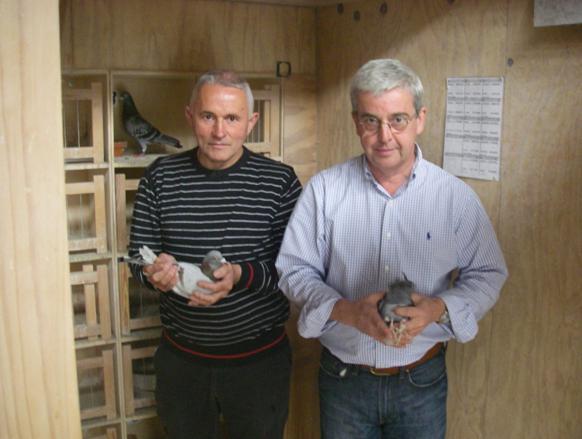
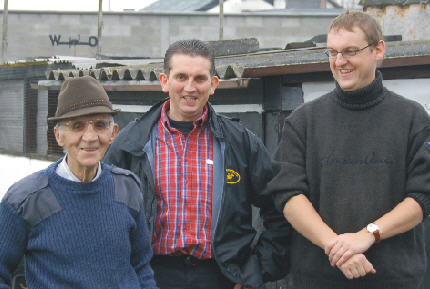
It was in 2000 that he contacted Giel Conings (better known by the name Conings-Smeets from Kotem) for the first time. Giel has his own philosophy when it comes to the pigeon sport: “If the pigeons are healthy but you’re beaten nonetheless on Sunday: don’t nag but make sure to get pigeons that can perform”.
In the meantime, 90% of Peter’s colony has been built up with pigeons from Giel and only the best ones were good enough to make a pigeon fancier out of Peter. And for the first time, Peter was playing with the pigeons and not the other way around. The old and yearlings are only raced with hens on widowhood, which is maybe a little more demanding than racing cocks but it pays.
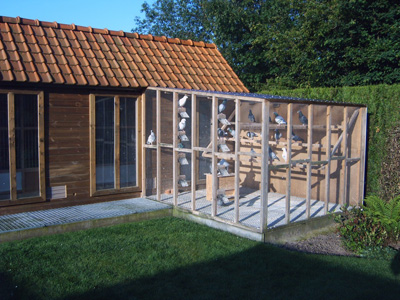
The 24 widow hens - there isn’t any room for more - are coupled by the end of November to grow a round of youngsters. By the time the youngsters are 2 weeks old, the cock is moved together with 1 youngster and the hen brings up the other youngster. The hens return to the aviary after weaning and they stay there up until the second half of February / early March for a new coupling and they stay together during 5 to 10 days of brooding, depending on the schedule. Then, widowhood begins and the bet racers start in the last weekend of March unless the weather decides otherwise, which has been the case this year.

Game:
The game is pretty simple: as long as they behave they are allowed loose in the loft, whereas the “girls with bad habits” are locked up in their nest box. Prior to basketing, they can spend a couple of hours with the cocks depending on how late Peter returns home and the hour of basketing. This varies sometimes from only half an hour up to 3 hours. This does not really influence their performances. After the race, it all depends on what time they arrive and how tough the race was. Sometimes they stay together until the next afternoon.
The national winner also tries to keep the feeding simple; purification at the start of the week and as the race gets closer the amount of sports mixture is increased. There is one thing Peter learnt very quickly: if hens get too much it soon is over but fortunately, there is Giel who knows how to re-start a sputtering engine.
Medication is kept simple as well: prior to breeding and at the start of the season they get a cure against tricho and as far as everything else (ornithosis etc.) is concerned, they only get something if it is really necessary and on Giel’s advice. The best cure is 4 to 5 weeks in the aviary before the start of the season.
The youngsters are only raced if circumstances allow it, so there is no pressure at all to perform. The most important thing is that they are trained thoroughly, the 1st as well as the 2nd, 3rd and 4th round of youngsters.
Every year, almost half of the youngsters (25 to 30) are lost to birds of prey in the forests. Alas, that’s the way it is…
The hens and youngsters are trained by Giel several times during the season. He drives up to Namur almost every day to train his pigeons. But this year, Giel went less often since he had to sell his racing pigeons abroad because of health reasons.
A quick word about the strains. 90% of the pigeons were obtained at Conings-Smeets’s who has several strains in his breeding loft, to mention some: Remi Demey (among which a daughter of "Paola"), Van Sweefvelt , Maurice Voets, Karel Meulemans and Van Hove Uyterhoeven.
The breeding loft has 4 permanent breeding couples and the remaining 15 boxes are filled by Giel’s breeders. Thanks to this arrangement there is a constant supply of fresh blood. They return after 4 rounds and the ones that gave birth to youngsters who perform well the year after, come back together with some others, so that by the time breeding starts, all the breeding boxes are occupied.
The colony exists of 24 widow hens and partners, 15 breeding couples and 50 youngsters, which is as much as 125 pigeons during summer and 75 to 85 in winter time.