PIGEON RACING IN THE PHILIPPINES
by Tony Harte
It was almost five years ago when I last visited the Philippines and at that time I was lucky enough, along with my wife, Ardanette, to visit Mr Benny Lim, of “Metro Cebu Racing Pigeon Association, (MCRPA). It whilst talking to Benny Lim that I learnt that pigeon racing was on the increase. I read on the news recently that the Philippines is only just behind China and India in economic growth. The cheaper labour of these countries attract investors and as the economy develops, then people find themselves with better standards of living and looking for new hobbies. There are currently around 200 pigeon clubs in the Philippines, with an average of 50 members per club, giving an estimated 10.000 fanciers.
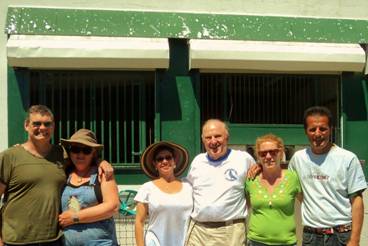
Through the internet, Facebook, I learnt of “The Advanced Hobbyist Genetic Breeding Station”, Manilla and was lucky enough to arrange a visit to see a Mr Jaime Lim. Jaime Lim is a building contractor and real estate developer, but also has a Koi Breeding Farm, Winslet Gamefowl Farm, Fire Dragon Aquatic Farm, Congo Charlie Exotic Reptile Jungle, Majestic World of Spotted Rays, Advanced Hobbyist Kennels and also Advanced Hobbyist Loft. He is an enthusiast of genetics and is a master of breeding. Jaime splits his time/working week between his contractors/real estate business and the Pigeon breeding lofts, gamefarm, kennels, etc. He is a member of the Philippine Homing Pigeon Association and is now President of the PHPA, which recently celebrated its 50th Anniversary. Jaime Lim was extremely kind enough to gift me a copy of their wonderful book, “Pigeon Racing Secrets Revealed”, which includes interviews with some of the top fanciers in the Philippines, PHPA, outlining their methods of racing, etc.
The Philippine Homing Pigeon Association, PHPA, is the oldest pigeon club and is the richest pigeon club in the Philippines. There are around 90 members with the prize money exceeding 100.000 Euros per year. There are two race seasons each year, the first is the South season which starts in February and finishes at the end of March. There are 7 races a season, all liberations which are south of Manilla, starting at 250 Km and with the longest race from 680 Km. The pigeons are normally basketed on a Saturday for a Sunday liberation. The birds have to be liberated within one hour of the designated time, irrespective of the weather, unless there is a typhoon. The race conditions are very hard, as they have to race across the large expanse of sea, twice, in high humidity and in very hot conditions. It never hardly ever goes below 25 C and is more often than not in excess of 30 C. Flying the south season in spring also means normally having to fly in to a northerly headwind. As a result of these flying conditions there are normally only around 5% of the race team left at the end of the season. Pigeons that compete in the south season are normally bred February March in the previous year, with special rings for each season. Although there are only 5% of the pigeons remaining at the end of the season, these pigeons can compete as old birds, the following season, with separate prizes for both old and young birds. As for the North season, this is for liberations north of Manilla and this season is from mid October until mid December, again with a series of 7 races. In the Philippines, the temperature is rarely if ever, below 25 C, but they experience the rainy season between June and October, so that is the main reason that they race outside of these months. The pigeons that take part in these races will normally have been bred, the previous January, so that they will be some nine or ten months old when they start to compete. By racing north, at this time the prevailing wind is southerly, so again the birds will be expected to race into headwinds. The longest race in the north season is 440 Km, they do not race any further, as they would have to face large mountain ranges. The basketing for both the north & south races are on the day before liberation, with the exception of the last race in the north season and the last three races in the south season, meaning two nights in the basket, for the long races. The prize money can be around 60.000 70.000 Euros, shared between those pigeons which have competed in all 7 races and which have achieved a speed of + 700 mph. It is not unusual for just one pigeon to win, but otherwise if there are six for example, then the prize money is shared equally. Pigeons must have raced at least 700 mph in all races and have to race in every race, similar to Taiwan, therefore the pigeons must be quick maturing, hard day, versatile pigeons.
Mr Jaime Lim, as one can imagine, has always had a keen interest in all forms of livestock and originally kept fancy pigeons. It was whilst visiting his Uncle Mr Victor Lim, to obtain some more fancy Jacobin pigeons that he found that his Uncle had changed to racing pigeons and was then persuaded by his Uncle to try his hand at racing pigeons. Victor Lim gifted Jamie with 20 race birds and straight away these proved to be a success for Jaime when he won the Naga lap champion on his very first attempt. It was in late 1982 that he received the racing pigeons from his Uncle Victor Lim. It was also 1982 when Jaime joined the PHPA and had his first race in 1983 south race. Now Jaime has around 120 old & young birds for racing and about 50 pairs of breeders. Mr Jaime Lim has now successfully established the legendary “Crack 52 & Flying Machine” lines. Jaime is recognised throughout the Philippines as one of the best fanciers in the sport after numerous dominating wins and overall championship crowns. Today Jaime continues his meticulous study of genetic breeding for the quest of continuous sky dominance of his winged athletes. The Crack 52 is one of the original gift pigeons from his Uncle Victor Lim and is of Joseph Van Den Broucke origin. The Flying Machine is a Dr Ayd and Bricoux line and is also a distant relative of Crack 52. These two pigeons have been the foundation of his stock and some 80% of his current pigeons carry these lines. New blood/birds have been introduced including birds from Aime Dewit Van Bunderen, Gerard Koopman, Joseph Van Den Broucke, Jos Thone, Morris Gordon, Louis Van Riet, Gerard Van Tuyl, Vrosh Meijers and Ivan Bardos of Hungary. Jaime only buys direct from the breeders and not from commercial lofts or middlemen.
The lofts are cleaned twice daily, with the use of disinfectant, the pigeons are given probiotics on a regular basis, the loft is kept dry and never overcrowded. The pigeons are self trained up to 100 Km and then go together training with the club birds. Birds are tossed in twos or threes where possible and given around 4 or 5 training tosses per week. The young birds are started training some 3 months before the first race. Vitamins and medicine from Thunderbird and Versele-Laga are also given. The pigeons are vaccinated against paramixo virus on an annual basis, with the young birds vaccinated against the pox virus at 45 days of age. The feeding for the young birds is high in protein whereas the feeding for the race birds is high in carbohydrates.
When asked for any advice Mr Jaime Lim stated that he had three mottos to follow with his pigeons:
-
Success can never be an accident. It is a decision. Winners are not the people who never fail, but the people who never quit.
-
Winning is not an act but a habit we select, we condition, manage our pigeons and discipline ourselves to be winners on race day.
-
Believe in the constant pursuit of success.
Wise words of wisdom from a true gentleman and great all round fancier. Many thanks for your hospitality and sharing your knowledge with fellow fanciers worldwide.
Tony Harte
Gozo, Malta
---