MAC DOES IT AGAIN
by Brian Batchelor in collaboration with Fergus Elley
I have previously reported on the performance of New Zealand long distance ace Mac Armstrong when he timed three pigeons on the day from just under 800 miles over this very difficult course. The 2011 event was a much harder affair with only six birds being timed, five of these being Mac's, proving that his pigeons can do the business be it a fast or slow race.
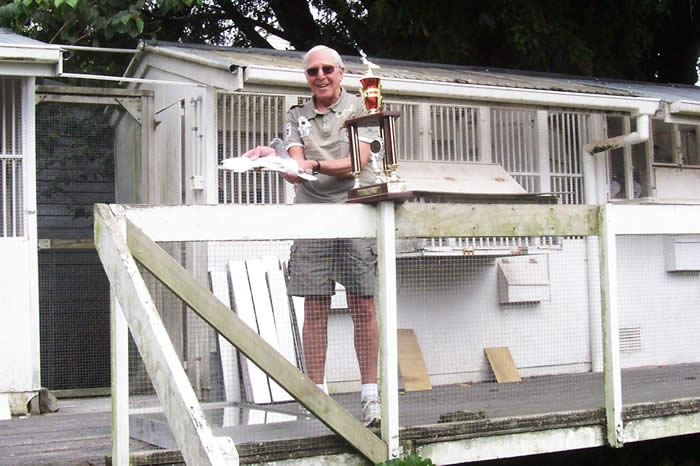
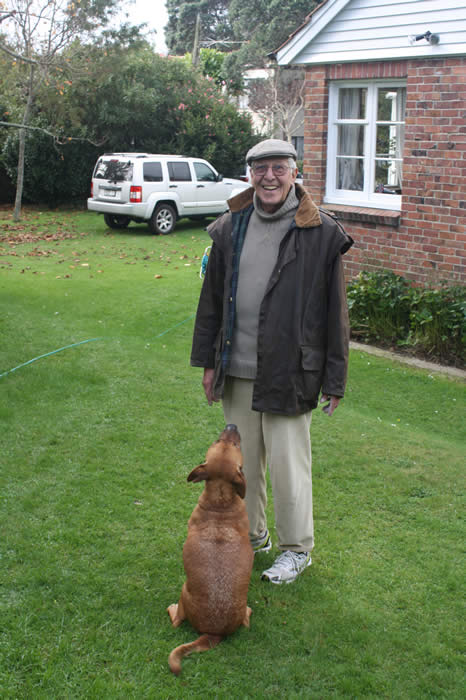
Mac Armstrong - winner of the ARPF Invercargill to Auckland race at nearly 800 miles four years running
The origins of these pigeons go back to a draft of Janssens and Busschaerts Mac imported from the Blenhaven Stud in Australia in the mid 1990s. Mac has kept each family pure and by his strict selection developed them into two lines that will do the extreme distance. Mac tells me the Janssens are a much calmer pigeon than the Busschaerts, which are highly strung, but this year he is intending to cross the two families for the first time, which should inject fresh vitality through the first cross. He says anyone that tells you these strains of pigeons won’t do the distance is talking rubbish, as he has proved time and time again. This year’s winner was actually bred from two pigeons bred by my good friend Fergus Elley. More on this game pigeon is detailed later.
Fergus has prepared a loft report on Mac's methods, which I am sure will be of interest to all long distance fanciers.
Fergus reports: -
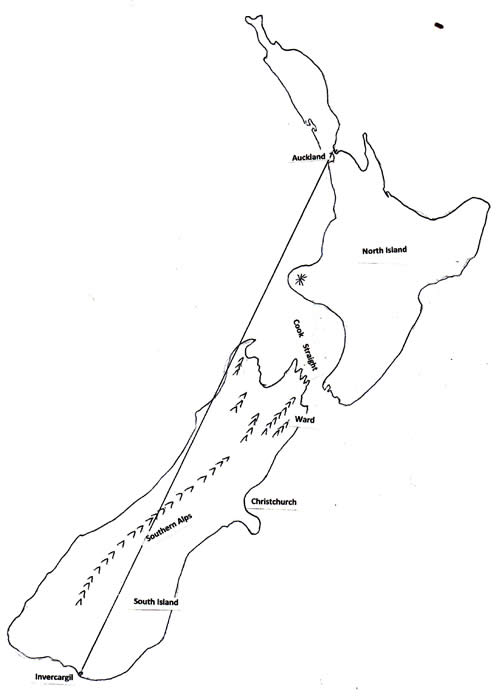
Mac has won the Invercargil to Auckland race the last four years viz 2008, 09, 10 and 11. 2008 was a very hard one with Mac’s bird the only bird in race time. In 2009 his three winning birds made it home on the day. In 2010 the winning birds arrived late in the morning of the second day. Finally in 2011 the winning pigeon arrived in the evening of the second day from a 7am liberation the previous day, with a winning velocity of 786.10 mpm. In 2011 Mac’s pigeons were 1st, 2nd, 3rd, 5th and 6th.
Mac certainly lives for the long distance and he finds, like many fanciers the world over, that being with the pigeons is very therapeutic. Watching them take a bath or a couple of cocks fighting, observing the social interactions, just fills him with a sense of calm and well-being. He says he comes out of the loft reenergised.
So why is Mac so successful in winning the annual ARPF Invercargill to Auckland race at nearly 800 miles?
To win this race four years running is no mean feat and certainly not down to luck or chance. Mac does aim for this race above all the other races on the race programme. Everything is set up to achieve that first place and nothing is left to chance. I believe the saying “nothing comes easy” applies here and despite the fact that Mac is now an Octogenarian he and his team of pigeons have been able to leave the opposition behind in their dust.
Mac does send a decent sized team to the race but I believe that it certainly isn’t down to numbers sent, rather it is many, many other reasons that he enjoys success in this event.
He is a very humble and delightful man and who gives all credit to his team of pigeons. Mac went into the 2011 Invercargill race not that confident and although we can call Mac and his team of winners Kings, he would not say that about himself. The number of top prizes including 1st and 2nd prizes in the last four years is just something truly exceptional in my book and leaves a challenge to all of us for many a year.
Race Preparation
Mac gives his birds a lot of open lofts and loves to see his bird’s free flying, particularly when they are darting around the sky full of energy. Cocks are out one day and hens the next. Mac spends up to five hours a day at the loft, mainly looking at the birds. He doesn’t handle the birds but observes them keenly. He keeps meticulous records of all their races and other relevant details. Mac normally starts the season with about 80 birds to race and keeps the hens and cocks separated on the celibate system. He says he would rather fly them to the perch than paired because then there is no risk of trouble with too many flights dropping or little babies in the nest and the birds are much calmer in the basket. He never sends yearlings or late breds to Invercargill. Instead sends two year old and older pigeons and particularly likes four to five year old hens. Mac keeps his hens in an aviary. The cocks when out can see the hens and he wonders if it would be better to block the view of the cocks to the hens. Indeed as the longer races draw nearer and the weather becomes warmer some of the cocks seem to get very frisky as if they were widowhood cocks, even though they aren’t on widowhood. I expect this is down to a good health indicator and acts as mild form of incentive.
Build up races to the Invercargill event
After a few North Island inland races Mac likes to get them to two South Island across the water races, the first being to Ward, a distance of around 360 miles and two weeks later to the first Christchurch race on the programme, a distance of around 480 miles. In 2011 the Ward race was a slow one but the Christchurch was a relatively easy one. After a ten day or so rest and loft flying until they are darting about the sky again, the birds had five or six fifty mile tosses over the next three weeks, the final toss being on the Monday prior to the Wednesday basketing. Seeing as the pigeons were held over until the following Tuesday this would have been a good pipe opener and retained their muscle condition and physical fitness in the basket. These fifty milers were normally in the late afternoon and the birds are released in one’s and two’s to simulate what hopefully may occur whilst returning home alone from Invercargill. Although the line the pigeons most likely take on the final leg is about 12 miles further west of this fifty mile liberation point, there are high twin power station stacks at this lib point and Mac believes the pigeons can see these land marks from a very long way away. Mac is quite prepared to take his time letting the birds head off alone.
This is part of his not leaving any stone unturned philosophy in his quest for excellence. Mac does not let his birds out for two days prior to basketing to allow rest and the building up of their reserves for the race ahead and the time spent away from home in the basket. Mac could send more pigeons to the race but only believes in sending them if they are 100% right. Hence the old adage, “If in doubt leave them out”.
The 2011 Winner
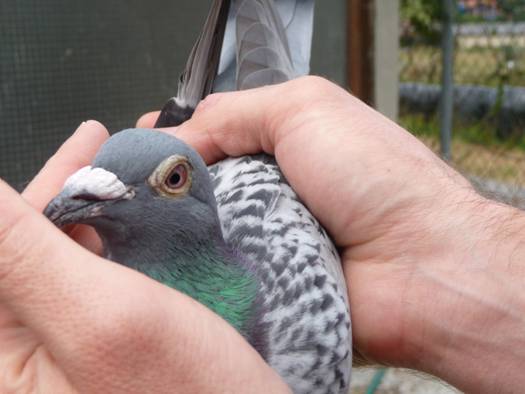
This was a rising three year old Blue cock which was often Mac's 1st or 2nd bird home in the build up races. This cock was clocked at 6.04pm on the second day one hour and 36 minutes ahead of his next two birds which scored 2nd and 3rd. The sire and dam of the 2011 winner were bred by myself (Fergus) being 7/8th Janssen and 1/8th Vandie, The GGfather being a Vandie cock that won the Christchurch to Auckland National in 1994. The Janssens being a mixture of my best lines, 50% like Mac's birds originate from the Blenhaven stud. The parents of the 2011 were very good racers themselves, winning a number of races.
Feeding Methods
Mac doesn’t feed peanuts instead he uses the Colin Walker poly seed oils mix on the feed when the birds are being prepared for their longer distance events. Feeding throughout the year for every race week in the old bird season is the following. In general Mac feeds small grains after the race for a few days to rest their system. He sources his corn from many areas and as countries as possible to allow for different mineral contents of the soils. It is the quality of the grain that is important. He likes it to be nice and clean too.
Day 1 Sunday – a mix of sunflower, safflower, canary seeds, wheat, sorghum, hulled oats, linseed and millet is fed three to four times a day.
Day 2 Monday – a mix of barley, safflower, wheat and sorghum is fed three to four times a day.
Day 3 Tuesday – morning repeats Mondays mix, afternoon maple peas and beans are added
Day 4 Wednesday (basketing) – small maize 25% (with good germ), green peas, maple peas (25%), wheat, barley, sorghum, sunflower and safflower 10% each, (making the remaining 50%.
Mac also has a hopper of Tic beans available to the birds which are purchased direct from the South Island.
In the off season Mac feeds mainly peas and beans, especially to his youngsters. The bulk of these are bred late in the season and include some off the current year’s best distance racers.
Final thoughts from Mac
Always be thorough and show attention to detail, don’t take short cuts.
Know what you are aiming for and be determined to reach the goal, don’t give up.
Breed off you best race birds at the end of the season and know when to place a bird permanently in the stock loft.
Be careful and don’t enter a bird to a long distance event unless it is perfectly right.
Use minimal medicine, preferably just treatment for internal parasites up to four times a year unless there is an individual bird with a problem, then just treat that individual bird for what it has. Solid immunity is a must for the rigours of racing. Don’t prop up the birds with medicines or you may come unstuck, 800 milers need to be very tough.
Be patient each year in educating the team for future years so that only very experienced and well trained birds are entered for those 800 mile races or don’t bother entering.
You don’t have to feed peanuts to win the long distance events but some fat is required and plenty of protein , hopper feeding tic beans is very good for this.
Celibate pigeons seem to do better at these extreme distances and especially for five day holdovers.
There you have it from the master himself - Mac Armstrong.