A Trinity Of Marathoners - Van Wanroy, Van Geel & Braakhuis
By Liam O Comain
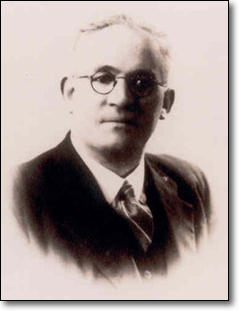
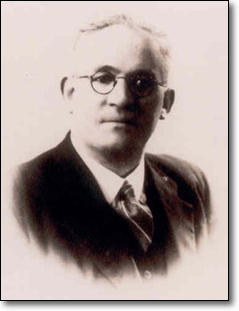
Van Wanroy
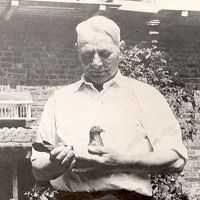
I wonder did the late Jef van Wanroy before his death ever envisage the impact that the strain which he founded would ultimately make upon the long distance scene. For amongst the national and international winners throughout the world today the blood of the van Wanroy's mingle in quite a lot of their veins. Not just the winners but the runner ups and other positions as well.
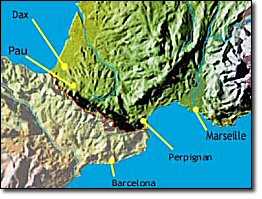
At a personal level within a period of fifteen years Jef van Wanroy won 182 plus very good prizes out of about 242 nationals in Holland. Some of the positions included 1st and 7th St. Vincent, 3rd and 4th Pau, 2nd and 9th Dax, 1st, 4th, 21st, 24th Marseille and of course 1st and 3rd Barcelona. There were also many minor prizes and this was from a loft of no more than approximately 50 pigeons.
Jef van Wanroy was a farmer who reared Shire-type horses and he became involved with pigeons during his teens, but after leaving for a period he returned with a serious intent in 1946 at the age of 42. He brought to the village of Broekhuizenvorst the best that he could purchase. From a local butcher name Steegs, he bought pure Bricoux and from his friend Dusarduyn he obtained some of the best. He also bought birds from Fabry senior of Liege which included the Hansenne stock. In fact the traditional bronze of the Van Wanroy's famous blacks derives from Fabry's famous 'Bronze'. Also another important addition to his stock was the famous '11' or the Hornstra hen. Interestingly in the 1950s Wanroy introduced Meesters of De Heen bloodlines from the great Zilvervosje which also played an important part in the evolution of the Aarden strain and dynasty.
The champion of all the Van Wanroy's was the immortal dark hen- Champion 90 who won 4th National St.Vincent,11th National Dax,36th National St.Vincent,125th National Dax,40th National Pau,139th National Dax and 7th National St.Vincent.Also an outstanding pigeon at stock so much so that when Van Wanroy passed away 17 pigeons out of 40 that he left were out of Champion 90.Yes, 63/1151390 was one of the greatest and most famous European pigeons of all time. She was a daughter of H.60.392092 that won 1st Barcelona International in 1964(De Raedt - Van Grembergen Of Belgium) and he was bred from a cross of Jansen of Venroy.
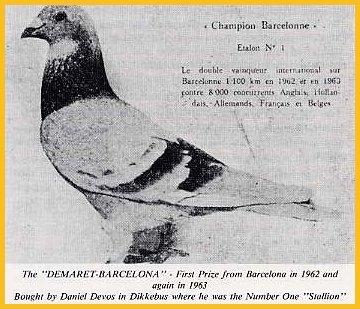
Interestingly like other great strains, their survival depended upon the the work of other fanciers who fell in love with the strain, for after the death of van Wanroy, which shocked the world's racing pigeon fraternity, there were a number of the latter which included Jan Hendrix, Anton Van Haaren and the father and son combination of Jo and Ben Hendrix. The latter combination won the International Barcelona classic with a Van Wanroy strain bird - De Barcelona. The winner having the great 90 as grand dam.
As for Jan Hendrix he was Van Wanroy's fellow villager and friend and after Van Wanroy's death, in 1971, his sister in law offered Hendrix the whole colony of pigeons, but due to limited space he refused. However, he had earlier obtained some of the Van Wanroy strain and it has left its mark, especially 'Westerhuis' and the 'Famous 90'. One of the most famous was the 'Kleine Donkere' who won the title of the Best Bird in Holland. This great specimen was sent to Barcelona (about 800 miles) 48 hours after flying from Orleans 350 miles and won 70th position in the National. Now owned by the Ponderosa Stud.
Van Haaren purchased the best of the Van Wanroys including the famous '11' and this was a stroke of some magnitude, for the new owner bred the best from them which included finishing 15 times within the top 20 of national races. Van Haaren also crossed his Van Wanroys with Aarden and Van der Wegen bloodlines (the latter a line of the Aardens). When the latter fancier sold out, the Jo and Ben Hendrix lofts obtained his stock and racers in 1974. Jo Hendrix was also a very close friend of Van Wanroy and knew his pigeons inside and out so to speak. Back in 1970 the father and son bought some outstanding representatives of the strain as squeakers. There are many of the opinion that Ben Hendrix was the worthy successor to Van Wanroy and the custodian of one of the best modern strains of the last and present century. Ben Hendrix has successfully crossed the van Wanroys with the Janssens and the Gommar Verbruggen families and the offspring are excellent for one day races races between three hundred and five hundred miles.
He may not have envisaged it but the strain which Jef Van Wanroy founded is world famous and all for the right reasons. For many the strain is on a par with the Aardens or at least not far behind. Many renowned masters of the sport have benefited from the Van Wanroys including the Kuyper Bros. from Neer (the 90 was the grand dam of 3rd and 1st Barcelona for the brothers), Wegh of Overloon, as well as G & M Vanhee of Wervik to name but a few.
(2) Van Geel
What can be written which has not already been written about this master of the sport of pigeon breeding and racing? A native of the Netherlands who obtained stock from a dynasty of the best marathon-type pigeons and in due course made a valuable contribution to that same dynasty. A fancier who made Nieuw Vosemeer known far and wide throughout Europe and the world. When did it all begin?
Marijn van Geel and the great Jan Cools, another enthusiast for Jan Aardens, were a partnership but decided to separate and thereafter went to Steenbergen to obtain long-distance pigeons to build up their own families. The only proviso being that the stock obtained had to be based on the old Jan Aardens. Marijn van Geel acquired some birds from a fancier named Van Agtmaal: he was the best friend of Aarden and could get all the pigeons he wanted from him. Van Agtmaal gave to Van Geel five eggs, two of which became the sire and dam of the famous '500', one of the best long- distance racers and also a superb breeder. Two more youngsters from the same pair were also to join the Van Geel colony that year and along with two more birds, Ligtenberg and the Old 59, bred by Van Geel from the Big Cock from Stoffelen. With these few pigeons Van Geel laid the base for what were to become perhaps the best distance birds in the world. Later two other pigeons were introduced to his loft, the 1st National St. Vincent winner of Willem van den Burgh and the 1st International Barcelona winner of Piet van der Slik. This formed the basis of the wonderful van Geels.
However, the future success of this family of pigeons did not come about through the chance matings of blue blooded birds. No! The owner epitomised the thinking fancier and hours of thought went into preparing the groundwork for his potential enterprise. As the master breeder, which he was, Marijn van Geel's course was that of inbreeding, in fact he was always reluctant to cross other pigeons into his family. This strategy paid off dividends for within a brief period of time van Geel was considered one of the very best Dutch fanciers especially from the start of the nineteen sixties onwards. Perhaps most important of all that this master of breeding technique kept the Aardens as they were during the 1950s. For even 25 years after the death of Aarden the van Geel Aardens were true to type and performance. What a family- it included the famous Dolle and Lange, Bonte 62, Old 54, Old 59 and numerous others including Vlekje whose bloodlines were the fertile soil from where champions blossomed within Holland and beyond. There is no doubt that van Geel was an outstanding master of the pigeon art and indeed, in the opinion of many,a genius of the sport.
Let us consider the great Dolle who died in 1985 at the age of 18. This great pigeon participated in 17 races and won 17 prizes including 1st Provincial St. Vincent 1.684 birds; 3rd National St. Vincent 6.844 birds; 1st Provincial Dax 1.032 birds; 3rd National Dax 3.649 birds; 9th Provincial Limoges 1.610 birds; 12th National St. Vincent 6.917 birds; 20th Provincial Chateauroux 2.176 birds; 22nd Provincial Chateauroux 2.425 birds; 39th Provincial Moulins 5.146 birds; 59th Provincial Moulins 4.612 birds; 66th National Dax 3.561 birds. Vlekje was a grandson of the Dolle and he won a car in the national from Dax which confirmed the breeding potential of the Dolle which won a car in a St. Vincent national and lost by a few seconds another car in the Dax race, and this was when he was eight years old. Even today the Dolle bloodlines remain quite potent for
Martha van Geel, the wife of the late Marijn, who returned to the sport after a period of absence and was 12th in the Barcelona national in the year 2000.
Throughout the world today the Van Geel pigeon genes ensure that when it comes to the distance they as a strain are not found wanting. What better memorial to Marijn van Geel, a gentleman of our sport, who put so much of a wonderful intellect into his contribution to the continuance of the Jan Aarden dynasty. The name of Van Geel will be forever etched in the annals of the sport of long- distance pigeon racing
(3) Braakhuis
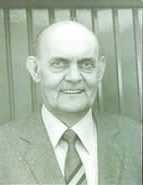
The name of Marcel Braakhuis is destined to be a part of European pigeon racing marathon history for all time. For he formed a strain of steel and no wonder they were given the name the Black Murderers. And like all great marathon strains of the last and present century they contained the genes of two of the greatest distance strains ever - namely Jan Aarden and Louis Stichelbaut - what a combination!
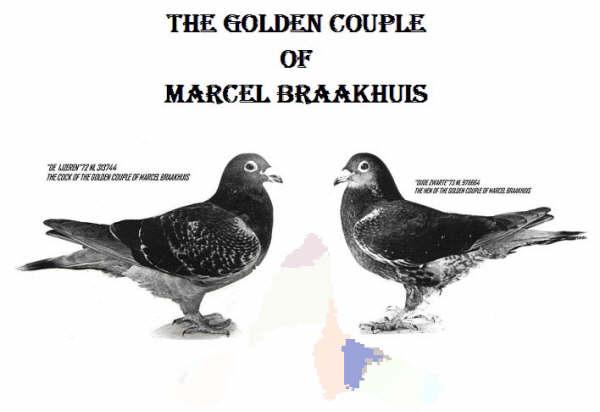
The edifice of the Black Murderers were based upon De Ijzeren, an Aarden cockbird rung 72 NL 313744 off the famous 131 of de Weert and the Oude Zwarte a Stichelbaut hen rung 73 NL 978644 (see above - cock left, hen right). Two of the greatest foundation couples witnessed by the fancy. A pair which produced De Barcelona 723 (80 NL 128723) who won 12 National and International prizes at 700 miles plus including 7 flights from Barcelona.In turn 723 was a great producer as was his brother the famous Marcel (81 NL 424634). In fact Marcel fathered countless good progeny across the globe.
Other examples: the great 34, rung 76 NL 857134, who was 2nd National, 3rd International Barcelona ; 22nd National, 179th International Barcelona ; 69th National, 76th International Barcelona ; 111th National, 322nd International Barcelona plus 16th National Bergerac, 18th National Bergerac and 102nd National Dax. The 71, rung 76 NL 696771, who scored 4th National Dax, 17th National Dax, 17th National Pau, 3rd National St.Vincent amongst other good positions.
Other noted pigeons were 74 and 56.The 74 rung 79 NL 2085274 was 1st National Dax, 19th National St.Vincent, 28th National Dax and 118th National Bergerac.The 56 scored 6th National Troye, 26th National St. Vincent as well as 29th National Dax. Both birds scored other good positions in their National careers. But a few of many.
Marcel Braakhuis was from Heer near Maastricht and by all accounts was a master when it came to the sport of marathon racing. Today the Brakhuis bloodlines are in the leading lofts in Europe and elsewhere. In fact the bird named Rick which won the International Narbonne race in 2005 carried Brakhuis genes. Its owner a great friend of Marcel Braakhuis, Winand van Engelshoven, was also 3rd National Marseille in 2005 with a pigeon carrying the same bloodlines.And to name but a couple of other major fanciers Raymund Hermes of Westerwald,Germany and the Klip-Verhagen loft of Rotterdam in Holland owe much to Braakhuis bloodlines.