Four Master Pigeoners - Part 5
By Liam O Comain
Commine
Julien Commine from Leers- Nord in Belgium not far from the border with France is one of the pivotal figures in Belgian and European pigeon racing. Reputedly his family of pigeons were for the sprint and middle distances but as I research the foundations of our sport the strain of this fancier lies at the roots of many of the marathon and long distance families of Europe. A famous stray of his bloodlines became the backbone of the Vanbrauene's, one of the greatest marathon and long distance families of all time.To the person who got it in the bird looked sickly in appearance, its tail was very long in relation to other bodily proportions, and he could not define its gender- 'a henny cock or a cocky hen'. Upon doctoring it he kept it for a few days until it appeared better but instead of releasing it he gave it to a fancier friend who upon handling it rejected it. The original fancier was not of the culling type in fact he hated killing anything so as he knew that his nephew had started in the sport he gave the stray to the latter who then reported it and was told to keep it.
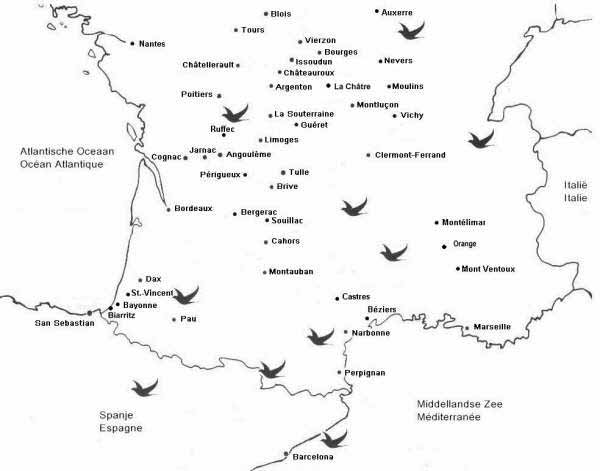
The bird in fact belonged to a Mr. Desprets who was the son-in-law of Mr. Commine. The nephew was called Andre and he bred the stray with a hen which he had obtained from a Mr R. Benoot.From the pairing a pigeon was bred which began to win races and make a reputation in the local area. Then one day at basketing for another race Mr Commine arrived and asked Andre where he had got the bird and upon being told that it was bred from a stray of his son-in-law Andre was told that he was a lucky person for the father of the stray was Commines favourite 'Napoleon'. Yes the famous 'Napoleon' bred what appeared to be a dunce or a freak of the pigeon world. Yet in turn a champion was born for Andre was no other than Andre Vanbruaene and the son of the stray was the famous 'Bull' who at the age of 15 years produced the 'Young Bull', who won 1st National Libourne and 1st International Pau in the same year. Followed a year later by the 'Bull' producing a son named 'Tarzan' who went on to win 1st International San Sebastian. Of course this is not the end of the story for a daughter of 'Young Bull' produced a pigeon from a mating which when bred with 'Tarzan' produced a 1st International Barcelona winner in 1966. And yet it is still not the end of the story for the 1966 International Barcelona winner was the ancestor of at least 3 other International Barcelona winners in 1984,1995 and 2003. All carrying the bloodlines of an ugly, ill formed wanderer of the skies- the original stray. Thus what greatness would have been denied if Andre Vanbrauene's uncle rather than doctoring the stray had pulled its neck.
Our subject Julien Commine was initially a farmer and a breeder of horses and therefore had the necessary experience of animal husbandry to do well at pigeon breeding and then racing. His foundation stock apparently were Wegges obtained from Michel Fache from Poperinge and stock obtained from Vandevelde of Oudenburg. This was his beginnings in approximately 1900.
From the latter purchases Commine laid the foundation of his strain and in 1910 he obtained another pigeon from Vandevelde, out of the latter's famous 'Vuil- Bleu Hen', which he mated to one of his best birds called the 'Checker White Flight Cock', who had flown Bordeaux twice although only 12 months old. Thus up until the beginning of the war 1914 this mating would be the source of some outstanding pigeons especially one called 'Napoleon' who from about 1912 to 1914, won 1st Creil, 1st Chartres, 1st Bordeaux, 2nd Bordeaux, 1st Orléans, etc. An outstanding pigeon.
During the war the pigeons of Julian Commine were taken over by the German occupying army and after a dispute with Commine all of the birds were removed to Brussels. When the war ended Julian Commine found some 3 dozen or thereabouts of his stock at Brussels and some in Germany.However the great 'Napoleon' was no where to be seen, that is, until his return to his home loft in 1919 after being reported. With the return of his number one bird Commine made a start again but not before selling some of his pigeons. Then with exactly 9 pigeons, Julien Commine went on to become a great champion from 1920 until his death in 1939 just as mankind was to experience another act of self inflicted madness across the world.
At the sale of Julian Commines stock apparently they were sold for pittance and famous fanciers like Maurice Ameel bought numerous birds which confirmed in time that they had got a bargain. Although not getting the price which the birds warranted nevertheless they went on to make the names of quite a number of Belgian fanciers. The strain was prominent until the 1960s but alas it tended to fade then but there were super pigeons of the bloodlines like the great bird of Dupondt which the Vereecke lofts bought for what was assumed to be a small fortune. Occasionally one will still see representatives of the strain being sold and the Natural Breeding Station has the bloodlines where grizzles, whites and other colours abound but the latter will admit that they are not in a pure state but are still producing winners. Nevertheless it is important that we do not forget pioneers such as Julian Commine.
Fabry
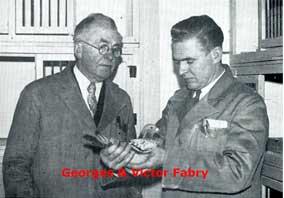
The pigeon strain of Georges and Victor Fabry of Liege, Belgium, played an important part in the history of European pigeon racing, in fact the Fabrys have been successful wherever the sport has put down its roots. The creator was Georges Fabr Victor was his son. Georges really started in in the sport in 1913 when he arrived in Liege to start a pharmacy business where he built a loft over his shop.To stock it he decided upon the Hansenne strain, for Alexander Hansenne then was considered by many as the best pigeon man in the world.
This purchase of Hansennes indicated Georges Fabry's astuteness for to start he was determined to stock the very best. Between the two world wars competing against approximately 4,000 flyers, the Fabry lofts were champions in 1928 and 1929. From 1930 to the start of the Second World War the Fabrys won many championships and National races including scoring nine times in the Angouleme National taking the gold medal for the highest number of prizes with an entry of 12 pigeons.
Unfortunately the German invasion of Belgium interrupted more success and many of the Fabry family ended up in Germany where some were destroyed. However, Fabry managed to retrieve a number and after the war ended bolstered his remaining stock with Bricoux's followed in about 1950 with a a hen from Vanbruaene and another from De Scheemaecker. This was not the last occasion to introduce other bloodlines but one of his important acts of management was to purchase his own bloodlines from those successful at racing Fabry's. This ensured a revitalization and continuing conformity of the phenotype.
There then began a very successful period for the Fabry's including the hatching in 1947 of a blue check hen called 'Heroine' who was to prove a fabulous racer and breeder, winning as a yearling 1st National St. Vincent at a distance of 945 kilometres in atrocious conditions. This great hen mothered in due course 'Porthos' the winner of two million Belgian francs within the period of 2 years and who in turn became the grand sire to the Janssen Brothers ' Halve Fabry'. Then there was 'Zotteke' who bred amongst others the famous 'Monty' and 'Aiglon' and the exceptional racer called 'Fangio' who won one million Belgian francs over a period of four years. Oh one could go on and on but the space is limited.
Georges Fabry was a meticulous record keeper and good ventilation was necessary for his lofts. He cleaned out twice per day and yearlings and old birds were raced on widowhood. The young birds were trained up to 250 kilometres and contrary to most widowhood flyers, he did not believe in breeding his widowers before the racing season began because this method helped the cocks maintain their form longer. As a family the Fabry's cross well with the Janssens and the strain have proven to be very successful in the USA.
Dordin
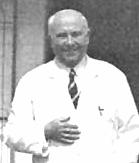
The founder of this great world renowned strain apparently would tap a walking stick and just like a regiment of soldiers his pigeons obeyed and done what was required of them. Now I'm old enough in the tooth so to speak and because of life experience I would not doubt the veracity of the first sentence. At any rate myths can grow around a wonderful enterprise and that is what I am writing about - the story of a great enterprise in the sport of pigeon racing. Pierre Dordin was a legend in his lifetime and his racing and breeding lofts were called 'Villa Patience' which stood below the Church tower in Harnes, France. With a background in farming prior to opening a pharmacy Dordin no doubt had learned much about animal husbandry for he was a maestro at the sport. So much so that his name is as revered as much as the earlier Wegge, Hansenne or Gurnay.
The son of a fancier Pierre Dordin was born into the sport which he loved and he knew that in order to succeed in it one had to have an abundance of patience and a tight regime of management. Hence the name of the lofts and the story of the tapping control. As a master of his art the founder of this strain knew that if he put the best into management that in turn his breeders and racers would eventually reward him and this they did. His discipline in his management, and it was hard, perhaps also derived from the fact that he was an ex- soldier who had answered the call in defence of his country in the World War.
Prior to a regime of management however one had to have pigeons to manage and the Dordin base arose from his father's colony. But we all know that we need crosses for the benefit of our stock therefore pigeons from the Commines, Hansenne and Stichelbaut strains plus some stock from Felix Rey were brought in. The latter contained Grooter bloodlines and it apparently contributed to an increase in the Dordins phenotype.This would appear to be the main input but I tend to believe that under the control of Dordin and his great loft manager Guy Barre other crosses were made if it was warranted.
Initially racing wise Dordin had some success and it grew but it was in the decade of the 1960s which saw all his hard work come to fruition. For in 1966 in a race from Angouleme the Dordins took the first 8 positions which included such greats as 'Spahi', 'Papillion' and 'Ramses' from an entry exceeding 3,000 birds. However one could not imagine what the following year would present to 'Villa Patience' and neither could I believe Pierre Dordin would either for in 1967 the new strain won 4 Nationals and 2nd International St. Vincent at a distance of 580 miles. Yes, the Dordins had arrived!
The following year saw more success with the famous 'Scout' winning 1st International San Sebastian whereas the 'Ut' in 1969 won the National from St. Vincent. In fact 4 of the Dordin strain finished within the first 8 in that race. In due course as the Dordin success went into top gear it is believed that many fanciers in France and in other European countries at the big races where in unison asking the question: 'What is Dordins time?' So many were his successes that a list of them would exceed the space which I have...
In this insight into a great strain and as a tribute it should be noted that it was not easy for any French pigeons to overcome the drag of other countries in the great International races but Dordin proved that it could be done if one had the right bloodlines and a committed managerial mindset. In a sense he was a pioneer and I hope that his example and spirit will influence the distance flyers of Britain and Ireland to follow suit. For there are more Internationals out there to be won!
Busschaert
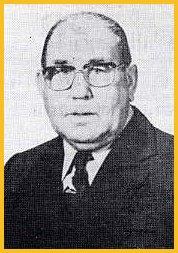
The Busschaerts have made their mark on British pigeon racing history and, like the great Slabbinck another Belgium born fancier with British connections, they are assured of an honourable place in it because of the successes which flew from this remarkable family. A family capable of winning again and again as the records show. One can recall the names of fanciers in Britain who successfully raced Busschaerts such as the Larkins, Henson, Palmer and Duncan to name but a few. And as R. Kirkbride who flew them with success once wrote 'I don't think there will ever be a type, family, call it what you will, of birds, put together by one man to make such an impact on competitive pigeon racing in this country again.'A view shared by quite a number of others. As a family the Busschaerts took to the British fancy and although defined as a sprint and middle distance type its representatives have flown well at the distance into Britain and Ireland. The phenomenal success of Ireland's, Ron Williamson, with his Busschaert family is known world wide.
Georges Busschaert was born on the 12th of May 1911 and was one of three brothers and one sister well known in Belgium's industrial society. They opened a textile manufacturing plant in England and as a fervent pigeon fancier Busschaert made the connection with their lofts in Belgium and the sport in England. Georges ran the company's plant in England and through his various duties met many English fanciers which eventually ensured the coming of many of his pigeons into English lofts, and from there into the rest of Britain and also Ireland.
While in England Busschaert went into partnership with Gil Duncan of Deal and this perhaps was the opening for the successes of the breed in Britain for in the late 1950s and early 1960s the partners birds had reaped a harvest of approximately 150 1sts, while breeding great birds such as 'the Coppi cock' and 'The Crack', etc. As the years passed however the plant in England was eventually sold and Georges returned to Belgium where he won races galore and was unbeatable upto 400 miles. The contacts he made in England however were not forgotten and many visited Georges loft at Beveren- Leie and bought what they required.
There appears some vagueness about the roots or base of the Busschaerts but apparently the Commines have been an input along with Vandevelde, Nachetregaele, and Baele bloodlines. In later years other crosses were brought into the family from Doetreloigne, Declerc and De Klinge... and these led to the winning of 1st National Limoges twice, 1st National Perigeux, 2nd National Cahors, 3rd National Brive, 5th National Cahors, 33rd San Sebastion International and 27th Barcelona International. Thus reflecting the genius of Georges Busschaert as a pigeon breeder and racer!
In partnership with his brother- in- law, Albert Nuttyens, Georges Busschaert moulded a family of pigeons who came in various shapes and sizes but possessed many winning genes. Thus was ignited a fire that is still burning for here in Derry City, Ireland,(11-6-2005)a Busschaert owned by Liam Hegarty and Son won a tough race from Bude in Britain at a distance of 300 plus miles (only 4 birds in the Fed' on the day of liberation). Yes, the fire lit by Georges Busschaert is still burning as we traverse a new millennium and long may it continue.