Modern European Pigeoners - Part 4
By Liam O Comain
Silvere Toye
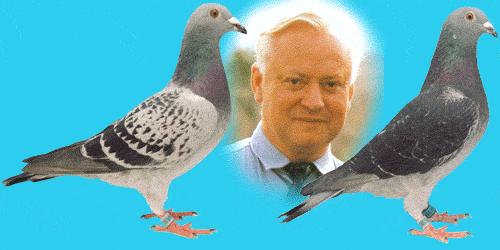
The subject of this article is Silvere Toye from Otegem, Belgium, whose strain has been very successful. Toye was the owner of the famous Peter Pau, a legendary pigeon who won the 1984 European International from Pau.
Silvere Toye's involvement in pigeon racing began at approximately the age of 10 when he went to help a neighbour, the latter was ill, by caring for his pigeons. This was his introduction to the sport and for many decades now has been one of Europes leading fanciers. At the base of his strain the basic families are Cattrysse, Montabaun family (1st National Montabaun), Vandenabeele pigeons, Alibaba & Grote Barcelona 1 & 2 National Ace Pigeons KBDB 2002.
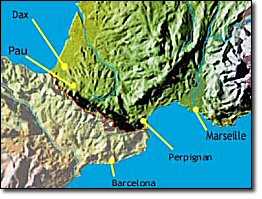
The results of this family would fill a book but aside from the Pau International win and randomly selecting from results the Toye lofts won in 1994 and 1995 the European Championship at the extreme long distance with the following countries competing: Germany, Luxembourg, France, Britain, Holland and Belgium.The winner of this championship can fly 3 or 4 international races: Pau, Marseille, Barcelona & Perpignan. In 1994 it was Romulus who won and he took the races: Pau,Marseille and Perpignan but, in 1995, Black Devil took prizes from all the 4 International races: Pau, Marseille, Barcelona and Perpignan.This great flyer of the ultra distances was 6 years old at the time! Randomly selecting from recent times the Toyes in 2002 won 1st Provincials at Tours, Bourges, La Souterraine, Argenton, Gueret with 2nd Provincials including Bourges, La Souterraine, Château roux, Tours. There were also many more positions in the top ten. At National level results include 3rd National Argenton, 3rd La Souterraine, 6th La Souterraine, 7th Gueret, 9th Souillac plus a further 12 top 100 positions.
As for other pigeons, to give a few examples, the famous Tarzan Boy belongs to the living legends of the sport for he was winner of 4 awards in 1988: 1st National Ace Pigeon Long Distance K.B.D.B.; 1st National Ace Pigeon Long Distance 'Belgische Duivensport'; 1st World champion Long Distance 'Versele Laga' & a car; 1st World Champion Long Distance 'Vanrobaeys' & 500,000 Belgium francs. Then there's Alibaba who accomplished 1st National Ace Pigeon Long Distance KBDB. Alibaba is out of the Tamme Stichelbaut son of the Descamps - Van Hasten Stichelbaut cock 3403880/81. A good flyer but also a good breeder for Alibaba bred Ali who was: 97th National Barcelona 12,721 birds 1997; 168th National Barcelona 12,678 birds 1998; 922nd National Barcelona 13,966 birds 1999. Alibaba is grandsire of Athena who was: 9th National Bourges Hens 3,397 birds; 34th National Bourges Yearlings 14,883; 15th National Bourges Yearlings 15,171 birds; 112th National Bourges Hens 4,202 birds amongst other positions. Also Alibaba is grandsire of Thalys who was: 2nd National Perigueux OB 1997 All Belgium 5,594 birds only beaten by loft mate Filou.
Silvere Toye would be considered a gentleman of the sport and has total commitment to it and his strain has much to offer the distance fancier. Interestingly the Stichelbaut and the Cattrysse blood still contributes to the formation of outstanding strains. Blood will tell as they say!
Jos Thone
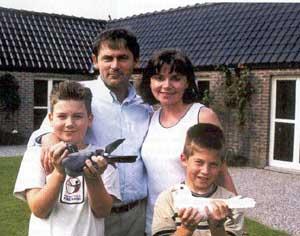
When Britain made a break through in the international racing scene with Brian Shepphard winning the Dax International in 2003 the blood of the Thone strain from Belgium played a significant part in that victory; for the winner carried that blood in his veins. And when the same loft was 2nd International from Dax the following year (2004) that bird also carried the blood of the Thone family of pigeons. Significantly both pigeons are half brothers and the Sheppard family have seen at first hand the worth of the Thone strain.
Jos Thone is from Niel near Ars in Belgium (born 1961) and in Europe he is, in the opinion of many, the best pigeon racer at all distances. It all began from the moment that he entered his father's loft as a very young child and he spent a lot of happy hours looking at his father's pigeons. This love of the racing pigeon has never ended and it is that love plus an excellent intellect that is the basis of his success. In fact this early blooding ensured that the racing pigeon has come to dominate his life, as he has willingly admitted. He was also influenced by another successful fancier of his childhood and early teens Jan Grondelaers of Opglabeek. In fact it has been said that at the age of 12 the young Thone would stand admiring the pigeons of Grondelaers aware that what the latter fancier had achieved is what he, the observer, hoped to attain. A hope that time has realised.
As the years passed Jos was employed as the loft manager of the Thomas Peeters and Sons' loft in As, where, as an excellent observer, he acquired an amount of knowledge and experience which would act as a base for the fulfilment of his sporting ambitions. In due course he married Gaby the daughter of Thomas Peeters. After their marriage Thone started to build his strain with pigeons from his father in law plus birds that he obtained from other fanciers who were his friends. After about ten years Jos Thone had built his own strain.
In racing he had almost immediate success which continued as he and his wife welcomed the arrival of two sons and as his colony of pigeons grew to approximately five hundred. This was an increase from the original 300 in 1991 when he started but Thone with his scientific approach and iron regime keeps no duds. Every pigeon must fly or produce, to earn its keep and perch, in lofts that are perhaps the best structured in Europe if not the world. This has produced some great achievements:1st International Barcelona Yearling 1993; 1st International Barcelona Yearling 1994; 1st, 2nd Euregio (Semi International) Barcelona 1994; 1st Belgium Barcelona hen 1995; 2nd International Barcelona hen 1995; and 1st International Barcelona 1996, 20,191 pigeons. He has been overall champion in the International Gouden Duif competition twice; World champion
(Versele-Lage) four times, something no one has ever matched and has won the overall championship of La Colombophilie Belge six times, a competition everyone in Belgium can enter. In 2003 he won three provincial races Perpignan, Chateauroux and Vichy and over 30 x 1st from 100 to 1,100 km. In 2004 some of the results are as follows: 39 x 1st from 140 to 1100 km; 54 times in the first 100 National and International; 1st Brive; 1st Barcelona; 1st Bordeaux; 1st La Souterraine; 1st Orleans; 1st Laon; 1st Melun; 1st Nanteuil; 1st Argenton; 1st Chimay etc; 1st club, 2nd and 3rd prov; 4th, 12th and 37th National La Souterraine 16,436 birds; 1st prov, 6th National La Souterraine 3,096 Old Pigeons; 1st National Hens; 1st Semi- National 7467 birds; 4th National Brive 19,487 birds with Gouden Grijs; 1st, 5th Prov Orleans 7,061; 1st club, 64th, 95th National Argenton 23,078; 1st National Champion Cureghem Centre hens; 1st Overall Champion Middle Distance hafo ML; 1st Ace Pigeon ML Middle Distance Yearlings Fiona; 1st Ace Pigeon ML Middle Distance Old Pigeons Olympic Ginwa; 1st champion Middle Distance Yearlings ML; 1st and 2nd Queensland Cup Australia; 1st Prov Ace Pigeon y. fond KBDB Wilby; 3rd Nat. Olympic Pigeon Belgium All Round Olympic Ginwa.
The Thone lofts have so many champions that it would be impossible to mention them all but some of the greatest of the Thone strain are Poco who in her first year raced approximately 5,000 km with two of the races over 700 km, the last race was Brive, 720 km. As a youngster the mileage covered was enough to destroy her as a future racer but not this lady for in 1993 she won first prize International Barcelona in the yearlings category, a very hard race. Then in 1995, 1st National Barcelona with hens. Then Polanova- 1st National Barcelona (yearlings) 1994. In 1996 Thoné and partner Willems won 1st International Barcelona with with Gerda. Then Arnold who was given to Valentin Vanheusden as an egg in 1997 won 1st International Barcelona.
Like the Sheppard success, many fanciers have won with the Jos Thone strain. As a fancier Thone, God willing, has many years ahead of him in the sport and as his two sons are keen the future looks bright for this modern strain of racing pigeons. In fact, like Aarden and a few others of the twentieth century Thone may become the strain of the new millennium. There is no doubt that his stock has the right genes which coupled with the fact that he is a master at the sport of pigeon racing what else does he require?
Heinz Seegmuller
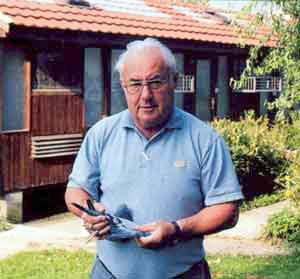
One of the best long distance flyers in Germany in modern times is Heinz Seegmuller, so much so that in 2005 he has won 1st International Biarritz with a blue cheq hen of his highly cultivated family of racers. Prior to the latest International win Seegmuller won Internationals from Dax, Marseille, Pau and Perpignan; which also included the addition of International hens from Pau. A truly great international flyer!
Our subject has been associated with pigeons since being quite young. However upon his interest in the distance races and his introduction to the strain of Havenith of Belgium success came Heinz way to consolidate his utter commitment to the sport at the longer events. This was about 1967/68 and based upon patience and good management Seegmuller crept up the ladder of the European elite based upon birds from Willy Linz.
Other successes are as follows: 8th National Section 3 St- Vincent 1995. 2nd National Narbonne 1996. 18th National Limoges 1996.1st Ace Pigeon Long Distance KBDB 1996. 1st National Section 3 St- Vincent 1996. 3rd National Brive 1997. 13th National Narbonne 1997. 2th National Dax 1997. 1st National Dax 1997.2nd National Perpignan 1997.1st Ace Pigeon Long Distance KBDB 1997 and 1st World Champion 1997.1st World Champion Marathon Versele-Laga 1998. 6th National Narbonne 1998. 2nd National St Vincent 1999. 1st Olympiad Pigeon Holland Long Distance Blackpool 1999.
The above speaks volumes and confirms if required my opinion of this great sportsman from the land of the Rhine. Heinz Seegmuller deserves all that he has achieved in the sport for through total widowhood his Havenith based family are reaping the international world of European pigeon racing. May he continue to do so for Heinz puts in so much time and effort to the sport. In conclusion, congratulations upon your recent International success.
Fauche Bros

The name of Fauche came to our notice after the Belgian Brothers of that name won the International race from Barcelona in 2003. However, as distance flyers their achievements were well known to those who follow the sport in Europe. The partnership lives at Waret l'Eveque near to Liege and Jean-Louis and Jean- Claude entered the sport in 1984.Apparently they had a good entrance for it was not long before success accompanied them.Their success from Barcelona in 2003 tends to hide the fact that their other accomplishments included 1st semi-National Jarnac (3,442 pigeons), 1st International Bordeaux (4,373 pigeons), 1st International Marseille (1,416 pigeons) and 1st International Pau (7,760 pigeons).A case of the rose masking the opening buds of their sporting success.
At the base of their family is the blood- lines of Deroo (Halle-Booienhoven) and a son of a Bourges winner owned and raced by Mario Kepski. Other bloodlines were to follow from Francois Collard (Marbaix), Roger Lesire (Chatelet) and Gisselbrecht (Knesselare). They, like many Belgians, use widowerhood and are very adept at the system.They also have some nest hens and the Barcelona winner came from them. The winner (1024337-99) was a black cheq hen, being basketed with a five day old squeaker prior to the momentous event.She being a daughter of the 39 who was the 2nd Olympiad pigeon Belgium Long distance Bazel '97. The latter bred from Rode Lesire X Blue Hen Collard. Whereas the mother of the black hen was 677/97, down from 557/95 (son of Laureaat Barcelona the International Winner from Barcelona in 1995 from X Het 80).
By their deeds you shall know them and that is true in relation to the Fauche Brothers of Belgium for they are amongst the elite of the distance flyers in Europe. Such international achievement which they have recorded must be based upon minds with a streak or more of husbandry gold.Thus I have no doubt that there are more in the pipeline to come.
Robert Buysse
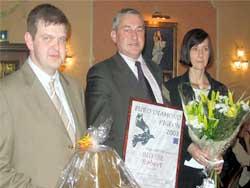
Robert Buysse is from Ertvelde, Belgium, and according to knowledgeable commentators upon the sport he is one of the leading racers of the long distance in Europe at the time of writing. His father who died in 1994 had pigeons from 1930 and this was Roberts way into the sport for he flew with his father prior to the latter's demise. From original purchases from the lofts of Desmet Matthys and Norman plus Van Quickborne and Derweduwen, Buysse has formed a strain of long distance and marathon type birds with the necessary basic ingredient of balance. As a person committed to the development of his strain Robert Buysse at all times is always seeking quality not quantity.
With many successes at national and international races a Buysse bird is hard to beat in his native country especially between distances of 600 and 1,100kms. Amongst his triumphs are 3rd International Barcelona against 24,115 birds; 1st Bordeaux 1998; 46th Barcelona 2000; 39th Perpignan International 2001; 2nd Castres 2002; 2nd Pau 2002; 39th San Sebastian 2002; 3rd Pau International 2002; 36th National & 84th International Barcelona 2003; the loft also received the Euro Diamond Pigeon Award for 2003; the loft recorded 18th West European Super Marathon in 2004. It should also be noted that his 'Mister Europe' was the Long Distance Champion of Europe in 1991.
Like many from the European mainland the stock birds are paired up around the middle part of December and are permitted to rear three or four rounds. The squeakers are left to grow and develop and if raced they are not entered into races with any serious intent. Whereas the racers are paired around the middle of February and after rearing one youngster they like many other fanciers allow their racers to go down on eggs again prior to being placed on wodowerhood.
They are released twice each day to fly around the loft and after rearing the first squeakers they are road trained a few times personally before entering the programme of club training. Buysse ensures that his birds receive the best of feeding and feeds his racers with a breeding mixture most of the year but advocates barley feeding after their return from racing for a couple of days. As for secrets Buysses total committment to the sport ensures its own rewards as his record confirms.
Robert Buysse, God willing, has the time required to ensure that his strain will make an important contribution to the sport of distance racing in the new millennium. In any case what he has achieved so far in the sport is quite impressive and with consistency may etch his name in the annals of pigeon racing at the long and marathon distances.