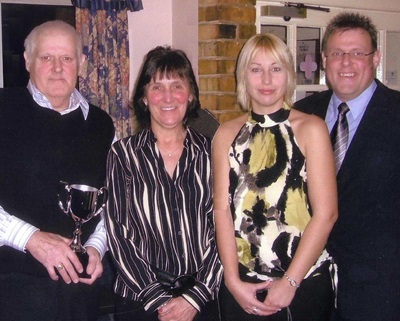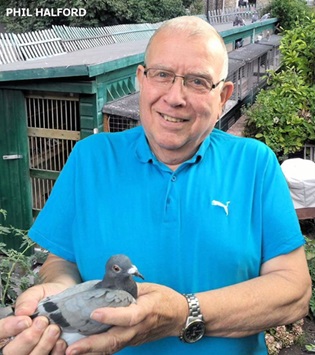
Elimar is inviting successful fanciers to tell us a little about themselves, as we feel sure that this will create plenty of interest for our readers in the UK and around the World. We start the series with outstanding fancier Roger Lowe.

ROGER LOWE
of ORBITAL LOFTS
My pigeon career started in 1973 when living in Micklands in Caversham, Berkshire. When I first got married I needed a hobby and thought about racing pigeons, and was given advice from local fancier Bill Huggins. And this is where it all began. I first started racing south road in the Reading Premier club, which at the time was a very strong club and if you could win a race there you were doing really well. The birds kept at this time were of the old Guerney strain and Barkers from Dr Rigg. Of course things are very different today. Birds kept now are De Rauw-sablon, De Klaks and Lou Wouters Janssens.
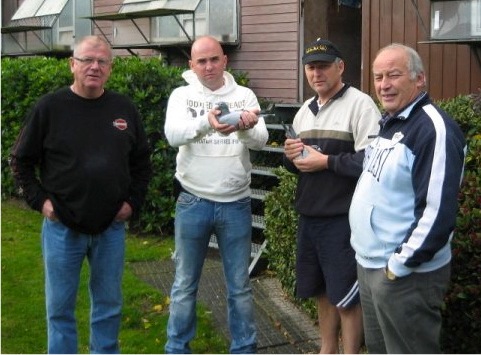
Roger and friends
I keep about 48 widowhood cocks and 32 pairs of stock birds. A team of 120 youngsters are bred from stock, and youngsters bred from the race team are sold each year for people to race. New blood is brought in on a regular basis every couple years at least. Birds paired each year can be line bred or outcrossed, best to best. If outcrossed they then may be paired back into the founder line.
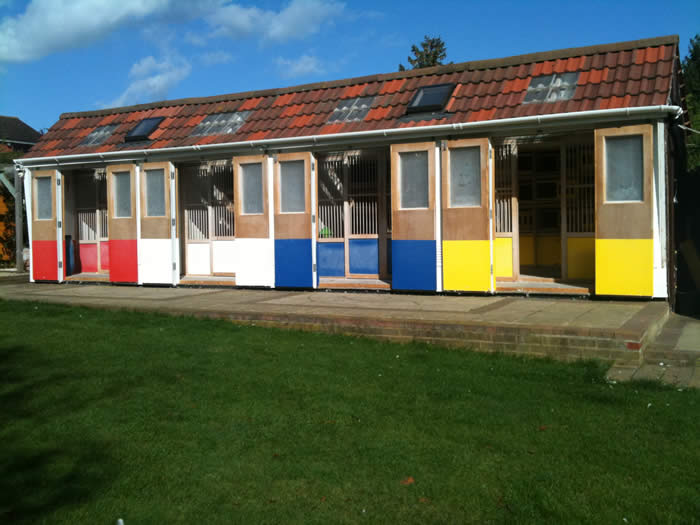
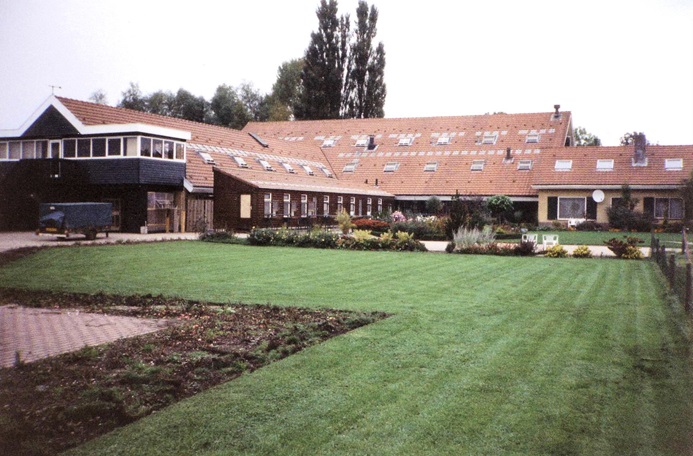
My main widowhood loft
My loft structures are either wood based with plastic coverings as in the race bird lofts or brick and wood structures as in the stock bird loft. The young bird section has an aviary on it. Natural daylight is a must in all the lofts. The lofts have grid flooring and the boxes are automatic cleaning. The main racing loft is 34 x 8 feet split into 4 sections. The second loft is 18 x 8 feet and the 3rd loft is 14 x 6 feet. I have another loft that is 18 x 6 feet. Old birds are raced open doors using the ETS system; the pads are located on the floor. Young birds are trapped using the ETS trap they drop into. Luckily the neighbours are not bothered about my birds so we are all on friendly terms.
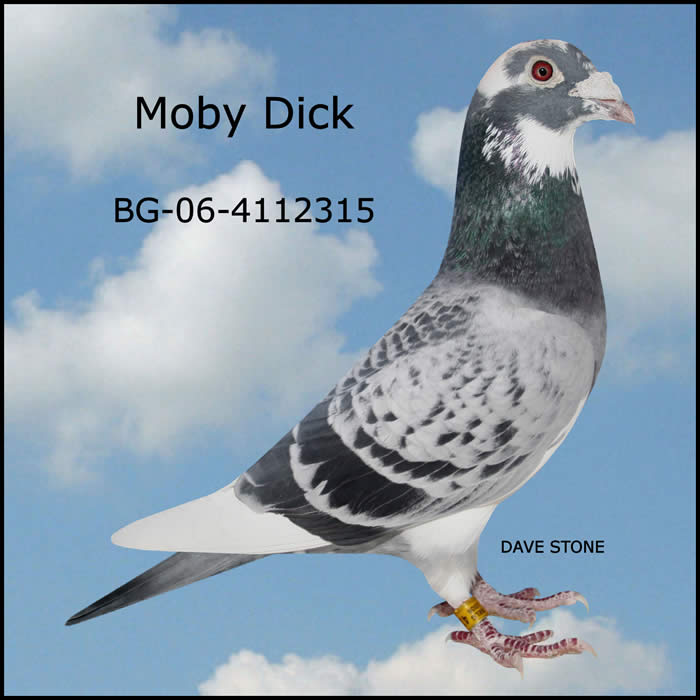
Moby Dick was bred by F & J Vandenheede from Moby, son of Frans from the Dream Couple of De Rauw Sablon.
Widowers are raced on Versele Laga widowhood mix. And youngsters are fed on young bird no maize to start with then they go on to the widowhood mix when we start racing. Feeding is done by eye. Grit and minerals are available at all times. Birds are treated at the start of the breeding season for the normal cocci, canker and worms and any treatment during the racing season is given when necessary.
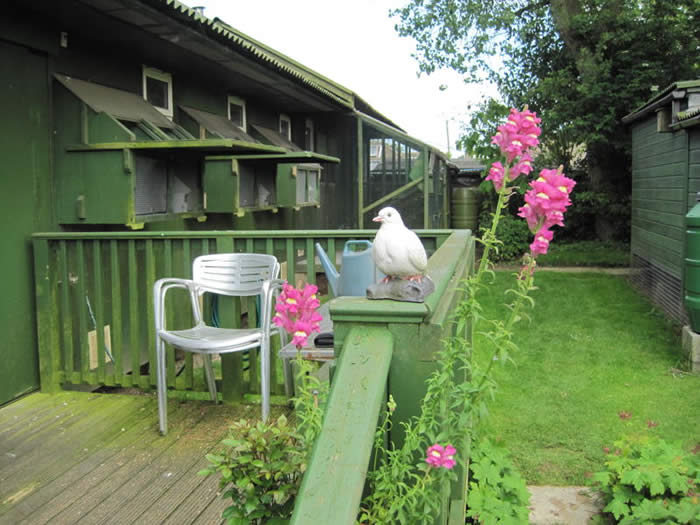
My old bird loft, and my 2 young bird lofts with aviaries
Training for the old birds commences about 3 weeks before the racing season starting at 10 miles and progressing to about 40 miles. I always train my own pigeons and they are trained about twice a week. Once racing starts no further training is given. Youngsters start to get trained about a month before racing starts. The first toss from about 10 miles, one basket at a time just in case something happens. They are taken then in stages to about 50 miles away. Once racing starts they only get one toss a week. Only birds that are showing perfect health and condition are raced. Young birds are divided into 3 sections. A and B are on the darkness sliding door system and the C team are left naturally, cocks and hens together.

Wonder Boy is a Lou Wouters bred Andre Roodhoft, sire to 3rd open NFC and 2 x 1st Feds.
I take all the pigeon weekly, monthly and yearly books and I like to keep on top of what’s going on in the pigeon fancy. If I could change anything I would like to see fewer small clubs and feds. Like all fanciers I have problems with birds of prey attacking the birds and this has become a big problem for all fanciers. I often go on trips abroad to meet well-known fanciers with a view to purchasing new bloodlines and I like going to the pigeon shows in Belgium and Holland. I normally go with my good friends Sheldon Leonard, Mark Gilbert and Stuart Sheffield. I would like to see more youngsters coming into the sport but unfortunately the costs these days are preventing youngsters from joining us although we always help any newcomers to the sport. Unfortunately the sport in 20 years time does not look to have a promising future in this country. I think it would need a big turn around here to have any future.
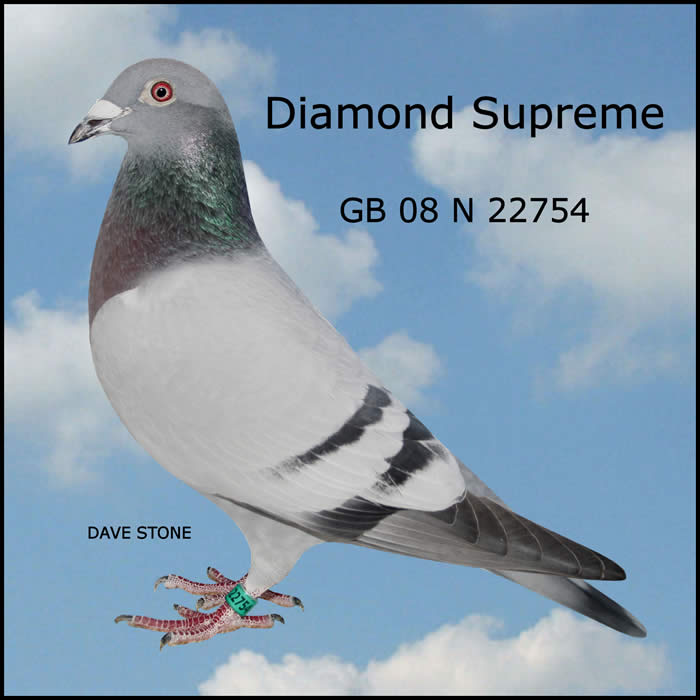
Diamond Supreme is bred from My Llittle Diamond when paired to Mark Gilbert's International winner Southfield Supreme. He's sire to 1st BBC old hens 2011 + 3 x 1st prize winners.

Conimix Dream won 1st BBC Lamballe when only 5 birds made it home to the mainland on the day from 2,315 competing, winning a R.P.R.A. Award.

My Little Diamond is the winner of 1st NFC. She has bred 1st prize winners with every cock she has been paired with, this year alone breeding 5 x 1st, 2 x 1st fed & 3rd open NFC Saintes.
Just to mention a few of my best performances: 1st, 2nd & 4th open CSCFC from Carentan 2011; 1st, 2nd & 3rd CSCFC open race from Picauville 2009; 3rd open National Flying Club from Siantes 2011 and also 3rd NFC open Saintes 2009 and I won the young bird National in 2007; 4th open Sartilly National Flying Club 2006. The BICC has been won twice - in 1999 and 2000, and I won the BBC in 2005 when there were only 5 birds home on the day. This year I have won the BBO fed 4 times. In total I have won 2 x 1st BICC, 4 x 1st BBC, 1 x 1st NFC & 2 x 1st CSCFC. In my most recent BBC win I took the first three positions by 25 minutes.
Yours in sport - Roger Lowe.