Jim Emerton speaks to Robert Wickes
1 Please talk a little of yourself and your profession, as you are an educated man with things to tell us.
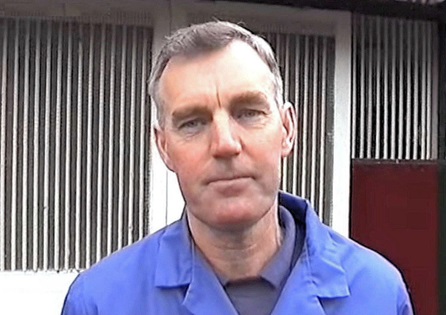
1. My name is Robert/Rob/Bobby Wickes (those are the three most polite names that I answer to). I live in the beautiful Devon countryside, a few miles west of Exeter. I work full time from home, working in IT Product Development for a large American financial services company based in Canary Wharf in London. I was working from home before it became fashionable as a result of the pandemic! We live in a small cottage with a little land high up in the hills with views out towards Dartmoor in the West and Mid Devon and Exmoor to the North. I am very fortunate that working from home allows me a lot of access to my birds through the day which leaves me with very few excuses come race day.

2 How did your enthusiasm for racing pigeons evolve-what is it about a pigeon?
2. My first contact with racing pigeons came when I was around five years old. I grew up on a farm on the south coast of England in a small village called Chideock. Chideock lies a mile west of West Bay for those whose geography is somewhat better when referencing liberation points, and the farm was less than a mile from the cliffs of the Jurassic Coast. My best pal at that time was a lad called David whose father, Martin Young and grandfather, whose name escapes me, had raced pigeons, with some success I believe, in the Coventry area in the 70s and early 80s before Martin brought his family down to the South West.
David kept a handful of racing pigeons in a wendy house in their garden and I became fascinated by them. I instantly saw the character, the way they regard you with intelligence, sizing you up to establish what you are about. The bright personalities of each individual bird intrigued me and the glossy Louella and Ponderosa brochures that David would lend to me with, their colourful pictures and close ups, all contributed to my enchantment.
I began to notice racers stopping on the farm for a rest on their way through from racing. We had a large, clean, spring fed pond and at certain points of the year, there was grain in the barns. For many pigeons coming across the channel, this would have been a welcome pit stop on their route up country. It must have seemed like a mirage or a miracle being the first thing they saw after crossing the channel!
It was some years later that I was given permission to convert a stable that was no longer being used for horses. David and I did so and I was ready for some pigeons of my own. That's how I started, with a couple of strays in an old stable. Soon 2 strays became nearly 30 strays, all reported, all fed and allowed liberty, all stayed.
3 What are your ambitions within the culture of pigeon racing?
3. My ambitions within the culture of pigeon racing are still quite fluid. 2021 was my first year with young birds. All I wanted from the season was to get my birds back from training and racing consistently and not be too far off the pace. As it happens I managed a club card and have a team of 17 cocks and 20 hens for 2022 all trained to 30 miles and half of them raced 90 miles. It has been an incredibly steep learning curve, something that I have revelled in. I enjoy absorbing the information and advice and I am desperate for more knowledge all the time. My future ambitions are to simply be better. I want to see progress and as long as I can see progress I will be happy. Small, incremental improvements will keep me satisfied. I have no aspirations to be competing for all top 6 club positions or to lock out large portions of the fed sheets. I would like to be near the pace and take the occasional podium position. I will keep increasing the goals as I progress but I am not looking too far ahead yet.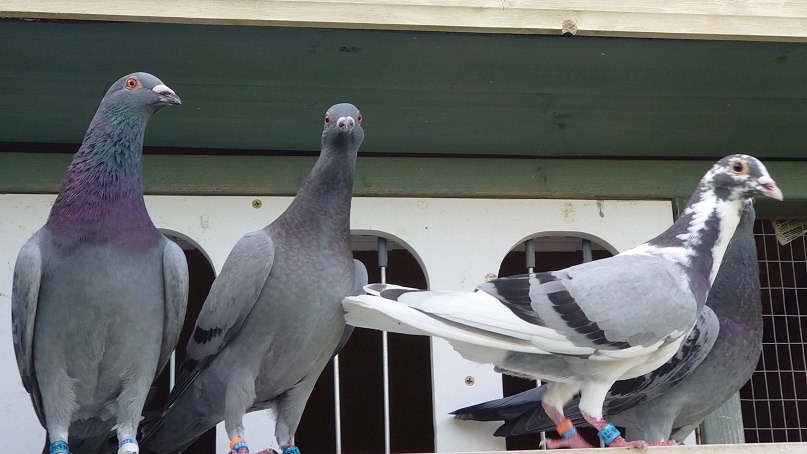
4 Who inspires you in the sport and why.?
4. The people I take inspiration from in the sport are those willing to share their knowledge and experience without something in return. Those with no secrets who have a genuine willingness to help others in the sport purely for the simple reason that the sport is dying and they have the foresight to realise that keeping secrets from new starters and novice fliers only serves to kill the sport further. Individuals who have helped me tremendously along the way with generosity of advice and birds are James Cook, Ian Johnston, Wayne Wright and Marcus Blackmore. More recently, I have also begun to follow certain individuals online who I believe are doing great things for the sport but who I have yet to meet. These are individuals who I look for updates from because to me they speak a lot of sense and have nothing to hide. David Reynolds, Jim Emerton, David 'Bunker' Brierley, Les & Luke Cross and Ad Schaerlaeckens. I'm sure there are others out there but these chaps are the ones I have seen the most from in terms of sharing knowledge and tips for no personal gain.
5. You are a leader on the Novice/New to pigeon racing site, please tell us all about the site-the ethos and objectives.
5. I help as one of the admins for a Facebook Group called Novice/New to racing Pigeons which was set up by James Cook of Tumley Lofts Stud to help new starters with information and assistance from experienced and knowledgeable fanciers. He has a tremendous section for people new to pigeons, on his website, but he was struggling to answer all the questions coming his way and had the foresight to set up the group with a handful of experienced men and women to guide the beginners among us. I take an active role in the group sharing what I have learnt myself and also sharing the tips and advice I have received over the short period of time I have been in the sport. It is vital to make this sport less daunting to start out in and easier to continue competitively in. We're now up to nearly 3k members and I'm delighted to say it remains a friendly and open environment where no questions are scoffed at and everyone is willing to help. It's exactly the kind of environment we want to create in order that people don't feel self-conscious or embarrassed. No such thing a stupid question with us.
6 How do we maintain the voice of reason and fair play on the site
6. Maintaining the voice of reason on the site has so far proven less challenging than you might have anticipated. We have a list of rules as follows:
We're all in this together to create a welcoming environment. Let's treat everyone with respect. Healthy debates are natural, but kindness is required.
Give more to this group than you take. Self-promotion, spam and irrelevant links aren't allowed.
Selling of livestock is prohibited on Facebook and advertising pigeons for sale puts our group at risk.
Please keep bad language to an absolute minimum on this group. There are children and young people who are members.
Personal abuse is not tolerated and members are ejected if it is spotted or reported. Thankfully, we have a good bunch of members who value the group greatly and who are willing to police it well too so they report things they see in case us admins have missed anything. We're also very much in favour of discussion. There's no right or wrong when it comes to pigeons and if someone is sharing something that might be considered questionable, there is no aggressive "You're wrong!" It's very much more respectful than that and discussions are had where people's opinions are challenged appropriately. Above all, we treat each other like adults and allow everyone to form their own opinions based on the measured sharing of information and advice. Feedback suggests it's working so far.
7 Do you study birds, books and films of racing pigeons with objectives in mind?
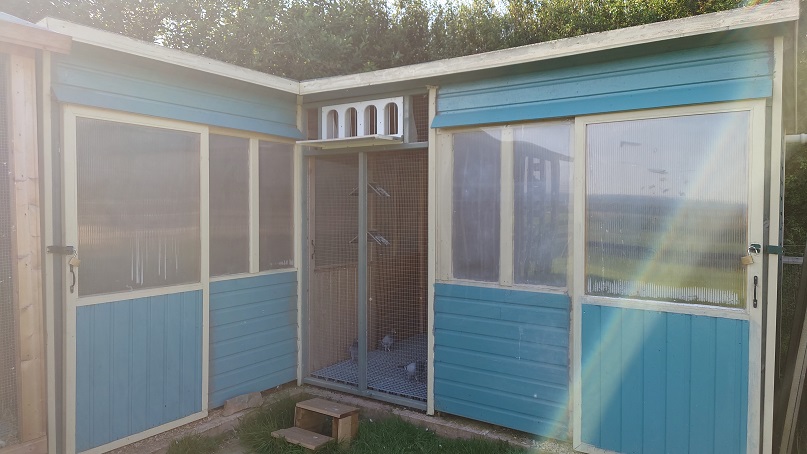
7. I do study birds, books and DVDs, internet articles, YouTube, magazines; pretty much all pigeon related media, practically in every spare minute I get, but at this stage not with any specific goals in mind other than a broad learning experience. I take snippets from here, snippets from there and things that I think are clever, that I can fit into my current loft and situation, I try to use. I am not yet in the habit of changing my situation to match the successful set ups of others, I am trying to use others' advice and techniques that will obviously fit into my own set up and routines. I am a great believer that my birds must fit around my own lifestyle and commitments. Again, this is an important aspect for attracting beginners to and keeping beginners in the sport. Those fanciers who insist that the birds must be cleaned out twice a day and therefore a working man must be at the lofts at 5am before heading to work at 7am and success cannot be expected with any other routine is not only complete nonsense, it is another factor killing the sport.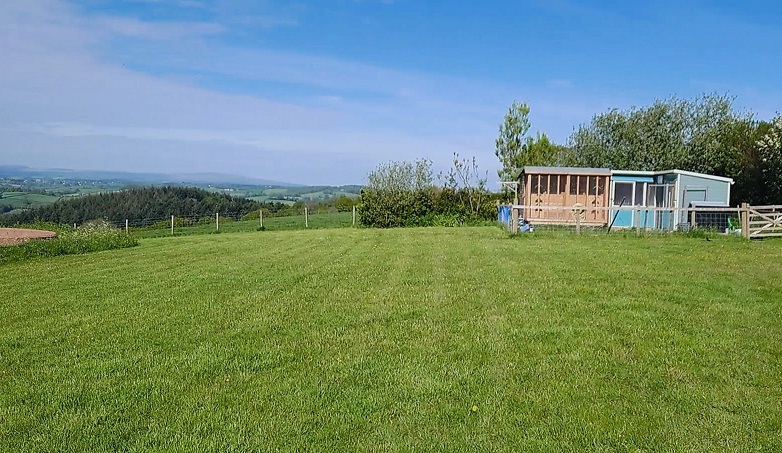
8 Are you wised up and shrewd about pigeon politics, money and hype?
8. I'm not sure if I am the best person to answer the question of whether I am 'wised up' and 'shrewd' when it comes to pigeon politics or money! Other people might have a far better view and see me as a pushover or a bit wet behind the ears, who knows?
What I will say is that I am generally suspicious of online sales and auctions and I have yet to buy a pigeon that I have not handled. I can count on one hand the people I fully trust in the sport. My stock loft has pigeons from 3 trusted sources and I intend to keep it that way. I leave a box or two on a rotation for 'trying' other sources against the 3 trusted ones. Occasionally I have an urge to spend altogether too much money on a pigeon or two but I only ever go to the same places for those birds. I like to spend a few bob every now and again. I know I don't have to and I could approach a very good friend who would give me some very fine pigeons but it's a nice little treat for myself.
I deliberately try not to get involved in any politics but I am often asked for my opinion, even in my short time in the sport. Perhaps because I am still new enough to have not taken a side yet and because in everything that I do, I try to offer a reasoned and unbiased view.
9. Do you like the thought processes behind the elite fanciers today who tend to dominate-how do they do that?
9. The thought processes of the elite fanciers are impressive to me but, in a similar way to the knowledge and skills I use, I haven't yet chosen who to emulate at this stage and I think the answer is most likely to be a mixture of any number of them. There is a very peculiar contrast between what I admire in the sport from other fanciers. I admire the very rigid, highly regimented and structured approach taken by the sprint and middle distance men and women. Their toughness and unwillingness to deviate from a routine, how hard they are on their birds, both in selection and in racing. It's remarkable to me and I applaud their ability to fill the results sheets split by a matter of seconds following the same schedule each day, each week of each season, only tweaking small things here and there. How do they fill the sheet each week? I don't know yet, I'll let you know if I ever find out!
In contrast I also hugely admire the feats of the distance flyers. Those flyers who know and understand their smaller teams of birds individually, what makes each pigeon tick. They know when a particular cock or hen is behaving in a way that suggests he or she is worth sending. The individual relationship aspect is fascinating. I don't ever see myself with a vast team here so building a rapport with the individual birds is more appealing. I also won't have time for in depth techniques like full widowhood, particularly as I want to fly hens competitively. So initially I will fly roundabout and will have a small enough team to be able to play around with the motivation of individual birds or pairs.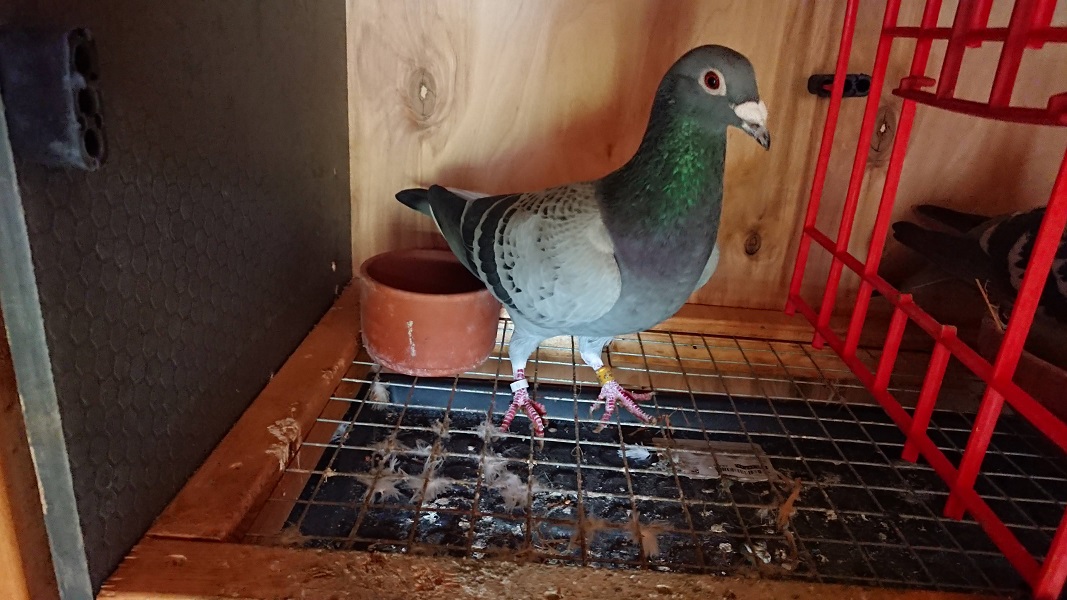
10 What is the essence of a top bird and fancier, is nature/nurture or both?
10. What is the nature of a top bird or fancier? Well the two are very different but there are parallels that can be drawn I'm sure.
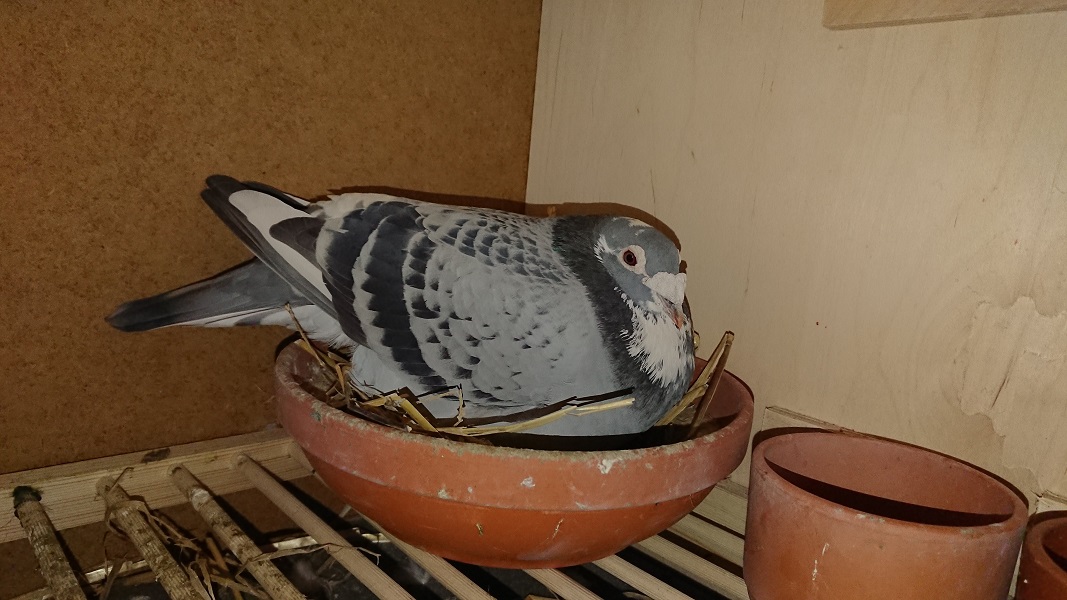
Firstly let's take the bird. Top birds are born. They cannot be created. They are a natural and fortunate alignment of breeding that creates the outstanding pigeon. While a champion pigeon is born, it still has learning to do to reach its potential. Top Pigeons sometimes show nothing as youngsters or yearlings but flourish as old birds, perhaps because they have been learning by themselves, establishing their own knowledge and experience. I still believe it is something they have been born with that gives them that ability to learn and piece things together.
Now it could also be argued that it is the fancier that puts the parents together, thus creating the champion pigeon and of course this is true, but in my opinion the fancier still relies on a huge element of luck even if they are a skilled breeder. Champion pigeons have been born in the best breeders lofts and they have also been born in lofts out of strays. You can increase your chances of breeding a champion perhaps, and you can breed more champions than others, but luck remains the untouchable element as you will still breed duds. It's the same in other breeding sports, horses, dogs, and show animals.
So to the fancier. Of course a fancier can learn and become better. They can absorb knowledge and follow instructions to improve. So there is an argument that great fanciers can be nurtured. Personally I believe there is one element that cannot be taught, it is a natural empathy and understanding of the birds, or perhaps of any animal. Some might call it stockmanship, whatever it is, it's the ability to read the animals that one has responsibility for and to instinctively understand what is missing, what they are craving, what they are looking for or what they have too much of. As I mentioned, I grew up on a farm in Dorset and while my father was not a farmer, he leased out our land for grazing and kept a few sheep and cattle as a hobby. To the uneducated eye, everyone's sheep looked the same, but it didn't take long to begin to notice certain shepherd's flocks looked far better than others, and they behaved better too. They were more compliant, they bred better, they would need fewer treatments, their wool was a higher quality and so on. So while some techniques may have been passed from father to son through generations, there were other aspects that were unspoken and not learnt. Just naturally understood. I believe this is a natural skill that some are better at than others.
11 Do you like the club/people world?
11. I do like the club. I have only experienced it in a very restricted environment, this being my first year racing, but they have been very welcoming and I have enjoyed the company of those who I have met immensely. I look forward to more regular contact under more regular circumstances from now on.
12 Have you any National/International or channel aspirations?
12. At the moment I have no channel aspirations and I will be glad to get my team of yearlings going for the full Fed programme. Once I feel more confident in my pigeons, and my methods I will consider channel racing which for me, is still middle distance but I am in no rush. I would rather build things slowly than risk my birds for my own egotistical gains.
13 What, on analysis is your 5 year plan?
13. I do not have a 5 year plan, but on reflection, if I am forced to consider one, it is very straightforward. I would like to have managed a winning club position. I am not in the most favourable position for my club, flying an extra 7-10 miles to most members. And if I have managed to achieve a winning club card, and have featured more regularly amongst the pace of those more talented flyers in my club, then in five years I would have liked to have had birds return from across the channel once or twice.
The five year plan is perhaps then a reflection of the industry I work in where I am often reminded that goals and targets must be 'SMART' - Simple, Measurable, Achievable, Realistic and Timestamped.
14 Do you favour English or Continental birds, or are they all a mixture?
14. The birds that I favour happen to all be long established in England but are based on old European families. I have a mixture of Leen Boers and Janssens from Tumley Lofts Stud, a wonderful group of pigeons from Ian Johnston who has spent many years building a superb family of pigeons merging different Janssen lines with Syndicate Pigeons, other continental pigeons he has admired, and winning pigeons he has picked out from various other sources over the years. I have a couple of nice Jan Aardens also from Tumley and a lovely Hereman Cuester pair from Wayne Wright's winning loft in Exeter.
I have never been one to follow convention and have not been tempted by the latest trends. As a result, I avoid the latest Van den Bulck, Leo Hereman pigeons and prefer to go my own way with my own ideas.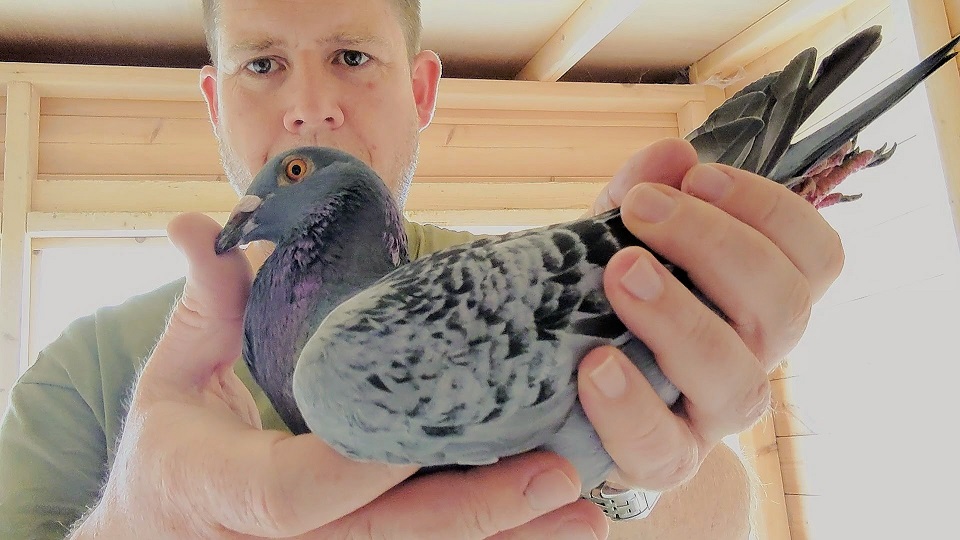
15 Can feeding ever be a perfect science?
15. Can feeding ever be a perfect science? On the face of it I believe it can be, because I believe that science can be a vital factor in any process. However, my lack of experience in pigeon racing means that I can't offer a great deal of insight or knowledge yet.
What I will say though, is that above all else, it need not be complicated. My most respected mentors keep it very simple with regards to feed and it is also what I have noticed from various DVDs as well. There is no need to over complicate feeding.
16 What do you do on a race day-act or think?
16. What I do on race days, as well as almost every other day in fact is think. I do a great deal more thinking than acting, much to the frustration of my partner Anne. I am extremely easily distracted as a result, infuriating for her and sometimes frustrating for me too as I'll be doing something and then suddenly have an idea about something and immediately need to go up the garden to the lofts to check something or change something. Then I forget what I was doing previously.
So on race day, I'm always thinking. So far, it's only been young birds and I'm thinking about whether I've fed them enough to get home. That was my main goal this season, to build a team. As a result I fed them to get home rather than for out and out speed and motivation. I would also be constantly questioning why I wasn't getting them back together. It was a strange year for racing too and I was frustrated that I never had more than one bird arrive at once. I was questioning my methods and training as I felt that even if I was off the pace, they should still be arriving together. It seems I wasn't the only one getting them back in single arrivals though and I was glad to hear others in the region experiencing similar.
It will be interesting how I react next year when I try to be a little more competitive with different motivation and feeding techniques to gain some speed. I'm sure I'll still be a thinker, but I might have a few more ideas to act upon too.
17 Is the sport doomed, if so why, or why not? 18 Please discuss any other aspects of the pigeon racing culture-ans and pics.
17./18. Sadly, I do think the sport is doomed. There are so many factors against it these days and very few people involved in the sport are doing all they can to improve the perception of it or to encourage participation, or to support those willing to do so.
From personal experience, I was totally unprepared for the horrors of watching my birds being taken out of the skies by birds of prey. I still find it very hard and I still see this as a huge factor in new starters not continuing.
We also have a crisis of perception within the broader general public. The image of the sport and the image of the humble pigeon is not helping our cause at all. These are remarkable birds capable of incredible feats of intelligence, speed and endurance. Friends of mine who have no interest in racing pigeons are genuinely fascinated by them and are captivated by my answers to their questions once they learn I keep them. Even my barber and my chiropractor say they look forward to my appointments so they can learn more and hear about my progress. There is an audience out there willing to listen, we just need to engage them properly.
The other big challenge for us is the animal rights activists. I am a keen angler and have followed with some dismay, the latest sentient being legislation debates in government. We need to be very careful about how our sport is perceived in this space as well. We must be way more proactive in this regard too rather than settling back and waiting for the challenges to come and then reacting as best we can.
It's a great shame as there are some truly wonderful people that I have met in my short time in this sport. However, there seem to be a great many who are equally happy to keep their methods and secrets to themselves, they are unwilling to assist with change for the good of the sport and they only see their own immediate short term gains over the long term sustainability of the sport.