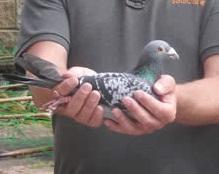
LONG STANDING SUCCESS IN LONG DISTANCE RACES FROM LERWICK
THE PAT O’SULLIVAN STORY
by Gareth Watkins
The race point of Lerwick in the Shetland Isles, situated 150 miles off the north east coast of Scotland, is regarded by many as one of the hardest races in the sport of pigeon racing. When you consider that as soon as the birds are liberated they have to face a MINIMUM flight of 150 miles over the treacherous North Sea before hitting the northern most point on the Scottish coast, this fact becomes even more obvious. However, many fanciers believe that if the birds head in a straight line home towards East Anglia and London and the home counties, this initial sea crossing is more like 200-250 miles. Very few fanciers have been able to consistently clock pigeons from this race, in fact you could probably count those fanciers who have consistently gained success from this race point on the fingers of one hand! One man, Pat O’Sullivan of Enfield on the northern fringes of London has, over the past two decades, clocked with almost metronomic consistency from this most daunting of races. In order to achieve this phenomenal rate of success Pat has developed a true family of big hearted sloggers based in the main on the bloodlines of one of, if not THE greatest pigeons ever to fly the north road into London – the incomparable Steptoe, bred and raced by the Went brothers of Enfield.
When I first started taking an interest in pigeons in the early 1960s there were two pigeons that I would have liked to have owned. They were Champion Steptoe and Champion Twilight, both terrific racing pigeons. Champion Steptoe won 1st and 2nd LNR Combine Thurso, 22nd and 23rd LNR Combine Fraserburgh, and 99th LNR Combine Berwick. He raced like a tornado winning races from Huntingdon at 45 miles through to Thurso at close on 500 miles. His wins in 2 bird, 5 bird clubs and Open events brought in more than £1000 for the Wents and this in the early 1960s was an absolute fortune. He was also a champion producer being the sire and grandsire of all the Went Bros' best pigeons including Sprucetoe, Stilltoe, Chilltoe, Skytoe, Staytoe and Seventoe – all great racers.
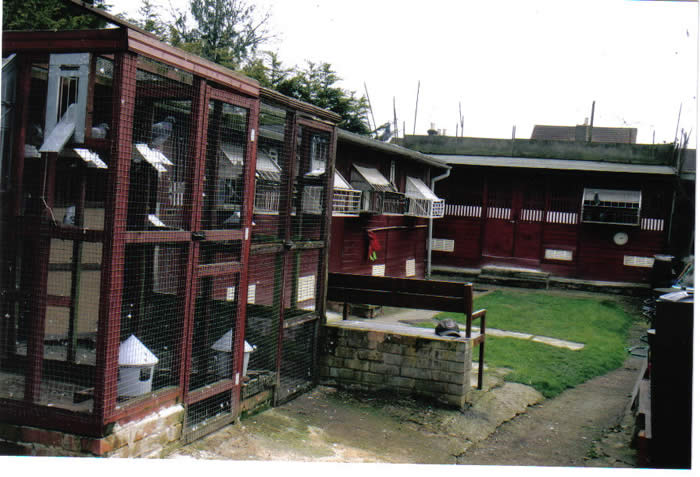
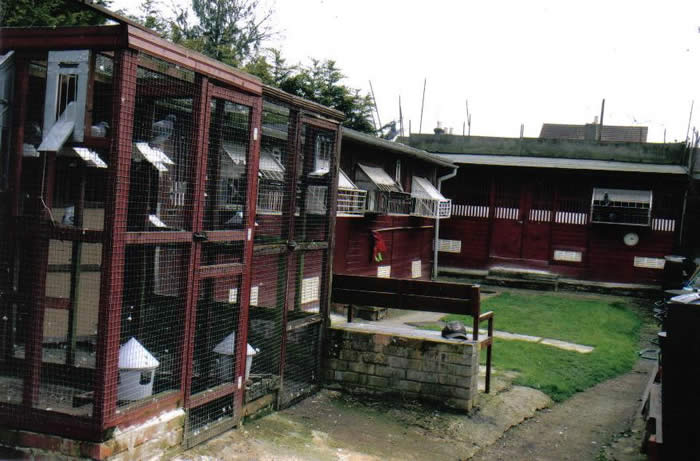
Pat O'Sullivan's loft set up
Many other fanciers who were fortunate to get hold of the Steptoe line were also successful as the family had a phenomenally prepotent ability to pass on their winning genes from generation to generation. Steptoe’s sire was bought from William Hollis of Tottenham - this chequer cock became known as 1212 and he was the son of the Combine cock – NU 56L1333. That won 6th combine Berwick and 8th combine Fraserburgh, and was bred down from Jimmy Bruton’s “The Great Lofty”. Steptoe’s dam was a blue hen 23512 being the nest mate of one of the Went brothers’ top racers at that time, “Jimmy’s One”.
There you have a little of the background information behind the bloodlines that laid the foundations of the present day long distance champions bred and raced by Pat O’Sullivan. Now for some information on the man himself and how he has continued to develop his family of pigeons.
Pat O’Sullivan first started in pigeons in 1966 when he joined a local club, the Enfield Highway, which was a very strong and competitive club, with a lot of members. At the same time a good friend of Pat’s, Terry Brown also joined the club. Terry was very keen on the Westcott family, and Pat and Terry would go to a lot of sales in London where the late Frank Hall carried out the auctions. Also in the club at that time was a character called Harry Wooding - they called him Ginger, who was a very good friend of the Went Brothers. As a result of this friendship Harry was gifted a September bred young bird by Nellie Went, the mother of Les and Doug Went, which he took home and kept in a basket in his front room for 3 weeks before he took it down to his loft. This youngster developed into a lovely chequer hen, which he called “Lucky Lady” and proved to be a direct daughter of champion Steptoe.
Terry Brown was also a friend of Alfie Hendle., Terry and Pat went along to the Hendle loft with the purpose of buying a certain pigeon. Alfie had a very good pigeon called the “Double Rung Cock” that was also bred out of the Combine cock (NU56L1333) of William Hollis mentioned earlier, which made him a brother to the Went Bros' pigeon – 1212 “The Hollis Cock” – the sire of Steptoe. Pat bought a son off this chequer cock which had already won 6 x 1st and 4 x 2nd. Many good pigeons came down from this purchase and he in turn proved to be one of the foundation stones of Pat’s early successes in pigeons.
At this time Pat joined the North London 5 Bird Club and also in this club were Brian Minton and his dad who had, over the years, built up a reputation as top class fanciers. Brian had some good Dordins at that time but he had also acquired birds from the Went Bros plus some eggs, that the ever generous Nellie Went gifted him. From these eggs, which were gifted in late September, came a great pigeon - Sting Step - a great grandson of Steptoe. Sting Step was a very good bird for Brian Minton scoring a 77th combine at Thurso, 123rd Combine at Thurso and 52nd Open Combine at Stonehaven. However his best performance was when Brian joined the North Road Championship Club and he sent him to Lerwick. After an 8 day holdover the birds were liberated in a strong south west wind, in what turned out to be a very, very hard race. Stingstep ended up winning 1st section, 14th open in the NRCC with 2,619 birds competing with all those birds beating him flying 100 miles less than Stingstep. Not surprisingly, given both his racing ability and breeding, Pat was keen to get his hands on some of the Stingstep blood and he eventually acquired a pigeon bred directly from Stingstep and also some youngsters from other Went Bros pigeons. Brian and Pat then went to Harry Wooding and purchased a pair of babies (nestmates) which turned out to be 2 cock birds. Brian had one (02) and Pat had the other (03). These were bred out of a blue cock GB73L28568, which was bred out of Sprucetoe - thus strengthening even further the influence of the Went Brothers’ pigeons on the developing O’Sullivan family of pigeons.
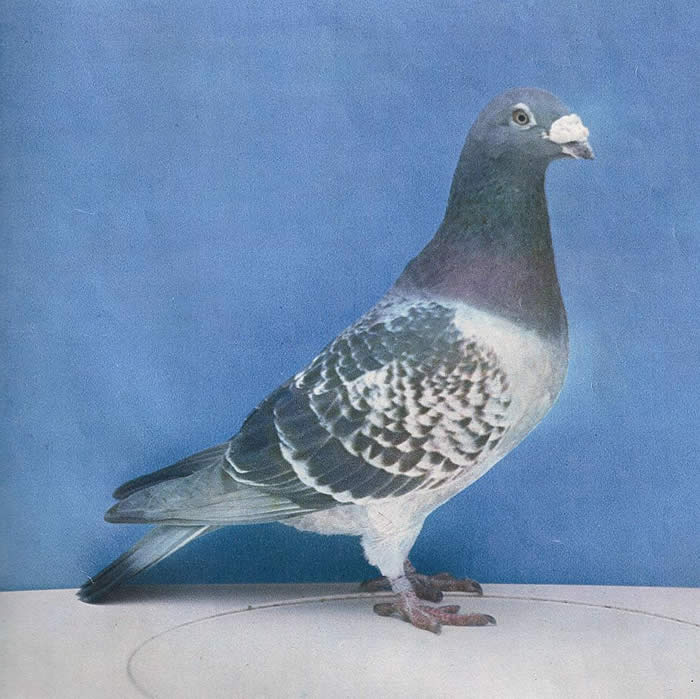
Steptoe
Also at about this time – the early 1970s, Pat sold his house and bought a small business so the birds had to take a back seat for a while as there was very little room for a loft at the business premises and even less time to race them. However Pat’s good mate Terry Brown invited Pat to fly in partnership with him although Terry did most of the day to day management of the birds as Pat was busy building up his business.
Pat soon had more time on his hands and decided to convert an outbuilding at the business premises and in no time at all he was once again racing with the 5 Bird club. By 1979 Pat had bought his present property - a lovely Victorian house with an impressive 150 foot long garden. Almost immediately the purchase of the house was completed some youngsters were installed in the new loft and Pat was soon back winning races. The initial loft measured just 12ft x 6ft which has over time expanded to the present loft set up which now consists of an 18ft x 9ft loft for old birds with 3 sections and a 3ft corridor. The young bird loft now measures 20ft long x 6ft, and there is also a stock loft which has two aviaries - one for cocks and one for hens.
In the winter of 1979 Pat obtained two pairs of pigeons from Harry Wooding. One of the four pigeons was a blue cock bred from the Went Brothers' Sprucetoe. This cock was mated to one of Pat’s hens, and they produced some good pigeons, including a chequer cock “Bridget's Boy”. In 1982 he was 1st Combine Berwick and 61st combine at Stonehaven. Another of the 4 birds from Harry Wooding was a hen bird bred by Doug Went, who by this time was flying pigeons on his own. That hen was paired to one of Pat’s cocks and from the union came yet another good bird named “Quality Lady”. In 1982 she was Pat’s first bird from Thurso when there were no birds on the day into London, winning 8th LNRC. Along with the performances of “Bridget’s Boy” these performances helped Pat win the famous Tommy Long trophy, the London Victory Trophy and many more including two RPRA awards during the 1982 season. The birdages in those days for the Tommy Long Cup was about 12,000 at Berwick, 8,000 at Stonehaven and just over 5,000 at Thurso, making a combined total of about 25,000 birds. The 1982 and 1983 seasons proved to be incredible years for Pat as the birds flew exceptionally well with Pat finishing as club top prize winner both seasons. In the club Combine races, three old bird and one young bird, the O’Sullivan pigeons won each and every one in both years.
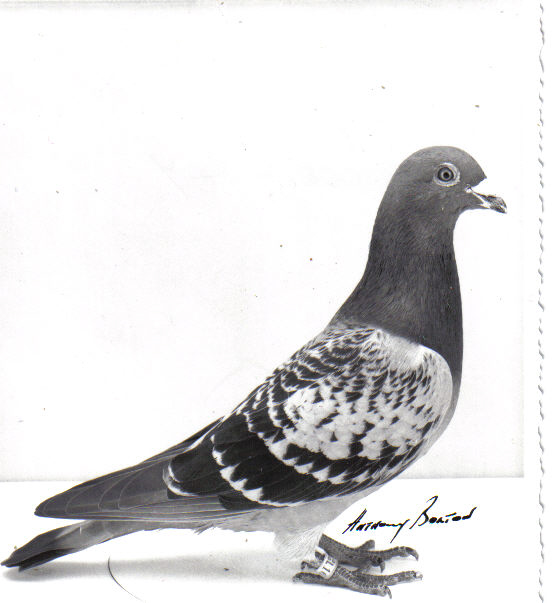
Bridget's Boy
Pat then decided to join the Enfield 2 Bird Club. The birds would be basketed on a Tuesday and race on a Wednesday. Most of the top local fanciers joined this club so the competition was fierce, which is hardly surprising with fanciers of the calibre of Alf Baker, Pat Newell, Bob Taylor, Went Bros, Minton and Son to name but a few amongst its membership. One year Pat ended the season as top prize winner and it was an honour he will never forget. The sportsmanship and camaraderie of these times has stuck in Pat’s mind over the years as the social side of the sport at that time was just as important as the winning of races – especially the after hours drinking in the club’s H Q!
These were the best times in Pat’s opinion as towards the end of the 80s there was a big change in pigeons. Up to that time most fanciers raced their pigeons on the natural system. As the 90s arrived, fanciers were beginning to change over to the widowhood method, so inevitably they all began to change their family of birds. Where previously the same birds would be good for the first to the last race, fanciers began to introduce specialist sprint pigeons. At the present time, Pat believes that most of the fanciers who fly natural today are more likely to be flying in the longer distance races. Nowadays sprint racing is dominated by widowhood or the roundabout systems. Pat flirted briefly with the idea of going with the flow and converting to widowhood flying but eventually decided to stick with his system and his Went Brothers based family of pigeons. Needless to say this decision has paid great dividends as Pat’s long distance performances prove.
Lerwick at 600 miles was now the goal. Not many people at that time would send their birds to this race point, because they thought it was “the graveyard for pigeons”. However, Pat set his stall out for Lerwick and has been doing so for the last 16 years. At about the same time, Pat’s friend Ivor Ringe went to see Frank Blackmore of Wood Green who was the man to beat in London if you wanted to win the Lerwick Combine. Ivor came away from the Blackmore loft with a late bred youngster (a blue hen) which he gave to Pat. Although it did not have a pedigree Pat knew that it was bred off Frank Blackmore’s best distance pigeons which were based on the old Westcott and Bruton bloodlines. The Blackmore blue hen was subsequently mated to a son of "Bridget's Boy" (cheq cock) which had already scored for Pat at Thurso. From the first nest came a blue cock later to be known as “Braveheart”. The nest mate was also a cock and they both flew Lerwick. “Braveheart” was an exceptionally good pigeon. He won 4 times from Lerwick including 1st LNRC, 9th Combine, 15th Combine and 24th Combine - 4 times Lerwick and 4 times a winner!! His sons and daughters have also scored from Lerwick for Pat including 3rd Combine, 3rd Combine, 7th Combine and 8th Combine.
Braveheart
The usual practice was that when Braveheart returned from Lerwick in late June, Pat would pair him to a different hen and get a pair of late breds out of him. At the end of the old bird season Braveheart would also be mated to the 1st hen back from Lerwick that season. These late bred youngsters would then be kept for stock. By using this practice Pat had at one time 3 sons and 3 daughters bred from Braveheart in the stock loft. These were all half brothers and half sisters, giving Pat plenty of options for continuing the line. Indeed three of Pat’s Combine winners - “Limerick Lady”, “Dream Maker” and “Celtic Spirit” - were all bred directly from Braveheart’s children. All his grandchildren are also winning, so he seems to be repeating a little of what Steptoe did, as Steptoe was a terrific racer and also a champion producer. Pat’s 2010 Lerwick Combine winner ”Celtic Spirit” is Braveheart’s grand daughter on both sides.
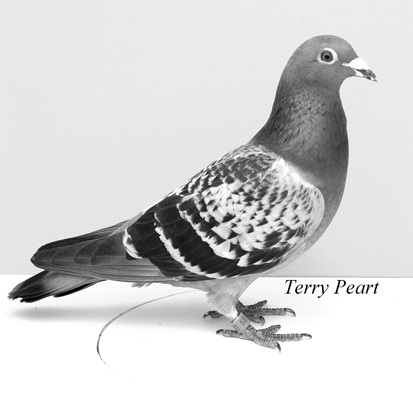
Dream Maker
Unfortunately, the great Braveheart died in the winter of 2005 as a result of what Pat could only believe was a heart attack following an abortive sparrow hawk attack. In the last year before he died, when he was 12 years of age, the last bird bred from him was a cock bird and Pat subsequently kept him for stock - he is the sire of “Celtic Spirit”. So even in the final year of his life, one of his children bred a Combine winner. Braveheart was undoubtedly a fantastic pigeon and almost all of the O’Sullivan pigeons now contain his genes.
Perhaps this would be a good time to give some details of some of the individual pigeons in the O’Sullivan loft. So we’ll start with the latest Lerwick Combine winner,”Celtic Spirit”. As a young bird she was trained starting off at 12 miles, then in stages to 20 and 30 miles. After the 30 mile stage Pat would go up to the race points such as Huntingdon, Peterborough, Grantham and then on to Newark which was roughly about 102 miles. On most of these tosses the birds would come together but from Newark, it was like a proper race for them and they would all split up. At the end of the season she was entered in the North Road Championship Club race from Dunbar at 317 miles for the first competitive race of her life. Spirit homed after 10 hours on the wing to be first bird to the loft. As a yearling she had 4 races and as a 2 year old she went to Fraserburgh, and again, she had 13 hours on the wing. At Thurso she homed on the 2nd day. Before going to Lerwick in 2010 she had 3 races including Perth which was a fast race and she then had 4 weeks rest before Lerwick. The birds were convoyed by the North Road Championship Club and there were no birds home on the day in the NRCC. Pat timed Celtic Spirit a little after 1 pm on the second day to win 1st Federation, 1st London NR Combine, 1st section 14th Open NRCC against 1,672 birds. Her bloodlines can be traced right back to the mighty “Steptoe”. Celtic Spirit has now earned her place in the O’Sullivan stock loft – and at 3 years of age Pat hopes he has plenty of time to get another Lerwick winner out of her.
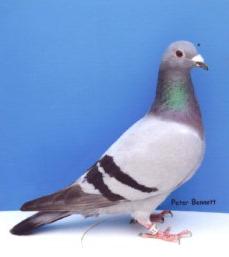
Celtic Spirit
She is bred directly out of Limerick Lady who won the Combine from Lerwick and which Pat believes was his best ever pigeon. Five times Lerwick winning 1st, 2nd, 5th and 19th Open London North Road Combine from Lerwick, 588 miles. She only went to Thurso once and she was 2nd club and 79th open LNRC. Limerick Lady won 2 x 1st sections in the NRCC plus 1st and 2nd Federation, all from Lerwick – a truly marvellous racer. She was prepared in a similar way to most of Pat’s Lerwick pigeons. This entails 3 preparatory races - 2 short ones, then on to Berwick or Perth then straight into Lerwick. All Lerwick pigeons are sent in their favoured nest condition, whether that be on eggs or youngsters – but always in the individual pigeon's most favoured nest condition. Of the 3 Berwick races Limerick Lady was entered in prior to going to Lerwick she won 1st, 2nd and 4th club so proving she was coming to the boil nicely at the precise time.
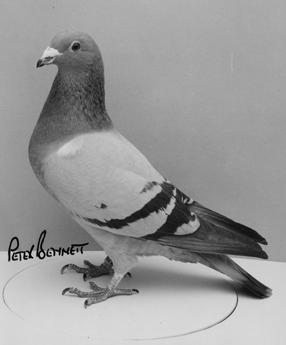
Limerick Lady
Yet another pigeon that deserves mention is “Dream Maker”. She won 1st LNR Combine Lerwick and also 1st section NRCC, 1st North London Federation and also won an RPRA award for her effort. Dream Maker is another pigeon bred from a son of Braveheart known as “Number 2 Son”, who is responsible for some outstanding pigeons for Pat. Dream Maker’s dam was bought by Ivor Ringe from Brian Siggers and Ivor loaned her to Pat who promptly paired her to Braveheart. This pairing produced some really good pigeons - one being Rocky who scored twice out of Lerwick for Pat winning 5th and 8th LNR Combine. She was then returned to Ivor Ringe for a short while before returning to the O’Sullivan stock loft for a second time. She was then paired to “Number 2 Son” of Braveheart to produce “Dream Maker”.
Another fancier that has played a part in the O’Sullivan success story is Mick Parish of Rainham, Essex. When he first started racing on the North Road Mick had a lot of Went Bros pigeons which produced a lot of winners. Pat bought a pigeon from Mick that was bred from a son of his 4 times Lerwick cock, which won the Essex Combine. The mother was a hen which had won the Fraserburgh Combine for Mick Parish and both these top performers were saturated with the Went Brothers' Steptoe blood. Pat also obtained birds direct from Les Went and ne of these was a dark cheq pied cock which was from Sprucetoe, similarly bred to the Harry Wooding blue cock mentioned in the opening paragraphs.
From the foregoing the reader can appreciate the massive influence that the Went Brothers' “Steptoe” family has had on the development of the present day O’Sullivan strain.
As mentioned earlier, Pat set his stall out to win Lerwick in 1995 and each year since then he has been fortunate to get a timer – that’s 16 years of consistent success from one of the most difficult race points in the world of pigeon racing. No mean feat I can tell you! Through those years Pat has won the Combine from this race point on four occasions. His birds have also topped the section in the North Road Championship Club section four times and have won 1st Federation seven times. The only blemish to this run of success was in the 2006 Lerwick race, when there were no birds into London for the first two days. On the third day, there were 3 pigeons home, Pat’s being the 3rd timed in, in the early afternoon. Unfortunately this timer was deemed to be out of race time according to the rules of the NRCC. One of Pat’s ambitions when starting in the sport was to win 100 LNRC diplomas. To win one you have to be in the first 100 positions in the Combine Open result. As of 2010 Pat has now surpassed that elusive number.
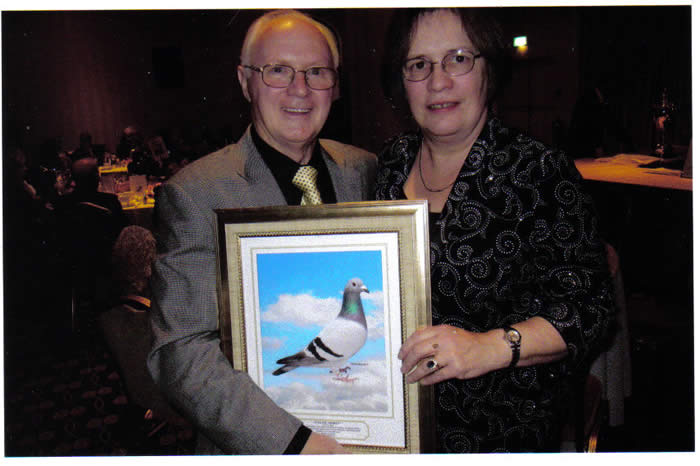
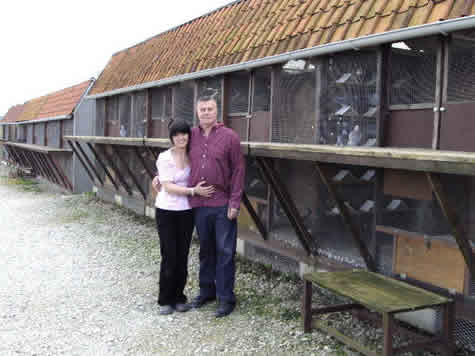
Pat & Angela O'Sullivan at the NRCC Dinner
Management of birds and how they are prepared for the long races
The old bird team, on the North Road, amounts to 24 pairs which is supplemented by a small team that is now raced on the South Road - usually 5 or 6 pairs. Thus far Pat has only dabbled on the South Road as his main aim is success from Lerwick. The birds are normally paired up on St Patrick’s Day - March 17th. It is a little bit late for the first few races as in London the old bird racing season starts at the beginning of April. Some of the early short races are missed and the O’Sullivan team is entered in the third or fourth race. Once the birds have been paired and settled in their boxes, they are shut in the boxes for a few days to calm them down. After that they enjoy a completely open loft. Sputnik traps are situated on the loft front and Pat has also incorporated anti-cat flaps on each loft that are rigged up to enable the pigeons to go in and out at any time. They are able to fly free throughout the day. Once the babies are weaned away, the old birds’ training begins. The yearlings have quite a few training tosses - maybe six or seven generally, anything up to 20 - 25 miles. The old birds will get 1 or 2 tosses, sometimes none at all before being entered in their first race at 150 - 160 miles. If they are a couple of hours behind in these early races it doesn’t really bother Pat, as they are working harder, and that brings them into form. Once the racing starts the old birds get very little training as the O’Sullivan team fly well around home. If he wants them to fly Pat puts the flag up - usually a brightly coloured plastic bag on a very long pole! This is around the time that the birds are at the 300 mile stage. Using these methods Pat can keep them flying for about 45 minutes to an hour.
Pat’s birds do very little racing as young birds. In fact he has not completed a full young bird programme for the last 10 years. The young birds are however trained thoroughly in the year of their birth. Once training commences at 8 - 12 miles the babies are kept going as far as Pat can get them - sometimes out to about 100 miles. Occasionally Pat will put them in several baskets and liberate them separately. He also likes to split them up into 4s and 5s; this can be time consuming but the youngsters learn well from the experience. When they are yearlings they usually have about 6 training tosses prior to their first race of the season.

Pat O'Sullivan's YB basketing system
Feeding
The birds are fed an old fashioned “traditional” mix of beans, peas, maize and tares. Most of the food is obtained direct from the farm, which is a bit cheaper than the commercial mixes on offer. The mixture consists of 40% beans, 40% peas and then the maize and tares (very little tares) make up the remaining 20%. Pat makes up his own condition seed by purchasing lots of small seeds and mixing them all together. The birds are hopper-fed during the day, and in the evening they get the condition seed as a special treat. They also get the seed mix when they come back from the races. The heavy food is given after the birds have been home some time. The race team fly well on the traditional mix, and as the longer races approach the maize content of the mixture is increased slightly.
Peanuts are also incorporated in the pigeons’ diet and these are broken up and mixed with the seed mix that Pat mixes himself. When the babies are weaned they are fed maples for a while and are then gradually introduced to the standard mixture. When the old birds are feeding youngsters, and the birds are on the hopper, they also have little pots filled with maples in their nest boxes. Pat firmly believes that the young birds need plenty of protein to build them up while they are growing. Grit and minerals are always there for them and nothing is added to the drinking water except chopped up garlic, natural lime once a week and occasionally cider vinegar which Pat feels is beneficial for the birds. As far as medication is concerned the O’Sullivan birds are vaccinated annually and that is it – nothing else is given, they have to build up their own immunity. The water is changed once a day, but Pat is not too worried about that as he sometimes just tops the water up from watering cans in which the water has been left standing for a few days - the birds rarely get water straight from the tap. In the winter time the food is changed slightly
Once the birds have got over the moult, barley is added to their feed, plus some fresh wheat. The beans and peas are also given but only a little maize. This feeding regime is continued right through the winter months until it is time to pair up. It seems to keep the pigeons on form, with not too much weight on and they are ready for pairing up. The same “winter” mix is fed even when they are on the eggs with the food being beefed up just before the eggs chip out.
Pat insists on strict control over the birds when he is in the loft and as such when the old birds are paired up and in their boxes, he always encourages them by repeatedly saying to them “In your box”. By tapping a cane on the loft floor the pairs soon learn to go to their boxes. This control greatly assists Pat when he is basketting the birds as he does not have to chase around the loft catching birds so everything is quiet and calm and stress free on basketting night.
With the young birds, after they are weaned away and on their perches, they are placed in the sputniks which can be closed off from the inside of the loft. They sit out in the traps for most of the day and get some sun. Once they start to fly out a platform is placed on the outside of the traps and the young birds are allowed to walk out onto this from inside the traps. During the day when they are in the loft once they are flying out, a basket is placed on this platform and Pat encourages the babies into the basket with help of a little seed thrown in. They are soon in and out all the time and get used to the basket thus removing the “fear factor” when their training begins later in the season.
Although the O’Sullivan young bird loft has four sections which can easily accommodate 80 - 90 birds, usually only about 40 or so babies are kept so there is certainly no overcrowding here. One section is called the nursery and this houses the late breds - once weaned they can be allowed out at different times to the older young birds so that they don’t get carried away when the other birds fly out. These late breds are favoured by Pat as future stock birds as they are usually bred from the top racers each season once old bird racing is over.
When it comes time to train the young birds, the basket is placed on the platform on the outside of the sputniks and the youngsters encouraged to enter by the act of tapping a stick on the loft floor. After 3 or 4 times it is natural for them and they go straight into the basket with no problems. Less than 10 minutes and the whole of the young bird team is basketted with minimum stress.
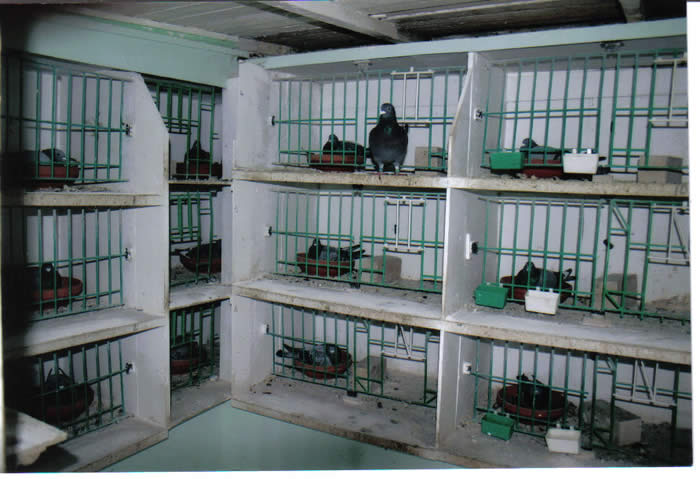
The old bird section
South Road Racing
At the present time Pat has a 8ft x 6ft loft that houses the birds he has selected to race on the South Road. Not many are kept but what Pat does is select six or seven youngsters for south road racing. He has been doing this now for 3 years and as a result has built up a small team of pigeons which hopefully in the future will lead to success on this route. Results so far are encouraging with a 58th Open BICC Tarbes 583 miles in 2009. If Pat sets his mind on a particular south road race point with the same single minded determination he has shown in his approach to conquering Lerwick, I feel sure that, with the pigeons he has at his disposal, allied to his undoubted skill as a fancier, it won’t be long before we see his name at the top of a result sheet from Pau, Tarbes, Perpignan or Barcelona.
To close this report on Pat O’Sullivan and his marvellous big hearted family of pigeons I will leave it to Pat to relate in his own words how he came by the name of his family… "When I won my first Lerwick Combine there were no birds on the day into London. I clocked the blue cock on the second day at 4.20 am after a night of heavy rain I thought it would take a BRAVE pigeon with a big HEART to keep going under those conditions."
This family trait of never giving up but relentlessly forging onwards no matter what conditions they are confronted by is so strongly bred into the birds that generation after generation have continued to demonstrate the same characteristics – starting with the great Steptoe of Went Brothers. Pat O’Sullivan's Braveheart family has won amongst other prizes 5 x 1st London North Road Combine, 6 x 1st Section NRCC Lerwick, 6 RPRA Awards and more than 20 x 1st prizes from Thurso. A terrific run of success which I’m sure will continue, given Pat’s ability as a fancier and single minded determination to succeed at the distance when applied to his courageous family of pigeons.
Unfortunately the 2011 season has seen Pat dogged by health problems which has necessitated hospitalisation and surgery. However he still managed to get 5 from 8 on the second day from Lerwick and when I spoke to him recently he was full of praise for the gallant pigeon of Mr Smith which was clocked on the day into London winning the Pat O’Sullivan £50 special plus 1st Sect 7 NRCC. Congratulations Pat on some superb exhibitions of long distance pigeon flying.