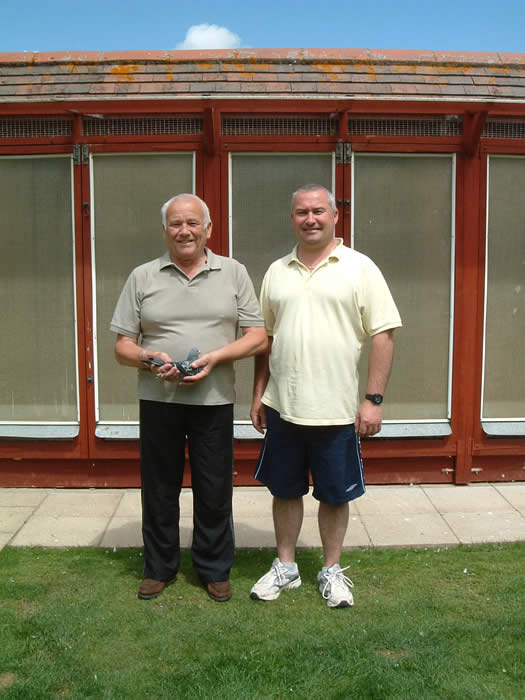
THE ART OF BREEDING, CONDITIONING & RACING PIGEONS AT THE EXTREME DISTANCE - Part 1
by Gareth Wakins
I hope this article will be the first in a series on the topic of long distance pigeon racing. In the series I intend to detail the methods of some of the present day long distance aces, fanciers who have, over a period of time, bred, conditioned and raced generations of long distance pigeons to achieve outstanding success in races between 600-800 miles.
In the first of the series I intend to stay on home ground and highlight three outstanding Welsh long distance lofts. I should also like to point out right at the outset that the distances ascribed to the winning Welsh pigeons in no way reflects accurately the actual distance covered by these big-hearted marathon athletes of the air. This anomaly is due to the fact that in the International races, the bulk of the birds entered by U.K. fanciers cross the English Channel and make landfall around the Dover area. The pigeons from the West Country and Wales then have to make their way west against the prevailing westerly winds, adding a further 200 miles to the distance accredited to the Welsh birds. So, in the Barcelona race officially given as 750+ miles to Welsh lofts, the birds are in effect flying close on 1,000 miles. Despite this fact a growing number of Welsh fanciers are taking up the challenge of International racing under the auspices of the British International Championship Club. As a result of this growing interest the Gwent Greater Distance club was formed in the winter of 2006/7 and was, for the greater part, the brainchild of Ray Strawbridge, the first fancier that I would like to profile in this long distance series.
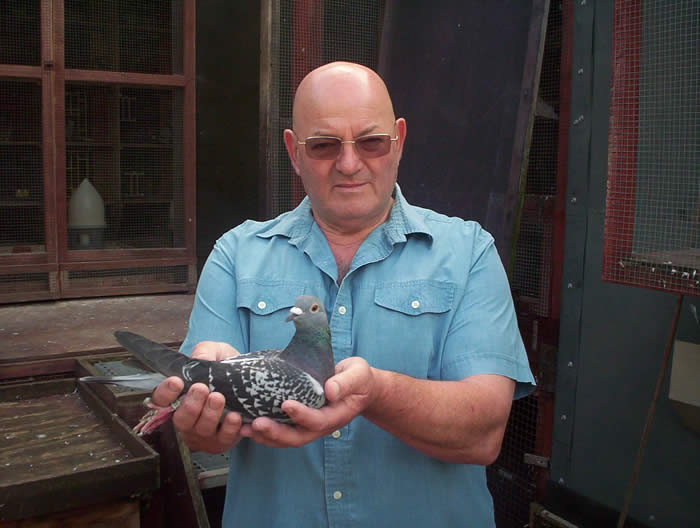
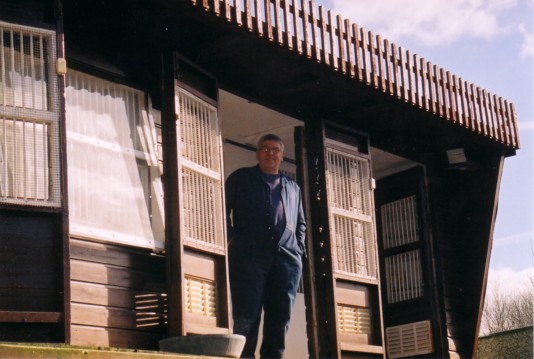
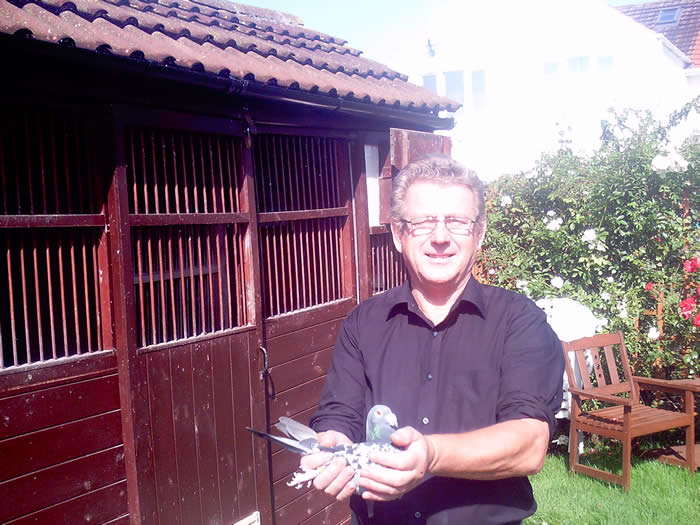
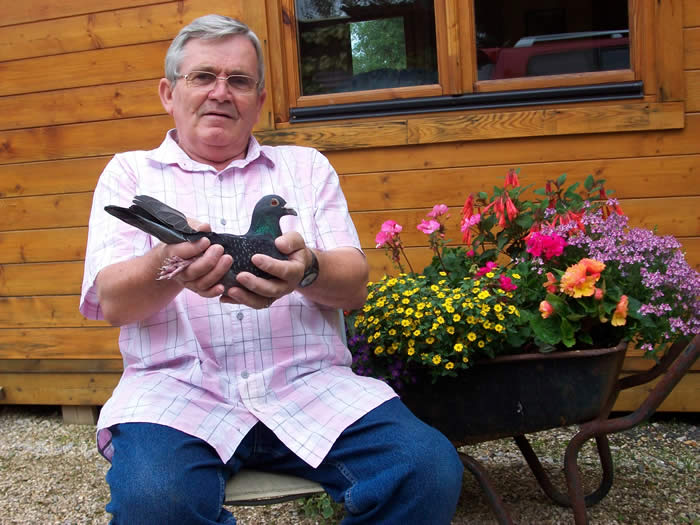
Ray holding Marie the double Perpignan winner.
Ray had the idea of forming a long distance specialist club which would give Welsh fanciers the opportunity of testing themselves and their pigeons not only against the best fanciers in Wales but also the cream of English long distance racing and those of continental Europe. Thus it was that the GGDC was formed in February 2007 and appropriately Ray was elected the club’s first chairman. Since those early days the club has gone from strength to strength with membership growing to its present level of close on fifty lofts. Success on the big stage has also been gained by the members on a regular basis, at both section and open level with the ultra competitive BICC. Ray’s objective of attracting the best long distance fanciers in Wales to join the GGDC and compete on the International stage has been achieved as, at the present time the membership includes fanciers who have won in excess of 70 x 1st in National races ,including a half dozen or more Queen’s Cup winners.
The 2009 Perpignan race was to prove to be a red letter day for the Strawbridge team, as Ray sent five, clocked five and had all five on the Open result of the BICC. Ray has tasted success on a regular basis with his big-hearted team of Jan Aardens. These birds have regularly won top prizes in the hotbed of classic racing that the GGDC has rapidly become, as well as with the BICC. In the Perpignan race the Strawbridge team won 1st, 2nd & 4th GGDC plus 2nd, 5th, 7th, 10th & 11th section and 23rd, 40th, 60th, 68th & 69th Open BICC. However, the best was still to come in the 2010 old bird season but more of that later!
First, let me give the reader a little background information on this long distance enthusiast. On my first visit to the Strawbridges in the mid-1980s Ray was clocking pigeons from Lerwick, Elgin and Thurso on the north road with ease. Not surprising really when you consider that in his early years in the sport, Ray along with his father, was in weekly competition with the likes of “Gentleman Jim” Brown, Channing & son, Atwell Brothers and Bale Brothers & Griffiths, the latter three all multi-National winning partnerships. With tutors like these, a keen and enthusiastic fancier like Ray couldn’t fail to pick up some tips on the preparation of long distance racing pigeons.
Since those days a house move in 2001 has seen a change of scenery, while both Ray and Marie have suffered health problems that, hopefully, they have both now overcome. A change of race route has also taken place in recent years and the Strawbridge team are presently raced exclusively on the south road through to Bergerac, Tarbes, Pau, Perpignan, Marseille, Narbonne, Palamos and Barcelona with the Welsh SRNFC, BBC and BICC.
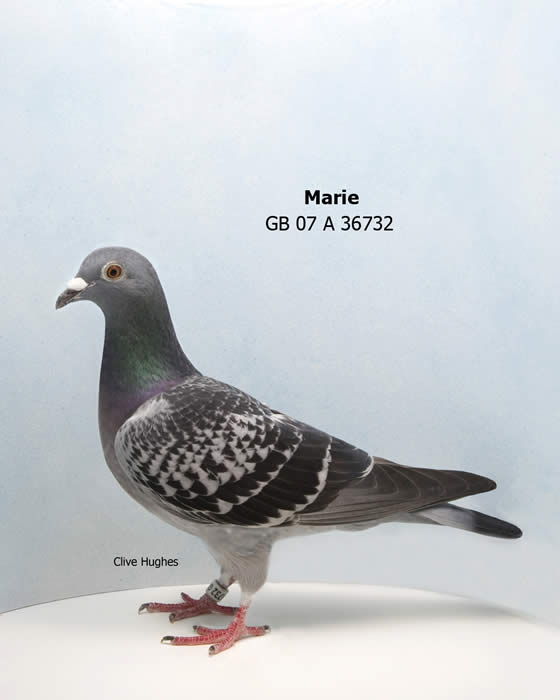
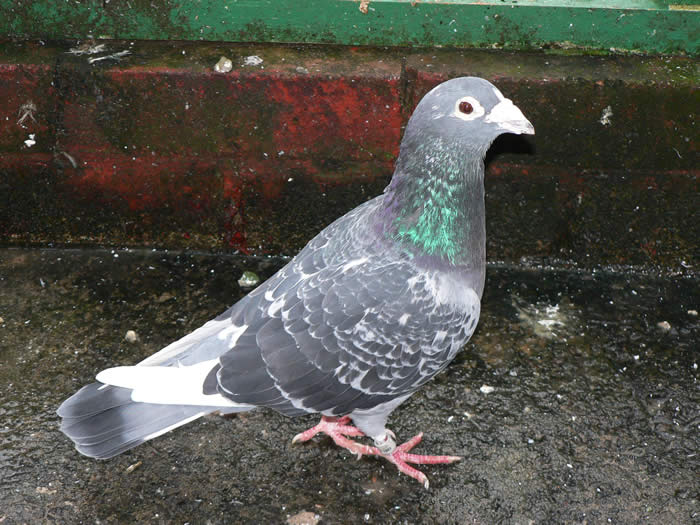
Marie - the double Perpignan winner for Ray.
The bloodlines housed nowadays, are a combination of Jan Aardens from various sources, Van Wanroys plus some of the old Morgan & Cook Atwell brothers bloodlines and Bowen Brothers of Porthcawl “Cambrian King” & “Cambrian Queen” Lerwick National winning family. The Jan Aardens have a strong Wim Muller influence via birds Ray introduced in the early 1990s from Mr & Mrs Woodyard, formerly of Costessey in Norfolk. Further successful introductions of the same bloodlines have since been made from Ray’s good friends the Padfield family of Cwmtillery.
An interesting story arose regarding the initial draft of birds from Mr & Mrs Woodyard. Ray was quite taken by most of the draft but was not too impressed with one of the group, a small, mousey looking dark chequer hen. After a few days Ray contacted the Woodyards and told them of his concern about the one hen and was told that she would be replaced without any problem but that there were no similarly bred birds then available to be sent down.
Luckily, Ray decided to be patient and see how the little hen developed. She has now become the cornerstone of the loft having bred at least 15 first prize winners and is grand dam to a Dax National winner and a San Sebastian National winner. She is also grand dam to four of the five birds clocked on the result from Perpignan in 2009, so she is not only breeding winners but, just as importantly, she is producing top class producers as well.
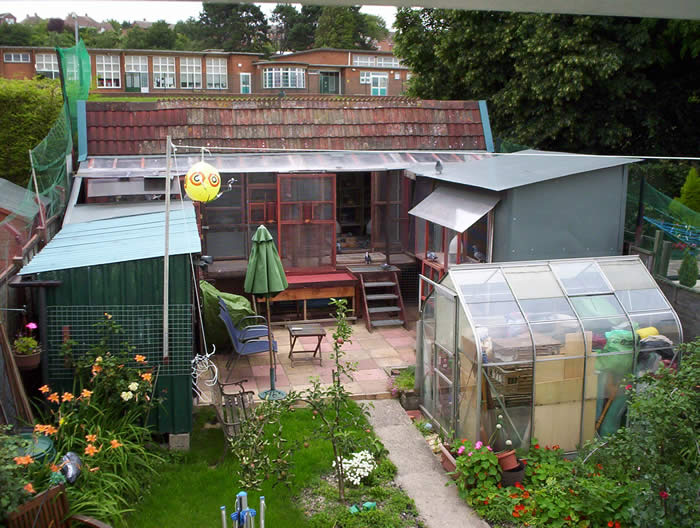
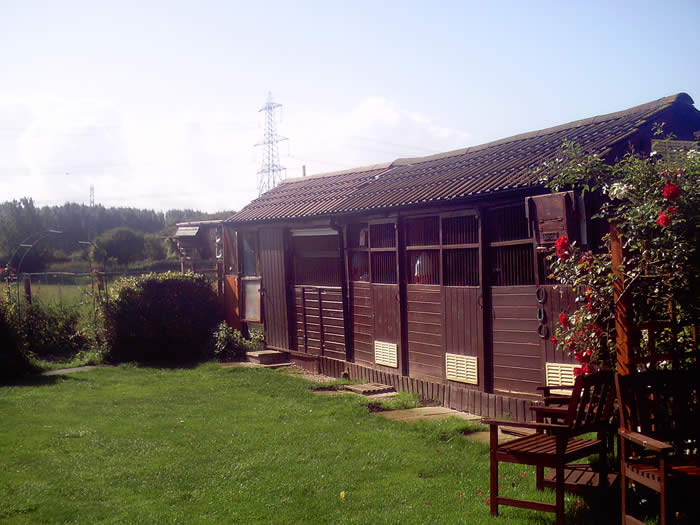
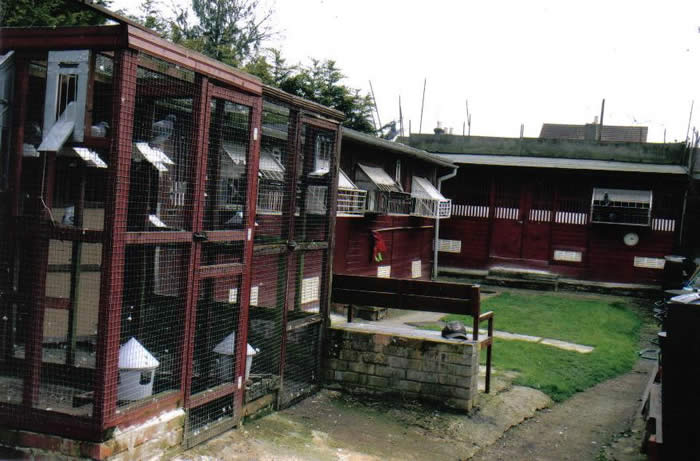
The birds are housed in a U-shaped loft at the rear of Ray and Marie’s semi-detached home. One arm of the U, measuring 14 ft x 8 ft, houses the young bird team, whilst the other houses the stock birds. The main body of the loft, measuring 13 ft x 8 ft, houses a few pairs of natural racers plus 15 pairs raced on the roundabout system. The floors of all sections are made from galvanised steel grids commonly used for gantries and fire escapes. This grid flooring is raised two feet off a concrete base which is covered with a layer of cat litter. The litter is raked over regularly and any heavy deposits of droppings removed. The complete front of the old bird sections is covered with ½ inch mesh so that the birds don’t suffer from lack of fresh air. The nest boxes are approximately 2 ft deep and these, and all other woodwork within the loft, are treated annually with creosote. The roof of the loft is constructed from clay tiles and this runs down onto a porch-like front section made up from clear plastic sheeting.
All birds, including young birds, are hopper fed farm beans and peas and chicken layers pellets. The beans and peas are fed in one hopper with the pellets in a second hopper. This arrangement seems to prevent the birds from spilling food in their search for something more tasty to eat. However, as the hoppers are placed in wooden trays covered in a thin dressing of cat litter, any spilt food remains in the trays and does not drop down onto the cat litter beneath the grids. Ray also hand feeds a special home made “sweet mixture”, of high fat content. The birds seemed to be extremely content in their home environment and are kept under control by judicious use of the home made “sweet mixture” which is fed in pots in the boxes.

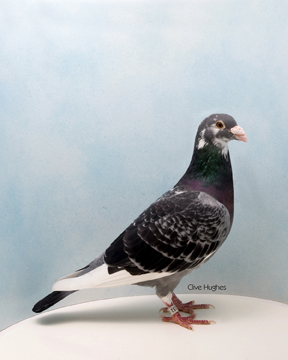
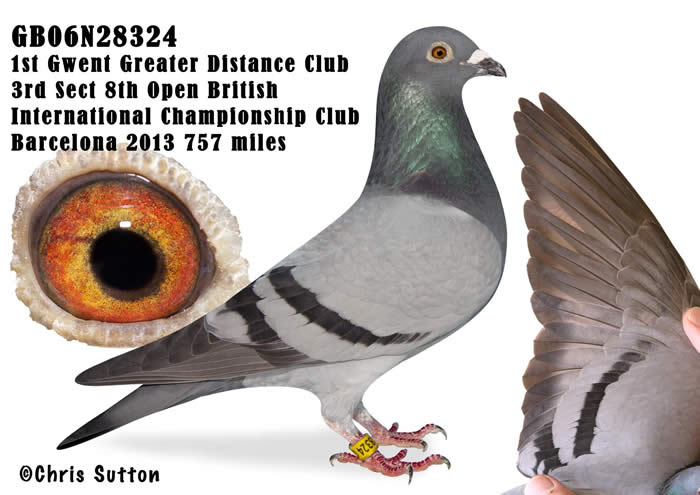
Tom Thumb - 1st Barcelona for Ray.
All race birds, which are mated in late March, are allowed to rear a round of youngsters and are then separated when the babies are 16 days old. The cocks then finish off the rearing process before racing starts. Once on the roundabout system both cocks and hens are exercised twice per day for 1 hour on each occasion. The birds are not forced to fly but are allowed to do as they please. This gentle home exercise is supplemented by two weekly training spins from 30 miles, always against the prevailing wind. After a couple of inland races the team are ready for channel racing and are sent across every two weeks unless circumstances dictate that individuals need a longer recovery time between races.
The family developed by Ray are like “peas in a pod”, mostly dark chequers with the occasional w/f and pied, medium sized with silky feathering and a good length in the keel. They were all calm and placid around the loft and were constantly clapping off and on throughout our visit.
Perhaps I should at this stage give some detail regarding the five pigeons timed in the 2009 Perpignan marathon.
The first in the clock was a two year old chequer hen which was raced on the roundabout system up to the Bergerac race flown on 10th July 2009 where she won 8th section 16th Open with the Welsh SRNFC. On her return she was allowed to go to nest and was basketed for Perpignan feeding a small youngster.
Second bird clocked, winning 2nd GGDC, 5th section 40th Open BICC was a three year old cock which also flew the Bergerac National in early July. He is a previous winner of 15th section 23rd Open WSRNFC Bergerac in 2008 and 10th sect 28th Open BICC Falaise 2007. He is in fact the nestmate to Ray’s first timer. This one takes 7th section 60th Open BICC.
Next we come to a two year old blue pied hen that won 10th section 68th Open BICC and finally we come to another two year old hen which won 11th section 69th Open BICC. She had previously competed in the Pau International race in 2009.
Four of the five birds clocked were grandchildren of the champion stock hen “My Little Gem” and all five have the bloodlines of the Padfield Family pigeons in their make up. “Blood will tell” certainly proves to be true here.
So now we come to the 2010 old bird season and this was to prove to be an extremely successful one for the Strawbridge loft as the birds featured on most of the section results of the BICC leading up to the International race programme.
Ray Strawbridge's loft.
In the Barcelona International race Ray clocked a small light chequer Jan Aarden cock sent feeding a small baby, to win 1st GGDC, 1st section 25th Open BICC at 750 miles. This cock, now aptly named “Tom Thumb” due to his diminutive size, had previously flown the Alencon and Saran races with the BICC earlier in the season whilst on roundabout and was remated specifically for Barcelona. He had flown in a number of International races from Pau and Marseille in previous seasons thus gaining a wealth of experience. “Tom” is bred in the purple as he has the genes of a 1st WGNFC Lerwick winner in his make up, this being the fantastic long distance racer “Leading Lady” bred and raced by Jeff Howells & Son of Risca. Also present in his breeding is the champion Jan Aarden cock Vlejke as well as the Padfield family’s “The Don” winner of 2nd Open BBC Palamos and “Padfield Perfection” winner of 1st, 3rd, 23rd & 39th Open National Pau at 594 miles. Oh, and his sire is a grandson of the champion stock hen “My Little Gem”. With breeding like that he couldn’t fail!
The Perpignan International race is traditionally flown in late July/early August and is the last race on the International race calendar. This season Ray once again entered the hen that had won 1st GGDC, 2nd section 23rd Open BICC in 2009, along with a number of other loftmates. The convoy of more than 15,000 pigeons, entered by some of the best fanciers in Europe, was liberated early on the morning of Saturday 31st July and at 20.21 pm on the Sunday evening Ray clocked his gallant little hen that had won the Perpignan race in 2009, to again win 1st GGDC plus 1st west section 20th Open BICC, having faced a strong westerly wind for most of the final 300 miles of the race. It should be noted that this little battler, now named “ Marie” after Ray’s lovely wife, was the furthest flying pigeon recorded on the BICC result and was also flying to the most westerly location of all the competing pigeons. I should also point out that “Marie” had returned from the 2010 BICC Saran race earlier in the season, in a terrible state, having been badly hawked. She was left to recuperate and with her wounds healed was soon out flying with the rest of the team. She was then set down for the Perpignan race feeding a small youngster as in 2009. She was in amazing condition on her return despite the fact that she had once again been the subject of a hawk attack, returning with her 8th primary ripped out and tail feathers missing.
That then is a report on one of the most successful long distance enthusiasts in Wales – a born battler whose pigeons have developed the same indomitable traits.
The next loft that I would like to highlight is that of the Padfield Family of Cwmtillery, a small former mining village deep in the Welsh valleys. The original partnership consisted of father Albert and sons Vincent and David. Unfortunately Albert passed away in 2005 but the two sons have maintained the family tradition of winning long distance races in his honour. In the 2007 season, the first year that members of the Gwent Greater Distance Club had competed with the BICC, the Padfields timed one of their team to win 1st GGDC 1st West Section 14th Open BICC Barcelona. In this race their timer was to be the longest flying pigeon on the result also the furthest west in a race that saw the European convoy, and the British entries in particular, having to face a strong westerly wind for most of the 700 mile journey from north east Spain.
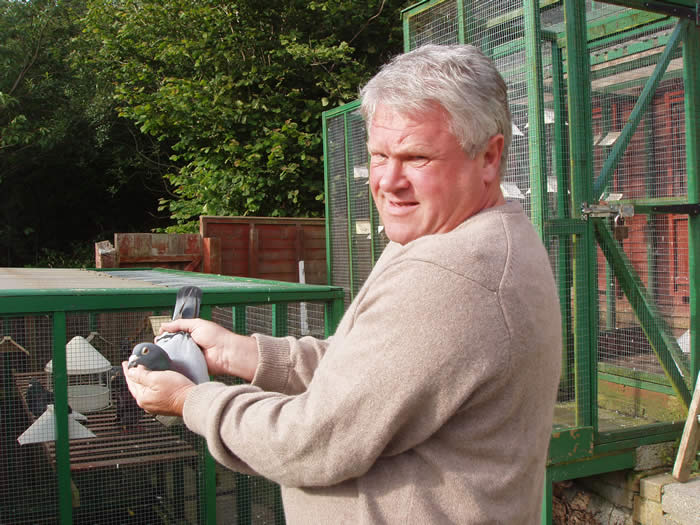
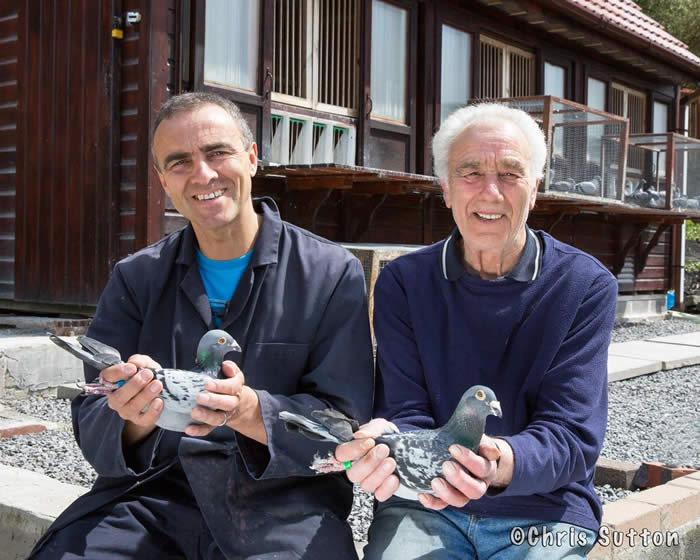
Dave Padfield holding 1st Barcelona 2007.
The loft, like so many other valleys lofts, is situated on the hillside above the terraced cottages previously homes for the thriving mining community. The location enjoys a lovely view across and down the valley to the west and when the birds take to the air they are immediately hundreds of feet above the valley floor. I first visited the Padfields in the mid 1990s and nothing much has changed in the intervening years, as far as the lofts, birds or performances are concerned – they are all still of the highest standard.
The loft is a 36ft x 12ft five-sectioned structure built and maintained in immaculate condition by Vince. Four sections house the 30 pairs of old bird racers and at one end there is an 8ft x 12ft section for the 80 or so young birds reared each year. This section also has a large aviary attached and it is here that the young birds spend most of the day light hours.
The old bird racers and 25 pairs of stock birds are mated on or around 20th February. The racers are allowed to rear a pair of babies and sit their second round eggs for 10 days before being separated. They then go onto the roundabout system for most of the inland programme and early channel races. Each section of racers is then re-paired for specific channel races. Once re-mated the old bird racers are allowed an open loft from day break until nightfall and are allowed to come and go as the please.
The Don - 2nd BBC Palamos.
The stock birds only rear one or perhaps two rounds of youngsters and are then placed on pot eggs for the remainder of the summer before separation in early August.
Vince and Dave like the young bird team to be brought along steadily but do like them to, as they put it, “have a look at the channel” in their first year. Yearlings are raced through to 300 miles and two year olds and over go to Pau if fit, and all other points south through to Barcelona 758 miles. When on the roundabout system, the cocks and hens are exercised twice daily for 60 minutes on each occasion. The birds have access to large 3ft x 4ft nest boxes and the hens are boxed up throughout the day except when at exercise. The old bird racers have access to a mixture of beans, peas and tares at all times and are also fed a titbit made up by the brothers to encourage them to trap and bring them into top condition for the longer races. A high carbohydrate mixture made up from mixing two commercial widowhood mixes is also fed to the birds as the longer races approach and this is further supplemented with a high fat mix in the final days before basketting for the extreme distance races.
The use of these tried and tested methods, applied by top class fanciers to high quality long distance racers, has brought the partners continued success over many years especially in long distance classic races. I won’t go into great detail here but can give as an example the partners’ record from Pau/Tarbes. They are the only loft in Wales to win the National on FIVE occasions and in addition have many other top ten finishes to add to this impressive list of outright wins. Yet another outstanding performance that deserves mention was in the Palamos race flown with the BBC, when they clocked their dark pied Wim Muller cock “The Don” to be 2nd Open BBC. The list goes on and on.
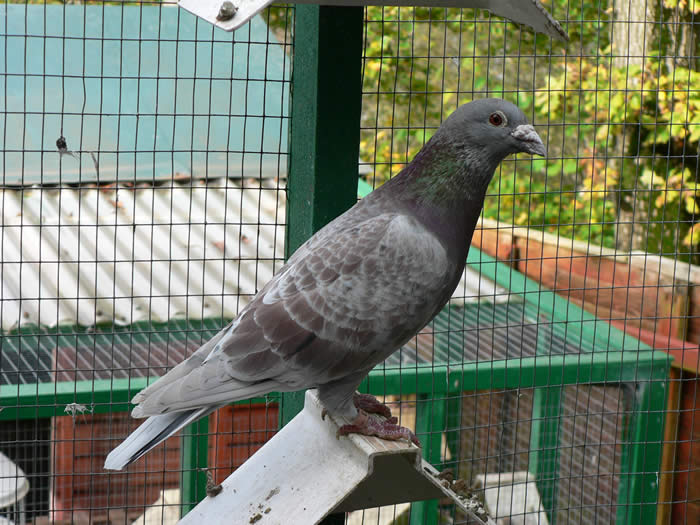
Padfield Perfection - 1st, 3rd, 23rd, & 39th National Pau.
The main bloodlines now housed are the Jan Aarden based Wim Mullers which were initially introduced in 1992. This strong base is augmented by some of the “old family” based on Morgan & Cook Atwells and some Clerebaut bloodlines. The birds are mainly dark chequers and white flights with the occasional blue and pied. In addition to the above bloodlines Vince and Dave have introduced selective pigeons of similar Jan Aarden lines via Louella including the highly successful “Invincible Spirit” lines. The present gene pool has proved extremely profitable, not only for the Padfields, but also for many other fanciers who have obtained these bloodlines from them.
The winner of the 2007 GGDC race from Barcelona mentioned in the opening paragraph of this section is a medium sized three year old blue cock which carries the very best of the “Invincible Spirit” and Wim Muller bloodlines. Mated in late February with the rest of the team, he reared a pair of youngsters before going onto the roundabout system. He raced in some of the early season inland races before being hawked, having most of his secondaries in one wing stripped away. Rested for a short while, he was then entered in a couple of the early BICC channel races before being re-mated and sent to Barcelona sitting due to hatch. The rest, as they say, is history as he was clocked at 4.45 pm on the third afternoon having faced a strong west wind for the previous two days. A conservative estimate would be that he covered nearer 1,000 miles rather than the 758 miles he was credited with having flown. He handled similarly to the other Padfield pigeons, being just on medium sized with a little depth to the keel to the front and with superb silky feathering.
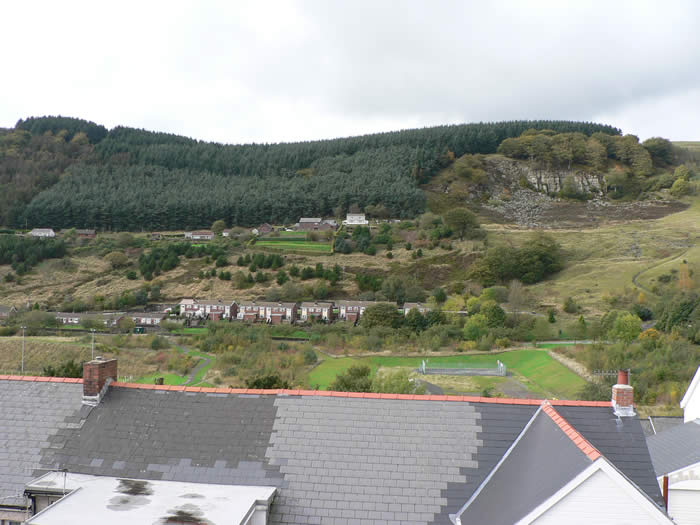
View to the west from the Padfield loft.
The 2009 season was to prove to be an excellent one for the brothers as they won, among other top prizes, 1st & 2nd GGDC 1st & 2nd section and 16th & 39th Open BICC in the Pau International race and quickly followed this up with yet another 1-2 GGDC and BICC section win from Barcelona at 758 miles. The first in the clock from Barcelona was a seven year old dark chequer pied cock which finished as runner up in the BICC Open result, only being beaten for top spot by Mr & Mrs Reg Elliott's gallant timer racing to their Chadwell Heath loft, 200 miles to the east of the Padfields' Cwmtillery loft. This terrific Jan Aarden cock of the Padfields, now named “Padfield’s Invincible”, has a host of top class long distance performances to his credit and has now earned what the brothers hope will be a long and happy retirement in the stock loft.
The second pigeon in the clock from the 2009 Barcelona race is yet another top class long distance performer and at 8 years old has been there, done it and beaten thousands of other pigeons in the process. He is of Wim Muller bloodlines crossed with the “Old Family” of Morgan & Cooke’s “Iron Man”, seven times Lerwick bloodlines, which contain a strong influence of the old Atwell Brothers of Newport pigeons.
Vince Padfield.
So we move on to the 2010 season and what a season it turned out to be! The race team was prepared in the usual manner as set out above and the marker for the season was set in the Welsh SRNFC race from Messac, a 270 mile pipe opener flown in early May. Vince and Dave entered a team of 44 pigeons in preparation for the longer races to be flown in late June/early July. In what turned out to be a tricky race with many fanciers getting less than 50% day returns, the Padfields had 44 from 44 by nightfall on the first day. The long distance candidates were then set up for their specific target races and the following is a list of their successes.
In the Pau International race [594 miles] flown in conjunction with the BICC the brothers entered three birds and clocked two to win 5th & 6th Section 25th & 55th Open BICC.
Next race on the programme was the Welsh SRNFC / CSCFC Tarbes race [608 miles] and the partners clocked three to win 1st, 3rd & 5th Open Welsh South Road National FC plus 1st & 3rd North section 3rd, 5th & 25th Open CSCFC.
Padfield's Invincible - 1st Barcelona 2nd Open BICC.
Amazingly, the Padfields failed to clock from the Barcelona International in what turned out to be a really hard race, when even the Continental birds struggled to cope with the heat and the distance. Nevertheless, the season was back on track pretty quickly as the brothers enjoyed one of the best races ever in the NFC /WSRNFC Tarbes International race. Here they entered a team of 11 tried and tested long distance performers and in yet another difficult race they made easy of a hard task by clocking 9 pigeons to win 1st, 2nd, 3rd, 5th & 7th Open WSRNFC plus 8th, 9th, 14th, 21st & 35th section; 56th, 61st, 113th, 154th & 248th Open NFC. They also won 1st Open GDSBNFC with their second in the clock. Incidentally the first pigeon clocked is a son of 2nd sect 13th Open BICC Barcelona for the brothers.
The third loft in this section that I would like to highlight is that of Terry and Carol Gardner of Caldicot, just across the border with England and within a stone’s throw of Mor Hafren - the Severn Sea or otherwise known as the Bristol Channel. Terry has been winning races in the eastern part of Wales for many years now and these successes have been across the board in club, Federation, National and Amalgamation competition and at all distances out to 700 miles. However, the 2009 season saw the Gardner’s small team of intrepid long distance racers take on the best that Wales and England can offer and succeed at the highest level whilst competing with the BICC. In the Marseille International race flown in late July Terry and Carol clocked their good chequer cock to win 1st Gwent Greater Distance Club, 1st west section 11th Open BICC in this 676 mile race flown in horrendous conditions. They followed up this superb performance a couple of weeks later in the Perpignan International race, when they clocked a brother to the Marseille cock to win 5th GGDC 8th west section 64th Open BICC. As if this were not enough for one season the “dynamic duo” went on to win 1st 2nd & 4th GGDC 1st section 7th Open BICC in the Falaise young bird National flown in late August. This last performance is even more remarkable when you consider that the Gardner pigeon was competing in this 217 mile cross channel race against thousands of English pigeons in a westerly wind. But wait, there’s more – this was the first competitive race of the young pigeon’s life as he had previously only been privately trained to 53 miles and was subsequently “jumped” 150 miles into this race!
Terry Gardner holding the 2009 Marseille winner.
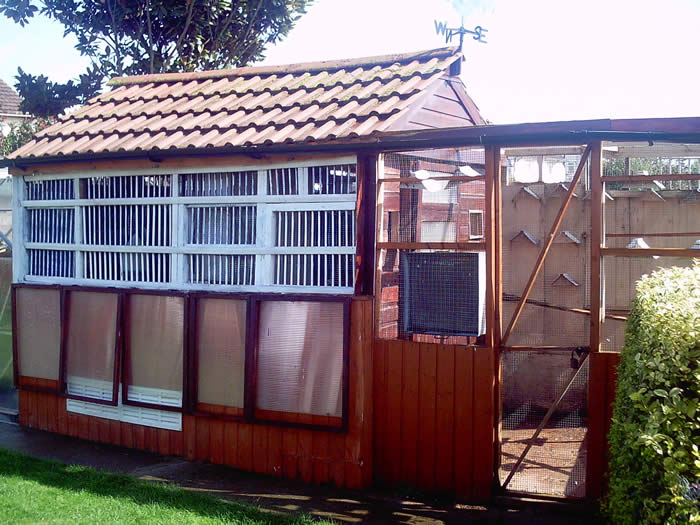
The loft set-up is simple and functional with the emphasis on good ventilation, dryness and no overcrowding. There are two lofts set along the bottom of the garden and facing each other across the lawn. The racing loft measures 30ft x 8ft and faces east. This has a tiled roof and is divided into four sections, two of which are fitted out with widowhood style nest boxes for the old bird racers and which are occupied by the racing cocks when on the round about system. Next to these sections is a section fitted with V-perches for the hens and on the southern end there is a section for young birds with accompanying aviary. The 14ft x 8ft stock loft faces west and also has an aviary on the southern facing aspect. Both lofts had plastic grids on the floors so that cleaning is kept to a minimum but the birds are not exposed to disease as the droppings fall through to the floor of the loft some six inches under the grids.
Sixteen pairs of old bird racers are housed and around 70 young birds are reared from the best of these and the 16 pairs of stock birds. The racers are mated in mid-February and are allowed to rear a youngster before being separated and raced on the round about system for the early part of the season. As the longer channel races approach selected pairs are re-mated so that hopefully they are in their favoured nest condition come the big National and International races in late June, July and early August. The old birds are not forced to fly when at exercise but are allowed to come and go as they please. Indeed the hens might not go out for exercise some weeks and are just introduced to the cocks on basketting night and away to the races they go! Once re mated they get regular training tosses from across the Severn estuary at Gordano services on the M5 outside Bristol. This is only 10 miles as the pigeon flies but it serves one important purpose – it gives the birds the confidence to cross open water without hesitation.
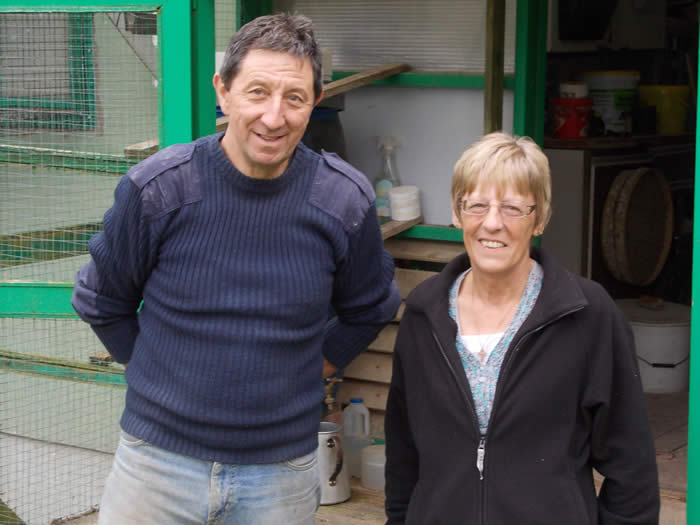
Terry and Carol Gardner's loft.
Feeding once again is approached with pragmatism – good sound farm beans and wheat are occasionally added to a continental type widowhood mixture and the resultant mix is fed to the birds ad lib in a hopper. However, the Aviform system of water and feed supplements is adhered to religiously and the only other supplement the birds receive is fresh garlic.
The main bloodlines housed are a combination of some of the finest Dutch long distance families based on Van Wanroys, Van der Wegens and Jan Aardens. Prominent amongst these is the line emanating from the Barcelona International winner “Invincible Spirit”. The Wim Muller family has also been very successful for Terry and these originated from the Ponderosa Stud at Weymouth.
Terry was also a good friend of the late Tommy Ingram who won the Thurso National with his Atwell Brothers based family obtained direct from the Atwells as well as from Ray Strawbridge. Tommy gifted Terry a number of pigeons from his best and one hen, containing the best of the Ingram Atwells, is proving to be a real asset at stock.
The top stock cock at present is a raw boned dark chequer w/f cock, a grandson of “Invincible Spirit” bred by Hampshire long distance aces Mr & Mrs Jack Randall and gifted to Terry and his grandson along with some other youngsters and eggs. This cock was put on the road as a young bird and subsequently won 1st club 1st Fed and 1st National Picauville 165 miles before being promptly removed to the stock loft! He is the sire, grandsire and great grandsire of a number of excellent racers. In turn, his sons are also breeding the goods, so Terry has been fortunate to stumble upon a goldmine breeder and breeder of breeders.
The Marseille winner is a long casted chequer cock with an excellent bone structure – like spring steel. When winning the Marseille race at 676 miles he was the only bird clocked on the second day in the west section, a day when the heavens opened at breakfast time and didn’t close until tea time. During these hours it was also blowing a gale from the west and for more than eight hours it was impossible for anything other than an aeroplane to fly. Yet this big-hearted battler forged on and was clocked at 20.35 on the second evening. Earlier in the season he had competed in the Pau International race at close on 600 miles and finished 3rd sect 64th Open BICC. During the 2008 season he competed in two 600 mile races in the space of a month winning 11th open National Tarbes, so in two seasons he has competed in four gruelling 600+ mile races.
The full brother to this cock is a mirror image of his illustrious brother being once again long cast with a strong skeletal structure. This one also has a long list of top class performances in classic races including 135th Open CSCFC Bergerac; 39th Open BBC Carlisle; 96th Open BBC Messac; 8th sect BICC Pau International and 8th sect 64th Open BICC Perpignan 670 miles plus 2nd Fed Chesterfield at a hundred miles for good measure. At the time of my visit the winner of 1st GGDC 1st section 7th Open BICC Falaise was away at Guernsey with the CSCFC! Two channel races in the space of 7 days for a non darkness young bird – you’re too soft with the birds Terry!
Terry and Carol's stock loft.
The success story has continued into the 2010 season as the Gardners have topped the west section of the BICC on three occasions. The Narbonne race saw them win 1st GGDC 1st West section 8th Open BICC and in the BICC Falaise young bird race they clocked one of their young bird team to win 1st west section 41st Open BICC competing against thousands of English pigeons on a day when the wind blew strongly and steadily from the west all day.
There you have the methods and preparation of three of the most successful Welsh fanciers. As you can see, all three use the roundabout system in the early part of the season in order to obtain supreme physical fitness in their teams before re-mating the by now ultra fit individuals in order to prepare them mentally for their ultimate tests at the extreme distance. Another common factor in all three fanciers management regime is the regular use of tic beans in their long distance candidates’ diet. No doubt the reader will also have noticed that all three fanciers have used Dutch long distance bloodlines as a base to which they have added good old fashioned Welsh long distance pigeons, pigeons that for generation after generation have slogged it out on dirty days from all race points from Lerwick in the cold far north to Barcelona in the blistering heat of the south.
n the next article in this series I will outline the birds and methods of three top-class English long distance enthusiasts, namely John Wills, A & T Deacon and Dave Goddard. This will be followed by a further article featuring Wilf Reed, Dennis Ford and the Preece Bros & Sons' multi-National winning loft and in turn three other top British long distance lofts.
Part 2 to follow...