DAVENPORT & ROBERTS OF CHIRK
CONSISTENT SUCCESS AT ALL LEVELS
by Gareth Watkins
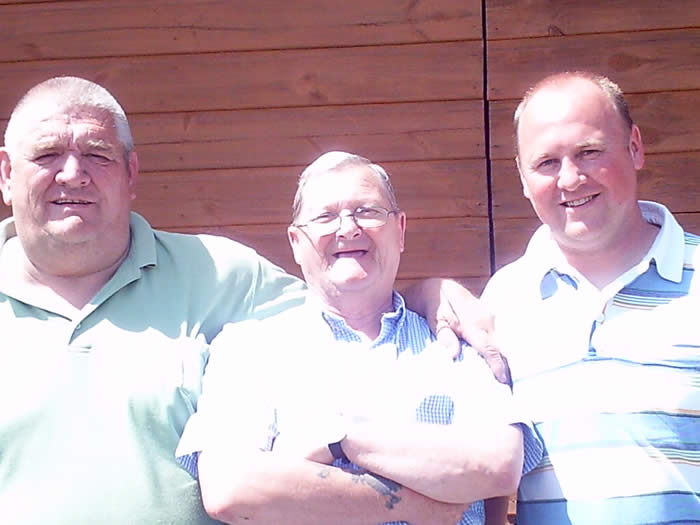
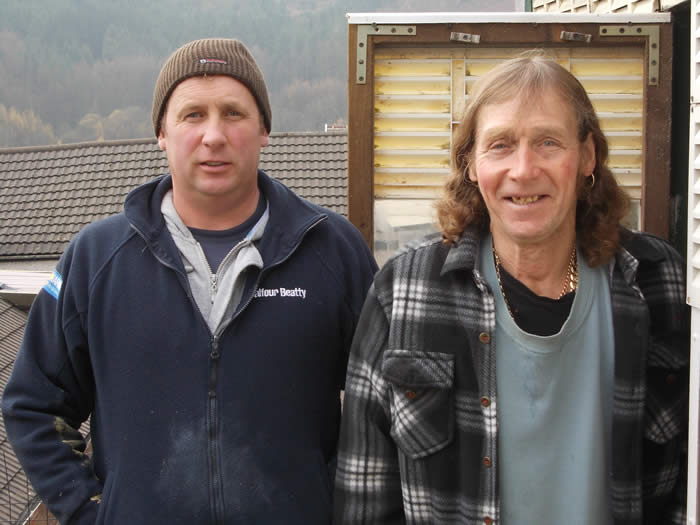
Chris and Darren with 'The Hairy Prune' (centre), Queen's Cup winner Glyn Cousins of Newport.
The above partnership consists of Chris Davenport and Darren Roberts, both of whom have been successful fanciers in their own right for quite some time. Since forming the present partnership they have gone from strength to strength, especially in channel racing and in classic competition competing against the top fanciers throughout England and Wales. In fact Darren and Chris have been fortunate enough to top their section in every organisation - except one - the Welsh SENFC. They have topped the section of the NFC; BBC; BICC and Welsh SRNFC - some on more than one occasion. Add to these top-class wins, numerous successes at local club and federation level and you have a pretty formidable record.
Take for example the 2005 season as typical of the Davenport & Roberts success story. In that year they won no less than 40 x 1sts at club, fed and combine level including 1st club, 1st Fed and 1st Combine Picauville 3,072 birds also winning the Old Bird Combined Average in the Shropshire Fed. In fact at one stage the partners had won no less than 18 of the previous 20 channel races in which they had entered.
This success story has continued through to the present day as in the partners’ first attempt at channel racing with the GGDC and BICC, they clocked a yearling hen to finish in 4th spot in both the GGDC and BICC. In the Pau International race organised by the BICC they again clocked a cracker at 675 miles to finish at 2nd Section in a very difficult race with atrocious weather conditions throughout Wales for the duration of the race.
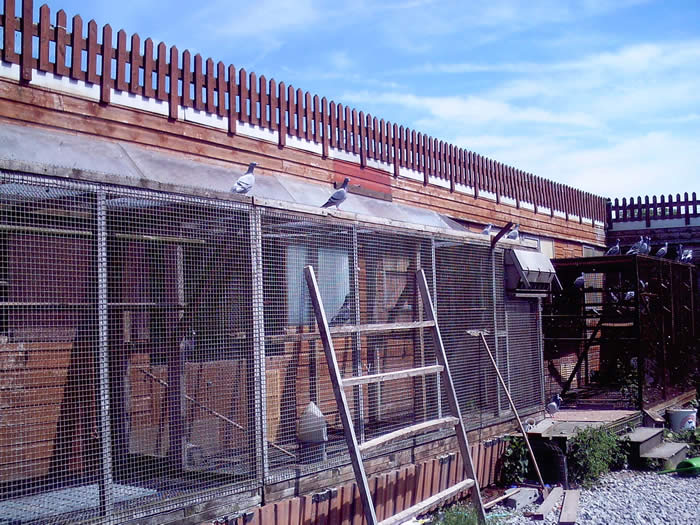
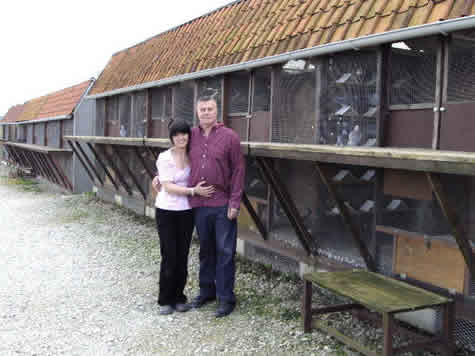
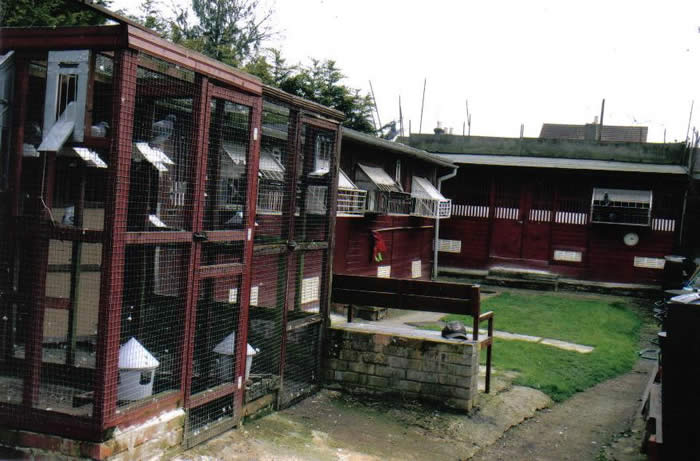
The lofts that house the race team and stock birds are situated on allotments just outside Chirk. This means a twenty mile round trip each day for Darren who lives in Wrexham. The lofts in their present location however, are extensive and ideally designed to keep the birds in tip top condition with the minimum amount of work on the part of the partners. Yet again we see a deep litter of dry droppings in use within the lofts. This litter is absolutely bone dry and as a result there is no odour or large mounds of droppings formed. Dust within the loft is also minimal and the birds are always in good order with a strong inbuilt immunity. They rarely go wrong.
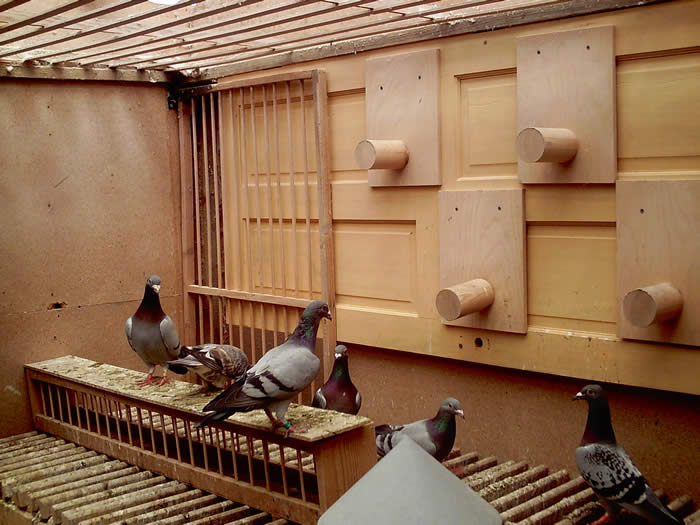
As the photographs that accompany this article demonstrate, the racing lofts are completely enclosed at the front with light entering through Perspex panels in the roof front and air via gaps under the eaves of the tiled roof. This design produces an excellent internal environment as the birds are not troubled by drafts or by outside predators and yet the inside of the loft is light and well ventilated.
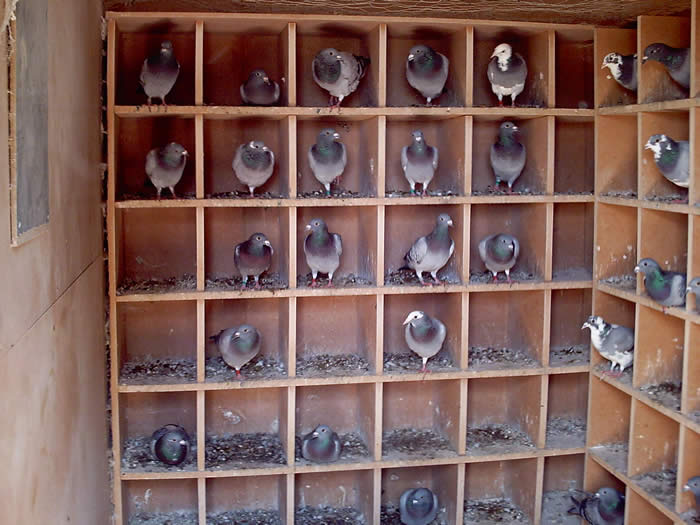
There are a number of sections fitted out with conventional widowhood style nest boxes and alongside these, separated by solid wooden doors, are two sections that house the hens when separated. The hens' sections have grid floors and every effort is made to ensure the more precocious hens don’t get too comfortable and start to show up to each other, as all birds are raced on the roundabout system at this loft.
The 40 pairs of racers, which are expected to race the local club and federation programme, as well as compete in the classics, are mated in stages. The yearlings are mated in the week after the Blackpool show and are allowed to go down on eggs. The older birds destined for the channel races are then introduced at a later date but are not allowed to pair. They are flown celibate during the inland programme, being allowed to go to nest in readiness for the channel classics in late May and June. Once separated the hens are exercised once per day until the 100-mile race stage is reached, after which they go out twice per day and are forced to fly for one hour on each occasion if necessary. The cocks on the other hand are allowed to do as they please during their exercise periods.
The feeding of these roundabout racers is somewhat unconventional in as much as they have a hopper of barley at their disposal at all times. This feed changes as race day approaches by the addition of a good racing mixture. When the long distance races come round the feed is further enriched by the addition of peanuts – as many as the birds can eat. This method of feeding certainly pumps up the birds at the right time. A great deal of maize and hemp are also incorporated into the daily feed in the final days before basketting for long distance races.
The old birds, which have not been allowed a nest earlier in the season, are then allowed to go to nest in preparation for the long distance races and very often are sent on their first youngsters of the season.
Stock birds are mated in early January and from these and the best of the race team, some 100 youngsters are bred annually. The young bird team are raced on the darkness system and are allowed an open loft to come and go as they please in the intervals between old bird exercise periods. The stock birds and youngsters have access to large aviaries so that they can relax in the elements at their pleasure. Stock birds and youngsters are fed a mixture of farm beans and cracked maize on which they seem to thrive. For many years, young bird racing has not been a great priority as Darren concentrates his efforts on the old birds and then likes to take his young family off on holiday in order to wind down from the hurly burly of old bird racing. However, in recent years the youngsters have been raced extensively with not a little success.
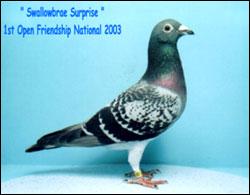
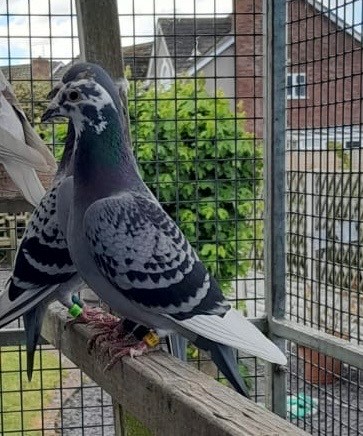
The birds responsible for these many wins are a combination of sprint, middle and long distance bloodlines. Chris and Darren have won consistently from 60 – 500 miles with the outstanding Huybregt family originating from Jimmy Weeder of Liverpool and Alan Incledon, formerly of Oak Villa lofts. These are real specimens, a little over medium sized, strong backed and immensely well muscled pigeons, that look and handle what they are – true racing machines.
With the greater emphasis on long distance classic racing in 500-700 mile races the partners have introduced Jan Aardens from various sources plus birds from among others Brian Reid, Brian Stansfield and Darren’s good friend and “long distance guru” Cameron Stansfield. These are now being tested at the distance and moulded into a team of long distance pathfinders.
I have the feeling that, given the right conditions, the name of Davenport & Roberts will soon be at the top of a long distance National result.