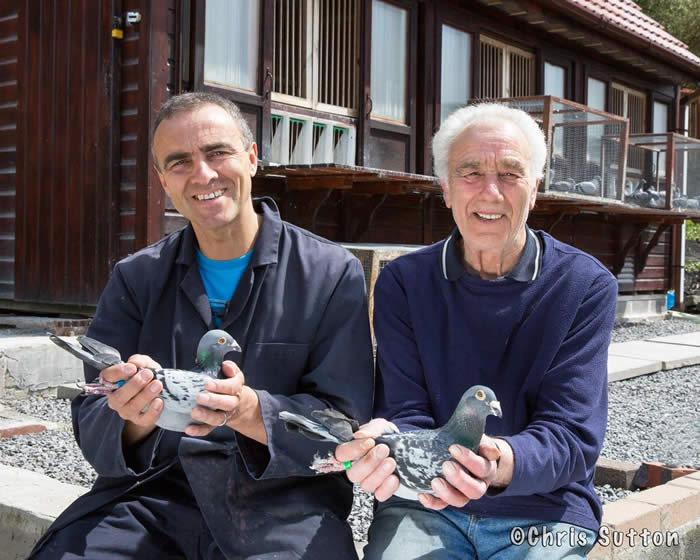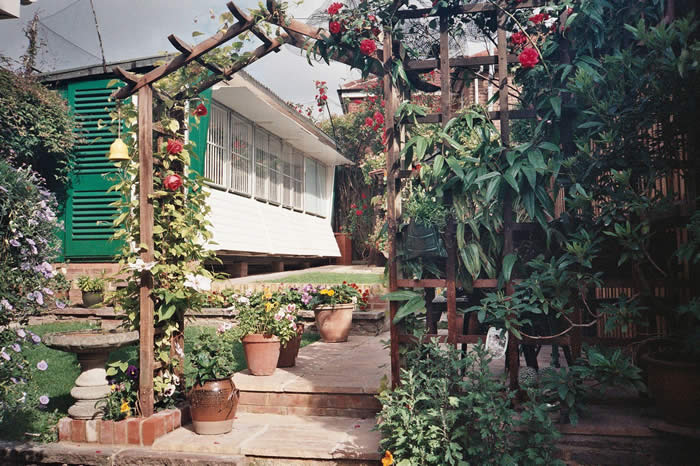
A CORNISH VIST
by Gareth Watkins
It was on the best weekend of the summer, even though it was early autumn, when my wife Judy and I travelled down to Cornwall in the company of Ray and Marie Strawbridge. The temperature was in the high 70s as we left Newport under a cloudless sky, to make our way down to “God’s County” – Cornwall. By 2 pm we were sitting comfortably in the Crab & Lobster pub in Truro tucking into a lovely pub lunch washed down with a couple of pints of real ale. After a quick look around the Cathedral we were soon on our way again towards our base for the weekend, the Lowenac Hotel in Camborne. Saturday morning saw us up bright and early so that Judy and Marie could get off on their own private tour of West Cornwall taking in Penzance and St Ives. Ray and I were then collected from the hotel by Big John Hoskins who was to act as our tour guide for the day.
First port of call on our Cornish visit was to the top cross channel winning loft of Richard and Gail Anthony of Kehelland, a small hamlet on the outskirts of Camborne. Dicky, as he is known by all his friends, has been an active member of the sport for 49 years, joining the Barncoose Homing Society in 1962. His first major influence in the sport was a gentleman by the name of Richard Davis of Tuckingmill a village near Camborne. All racing at that time was on the North Road through to Portsoy and Thurso close on 600 miles to the far west of Cornwall. Dicky’s first loft was built on a piece of ground rented from South Crofty Tin mine as that was where Dick was employed- in fact the loft was sited very close to the winding gear of the mine. With the loft complete the first birds housed were obtained from the aforementioned Richard Davis and these were of Putman and Marriott bloodlines. Later additions of the Hallmark Brutons were to come from the very successful long distance family of C.T.Crowle of Dowgas Coombe near St Austell. These were gifted to Dick by Cyril Crowle’s former flying partner Reg Goddard.
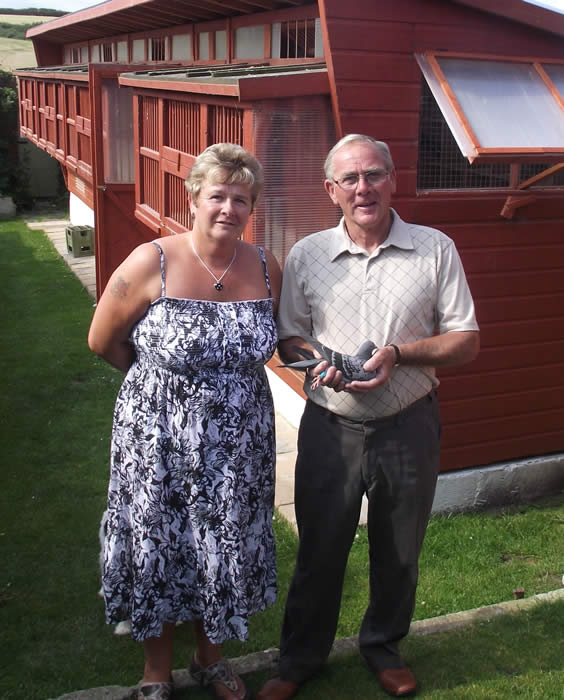
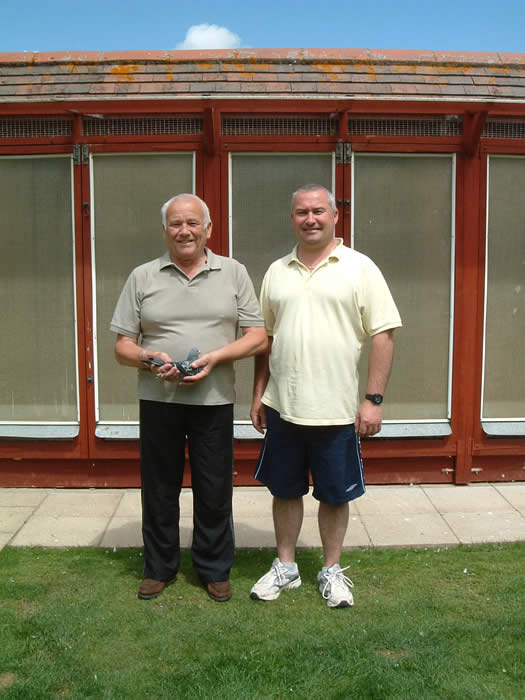
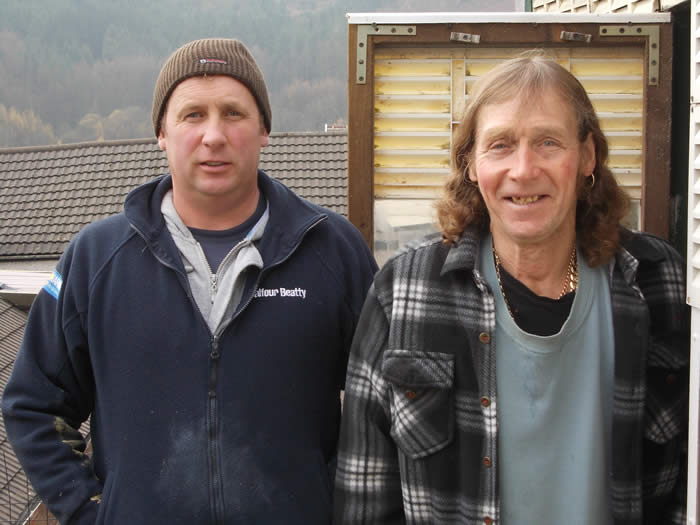
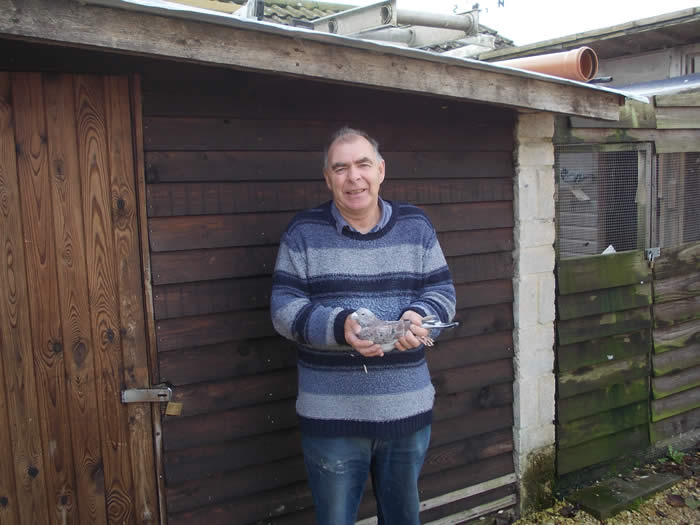
Dick and Gail Anthony pictured outside their loft with their 2nd Open NFC Cholet winner
Dick and wife Gail have raced at their present lovely rural location for the past 43 years and during that time they have maintained the old family of Marriott x Putmans and Hallmark Brutons with the addition of some judicious crosses as and when Dick thought it necessary to reinvigorate the bloodlines. These crosses have come from good friends Stephen Holmes and Jan Sealy, Bob Brown and Ross Watson who have all gifted Dick and Gail pigeons from their long distance bloodlines. They also have a high regard for Jeff Byles who was, until the great Ken Hine’s recent death, loft manager and right hand man to the great long distance fancier.
The present loft is just three years old and was bought for Dick as a retirement present by his very generous wife Gail!!! The loft has four sections plus a corn store area and faces south east over the surrounding farmland. The lofts are cleaned three times each and every day of the year and ventilation was excellent with large dowelled trapping areas along the front and windows in both end walls so air can enter whichever way the wind is blowing. At the time of our visit the birds were just coming through the moult and were in excellent condition. They all handled similarly with the cocks being just over medium sized and the hens just on medium and all were slightly long cast. Dick does not keep stock birds as such but retires old reliable racers so that they have a perch for life. Around 20 pairs of old bird racers are present at the start of the season and from these, a modest team of just 30 young birds are reared annually. Youngsters are no longer raced in the year of their birth but do receive a sound education out to 80 miles. As yearlings some of these are raced out to 400- 500 miles but ALL have to cross the channel.
Dick & Gail's birds out at exercise around the loft
The old birds are mated around 1st March and all racing is carried out on the natural system as Dick is now only interested in National cross channel racing. The old birds have no more than 6 short training spins out to 30 miles before the commencement of the season and receive two tosses per week at 20 miles throughout the season. They are exercised twice daily for one hour both morning and night and are allowed to do as they please. However if the local peregrines start to take an interest then they may not have their liberty for a couple of days so as to discourage the local aerial killers. The birds are fed in to a morning meal of ½ oz per bird of Buckton’s Ruby racing mixture with the same feed at night of ¾ oz per bird. As the long distance channel races approach the feed is beefed up with a high fat mixture of Buckton’s Expert. Youngsters are reared on the same company’s Breed and Wean Mixture.
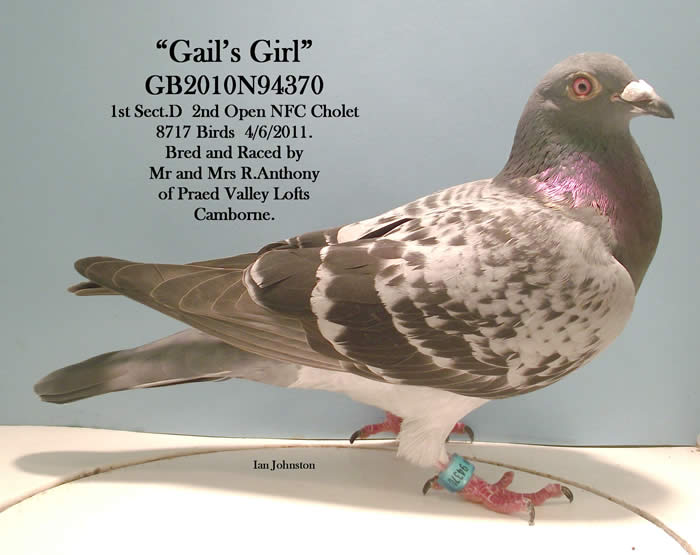
Portrait of 2nd Open Cholet courtesy of Ian Johnson
As mentioned in the opening paragraphs, most of the racing when Dick joined the sport in the early ‘60s was on the north road, however a close friend of Dick’s, who was soon to become his father in law, the late Clive Pollard decided to join the Camborne Invitation Club that raced the East to West route through to Hanau in Germany and so Dick joined Clive on this new adventure winning numerous prizes out to 500 miles. This long distance success really spurred Dick on and so in 1964 he decided to join the mighty NFC and in 1966 clocked his first ever Pau winner. This bird also won 1st Cornish Championship Club and was the only bird timed in race time. Incidentally, Clive Pollard was also to enjoy great success in National races into Cornwall, winning amongst many other top prizes 1st Open NFC Nantes in 1970.
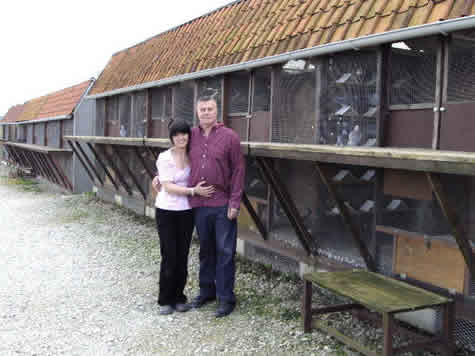
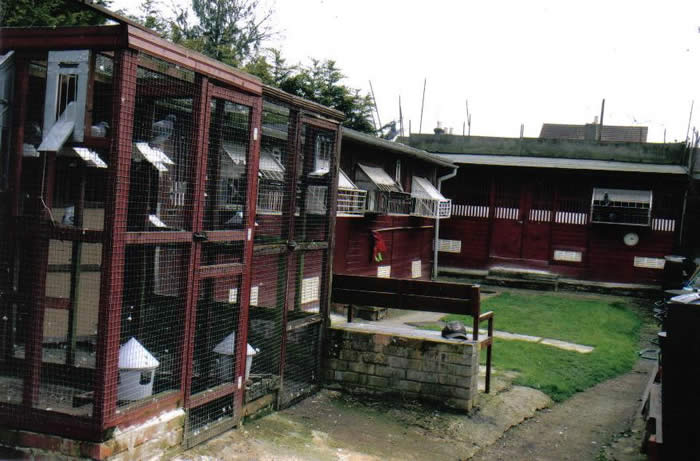
The lofts of Dick and Gail Anthony
Since those early days, Dick’s birds have won the following prizes in National races – and the reader should be mindful of the fact that with a predominant westerly wind the Cornish pigeons flying to a peninsular in the far south west of these islands have one hell of a job on their hands.
THE RACE RESULTS IN THE LAST COUPLE OF YEARS ARE AS FOLLOWS competing with the NFC, W.E.C.A. and the BRITISH BARCELONA CLUB:- 68TH OPEN NANTES 10,573 BIRDS; 422ND PAU 5,482 BIRDS; 1ST SEC 4TH OPEN NANTES 2,000 birds; 1ST OPEN RENNES 1,878 birds; 1st section 5th Open NANTES 2,235 birds; 1ST SECT RENNES; 418TH SAINTES 1,388 BIRDS; 5TH OPEN NANTES 1,233 birds; 2ND OPEN RENNES 1,878 birds; 4th Open NANTES 2,007 birds; 6TH OPEN PAU; 439th OPEN TARBES 3,808 birds; 6TH OPEN NANTES 2,235 birds; 17th OPEN NANTES 1.363 birds; 246TH OPEN SAINTES 5,666 birds; 61ST OPEN NANTES 1,090 birds; 20th OPEN RENNES 1.893 birds; 4TH OPEN ST NAZAIRE 4,483 birds; 99TH OPEN NANTES 1,233 birds. 5TH OPEN ST NAZAIRE 4,483 birds; 143RD OPEN PAU 5,070 birds; 91ST OPEN PAU 4,147 birds; 2ND OPEN CHOLET 8,800 in 2011.
This series of results in National and Amalgamation competition proves that if you have the right class of pigeon and the skills to condition and motivate them then anything is possible, even if you do not have a favourable loft location. Before leaving the Anthonys, Dick asked me to thank on his behalf, the people in charge of the marking stations for both the NFC and BBC as they do a lot of work for the fancy with very little praise. Also thanks to the people at Twyfords Farm Supplies for their generous sponsorship of Section D of the NFC.
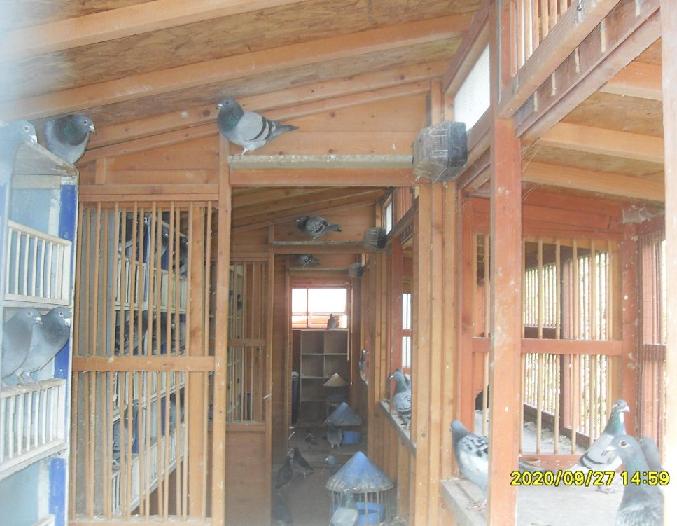
Inside Dick & Gail's loft
On leaving Dick and Gail’s home we were treated to a scenic tour of Penzance before winding our way to the loft of Ross Watson which was situated in a lovely rural setting about two miles from the town centre. Ross is yet another of the growing band of long distance enthusiasts who have turned their backs on the hustle and bustle of sprint racing and set their sights singlemindedly on the difficult task of long distance National racing.
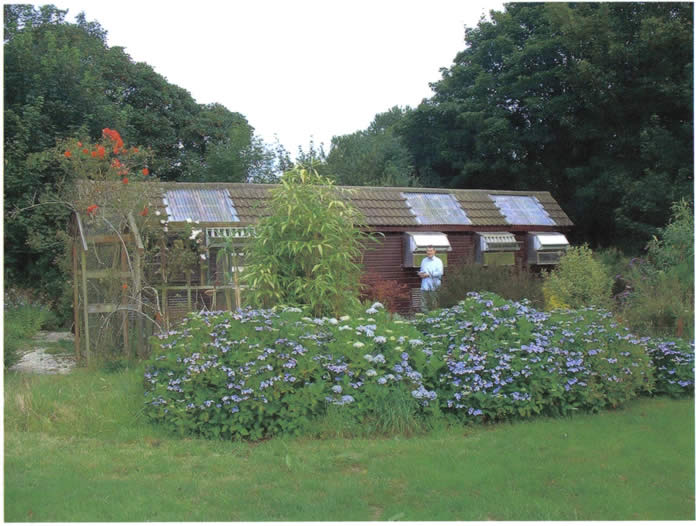
Ross Watson's loft
The Watson loft is a fairly imposing structure measuring some 44ft x 8ft. It has a large aviary at one end to accommodate the stock birds with a corresponding aviary at the opposite end for the use of the old bird racers and young birds. The floor is made from concrete and a deep litter is normally used for the comfort of the birds and to cut down the daily cleaning routine. The walls of all internal sections have been treated with a brown wood preservative giving a pleasant relaxing internal environment. Ross is totally dedicated to long distance racing and has no interest whatsoever in races from “this side of the pond”. Everything is geared up for cross channel long distance National racing and this is reflected in his choice of stock. At great expense, Ross has introduced the very best of Brian Denney’s “Bryden” 750 mile strain including children of most of Denney’s top pigeons. During our visit I handled a son of Tough Nut – this one a schallie red mosaic throws back to the original Harold Hainsworth pigeons which were the base of Derek Smith’s UNC winning pigeons of the early ‘60s. The Derek Smith pigeons in turn were one of the base bloodlines of the early “Brydens”. I think I counted at least six of these mosaic “throwbacks” so it looks as if Ross has the breeding lines right! More recent introductions have come from the Welsh loft of Ray Strawbridge and Ross has once again gone for the best by introducing children of “Marie” 2 x 1st GGDC Perpignan at 670 miles plus 1st &2nd Section BICC. I handled a lovely chequer hen daughter of Marie when mated to “Tom Thumb” 1st GGDC Barcelona 750 miles plus 1st section BICC and many others containing all of the best Strawbridge x Padfield long distance Jan Aardens. Other tried and tested long distance bloodlines have come via the late, great Ken Hine and also some Southwells from Jimmy Shepherd.
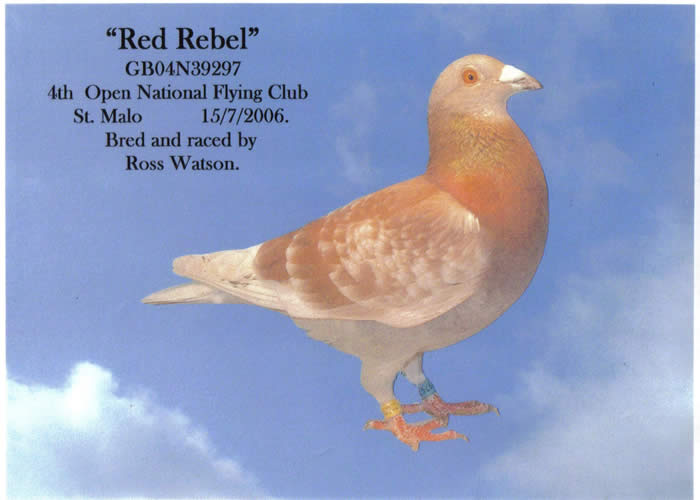
As mentioned earlier the loft is a substantial structure of 44ft x 8ft divided internally into five sections. The stock bird team of 12 pairs are housed in two sections whilst the 15 pairs of old bird racers and 60 or so young birds occupy the remaining three sections with adjoining aviary. The local peregrine population usually reduces the young bird team by 50% before Ross starts to train them and with this rate of attrition it’s amazing that the sport in Cornwall can survive.
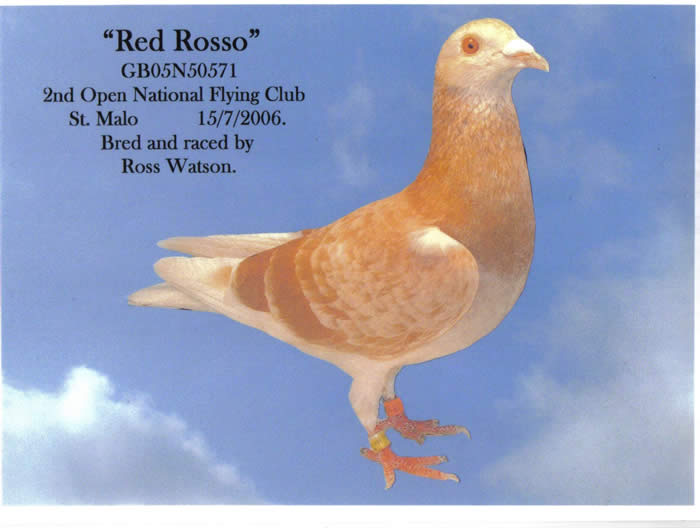
Stock birds are mated in February followed by the old bird race team in March. Once the old bird’s domestic duties are over they are force flown around the loft and after a couple of weeks of this regime they are ready for basket training. The old birds get something like a dozen tosses from 12 – 50 miles and are then deemed ready for a crack at the Channel. The home exercise continues throughout the season and Ross has very little difficulty in getting the birds, both young and old, to do 60 minutes twice daily. If possible Ross likes to send pairs to their selected channel races sitting eggs of 10 -12 days.
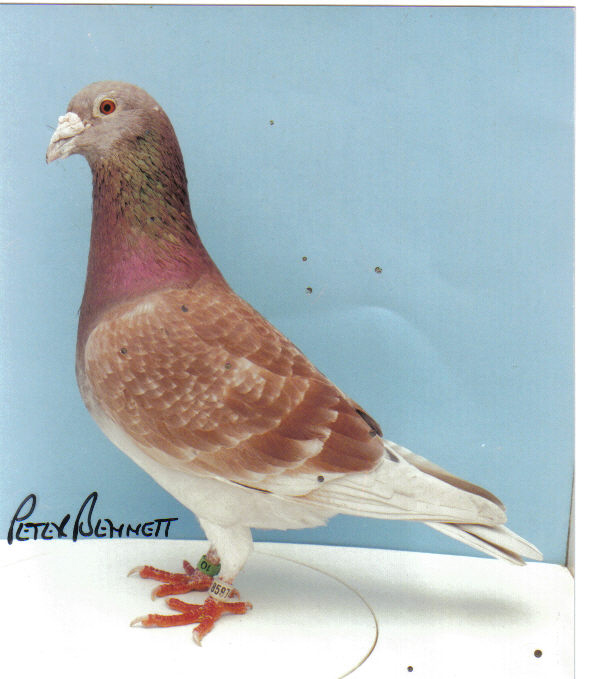
Red Destiny
The birds have access to a hopper full of Tic beans at all times and this basic diet is supplemented with a good widowhood mixture fed by hand after each exercise period. Extra maize is added to the birds’ diet as the long distance Nationals approach and they also have access to fresh supplies of grit and minerals daily. The only other supplement given are chicken layers pellets as these contain everything a laying hen needs to thrive so they are hardly likely to do any harm to pigeons!
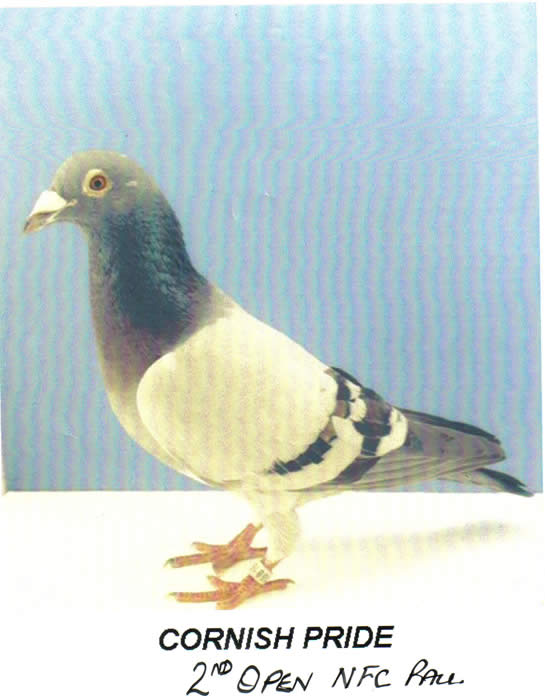
Young birds are not raced here but they are well trained out to 50 miles in the year of their birth and as yearlings are expected to cross the channel a number of times with selected individuals going right through to 500+ miles. As an example of this fairly harsh testing policy I give you Ross’s winner of 1st Section D 2nd Open Pau NFC, beaten only by Paul Kendal’s “Holloway Boy” which was a late bred carrying 5 nest flights!!!! This blue cock named “Cornish Pride” was purchased by Ross from a Mr Clarke of Oxford as one of a batch of six babies – for the princely sum of £50 the lot.
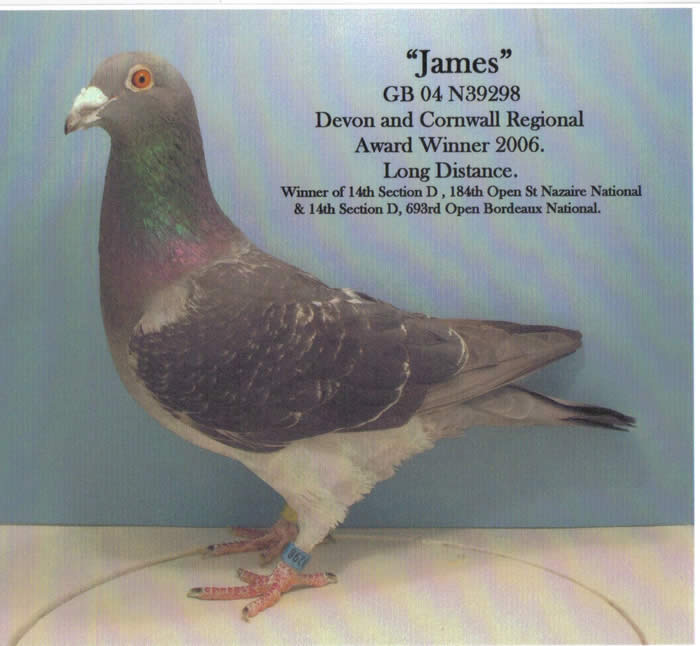
Yet another of Ross’s foundation pigeons ,the magnificent red cock “Cornish Destiny” was purchased for just £5 and was in fact bred from a pair of strays, yet he went on to win 95th Open BBC Palamos and his genes can be found in many of the lofts top distance performers including 2nd Open NFC St Malo and the winner of 1st section D NFC St Nazaire.
On breeding, Ross said that he likes to inbreed to performance pigeons for stock and then outcross by pairing two pigeons from different inbred lines for racing. This system usually produces Ross’s favoured type of pigeon which is medium sized and well balanced with a feeling of strength and inbuilt power. The photographs by Ian “Poldark” Johnson that accompany this article demonstrate the type of bird housed at the Watson lofts.
After handling the birds and speaking to Ross I feel sure that given the right conditions on the day it won’t be too long before the name of Ross Watson appears at, or very near the top of a National result whether it be the NFC, BBC or dare I say it the home of International racing in the UK the BICC.
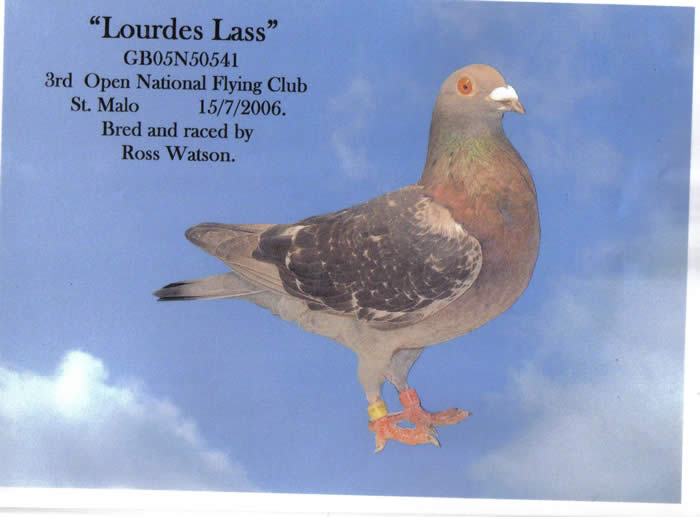
Next we were off to visit one of my oldest friends and along with the late Frank Tasker, one of the finest pigeon fanciers I have met in my 50 years in the sport. I refer to Bob Bolitho of Helston, some 11 miles from Ross Watson’s loft in Penzance. Bob is increasingly incapacitated by chronic arthritis but his enthusiasm for the sport has not diminished one iota. We did not have much time to handle the birds but those we did handle were in superb condition. Bob has not raced his young birds this year but has trained them extensively with up to 40 tosses out to 40 miles. They had just come through an excellent moult and should give a good account of themselves in the years to come. We were to meet up with Bob and old friend Arthur Luscombe at our hotel later in the evening but had to leave after a short visit as the call of the “Cornish Rattler” cider was ringing in Ray’s ears. John Hoskins kindly dropped us at the hotel and after a couple of quick pints of the aforementioned Cornish nectar we were ready for a good meal and a long chat about pigeons with Bob and Arthur until midnight.
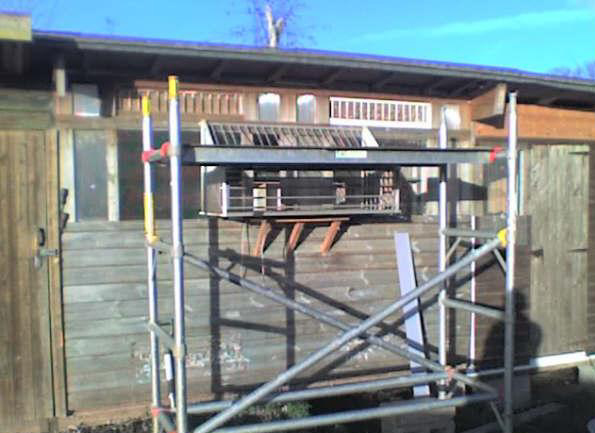
The Sunday morning saw us up and breakfasted and on our way to Port Isaac better known as Port Wen from the hit TV series Doc Martin. This is a lovely quaint fishing village and seems a lot smaller than it looks on the television. Even in early autumn there were quite a number of tourists milling around the narrow streets and I was surprised to find that the schoolhouse in the TV series is actually a very popular hotel. From Port Isaac we made our way back to South Wales and it was good to call in to Ray and Marie’s home and view the almost completed new loft that Ray has built at their new address. This is a two storey structure measuring 48ft x 20ft and is a credit to Ray’s skill as a carpenter. I include some photographs to illustrate the loft layout. Ray has not raced a pigeon since the 2010 Perpignan race as a house move was imminent. This eventually took place in November 2010 and at the time of our visit all birds had been settled in a matter of days at the new loft ready for racing in 2012. Unfortunately in the first few weeks since settling the birds the local goshawk has taken 10 pigeons including Ray’s Dax National winner. Needless to say the birds are now confined to the loft until the offending raptor moves on to pastures new.
An impressive end to a lovely weekend of handling top class pigeons in idyllic surroundings and under cloudless blue skies - who needs the Cost Del Sol? Below are some pictures of Ray's new loft.
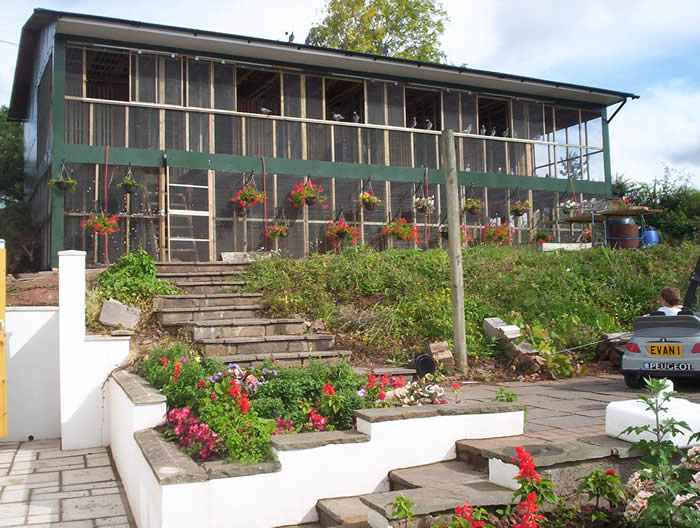
Ray's loft
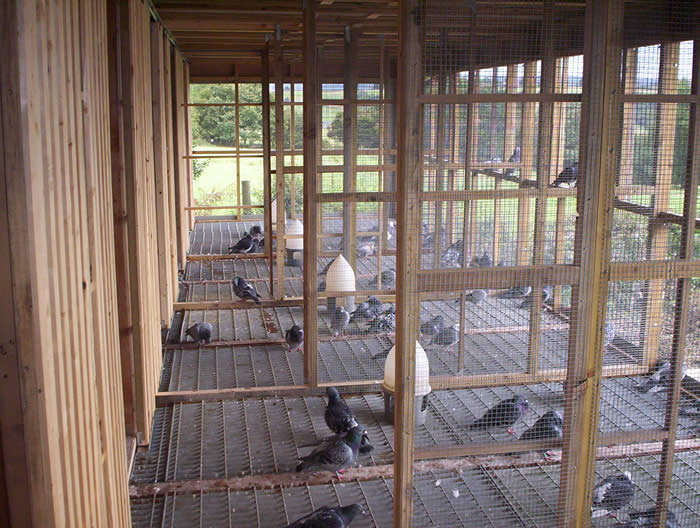
Ray's young bird sections.
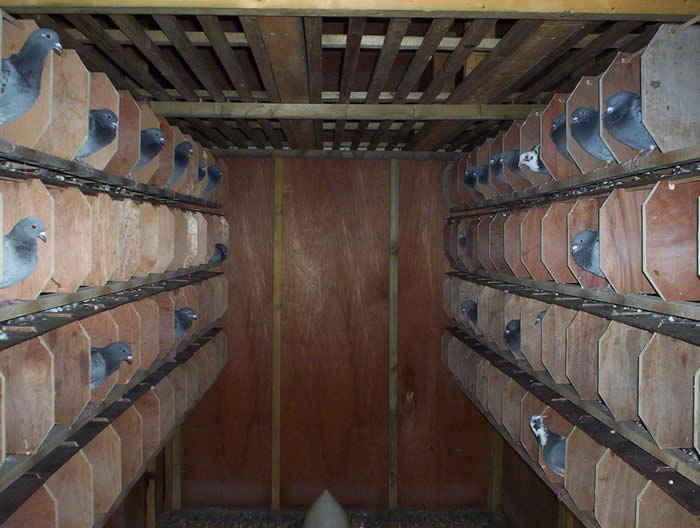
YB section
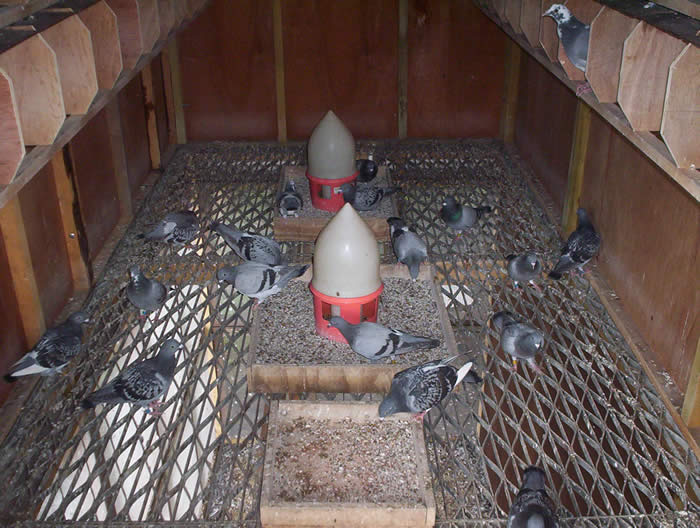
YB section
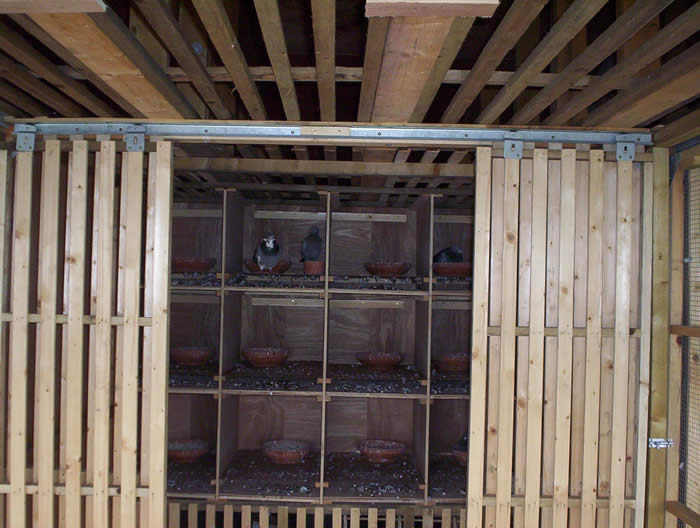
One of the old bird sections