
THE ART OF BREEDING, CONDITIONING & RACING PIGEONS AT LONG DISTANCES - Part 9
by Gareth Watkins
In this, the final article in the series, I intend to highlight the lofts, pigeons and performances of two partnerships which have, for a number of years, enjoyed success in producing successive generations of long distance racing pigeons. The two partnerships in question are Paul and Wendy Woolliss of Grimsby and the Black Family from Dromore in Northern Ireland.
I have always had immense respect and admiration for the Irish fanciers and their pigeons as in my opinion they have to contend with the most difficult race route in Europe. Admittedly the races might not be termed extreme distance, but the reader should be aware of the fact that when the Irish pigeons are liberated in Northern France to race the 500 miles to their home lofts in the “Emerald Isle”, they first have to cross the English Channel and then traverse the Southern counties of England and the Bristol Channel before crossing the peregrine filled skies of Wales and finally taking on the treacherous Irish sea in the last leg of their journey, which is usually late in the day with the sun setting in the west. It takes a big hearted pigeon to do this and the Irish fanciers have continued to produce this type of pigeon for generation after generation.
But first on to Paul and Wendy Woolliss of Grimsby who have produced many pigeons to fly successfully from Southern France and Spain to their Grimsby home at distances from 700 – 842 miles. The Woolliss pigeons have also excelled at the distance for other fanciers in various parts of the UK and have produced National winners in both Scotland and Wales.
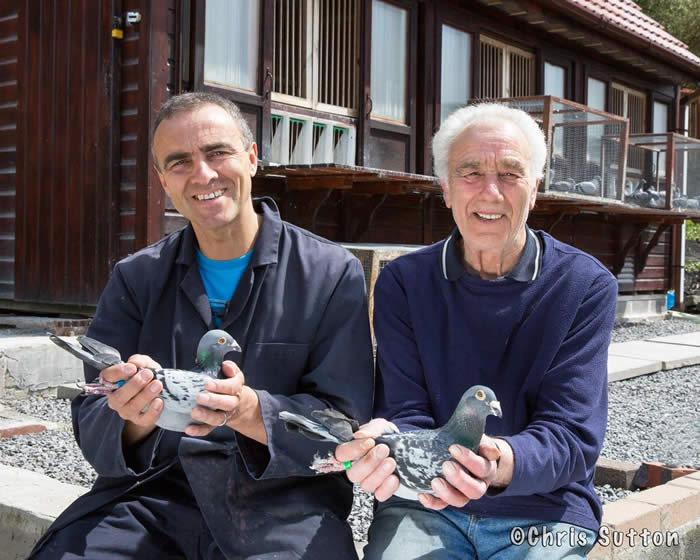
Paul and Wendy Woolliss
Paul Woolliss started racing pigeons in the early 1970s in partnership with his dad. It was not until 1987 that he made his first stab at National racing on the big stage and despite the disadvantage of his loft location near the north-east coast of England, he was determined to succeed at his goal of producing a team of long distance racing pigeons. In his first attempt at National racing Paul clocked the only pigeon on the day in the Hull marking station from the NFC Guernsey young bird National at 300 miles. Paul’s timer on that occasion took 2nd Open NE 700 mile Club and also won section and Open prizes in the National – and he was for ever hooked! I think it would be safe to say that since those early days, Paul has indeed been successful in achieving his aims as he has raced or bred and raced pigeons of the calibre of “Lona” - eight times over 600 miles, 4 times over 700 miles and 3 times over 800 miles including 1st & 2nd Section at 815 miles and 3rd section at 842 miles. Lona also won 9th section at 698 miles, in fact this incredible hen was a prize winner in eight separate National races and is responsible for winners throughout the UK.
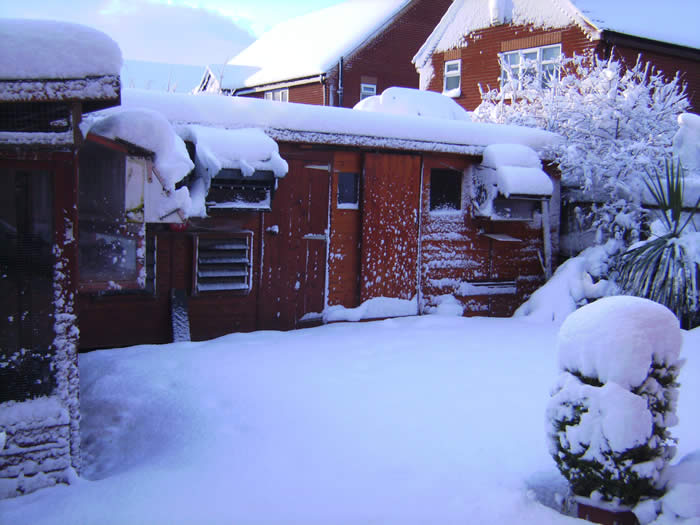
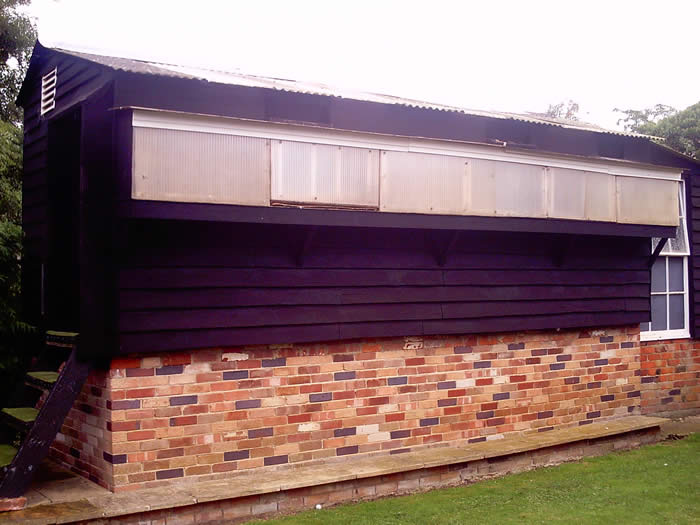
The Woolliss loft
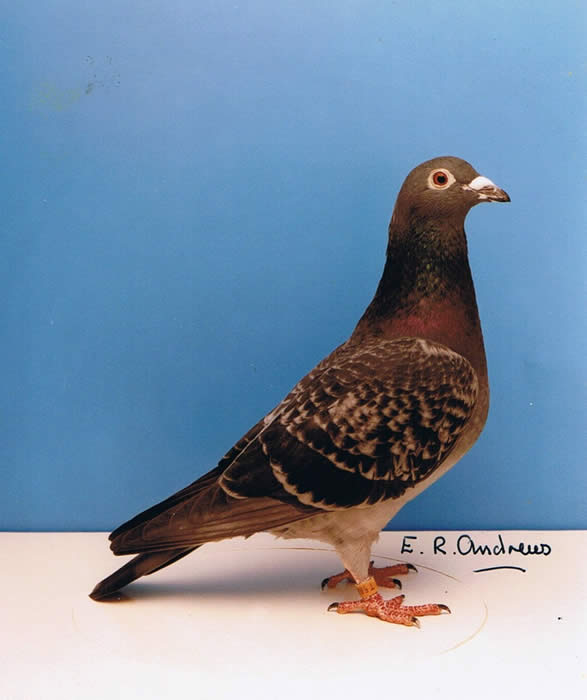
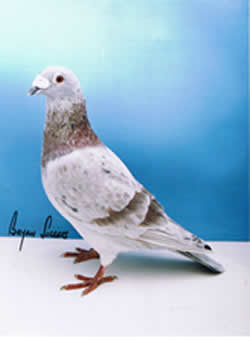
Then there is “Ambition”, a dark chequer hen that was to become the mother of the Woolliss loft after having flown from Pau to Grimsby twice winning 1st sect 37th Open NFC Pau at 703 miles. Ambition flew more than 600 miles on four occasions and was then retired to the stock loft where her offspring are churning out top class long distance racers for Paul and others.
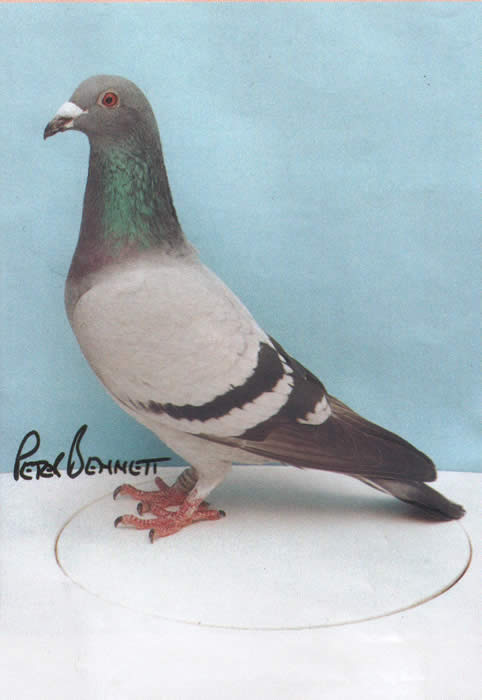
“Palona” is yet another 800 miler with wins including 1st sect 7th Open at 815 miles. Palona was bred from a son of Ambition. Then we have the great long distance racer “Doug”, nine times over 600 miles including three times 800 + miles with wins that include 8th sect 155th Open Palamos; 8th sect 154th Open Palamos and 23rd Sect NFC Pau 703 miles. Doug also went on to leave his mark in the stock loft as his sons and daughters are responsible for a number of top class long distance racers in classic competition. Doug was bred from yet another son of Ambition, a blue cock “375” when paired to a red hen of Westcott x Hansenne bloodlines that was bought as one of a batch of six late breds from a Welsh fancier. The red hen was later killed by a peregrine but not before she had bred Doug. So how did Paul produce pigeons of the above quality? Read on…..
Paul Woolliss firmly believes that you have to have the correct tools to accomplish the job in hand and to succeed at the extreme distance you therefore have to have birds bred from birds that HAVE ALREADY SUCCEEDED at the extreme distance. Extreme distance racing is a completely different proposition to 500 mile racing and as such needs a different type of pigeon. Paul believes that conditioning a pigeon to win at 500, 600, 700 and 800 miles is an art that has been perfected by only a few, otherwise in national racing the same few names would not appear year in year out. This sort of racing can at times be heartbreaking but if he is to become successful the fancier must be as determined as the pigeons he races, as without this steely, single minded determination he will not succeed.
Ambition
Given that the fancier has the right pigeons to work on – pigeons with iron hard constitutions and intelligence, they must be prepared correctly for the job in hand, because if they are not 100% both mentally and physically even the best will not cope with the hardships they will have to endure over the marathon course.
With regard to type Paul prefers a small to medium sized well balanced pigeon, because as he says you don’t see many big muscular marathon runners. 800 milers really are one-off special birds and to find multiple winners at these distances is very rare although in the British Isles and for that matter the Netherlands, they do exist.
Having said this Paul and Wendy breed no more than 25 – 30 youngsters annually for their own use and this small team are augmented by the addition of a few choice late breds. It should be noted that Palona, the winner of 1st section 7th Open Palamos at 815 miles, was one such late bred and did not see the inside of a race basket until he was two years old. This is a small team set up as the old bird race team rarely amounts to more than a dozen to twenty or so pigeons. However, the Woolliss strength lies in the stock loft, which is full of sons and daughters of the loft’s best long distance performers.
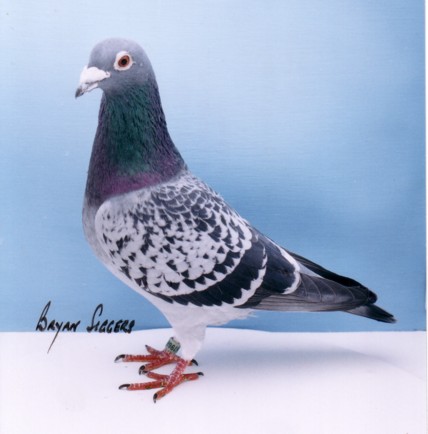
Lona
The Woolliss family is based in the main on the Van Wanroys, a family of long distance pigeons of Dutch origin. A batch of these was introduced by local fancier R.G. Marris in the early 1980s. This draft originated in the loft of Joe Hendricks of Twello, whose pigeon “De Barcelona” won the Barcelona International in 1980, regarded by many as the hardest Barcelona race in the history of the event. The progeny of this initial batch was then severely tested leaving Paul with the foundation stock housed today. Selected introductions, the most prominent amongst these being the Pol Bostyn Stichelbauts bred down from “Olympic Gold”, F.Bloor’s NFC Pau winner, have been used over the years and the offspring tested at the extreme distance before introducing the survivors into the base family.
Because he is only interested in extreme distance racing, any new introduction must come from a fancier whose pigeons are competing and winning at a similar distance to Paul’s pigeons, that is 700 – 800 miles and just as importantly, the birds must experience the same amount of hours on the wing i.e. 20 hours plus from Pau, Palamos and Barcelona.
Palona
Right, so much for the basic principles that Paul has applied to develop his present day family of marathon racers, I will now move on to outline the background behind some of the loft's main pigeons starting with the dark chequer hen named “Ambition”. She was raced in four races as a youngster without making any mistakes or winning any prizes. As a yearling she was raced to the coast and had four channel races out to 473 miles, winning minor club prizes on two occasions. On her return from the final channel race the little dark hen was looking so well that she was sent to the NFC Saintes National at 540 miles and was the first in the clock.
As a two year old she was prepared specifically for the NFC Pau National and her preparation included a few races to the coast followed by a 300 mile channel race and then light training and plenty of rest before being basketed for the Pau National at 703 miles. She was liberated at 1.30 pm on the Friday and clocked the next afternoon to record a velocity of 1063 ypm over the 703 mile course to finish 1st sect 37th Open against a field of 5,976 birds. She also won 1st North East 700 mile Club and an RPRA Award. As mentioned earlier, Ambition went on to become the cornerstone of the Woolliss loft being responsible for winners for Paul and others in races between 60 to 815 miles. Indeed, as mentioned earlier, she is the grand dam of amongst others, Doug and Palona the winner of 1st sect 7th Open 1st Single Bird National Palamos 815 miles.
Doug
Whilst compiling the earlier articles in this series I have noted that a number of the fanciers featured, most notably John Wills and Dave Goddard, are quite prepared to find room for pigeons that have made a mistake but have subsequently found their own way home. Paul Woolliss is of a similar mind set as some of his best birds have made mistakes, rectified their errors and then gone on to achieve great things in long distance races. I should however also point out that all three fanciers mentioned do not allow these mistakes to become habit forming!
In order to emphasise this point I should mention one of the loft's greatest racers, “Lona”, who, in the second race of her life as a young bird, was lost at 80 miles, in a disaster of a race with 70% of the entries in the whole federation missing. She returned the following year as a yearling looking a total mess with every feather frayed and with heat burns on all her flights. The hen was left alone to have a good moult and was then given a few training spins as a two year old followed by two inland races before being entered in the NFC Nantes National at 438 miles, and she returned after 12 hours on the wing to be third bird in the clock. Amazingly her next race, and remember this was only the sixth race of her life, was the Barcelona International at 842 miles. Lona returned in fine style to win 3rd sect 55th Open! She later went on to win 1st Section, 46th Open Palamos, being the only bird in the Section in race time. The next season she took 2nd Section, 68th Open Palamos, making it 3 times Spain to Grimsby. Four weeks after this Palamos performance she was entered in the Bordeaux race at close on 600 miles to win 9th sect 283rd Open. Lona scored in 8 different nationals from distances ranging from 370 miles to 842 miles, what a pigeon!!!!
Paul & and Wendy Woolliss
Next we move on to one of Lona’s grandsons, “Palona”, which was a late bred that did not go into a basket until he was two years old. He was then raced through to 473 miles making only one mistake. He was raced south west to Penzance in Cornwall followed the next week with a race from Herstal in Belgium. As a three year old he won 18th sect BBC Nantes at 438 miles followed two weeks later with 51st section NFC Nantes. His next race after a three week rest was from Pau with the NFC where he returned to win 14th sect 490th Open at 703 miles. Palona had thus flown and won prizes in three races totalling more than 1,500 miles in a five week period, making Paul think that he had another top class candidate for Palamos. The following season he was therefore prepared specifically with Palamos in mind. Mated in April, he was entered in three inland races before being sent to Picauville at 296 miles with the MNFC and returned after having nine hours on the wing. That completed his preparatory racing and the weeks leading up to the Palamos race saw him being exercised with the young bird team for 45 – 60 minutes each day. He was basketed for the Palamos race just beginning to chase his hen to nest, and indeed any other hen he clapped his eyes on. In a very difficult race with extreme temperatures throughout the course of the race, Palona was clocked at tea time on the third day to win 1st sect 7th Open at 815 miles plus 1st Open Greater Distance Single Bird NFC.
Above, the sire of Doug
54, the sire of Palona
The Mealy cock “Doug” was also a late bred and didn’t go in the basket as a young bird. As a yearling he had the usual preliminary training and was then entered in three races down to the south coast before being stopped for the season. The two year old stage saw him going across the channel four times finishing off at Nevers 476 miles. As a three year old, a number of channel races finishing off with Saintes on the day at 540 miles. Although not a prizewinner, Doug was always there or thereabouts being clocked in most of his channel races. The four year old stage saw Doug attempt his first 600 mile race when he was entered in the Bordeaux National to be clocked on the day. Doug later went on to fly over 600 miles on NINE occasions including three times Spain to Grimsby at 815 miles.
Dorothy
There are no fancy methods at the Woolliss set up, just good, big hearted long distance racers that literally put heart and soul into returning to their small back garden loft. The racing loft measures just 12f x 6 ft and is divided into two sections. One section is fitted with nest boxes and the other just perches. The cocks are housed in the section with the nest boxes and the hens can be moved over into the adjoining section during the racing season if Paul wishes to race the old birds on round about for a time in mid season. A second loft which is fitted with an aviary, houses the stock birds and small young bird team.
Stock birds are usually mated in stages beginning in early February with the racers mated in March as and when Paul thinks it appropriate. Paul does not separate the pairs during the winter but simply closes the nest boxes in September and the pairs perch on the nest box fronts throughout the winter and rarely lay any more eggs until re – mated in the spring. Once their domestic duties are over the Woolliss old bird team will have a few preliminary training tosses and some may then be jumped straight into a 190 mile race from the south coast. This includes any late breds that have been unraced as young birds! Paul likes to sort them out as early as possible and so he “tries to lose them” in their preliminary early season training tosses. When they are over this first hurdle they may then go out to the Federation’s longest race at 470 miles. The more experienced members of the old bird race team may have a few inland races before being lifted into a 300 mile channel race in final preparation for the marathon races. It should however be noted that the Woolliss pigeons, both old and young, exercise freely around home and are therefore very fit before they enter the training basket.
Sire of Doug
8th sect palamos
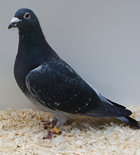
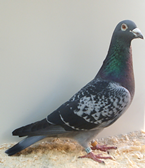
Daughter of Ambition
Daughter of Lona
Son of Lona
The young bird team, excluding any late breds, after their first toss at 20 – 25 miles will have a number of further tosses and will have perhaps four or five races down to the south coast at 192 miles and that satisfies Paul. No darkness youngsters here, just brought on naturally with no pressure and then stopped once they have cast their 8th flight.
The race birds have unlimited access to a hopper filled with beans. This is supplemented with a high protein mix once the 300 mile stage is reached plus a pinch of Red Band Conditioner and Hormoform each evening. At the 400 mile stage maize is added to the mixture and is increased to 80% of the feed when the 500 mile+ races have arrived. Paul uses Aviform products routinely as well as Naturaline, fresh garlic and pigeon tea. Glucose and honey are always in the birds’ drinking water on their return from the long races. The birds are treated as a preventative for canker twice yearly.
As the meerkat says “seemple” or it seems to be when you have a team of outstanding tough as teak, long distance racers.
N. Black & Son, Dromore, Northern Ireland
This partnership has won just about all there is to win in Irish pigeon racing circles including the King’s Cup and the Harkness Rose Bowl. The latter trophy is awarded for the best 2 bird average in the King’s Cup race and has been won on three separate occasions. In 1992 the partners decided to concentrate their efforts on the King’s Cup race which is the longest race in the Irish pigeon racing calendar. Since that time they have taken the following positions at National level in this event:- 1st, 2nd, 4th, 4 x 6th, 3 x 7th, 3 x 8th plus many more top twenty finishes in one of the most difficult races there is in the world of pigeon racing.
The Blacks entered the sport in 1973 with encouragement from the Russell Brothers, Nigel and George, although David’s father and uncle had previously raced pigeons during the 1960s. The present day set up is firmly family orientated as David’s brothers Ian and Alan assist, with Alan carrying out most of the loft cleaning, usually aided by David’s son Andrew. The ladies of the family are also roped in to do their share as David’s wife Janice and daughter Caroline carry out most of the training of the birds, a duty formerly carried out by David’s mum and grand mother Annie Mary.
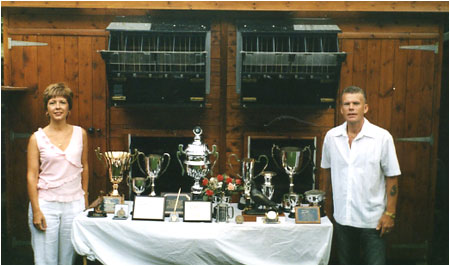
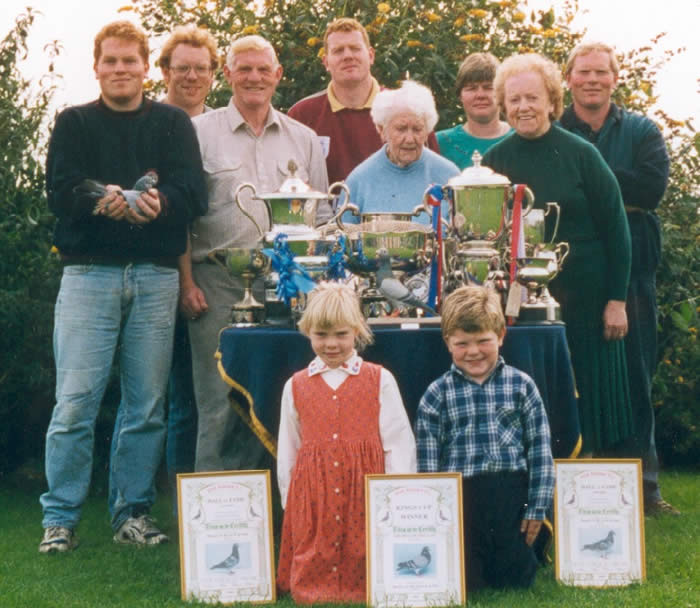
Black Family with trophies won in 1996
Local fanciers John McMullan and George Casement were influential mentors during David’s early years in the sport and both were also instrumental in providing some of the foundation stock. One of the earliest rules learned was never to be afraid to lose a pigeon as “if the bird is fit and well it should be sent” and “if a bird can’t fly France it’s not worth a damn”. With such a philosophy your loft will rarely suffer from overcrowding!
In 1976 the Russell brothers who were mentioned earlier, provided a blue pied hen which proved to be an outstanding breeder and was to become a major influence in the development of the Black's team of long distance racers. This blue pied hen was also an exceptional racer scoring twice from France including 66th Open Les Sables at 577 miles and 179th Open Rennes. Further influential introductions were made from Jim Moreland, John McMullan and George Casement. The Casement introduction came in the form of two blue cocks, one being a direct son of the famous “Top of the Box”. Later on, a dark chequer Busschaert hen was brought in from Joe Cromie along with a red cock from Mick Conlon. In recent years a son and two daughters of David’s father in law’s great racing hen “Pinehill Lass” have been incorporated and are producing some class pigeons. David has moulded the present day family from the above bloodlines by inbreeding to two different lines within the family and then crossing these lines to produce the racing stock, one of David’s favoured matings within the respective blood lines being uncle to niece.
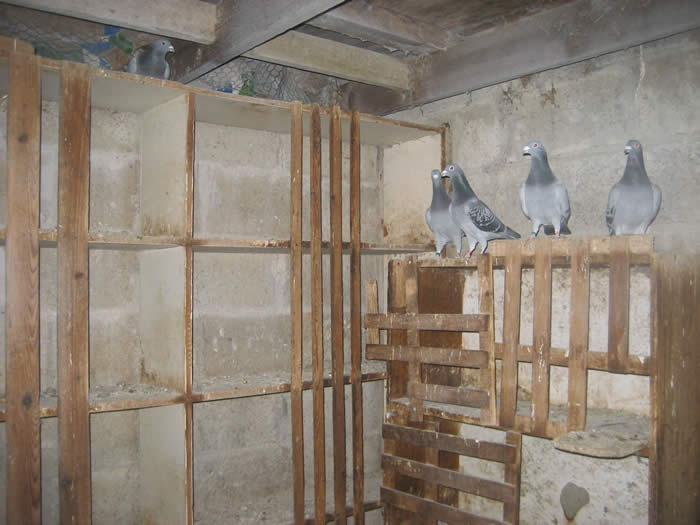
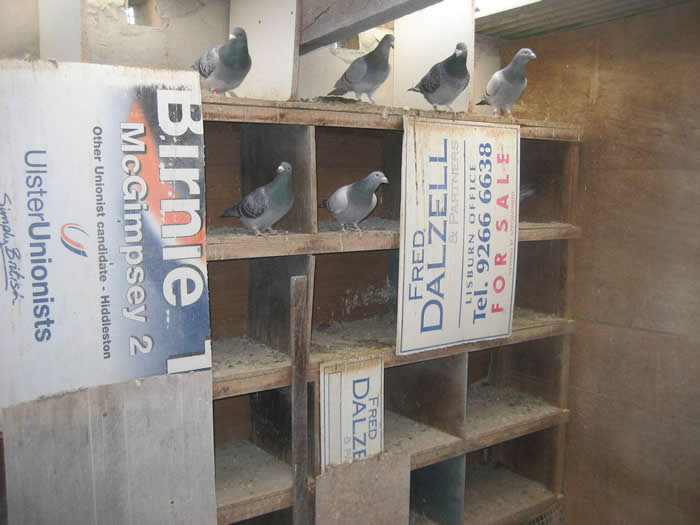
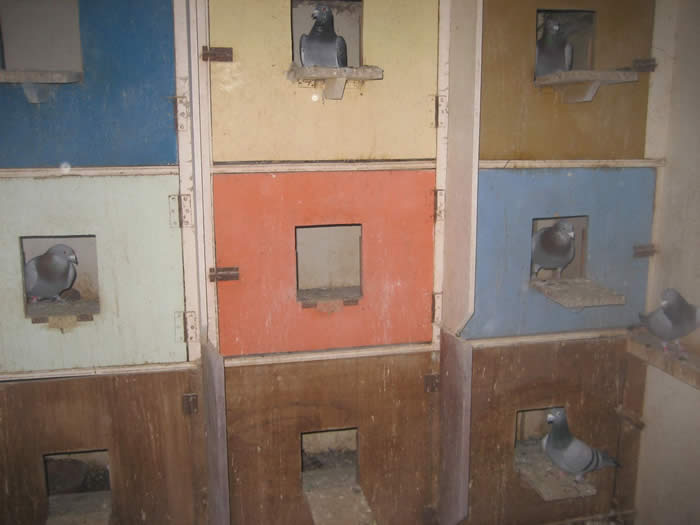
One of the racing sections downstairs
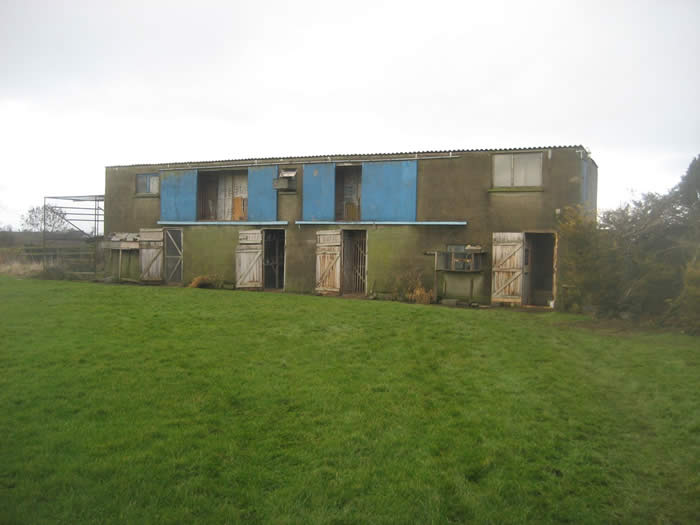
The present loft was erected in 1980 and has survived with only minor modifications to the present day. It is 60 foot long and 10 foot wide and is a two storey structure divided into a number of different sections. The bottom storey used to be used as a stables but the increased interest in long distance National racing saw the removal of the horses and their replacement by pigeons. A second loft has been built alongside the main loft and this measures 20 ft x 8 ft. Both lofts are built of breeze blocks and face south, south west so have plenty of sun light during daylight hours. The complete two loft set up has a total of twenty sections which house the 80 old bird racers, 80 youngsters and 25 pairs of stock birds, so there is certainly no overcrowding here. During the winter months a deep litter is used in all lofts but when the racing season arrives the lofts are scraped clean daily.
The view of the lofts from the road
Some of the stock birds are mated in January if the weather is suitable and it is from this first group of matings that the Black’s darkness young birds are reared. This initial group of matings is followed by the race birds in mid February. The pigeons that are earmarked for the Nationals are not allowed to rear youngsters in this first nest but have their eggs transferred to feeders. David likes to have his National candidates entered in their target race feeding their first young birds of the year, and, in the case of two year olds, feeding their first ever babies - a terrific form of motivation. The old birds are raced on a variety of systems including natural, widowhood and roundabout. Preparation for the old bird races starts in earnest in April when, if the weather is suitable, the old birds are force exercised twice daily. The yearlings are sent to the first couple of races with the National candidates being lifted into the races at around the 150 – 180 mile race stage after having a few 40 mile trainers in addition to the home exercise. The old bird team is then sent to four or five races on roundabout before the National candidates are re-mated so that they are feeding a one day old baby on the day of basketting for the National race. Once sitting the cocks are exercised for a minimum of one hour twice daily, morning and evening, with the hens flown when they come off the nest at lunch time. During this second period of sitting the old birds might also get a few 40 mile tosses depending on how hard their preparatory races had been. It should be noted that the Black pigeons are never allowed an open loft to come and go as they please. All exercise is carried out to a strict routine and the birds seem to benefit from this disciplined regime.
Another downstairs racing section
At the start of the racing season the old bird racers are fed twice per day after exercise with a typical widowhood mixture. The food is given in troughs and is left before the birds for an hour before any food remaining is removed until the next meal time. As the season progresses the feed is increased so that by the time the National races arrive the racers have food in front of them throughout the day. A good diet style mix is fed on return from the races and brewers yeast is added to this light, easily digestible feed for the first couple of feeds after their return. Also at this time the birds get cider vinegar in the drinking water. After a day or two they go back to feeding the widowhood mixture which is switched to a high fat, high energy mixture plus energy oils in the day or two prior to basketting for the Nationals.
The young bird team is split into two groups. Half the team is kept on the natural system and receive plenty of training but only one, or perhaps two races for experience in their first year. The other half of the team is raced on the darkness system and it is these youngsters that carry out the bulk of the racing during the young bird programme. Once weaned the young birds are fed maple peas and this is changed to a breeding mix for the natural young birds which are only lightly worked and a diet/ high energy mix for the darkness young birds which will carry out the bulk of the young bird race programme. They also have Frazers Glucoboost and Frazers Pink Mineral compound, products manufactured by Frazers a local firm of animal feed distributors. In fact in 2010 David used all the pigeon mixtures developed by Frazers and is more than satisfied with the results. Wheat germ and linseed oils are regularly added to these mixtures so the birds lack for nothing in their diet.
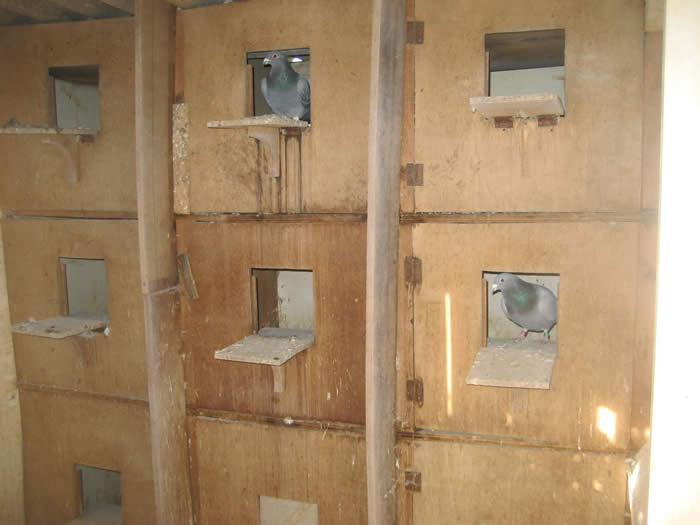
One of the widowhood sections upstairs
With regard to medical treatments, all birds are routinely given a preventative treatment against paratyphoid in December with a preventative for canker in February, followed by preventatives for respiratory disease and canker during the racing season. Multivitamins are given in the drinking water once per week with cider vinegar in the drinkers two or three times weekly.
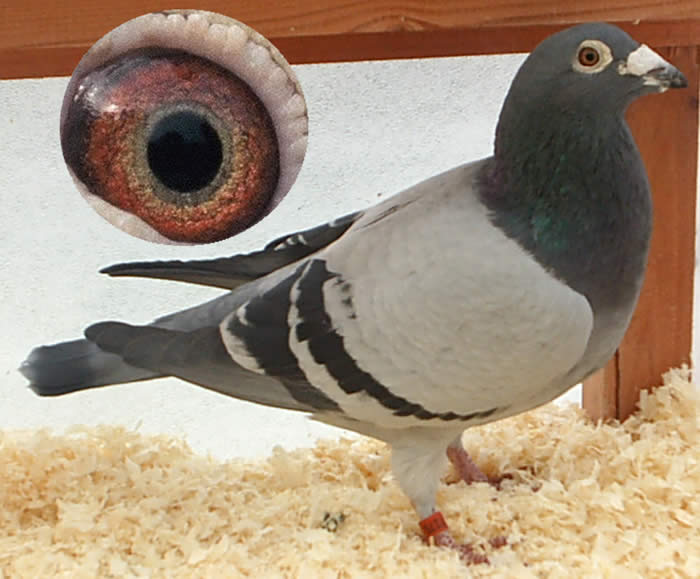
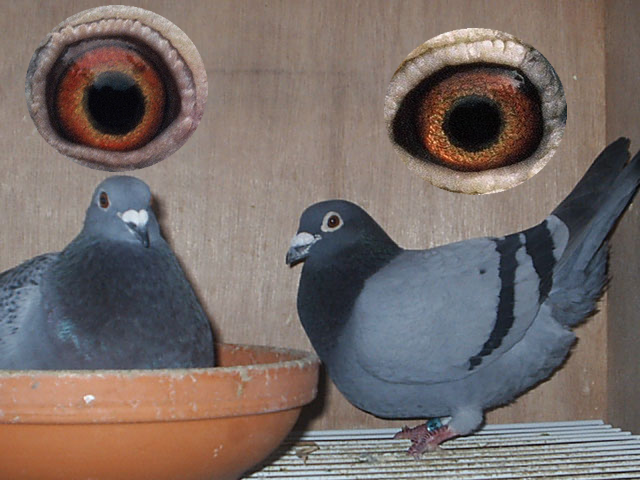
Over the past thirty years the Blacks have developed a family of racers that rarely produce excessively large or deep keeled pigeons. They like their birds to come to hand nicely being well balanced with good strong richly coloured eyes. Another trait within the family is their unerring homing ability as David has found them extremely difficult to lose even when the race turns out to be a stinker. They also do well for other fanciers thus proving that it is not just the Blacks’ expert management, but just as importantly, the birds own innate racing ability that makes them win as they continue to win under varying management systems.
The unpainted widowhood section upstairs
Many top class racers have been bred at the lofts including Drumiller Hill Lad the 1996 King’s Cup Winner. However his dam”99” was also a fine racing hen having flown from France to Northern Ireland on five occasions winning 23rd and 49th Open National. “99” also bred three birds to finish in the top 10 Open of the National plus other grand children to emulate this achievement. Having said this, another pigeon, ”The 25 hen” was probably David’s most consistent racer winning 6th, 7th & 176th Open in the King’s Cup race from Rennes, earning herself a Hall of Fame Diploma. In four seasons racing she was only beaten to the loft on one occasion and this record included private training tosses. She also bred winners including a grand daughter which won 1st East Down Combine for John Patterson plus a grand son to win 1st East Down Combine Penzance for Jackie Rankin. Another grand daughter won 6th Open National Vains in 2010. Annie Mary, yet another grand daughter of the 25 Hen won 4th & 8th Open National Messac and was in turn the grand dam of 10th Open Vains for D & J Caskey in 2010.
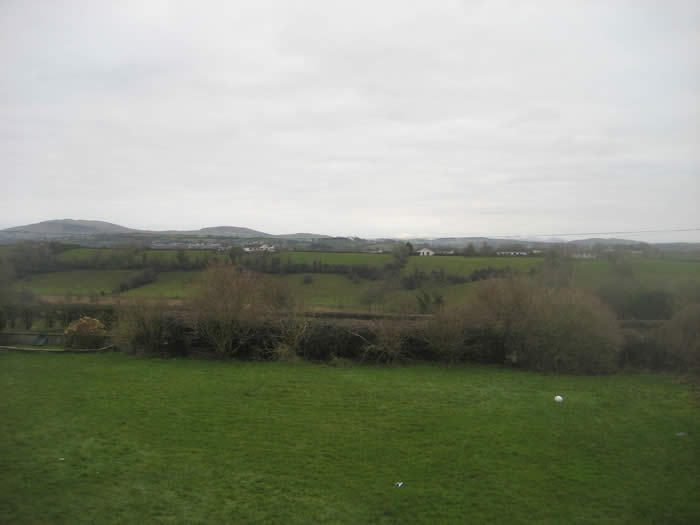
Hills to the left and the snow capped Mournes in the distance
Another good racer for the partners was a pigeon named “White Eyes” which won 1st sect 3rd Open Eastbourne and 1st section 3rd Open Fort William. In the 80 year history of the Irish King’s Cup race only a very few birds have made the top ten Open positions twice and the Black family have raced two of this handful of birds.
The 2010 season proved to be one of the most successful ever for David and the family as their birds appeared on each and every one of the I.N.F.C. results. In the yearling National race, which proved to be a bit of a stickler, the Blacks sent a team of 20 had all 20 home and had their 8 timers in the result with the first finishing at 19th Open. In the King’s Cup race their first in the clock finished at 6th Open National and further National prizes were won in the Friendship National [29th Open], Young Bird National [21st] and Skibbereen YB National [6th sect]. Add to this haul, 10 x 1sts at club level plus channel average winners and highest club prizewinners and you have an excellent season’s racing from first race to last.
There you have it then, the birds and management system of one of Ireland’s most successful lofts over the past twenty or so years.
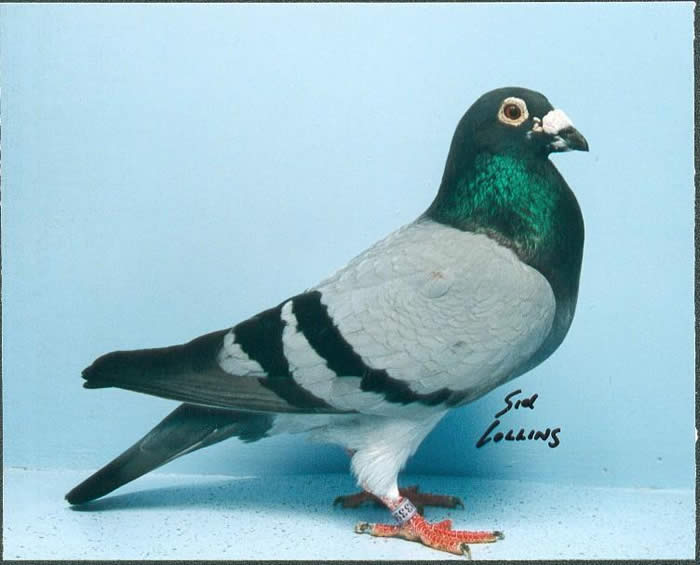
Drumiller Hill Lad - King's Cup winner
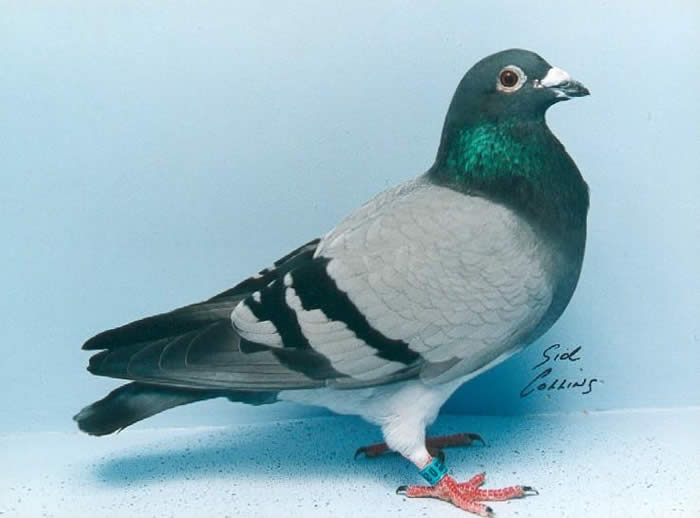
Son of Top of the Box - sire of loft
GB76E42253 - Dam of the loft
GB89D18209 - Hall of Fame winner
GB91D08525 - Hall of Fame winner
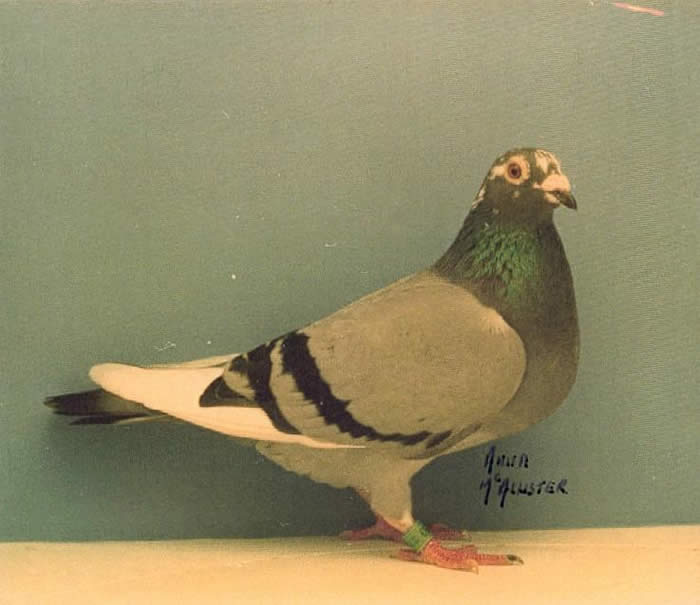
White Eyes - 1st Section 3rd Open Eastbourne
IN CONCLUSION
Throughout this series I have attempted to highlight the pigeons, management and performances of some of the finest long distance fanciers in the British Isles. Fanciers who have for many years concentrated all of their efforts on producing pigeons that can win consistently at the highest level of competition i.e. National and International level. Most of the fanciers featured, have, as a result of their quest for super performance, developed their own distinct families of pigeons – birds that can be relied upon to give their all when put to the test and rarely disappoint their breeders. Most, but not all of these fanciers take the “softly, softly” approach to young birds in their first year and indeed some of the most successful extreme distance fanciers rarely race their babies, but ALL insist that the babies must have a certain amount of education on the road in the year of their birth. Many systems are used by these fanciers in an attempt to get the very best out of their long distance candidates on the appointed day of judgement, but one common thread emerges in most of these lofts and that is that at some stage the birds are forced to undergo a period of separation from their mates and during this period of separation are either raced celibate, widowhood or more often on the round about system. This period of separation serves to produce an extra edge of keenness on the birds once re-mated and their form subsequently goes on to an extra, higher level.
Yet another startling fact regarding the fanciers that concentrate on extreme distance racing is the relatively small number of pigeons that they keep. This is no doubt due to the fact that very few pigeons succeed consistently at 600, 700 and 800 miles and following on from this thought is the fact that very few pigeons consistently produce pigeons that are capable of competing in these marathon events – hence the extreme distance fanciers house less pigeons and those pigeons that are housed are usually closely related. Or in other words like breeds like. Q.E.D.
I have thoroughly enjoyed writing this series and from the feed back that I have received from fanciers throughout the British Isles, many of you readers have enjoyed them as well. If I have been able to bring together some interesting points that will help some of you achieve a degree of the success already enjoyed by those fanciers who have been featured then my time and effort will not have been spent in vain. Good luck to you all for the future and remember as you read this, you, yourself may already have a “Lona”, “Padfield Invincible”, “Britannia”, “Plum” or “Cornelius” in your own loft. The only sure way to find out is to send to the long distance race points. Good luck to you all and enjoy your pigeons, because if you don’t enjoy them it can become an expensive form of misery.
The Art of Breeding, Conditioning & Racing Pigeons at Long Distances - Part 9
- Details
- Hits: 6020
Related Articles


Continue Reading
Continue Reading: more racing pigeon articles from the Elimar archive