PAGES FROM THE PAST - part 4
GEOFF HUNT & SON of Westmarsh, Kent
MULTIPLE WINNERS OF BICC RACES AT THE DISTANCE
by Gareth Watkins
Having kept pigeons since 1938, Geoff actually started to race in 1946 winning his first ever race and topping the amalgamation into the bargain. After completing his National Service he became more involved with the John Banks family of “funny coloured ‘uns”. These were very hard to lose and won many 1sts etc in the early 1950s plus 30th open Pau NFC & 1st Fed Bordeaux with a smokey chequer hen which qualified to compete in the International Barcelona race in 1956, but returned out of race time. In 1957 her half sister also flew Barcelona. These two hens were bred down from Les Gilbert’s "Champion Eddie" - 1st Bordeaux NFC 1946 crossed with a John Banks hen that John sent up to mate with a Norman Southwell cock. Geoff then purchased two dark chequer hens 97218 & 90234 from Frank Forest Hill.
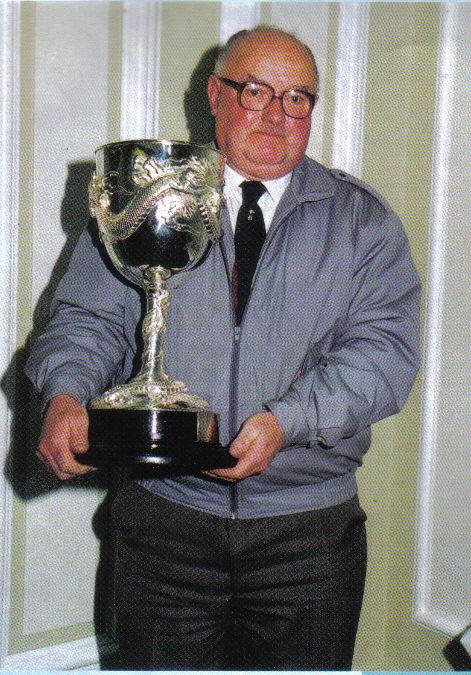
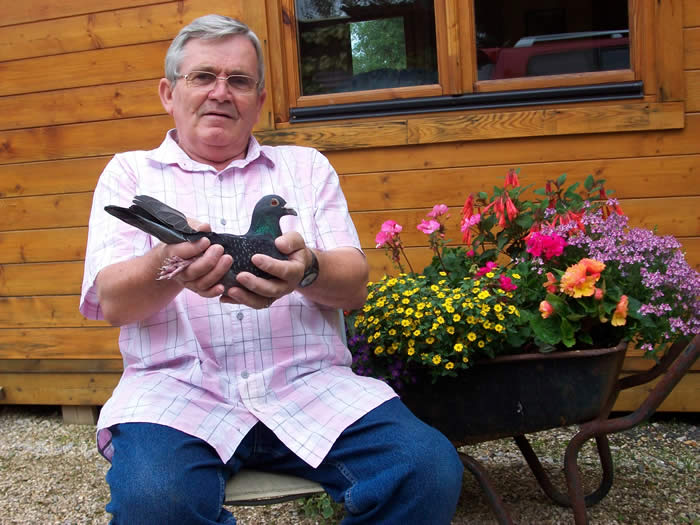
Geoff Hunt with one of his many trophies won in long distance races
In 1954 Geoff was gifted a mosaic cock 48AM3131 by John Banks which blended well with the team he already had. The mosaic cock 3131 was a grandson of John Banks’ ref A "Sally" - 3rd NFC Mirande x ref C "Sockeye"- 1st Yorks Fed 502 miles on the day. In the late 1960s a Delbar red cock “389” was added from Jack Roberts of Marple. in the 1970s Geoff was again gifted a bird by Bill Dray of Ramsgate which was bred down from his 1st Amsterdam cock (Delmotte x Jurion) crossed with Frank Cheetham of Pontefract bloodlines. The Cheetham pigeons were ultra successful at channel racing into Yorkshire at close on 700 miles. With the arrival of these birds things really progressed at a rapid rate.
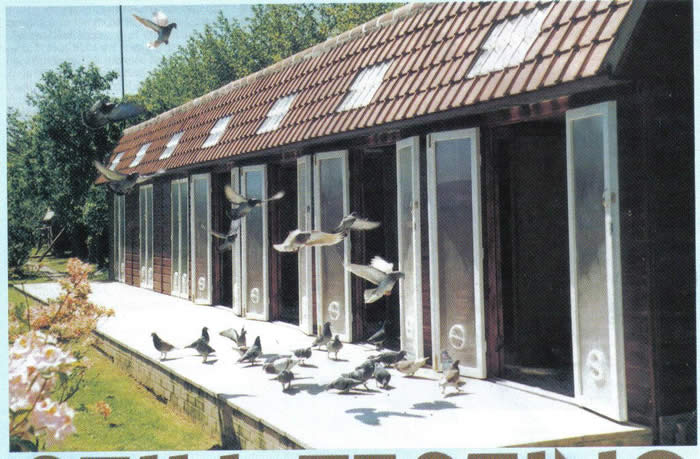
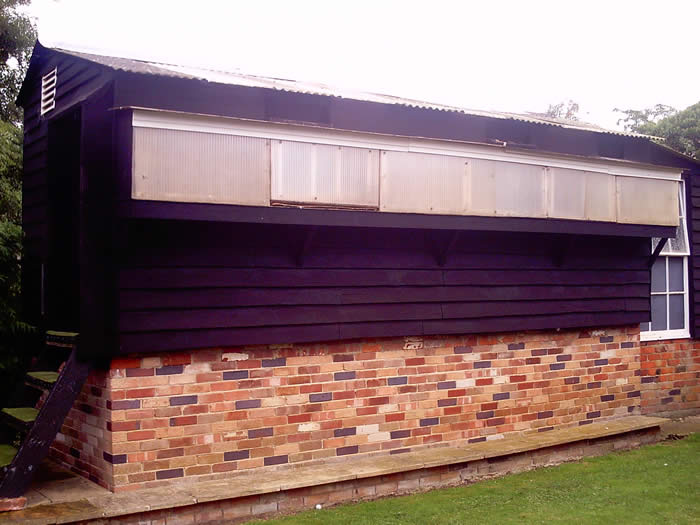
The latter day racing loft
In 1976 in the channel races, Geoff and son Ian were 1st club, 1st KSRA Rennes (1) and 1st club, 1st KSRA Rennes (2) with nest mate hens, 1st club, 1st KSRA Niort only 15 on the day and 5 of these to the Hunt loft. At Bergerac the Hunt team came well for 2nd & 3rd club both birds homing together, followed by 18th section 428th open Pau International.
A move was made to Westmarsh in December 1976 and Geoff and Ian decided it was time to improve their stock and with vastly more room to expand the lofts they purchased over a period of time birds from the following fanciers:- R. T. Dicken of Wells in Somerset whose initial pigeons had a strong Kentish influence via Sam Bailey of Glastonbury who had a number of birds containing John Banks' bloodlines. These contained the bloodlines of Flash and a red grizzle cock 9120 and his hen. Flash in turn was bred from a brother and sister mating Sally x 28 (ref lot 177 at the John Banks clearance sale 8/10/55]. These were the same bloodlines as 48 AM 3131 mentioned above, which was the gift from Johnny Banks to Geoff in the 1950s. Also at the same time R. T. Dickens purchased a direct cock - red chequer RP57RRC36 from Bill Dray’s Amsterdam cock.
Geoff and Ian’s intention was to purchase stock from another part of the country some of which originated in Kent and were of the same John Banks bloodlines. Their first purchase from Trueman Dickens was a dark chequer cock 76J89988 which was very inbred and was bred down from birds that Truman Dicken had obtained from Ted Vowles of Glastonbury. Next to travel east to Westmarsh were "Amigo" - 2nd Barcelona for R. T. Dicken and "Palamos Pixie" - 1st Palamos for their friend Trevor Perrett of Mere in Somerset. Pixie was then sent to their friend Trevor Dodd of Taunton for a nest to share when paired with his Palamos winner "Supreme". Once her breeding duties in Somerset were completed, Trevor returned Pixie along with one of her young birds when mated to Palamos Supreme, which turned out to be a blue chequer w/f cock 19404.
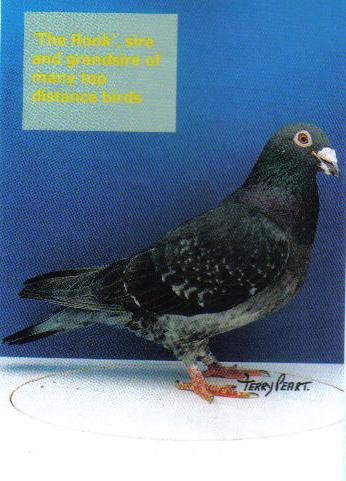
The Rook - top stock cock
A grandson of "Lancashire Lad" was purchased at London Auction and two daughters of Cyril Medway’s "Palamos Aaron" 49158-59. Next to be introduced was "The Lark" a dark chequer cock bred by Jim Biss plus two hens from Joe Bradford's "Jubilee Lady" lines (Cheetham x Joe Shore). After two years breeding at Westmarsh "Amigo" went back to Jim Biss and Geoff and Ian were loaned "Bartholomew" for a season’s breeding. Bartholomew was bred and raced by R. T. Dickens and purchased by Jim Biss.
All these pigeons from PROVEN long distance winning lofts were introduced and the offspring crossed and tested from all the International race points e.g. Pau 559mls, Barcelona 686mls, Palamos 654 mls, Lourdes 570 mls, Marseilles 565mls and Perpignan 600mls. As a result of this policy of only introducing birds from PROVEN long distance families and severely testing each generation at the distance in International races, by 1996 the Hunts had 45 birds fly Barcelona!
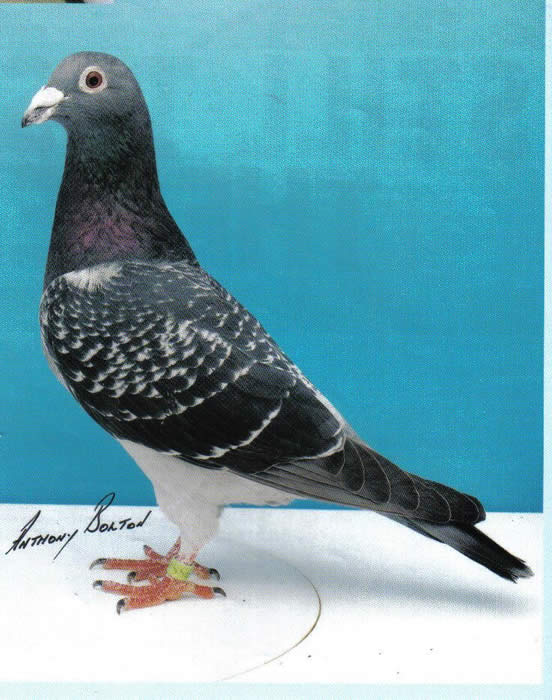
Never Bend - 1st Open BICC Barcelona 1992
After 20 years of this policy Geoff and Ian had formed two distinct lines of breeding with almost every bird related. The partners liked to inbreed to consolidate these lines within the “family”. Further introductions were also made from their good friend and master Palamos flier Dave Goddard, who loaned Geoff and Ian his good hen "Almost There" - 2nd open Palamos. She bred them "High Capacity" in 1992 who was to prove a wonderful addition to the Westmarsh stock team. Later introductions came via Geoff and Ian’s good friend, the great Belgian fancier Roger Vereeke and these also left their mark at Westmarsh producing top class long distance racers for the Hunts and others.
On my visit to Westmarsh in the late 1990s I was amazed at the number of pigeons housed that had successfully flown in International races from 500 – 700 miles. The resultant type produced by years of breeding and testing at the distance was a medium sized apple bodied pigeon with strong bone structure and a little depth to the front of the keel. The last three primary flights on most of the birds handled were of equal length and well ventilated with narrow leading edges to the flights. Many were dark chequers with a few blues, reds and mealies also present. Most of the birds handled during my visit had red/orange irises with very few gravel eyed birds in evidence. The younger birds were very henny looking but as they developed with age they took on the appearance of real aristocrats of the sky.

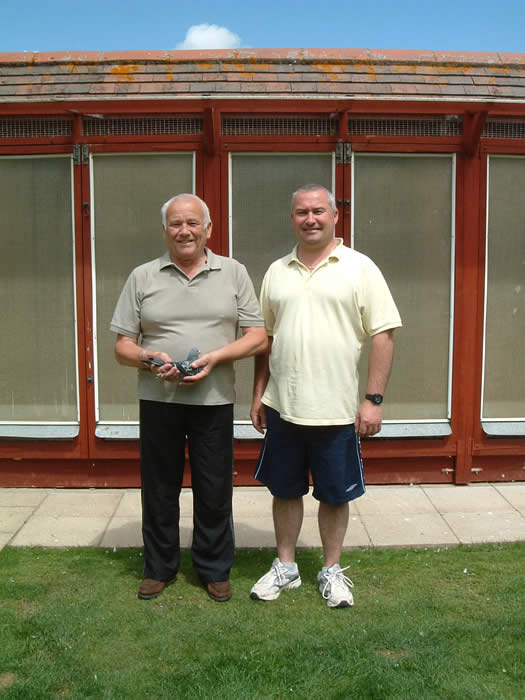
Geoff Hunt & Son's 1st Open BICC Marseille
MANAGEMENT
The race team was usually mated in March and was not allowed to rear any youngsters, as all youngsters were bred from the stock team. The youngsters were housed in a large loft which had a large aviary attached and the babies were confined to this loft until they were 3 – 4 months old. On experiencing freedom for the first time, they invariably used to disperse in all directions, with some taking days or even weeks to return but return most of them did. Once settled they were then trained privately with a few single up tosses from 50 – 100 miles and Geoff and Ian weren’t too bothered if they had a race or not in their first year. They were then left to enjoy a good moult being hopper fed beans and maize coated once a week with cod liver oil.
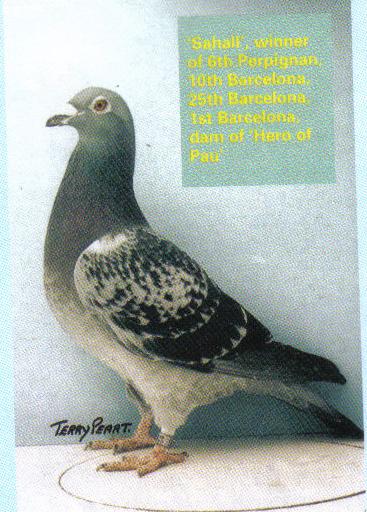
Sahall - 6th Perpignan and 1st, 10th & 29th Barcelona
Once sitting in late March/ early April, the yearlings had a number of short tosses from 30 miles before racing began and were expected to cross the channel a couple of times before being set aside for the two year old stage. Two year olds and older were expected to go through to 500 – 700 miles and were split into separate teams for certain target races i.e. Pau, Dax, Barcelona, Perpignan etc. Their preparation entailed a number of 30-50 miles tosses then into a middle distance channel race where Geoff liked them to have a good work out of approximately 10 hours on the wing. After this “pipe opener” the birds for specific races were set up to be sitting a six day old squab at the time of basketting for their target race, this baby being their first young bird of the season, thus enhancing their keenness.
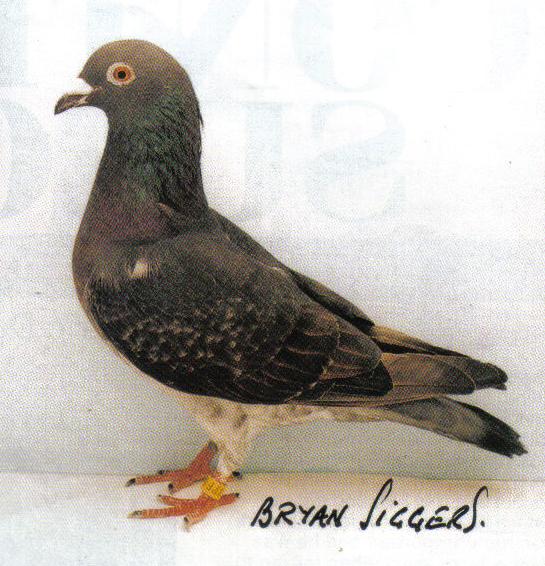
Super Nova - 1st Perpignan
FEEDING
The race team had access to hoppers of locally grown farm beans at all times with the addition of more maize fed by hand and a supplement of pinhead oatmeal soaked in cod liver oil in the final days prior to basketting for a marathon race.
LOFTS
At the time of my visit a brand new loft was under construction and this was destined to house racers for the first time in 1998. However, the main racing loft to which all their success had been achieved was a 32 ft x 8 ft four-sectioned structure, the front of which was covered with flat opaque fibreglass sheets. Air entered the loft via air vents along the back wall at floor and ceiling level and also through vents set in the top of the loft front.
The stock birds and youngsters were housed in a separate loft running alongside the old bird racing loft and this loft had a large aviary running along the whole front allowing the inmates a panoramic view of the surrounding area. Running water was plumbed into each loft so the birds were able to shower in almost natural conditions.
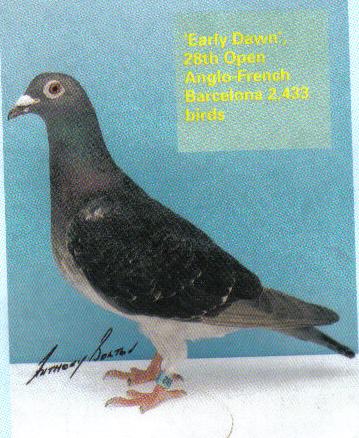
Early Dawn - 28th Open Anglo French Barcelona 2,433 birds
RESULTS
I am not going to bore readers with a long list of performances but feel I must highlight some of the terrific long distance performances achieved by this tremendous family of pigeons during the 1980s and 90s whilst racing with the BICC.
Pau 559 miles: 4 x 1st; 3x2nd; 1x3rd etc.
Barcelona 684 miles: 2 x 1st, 1 x 2nd; 2 x 3rd etc.
Dax 534 miles: 1 x 1st; 2 x 2nd; 1 x 3rd etc.
Perpignan 599 miles: 1st & 2nd etc.
Marseille 585 miles: 1st & 2nd.
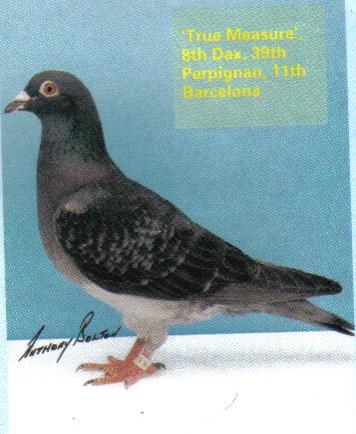
True Measure - 8th Dax, 39th Perpignan, 11th Barcelona
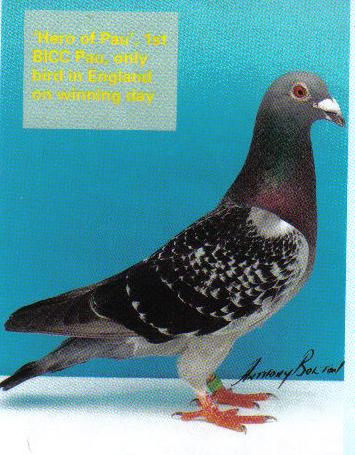
Hero of Pau - 1st Open BICC Pau, only bird on the day in the UK
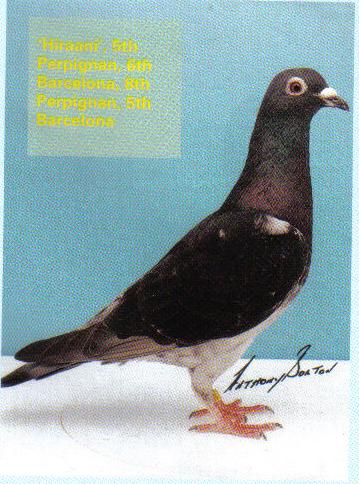
Hiraani
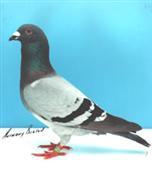
Blue Boy - 3rd & 7th Barcelona
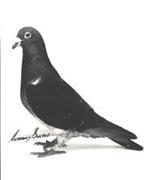
Dusky Diamond - 1st, 9th & 16th Pau; flown Pau x 5 and Perpignan x 2
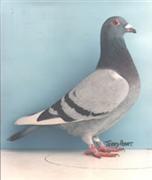
Hoist the Flag - 1st & 10th Pau
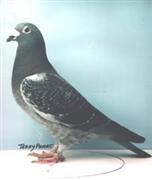
Keefah - 5th Barcelona
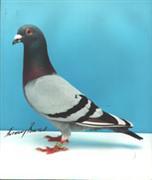
Nestbro - 2nd & 9th Barcelona
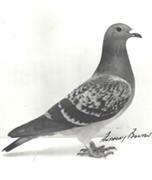
Sipsi Fach - 3rd Perpignan, 7th & 17th Dax, 2nd & 5th Pau
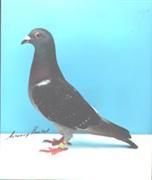
Westmarsh Elder - flown Barcelona 694 miles 4 times
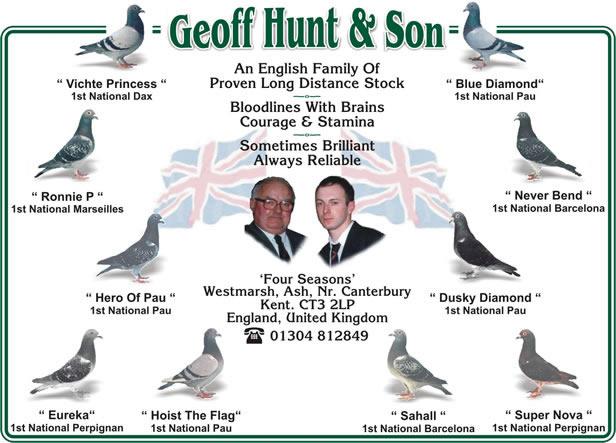
The pigeon portraits that accompany this article amply illustrate the type of long distance pathfinders developed by Geoff and Ian Hunt over three decades of selective breeding and testing their family at the distance. In addition to these top three finishes there were literally scores of other top twenty prizes won in International long distance races. Not only did these pigeons win into Kent for the Hunts and others but I know for a fact that they also won throughout the British Isles for other fanciers under varying systems, none more so than the Pontypridd partnership of Lloyd, Son & Griffiths who enjoyed terrific success through to Pau at close on 600 miles with birds obtained from Geoff and Ian Hunt.
COPYRIGHT Gareth Watkins 2013