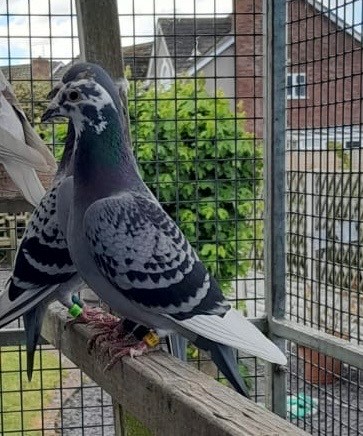
AN APPRECIATION OF
A. H. BENNETT, MASTER STOCKMAN
by Gareth Watkins
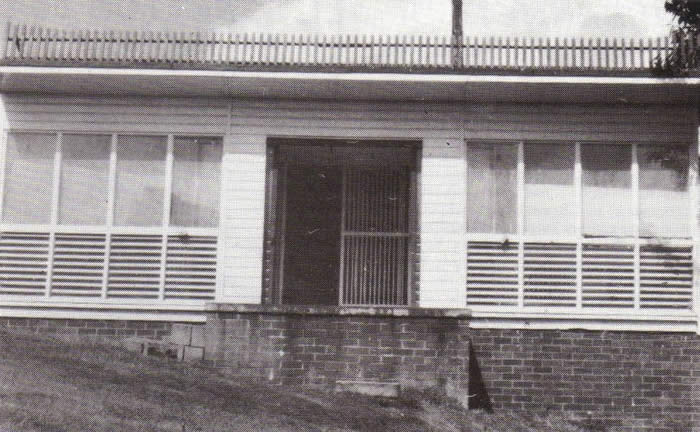
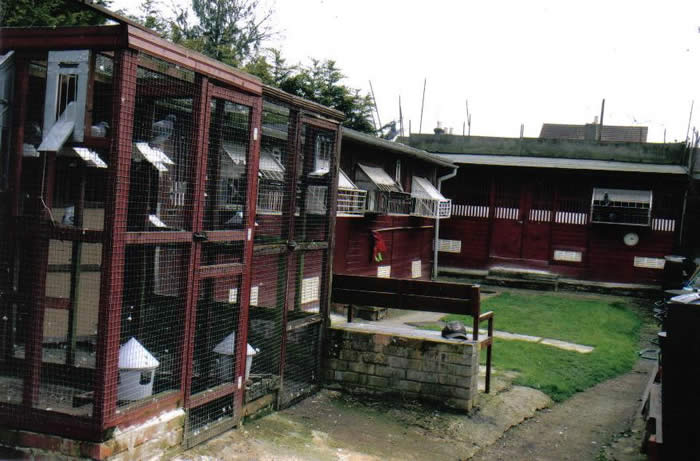
Albert's racing loft
On reading a feature on the Elimar website a couple of months back I was pleased to see that one of England's greatest exponents of long distance pigeon racing had achieved great success at his newly chosen pastime of breeding top class race horses.
As some of the "old guard" will no doubt be aware, Albert Bennett, formerly of Church Stretton, and more recently of Much Wenlock in Shropshire, had an absolutely outstanding record of success with the NFC in the 1960s, 70s and 80s in races out to Pau at 650 miles, winning the NFC Nantes race of 1969 with Champion Midas and topping it all off with 1st Open Pau and King's Cup in 1982 with Champion Hermes.
During the 1980s I was race advisor for the then massive Welsh North Road Fed which could boast 1,500 competing lofts and had an annual "send" of 350,000 birds per season in a 25 race programme. As part of my duties as race advisor I collected line of flight weather information from various sources along the race route and one of my most reliable contacts was Albert Bennett, who incidentally, carried out the same duties for the Hereford & South Shropshire Fed.
Although the position of race advisor could be extremely nerve wracking to say the least, I always looked forward to my early morning chats to "Mr Bennett" as I always referred to the great man. He was calmness personified and was a mine of sound, solid, "no frills" good advice and was a great help to me, a young but enthusiastic race advisor.
I can remember discussing many aspects of the racing pigeon scene with A.H. and on one occasion asked him what was the best pigeon he had ever raced, and with very little hesitation he rattled off a list of wins such as 20 x 1sts plus 2 RPRA Awards of one of his widowhood cocks.
I assumed this was the great Nantes NFC winning blue cock "Midas" and to my surprise he replied that it was in fact another blue cock named "Andre". On enquiring if I could purchase one from Andre, A. H. replied "Yes but not this year as I'm fully booked, but you might be able to have a late bred next year". The young bird was duly ordered and I thought no more of it. The following year, which would have been 1985, during one of our early morning race day chats A. H. said to me that the young bird that I'd ordered the previous summer was ready. With some trepidation I asked the price and was pleasantly surprised to learn that the cost of a young bird bred from the best pigeon, from what was in my opinion, the best fancier in the UK at that time was so reasonably priced.
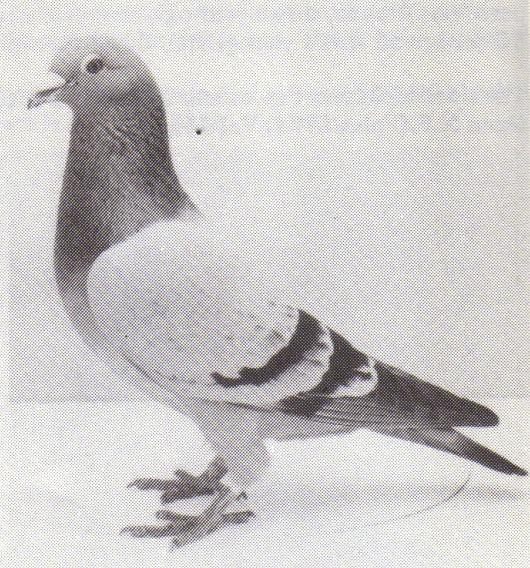
Andre - 20 x 1st & 2 RPRA Awards
To cut a long story short the young blue cock duly arrived in South Wales and in a very short time was responsible for breeding club, fed and amalgamation winners with just about every hen to which he was paired. In fact at one stage every single pigeon from him that I had in the race team had won a federation prize and this in what was then the biggest Fed in the UK. One of his daughters won 29th National as a young bird and was gifted to my friend Gerald Honeyfield for whom she bred a 1st Welsh Amal winner from Messac with I believe 8,000 birds competing.
I digress, so back now to the A. H. Bennett story. As some will be aware, A. H. had raced a super team of top class all weather, long distance pigeons for many years. These were based on locally sourced pigeons with the addition of some from Heber Fearnall of Chester and Doran Brothers of Chester. These were lovely medium sized chequers and dark chequers on the whole. In the early 70s A. H. set out to find a suitable cross into the old family and travelled extensively on the continent to seek out a suitable addition to the loft. After visiting numerous top class fanciers he settled on the Van Bruaenes and during one of our early morning chats I asked him why the Van Bruaenes? To which he replied: "I handled many top class pigeons in a number of top lofts but THE MAN I thought I could do business with was the great Andre Van Bruaene because he impressed me as a man not just as a pigeon fancier". Enough said.
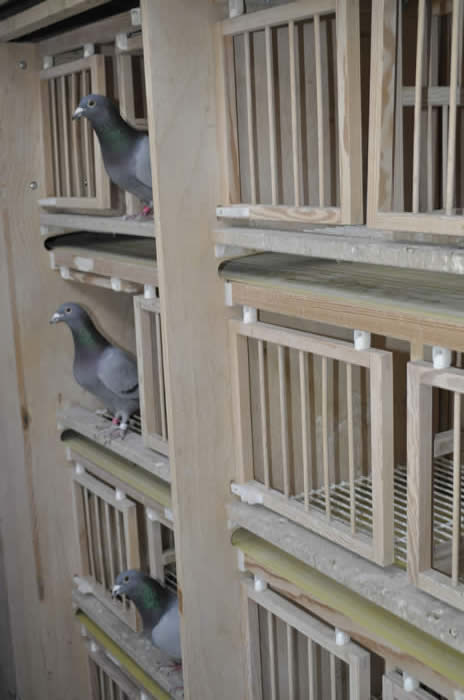
Stock loft
On another occasion I asked him if he raced young birds and his reply was a simple "no". When questioned further on his reason for not racing youngsters his reply was, once again, simple and to the point and full of basic common sense: "If someone could convince me that I would only lose the bad pigeons then I would race young birds, but I know for a fact that not all those lost as young birds are bad pigeons". Case closed.
In the early years A. H. did however, race youngsters and their training started at 20 miles south followed by a second toss at 20 miles in the opposite direction north. After a dozen or so tosses the youngsters were then subjected to a light race programme as A. H. did not complete a young bird programme after the 1962 season.
In later years, although the youngsters at Church Stretton were not raced, they were extensively privately trained in the year of their birth out to 80-100 miles. As yearlings they were taken through to 300-350 miles and as two year olds were expected to perform at 500+ miles with some going to Pau at 656 miles. Old birds received the absolute minimum of training during the later years as A. H. preferred to get them fit with twice daily home exercise.
I eventually visited the Bennett home at Hurst Wood, Church Stretton around Christmas time in the company of Mel Culverhouse, Mel's brother Cliff and John Morgan and A. H. immediately welcomed us into his home and insisted on making us tea and offering us cake and biscuits after our drive up from South Wales. However, we were all eager to see and handle the terrific team of racers and so after a short break we were in amongst the birds and allowed to handle all and sundry with no exceptions.
These included "Hermes" the King's Cup winner from Pau, "Zeus" a magnificent pencil blue cock and sire of Hermes and the fantastic "Fabiola" the mother of the loft and a hen that was reared from an egg laid in September. I lost count of the number of National prize winning pigeons handled that day and they were all superb specimens. The Van Bruaenes handled above medium sized - in fact some were on the large side of massive, but the old family were uniformly outstanding in type, being just on medium sized with a little depth to the front of the keel and excellent eyesign.
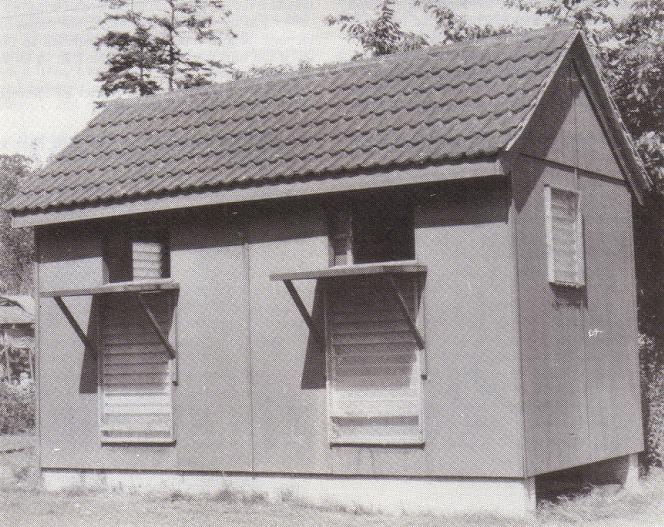
The loft which housed the youngsters and yearlings
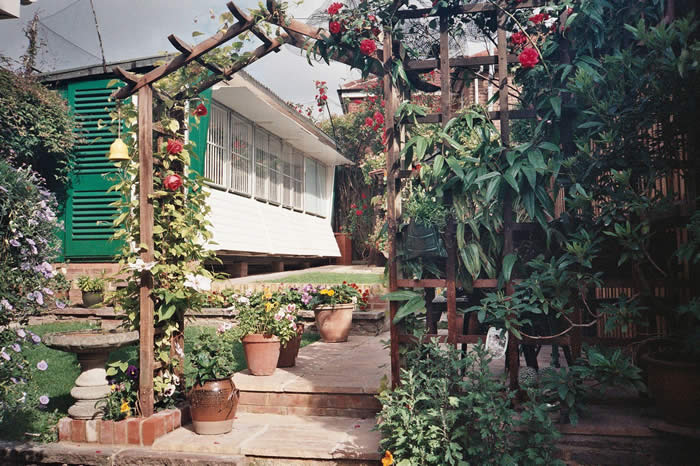
The lofts were arranged around the large kitchen garden and there were separate lofts for the stock birds, young birds, yearlings and old bird racers. The nest boxes in the old bird racing loft were very large affairs that in all probability could have housed an Alsatian dog. They were certainly made to last as they were constructed of 2" x 2" timber with nest fronts made from 2" x 1" roofing battens.
After viewing one of, if not the best team of long distance racers in the UK at that time, we were ready to make our way home to South Wales. A. H. would hear none of it and insisted that we come in and have a buffet tea with him as chef, as Mrs Bennett, a hospital sister, was at work.
I've rambled on down memory lane a bit here but I thought that readers might like to share some of my fond memories of not just a top class pigeon fancier but also one of the finest men that I have met within or out of the pigeon racing fraternity. A man who, if I had to go to war, I'd be more than happy to share a trench with.
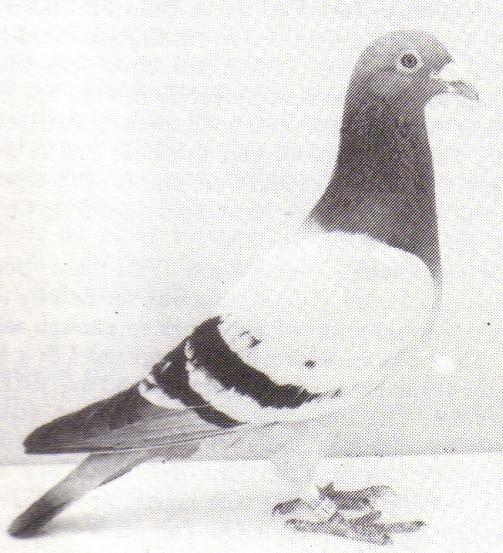
Hermes - 1st Open NFC Pau 1982
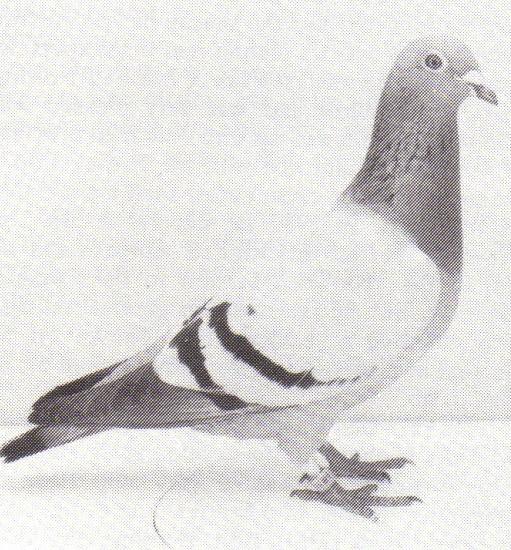
The dam of Hermes
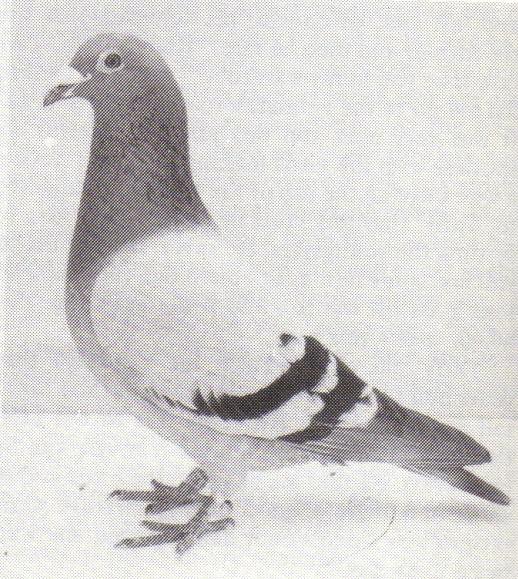
2nd section 6th open NFC Pau
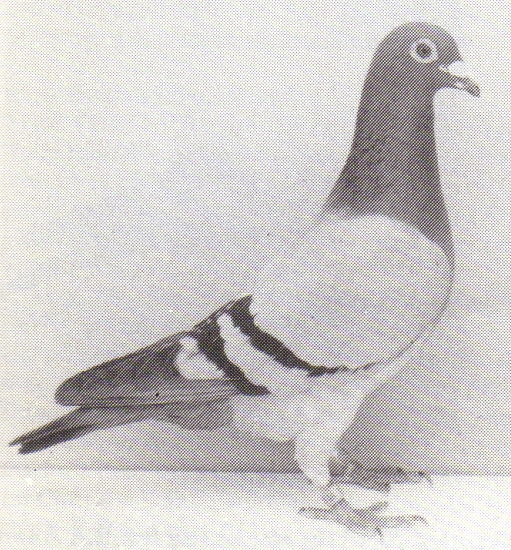
8th section 35th open NFC Pau in 1982
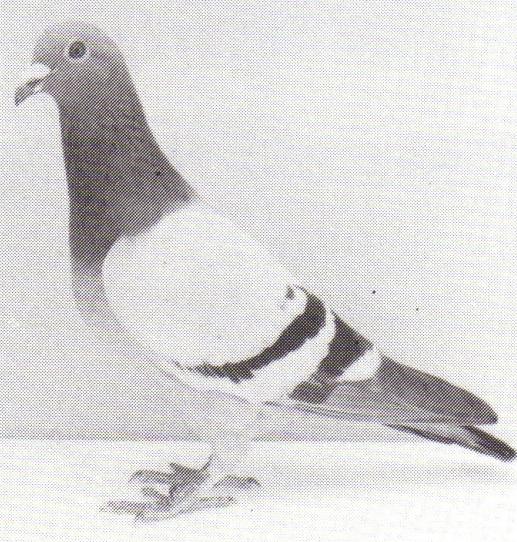
11th section 64th open NFC Pau in 1982
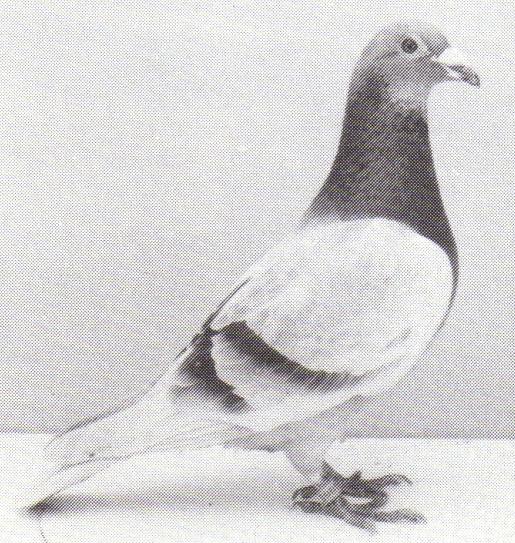
15th section 125th open NFC Pau in 1982
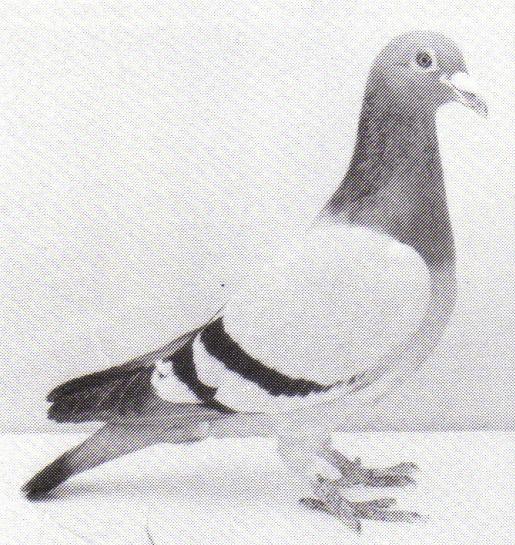
Albert's 6th bird from Pau in 1982 winning 25th section 285th Open
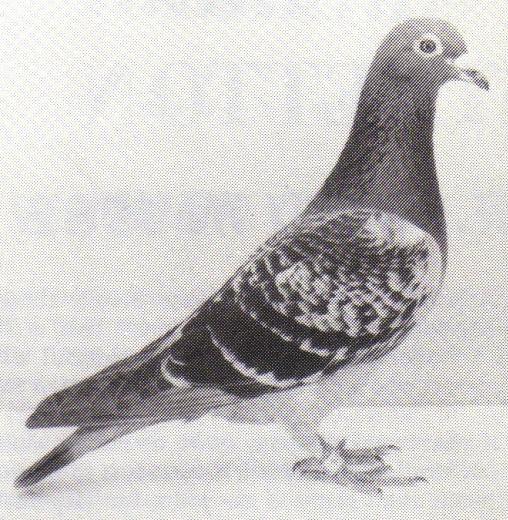
The 7th bird home from Pau in 1982
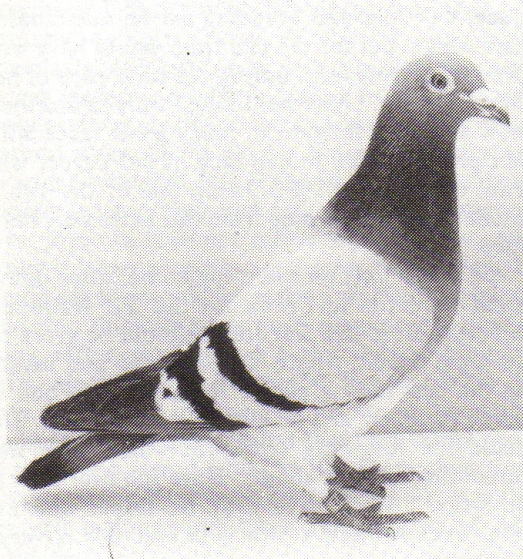
Albert's 8th pigeon from Pau in 1982
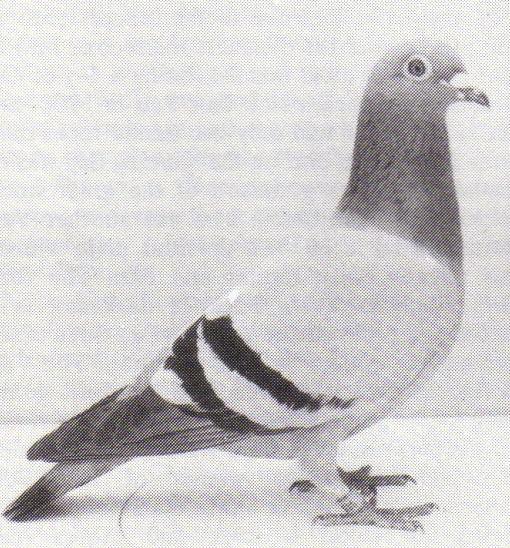
Albert's 9th pigeon from Pau in 1982
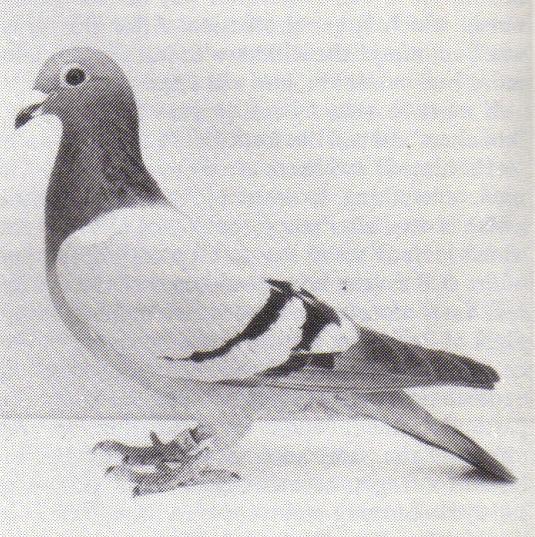
1st club 2nd fed Saintes
---
Elimar - November 2014