RHONDDA VALLEY FED
Reports by Martin Dunn
DAVE GORE OF KENFIG HILL
This loft report is on one of the premier fanciers not just in the Rhondda Valley federation but in the whole of Wales, Due to Dave’s loft position, flying around 30 miles further than the first drop in the federation and being in the West Section of Combine and Welsh South East National, He’s certainly not in the best of positions to justify the brilliant results he puts up, year in year out.
Results such as the top old bird flyer in the West section of the Rhondda Valley federation for the past 3 seasons, is just a starter, you can add a Double hat trick of section wins in the Welsh South East National. For the last 3 seasons Dave’s topped the section from Maidstone young birds, and in 2008 results such as 1st section13th Open Bonn National, 475 miles,1st section Maidstone national young birds, 185 miles and again one week later 1st section Ramsgate National, 220 miles, can be classed as the norm, rather than the exception.
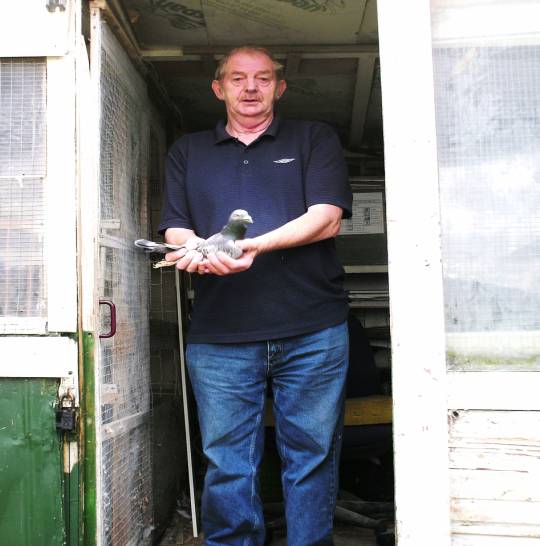
I honestly feel if he was flying in the Eastern Valleys of Wales, he would certainly have added to his 1st open Welsh South East National from Ramsgate in 2002. Dave’s results are equally as good from the shortest to the longest race points, examples of which could be seen at the loft with one hen shown winning 3 x 1st club from Newbury, 103 miles, plus a 1st Rhondda Valley federation to go with it.
Dave holding his hen 1st fed Newbury – 3 x 1st club Newbury
You can go back to 2001 flying from Pau for a good example of his ability to get the best out of his distance team, Dave sent 7 pigeons, with his first arrival taking 1st Club, 1st section, 3rd open Welsh South Road National, with further arrivals taking 20th, 44th, 54th and 55th open, all clocked on the winning day, this when the Welsh South Road National was at it’s peak, proves how good an all round fancier he really his.
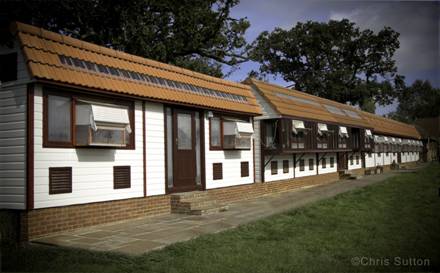
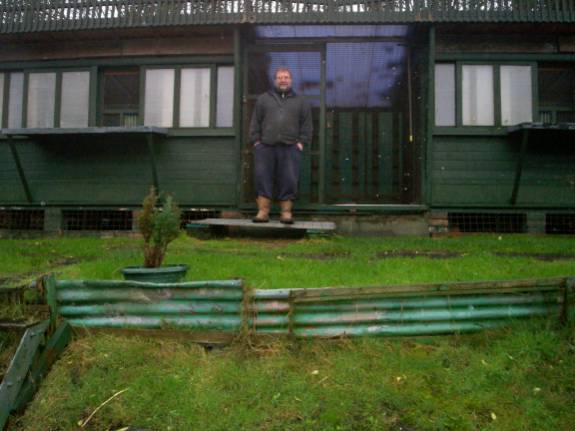
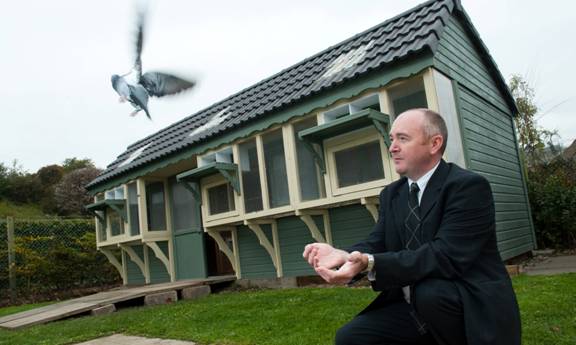
The lofts are situated on an allotments at the rear of Dave’s home, this brings it’s own dangers, with Dave’s stock loft being burned down in 2007, along with a New starter’s loft directly behind Dave’s, showing how much these sad events are on the increase in South Wales. The main racing loft is 20ft x 8ft,split into 2 sections, one for the naturals and one for the 16 widowhood cocks, with a corridor running the full length of the loft, Dave has vents in the roof to aid the circulation of the air through the loft. The darkness loft has been added on to the main loft, approximately 8ft x 8ft, this loft has a Louvered front, something that is felt has essential to help the young birds when they are put onto darkness proper.
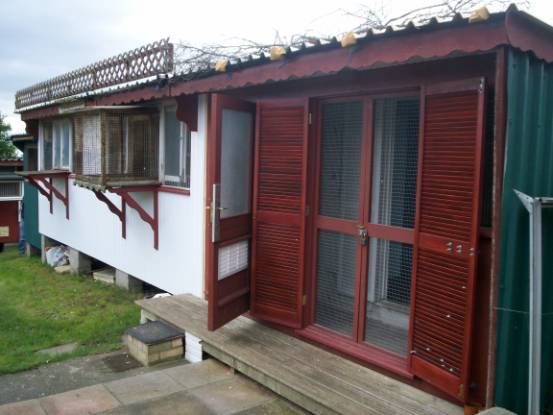
Dave’s old bird loft to the left – young bird to the right
A further loft just to the side of the main loft contains the natural young birds, who have access to the trap running right across the front, all day for these to relax in, The stock birds can found at the rear of this loft, and these have access to an aviary for these take in as much fresh air as possible.
How does he go about getting these results, from 60 to 600 miles, then this is done with 16 widowhood cocks as mentioned earlier, added to this he has a 40 strong team of naturals. The young birds number 30 in the darkness lofts, these are relied upon to represent the loft in the young bird racing proper, with a team of around 40 young birds on the natural, these are used as back up if the darkness team have a bumping, but in general are well trained and given around 2 races for their education for the following seasons.
The widowhood cocks are paired after the Blackpool show and rear their young and are parted as per normal methods. When the cocks are exercising well around the loft the training is started from around 5 miles and will increase gradually out to 50 miles from the Severn Bridge, generally on the local trainer.
After racing commences the cocks are given a bath on the Sunday morning and left to relax and come and go as they please. From Monday onwards, they are let out before Dave goes to work in the morning and when he returns home in the evening for one hour each exercise period. They are fed a spoon full morning and evening in their boxes, a lighter mix earlier in the week with the food progressing onto the standard widowhood mix as the week goes on.
The naturals are paired in March, specifically aimed at the Channel races, they are also well trained before racing starts, and are then trained twice weekly from 50 miles with the local trainer during the season. These are fed on the floor in trays, with Dave blending 6 different mixes together to give them a varied diet, the food’s not measured, but given ad lib until he feels that they have had enough to eat. Again these are exercised morning and evening during the week.
As stated earlier the young birds are split in two teams, Darkness and Natural, Darkness as been flow since 2002 and this is where Dave was quick to thank good friend Jeff Thomas, who looks after the Darkness team while Dave is at work through the day. Unfourtunatley, due to ill health Jeff hasn’t been able to help in 2008 and has been greatly missed around the loft by David.
These are fed on 100% maple peas for the first month after weaning, they go onto Bamfords Bread and Wean until 3 weeks before the first race when the corn is changed to GEM young bird with no maize. When the longer young bird races kicks in Dave then changes the team to Versele Laga Widowhood mix.
The young birds a given the same additives in the water as the old birds, base of which are the Aviform products, with Gem-thepax and Orego Stim also used during the week. The birds are treated for the usual ailments before racing, Cocci and Canker etc, but during racing Dave will treat with a 4 in 1 product once a month to keep them clean.
After the race team I had the pleasure of handling the stock birds, the 15 pairs of stock are paired after the Blackpool show, these are mainly Janssen based and Dave prefers to buy in direct children out of the best winners or breeders. The cock that won the Ramsgate national in 2002 is an absolute beauty and is breeding the goods, with a number of children in the race team that had won on the road. Dave also likes to bring in a kit of young birds from different sources each season to try against his own pigeons, he has a lot of success trying this and if he likes what he sees he doesn’t hesitate in going back for a pair to try in his stock team. The quality in the stock shed is really impressive and you can see this quality filtering through to the race team.
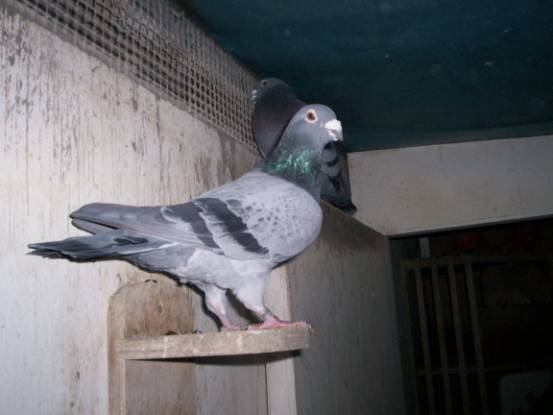
1st National Ramsgate 2002 and a prolific breeder at stock
I asked David what he felt was his best performance since he started with the birds in 1974, although he’s had a number of highlights, including 1st Welsh Combine from Carlisle in 1983, 9600 pigeons and 1st Welsh South East National in 2002, the one performance that stands out is the 1st section, 3RD Open Pau National, with 6 high on the result from 7 sent as the most memorable. Listed below is a summary of the last 2 years results, in 2007 he had 12 x 1st club, top prize winner in the West Section of the Rhondda valley fed and 1st section from Maidstone young bird national.
In 2008 Dave was again top Prize winner in the West section of the fed, 3rd year running, added to this he was, 1st section from Bonn, Maidstone and Ramsgate in the Welsh South East National, the week before the Maidstone young bird National he was 1st Rhondda Valley federation from Epsom, 3300 pigeons, with another 5 on the result for 5,6,7,8 and 9th fed, showing how well the pigeons come as a team.
His old bird results were equally as good, results such as 1st club, 2nd fed Newbury, 4th, 5th and 8th fed Newbury, with almost 3000 pigeons being sent are just an example.
To sum up he has won 7 x 1st club in 2008, another bonus was from Maidstone young birds, where in three different breeder buyers he was 1st, 1st + 2nd and 1st, 3rd and 6th to help fill the corn bins for the winter.
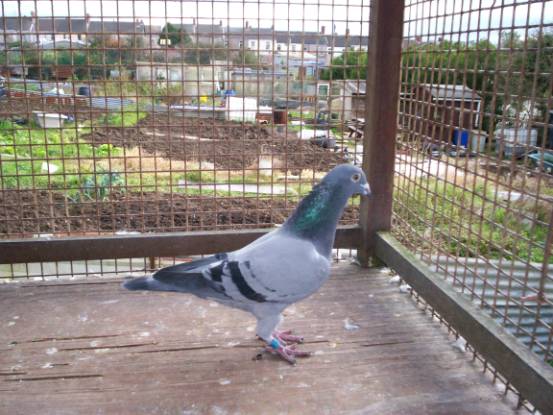
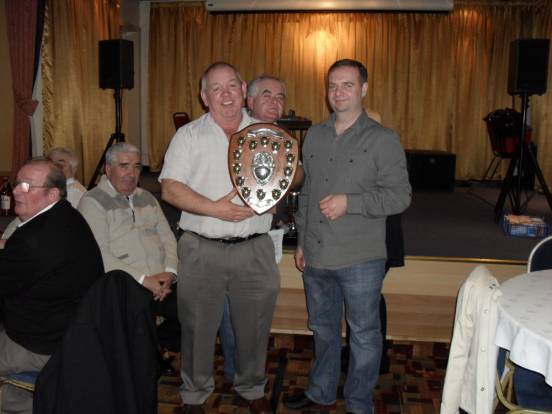
1st club – 1st West Section Welsh South East National 2008 from Bonn 480 miles
Hopefully you’ve enjoyed this report on one of the sports nice guys, who deserves the success he has with all the hard work and effort that he puts into the pigeons. I am sure that another National win isn’t to far away judging by the quality of the pigeons housed at the lofts.