GRAHAM THOMAS AND SON ADAM
OF BEDDAU, SOUTH WALES
4 x 1st WELSH SOUTH EAST NATIONAL
by Ian Evans
Graham has been involved with pigeons since the age of ten and first became interested in the sport through neighbour Jack Lamerton. Graham helped Jack with the day-to-day loft management with long distance being the aim and success was achieved winning races from Thurso 500 miles and Lerwick 602 miles etc. Due to Jack’s ill health Graham decided to fly on his own in 1989 and race from the current loft location overlooking Llantrisant common. Llantrisant is a town in the county of Rhondda Cynon Taf in Wales, within the historic county boundaries of Galmorgan. In 1996 the partnership G. Thomas & Son was formed following Adam’s continued interest in the pigeons. Adam, now 25, was just 8 years of age at the time.
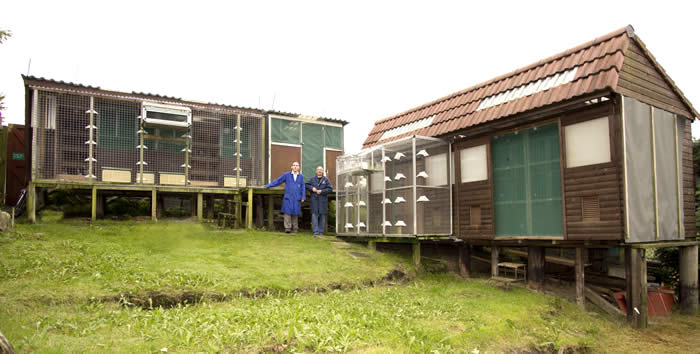
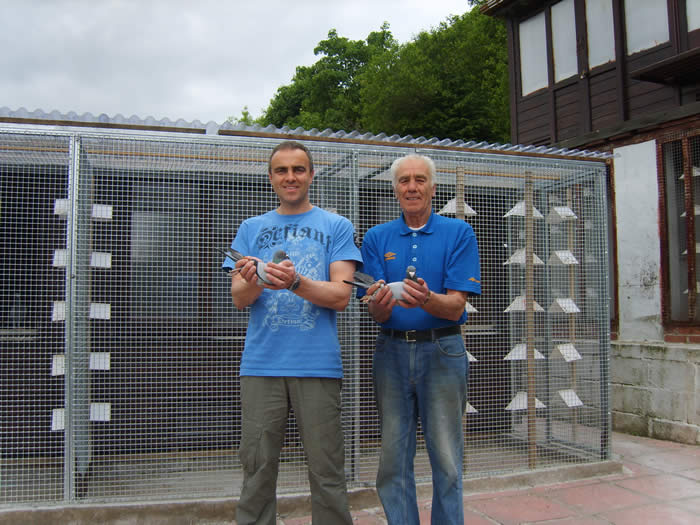
Graham and Adam at their lofts
I have closely followed the success of this partnership since first meeting Adam in March 2009 while we were both studying the Financial Reporting module of the Chartered Institute of Public Finance and Accountancy in Cardiff. By chance we were both sat next to each other during the lessons and during one conversation we discovered our common interest, pigeon racing.
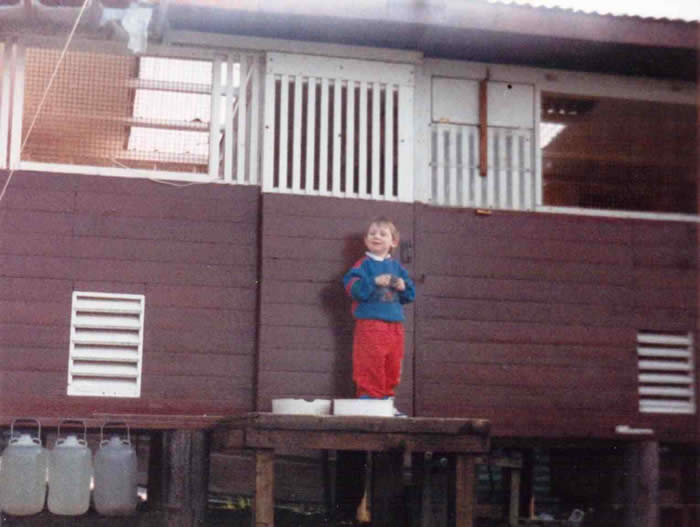
Adam showing early signs of interest
RESULTS
The aim at the start of every season is to fly well in the National races with early club races used as training to get the birds fit for the Nationals. Here are some of the best National/Combine results:
1st National Ramsgate, 1st Welsh Combine Ramsgate 10,401p 209 miles 2002
1st National Liege, 1st Welsh Combine Liege 5,121p 395 miles 2004
1st National Maidstone Ybs, 1st Welsh Combine Maidstone Ybs 5,961p 171 miles 2010
1st National Brussels, 1st Welsh Combine Brussels 1,935p 346 miles 2012
2nd National Bonn, 2nd Welsh Combine Bonn 2,500p 465 miles 2008
5th National Lillers, 5th Welsh Combine Lillers 8,900p 2003
5th National Maidstone Ybs, 8th Welsh Combine Maidstone Ybs 3967p 171 miles 2012
5th National Giessen, 6th Welsh Combine Giessen 1,290p 531 miles 2005
6th Welsh Combine Lillers Ybs 975p 263 miles 2011
8th National Aachen, 8th Welsh Combine Aachen 417 miles 2012
10th National Bonn, 14th Welsh Combine Bonn 2930p 465 miles 2007
11th National Huy, 14th Welsh Combine Huy 5396p 387 miles 2007
12th National Brussels, 16th Welsh Combine Brussels 5756p 346 miles 2005
12th National Bonn, 17th Welsh Combine Bonn 2500p 465 miles 2008
13th National Maidstone Ybs, 14th Welsh Combine Maidstone Ybs 5567p 171 miles 2011
13th National Lillers, 17th Welsh Combine Lillers 4609p 263 miles 2004
14th National Bonn, 16th Welsh Combine Bonn 2768p 465 miles 2003
17th National Maidstone Ybs, 21st Welsh Combine Maidstone Ybs 5567p 171 miles 2011
18th National Maidstone Ybs, 22nd Welsh Combine Maidstone Ybs 5567p 171 miles 2011 etc.
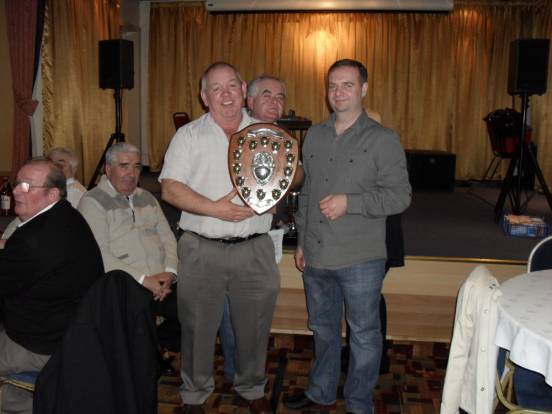
The partnership were South West Glamorgan Federation Young Bird Champions 2011 and South West Glamorgan Federation Channel Average winners 2012. They also had the best yearling in the Federation in 2011, and have a very strong candidate for best yearling in the Federation 2012. To date they have won more Welsh South East Nationals than any other fancier flying in the Centre Section.
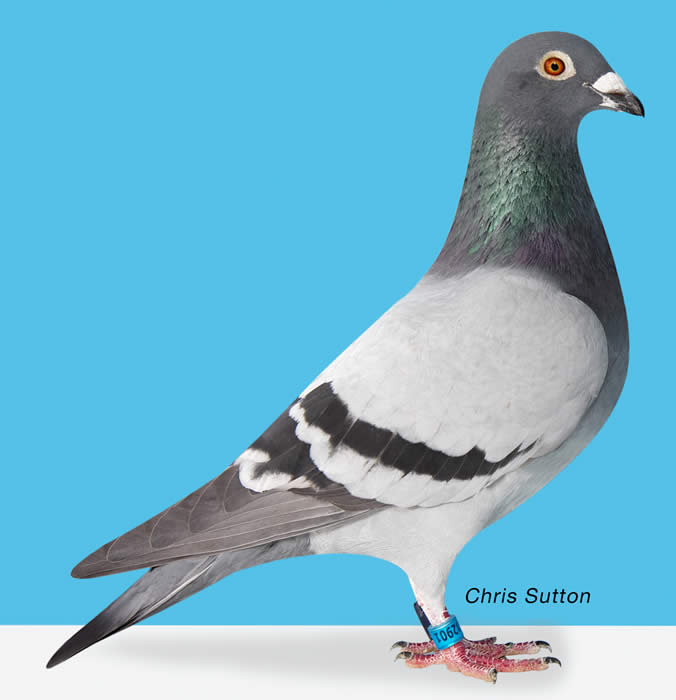
Flyingbolt - 1st National Brussels, 1st Welsh Combine Brussels 1,935p 346 miles 2012.
MANAGEMENT
Since the 2008 season the set up has consisted of on old bird loft 16ft x 6ft, a young bird loft 20ft x 10ft and two stock sheds, both 8ft x 6ft, all of which have an aviary, which they believe is essential for maintaining good health among the birds. The racing lofts face south-east and this maximises the amount of sun entering the lofts. Since the 2009 season deep litter has been used in all the lofts, mainly due to time constraints as a result of work commitments but also to try and increase the natural resistance of the birds.
Eighteen pairs of pigeons are kept for stock, with each bird having two years to prove themselves. Approx 70 youngsters are reared each year including a few from the best racers. The stock birds are allowed to mate freely although care is taken to avoid brother and sister pairings etc. The number of old bird racers depends on performances in the previous season and not filling the number of boxes or perches available - in other words if they feel the performance of the pigeon is not up to standard then there is no room for it. All birds are hopper fed in troughs on the loft floor with the feeding system during racing with both the old and young birds developed with the help of a very good friend on the continent, containing up to 4 different mixes at any given time, all from Versele-laga. Extra seed, maize and peanuts are provided as the distance progresses.
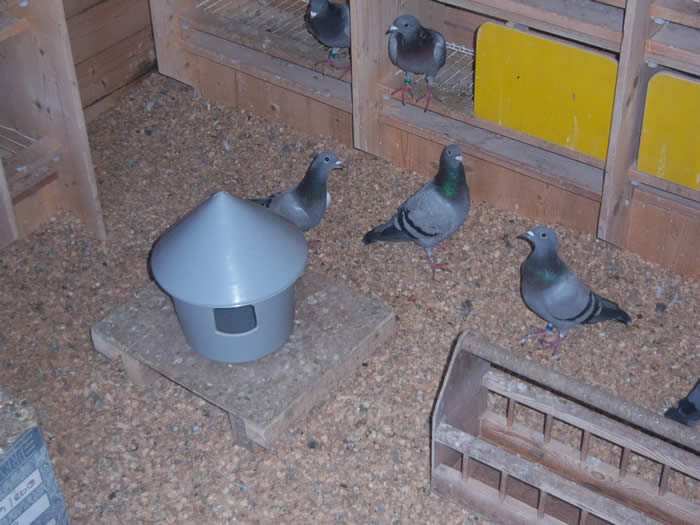
The deep litter used in all lofts.
As far as medication goes, the lads try and keep things as natural as possible with regular use of cider vinegar, garlic, brewer’s yeast and Sedechol, especially during the moult. Obviously the compulsory inoculations for paramyxo take place but never blind treatment for other diseases. The droppings are sent to a vet before the start of breeding and racing, and treatment given if necessary - no medication was given in 2012. With regards to lice, Tollisan Ungeziefer-Stop is used in the bath water before the season starts and this has kept the birds clean during the entire season.
Theories are not for this partnership and they believe only that there are two types of pigeon, good and bad. You can’t make a bad pigeon a good pigeon but you can certainly make a good pigeon bad with poor management.
OLD BIRDS
Although dictated by the weather, race and stock birds are usually paired at the end of January with the eggs from the best stock pairs floated under the racers ensuring all youngsters are roughly the same age. Due to the raptor problem, the birds are not given their liberty from the end of the racing programme until April. Both Graham and Adam acknowledge that they would prefer to start the exercising at the start of March but the raptor problem at this time seems to be greater than at any other time of the year. As a result the pigeons are not fit enough to compete in the early federation races. Once the birds are deemed fit enough they are given 2 twenty mile training tosses prior to their first race (usually the third federation race) and thereafter, exercise consists of one hour ONCE per day. Although not excessive the partners believe that this keeps their team fresh for the National races later in the season. Both the cocks and hens are raced weekly on the roundabout system with a week’s rest in between the channel races and all yearlings are expected to fly the channel at least twice during the season. What’s interesting is that motivation in relation to showing the cocks and hens sometimes takes place on the day of marking, sometimes midweek, and sometimes not at all. As the National races approach if it is felt that the above system is not motivating the pigeons then they will pair them up and get them in nest positions.
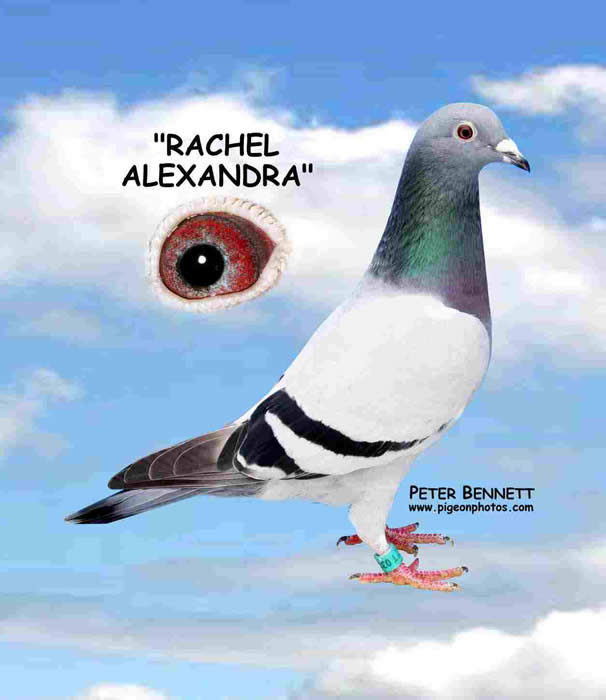
Rachel Alexandra - 1st National, 1st Welsh Combine Maidstone 171 miles 2010.
YOUNGSTERS
Youngsters are darkened from the moment they are weaned until start of June and unless injured or deep in the body moult are expected to fly through to Lillers 263 miles. No extra light is given at the end of the season but most of the birds come through a full moult. Darkening does not seem to have any detrimental effects on them as yearlings, neither does holding flights. An example of this being the loft’s best yearling hen that scored in every channel race winning 32nd National Lillers, 37th National Brussels, 66th National Aachen and 50th National Bonn whilst holding 3 flights from the previous young bird’s season. In terms of motivation the youngsters are never separated, and are encouraged to pair up as the National races approach.
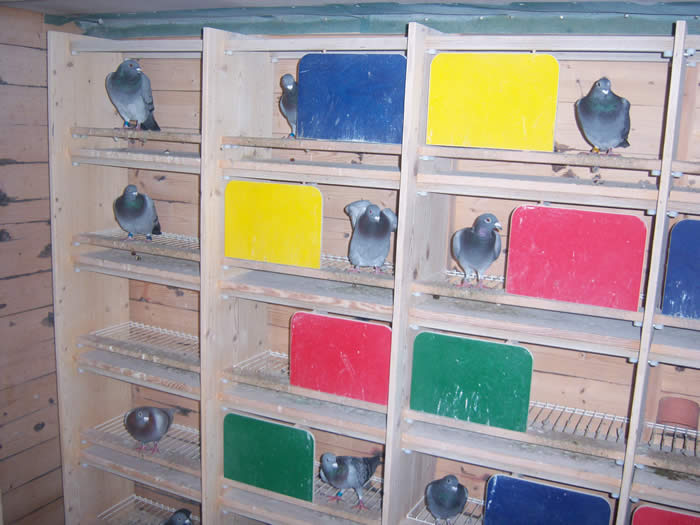
A view inside the old bird racing loft.
STOCK ORIGIN
Initially success was achieved with Leen Boers and Maurice Matthews bloodlines, some of which can still be found in one or two of the stock today. A big turning point came with the introduction of birds from Dai & Gloria Clappe of Cardiff. Dai and Gloria won the Welsh Combine from Thurso in 1996 with “Gatch” against 4501p, a distance of 500 miles, and followed it up with 1st Welsh Grand National Thurso, 1st Welsh Combine Thurso 1997 with the famous “Hattrick”, also winning the Queen’s Cup. A direct daughter of “Gatch”, a Van Hee pigeon was purchased and this hen (now named Gloria) bred winners straight away and is the dam of 2 x 1st National winners, 2 x 1st Welsh Combine winners. She is also the double great grand dam of 1st National Brussels 2012. Further birds were purchased from Dai Clappe before his total sale in 2001 and these formed the basis of the family until 2008. These proved great pigeons but did not suit the faster velocities experienced on the south-east route so the partnership decided that an injection of pace was needed and no expense would be spared buying the very best birds on the continent. Only the very best of the D Clappe family were kept and after over 12 months of studying results from Holland and Belgium, and with the advice of their good friend Ad Schaerlaeckens, they decided to buy birds from Henri Van Doorn. Nine youngsters, all from the principal racers and breeders, were purchased from Henri during their first trip to Belgium and Holland, all of which have bred top pigeons and are responsible for 2 x 1st National and Welsh Combine winners in 2 ½ years. Further visits and acquisitions followed to and from Ad Schaerlaeckens, Nico-Jan Koenders, Hans Dekkers, Marcel Jansen, Mark Van Der Berg, Danny Van Dyke, Leo Heremans-Ceusters, Rudi Diels, Geert Munnik and Jos Cools, only buying from their best pigeons. In addition three birds from their good friends Scammell & Peploe, children of their famous Nearly Cock, make up the stock loft. The most recent introductions in 2012 are from Jos Das, an excellent fancier in Belgium who won 1st National Bourges 68,000p. The famous partnership of Arrien-Verrcket has won 2 x 1st Provincial with direct Jos Das pigeons in recent years.
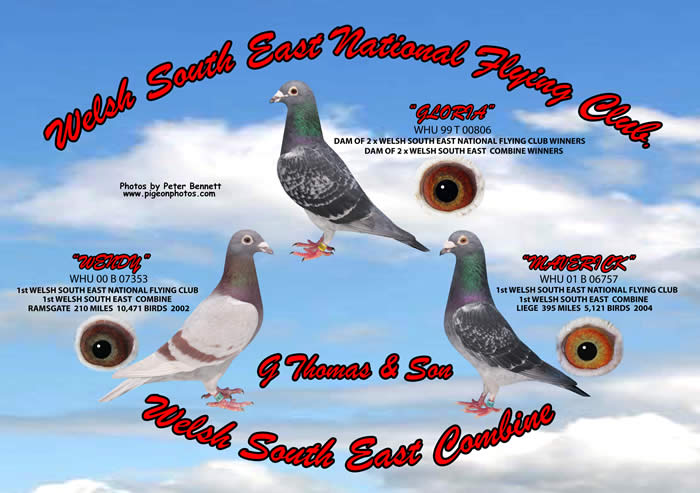
A montage of Gloria and her son and daughter, both national combine winners.
THOUGHTS ON THE SPORT
Here in their own words are the partnerships thought on the sport in general: ‘We have numerous views and thoughts on the pigeon sport in general and here in Wales. Racing into Wales has become too fragmented in recent years and we believe everyone in Wales should fly as one in one National; we need strength in numbers. Regarding the problems with birds of prey, we feel more of the money generated from all the shows across the country should be put back into the sport to fight this problem. We have three pairs around us and only last year our hen that won 2nd National Bonn was attacked and killed in front of our eyes. I feel the sport also needs to do something to attract younger fanciers into the sport, like starter packs for new starters including Ets etc to help them with the cost.’
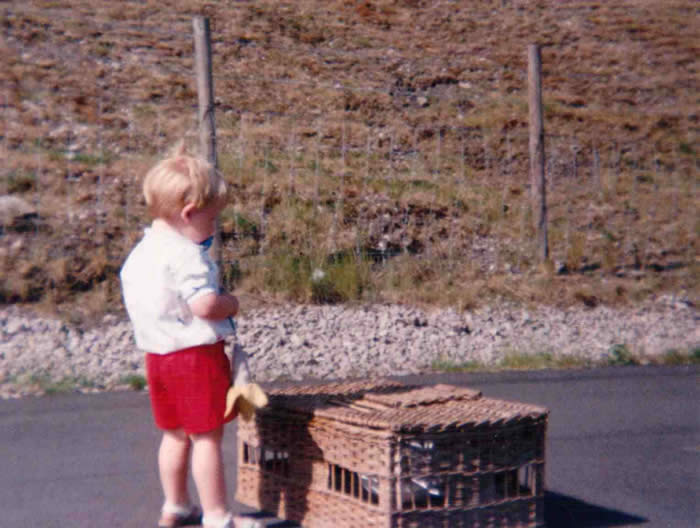
A very young Adam.
SUMMARY
This is not a big set up, with 36 racers expected to make up the old bird team for 2013. Quality not quantity is the standard with a big emphasis placed on natural resistance. They have proved that even with a limited amount of space it’s possible to get to the top and that the key to success includes adopting systems that suit your lifestyle and not religiously following pre-conceived ideas.
Graham and Adam are two of the most honest and genuine people I have met and any past and future success is well deserved. The quality of their stock coupled with their passion, determination and attention to detail will keep this loft at the top for many years to come. Well done to you both and thank you for giving me this opportunity.
---