Four Master Pigeoners - Part 4
By Liam O Comain
Cattrysse
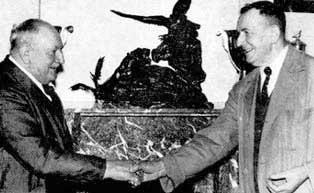
The late Oscar and Gerard Cattrysse founded a strain of racing pigeons which can in the minds of the experts be compared with any other of the great racing pigeon dynasties. Numerous authorities in their time referred to the brothers as the 'undisputed world champions'. This included the world acknowledged pigeon authority the legendary Piet de Weerd. And there is no doubt that the results obtained by this wonderful strain would confirm the latter opinion.
The Cattrysse browere from Moere in Belgium and they had entered the sport prior to the first world war. Pigeon wise things however did not blossom until they purchased in 1922 a pair of squeakers from the loft of Jules Vander Espt which were sired by the latter's 'Blauwe' which won approximately eight races as a youngster. Following this purchase the brothers based upon a newspaper report visited the loft of Pierre Deknop and for a large sum bought a pair of squeakers from the latter. They also purchased a hen from the loft of Ernest Casteleyn from near- to Moere and through a process of crossing they eventually, based upon the cross of Casteleyn and Vander Espt, produced their 'Grote Blauwe'
Which was the foundation of a lifetime of great pigeon racing into Moere. From their example if anything was the pursuit of good stock for which they paid handsomely within the context of a sense of patience. For a 'sport' can won a race but unless there is pedigree and consistency the odds against are high. As for the virtue of patience the brothers had it apparently in abundance- a virtue which many others lack but which is necessary in the sport otherwise the years are lean with the odd 'sport' making an appearance.
From the great 'Grote Blauwe' came a string of outstanding racers and breeders especially when mated to another of their purchases from the Deknop lofts. One of these winners was 'Louis' with many successes including firsts from Tours and Angouleme. The latter was a brother of 'The Langen', the 'Kleine' and 'Napoleon' and who in fact was equal to or better than their brother.
Always being on the lookout for good crosses to improve their stock the Cattrysses's made a very important purchase in 1930. From a certain Albert Deforce they bought two hens which they mated to 'The Kleine' and 'Louis'. The resultant offspring from these matings were outstanding to say the lease for they included 'The Kleine Blauwe', 'Cendre' and 'Langen Jr'. While the mating of the 'Kleine' produced the great 'Gebroken Poot'.
Still the successes with the breeding and the racing never dampened the brothers pursuit of good crosses for again they purchased from Leopold Lamote a very small hen with a speck of white on its head. Another stroke of genius for it was bred with 'Gebroken Poot' breeding outstanding representatives of the strain including the great 'Sproeten'. It cannot be doubted when one peruses the record of their breeding that the Cattrysse brothers were masters of their art.
During the period of about 1930-1940 the brothers racing successes became known world-wide and they were feted at home for they were bringing fame to their local area. Unfortunately the event of the German occupation of Belgium in 1940 saw the brothers being denied access to their lofts but after the arrival of the Canadians in 1944 they entered empty lofts for in the meantime their stock had been removed to aviaries at Brussels. Upon the reception of this news approximately 40 birds were returned to their lofts at Moere which included four sons of one of their many champions and a few grandchildren of 'Louis'. Then as if the horrors of the recent past had never happened the breeding began again in which in due course there arrived via one pairing an ugly looking blue which was to prove a gold mine in pigeon racing terms. It was named 'Pette' and was the father of the immortal 'De 45' as well as numerous other fantastic racers and breeders. From Arrass to Mountauban 'De 45' won at all distances and in 1949 won 255,000 francs.
The following year he won 47,000 francs as he established himself as truly an ace pigeon having won for example from Bordeaux by one clear hour. His mother was the great 'Mette'. Also in that year (1950) the first sale of the Cattrysse's was held in the Belgium capital and the prices were outstanding.
Many were the successes of the strain during the fifties and the sixties especially when the weather was so bad that other species of birds were noticeable by their absence. But the thoroughbreds of the brothers flew and reaped much rewards inspite of the looming figure of the Old Reaper for Oscar's health got bad and on the 21st of March in 1964 he died. As he was buried many representatives from throughout the world followed his remains for he like his brother was held in high esteem not alone as pigeon greats but as fine human beings For a few years Gerard raced along with Maurice Beuselinck- Cattrysse but decided to go it alone in 1967 but time was short for in February 1969 the second person of the great partnership also answered the call. Again like the funeral of his brother they came from everywhere to pay their respects. Many of whom were flying and winning with the thoroughbreds which originated in Moere under the genius of two apparently humble men.
The Belgium and the world pigeon community should remember them with pride!
Van Hee
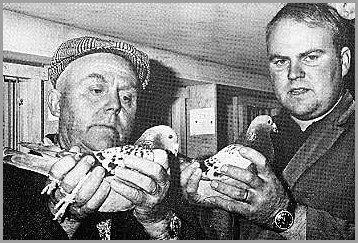
This is an article about a European strain of racing pigeons that for generations has had a world wide reputation as being one of the best, if not thee best, so far in the development of the thoroughbreds of the sky. Unlike many great strains, the family who moulded the originals are still the family who manage the modern descendants of the foundation today. The one- and- only van Hee strain has rewritten the record books, not alone in Europe but wherever on this planet the sport of pigeon racing flourishes.
This strain now covers three generations. It was founded by Gerard van Hee who was born in 1910, and when the founder died in 1998, the reins were taken up by his son, Michel, who was involved with his father in the propagating of the strain for years.Sadly Michel died in an accident and the pigeon world expected to see the dispersal of a strain which for decades led were others had merely followed. But it was not to be. A third member of the van Hee family decided to support the legend, in the person of a beautiful young woman, Annemie van Hee. The dynasty was saved. Annemie, Michel's daughter and the granddaughter of Gerard, decided after her fathers death and prior to the auction to continue with the sport and she, too, has the magic touch of her father and grandfather, for in turn she has experienced success.
The seed of the van Hees took root in 1925 when its founder, Gerard, at the age of approximately 15 years, caught the bug that many before and since have experienced, and entered the world of pigeondom. He was a thinking type of fancier and he pursued the knowledge of racing pigeons wherever it existed, becoming a walking encyclopaedia of the sport. Obviously, this gave Gerard van Hee a confidence which was a definite advantage when it came to stocking, breeding, and racing. Sadly, the adventure was dealt a blow when the Second World War intervened and the potential van Hee dynasty was wiped out as Gerard witnessed the destruction of his stock. However, the fire had been lit and when the war ended, with a steely resolve Gerard travelled Belgium to purchase stock, after initially discerning who were the owners of the best pigeons. In due course, owning the bloodlines of the best to be got at the time (including well- known names such as Stichelbaut, Cattrysse, Descamps-Van Hasten, Huyskens- Van Riel, amongst others), thus from the ashes of the war the legend resurfaced and in due course, through the brain of a master, a strain was built upon those various bloodlines.
As the strain developed, there appeared five lines in the breeding loft. They were not strictly kept pure, but crossed and the lines which lay at the base of the racers were as follows:
1. Atoom - 1st National Limoges winner 1962.
2. Motta - line, top racer.
3. Patrick - Gold Medal Olympiad Winner.
4. Napoleon - 1st International Narbonne 1978.
5. Janssen Arendonk - for speed in the distance lines.
After winning the National from Chateauroux in 1949 (van Hees first national win ) upto 1995, the lofts won many Regional and Provincial prizes. Amazingly, during those years they won approximately 20 Nationals, two of them also 1sts International. In addition, the lofts won 16 x 2nd Nationals. What an achievement! Just look at the list:
1949- 1st National Chateauroux.
1958- 1st NationalVannes.
1959- 1st National Argenton with Kleine.
1962- 1st National Limoges with Atoom. and 1st National Libourne with Monsieur.
1969- 1st National Montauban with Argenton.
1971- 1st National Barcelona with Jonge Monsieur (5th International).
1972- 1st National Limoges with Dromer.
1974- 1st National Barcelona with Teentje and 1st National Bordeaux (hens) with Bordeautje.
1975, 1st National Bordeaux with Zwarte Ijzeren and 1st National Montauban (hens) with Ginetje.
1976- 1st National Bordeaux (yearlings) with Apache.
1977- 1st National Cahors (hens) with Lucresetje, (4th National overall).
1978- 1st International Narbonne with Napoleon.
1982- 1st National St. Vincent with Workman-Libourne.
1983- 1st International Lourdes with Lourdes.
1988- 1st National La Souterraine with Domingo.
1995- 1st National Limoges with pure Patrick Gimondi and 1st National Limoges young birds.
We also must take into account that Vanhee was Four Times National Long- Distance Champion of the National Federation K.B.D.B. and 2 times General Champion of Belgium, K.B.D.B. Vanhees have also scored at the pigeon Olympiads, which implies outstanding results for the two years prior to an Olympiad. In fact, they have scored at five Olympiads, including Lisbon 1959, Gold Medal Standard Class with Crayonné; Essen 1961, Silver Medal Sport Class with Kleinen; Katowiczse 1969, Gold Medal Sport Class with Patrick; Budapest 1975, Gold Medal Sport Class with Patrick Ijzeren and Blackpool 1977, Silver Medal Sport Class with Blauwe Motta.
Beyond the family, van Hee pigeons have scored for fanciers world-wide including wins at National and international level. (Indeed this has been recognized by the European racing pigeon community for the van Hees have been awarded the Continent's Supreme Breeding Award for long distance.) The list is too numerous to relate in this brief article of tribute to a great strain but there are hundreds of fanciers who are scoring because a man called Gerard van Hee in the last century, set out to conquer the world of pigeon racing and indeed, that is what he accomplished.
Biss

In this article I refer to a strain of racing pigeons that are truly extraordinary. It is a family that the founder cultivated for well nigh 60 years since he first decided in the 1930s to create a strain capable of winning from 60 up to 800 miles. In another article I have expressed doubt if there is any family of racing pigeons that could be defined as an all rounder for there are horses for courses so to speak, but if my tendency to think as above can or would be refuted then perhaps the Biss strain is the one that may have that potential. However in the meantime my interest in the Jim Biss creation is the strain's achievements at the long and marathon distances. And successes of this strain were not restricted to Biss himself for there are scores of fanciers who have experienced success with the family.
At the base of the Biss strain are a number of the old English families which sadly in the main have apparently passed on into history. The latter being supplemented in time by representatives of the Commines i.e. of the Super Crack lines and the enduring Stichelbauts. An important input into the family in its early days was a pigeon known as the Donachy Hen which was a grand- daughter of a famous hen which won over 800 pounds sterling in a race from St Sebastian into Liverpool, England, in the early nineteen thirties for a Mr.Cope. In fact the bloodlines of this great breeder can still be found in the strain today, for example, the great 'Natrix' of the family traces back to the Donachy Hen over generations.
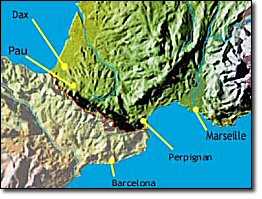
Bloodlines that has achieved the following results in NFC Nationals from Pau into England (645 miles): 1991- 32nd, 34th, 62nd, 140th, 260, - (4,992 birds) 1993- 1st, 2nd, 7th, 21st, 30th, 38th, 65th, 74th, 79th, 85th, 105th, 198th, 227th, - (5,423 birds) 1994 - 38th, 51st, 104th, 202nd, 222nd, 319th, 407th, - (4,976 birds) 1995- 52nd, 73rd, 120th, 312th, 337th, 396th, 417th, 432nd, 441st, 460th, - (5,482 birds) 1996 - 71st, 77th, 81st, 127th, 218th, 369th, 377th, 494th, 525th, 557th, 608th, 613th, 626th, 629th, - (4,976 birds)1997- 3rd, 4th, 9th, 14th, 16th, 17th, 47th, 114th, 205th, 207th, 227th, 322nd, 336th, 386th - (3,466 birds). But let us jump to other results in the NFC races and the pigeons who recorded them: starting with last year (2004) when Glazer NFC after winning 11th position from Pau in 2002; Dasher scoring 44th Grand National Pau in 2002 and 19th in 1999; Basher being 261st in the Grand National from San Sebastian in 2001 flying 661 miles after recording 22nd Open Pau in 1998; then there is Emboli who was 341st Open NFC Pau in 2000 but who has added 10th and 5th Open Pau in
2002 and 2003. Surely enough said!
Of course the latter results are just a dip in the ocean for the family of Biss have won numerous sections, numerous averages, numerous trophies covering all aspects of pigeon racing into England and the United Kingdom in its entirety which would require more space than we have here available. And the latter confirms the greatness of the Biss strain which in the opinion of many objective pigeon sports persons is the greatest English if not British strain ever. In fact the great Emil Denys in a letter to Jim Biss wrote, 'You did not buy for commercial reasons, you purchased because you wanted to create a Super-family of long distance pigeons... I think you own one of the best long distance families in the world'.Yes at Brundall Lofts near Norwich, in the county of Norfolk, England, a great master of the sport of pigeon racing daily participated in the joy of expert managerial activity. The latter statement is no exaggeration for there lays the reason, the basis, for the phenomenal success of this wonderful strain. A decades long and total commitment to the sport which he loved. And within those years Jim Biss in 1992 formed a partnership with Tony Waite and extended his work to the latters home atWhitchurch, Hampshire, England. An arrangement which proved valuable to both for the partnership in 1996 clocked 25 birds in an hour and recorded many positions in the first 50 open, including 1st Open National as recorded above. Then in 1998 the partners won 1st Open Palamos (679 miles) with the British Barcelona Club. The maestro bred all the pigeons from his champion stock at Hillside and (from coming together as partners) Tony Waite raced them from his home at Hampshire. Tony Waite entered the sport in about 1969 and had experienced success with pigeons prior to his association with Biss.
Some may argue that the status bestowed upon Jim Biss in this article and elsewhere may be premature if not exaggerated. Such an argument will not and cannot stand up to objective scrutiny for the facts speak for themselves and there are numerous successes by the Biss family of pigeons which supports the opinion of this author. And I have no doubt that history will validate and vindicate the greatness of the Biss strain. But in stating that opinion I don't believe that is necessary! Sadly Jim Biss died in 2005.
Smyth

This is one of the greatest strains of the last and present century. In confirmation this family of racing pigeons for more than half a century has faced and conquered what is perhaps one of the toughest if not the toughest route in the world of pigeon racing. Now aside from the geographical reality of the route what I do assert is that this is an authentic long distance and marathon strain in its own right! And that for far too long the pigeon racing fraternity has seemingly failed to recognize or acknowledge this truth.
It origins obviously lie in another strain but the two Smyth brothers (Bobby and Hughie) from Ballymena in the island of Ireland forged perhaps the first long distance and marathon strain of the land of the shamrock. A partnership whose results at the distance were achieved by sending only a few birds to the races. But there is no doubt based upon their results and the results of their strain in the lofts of others that these two Irish fanciers were masters at their craft!
The brothers when caught by the bug of pigeon racing early in their pigeon racing lives decided to buy the best and race the best. It was then that apparently they read the comments of Major Osman of the Racing Pigeon weekly that one of the best strains was the Kenyon strain. So they decided to stock their loft with the best of the latter.
From 1943 onwards some good pigeons where bought from the Kenyon lofts and through the astute management of the brothers the result was some of the best racing performances seen in Europe. But alas the remoteness of Ireland was a factor which contributed towards the strain not being given its due.
For the Smyth's, the best started in 1948 when they were 11th from Rennes, France, at a distance of 510 miles. Being named, Rennes Queen, she was one of only 12 birds in race time. This hen also took 18th Open from the same race point in 1949 beaten by her daughter, Northern Leader. The latter was 7th Open in a race where only twenty-five pigeons were timed. This was out of thousands sent but aside from the crossing of two seas the maritime climate was always an obstacle for Irish pigeons to overcome.
In 1951 the partners scored 23rd Open in the National from Rennes, a very hard race with the winning velocity around 800 yards per minute. To be followed in 1953 with 33rd Open NIPA Derby from Landerneau, France, and 62nd and 75th Open National Redon, France. The latter a distance of 532 miles. The following year 1954 saw the strain winning three positions in a tough National from Redon with only 28 birds home in race time. The positions were 20th, 21st and 24th Open.
The brothers scored again in 1955 from Redon, the velocities were down around 700 yards per minute,when the pigeon who was 21st in 1954 won 4th Open National. This was the famous Leading Lady who went on the following year to win 6th Open from Redon at a speed of 579 yards per minute. Then perhaps the greatest racing pigeon ever in 1957 scored 9th Open from Redon. Another tough race but Leading Lady was only three positions behind her cousin who scored 6th Open. The latter being National Effort who went back in 1958 to Redon and finished 36th Open. Also in this race a grand daughter of Leading Lady was 38th Open National.
Since the exploits of Leading Lady the fabulous Smyth Strain has won 27th Open from Les Sables, France (610 miles) in 1960; 21st Open from Les Sables in 1961; 42st Open Dinard, France, in 1965; 49th Open from Nantes, France (570 miles) in 1966; 8th Open Old Bird Derby from Dinard in 1967; 22nd Open National Nantes in 1968; 63rd Open National Nantes and 31st Open OB Derby Dinard in 1969; 2nd and 6th Open Beauvais, France, 517 miles in 1970; 24th and 45th Open National Nantes in 1971; 2nd Open Nantes National by another hen named Northern Lady in 1973; 17th Open OB Derby Dinard in 1976; 135th Open National Rennes in 1977; 24th Open National Rennes in 1978; 48th and 101st Open National Rennes in 1979; 26th,125th,and 127th Open Les Sables in 1980; 40th and 58th Open National Les Sables in 1981; 66th Open OB Derby, Dinard in 1982.
Then the National racing received a set back arising from France's ban on racing pigeons in 1983 but the alternative races (although shorter in distance) from various parts of the island of Britain saw the Smyth strain continue to win many prizes. It must be said that over the time of the above old bird results the Ballymena lofts scored time and time again in the Young Bird Nationals into Ireland. In fact they have a terrific record in this area of pigeon racing.
In 1988, the racing of Nationals returned to France again and the brothers were 64th and 145th Open from Rennes. The following year saw them 41st Open from Rennes and 45th Open in the NIPA Derby from Dinard. This was followed in the next year by 66th and 192nd Open from Rennes as well as 1st and 2nd in the Friendship National from Sartilly. In 1992 the lofts scored 7th and 14th Open from Rennes followed in 1993 with 12th Open in the OB Derby from Dinard. 1994 saw 133rd and 194th from the Rennes National and 58th Open in the Derby from Dinard. Since then the lofts have scored in 1997 from St. Nazaire in France (554 miles) with 97th Open. Scoring again the following year with 10th position in the Friendship National from Dinard. And at the time of writing the Smyth Brothers lofts are still scoring under the auspices of Bobby for alas Hughie has passed away.This year this master of pigeon racing Bobby Smith celebrates over 80 fruitful years on this earth. May he have many more.
It should be noted that the Smyth strain of racing pigeons have provided National winners for other Irish fanciers and others from abroad including providing the sire for Ted Vowles, Gwendolene Supreme, who won 1st Section, 1st Open from Palamos into Britain at a distance of 700 miles. Of course there is much more that I could add to back my contention that this is one of the best strains of long distance and marathon pigeons that the sport has ever experienced. A strain that has produced many champions including perhaps the greatest distance racer - Leading Lady - so far in the history of the sport.