visits
Graham & Roseanne Jones of Barnsley
This year has been just me second season racing a small team of young birds in the Barnsley & Dist South Road Federation and I must say that from a personal point of view the racing has been good with very few losses. The Federation is a relatively small one but still send up to 1,800 birds. Which isn’t bad when you consider the small radius of the Fed.
The Fed can boast some top draw fanciers including the legend Mr Frank Pearson and, for me, the best fanciers in the Fed. the Marples Bros whose old bird results are mouth watering. The Barnsley & Dist South Road Fed is the smaller of the two Barnsley Feds and can be often over looked due to the much bigger Barnsley Federation, or the big fed as it’s most commonly known. But make no mistake about there are some equally fanciers in this Fed too.
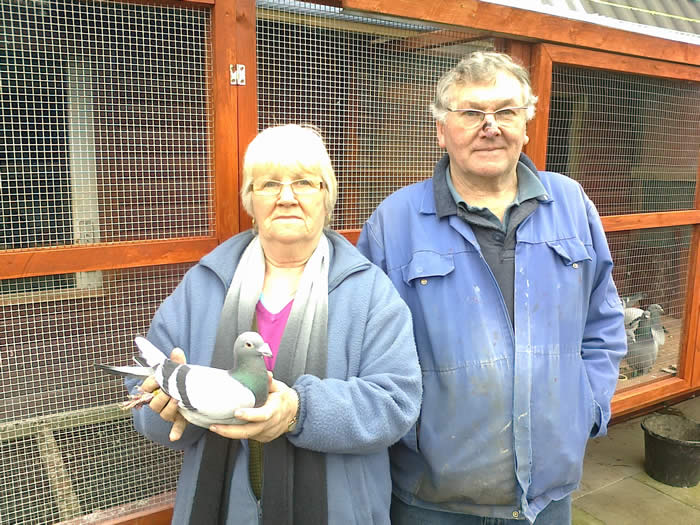
Graham & Roseanne Jones
Back in July of this year I was asked by the Federation Secretary Mrs Wendy Jones if I would be willing to do a little writing in order highlight some of the top lofts within the Fed. Obviously, I didn’t need think too long and hard about helping highlight local fanciers and to promote the Federation in which I now race.
The loft I was asked to visit was that of G&R Jones of Redbrook. Graham and his wife Roseanne who have, in 2015, excelled in the Federations channel races which are flown in conjunction with the Mid Yorkshire Combine. It was back in July when I visited Graham and Roseanne at their beautiful home in the north of Barnsley. .
Having not lived in this area for long it would be fair to say that I know less than a handful of fanciers in the fed and Graham and Roseanne aren’t amongst them. However, from the moment I knocked on their front door they made me most welcome, and the kettle was soon on. Both Graham and Roseanne are recently retired and are now thoroughly enjoying their new laid back life style. And this, Graham says , has made a world of difference to their pigeons and they have benefited hugely from the extra time and work that they can now put into the birds, with the results improving instantly. Although, I am told they were already pretty good prior to their retirement.
Graham and Roseanne are members of several organisations, namely Wosborough HS (of which Roseanne is Secretary off) Barnsley & Dist South Road Federation, Mid Yorkshire Combine, North Midlands Continental Club and National Flying Club.
Accommodation
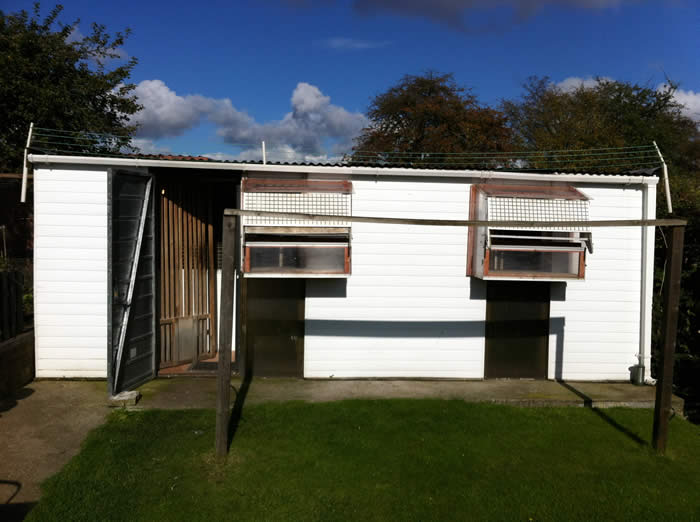
I have to admit, when I first drove onto the lovely, relatively new, estate where Graham and Roseanne I thought I had got the wrong address as the estate is a relatively new one and the kind that you never tend to see a pigeon loft on, due to restrictions in deeds etc. and of course potential complaining neighbours. However, sure enough I did have the correct address. L ooking at their very neat and tidy loft and garden you can understand just way they have not had an issue with their neighbours, in fact race days are somewhat of a social gathering as friends and neighbours often come round for a beer or glass of wine to watch the birds arrive. If everyone’s lofts were as pleasing to the eye and spotlessly clean I’m sure this would be small improvement on the image and the public’s perception of the sport.
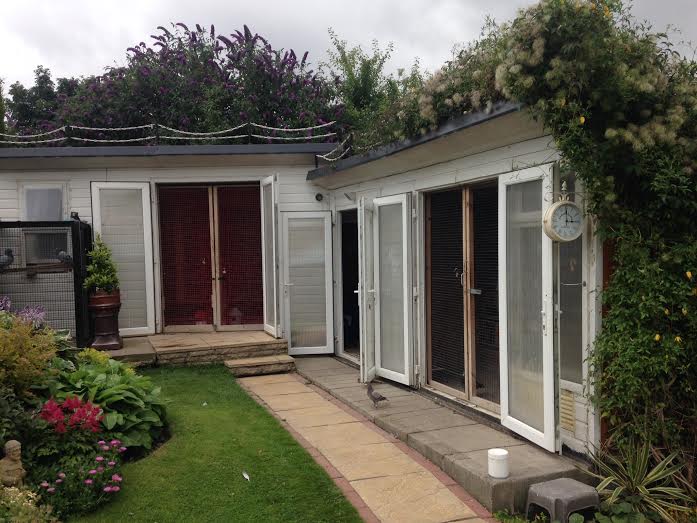
The very tidy set-up!
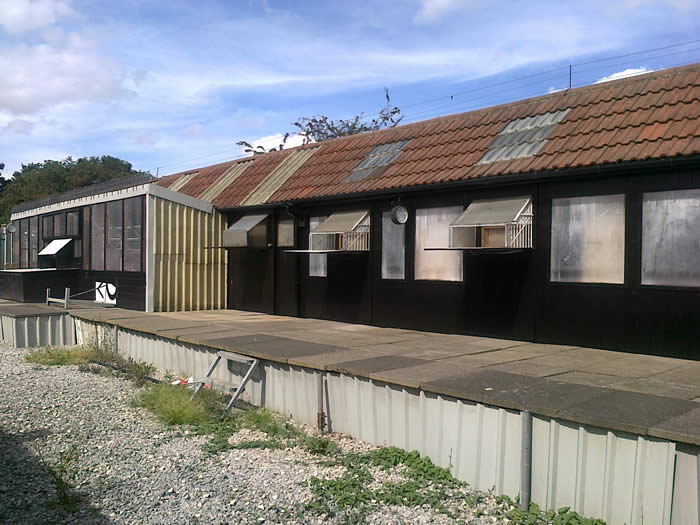
The loft its self was built be Graham some five years ago when he decided to start racing again with Rosanne following a break from the sport. It is an L shaped loft that fits rather snugly in to top right corner of the small garden. The white UPVC cladding really adds to its appearance. It is 4m x 4m and is 2 ½ m deep. As you look at the loft from the house their small team of stock are housed in the far left with the small aviary, with the two young bird sections to the right of the stock. Then the old bird race team is in the loft that runs down the right side of the garden and faces south westerly.
Both the young bird sections have pipo boxes in them which Graham finds help to motivate the young birds, the widowhood hens are boxed up in their own section with a curtain being used to keep them calm. Also, an extractor fan has been placed in their section to expel any bad air, helping to keep the hens in good health. There is also one in the young bird loft. As you can see from the photos, on nice days the doors to the lofts are open to allow the sun and fresh air into the lofts. In the cocks loft is the German style up and over boxes.
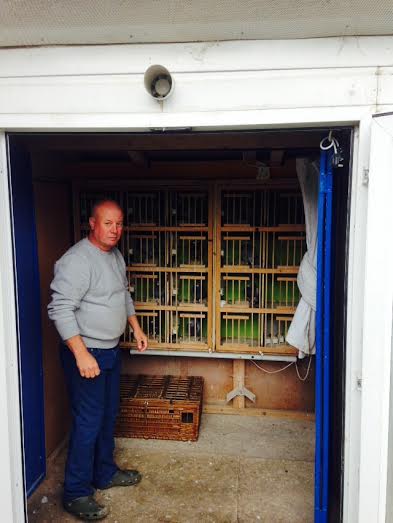
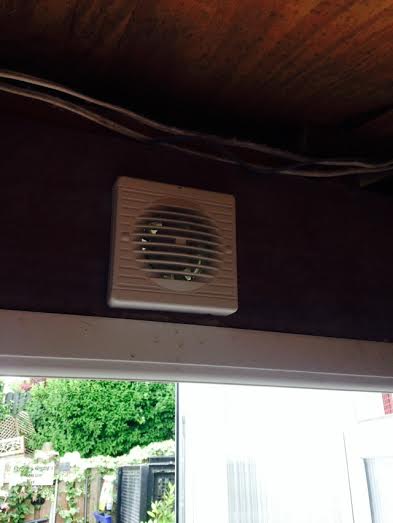
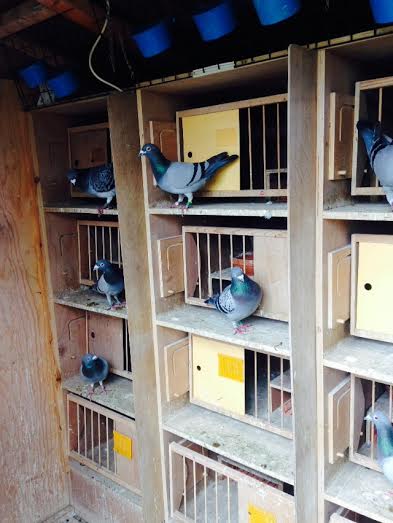
Widow Hens section. The extractor fan used. Widowhood cocks section.
Birds
Since racing at their present location Graham has invested in new bloodlines and has purchased pigeons that he feels can compete on all levels and help them climb the ladder of success to achieve more than they have already.They have just eight pairs of stock birds which in the main are M&D Evans Vandenabeele’s which are the main pigeons throughout the lofts. They have also obtained the best of the De Rauw-Sablon bloodlines and pigeons of Leo Van Rijn breeding from my old friend Adrian Duggins in Matlock. In addition to the eight pairs of stock, 20 pairs of widowers are raced and around 40 young birds are bred each year for themselves to race.
Widowers system
The widowers and breeders are paired around the middle of January, the stock are obviously selected and paired by Graham in the hope of breeding the type and quality of bird that he wants in his race team. However, the widowers are allowed to love pair which he feels is the first step the achieving good results with widowers. I must admit, I agree with this when racing widowhood. There are a lot of components needed to give a pigeon its love of home that gain an extra yard when racing and its love of its partner is one of them.
Most of the young that are reared are from the breeders with only a few youngsters taken from the best races. When the babies are around 20 days old the hens along with one youngster from the nest are parted off, this is also to ensure the bond to the loft/box is enhanced in the hope to gain an extra few yards on race day. Once the youngsters are parted into their own loft the widowers are allowed to rest and recover from rearing before they are made to work around the loft. Graham assures me that it doesn’t take them long to gain a good level of fitness as the birds enjoy their freedom during the winter months as and when the weather allows. Within a few weeks of regular exercise both the cocks and hens will be flying well up to 45 minutes both AM and PM with flags.
If they are working well around home then only a few short tosses are given to sharpen them up, maybe 5 or 6 then it’s into the races. No training is given once racing is underway; unless it’s felt that it is needed. Both Graham and Roseanne put a lot of emphasis on the birds having that all important love of home and work hard to try and ensure that the birds are content and have a good bond with them when in the loft.
Motivation for the sprint races is the usual method of the cocks being given their bowls for a while prior to the hens being allowed into the cocks’ loft. There’s not much variation from this routine as its felt they respond very well each week to this. For the channel races things are totally different with no motivation being given at all as Graham wants them to be as calm as possible for the two or three nights in the crates and not excited at all.
Feeding for widowers
The widowhood cocks are simply fed on 50% Versele-Laga Sneaky Mix and 50% Super Diet 200. This is fed 7 days a week. The hens are fed 100% Versele-Laga Gerry Plus 7 days a week. They say the hens really do tear the sky apart when exercising, and I should imagine they do with such a feeding program. However, two weeks prior to the channel races the feed is changed to 50% Gerry Plus and 50% Super Star Plus along with added red maize and peanuts.
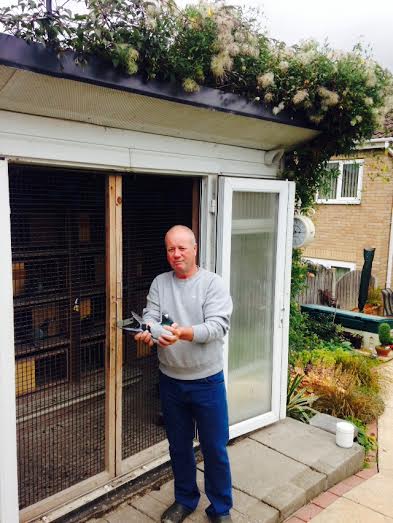
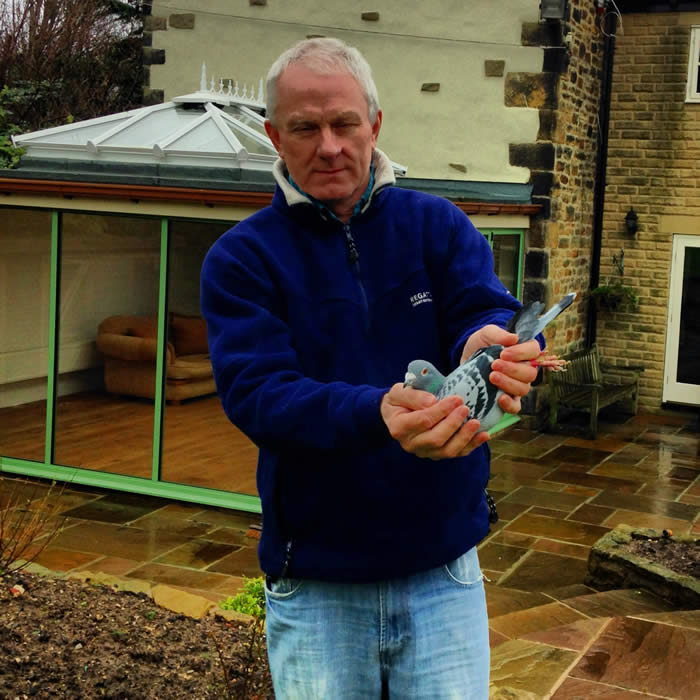
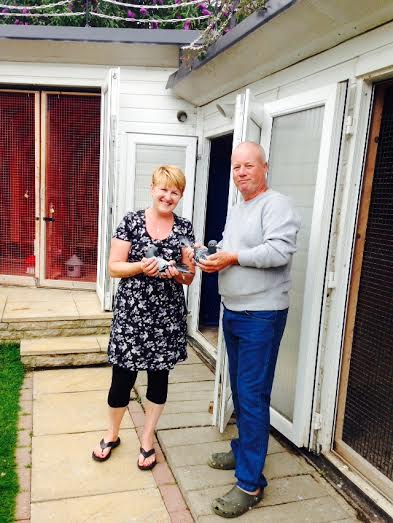
Graham holding one of their Fed. winners.
Young bird system
Graham admits that they don’t follow a set system with the babies and take each week as it comes. But in general darkening takes place from 6pm till 8am until mid June and once settled to the loft they are made to work and learn what their wings are for and will soon begin to work well and range away from the loft. They are allowed to do this each day until around four weeks before the first race when they will begin their education on the road.
Road work begins at 5 miles until they are comfortable, it will then increase to 10 mile and be moved up to 30 were they will stay throughout the whole season several times a week. Other than the short tosses Graham and Roseanne put their trust in one of the local training services, namely Faye Burrows, who they say, provides an excellent service and cares for the birds ensuring they are not realised if the weather takes a turn for the worse. Graham and Roseanne would like to thank Faye for the excellent training she provides. The young birds are raced to the perch and are not separated, although they are encouraged to pair in order to gain a little more motivation.
Feeding for young birds
Again the feeding is kept simple with the youngsters being fed on a breed and wean mix right from being parted up until three weeks before racing when they are fed in the same way as the widow hens with Gerry Plus all week with just a little bit of seed on return from the race on Saturdays. They are fed a set measure but this is tweaked a little dependent on the weather conditions. Whilst speaking to Graham about feeding, in particular the feeding of youngsters, we spoke about the feeding on Fridays prior to basketing. For example, should pigeons be basketed for a race with corn still in their crop? No is the answer!!! All the fuel they need should have already been put in to them. Beginning Wednesday, then Thursday and finally Friday morning allowing them time to digest it. I also believe that Friday’s feed should not be of a heavy type, smaller seeds will be digested much quicker whilst still giving the bird the nutrients its needs.
How many athletes do you know fill themselves up with a huge heavy meal then sit on a fairground ride for a few hours and then attempt to compete in their race. Well this is what a fair few fanciers expect their birds to do, particularly their young birds. And this only helps to spread sickness when the birds that are full of corn perform the natural bodily function of spewing it up half way down the road whilst in transit on the transprter. Thus giving the others a free meal, nice....!
In the last article I wrote I quoted some comments about some of the problems that are experienced with young bird’s year in year out by lots of fanciers. These made by a friend of mine who is a top class fancier up in the West Durham Amalgamation these were in relation to problems with young bird losses. Here is what he wrote.
“The biggest problem is youngsters suffering with ill health being sent as people are either not seeing they have a problem or they choose to ignore it as they are frightened to miss a race. These are then sent to the early young bird races and are liberated with those youngsters that are healthy and well trained but affect the convoy adversely by milling around and holding back other youngsters when they try to leave the race point. Within a week or two more fanciers have ill pigeons but some of those know they have a health problem in the loft but dare not miss a race and others don't realise they have a problem in there, it just gets worse as the weeks go on until we get to about the 5th race and it settles down as you are left with the same fanciers sending and they have sorted the health issues or avoided them.
The other massive problem that affects the early young bird racing is a lack of education. Does anyone really believe a 5 mile training toss or a 5 mile and a 10 mile training toss is sufficient preparation for a youngster before being sent to a race? Sadly some fanciers seem to have the mistaken belief that other fanciers well trained youngsters will bring the rest home so send them and hope for the best but then blame the convoyer and everyone else when they experience a poor race. Factor in the large number of liberations in a short period of time in close proximity to each other and it is chaos, is it any wonder that we experience poor racing for the early part of the young bird programme year after year?
We all need to take a long hard look at our own pigeons and ourselves and ask a few hard questions before thinking about taking our youngsters to the club for the first few races:
1) Are they healthy??
2) Are they properly trained?
3) Are they fuelled properly to allow them to recover from a mistake or have I starved them from Thursday in the hope of a quick trap on the Saturday??”
A bit of food for thought in what he says I think, particularly with regards to health. I’d go as far as to say that up to 50% of young birds raced at club level not fit to be in the crates. And that’s the reason for heavy losses.
Supplements and medication
It would be fare to say that when it comes to this section of the article there is a lot less to write than in previous loft reports I’ve done because at this loft things are kept simple and very basic. Starting with Saturday on the birds return thin bleach is in the water at a rate of 5ml per litre, if its been a tough race then Glucose is also added. Sunday is the same. Monday and Wednesday see’s Primalac in the water with Multi vits on Tuesday. Thursday and Friday is just plain water.
As for products added to the feed Dr Wolz, Zell Oxygen is added on a Monday and Wednesday. And following channel races baby milk powder is added to help build the birds up quicker.
With regards to medication, Graham has in the past used the odd vet but by his own admission only because it was the in thing at the time. Nowadays, the birds are just wormed and cankered before pairing up and receive a canker treatment every four weeks during the racing season in the form of Harkers Soluble Canker treatment.
When asked about the prevention of young bird sickness Graham stated that the only thing he does is to spay the loft out with Jeyes fluid once or twice a week.
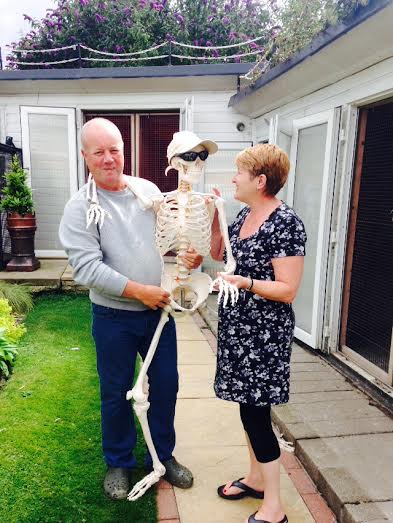
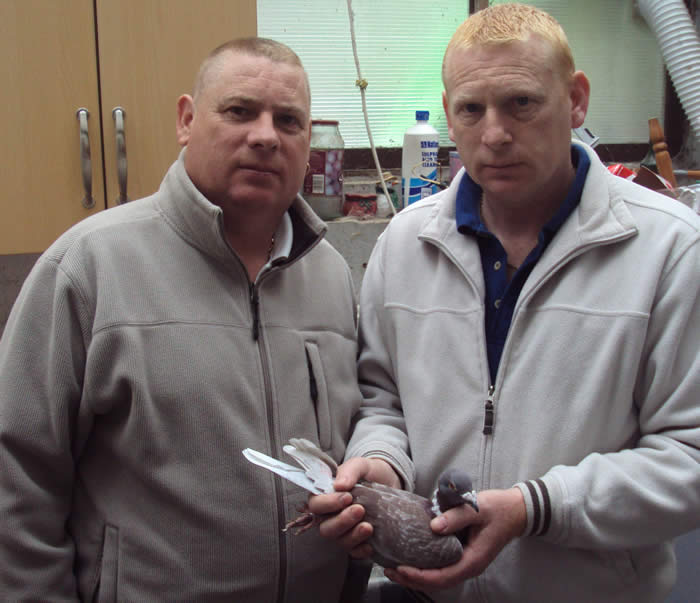
Graham and Roseanne with their silent partner - Bones!
Results 2015
2015 has been a decent year for Gary and Roseanne particularly from over the channel with old birds so these are the results I’ll concentrate on as I do not have all the young bird results to hand, particularly Fed positions. Maybe next year the Federation could produce a proper Fed result for all races not just channel, the first 50 would be good. After all this would still only show the first 5% of birds from an entry of just a 1,000 birds. This would help with fanciers record keeping of their birds results, submission of Breeder Buyer results of overall performances and, something that been in the press of late, submission of results for RPRA awards and Olympiad entries. Anyway here are the 2015 result of Gary and Roseanne.
Club: Worsborough HS, 9x1st 9X2nd 10x3rd 8x4th
Barnsley & Dist South Road Federation: Newbury 1st & 2nd Falaise 3rd
Le-Mans1st 2nd & 3rd Poitiers 1st Falaise 8th
Mid Yorkshire Combine: Falaise 6th Le-Mans 5th 10th 12th Poitiers 3rd
North Midlands Continental Club: Carentan 39th Sec 113th Open 1,532b
Messac 8th Sec 25th Open 1,052b
National Flying Club: Fougeres 17th 45th 92nd Sec K 55th 175th 450th Open 8,579b Messac 41st Sec K 184th Open 7,000b
As stated above not a bad season for the husband and wife partnership, and I’m sure they’ll be more to come in the coming seasons.
Thoughts on the future
Graham and Roseanne are clearly passionate about moving their club and the Federation forward into the 21st Century, and shared some great ideas with me. However, managing to put them in motion may well be a difficult task, particularly in an area that still, in this day and age, is struggling to come to terms with the use of modern technology within the sport ie: ETS....
Graham handed me a small piece of paper with a little saying on it that he had wrote, and I think it says it all really. “Let the first rule be common sense and fairness, and the rule book be interpreted accordingly”
If only everyone applied common sense and fairness the sport would be in a much better place than it is now.
I’d like to thank Graham and Roseanne for such a warm welcome and an enjoyable few hours. Hopefully, some of your ideas will be put into motion next year.
Before I finish Graham would like to thank John Sykes of Sykes Pet Food for sponsoring the Federation with a £5 gift voucher for every centrally marked race. John is situated just off Race Common Rd in Barnsley and has in stock all you need for the coming breeding and racing season so why not pay him a visit.
Thanks for reading everyone. And remember, no slacking at this time of year, as this is when next years races are won....!!!
Regards Chris