NORTH ROAD CHAMPIONSHIP CLUB
Looking back at Lerwick . . . 9
By George Wheatman
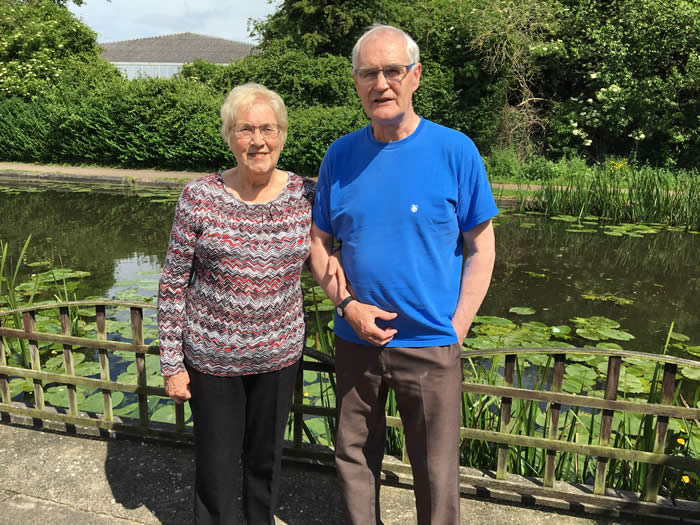
The fastest, and probably most closely contested, North Road Championship Club race from Lerwick was in the year 2000 when Mr and Mrs Graham Parrinder’s winner recorded a velocity of 2104 yards per minute.
This is only the second time that NRCC birds have topped 2000ypm from this race point and, ironically, the other time was the year before when MW Ward and Son, of High Bridgham won on a velocity of 2075ypm.
The husband and wife partnership of Geoff and Bridget Clare were beaten into second place by the tenth of a second - in the 2000 race.
They were living at Old Leake, eight miles to the north east of Boston, at the time, and Geoff, now flying his pigeons successfully in Australia, remembers the day well.
“We had also had a Federation race from Waldridge Fell that day,” he recalls. “The birds had been doing about 1800ypm from that race, and we expected a similar velocity from Lerwick in the north-west wind, but they turned out to be much quicker.
“I saw two pigeons coming back from Boston. I thought they were later birds from the previous race. One dropped and went straight in. The other one stayed on the landing board, and it was then I realised that it was a Lerwick bird, and that the one which had gone in was also possibly a Lerwick pigeon.
“I looked in the loft, and it was, so timed it in. I was second and third but that delay could have cost me the race.
“Another factor was that Bridget, who was normally on the look out, had gone into Boston to watch a wedding, and was delayed on her way back by road works. Had she been there she would have seen the birds arrive.
“But these things happen in pigeon racing.”
Although they never won the King’s Cup, they did win five NRCC races, two of them from Perth in successive years with the same pigeon, Champion Lucky, and three hens’ races, again one pigeon winning twice. They were also second a total of 14 times.”
Long flying
Manningtree, in Essex claims to be the smallest town in England, but another claim to fame is that it has been the home to a NRCC King’s Cup winner.
Teddy Soames, who died last year, won the Lerwick race in 1961 flying a distance of 576 miles in a north-west wind for a velocity of 1219ypm. No one has won it from a greater distance since.
Manningtree, nine miles from Ipswich, the base of more Lerwick-minded members, is also the home of another highly respected distance flyer, Terry Calver who, hopefully, will feature when I wind up this series shortly with a look at some of the multiple-performing birds which have won Diplomas of Merit.
Snippets from the Archives
As I have researched this series of articles a number of intriguing facts have arisen which, I think, may make interesting reading for fanciers.
Here are a few of them:
Martin Lewis, a NRCC committee member from Spalding, was hooked on racing from Lerwick when he timed his first day bird as a teenager. He recalls another occasion when he timed a bird at 4pm on the Sunday. A week later there were still only five birds home. Yes, there are times when racing from the Shetland Islands can be that tough.
Bob Boulton, the veteran fancier from Addlethorpe, near Skegness, recalls sending two pied cock birds to Lerwick, and not seeing them again . . . until he was waiting for his Lerwick pigeons the following year. Then one dropped on the loft, only to be followed minutes later by the other one. I’ll leave you to work out the velocity! Incidentally, Bob gave them to a fancier friend, and they produced some useful pigeons.
In 2009, Roy Fox and grandson Will, of Harlow, timed three birds on the second day at 7-20am, 7-50am and 8-15am to take 1-2-3 in Section Seven at near 600 miles. They also bred the father of Cecil Bulled and Son’s section winner in 2005.
Roger Hallsworth’s second pigeon in his 2006 1-2, flew Lerwick twice in two weeks, winning the Midlands Two-bird Championship Club race before being runner-up to his King’s Cup winner.
George and Barbara Knowles, of Rainworth, Mansfield, had their best ever Lerwick race in 2007 when they timed the Section One winner at 5-04pm, followed by two others which came together to be timed at 5-16 and 5-17.
A fancier with a good Lerwick pedigree himself is John Parker, of Eastwood. His inspiration was his uncle Joe Bates, King’s Cup winner in 1978 and 1987, and John says he once saw six pigeons arrive at his uncle’s loft, from Lerwick, inside half an hour.
Another uncle, Tom Cork, was a good fancier, and his mother’s uncle was the Braunstone in the Braunstone, Son and Smith partnership which won NRCC Lerwick in 1933.
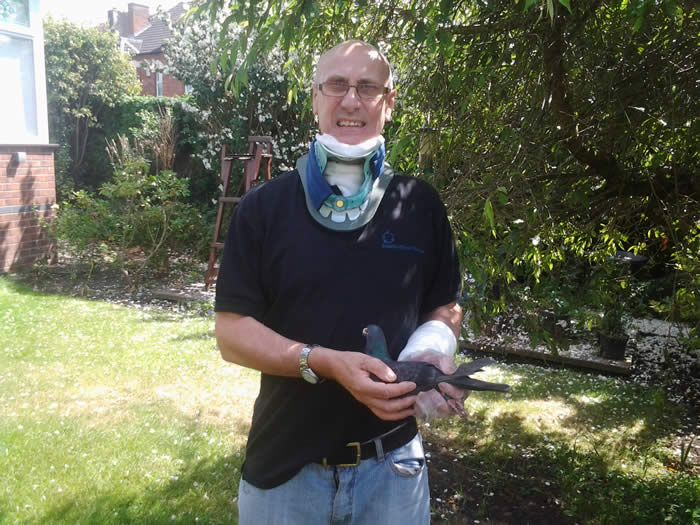
John Parker
Enfield’s Pat O’Sullivan is someone who has been reading this nostalgic look-back at NRCC Lerwick racing with mixed feelings with a lot of interest because he has always loved the race, but with sadness because he will not be competing in it again.
Health problems, and the doctor’s uncompromising advice, has forced him to retire from the sport, and he will be using some of the money raised from a successful clearance sale at Blackpool in January to take his wife on a trip to Canada, plus other regular outings during the year which were not previously possible in the pigeon racing season.
But who could forget his legendary Limerick Lady who won the section twice from Lerwick, in addition to taking 10th and 14th places, on top of positions 1-2-5 and 19 in the competitive London Combine?
Limerick Lady was eight years old when she was timed for the fifth time from Lerwick.
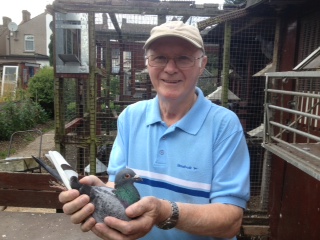
Pat OSullivan
Section Five winner in 2007, Max Hind, of Irchester, had a job that was handy for preparing his Lerwick pigeons. He worked for Wetherbys and one of his tasks was to deliver racecards to race courses around the country, including Beverley and York, two strategic training spots.
An NRCC legend is George Colthorpe, of Ipswich, who, unfortunately is not in the best of health these days as age advances. He said it was “lashing down with rain” when he timed the four-year-old Westcott hen which won his section in 2009. The previous year the race was held in a heat wave more evidence of how mid-summer conditions can change from year to year.
Mr and Mrs Stephen Howells, of Cawston, Norwich, sent only one bird to the 2008 race and won their section with the three-year-old chequer hen which, for the first time in her life, was enticed home by the pleasures of being paired to a cock bird. Hitherto, she had preferred the ladies.
Russ and Denise Skinner, of Boston, no longer compete on the north road, but they came close to signing off from the NRCC with a King’s Cup victory in 2009 when they were runners-up to Rob Walton, of Ollerton. They were chasing a hat-trick that day, having already won open races from Perth (2004) and Thurso (2006).
The late Ray Farrington, of Great Abington, doubted the wisdom of friend, Keith Rayner, spending £120 on a ten-year-old cock bird from Louella even though it was a grandson of the legendary Motta. But he accepted that his share of the purchase price was money well spent when the “senior” acquisition bred his 2010 King’s Cup winner, Fergie.
Terry Winterton, of Holbeach, is one of the top Lerwick flyers in the NRCC. His three-year-old widowhood cock bird which won Section Four in 2011 (and was also 20th open) was followed home by its mother which was sixth section. Her mother, in turn, had flown Lerwick five times. No wonder Terry maintains: “Lerwick pigeons breed Lerwick pigeons.”