ALBERT TARLETON
SKY LEADER
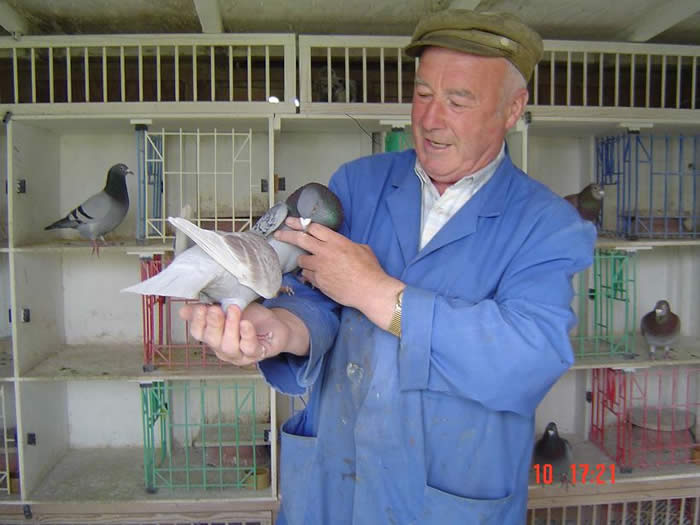
A happy environment
The city of Liverpool has on many occasions stretching back over the last century, been home to an army of sporting greats, catapulted as a result of the sustained brilliance of their achievements to the status of giants, though most if not all have been humble enough to admit to never feeling more at ease than when being treated as just another face in the crowd. From those born and bred in the heartlands of this great maritime port, to the travellers, whose journey in life has seen them pitch up almost unnoticed and take residence, becoming one with the natives and the organic, living, breathing, unique consciousness that is Liverpool.
The names of these personalities have been etched deep into the tapestry, folklore and more importantly the hearts of the people who look upon them not only as heroes and leaders, but also as friends and comrades. Iconic figures whose tremor-like impact was felt way beyond the sounding of the final bell, or whistle, permeating onwards into the ethers of the future. Their names uttered in conversation endlessly the length and breadth of the country and depending upon your camp, in tones of both admiration and fear!
The Liverpool pigeon racing community can count amongst its ranks a select elite who have risen to such lofty heights. Master technicians who left no nest bowl unturned in their quest to make the quantum leap and become the game’s very own bastions of invincibility. Ability and powers that were demonstrated by way of relentless achievement and a higher understanding of their craft time and time again, season after season, decade after decade. These are the Shanklys, Paisleys, Fagans, Cattericks and Kendalls of not just Liverpool, but the British pigeon fancy.
One such man is the subject of this profile, His success in the sport of pigeon racing stretches back four decades, in which time he has clocked not just the winning pigeon, but often the pigeon in 2nd, 3rd and 4th positions, on many hundreds of occasions at the highest levels of sport offered in this corner of England.
An output achieved in the glory years of the Liverpool Amalgamation against huge birdages of up to 7,500 per week. Indeed, the West Derby FC where his team did much of their damage would send up to 900 pigeons on a weekly basis and that is during the old bird season.
Consider then the impact this small colony of racing and breeding superstars (that so often decimated the best competition the city could muster) had when they were put to stud at Louis Massarella’s Louella Lofts in Loughborough, Leicestershire.
The introduction of these pre-potent bloodlines acted like a catalyst and their success for many across the British Isles knew no bounds. Whether or not it was a marketing ploy by the Massarella family, the fact that his name supplanted the name of the family of pigeons he had used to elevate his own racing performances, namely the Janssen Brothers of Arendonk, placed our subject in a niche category of fanciers including the late great Messrs Fred Shaw, Alf Baker, Arthur Beardsmore, Len Hopton, Jim Smith, Dr Rigg and Danny Challis.
But ultimately it was confirmation (if ever it were needed) that here was a pigeon fancier held in the highest esteem by his peers. And so without any further ado, it is an honour to present to you an interview with the Sky Leader himself, Mr Albert Tarleton.
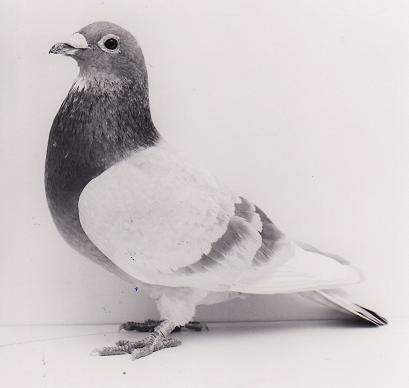
Golden Ball
An Icon Reflects
I was born in 1937, the youngest of 5 kids (4 boys and 1 girl) and spent the first 7 years of my life growing up on Everton Road before my family moved to Old Swan in 1944. None of my family had any interest in pigeons, although most of the lads I knocked around with either had pigeons or were interested in the other lads' pigeons.
Two who I can recall were Bobby Hollis and Ken McDonald. They had anything and everything; racers crossed with fantails, crossed again with tipplers or rollers. They were a right concoction and with some weird colours.
I’ve had an infatuation with pigeons stretching back to when I was 5 years old. I remember it was me brother’s wedding in 1942 and I noticed these two pigeons in the church and I was fascinated. I know now they were two blues and here’s me mesmerised as they’re fluttering about and everybody’s snapping at me to pay attention to the wedding!
Another time while passing the army barracks that used to be on the corner of Shaw Street and William Henry Street, I was with me mother and I sees this red ’un fly into a window and said to me Mum, ‘look, they’ve got pigeons up there’ but she just grabbed me by the hand tighter and proceeded to march me even faster up the road!
It was 1951 when I caught a stray in the back entry. It belonged to a Mr J A Jackson from Brampton in Cumberland, but I had no loft so I put it in the loft of a school mate named Denis Irwin and I reported it to the NHU (now the RPRA).
Mr Jackson duly sent me 7 shillings and 6 pence to return it by rail, so I went round to get it from Denis who informed me that it had got out and disappeared. My mother was straight as a die and gave me a right scolding. But several days later, Denis told me it had returned so my mother told me to make a box for it and to go and get it. So off I went to the local chemist’s shop and got myself a tea chest and fancying myself as a joiner, I made a dowel front for the tea chest and that was my first loft.
Having returned the stray to Mr Jackson, I then had an empty loft so my mother, who actually thought pigeons were unlucky, agreed I could get some pigeons and a chap named Alf Eales, who was a family friend, came to my rescue and gave me a pair of grizzles which had been bred by Bill & Leslie Kilshaw.
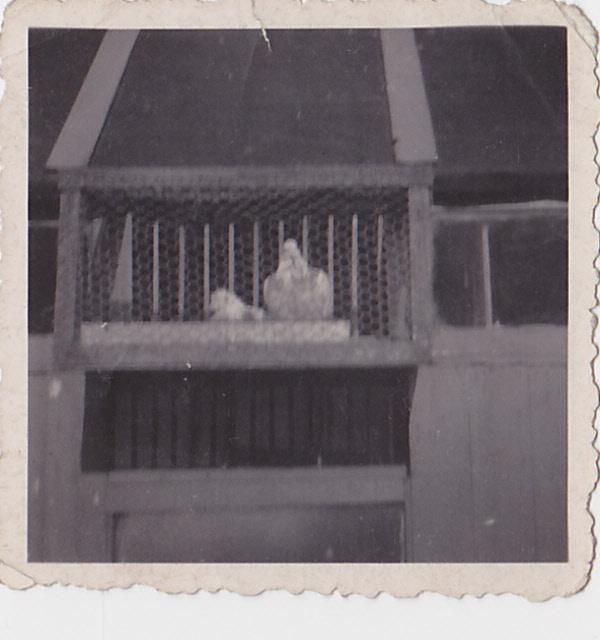
My first pair of pigeon from Alfie Eales
My mind was pre-occupied with grand thoughts of competing and in the winter of 1951 I applied to join the East Liverpool HS and was accepted. I ordered 4 rings from the secretary - not what you would call a mob flier! Breeding arrived and my rings were duly filled, but I lost 2 of my 4 youngsters off the loft and so carried on with my remaining pair. I trained them up and sent in 4 races, finishing last in all of them. Funnily enough I still remember their ring numbers now, 2010 and 2012.
I must mention that one race I took my clock in to the clock station at Edgehill station and there was no one else there so I waited around for about an hour. The station porter must have noticed me and said ‘What are you waiting for son?’ I replied that I was waiting for the pigeon men to come and he said ‘they went home hours ago lad’. That deflated my ego a little.
In 1956 I was called up for the army, serving in the Royal Army Pay Corps. But my pigeons were never far from my mind and upon demob in 1958, I got a bigger loft and in 1959 made premier prize-winner in East Liverpool HS. But the secretary fiddled me out of it by declaring the position was determined by how much money you won and not how many prizes.
Well I was only young at the time and didn’t pool. It took me all the time to get the money together just to send them and I said it wasn’t fair but was met with the reply ’well that’s the way it is now’ so I said give us a bit of paper and I wrote a letter resigning immediately and joined the West Derby FC and actually won the first race.
It was not long after that I met my future wife June and after courting for 4 years, we were married in 1965 and in 1967 we bought our own house, the setting for some of our finest racing. I was working on Edgehill railway as a staff clerk at the time and June phoned me up in work and said ‘there’s a lovely house for sale in Reva Road and it’s got a big garden’, so I says okay, I’ll pick you up and we’ll go and get the keys and take a look at it.
So I took the secretary with me, picked June up and when we got there, I went straight upstairs and looked out the window at the garden and thought that is magnificent and it was on a bend so it had the biggest garden in the road and I knew it would be perfect to fly pigeons from. Of course June was busy looking at the house. So we came away and arranged to buy it.
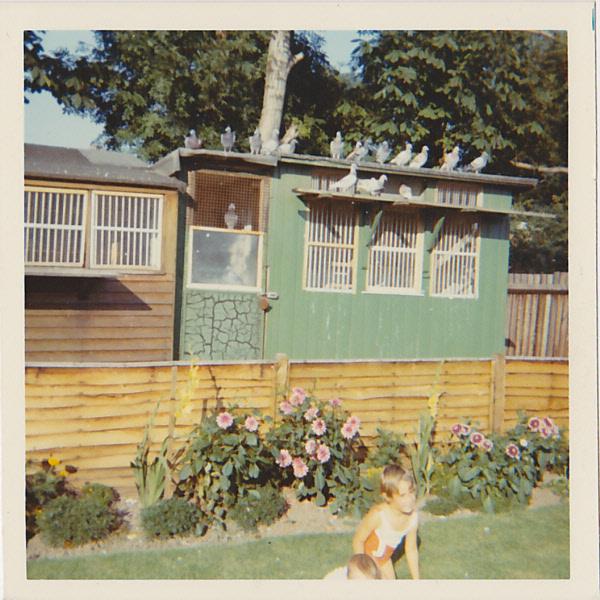
The original set up in Reva Road
I took a month off work to paint it because it had all this varnish everywhere. I had to use a blowlamp to get it all off. I started the painting and had the first two bedrooms licked when I thought I’ll make a start on the third now and it was only then I realised we’d bought a two bed roomed house. I was that busy making sure the garden was right, I hadn’t noticed!
The patter of tiny feet was to follow shortly and June and I had 2 daughters. Sandra was born in 1967 and Alison, who was diagnosed with Leukaemia and passed away in 2009 aged just 38, was born in 1971. As kids, the girls used to play in the pigeon sheds, something unheard of I suppose, but I used to let them. They’d be in and out playing hide and seek with their mates. The pigeons would come in and then go out, but it never bothered them.
They never had any interest in the pigeons but would give them all names. An eye-sign expert was at the loft one day and remarked that one of the pigeons had a cracking eye. Upon hearing this, the girls asked what’s wrong with his eye and I explained what the fella had meant and so the girls nicknamed the pigeon in question Steve Austin after the Bionic Man. Then there was Grumpy who would grunt on account of the girls always prodding him with sticks.
June liked the pigeons and would always let them out for me and even feed them if I couldn't get home from work in time. She would sit and talk to them as I did, but never handled them. That was until 1971 when we were racing from the first channel race and there was a holdover until the Sunday morning.
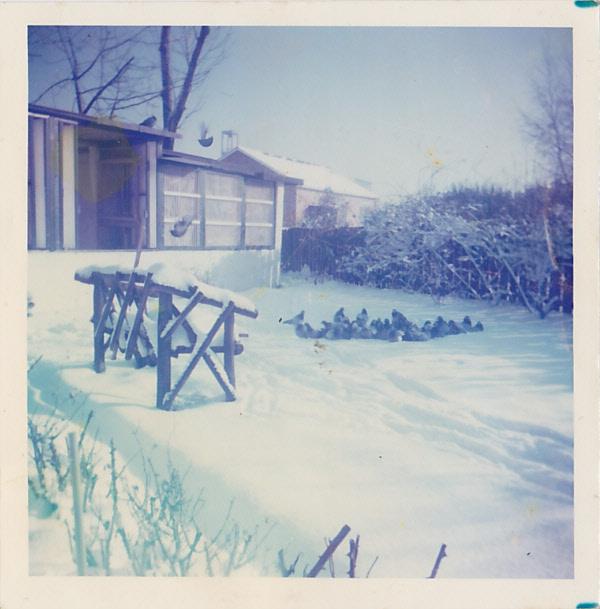
Out in all weathers - a picture of contentment
I went to the Fur & Feather club for my usual Sunday dinner time pint, as did most of the West Derby FC members. I hadn't been in there long when the phone went and Reg Wright the club owner, shouted me: ‘Albert, phone for you’. All the members were laughing and shouting to me ‘Your missus has timed in for you!’ I answered and it was June on the phone who told me there was a pigeon there with 2 blue rubbers on so I shouted in to the bar ‘Did the pigeons have blue rubbers on?’ The doors nearly came off in the scramble to get out. I took my time as June had clocked for me and we won 1st in the West Derby. Reg Wright said to me afterwards ‘I would give your missus a job if she could clear them all out like that every night!’
I also flew in the Roby for 3 years. A couple of Roby members came down to the West Derby HQ one weekend and asked one of my club mates who had won and were told I had. I had actually topped the Liverpool Amal from Dorchester for the second week running that day and they replied ‘he wouldn’t win in our club‘. They made a few more silly statements before they left and when my club-mate informed me what had been said, I decided to apply to join the Roby.
I was the Amal secretary at the time and so I was surprised that my application was refused. But a few of the Roby members approached me a while later and urged me to submit a second application and this time it was successful. I made highest prize-winner 3 years in a row and then resigned. I think I proved a point.
At one point, one of my fellow Roby competitors put in a proposition to ban widowhood in an attempt to stop me winning, but it failed the vote at the club AGM. In hindsight I wish I would have flown widowhood hens and took just a basket of hens down and seen what the reaction would have been.
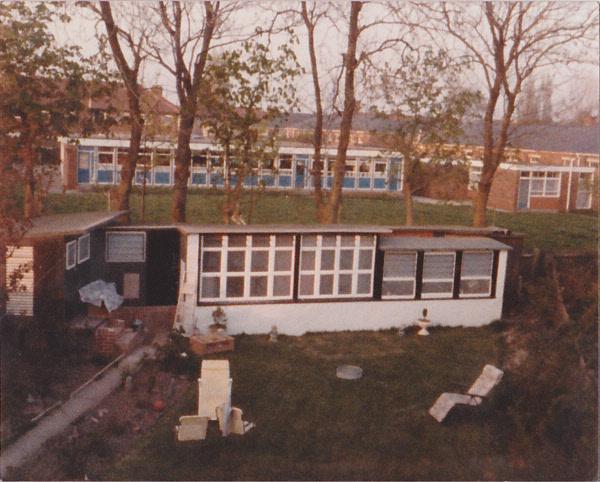
The condition of the pigeons improved considerably once the dowel windows were covered
I think anyone who doesn’t race hens now is mad. They are wonderful to watch and they just drop like bricks from the sky. No clapping around like you’ll occasionally get from a widowhood cock.
I actually topped the North West Nantes 2 bird with a hen 2 years ago, a feat I have achieved 3 times over the years and I was the first man in Liverpool to win it. It was a visit from Dr Rigg that convinced me to join in 1976 and I won it the year after.
Without a doubt one of the leading men of the day was Charlie Howell. He owned a haulage business in Allerton and he was the president of the RPRA and president of the Liverpool Amalgamation.
Then of course there was Les Kilshaw who I’m sure needs no introduction. Les was a good friend of mine and was a big influence. He was good, decent man Les Kilshaw and straight as a dye.
We had so many adventures together and it was when his wife phoned me up one day asking me to encourage him to take a break that we decided to visit Belgium and this is where Les visited the loft of Emiel DeWeerdt in Kortemark and he bought that famous pair of pigeons.
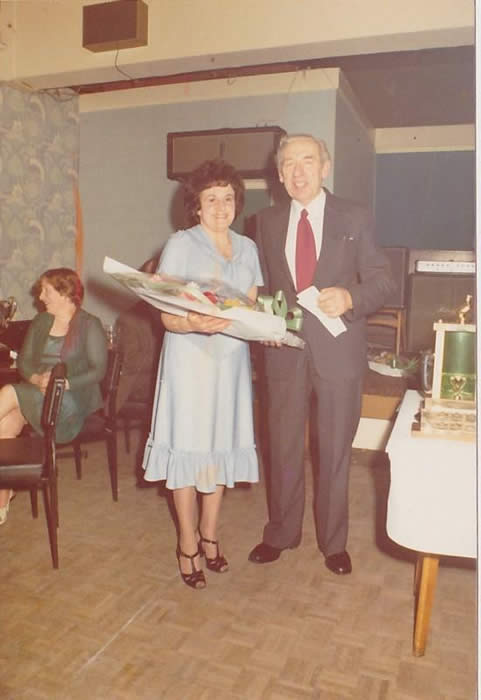
June and Les
You also had fellas like Syd Jayne who was the secretary of the West Derby. Syd’s ambition was to get 100 members in the West Derby and he actually got it to 105 so that was his ambition realised. Syd was a good secretary; he taught me how to work velocities out when I was about 15 years old and also how to set clocks.
Other notable fliers I recall were Peter Don and Danny Owens. Roy Humphreys was another and in the 1980s Pauline Ackers burst onto the scene with some really good results. Most, if not all clubs in Liverpool had good fliers, but they were perhaps not in the best of locations.
The 1970s saw a big explosion of members in the Liverpool Amalgamation. There were about 13 clubs and at the time we were transported by rail, but that ended in 1965 when we went with Catteralls. From average memberships of around 30 members in the late 1960s, numbers suddenly boomed and I think a lot of it was to do with the extinction of the shorts fliers.
There used to be a lot of milers clubs in the city and what with all the demolition in the 1960s and 1970s and the removal of so many families to places like Kirkby and Netherley (which was farmland at the time) and giving them spacious gardens, they couldn’t fly the shorts the way they did when they were in the back entries, so they ended up with the homers as they called them.
Liverpool as I recall was yet to emerge as a force in the North West Combine and all these rural farming areas such as Lathom, Scarisbrick etc were bigger in terms of membership. The inland combine races are a recent innovation, but the channel racing was far more dominant then. Very few were in the National.
In the winter of 1973 I became interested in a method of racing known as widowhood. I had read a number of books on the subject, all extolling its merits and I decided to give it a go the following season with 8 cocks.
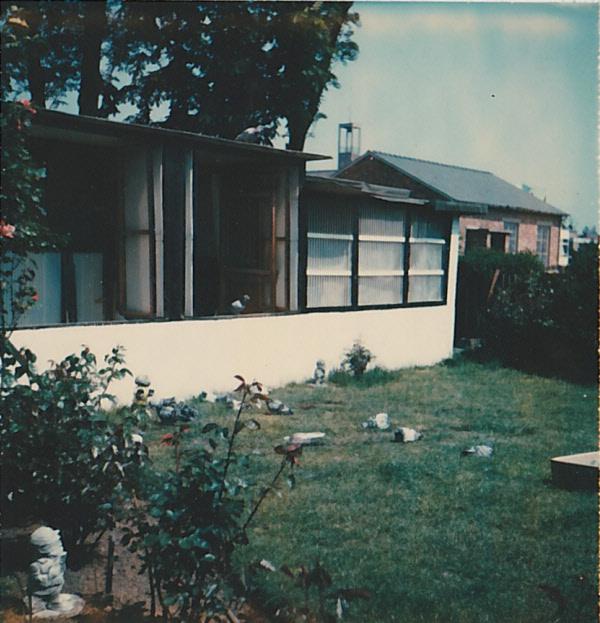
The loft at Reva Road once an outer skin had been added
While they didn’t set the world alight results wise, what I did notice was that these cocks held their condition far better than the natural pigeons and were far more consistent in comparison to the naturals, some of whom weren’t shaping, so then I turned it over totally in 1975.
So impressed with the condition of the pigeons, I convinced Les Kilshaw into trying widowhood and so he made the switch the year after me.
I was always fascinated with the Belgians. It was widely accepted that they had the cream in terms of pigeons and could teach us how to do things. That is how a lifelong love affair with the Janssen pigeons began.
I was attending an RPRA western region meeting in 1975 and in conversation with Charlie Miller the auctioneer from Wrexham, I asked him who’s got the best Belgian pigeons and he replied ‘me, I’ve got them’ and so he agreed to send me some.
So Charlie sends me ten young ’uns and to be honest they could have paired up they were that old and I lost nearly all of them. But one of the ones I lost I really liked; it was the most beautiful shape that I can ever recall handling in a pigeon. A year later Charlie invited June, the kids and me down to Wrexham for dinner with his family.
I had the ring number of this pigeon wrote down on a piece of paper and when we went over I said show me the parents of that one you sent me last year and he first of all handed me the sire which he said was a Busschaert cock and I told him ‘that’s a horror, show me the mother!’ so Charlie handed me the mother and I said ‘that is absolute perfection, I’m not going home without this hen’.
I got her and a cock to go with her and the first 3 youngsters I bred from her topped the Liverpool Amalgamation. I bred 6 in total from her, gave one to Les Kilshaw which bred an Amal topper and the other 2 I kept for stock and both of them bred Amal winners. She was a fabulous pigeon and I named her Miller’s Gold in honour of Charlie.
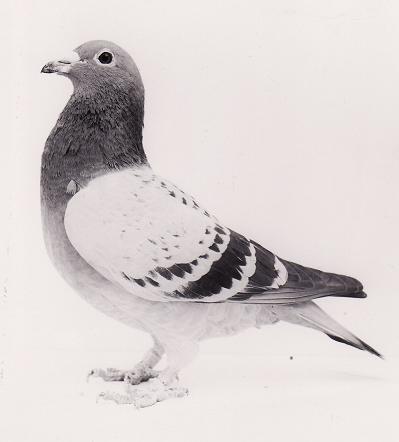
Miller's Gold
Miller's Gold was bred by a well known Belgian by the name of Jules Gallez so I got a couple more from him and then I went to an auction, and strange to say again, I was afforded a bit of luck. Les Kilshaw asked me to go to an auction of a fella named Paul Fauconnier as he was interested in these red pigeons Fauconnier had but Les didn’t like driving on the motorway so he asked me to drive so I said okay.
So we goes the sale and I’m just having a look around and a pigeon catches my eye so I looks at the paperwork and it says it’s out of the Vieux Bange which translates into Flemish as the Oude Bange. So I gets it out the pen and I thought it’s a bit rough, probably due to foreign pigeons having to go into quarantine for 35 days.
I grabbed Les and said come and have a look at this and he said ‘it’s alright, looks a bit down, but three weeks in your loft and no doubt it will look a film-star!’ The bidding started at ten quid but hit a wall at 20 quid so I bid £22 and got her and she bred Sky Leader who I later sold to Massarella for £3,300 so she wasn’t a bad buy was she!
This hen I named La Marveilleuse and she was purchased by Fauconnier from a man named Albert van Cauwenbergh the year before I bought her. Paul Fauconnier was a bit of a wheeler dealer in that he was buying pigeons in Belgium and then bringing them to England and selling them in his own name.
Her grandsire was the most famous of all the Janssen Brothers pigeons the Bange of 59 sire of the Merck and had the paperwork been in Flemish someone else at the sale might have associated it with the Janssens, but I knew my way round both languages and I was lucky.
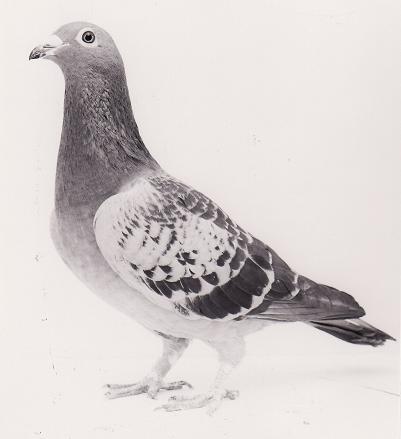
La Marveilleuse
It was a similar story in how I acquired the Golden Ball. A fella asked me to go an auction with him and pick him some stock birds out so I did, but the pigeons were pricey. I did however spot a smashing youngster and told the fella but he said he didn’t want youngsters, he wanted old ones, so I bought it myself for 40 quid and that was the Golden Ball. He was bred by a man named Roger Timmermans and I later sold him to Massarella for £2,000.
It just goes to show you, even now, there are good pigeons to be had at good prices if you go looking for them. I’ve never ever disclosed this, but in total my Janssen family which originated from just 5 pigeons, cost me £185 and I sold them back in the early 80s for a total of £45,000.
They provided me with so many hours of enjoyment during their time with me and I mean that genuinely. Not just when racing but also when pottering about the garden and cleaning out. I would spend hours with them.
Unfortunately in the 1970s certain parties to suit their own ends were telling people that my Janssens would only sprint, they couldn’t do the channel. But the reason they weren’t as prolific is because I wasn’t there. I never sent because I was on holiday.
And yet I was the only fancier in Liverpool that could boast to have won the Liverpool Amalgamation, the North West Combine, the Liverpool 2 Bird Nantes and the North West Nantes 2 Bird, all good races and all from France.
I cannot recall exactly everything they won, but my main pigeons were Sky Leader who topped the Liverpool Amal twice and had a string of good performances including 4th Amal when I took the first four, his brother June’s Red Pied was another good cock who topped the Amal, then there was the Young Fox also a double Liverpool Amalgamation winner who was bred from a sister of Sky Leader. Ajax was a half brother of Sky Leader from the same mother, he topped the Liverpool Amal twice as well.
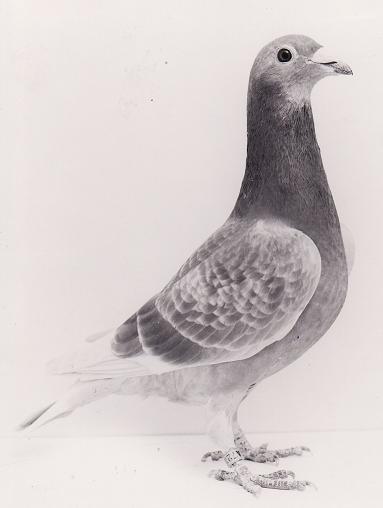
Young Fox
There were many more, but my favourites were probably Sky Leader and Young Fox. Both won 6x1st in club racing and as a family of pigeons they were just great. They were so consistent, that was the thing. You could put your money on them with confidence every week and I still have this blood in my lofts today, crossed into my newer introductions so they have been with me for 40 years now.
Massarella had them for must be twenty years before they were moved on and I went back from time to time to re-introduce their bloodlines, I had 2 particularly good breeding sons of Sky Leader this way.
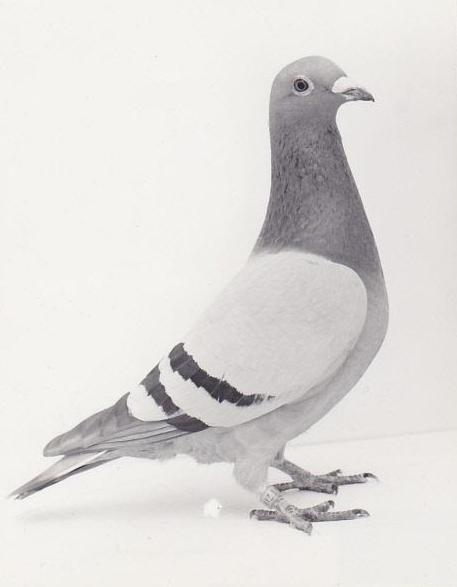
Skyleader
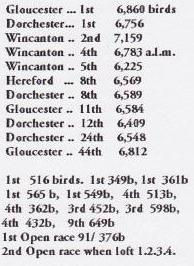
Following on from working as chief staff clerk at Edgehill station marshalling yards, I became employed by the Prudential in 1969 and worked there for 13 years, before going it on my own and purchasing Mersey Pigeons a corn shop in Aintree.
We left Liverpool in 1985 and after a 3 year hiatus following my clearance sale, I decided to take up the challenge once more. I had a handful of pigeons including a few I had given to Les Kilshaw which he returned to me to start me off again. I had an aviary measuring 20 feet long attached to a little shed with all the pigeons that I wouldn‘t sell due to their age.
Dennis Gerrard brought the Roby Cock back, he was a good pigeon, so I was rearing youngsters for the lads. The local fanciers also started calling in to see me and the pigeons and that got me involved again in.
I had a couple of yearlings already and what I was doing with them was singling them up every day at the corn shop. It was only 8 miles away but they were going every day and they must have had around a hundred tosses so when it came round to racing in 1989, while they had no race experience, they had received plenty of single up training.
The first race I was a bit behind and one of the local fliers said to me ‘this is Little Belgium up here, this isn’t Liverpool’ inferring of course the competition in my home city was inferior. In the next 6 weeks I topped the Amalgamation four times and was 2nd in the other two races so I sees this same fella, tapped him on the shoulder and said I learned to fly in big Belgium!
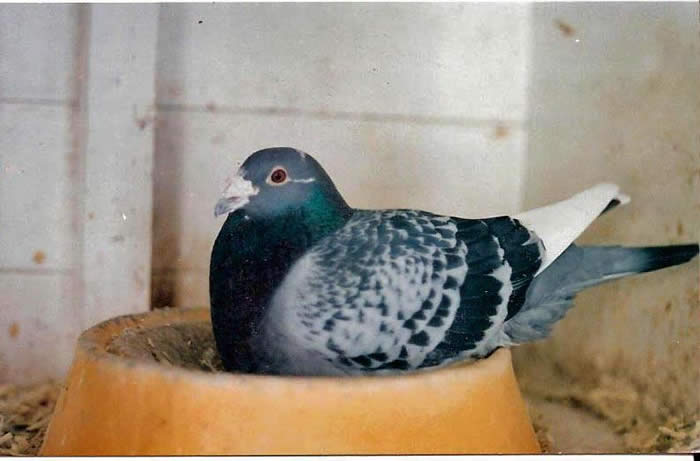
GB91T67582 - One of 6 brothers to win 1st Amalgamation
In 1995 I was introduced to a professional footballer by the name of Duncan Ferguson who was known to be a pigeon fancier. Duncan had signed for Everton from Glasgow Rangers and a lady who worked at the club mentioned to him that she knew a pigeon fancier by the name of Albert Tarleton and immediately Duncan replied that he had been told to look me up and so a meeting was arranged in a local pub and we have been friends ever since.
He moved about a lot at first. He set up a loft in Rufford, then he moved to Formby and set up a loft there. Then he moved to Spain and put up a loft there. He then decided to move back and each time the number of pigeons and lofts increased and the onus was on me to look after them as Duncan was so busy with the football. I don’t think he will mind me saying that in pigeon terms he was a total amateur when we first met, but he has come a long way since.
Duncan is mad keen on pigeons, he loves handling them and is much the same as I was at his age, but he now works 12 hours a day at Everton and just doesn’t have the time for them.
In 2004, Duncan and I brought in the Koopman pigeons after speaking to Peter Fox of Syndicate Lofts and we were discussing various fanciers on the continent who all had something similar in common.
Gerard Koopman bought a pigeon from Louis and Dirk Van Dyke called Golden Lady and she hit it off amazingly with Kleine Dirk, his famous pigeon. Next Pieter Veenstra bought a sister to Golden Lady and crossed her into his Koopman pigeons and they hit it off and so Marijke Vink introduced pigeons through Van Dyke’s Kannibaal and crossed them into her Koopmans.
We noticed that they had all been doing the same trick so we decided to follow suit, purchasing a daughter of the Kannibaal and we also bought a daughter of Kleine Dirk and crossed them with my Janssens and needless to say they hit it off and have proven to be very successful for us and others who have had pigeons from us.
I have visited a few continental lofts over the years, some I liked, others not so much, but I have to say the pigeons of Paul Haelterman I really liked, they were fantastic. He kept them over the house in his attic and the type of heat such an environment generates does wonders for a pigeon’s condition.
Creating an ideal loft environment to me is the main thing when racing widowhood. I also like tame pigeons and the optimum environment comes in part from having tame pigeons. I would feed all mine in their boxes and they get used to the routine, queuing up as I walked along with the bucket of feed.
I went away on holiday one year and a good mate of mine John McGreavy from Breeze Lane agreed to feed them. I was a bit bothered as I didn’t like leaving them so I phoned John on the first night and he said ‘you didn’t tell me everything did you?’ I asked what he meant and he said he threw the corn on the floor and not one of them would come off their boxes to eat.
He thought I’d asked somebody else to feed them and they’d been before him so he was a bit annoyed. So he grabbed a couple and realised they had no corn in their crops and they were all picking at his fingers so he offered them a bit of corn and they all ate out of his hands from their own boxes. Even I didn’t expect that!
I’ve always had an absolute fascination with feeding. It was the late 1960s that I came to the conclusion that everyone fed too heavy. There were too many peas and beans and stuff like that. Maize was looked upon with contempt.
I knew fellas who used the term a bag of crap and it was a bag of maize they were talking about. In later years fellas used to bring their sick pigeons into me at the corn shop and I never ever saw one that was underfed, they were all overfed or killed with kindness as they say.
I had a book which had a nutritional analysis of all corns and it stated the grains of the highest nutritional value in terms of carbohydrates were paddy rice and maize so I made a conscientious decision to make it the principal diet. But the thing is you don’t need to feed a pigeon all of the best grains at the beginning of the week, you want it at the back end so you’ve got to scale it.
So what I used to do was feed them all the stuff they don’t particularly like early on, like barley and pulses and gradually change it so it was nearly all maize and paddy rice by the end of the week, just moving the scale gently as each day passed. The proportion of paddy rice I would feed towards the end of the week would be between 20-30% and the maize would make up the rest.
I read an article about paddy rice where a test group of rats were fed un-husked rice and they got rickets. So they were fed the rice with the husk on and it cured them all.
Carol Vorderman also told a similar story on a TV programme. Her grandfather was in charge of a health department in the Dutch East Indies and they were having major health problems with the local people. He came to the conclusion that it was as a result of the diet and he done exactly same thing, observing that their staple was un-husked rice. He convinced them to eat the rice with the husks still intact and it worked straight away.
I also fed a small amount of hemp on a Thursday and Friday before a race but not much. I’m of the opinion a pigeon has always got to have an appetite. If it is off its food, is it because you have fed it too much the day or feed before? This probably is the answer.
I used to buy all the corns in separate bags and mix my own and I knew it worked because the pigeons felt right, they were light in weight, blown up and they looked the part.
I’d make a bucket of corn up on a Sunday morning and using a tin as a measure, I’d make up this mix consisting of about ten tin measures in total. Say I’d use about 3 measures a day, I’d then replace that with 3 measures of maize on the Monday so it would still be weak maize wise. On the Tuesday, the same again, replace the 3 measures used with 3 more of maize so as the week progresses, the mix goes from being barley looking, to maize looking but it has been a gradual build up.
I was very fussy when it came to feeding. I used to watch them, give them a measure but I’d keep handling them to see they had enough in them and if they wanted any extra they had to eat it out of my hand or they’d get no more and that way they were always fed just right.
During the winter I also used to feed a percentage of whole oats with the husk on, about 10%. You used to see the condition on the police horses and that is all they were fed on so I’d think if they can do that for a horse imagine what they can do for my pigeons.
I wasn’t a big lover of linseed and rapeseed during the moulting period and I’ve got a feeling that it’s too much oils that causes these blood bursts. They only ever seem to get them between September and November and it could be related to the moult but the thing is everyone throws sweet seeds at them and I’ve got a feeling it’s something to do with that, too much oil seed. I always fed a large proportion of barley during the winter, between 25-30%.
I’m not one for using supplements. You’ve got all these fellas who are not that successful but they can spell all these medicine names perfectly. They’re experts at it, but they know nothing about pigeons. Their pigeons must never get clean water.
Mine get practically nothing like that. In fact if I do give vitamins they are children’s vitamins from Boots and they go on the corn so you’re not throwing any of it away. But the game has gone supplement mad. You look at a BHW in 1960, no adverts, now it’s one thing after another and there really is no need for it at all.
One thing I feel strongly about is that pigeon fanciers don’t spend enough time in their lofts observing and getting to know the ins and outs of their pigeons and their characters, even talking to their pigeons. They’d win more if they did. I used to spend hours out there and I can recall Stuart Blake visiting from Manchester around 6pm one evening and my Mrs shouts down in the end ‘it’s twenty past 11, the kettle’s boiled I’m going to bed’.
Stuart Blake went home at half past two in the morning so we must have been in the shed for over 8 hours just talking pigeons. He was as fanatical as I was, but he’s passed on now God bless him. I think people might think it’s a soft idea talking to pigeons but it’s all about the environment and Reva Road was fantastic. It’s something I’ve never really recaptured up here as June passed away in 1994 and she was a big part of my success.
The kids were running round and not just my kids, there were all the neighbours as well, in and out of me sheds, playing hide and seek. June was always here talking to them and playing with them. Joe Murphy used to fly in Reva Road, he lived ten doors away. His kids used to play in my pigeon shed but he wouldn’t let them near his!
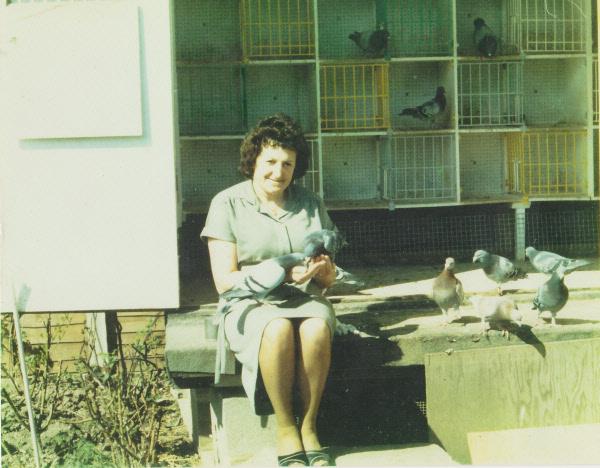
June was a natural with the birds
I used to laugh at the idea that to fly widowhood you shouldn’t go near the shed of a day. If I had to keep pigeons like that I’d have packed in. You get to know everything about them, a white toe nail or feather in an odd place and you could recognise that pigeon. Far too much time is spent down at the pub talking about them and not enough time with them.
I feel you have got to be part of the pigeon’s establishment, from the pigeon’s point of view. You have to be part of the loft, much like them, the drinker, everything has to be in harmony, you belong there. From what I can make out some pigeon men just feed them from outside, shut the door and go back in the house. That’s not the way, you have to be part of the environment.
It’s about creating affinity with your pigeons. You could have put a hundred pigeons of mine in pens and I could go along and recount every ring number from memory and I guarantee you I wouldn’t get one wrong. It annoys me slightly that I can remember every single ring number of every pigeon from 40 years ago, but I can’t remember last year’s ring numbers.
People do not seem to enjoy the company of their pigeons these days. Some treat it as though it’s a war game, or like they are racing for bars of gold and it is not a modern phenomenon. I have been the subject of many such incidents down the years and I just think it is sad for these people that they have never received the enjoyment out of the sport that I have.
Unfortunately I don’t see a great future for pigeon racing. There are many reasons and closest to home is the problem of multiple timings. I do not blame ETS for this, but I do believe that people taking 20 or 30 positions is ridiculous and it needs to be stopped.
And like a lot of things these days, you cannot compete against these kids' games. Kids don’t want to look after animals and birds any more, they just want to sit in their bedrooms all day playing on these bloody games and you can’t compete against it.
It’s the same with the canary & finch men, even the football, the kids are not interested enough to come out of their bedrooms and away from the computers. They want holidays to Spain and Turkey and to go travelling around the World. We never had that in them days. Time has marched on and sadly not for the better in a lot of things.
The proposed changes to the North West Combine programme has to happen I would say given the birdage dropping, but I would drop the extra Carentan and Fougeres and make sure Niort stays in the programme, that is a must.
In the sport of pigeon racing I have a lot of admiration for my old mate Ron Green who I’ve been close to for 40 years. He’s a great fella Ron and certainly knows how to fly a pigeon.
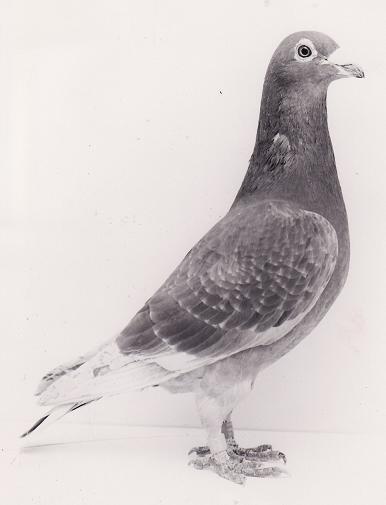
De Vos
I would like to thank Harry Andrews who is the secretary of my club Standish FC and who has been coming over and cutting the grass for me as I can’t do it and also Peter Moss who has been training my pigeons this year. Both have been a big help to me.
I’ve always been pigeon mad, absolutely fascinated by the things and I’ve done some mad things down the years. I remember a mate of mine John Green. His wife said to me once ‘pigeon men are keen, but you’re obsessed!‘ and I was to be fair.
But they can dominate your life and it can become out of order. I can recall Sandra when she was about 9 years old, coming home from school one day and we were just talking and she said her mate Janet was going to the beach tomorrow, so I said good for her and then Sandra asked me, ‘what‘s the beach?’.
June was there and she said ‘there you go, the kids don’t even know what the beach is‘, because I was always too busy with the pigeons. So it was decided there and then we were going to go on holiday and I agreed, reluctantly, to go away for a week to Cornwall. It was the glorious summer of 1976 and we had a fantastic week away and from there on in, we went away every summer for 2 weeks.
But it comes to something when kids who live by the sea don’t even know what a beach is and there are times when you just have to take a step back and put what’s important to your family first.
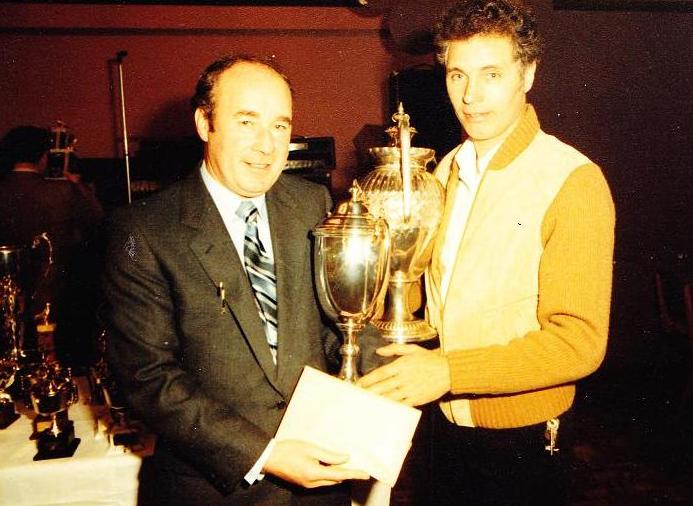
Myself and good friend Brian Snagg
CONCLUSION
I'd like to say thank you to Albert for giving of his time to compile this article and I wish him all the very best for the future. Soon he will be heading north to live with daughter Sandra and her family up in Tain, Scotland. His lifelong involvement with racing pigeons will be no more, though the love affair will no doubt continue.
Albert Tarleton has been a tremendous ambassador for our sport. For the many rewards he has gained, his aim was always to give as much as he could back and his time in the various offices of the organisations he flew in and the many friends he has gained from around the world will testify to that.
The sport of pigeon racing has been all the more richer for this great man's involvement and here is hoping his legacy continues long into the future with continued success for all who race his pigeons.
Darren Smith
---
Elimar November 2013