LES J. PARKINSON'S
NEWS-REPORTS-ARTICLES
Henry Van Neste of Feluy
The visits to Belgian lofts had been arranged by Guillaume Vanneste and he had not given himself as driver a great deal of time because we had two hectic days to see some excellent lofts. So what a great day it was when I had the opportunity to visit one of the legends in pigeon racing, a real master and one whose performances have been noticed for many years. There is no doubt about it, he has been an outstanding fancier on the international scene for many years and he is Henri Van Neste of Feluy, Belgium. This is a fancier who has been at the top of in racing pigeons for well over 40 years and during that time his performances point to the fact that he has no intention of giving up.
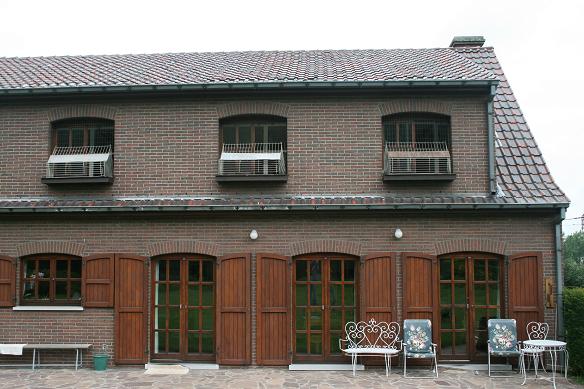
Henry Van Neste's old bird race loft
I did not catch all of the conversation but I did get the outline of the story and it was about Bilco, one of our scribes for many years and one who has been in the company of Henri Van Neste on many occasions. There was one thing for certain and that is they were exchanging what appeared to be amusing stories of the past and Bilco appeared to be in the thick of the conversation. While we were sitting in the living room of the Van Neste home, Henri’s wife Esther was bringing in refreshments all the time and she was certainly keen for us to have a glass of port with Henri, the only trouble was one went into two and she would not take no for an answer, and the select biscuits were going down well with the port.
As the port went down the stories continued and I was watching Henri, who I am told is no 85yrs and he was really enjoying the chat with Frans & Guillaume. It's just a pity that I could not understand it all. Even though Henri's father was not a pigeon fancier, Esther’s uncle was Honore Vandemeulebroucke of Lauwe who was well known for his family of Stichelbauts. They were not the only family that he had because there was also another well known line and theyw ere those of Charles Van Der Espt. The obvious choice for any family is go to the source so pigeons were obtained direct from a legend of the sport Alois Stichelbaut who was a close neighbour of Honore Vandemeulebroucke in the 30s. Many winning fanciers get a break and that was the case with Henri when in 1961 received 10 eggs from Esther's uncle that led to a great team of racing and breeding pigeons that went on to record performances that were noted by fanciers world wide. Even today we see many fanciers racing and winning with the old lines of Alois Stichelbaut, bloodlines that figure prominently especially in distance winners. It is surprising how many fanciers do or have used this line over the years and with great success. Alois obviously had a small select team that he spread lightly and then others benefited and crossed them as so many do. That was also the case with Henri who over the years brought pigeons in from other top fanciers such as Leopold Bostyn, Andre Lietaer whose are Stichelbaut lines anyway so a good introduction.
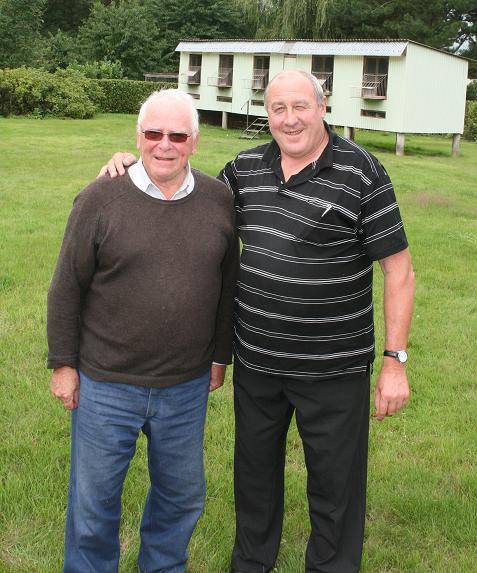
Henry Van Neste with Frans Rigole
Then we see the pigeons from Germain Imbrecht whose lines can be seen in today’s stock and with them living only a few miles apart Henri and Germain were frequently in conversation and exchanged of pigeons. Then we have Robert Fayt, Jacques Pattijn then more up to date the likes of Henri Deleu and Pol Tossens. The last to be brought in are the origin of the Cobut strain are: Pure Duray (Ecaussines); Cattrysse and. Coudou pigeons. Henri, like most fanciers, is always looking to improve his stock. No matter how many birds are brought in Henri would only select a few from each loft and when he did select they were really selective. All top winning fanciers are going to be careful about the pigeons that they introduce into their lofts and Henri was as selective as they come. What was noticeable about the pigeons and that is how many reds there are housed in these lofts, and this colour has produced many good winners. I wonder how much the influence of the Imbrecht line has had on producing so many winning reds in one loft.
Over the years the methods around the lofts have changed slightly and with his retirement from the mill he has more time with the pigeons. It was his business that brought about the new house where they live and during this major change Henri parted with most of his birds, especially the race team. When many pass on a major part of their team they find it hard to get back but with a fancier as successful as Henri that was not too hard and he soon established a winning team again. Henri was soon once again on the winning trail and the National performances were soon to be seen at the new lofts in Feluy. The birds left were carefully paired and it was a known fact that Henri preferred to use such pairings as uncle to niece, aunt to nephew and cousins so they are not too close because he would steer away from brother and sister, father and daughter, mother and son pairings. Also as with most fanciers Henri was always looking for a class pigeon to bring in as an outcross but before they went to far into his team they would be thoroughly tested, then and only then if they were successful would they go all the way into his team. By breeding this way Henri did not have to breed large numbers as so many do in Belgium to reach his goal. Through his expertise of breeding and the knowledge that he had collected over the years Henri soon collected a top win when he won his first Long Distance Champion of the Colombophile Belge. So it took just two years to establish a winning team of pigeons after moving to the new home and racing lofts. Henri has terrific stock sense which was a subject that I discussed many years ago with the late Denis Gleave who had his own thoughts on breeding winning pigeons. Denis was a farmer and would always say that to breed winners no matter what sort you needed stock sense and his came through being a farmer and there are quite a few farmers about who successfully race pigeons.
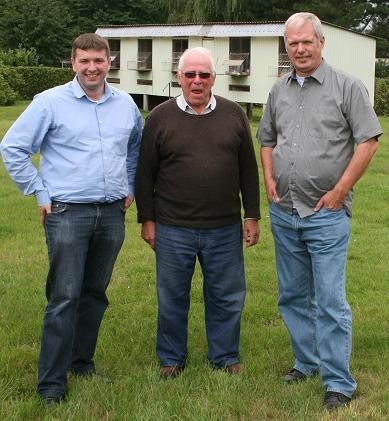
Henry Van Neste with Guillaume Van Neste & Les J Parkinson
In the modern day of racing pigeons fanciers have their won thoughts on what distances they race from and in Henri's case the main interest is the middle and long distance races but he does, like so many others, send to the shorter races as part of their preparation for the season ahead. Pigeons are bred for a reason and Henri believes they are bred for a distance and his are for the middle to long distance and that is where he prefers to keep them. Henri has based his pigeons on the choice of races that he likes to compete in and they are preferably the distance events. This fancier is different from many of the continentals because he races more so on the old tradition UK system of pairing the birds up in Mid March. Something else that he does is to get the racers on eggs but they are not allowed to rear a nest of young birds, they are raced dry. The 2yo and upward team are the one’s that do not rear a young bird, instead they are on eggs for about ten days and then the hens are removed and placed in their own section. The yearlings are treated differently because they do rear one young bird and that is from the stock loft. The yearlings are then raced up to about 350mls during late May, June and early July. The young birds are not very often raced and while we were there they were out exercising and Henri was telling us that they are three rounds off the stock and they exercise for around 4hrs each day and that is all in one go. I must admit that we were there for quite some time and they showed no intention of dropping on the loft and there was no flag so it was at their own discretion.
The only lofts we actually saw while on this visit was the young bird loft because the old bird loft was off limits due to being close to basketting for the weekend's race. The actual old bird loft was in the top half of the new house and a great deal of care had gone into the design so that fancier and birds could be confined to the same building. Henri did say that the yearlings and old birds have their own sections with two for the established team and one for the yearlings, they are never mixed. There is also a corridor the full length of the upstairs loft and there is good ventilation through the roof. The next move after the long distance events have finished the old birds are left to rear a nest of young and these are treasured for the future as Henri believes they make excellent stock birds. It is nearly on going system because by the time they are all separated and the late breds have been seen to Henri is looking at sorting the stock birds out to pair at the end of November.
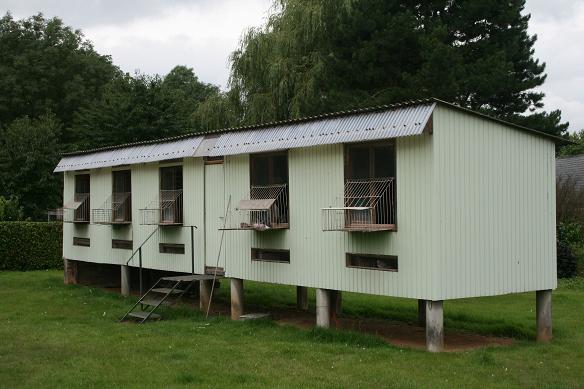
Henry Van Neste's young bird loft
On about exercising, the widowhood cocks also exercise well and quite easily do their hour at both ends of the day and again they are not flagged so they must always be in good condition. For the pigeons to exercise like they do they have to be fed on good corn and fed well and from what I gather they are. I do wonder if the woods that are part of the property are anything to do with why they exercise because there must be quite a few wild birds knocking about and they could disturb them to a certain extent. What I was surprised at about the exercise regime is that Henri does not let the old birds and yearlings out together, the old are out first and then the yearlings. I would like to have seen more and been able to understand the conversations that were going on, I did get some of it but more would have been very nice.
Raymond Cobut friend of Henry Van Nest and supplier of pigeons
I would like to thank Mick Bray and Guillaume Vanneste for their help in gathering information on this legend of the pigeon racing world. I would also like to thank Henri Van Neste and his good lady for their time and looking after us on this occasion and it was a pleasure to meet one of the legends of the sport.
Strains for a system
How many times do we bring new pigeons into our loft only to find that they do not suit the system so out they go again? This may be seen by many as an ongoing problem because they cannot get to grips with a certain fancied family of pigeons. Some pigeons have recently come into my position for a short stay and I am amazed at how they have reacted and they are not old young bird’s neither they are about May/June bred. But they are already showing keenness and have paired up even though there are no boxes in that section. There are also old cocks and hens but they have not shown the drive that the Nadira pigeons have so far shown. I am looking at them and thinking that they could make a good roundabout pigeon with both the cocks and hens showing interest at such an early age. I also wonder just how many fanciers do not give their new introductions a chance to prove themselves. I must say that I am impressed with these pigeons and will probably be taking a look at introducing a couple myself after all I am always prepared to try something new, trouble is they nearly always don’t react to the way I do things. But as I say with the way these are now showing at their age they might just be worth a try. Nadira is probably the best pigeon ever raced in Europe having won 2 x 1st Internationals plus many more positions so could be OK.
Club/Fed news