Back to Basics - The Marathon Challenge
Where does the time go? It is months since I put pen to paper, or should I say fingers to iPad. The combination of 1 year old daughter who was walking at 9 months, a house requiring significantly more work and time than was ever anticipated, and an increasingly demanding role within my company has meant that spare time is precious at best and finding the drive to get an article written up does become more difficult! However, tomorrow morning I am off to the Peak District with my wife and three daughters, along with the larger than life Father-In-Law and his wife, for a week of camping out under the stars, keeping it basic, just the way I like things. Sunday evenings are usually pretty chaotic after bath time for young Abbie, preparing for the week at work which lay ahead, but this evening I grabbed out an old British Homing World stud book and relaxed for a little while. The 1968 version is full of interesting articles and it must have been a sign when I flicked over the page to see an article by one of the greatest Pau flyers of all time, John McLaren. A sign to surely get something drafted up, even if it is short and sweet, to keep the interest alive and more importantly the hopes and dreams of my fellow Back to Basic fanciers!
I simply do not know where the last 10 months have gone! We moved into our new home on October 17th last year and it still feels like yesterday. The house needed, and still needs, a fair amount of updating, and whilst the hard work of new kitchen and bathroom installations have been completed, general decorating is taking a little while longer than expected due to life distractions! My three daughters have been growing up very quickly, I have 1 going into 3rd year of high school next week, another into the last year of primary school and Abbie is now 15 months old, and a totally different little girl to when I last wrote a Back to Basics article some months ago.
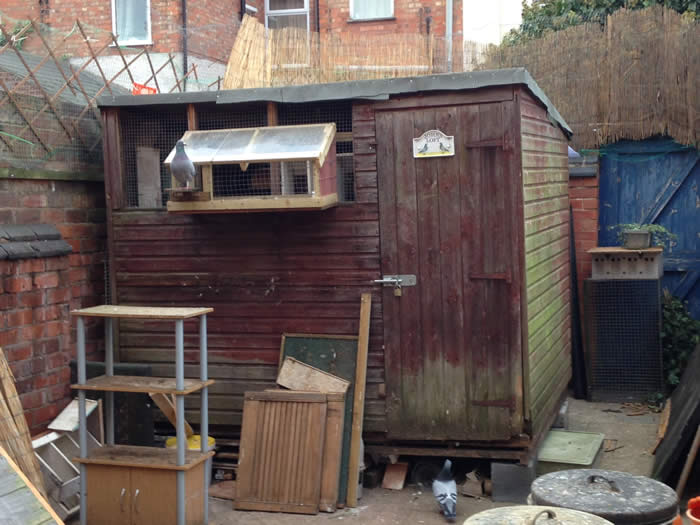
Fast forward a week from when I started this article, my eyes were sagging a touch last Sunday so had to retire to bed. Fortunately something happened in the last week to give this little piece some more substance. This year has been about finding my feet with the new loft and a proper stock loft, I feel very spoilt! Including the stock birds I currently have about 60 birds, young and old mixed together, and 40 of those are this year's youngsters. The past week I decided that instead of having somebody in to look after the birds I would feed and water them enough for the week, lock the doors and leave them, see how "basic" they can actually be. Well I am very pleased with the results. They look just as good as when I left them, the food had run out but water was still OK. They all dived for the food trough when I topped it back up again but it got me thinking, "What do I actually do in the loft each day?" The honest answer is not a lot! Breeding season is a little different but when there are no babies and the old birds are on pot eggs what do I need to go in for except to feed and water them? I would honestly love to spend more time in the loft pottering about and getting to know each bird like the back of my hand but time does not allow it at the minute with my lifestyle so I have always needed to find another way. Basically the birds are wild, feral if you will. They come in to roost and know where the food and water is, that's it, no different in all honesty to how Norman Southwell kept his birds so I am told, or how several long distance men I know keep theirs. So as long as they have food and water then they seem to be happy to come and go as they please as the loft is always open when I am not on holiday. So it has come to a head that I actually don't even NEED to go to the loft every day. Now I know that will scare the heck out of some people but for me, my fellow "Back to Basics" marathon fanciers and any other fancier struggling with the daily grind that can come with pigeon racing, it opens up a whole different array of opportunities. For the working man who has no pigeon partner, the shift worker, the lorry driver, the family man, the company director, the Barcelona fanatic with several hundred or just a dozen pigeons, this is as basic as you can get!
I enjoy the natural method, the interaction the birds have with each other and their surrounds, the "feel" inside the loft when I step inside. The difficulty is this; can I use this method in it's entirety from Day 1 each year and be successful towards the end of July? It's possible but certainly more difficult. It's hard enough finding the pigeons to be able to take on these challenges, let alone find ones that can overcome moulting issues late in the season as well as take on 650-800 miles! So whilst the true "Back to Basic" method would involve a colony of birds, with each other 365 days a year, this may need to give slightly to be in with a shout come the end of July races. However, the way in which we care for our birds, regardless of system, can still be as basic as we want it to be. I am 100% sure that the old style methods of farm corn fed to natural pigeons which are paired to peak just at the right time can yield great success in one or two target races each year. And let's face it, if you are embracing these methods to the full then time is precious and 1 or 2 races a year is plenty, especially if they are marathon events that test the nerves and the patience of even the most confident long distance fancier.
So to conclude, I currently have more pigeons than I would ideally like but the testing begins next year and following several years of soul-searching and questioning everything that has been put in front of me I think I am nearly there with settling on a method that works for me, and that's what it must do for every fancier, work for you. The end of another season is nigh and the preparation for many begins in earnest for the early bred youngsters of 2017. It's not my cup of tea to be honest but each to their own, good luck with whatever your plans are. I'm not 100% sure on my 2017 plans but one thing is for sure, they will be very basic and very, very simple!
I will leave you with this quote from the world-renowned entrepreneur Richard Branson.
"Complexity is your enemy. Any fool can make something complicated. It is hard to keep things simple."
Would you not agree that 95% of pigeon men are guilty of the above quote? Look at the winners; they are the other 5%.
Bye for now.
John Ghent