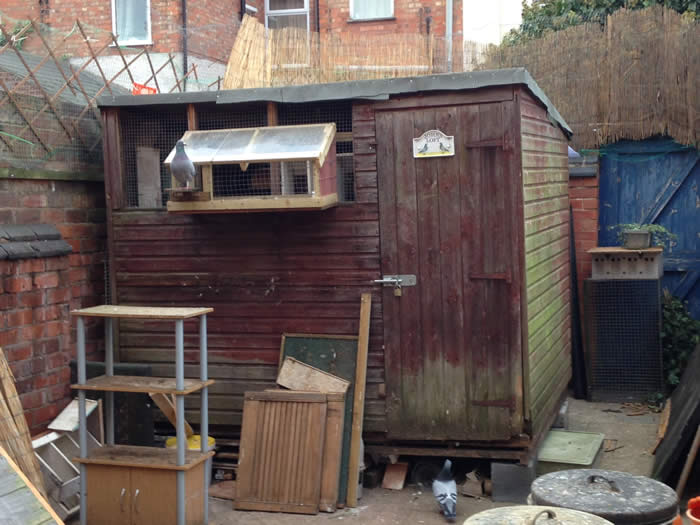
BACK TO BASICS
by John Ghent
"Life is simple but we insist on making it complicated."
I read this quote a few days ago and for me it sums up the entire pigeon racing hobby. Aside from the administration side of the sport being ludicrously difficult to trawl through, full of smoke and mirrors with a few people ultimately pulling the strings, the racing side seems to be becoming more complex with each winter that passes us by. Take a look through any of the weekly publications, browse the various forums or read an article from one of the plethora of websites and you will find an ocean of information at your finger tips, very often experiencing contradicting analysis within the same piece of writing.
The biggest difficulty is syphoning the information that matters from that which does not, establishing what it is that actually made that pigeon tick, that loft work, why was the race that difficult and so on. Being a sponge for information has it's negatives, forever being pulled in different directions, I liken it to being stuck on a roundabout, knowing that there are several exits, getting close to identifying which is the correct one to take, before doubting it so just staying on the roundabout forever and a day.
This complicated racing world we now live in is full of magic options, new feeding regimes, various racing and exercise systems, and lastly... stacks and stacks of pigeons for sale! There is no way in a million years that all those birds for sale in the Homing World every week are going to do the business so why do we keep on buying. I say we, it's not for me, but I know people spend thousands and thousands on pigeons and I say good luck to them. Quite honestly, there is probably someone in your club or in your circle of influence that will gift you birds just as good as those you are writing the cheque out for but there we go!
The only constant in the pigeon world, the one thing that we can't change or improve upon is the birds natural ability. You could give me all the training and magic potions in the world but I still will not beat Usain Bolt over 100 metres and will get nowhere near Mo Farah over 10,000, I simply do not have the natural ability. The reason this has come to light for me is that whilst I am still racing around the roundabout I have my indicator on and am heading for the exit, allow me to elaborate.
Theories are exactly that, just theories. Until something is proven as fact it remains a theory, therefore we have eyesight theory, wing theory, throat theory. So, the last few weeks have led me to research some of these "theories" that have sprung up in pigeon racing and most importantly the theories surrounding extreme or marathon racing. From the feeding, training, exercise regime, loft management, ventilation, location, race preparation, everyone has their own opinions on what will and won't work, the following few examples are of people that have put their opinions into practice with what can only be described as "basic pigeon racing." Simplicity of the highest order, yet delivering massive results. These fanciers which I am about to highlight will, in the main, not be household names. Some you may recognise from yester-year but the publicity machine did not surround these men, they used basic common sense to achieve their goals and my question is, why have we changed? Please note that this information is all second hand and I am writing these pieces based on what I have read over the last two years, I have never met any of the fanciers below.
Cyril Medway is who I strive to emulate. Cyril raced to a 10x6 loft split into 2 for old birds and young birds, he won Palamos twice in the 1970's with 10 pairs of old birds, "Palamos Pathfinder" being his most famous bird. He was sold to Japan following his remarkable performance in 1972 when he won the race by nearly two clear days! Cyril was a pigeon genius by all accounts, he never raced to a bigger loft than the 10x6 he had and as was the fashion of the time, raced natural with a solid mixture of beans, peas, wheat and maize, given in different rations depending on the activity in the loft at the time. Cyril classed himself as a mob flyer in 1976 when he sent 5 to Palamos as his normal procedure was to send and prepare two or three birds for the challenge from Northern Spain.
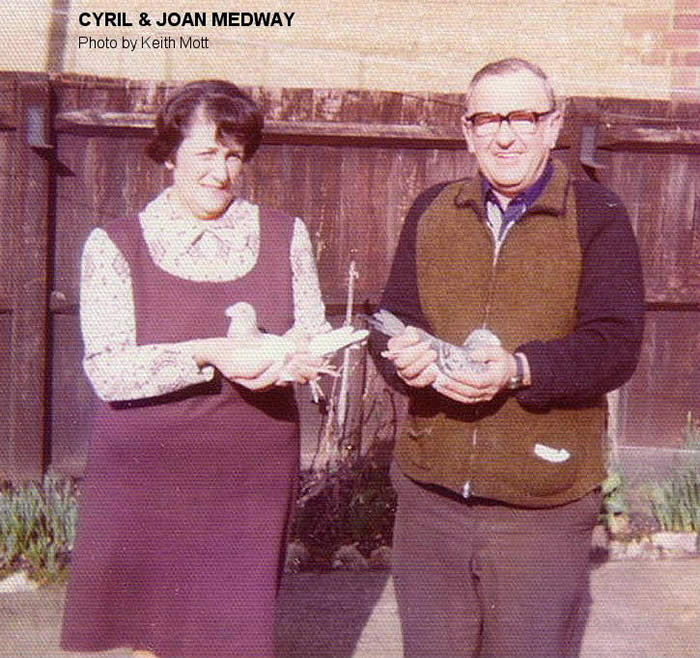
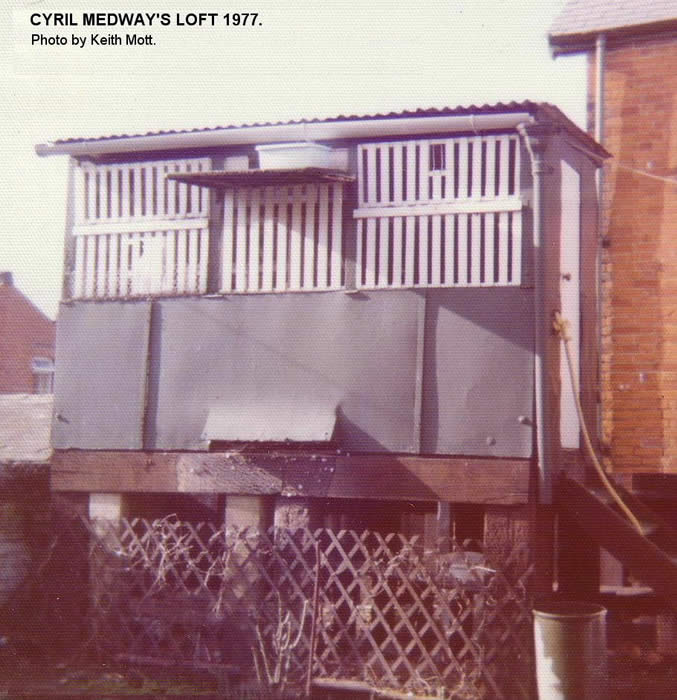
1st open BBC Palamos
Another amazing fancier who is well known online at least due to an excellent article published on him a few years ago is a gentleman called Ron Sampford. Unfortunately Ron is no longer with us but his legacy remains. Racing to a single section 8x5 loft, feeding only beans and not being able to drive, Ron put up stunning performances in the North Road from his base in Hertfordshire. The constitution these pigeons must have had, and the patience Ron must have shown to get them to achieve the amazing results he did are both incredible. As soon as the race programme moved up beyond 400 miles, to Fraserburgh, Thurso and Lerwick, there doesn't appear to be too many people who could get close to Ron in these most special of races. As an example of his perfomances, Ron topped the Fed from Lerwick at 578 miles and was 3rd Fed Fraserburgh on the same day, 429 miles, he sent 1 to Lerwick and 3 to Fraserburgh. Due to the loft size the birds were never split, they led an ultra natural lifestyle with no treatments apart from the mandatory PMV injection and Ron housed around 7 pairs of old birds and 6-10 young birds at any one time.
L.S Bunn of Folkestone was victorious from BBC Palamos in 1968 and like the previous two fanciers did not keep a lot of pigeons. He exercised his 24 birds twice a day and was not afraid to jump birds into the main event if he believed they were right, an example being his Palamos winner. She was unraced as a baby, then trained to 90 miles as a yearling before being jumped into NFC Nantes for the first race of her life. She was then put to stock at two years old and then re-appeared in the race team as a three year old. A few more spins from Chichester, 90 miles, and off she went to Palamos for the 2nd race of her life, unbelievable! Mr Bunn was another bean feeder and also never parted his pigeons, young and old were ran together and although they were allowed out to fly they rarely put in more than 10 minutes.
I could go on and on talking about fanciers that succeeded at the very highest level with basic methods. I know of other fanciers that are still racing like this now and are extremely successful but because they are not "fashionable" they are not out in the public eye! I was with an extremely consistent fancier last Monday and something he said struck a chord with me which prompted me into the research above.
"The modern methods have allowed us to improve the speed and quality of the pigeons that race from every racepoint, except Barcelona and Palamos."
And he is right! The penny then dropped for me! Take a look at the results from Pau/Tarbes on the South and Lerwick on the North. Pigeons, even at these great distances of 500 miles plus, have got quicker and are more reliable. This is surely down to the modern feeding methods as well as better systems in place for health and motivation. But go to Barcelona and Palamos and it is a different ball game! The winners from the 1950s, '60s and '70s were doing the same velocities that the birds are doing today. That is very much a sweeping statement but I am sure you can see where I am coming from, there is an opportunity to get back to basics and still compete with a few pigeons to the backyard loft, this is the sort of set-up that pigeon racing was founded on in this country, it runs the risk of being forgotten about, if it hasn't already, due to the ludicrous sums of money involved in our hobby, the amazing amount of medications available and the the myth that bigger is better.
I want you, for a minute, to forget about everything that is in your garden, on your allotment or wherever your loft/lofts are located, and think how easy life would be, how simple your methods could be, and how much enjoyment you could obtain by knowing all of your birds individually and saving hundreds, if not thousands of pounds a year, by keeping less pigeons and enjoying them more! Now I doubt for one second this will influence anybody to go and tear down 60 feet of Iofts, remove the 20 pairs of stock birds, even though 16 of those pairs haven't bred a dime, but if it serves to offer people an alternative who are short on money, short on time, or just feel the modern pigeon world is leaving them behind then this article will have done some good!
Imagine how inexpensive it would be to feed 30 pigeons for a year on a basic mixture, with no treatments. Imagine how little time it would take to basket your 10 candidates for the next race, imagine how easy it would be to keep these birds content and keep an eye on them 365 days a year. The modern pigeon world is a scary place for the most experienced of fanciers, imagine what it looks like to a new comer.
So, I admit, the grass isn't always greener and people don't like change, but we need to look at things from a different angle sometimes and I wanted to give people a taste of the angle I have been viewing from for the last few weeks and months. Plotting next year and the year after, taking on board a pinch of Medway and sprinkle of Sampford, has been really enjoyable for the last few days, and I am looking forward to 2015 with great optimism! If on the other hand your blood pressure is rising and you break into a cold sweat just thinking about next season, then maybe take a leaf out of Ron Sampford's book; get back to basics, enjoy your pigeons, and you will be rewarded for your efforts.
"Life is amazingly good when it’s simple and amazingly simple when it’s good."
John Ghent
83, Newport Street
Leicester
LE3 9FU
---
Elimar - November 2014