Joe Murphy visits
GEORGE & BRIAN HUNTER
of Dunfermline
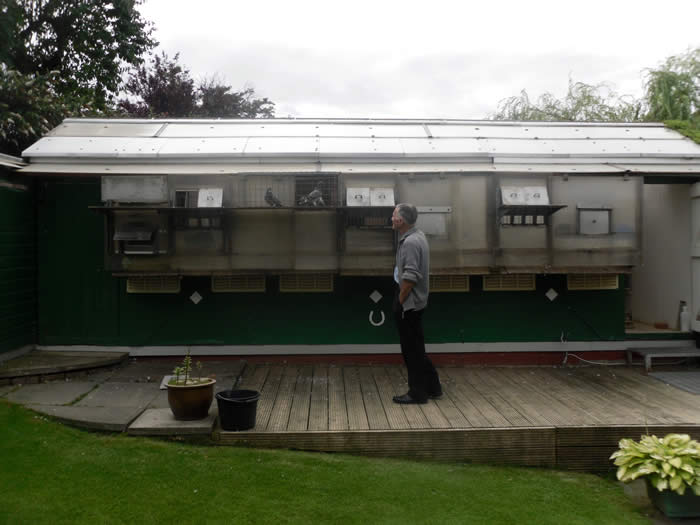
George outside the racing loft
One of the names that has been cropping up regularly in the Scottish National results these past years is the partnership of George & Brian Hunter who race in Rosyth pigeon club near Dunfermline in Fife. They own and race one of the best long distance hens in Scotland at the present time, ‘Kingdom Spirit’, a winner of a Gold Award in the Scottish National Flying Club in 2012. She also won a SNFC Silver Award in 2011, was winner of the Scottish Homing Union Dewar Trophy for Champion Bird of the Year in 2010, was Runner Up for the SHU Dewar Trophy for Champion Bird of the Year in 2011 and landed the last Joe Murphy/BHW Sporting Challenge in 2012.
Her SNFC performances over this period of time are as follows:
2010 Reims - 7th sec 26th open 567 miles 1187 birds. Coefficient 2.19
2010 Clermont - 2nd sec 30th open 524 miles 1102 birds. Coefficient 2.72
2011 Messac - 2nd sec 32nd open 573 miles 1159 birds. Coefficient 2.76
2011 Clermont - 31st sec 67th open 524 miles 1741 birds. Coefficient 3.84
2012 Alencon - 4th sec 36th open 547 miles 1250 birds. Coefficient 2.88
2013 Alencon - 8th sec 22nd open 547 miles 1355 birds. Coefficient 1.62
2013 Clermont - 41st sec 90th open 524 miles 1500 birds. Coefficient 6.00
Total - 3806 miiles 9294 birds. Coefficient 3.18
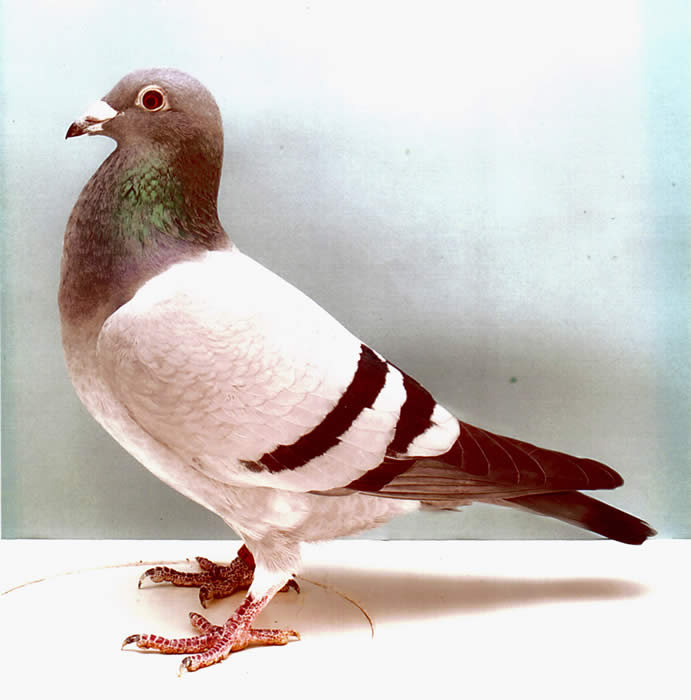
Kingdom Spirit
Seven times a national winner from races over 500 miles and all within the top 90 open positions. When you look at the total birdage of 9294 birds, she is only two pigeons short of beating 9000 pigeons over this 4 year period as only 296 birds beat her during this time. As you will see, she achieved a staggering 3.18 coefficient to be in the top 3% of these races during this time which is a truly remarkable accomplishment. Had she been a Dutch-Belgian or German pigeon she would be worth a fortune and the world record priced pigeon does not have performances as outstanding as these.
I personally thought after she won her Gold Award that she would be stopped and put to stock but you will see as you read this story on the partnership, they do not keep a lot of pigeons and try to keep quality more than quantity. With this in mind I would not be surprised to see Kingdom Spirit become only the second pigeon in the history of the Scottish National Flying Club to win a DOUBLE GOLD AWARD. The only other pigeon to do so was Mr & Mrs Smith of Elphinstone ‘Fortune Lady’.
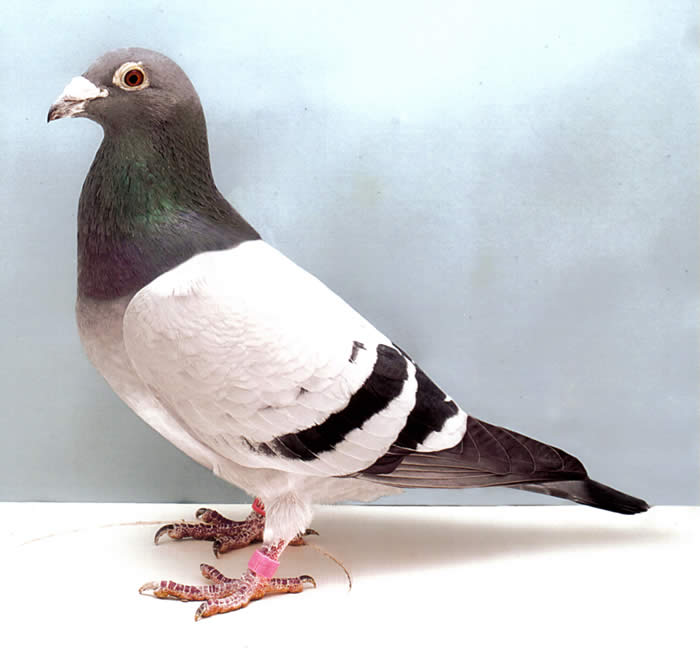
Sire of Kingdom Spirit
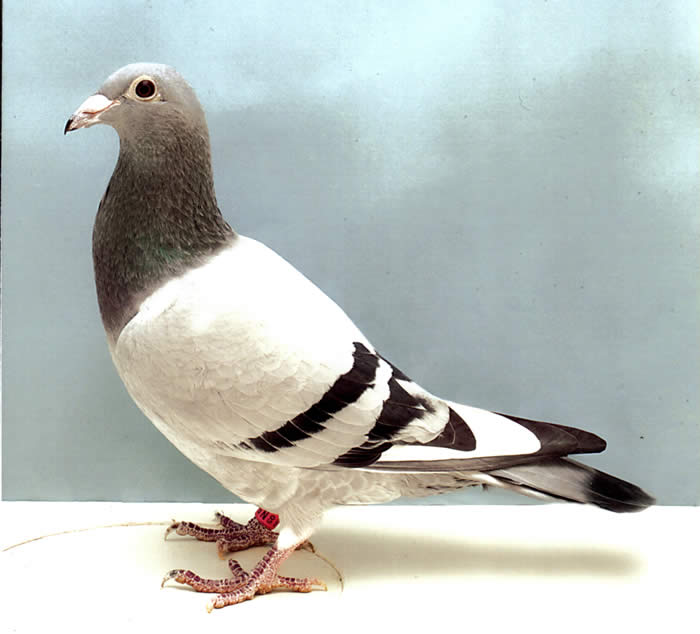
Dam of Kingdom Spirit
However this is not a one bird loft as the partnership has other outstanding superstars being raced at the present time namely:
Kingdom Anna, a chequer hen, winner of a SNFC Silver Award winner in 2013. She was Runner Up for the SHU Dewar Trophy for Champion Bird of the Year in 2013. These are her performances:
2011 SNFC Tours - 2nd section C 13th open 626 miles 280 birds
2013 SNFC Ancenis - 2nd section C 6th open 609 miles 268 birds
2013 SNFC Clermont - 37th section C 85th open 524 miles 1500 birds
2013 SNFC Newbury - 16th section C 158th open 334 miles 3328 birds
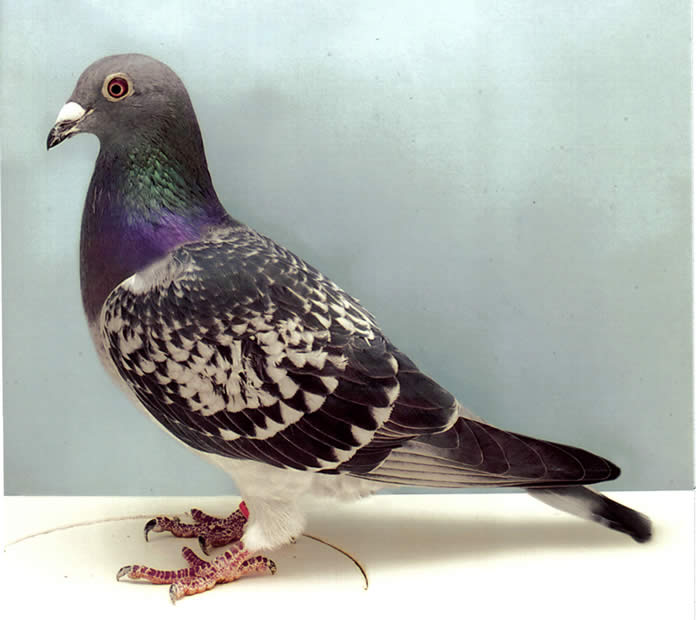
Kingdom Anna
Then we come to Kingdom Kate, a full sister to Kingdom Spirit, Runner Up for the SHU Dewar Trophy for Champion Bird of the Year in 2012 as she won the following positions:
2012 SNFC Ypres - 2nd section C 45th open 445 miles 2100 birds
2012 SNFC Clermont - 24th section C 34th open 524 miles 1700 birds
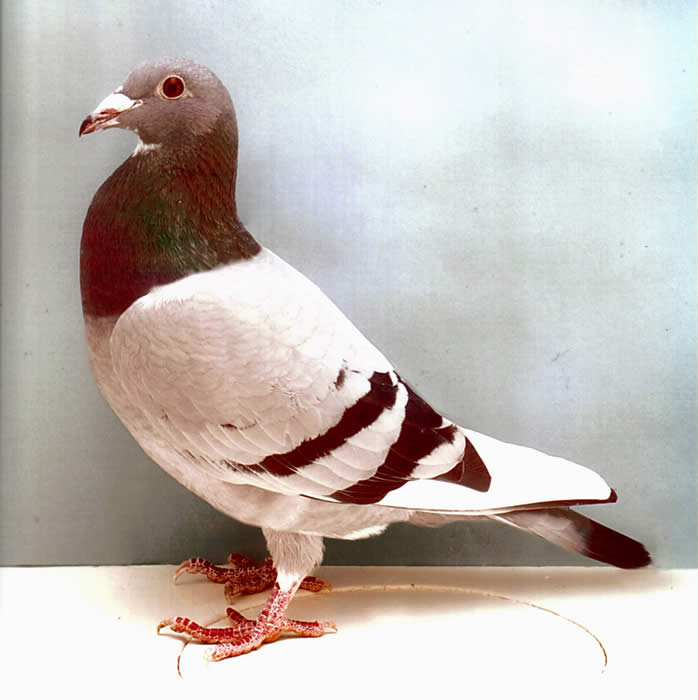
Kingdom Kate
So readers will see that there are some top quality pigeons housed in this small back garden loft in Dunfermline and note the outstanding consistency this partnership has achieved over a 4 year period being either winner or runner up for the Dewar Trophy for Champion Bird of the Year in the whole of Scotland. Spirit won it, was runner up the following year, her sister Kate was runner up and now Anna has been runner up for this prestigious award in 2013.
The Start
The senior partner is father George Hunter who was a founder member of Oakley RPC in the west of Fife. At that time another founder member was the late Willie Millar from Blairhall who had moved to Fife from Greengairs in Lanarkshire to work in the Fife coal mines. Another top class national flier back then was the late great Jimmy Callen who lived in the same street as Willie in Blairhall. Jimmy was the first fancier to win the Fife Fancier of the Year trophy presented by Davie Kinnear from Methilhill to the Fife Federation. Believe me, this was a great honour as there were some of the best long distance men in Britain racing pigeons at this time in the Kingdom. (My son Kevin and I were fortunate to win this great award with our team of pigeons in 1992 - Joe Murphy.) I was present when Jimmy Callen received his award and will never forget his speech as he received this wonderful trophy and I quote: ‘Always remember that when you put a bird into a national race you must be able to say to yourself I have done my bit it is now up to you. If you have any doubts then do not send it as only the best is good enough to race and win at 500 miles’, and ladies and gentlemen this is still true to the present day. These early influences played a major part in how George and his son Brian approach racing their pigeons today. Moving through the years they have also encountered other great Fife fanciers in the names of George Scotland & Son from Queensferry and Mike Donnachie from Kingseat who were both held in high regard by the partnership and you could say it is the old school with the modern day twist added into it that has influenced them.
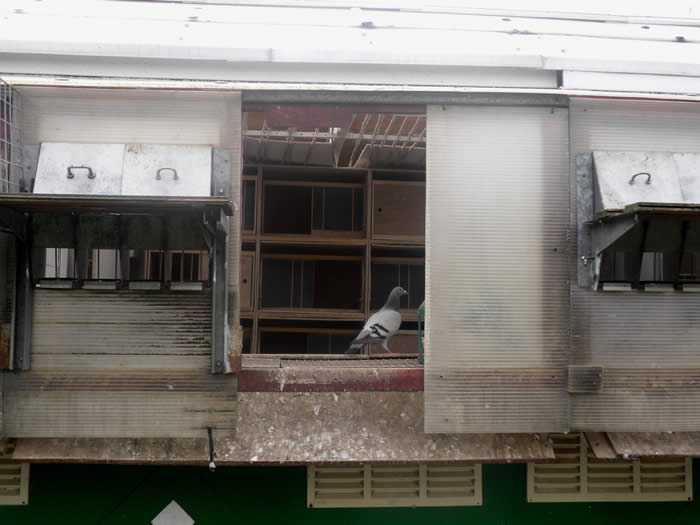
Birds on open bowl
Distance the Goal
The partners try to target the SNFC races especially from France as this is where they achieve their biggest ‘thrill’. However due to having a relatively small team of birds it is difficult to compete in all the national races (2 inland old birds, 4 from over the channel and the young bird national from Leicester) therefore in the last few years they have only raced in one of the inland national races. They feel that it is of greater importance to try and condition their birds and have them just right during the month of June for the channel races ahead.
Regarding motivation I asked what type of system they used and George answered: ‘We use the roundabout system throughout the month of May. The birds are stretched out to 250-300 miles on this system but then in the months of June and July we are looking to create an atmosphere of quiet contentment on the natural system with the hens on 8 to 10 day eggs for their particular race. It’s strange how it usually comes down to the hens when we are considering candidates for the distance races. I don’t know if it’s the family of pigeons we have created or the management system we use but at times I wonder if we keep the cocks there just to keep the hens happy.’
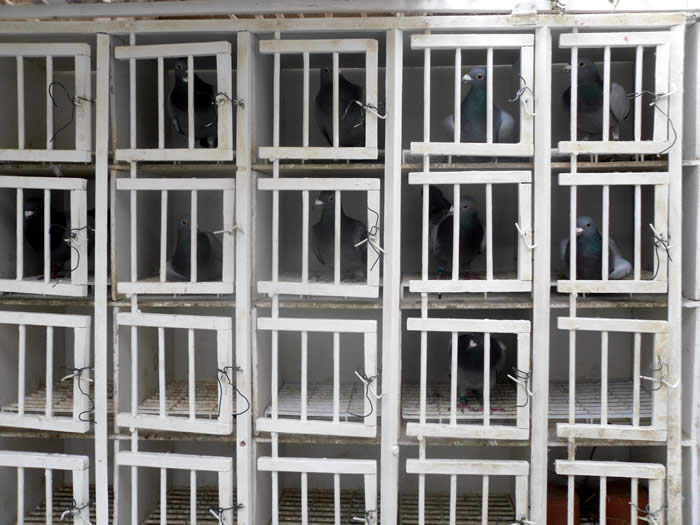
The hens in their roundabout boxes
Preparation for the main targets races usually consist of about 4 club races out to Leicester 260 miles with the team flying roundabout, then some might go to the first inland national from Newbury a distance of 334 miles. Then depending on the type of race it is and how long the birds have been on the wing i.e. they look for an 8 to 10 hour fly to set the birds up for the main event and the following day they are re-paired with the distance race in mind. The birds are then given 3 or 4 training flights from about 50 miles either with Wattie Hodge who has a transporter that goes with the birds 3 times a week or they will privately train them from St Boswells. During June and July they give the old birds as much open bowl as possible as George likes to see them relaxing and rest in the garden or in the loft. He finds that the birds love being out and about in the garden especially during the summer months and they take this important time to watch and observe the birds, especially when they are coming into peak condition. They often give them the odd peanut as they come down to the house and you can also hear them making a ‘purring noise’ when wandering contentedly round George or Brian’s feet. Through this surveillance they know when an individual bird hits top form. I asked them to explain this to fanciers and they said ‘usually they have a healthy eye which is bright and full of colour, their feathers are tight to the body and they handle like a tennis ball, and you just know they are spot on’. This by the way is achieved by experience and good fanciers know when a bird is right or has a little doubt about it. The partners like to have a bond with their pigeons and by doing so create a tame team of birds that become more confident and a very important detail for them is that the birds are ‘relaxed’. They try to provide a secure comfortable environment for them to live in and maybe ultimately this love of home is what gives them the edge in these long arduous races.
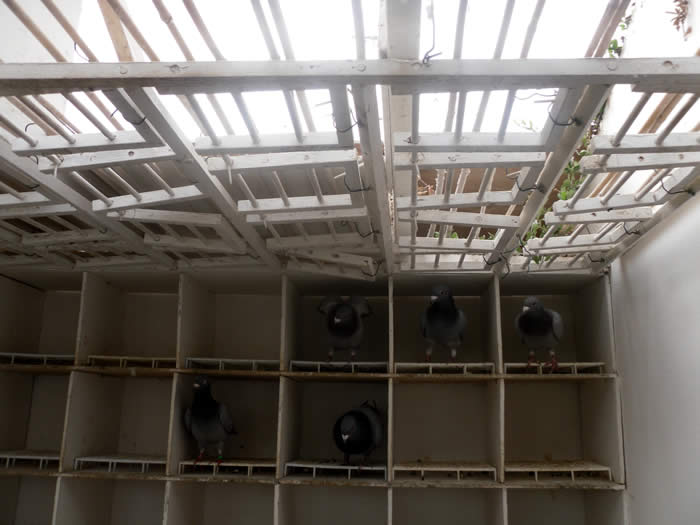
Hens in boxes prior to being locked up - see front on roof area
Base of the Family
The major bloodlines which form the family of pigeons are from Geoff Kirkland (Alfon Bauwens), the Midland National great. These are bred down from his famous ‘The Pest’ 1st open BBC Nantes and 1st open Midland National Flying Club Angouleme. Also in the breeding is the 014 winner of 1st open national and sire of 1st & 2nd national winner, Jackpot 1st national and Blue Panda 1st national - all outstanding wining lines. This family has provided the partnership with outstanding pigeons with these originating from a small group of 6 purchased from Bob Cook of Colchester and their No 1 stock pair came from this group. Another pair of stock pigeons to do well for them is the Stoffel-Ophoff of Germany (top national and international fliers) and these were purchased with the help of Bill Woodall of Dover whom they met at Blackpool show a few years ago. There have been a few others strains added including some Deweerdts from Kevin Hitchcock of Windsor which have started to make their mark at SNFC level; Kingdom Anna is down from this family. They are both very grateful to the above named fanciers who have inspired and influenced them to improve on a yearly basis.
At this point I asked both who they rate in today’s competitive sporting world and without hesitation they said: ‘In the Scottish national we admire the results of Richard & Jamie Combe and John Bosworth of Elphinstone and Jocky King of Kirkcaldy. While down south we admire Geoff Kirkland, Geoff & Catherine Cooper, Mark Gilbert and the legend Brian Denney.’
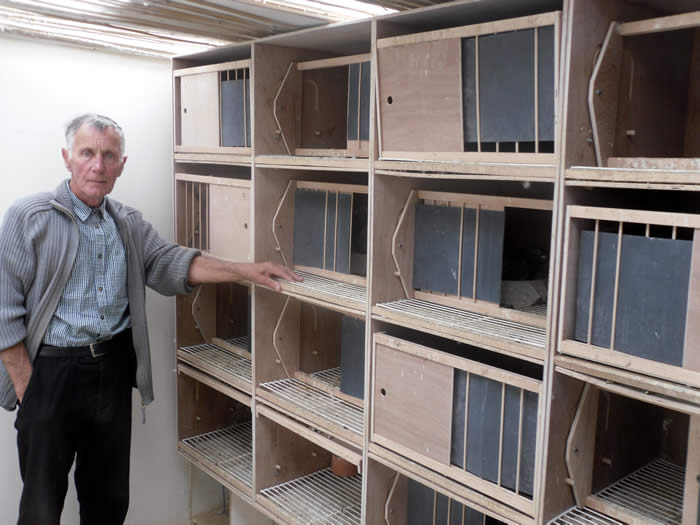
Nestbox section
I asked George, ‘When sourcing for your base pigeons what attracted you to a certain family?’ He said: ‘We tried to go to a well-established racing loft with good national and international performances that have been achieved in recent times and Geoff Kirkland fitted the bill. We now only introduce 1 or 2 individual pigeons to test them out and see if they have any impact on our loft before introducing their bloodlines into our gene pool.’ Staying on this subject I asked how they have evolved this particular type of bird to suit their methods. They both agreed this was with natural selection and racing and they have produced a type of pigeon that is well balanced, has good feathering and is of a quiet disposition. Obviously these are all major attributes but ultimately they have to be tested out in the race basket. George said: ‘Very few pigeons Joe have the intelligence or determination for racing from France a distance of 500-600 mile into Scotland and I’m sorry to say that quite a few are lost during this process.’
I enquired if they had ever kept youngsters for stock based solely on their lineage and if so what kind of success have they had. Their reply was: ‘in recent years we have been keeping back 2 or 3 late breds from our top birds and these are only trained the following year. We breed from them during the summer and then they are put into the race team the following year. The reason behind this thinking is our Number 1 stock pair is getting older and as I have already said, distance racing takes its toll at times and we like everyone else suffer losses at these longer distance events.’
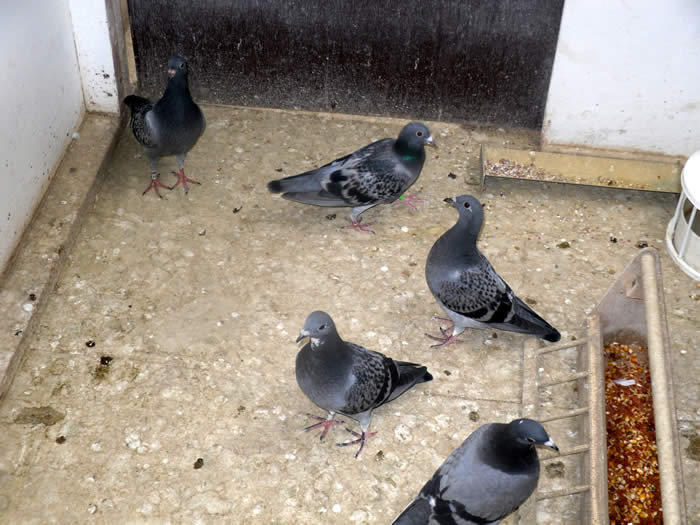
2013 late bred youngsters
Management
The birds are separated in November and are usually re-paired for the new season around the 1st of March depending on the weather and the temperature with the principal birds usually paired to a safe mate. Normally over the winter months they have about 14 pairs of birds which include 3 pairs of stock plus they have about 10 or 12 later bred birds that are added to the race team. One stipulation George is adamant about is the loft has to be kept clean, dry and well ventilated and not too exposed to the elements. In the summer if the loft gets too hot a fan is used to keep the air circulating.
Concerning feeding, I wondered if they put any importance on this subject and their reply was the birds are fed on Versele-Laga best all round throughout the year with Gerry Plus and Super Diet added accordingly to the workload and time of the year. In the build-up to the longer distance races peanuts are used in an increasing amount up to the day of basketing. They are great believers of using peanuts as the birds love them and it helps to build up a bond and they always have some in the pockets of their loft coats. All birds are hopper fed throughout the year (old birds and young birds) with maples added as an adjustment to the feeding throughout the year. The birds are given fresh grit and picking stone daily with black minerals used during the spring and summer months. Naturaline is given in the water twice a week with Gerdon once a week on Sunday; Hormoform is used, especially when rearing youngsters.
The birds are injected for Paramyxovirus before pairing up and are also given Harkers 3 in 1 treatment but other than this they try to achieve natural immunity. Asking the partners if they had any further comments on their management, they said: ‘We like to be able to have control of the birds at all times, therefore we have frames that come down in front of the box perches (see photo). This enables us to handle the birds without causing any stress and it also makes it easier for basketting the birds to take them training or for race marking.’
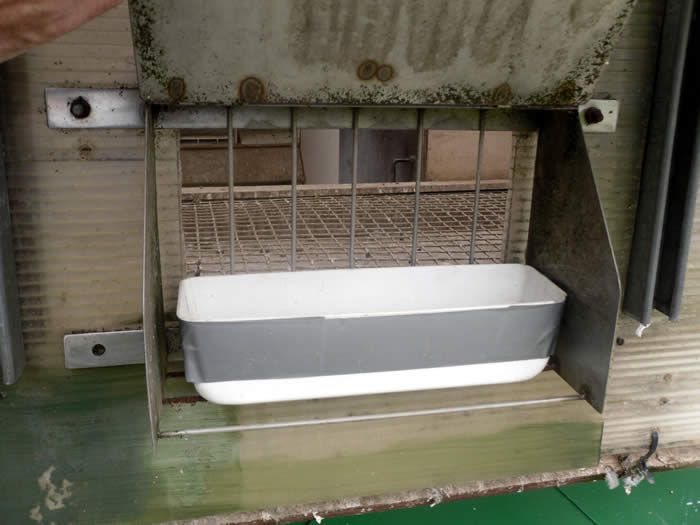
Drinker for birds placed from outside the loft
Memorable results
As I said at the beginning, George has been in pigeons for a long time and has achieved some outstanding results over the years. He remembers very fondly a blue chequer cock who won the following positions:
2002 SNFC Reims - 15th section C 23rd open 567 miles 2650 birds
2003 SNFC Reims - 147th section C 270th open 567 miles 3168 birds
2004 SNFC Le Ferte Bernard - 157th open 571 miles 2538 birds
2006 SNFC Alencon - 7th section C 79th open 547 miles 1556 birds
2006 SNFC Falaise - 15th section C 58th open 520 miles 2039 birds
There was also a dark hen who topped the Fife Federation from an entry of 830 birds in 2004 to win 1st open flying 520 miles and she also won 1st section C 7th open SNFC Falaise from an entry of 3.200 birds.
Trophies won 2013
At the recent SNFC dinner and presentation the partners won the following trophies: The Ellsworth Challenge Trophy awarded annually to the competitor making the best combined average from the Alencon & Ancenis races. The News of the World Trophy competed for annually and awarded to the best average from Alencon & Ancenis. These trophies are for the two longest races within the national and Kingdom Spirit won 22nd open from Alencon flying a distance of 547 miles while Kingdom Anna won 6th open from Ancenis a distance of 609 miles. I don’t think there has been a Gold Award winner and Silver Award winner winning this trophy ever in the club’s history so a first for the partnership who have now created history.
George & Brian also won the E R Williamson Trophy in the SNFC for the best combined average with 2 nominated pigeons in the longest race Ancenis with the partnership winning 6th & 26th open when only 29 birds were recorded in race time. Exceptional flying - well done.
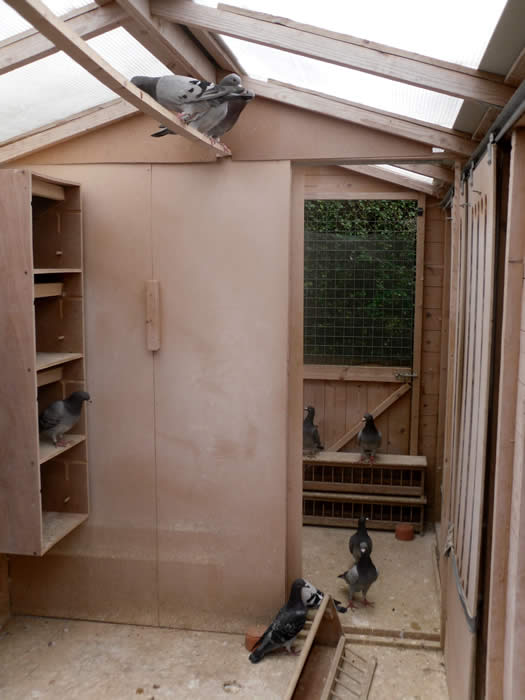
Inside the young bird section
Advice to new starters
When asked to give some advice they replied: ‘Try and get some birds from a couple of good local fanciers; it would be better to obtain summer bred or late bred birds as they are easier to obtain as most fanciers need their first round of babies for themselves. Try to get these birds well established by giving some short training flights in preparation for the following year as these will be your breeding stock and once you have youngsters then you can maybe train them with that year’s youngsters. One point that is very important: DO NOT be tempted to get these youngsters into the race basket too quickly. Nowadays it seems that people are so desperate to get started they put these birds in (against experienced pigeons) and they get lost and this only leads to disappointment. Regarding management, a well ventilated comfortable loft is very important; it does not have to be anything fancy just neat and tidy as this keeps the neighbours happy and helps with the image of the pigeon sport. Select and Test is our advice, for example if you have a couple of pairs of birds for stock then they have to prove themselves over a couple of years by sending their children in the race basket. If these turn out to be any good then breed from them the following year and you have the start of a family of pigeons. Another point is to read up as much as you can on the winning fanciers not just from your own area but from all over the world. This can be done via the internet or through reading the weekly RP or BHW as well as the monthly Racing Pigeon Pictorial. There is also the yearly Stud Book and Squills which do wonderful articles on the previous year’s winners and this is a MUST during the winter months.’ There are also other books, however in George and Brian’s opinion the best on the market at the present time is ‘Long Distance Pigeon Racing’ by John Clements which the partners say is a must read.
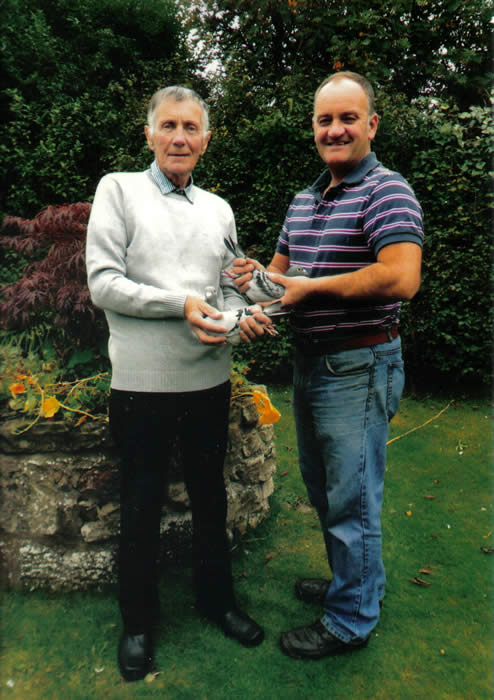
George and Brian
Conclusion
I thoroughly enjoyed my visit to George and Brian’s and I was impressed with the control they have over their birds; they were not wild or scared just happy to be at home. It is more than obvious that the partners spend a lot of time with the birds and even the day I visited George he showed me the hens in their roundabout boxes and he went along giving each one a peanut and they all watched him move along the line. The other thing that impressed me was they did not keep a lot of pigeons but the birds housed are ‘quality’, of that there is no doubt. With the ‘Star’ being Kingdom Spirit and I hope that she can continue with her winning and achieve a Double Gold Award. If she does then there will be no prouder men in Scotland than George and Brian Hunter.
© Compiled by Joe Murphy
---
Elimar - January 2014