THE ELIMAR INTERVIEW
JIM EMERTON CHATS TO
DAVE PADFIELD
of the Padfield Family
1st & 5th West Section, 9th & 35th Open BICC Barcelona 757 miles 2012
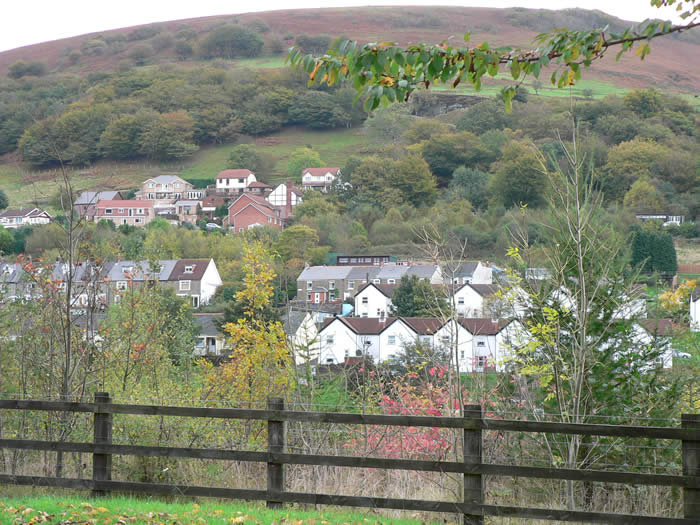
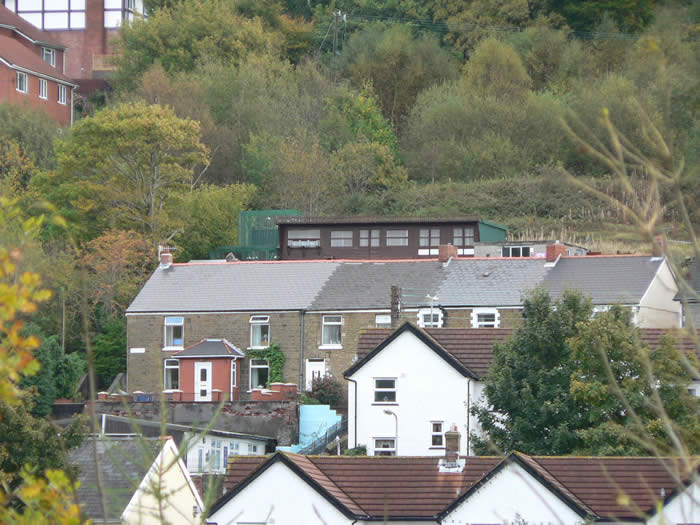
Above and below, shots of the Padfield Family's lofts from across their Welsh valley, 757 miles from Barcelona.
What was the genesis for your fascination with racing pigeons?
Vince and I were born into the world of pigeon racing in the Welsh Valleys in the late 40s and early 50s. Cwmtillery was a mining village and Albert, our Dad, had started racing pigeons around this time and became interested due to the fact that every other house in our small two up two down street raced pigeons from a small back garden loft. It was the poor man’s horse racing. What chance did either of us have when Dad swapped our rattles for a scraper?
I have many vivid memories of carrying a basket full of birds about one and a half miles down to the railway station in Abertillery for a toss to Abergavenny or Hereford or even the Severn Tunnel junction. And at the age of about ten I can remember taking a detour across the valley from school every Friday to collect Dad’s corn for the week. It was a mixture of beans, peas and maize. It came in an old fashioned brown bag and the weight bought was a peck; if my memory serves me correctly I think this was fourteen pounds in weight. I would take the quicker off-road route across the base of the valley. The last couple of hundred yards were up the path on a coal waste tip and I used to stop every now and then as the bag got heavier and heavier until finally making it to the corn bin in the loft.
There is quite a well known story that we would always recall with Dad when spending hours waiting for birds from the distance races. A certain Mr Smith sent birds training by rail to Abergavenny for liberation late afternoon. Come late evening, he had no returns so he rang the station master to find out what had gone wrong. The conversation went something like this:
“Mr Smith here, could I speak to the station manager?”
“Just one minute Sir, I will get him for you.”
“Mr Smith, Station Manager speaking.”
“I sent some birds for you to liberate this afternoon and none have returned. Have you any idea what could have happened?”
“Just one moment, I will ask the guard.”
Two minutes later…
“Mr Smith, it appears that just after your birds were liberated a massive thunderstorm broke out.”
Mr Smith replied, “Yes and you should have been in the middle of the b-----d!”
How difficult is it to race at the top level in the far west of Wales?
To say it’s bloody hard is an understatement, but in a strange way this is what creates the attraction to have a go. The odds are sometimes against you as there are a few 'minor' things that get in the way. For example, nine times out of ten the west or south-west winds blow week in week out across our little valley. We all know that the winner of any race is dictated by the wind, and in reality you are only flying against a smaller number who have similar conditions to win a National or International.
With regard to competing in the Internationals, there is the drag and pull of the convoy when 20,000 plus birds are heading into Belgium, France, Holland and Germany. It is very difficult to get birds to break away and head for the Welsh valleys.
I believe that the best we can hope for from Barcelona in a west wind is for the birds to enter the UK crossing the Channel in the Calais to Dover straights. This does create another problem as the fanciers in Kent will get the first drop and we in Wales are only getting about 80 or 90 miles or so overfly. In reality from Dover to Cwmtillery as the crow flys is about 210 miles. I know this because we used to fly Dover with the Welsh South Road. This gives the birds over 100 miles extra and by this time they are getting tired.
I hope I don’t sound as if I am having a moan, but the final straw that could break the camel’s back is the International hours of darkness which are roughly 10pm to 4am whereas most British races are 10pm to 5pm. So we lose an extra one hour of flying under International rules. This year we clocked at 5:32am from Barcelona and yet it was barely light by 5:00am. In horse racing terms, we carry a 5lb penalty for competing.
Having commented on all the disadvantages, just imagine the feeling when you’re sat at the loft at 5:30 on a cold dank morning and spot a small chequer hen making her way up the valley to land after flying 757 miles plus.
The ultimate conclusion is that we are both mad. I blame Dad for this. I can remember 50 years ago when as a lad I was ear wigging when local fanciers were talking about Dad and didn’t see me in the background. The gist of the conversation was that Dad had the audacity to send to the Welsh Thurso National before he had even won his first club race. None so funny as folk!
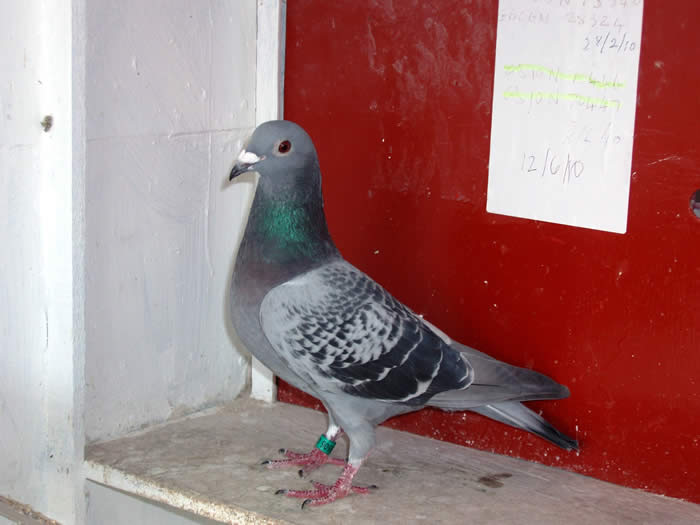
Cheq hen. Wim Muller Jan Aarden. Winner of 9th Open 1st West Section and 1st WDGCC Barcelona 2012. Her previous results are: 2009 - 30th Open WSR National Tours; 2010 - 25th Open 5th North Section BICC Pau also 1st club GGDFC Pau; 2011 - 74th Open CSCFC Tarbes.
What is your impression of International racing in general?
I think it’s fair to say in general terms I am fully supportive of the concept of International racing. Unfortunately that isn’t the case with all fanciers. At this point I could move into the arena of fanciers who are looking to gain an advantage through moving club boundaries, federation or even national boundaries. Unfortunately pigeon politics has created a situation where there are too many organisations operating under the banner of ‘national’. Anyone with any sense would realise that for it to be a true national we must compete as one. I think most of the continentals and English accept this but this is not the case in Wales, hence our move to compete in the English organisations as well as the WSRN.
How did you create the Padfield strain of battle-hardened birds?
A very good friend of ours, Mr John Smail from Abergavenny, has coined what has become a well known phrase in Wales. John says: “IF YOU WANT TO PLAY WITH THE BOYS, YOU MUST HAVE THE TOYS.” Put in plain English, what he is saying is that if you want to compete with the best you must own pigeons that are among the very best. I think it’s fair to say that you must invest in the best stock possible and then let the basket tell you how good they really are.
In reality we have built up the family over the past 30 years. In the late eighties, Vince was racing local pigeons which included the Morgan & Cook Iron Man lines, Iron Man being 7 times Lerwick into Wales. Dad and I were flying the Willy Clerebaut that we bought from Eddy Collard from Ryhader and we also bought Willy’s birds in a Bristol sale. When we decided to join forces and fly as Padfield Family these were the basis of our initial stock. It’s a little known fact that the famous Holloway Boy’s mother was bred in our stock loft. I bred and sold her to Derek Parkin, who paired her to a Clerebaut cock and reared Holloway Boy. Paul Kendal raced Holloway Boy to win 1st NFC Pau and his son, Morning Glory, was 2nd Pau NFC twice. The rest is history. What a pigeon. Well done Paul.
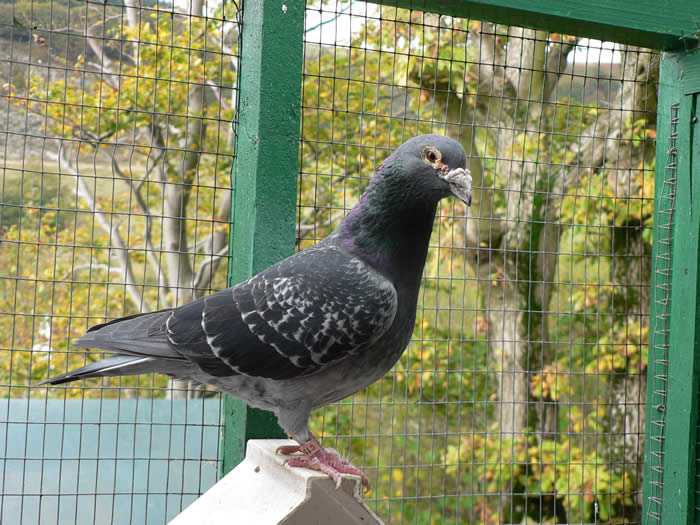
Old 89 - a prime foundation cock
So there we were, me, Vince and Albert with a good team of birds, but looking to improve and concentrate on long distance racing. To this end after doing a lot of research I decided to introduce the Wim Muller Jan Aardens. Wim is based in Goes in the Netherlands. His performances up to Barcelona International were fantastic and people flying his birds were winning Internationals. Another major influence was that Eijerkamp went into partnership with Wim and they had the money to partner with anyone, no expense spared.
Wim in 1990 sent 100 latebreds to Tony down at the Ponderosa Stud in Weymouth. Me and two mates had the first pick and bought a pair each. Mine turned out to be an absolute goldmine.
Having made a good friend of Wim, I now get the birds direct. I had a daughter of his International Perpignan winner that went on to be grand dam of two Tarbes National winners for me; real good pigeons. This year’s Barcelona hen is bred down from a direct Wim Muller of Golden Breeder lines.
In subsequent years we have crossed the Invincible Spirit lines with great success and within the last few years have obtained the Bruggeman lines from Dave Impett of Blackpool.
Over the years and by using the basket, we have created a team of individuals that are able to compete when there are only a handful of birds heading into Wales.
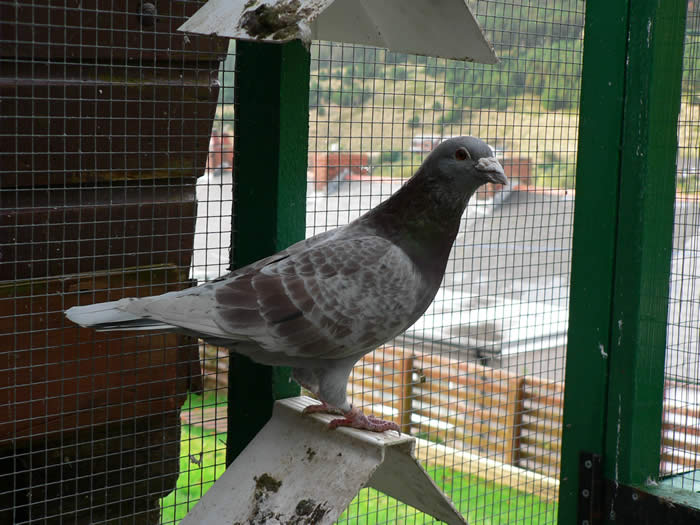
Padfield's Perfection - another foundation bird
Your great success is no fluke, and down to exemplary management. Just how do you do it?
This is the easiest question you have asked. The answer is VINCE. As far as the day to day management is concerned, HE IS THE MAN. Vince has a tenacity and methodology that is hard to put into words. I think the easiest way out for me is to say that he is a 'natural' where pigeons are concerned. I will claim a little credit as he does allow me to select the stock birds we purchase. I think it’s fair to say that I have had a slice of luck as I have picked some crackers.
Can you please outline some of your top performances.
When the partnership came together we immediately won 2nd WSRN Lerwick. Then we decided to fly south and race with the NFC, BICC, BBC, CSCFC etc. Over the years we have had some good performances. These include:
1st WSRN Pau with Olwen
1st, 3rd, 23rd, 39th Pau with Padfield's Perfection
1st WSRN Pau with Vince
2nd WSRN Pau and 13th NFC Pau with Albert
1st WSRN Tarbes and 3rd CSCFC Tarbes with Dave
1st, 3rd, 15th WSRN Tarbes with Jack
2nd BBC Palamos with The Don
2nd Barcelona BICC with Padfield's Invincible
We have been 4 times NFC Single Bird National winners, and we won a car in the Central Southern Classic with a cock we called Punto. I would guess that over the last 20 years in the WSR National's longest race we have had probably 50 birds to finish in the first 10 be it Pau or Tarbes.
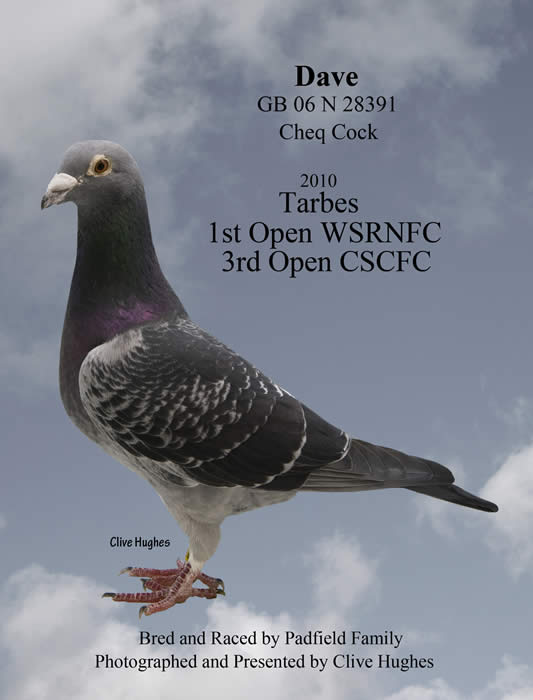
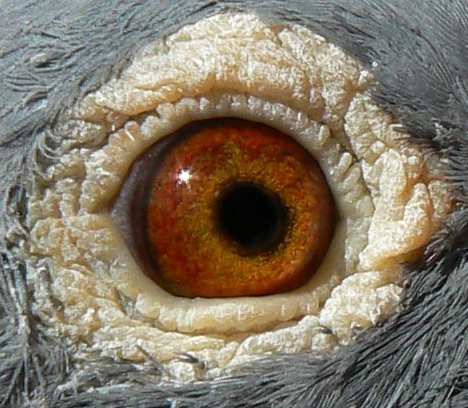
The eye of Dave
What are the elements of a champion pigeon and a champion fancier?
Having kept pigeons for 50 years plus and studied all the theories for wing, eye-sign etc, the champions come in all shapes and sizes. I think everyone who keeps pigeons will settle on a particular type of pigeon based on size, balance and feather quality, and the type will vary for sprint, middle and long distance. Unfortunately the acid test is invariably the basket and the ability of an individual pigeon to battle against the odds when the chips are down. One feature you cannot assess easily is how big the heart is. I think the champions have got the biggest hearts.
And champion fanciers are like champion pigeons in that they don’t know when they are beat. It should always be remembered that the joy of winning is only enhanced by disappointment of losing along the way.
What are the key elements to your unique winning system?
The key element to long distance racing is having the birds that are good enough for the job and then to develop a system they will race to. I believe that there is no right or wrong system. If the pigeons are good enough and you have played your part, irrespective of the system they will win.
There are a number of points I would make in preparing birds for the distance. If you are looking to win a long distance race with a pigeon, do not send it to win the first race. What I am trying to say is that feeding to win the first race is counter productive to preparing a pigeon to win at the distance. Don’t expect to feed lightly to win sprint racing and then increase the feed later and expect that pigeon to win at the distance.
In general to win at the extreme distance you have got to use the earlier races as training and accept those birds will be 5 or 10 minutes behind the winners. The aim is to get your distance pigeons to peak in form and condition at the time of the race you want them to win.
Develop the ability to keep your powder dry. Remember it’s harder to keep them in the loft than send them to a race. Patience is a virtue (I thought he was a crafty old Scotsman - what a flyer). Don’t hammer your birds in the cold east winds early in the year, keep the loft closed and watch Coronation Street instead.
Pray for sunshine. One of the key elements of conditioning a pigeon is warm summer sunshine. We find it difficult to get real form, especially with all the rain we have been getting of late.
Pigeons respond better if you adopt a formal system. Exercising and feeding must be done to the clock (this is only my view) and in addition to this I am a firm believer that the early bird catches the worm; their first fly of the day should be as early as possible.
The day of reckoning is when you have handled your birds and placed them in the basket before you go to the marking station. Look in the mirror and ask ‘have I done my job?’. If you haven’t you will have a long face on Saturday night when you are having a pint with the boys.
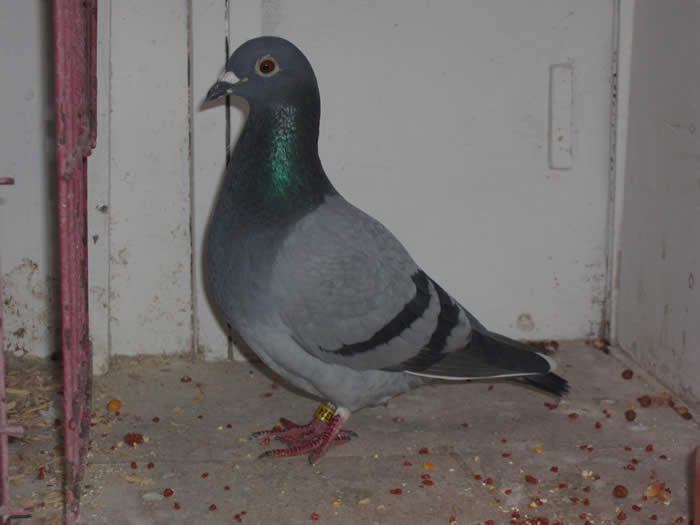
Blue white flight hen. 2009 - 39th Open 2nd West Section BICC Pau International 2nd WDGCC, 61st West Section BICC Alencon; 2011 - 11th Open 3rd West Section BICC Barcelona, 2nd WDGCC; 2012 - 35th Open 5th West Section BICC Barcelona.
Who do you admire in pigeon racing?
There are so many top pigeon flyers in our own Gwent Greater Distance Club in Wales. But at the risk of upsetting them I will single out one. As far as a current distance fanciers flying into Wales you would have to go a long way to find one better than Wilf Reed of Monmouth, though I think it’s only fair to point out that whereas his old bird loft is in Wales, his young bird loft is in England! Joking apart, if you can beat Wilf in the long ones you will not be far off the top spot.
I think the people to admire are not always the fanciers but the behind the scenes unsung hero scribes, you included. I would like to mention Gareth Watkins whose pen must have caught on fire a few times in the last few years. Gareth told me about 2 years ago that he would not be doing much with the writing in future and was semi-retiring from his scribing. God help us when he does retire. Seriously, Gareth has been a tremendous ambassador in the promotion of distance racing in the UK.
In addition to Gareth and regarding being able to compete Internationally into Wales, a lot of credit must go to the men behind the Gwent Greater Distance Club. The likes of Ray Strawbridge, Gordon Mears, Tony Combs, Adrian Ware, Jim Hooper, Terry Gardener and many more have done a tremendous job in setting up one of the best specialist clubs in the UK. Well done lads.
What can we do to further popularise distance/marathon racing into the UK?
I think that the performances into the UK in recent years have really given International racing a boost. I think the secret to success is unity, working as one to create an environment that promotes distance racing into the UK.
One disappointment for me this year was the fact that I was unable to duplicate my birds back from the BICC to the BBC for the Barcelona race. I would have been more than happy to pay entry fees to both organisations and at one point it looked as if common sense would prevail and duplication would be allowed. Unfortunately our old enemy pigeon politics won the day yet again. Let’s hope we can take a more coherent course in future, as very few fanciers can prepare two teams for Barcelona.
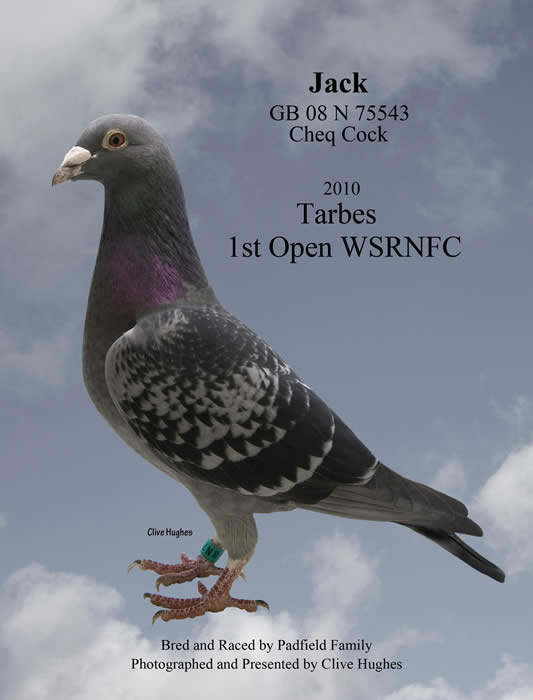
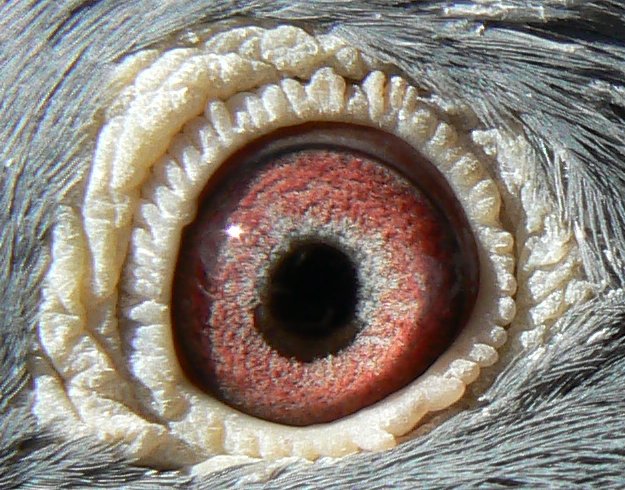
The eye of Jack
Why is the Barcelona race so awe inspiring and will it one day be won in the UK?
The reason it’s awe inspiring is because it is the European Championship Blue Riband Event. The UK has proved that with the right wind conditions from France we can win International races but I think winning an International into the UK from Spain will be a lot more difficult to achieve. Getting the right easterly winds over the 700 mile course into the UK is going to be a once in a lifetime opportunity. But never say never. Let’s hope it happens in the not too distant future.
Please explain to us about total obsession and absolute dedication.
I don’t know where you dig some of these questions up from Jim! I think that it is easier to say that all distance men are sadists and mad - who the hell wants to hang around the back garden for days on end waiting for a bundle of feathers? Only joking. Seriously, it’s the same in any sport. People who are obsessive and dedicated will invariably arrive at the top of whatever sport or activity they participate in. These people do not take no for an answer and will power on irrespective of the pitfalls that stand in their way.
How would you like to be remembered?
It will be good to be remembered as pigeon men who liked a challenge and had a few good performances along the way.
Have you learned from publications and others?
We have discussed and taken advice off many good fanciers over the years, but neither of us are avid readers. I think the most important facet is to be able to learn from your mistakes.
Any other comments?
As I am finishing penning this response to your question Jim, we are still not sure if we have managed to win your distance trophy in the BICC Barcelona race for the longest flying bird in race time. If we have, it would be nice to collect it at the BICC dinner dance in February next year. It would also be nice for us to be photographed with the best looking Scot in England, John Tidyman (that can’t be the right spelling!).