'Barcelona to Broechem'
PAUL & DAVID VETS
by Mike Lakin
On a sunny autumn morning in October I made the trip over to Broechem to visit long distance enthusiasts Paul and David Vets. These guys have had another fine season in 2010 with two 1st Provincial victories at the marathon distances. As this is the latest in a string of fine performances put up by this loft over the last twelve years, I am sure that many readers will be both interested while largely unaware of this unassuming but highly successful partnership.
I personally draw a great deal of satisfaction from attempting to put the record straight and highlighting excellent pigeon enthusiasts like Paul and his son David. When I sit and look at the results put up by this team of pigeons I scratch my head in wonder at their apparent anonymity outside of their own locality. I must admit to being nearly as guilty as so many others as I only became fully aware of this loft's exploits thanks to my good friend Ronny Kesselaers.
In no time at all we were sitting talking pigeons with the senior partner Paul. I was told that their start in the pigeon sport was made in 1984 and three years later the decision was made to move up to the long distance or Grote Fond races as the Belgians call them. In the early days the Jan Arden lines were used but these were found to be too slow for all but the very hardest events, when velocities dip below 1000 metres per minute.
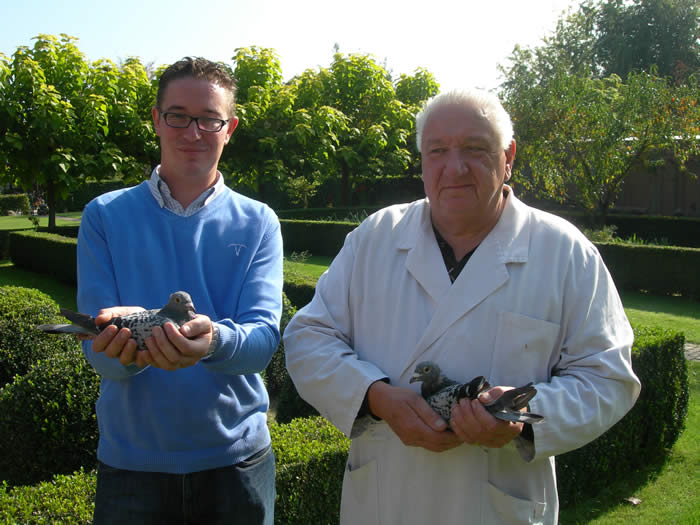
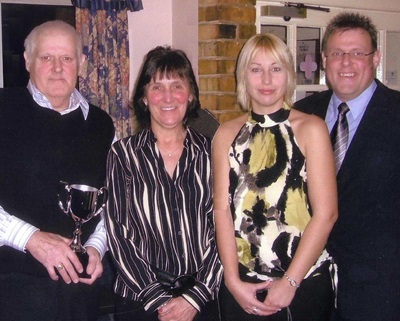
Paul & David
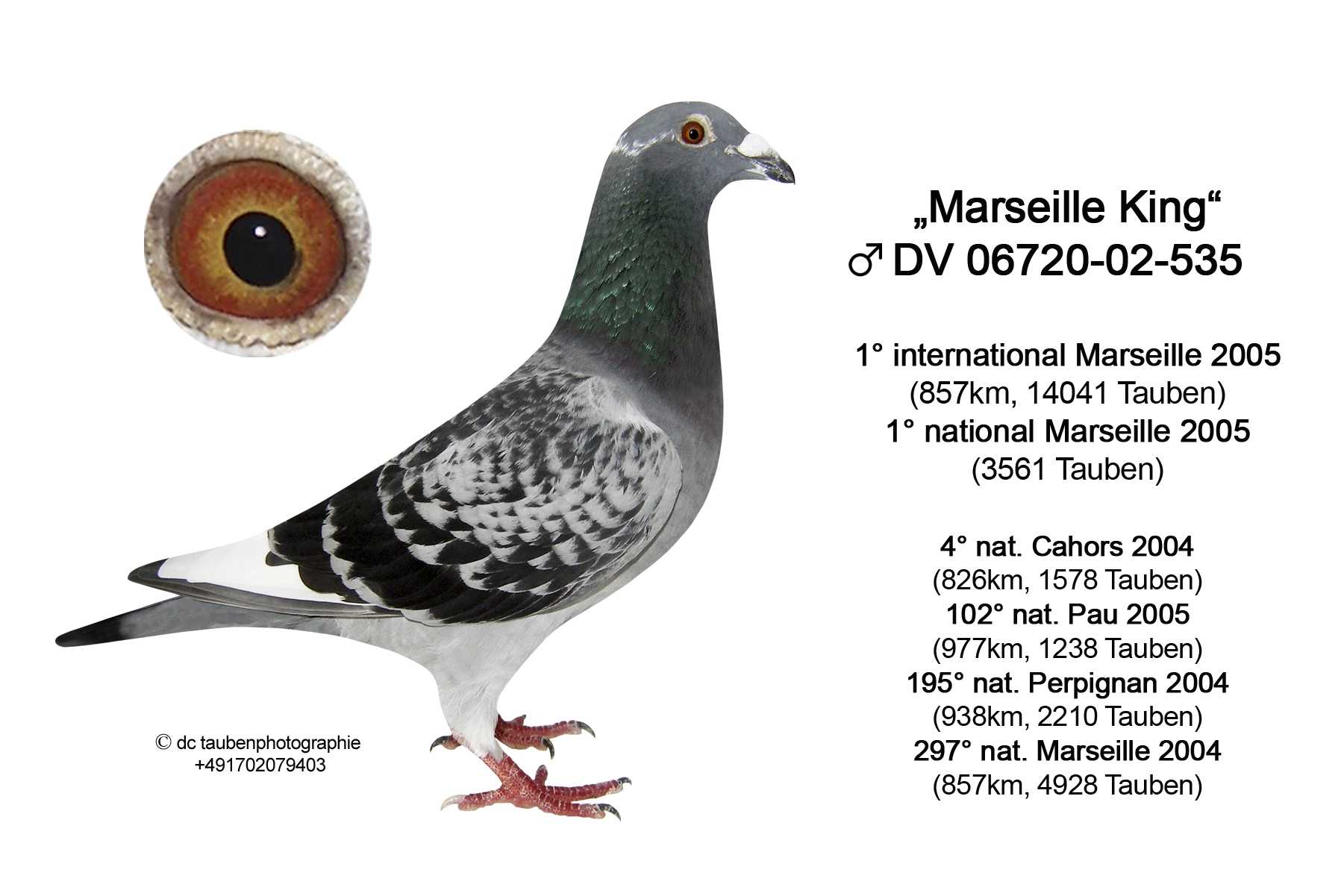
So Paul went to visit Jean-Luc Van Roy, the loft famed for the fabulous ‘Playboy’, the winner of 1st International Barcelona. Paul was a happy man in 1995 when he came away from The Van Roy loft with a brother of the world famed Barcelona ace. ‘Playboy’ is a son of the wonderful Van der Wegen bird ‘De Pearl’. This brother of ‘Playboy’ when coupled to a daughter of a 1st National Bordeaux winner of Van Hee origin turned out to be the first base breeding pair on the Vets loft.
Since this time the passion for the Van der Wegen pigeons has grown stronger and stronger but is that any wonder when their descendants have raced so successfully for Paul and David? What the partners soon found was that the Van der Wegens will fly at the longest distance but also they possess the ability of put up high velocities on favourable days. Other Van der Wegen based lofts like Christ Musters of Hoogerheide in Holland and more recently birds from Ko Van Dommelen of St Philipsland were both visited for recruits to their own colony. Paul explained that Ko is presently flying with breathtaking results and his birds are currently in very high demand. As proof of this fact we were told that in a recent International race Ko sent just 4 birds and had all 4 inthe top 600 places from an entry of 25,000+ birds. So this is the rock solid basis that the Vets have formed their team upon. This base has enabled the father and son team from Broechem to compete with the very best on the National and International scene. David explained that though they are always on the look out for fresh Van der Wegen blood, ‘’My father likes to go back to the fanciers that we have built up a friendship with because this close relationship which has been developed means that they always allow us to get from their very best lines’’. I believe that this is an excellent tip as people will always favour someone that they know personally. Another fact which the partners were happy to reveal was that very often the children directly from National winners can disappoint in the breeding loft but their children often breed far more successfully, so patience must be adopted. Patience though is the watchword of the Long Distance enthusiast.
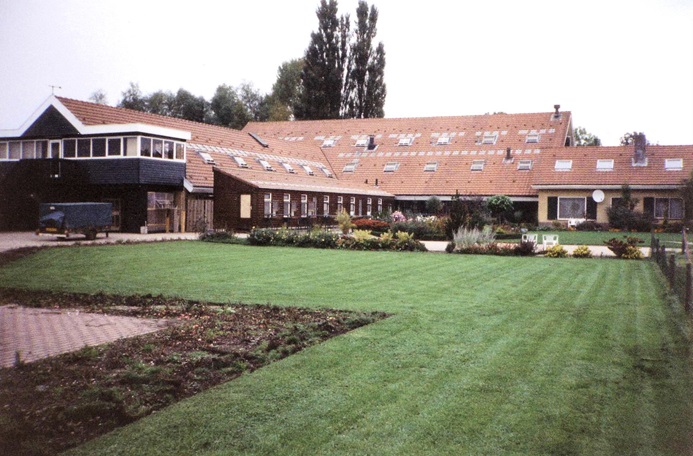
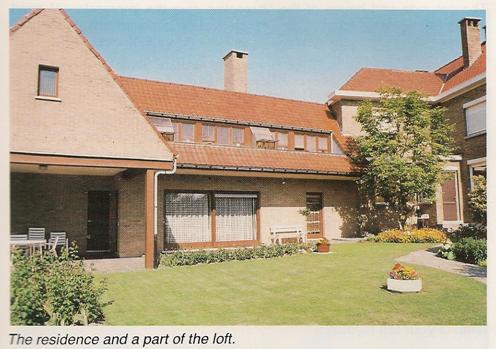
We were soon walking outside into a lovely lawned garden and David, the son of the partnership, joined us to look at, admire and discuss the Paul & David Vets colony. The setup is what we have got used to with an impressive large and L-shaped layout. There is also a large covered aviary where the females were housed at the time of our visit. The Belgians in particular are big believers in the great benefits of fresh air. It is free and without doubt is a huge aid to good health.
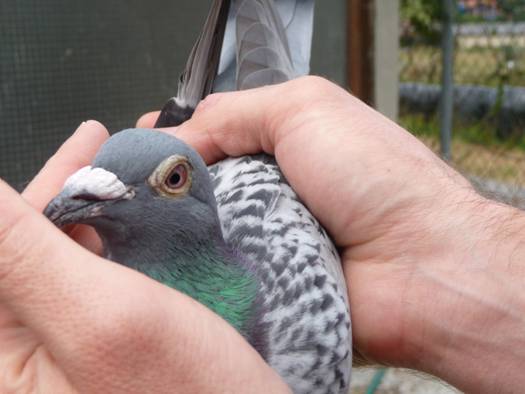
Paul brought us out some excellent examples of the Van der Wegen blood. Predominantly dark chequer in colour and as well as being similiar in colour the birds handled like the proverbial ‘peas in a pod’. They had a strong skeletal structure with a long keel and solid vent bones. The muscle quality was excellent, with the slightly down turned tail due to the strength in the rear quarter and rump area of the birds. As is usual with class pigeons the eyes were a ‘eyesign’ fan's delight with loads of character and heavy shading around the pupil. The eye colour is predominantly nut brown or as Paul accurately describes it ‘cashew nut’. This as the partners confirmed is the normal colour of this closely knitted Van der Wegen family. An interesting point was that the majority of the breeders were showing the tell tale signs of feeding youngsters with the side of the wattle slightly discoloured. Paul told us that this is normal as he and Paul are big believers in these late reared youngsters. With a little patience, many have gone on to be successful in both the racing and breeding lofts. As we looked at the adults there were a small number of late young birds pecking around the front of the loft. They will be trained on good days all through the winter time and if treated gently as yearlings will go on to repay their owner's patience as old birds in the marathon races. Included in their number were a few fresh imports from their aforementioned friends, off their very best pigeons. The partners are brave enough to test the new introductions in the race basket before they choose to breed from them. Maybe that is why their breeding section only numbers 8 couples. Yes small in number but extremely high in quality. Perhaps this is the reason why the Vets produce a high percentage of good racers?
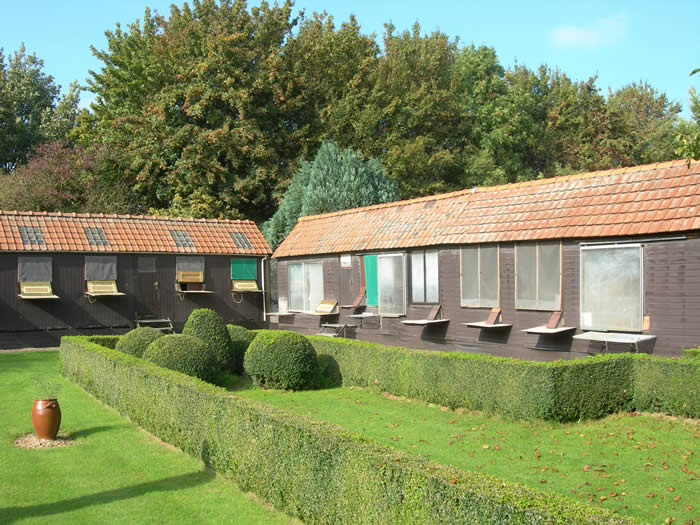
The super loft set-up
Let’s take a look at the very best results that Paul & David have achieved with their superb lond distance racing pigeons.
1998 1st National Narbonne 7325 birds with ‘De Grote Jean-Luc’
1st & 2nd Provincial from Narbonne with ‘De Grote Jean-Luc’ and ‘De Kleine Jean –Luc’
2001 3rd champion Yearlings Antwerp FC
2nd champion Grote Fond Antwerp Union
2nd champion Grote Fond Kempische fond
2003 1st Bordeaux Kempische fond
2004 2nd Provincial Montelimar 756 birds
11th National Montelimar 8538 birds
1st Provincial Cahors
1st Cahors zone B 2240 birds
2nd National Cahors 7340 birds
3rd Provincial Pau
55th National Pau
2nd champion Grote fond Province of Antwerp
2005 1st Barcelona Antwerp Union
14th National Barcelona 12998 birds
33rd International Barcelona 25815 birds
1st National Biarritz
1st International Biarritz
1st champion Grote fond Wijnegem fond
3rd champion long distance Curreghem centre
2nd champion Antwerp FC
2006 2nd Provincial Alby
55th National Alby
2008 1st champion Wijnegem Fond
2009 1st Champion Old Birds Antwerp FC,
1st Champion long distance Wijnegem fond
2010 1st Provincial Bordeaux 441 birds
11th National Bordeaux 2306 birds (this is the same bird that won 2nd Pov 55th National Alby)
24th Euro region Bordeaux 6710 birds
3rd Provincial Bordeaux Yearlings 551 birds
14th National Bordeaux Yearlings 2306 birds
33rd Euro region Bordeaux 6910 birds
1st Provincial Barcelona 1442 birds
9th National Barcelona 12641 birds
13th International Barcelona 25750 birds
What is so incredible is the fact that Paul & David normally only send a small entry of 2 or 3 birds because they like to pool their birds.
The individual stars include ‘De Chris’, a direct Christ Musters pigeon which as a yearling won 15th Prov, 58th semi-nat, 176 Int Bordeaux & 3rd Prov, 17th zone B, 55th Nat Narbonne. Then it was straight to the breeding loft, where he has proved his worth with ‘Alexander’ the 1st Prov 9th National and 13th International Barcelona pigeon; ‘The Schicht’ the winner of 3rd Prov, 13th National winner from Bordeaux; ‘The Blue Jean-Luc’ ½ brother to ‘De Grote Jean-Luc’ and De Kleine Jean-Luc’ the 1st& 2nd, 1st &44th National Narbonne winners. ‘Blue Jean-Luc’ won 14th National Barcelona in 2005; ‘The Arthur’ winner of 2nd Prov 55th National Alby in 2006 and 1st Prov, 24th Euro pigeon.
Methods
The only system used is the classic widowhood method. The partners have raced hens in the past but prefer to keep things simple so it’s just the cocks that do the work. Though I personally believe that it is rather a waste of good hens, I cannot fault the results obtained by the partners. As pointed out earlier, the race entry is normally only 2/3 birds. With this in mind prior to basketing, the chosen race candidates are shut in their box while the rest of the team are turned out for exercise. Then the hens are introduced to their mates and spend a few minutes fussing over their partners. Quietly the cocks are basketed and the hens put back into the aviary. In this way the cocks are unaware of the ‘party’ that took place while they blissfully flew around the surrounding countryside.
One thing the partners are adamant of is that the yearlings must win ‘their’ prize at the long distance. Those that fail will get a second chance but if they fail again then it’s out they go. This is one of the difficult decisions which must be made when you only have a comparatively small team of 29 old widowers. So competition is keen to claim a nestbox and then hold on to it!.
I asked Paul about the exercise periods and was told that the birds are flown out twice a day for 1 hour each time. Paul says that when the birds are reaching peak condition they fly in a very tight formation and they tend to fly over a nearby wooded area and it is thought that it is the oxygen that these trees give off that is the attraction and feeds their overall condition. As the log races approach, the birds are exercised later in the evening to encourage them to fly right up until dark on race day.
On a negative note, it is found that if a bird is reluctant to leave the loft for free flight then the bird is out of condition and could even be ill. So a close eye is kept on the bird until he resumes acting normally. Fit birds like to fly.
Feeding
The birds are fed on a simple routine with the same mixture from Van Camp, fed all year. The only exception is the widowers who are moved onto a sport mixture called Van Camp ‘Super 4’. This mixture incorporates 4 different types of maize including the ‘red maize’ which is becoming increasingly popular with many long distance enthusiasts due to its high sugar content. Also in this mix is a variety of small oil rich seeds. The other ‘secret weapon’ used by Paul and David is a grit based mineral and small tit bit mixture made by the animal feed company ‘Theuns’. A soup spoon of this is given to the birds each evening in their box and I was told that the cocks simply adore this little ‘extra’.
Young birds
As is normal with the long distance enthusiasts, the Vets' young birds are not darkened and the racing is not taken seriously but is more used for training and educational purposes. The partners are happy if the young cocks get a 300kms (200 mls) flight ‘under their belt’. As explained previously, Paul is a big believer in the late young birds and every day, weather permitting, they can be seen exercising around Broechem, and if the weather is good the training basket comes out to educate these young marathon birds. This education will stand them in good stead for the rest of their racing careers.
Medication
This is kept to a minimum as the Vets’ birds have been largely kept away from medications especially antibiotics so tend to have a good immune system against head colds, coccidiosis and trichomonias. The only routine medication is a Metrozolidone tablet against tricho early in the racing season.
I asked Paul what was the normal race preparation before the Barcelona International? He openly said: ‘’Ideally one flight from the following distances 100kms, 300kms, 360kms, 480kms, 700kms then it's rest until the big one.’’ I continued by enquiring at what age do they consider a bird is at its best to fly from Barcelona. His reply was, ’’Normally 4-5 years of age but the Van der Wegen are a slow maturing family so will often go on to fly successfully at 6-8 years of age’’.
Paul told us an interesting fact which was that the 2010 Barcelona race was a very tough one but in the top 100 national placings no less than 84 pigeons were their owners 1st Nominated, proving that ‘when the going gets tough the tough do get going’
The partners told us about one of their best birds ‘that got away’. This was a young bird that strayed off and went into another loft. The man contacted Paul and when Paul explained that it was a long distance bird, the man said that he had never had a good long distance pigeon as he only played in the short distance races but that he would very much like to compete in the long distance, so Paul kindly transferred the pigeon. This bird, a grandson of ‘De Pearl’, proved to be a fantastic racer for his adopted owner, with several fine performances to its credit Paul sent him a good hen to couple with his good pigeon. As a thank you the man presented Paul and David with the first pair of young birds that they reared. When the man retired from the long distance racing because it was too time consuming he returned the ‘prodigal son’ and his mate back to Paul and David and they are now in the breeding loft. This bird is called ‘De Amedee’. The amazing thing was the day after they were offered the couple back a son of ‘Amedee’ which the fancier had given to the Vets earlier won 3rd prize in the Yearling race from Bordeaux and is the previously highlighted ‘Schicht’. There must be a moral to this story.
I asked Paul if he had any tips on selecting good long distance candidates? He paused, then replied: ‘’Take note of a young long distance bird that takes early prizes in the short races as they often go on to be the best marathon pigeons also!’’
David told me that his daughter Elena was showing a keen interest in the pigeons so he had built her a small loft at their home to encourage her passion. So perhaps the sport's future is in safe hands with the likes of young Elena.
I must say it was a pleasure to spend some time in the company of Paul and David Vets, two successful but very unassuming pigeon fanciers. I shall follow their future results with great interest.