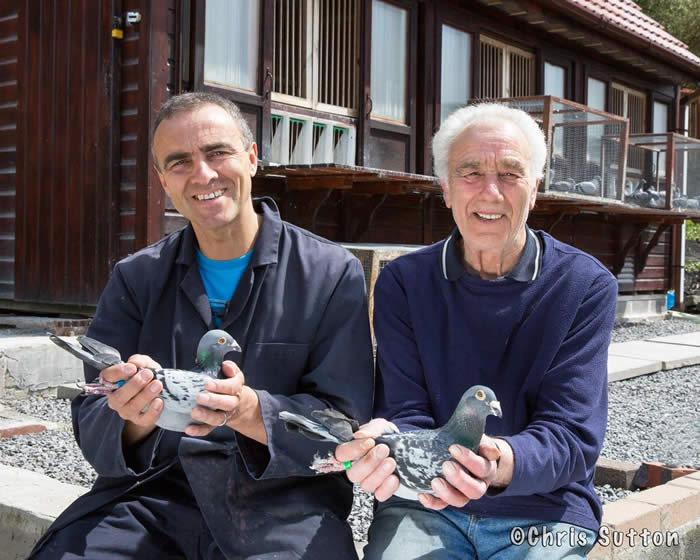
RAY STRAWBRIDGE of NEWPORT
CHANNEL SUCCESS ON THE BIG STAGE
by Gareth Watkins
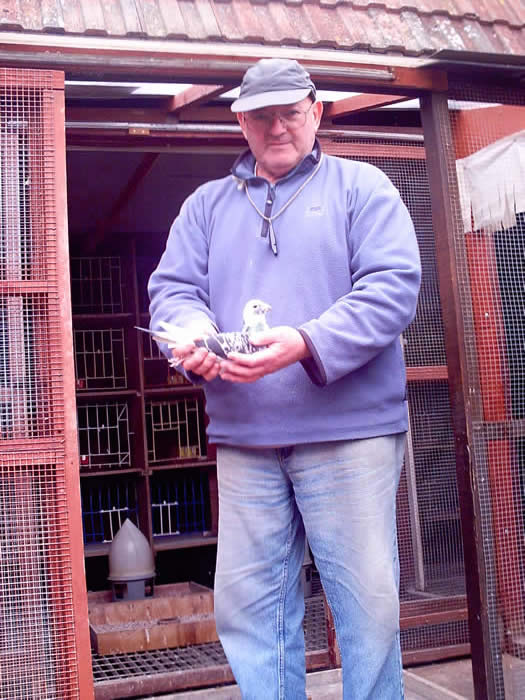
The Gwent Greater Distance club, formed in the winter of 2006/7 was, for the greater part, the brainchild of Ray Strawbridge. Along with a number of other long distance stalwarts such as Gordon Mears and Glyn Cousins, Ray had the idea of forming a long distance specialist club, which would give Welsh fanciers the opportunity of testing themselves and their pigeons not only against the best in Wales but also England and the rest of continental Europe. Thus it was that the GGDC was formed in February and appropriately Ray was elected the club’s first chairman. The objectives of the club were as set out above and also that no petty politicking would be allowed. The members were there to enjoy their sport and to compete against the best – simple as that.
I’m pleased to say that both objectives have been achieved and a great deal of the credit for this can be attributed to Ray and his leadership and drive.
The first race for club members took place from Falaise and the birds were convoyed by the superbly organised and professionally run BICC. What could be more fitting than that this inaugural race should be won by the man who was most responsible for the club’s formation, none other than the aforementioned Ray Strawbridge? This initial success has continued into a rich vein of form as the Strawbridge team has featured on every club result including a 1st & 3rd in the difficult Tours race, each time also featuring on the BICC open result against thousands of pigeons and generally against the prevailing westerly wind. When you also consider that the GGDC boasts amongst its membership AT LEAST TEN NATIONAL WINNERS plus a number of QUEEN’S CUP WINNERS then you can appreciate how impressive these performances are.
A loft visit was quickly arranged and so it was that I made my second visit in 20 years to highlight the successes of this straight talking, enthusiastic, and skilful Newport fancier.
On my first visit in the mid 1980s Ray and wife Marie were living in Tennyson road and Ray was clocking pigeons from Lerwick, Elgin and Thurso on the north road with ease. Not surprising really when you consider that in his early years in the sport, Ray along with his father, were in weekly competition with the likes of “Gentleman Jim” Brown, Channing & son, Atwell Brothers and Bale Brothers & Griffiths, the latter three all multi-National winning partnerships. With tutors like these, a keen and enthusiastic fancier like Ray couldn’t fail to pick up some tips on the preparation of long distance racing pigeons.
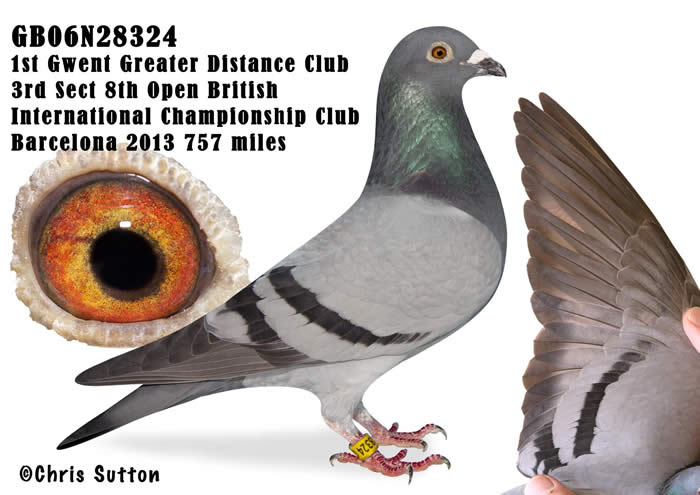
Since those days a house move in 2001 has seen a change of scenery, while both Ray and Marie have suffered health problems that, hopefully, they have both now overcome. A change of race route has also taken place and the Strawbridge team are presently raced exclusively on the south road through to Tarbes, Pau, Perpignan, Palamos and Barcelona with the Welsh SRNFC, BBC and BICC.
The bloodlines housed nowadays are a combination of Jan Aardens from various sources, Van Wanroys plus some of the old Morgan & Cook Atwell brothers bloodlines and Bowen Brothers of Porthcawl Cambrian King & Queen Lerwick National winning family. The Jan Aardens have a strong Wim Muller influence via birds Ray introduced in the early 1990s from Mr & Mrs Woodyard formerly of Costessey in Norfolk. Further successful introductions of the same bloodlines have since been made from Ray’s good friends the Padfield family of Cwmtillery.
An interesting story arose regarding the initial draft of birds from Mr & Mrs Woodyard. Ray was quite taken by most of the draft but was not too impressed with one of the group, a small mousey looking dark chequer hen. After a few days Ray contacted the Woodyards and told them of his concern about the one hen and was told that she would be replaced without any problem but that there were no similarly bred birds then available to be sent down. Luckily Ray decided to be patient and see how the little hen developed, as she has now become the cornerstone of the loft having bred at least 12 first prize winners including a Dax National winner, with five different cocks.
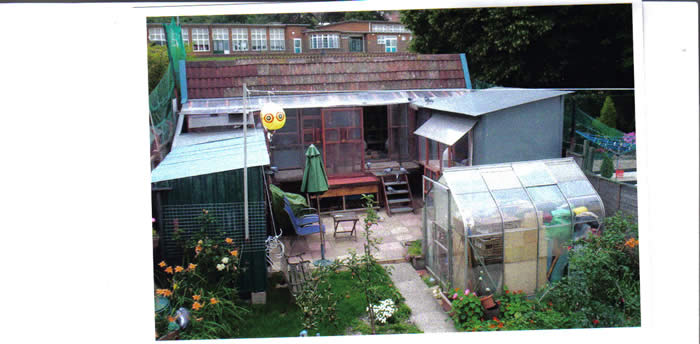
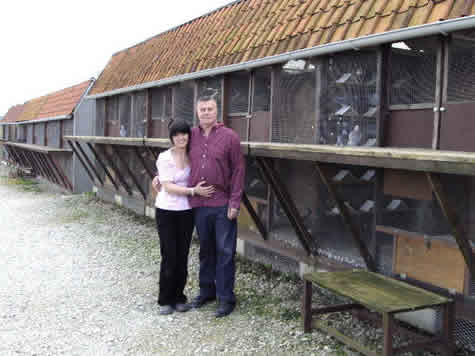
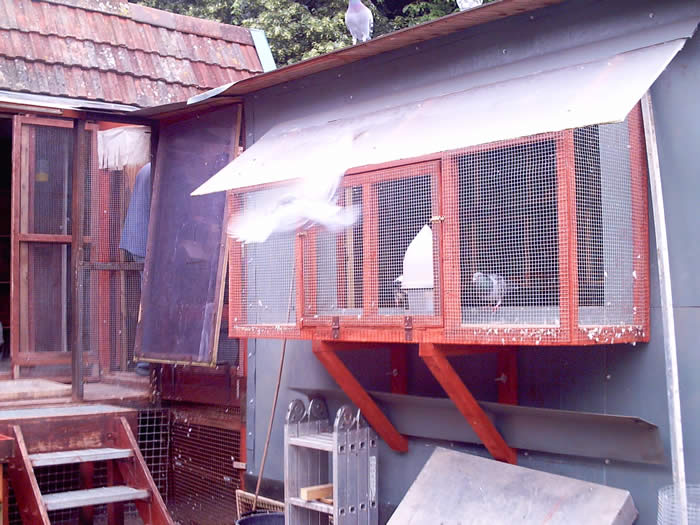
The birds are housed in a U-shaped loft at the rear of Ray and Marie’s semi detached home. One arm of the U, measuring 14 ft x 8 ft, houses the young bird team, whilst the other houses the stock birds. The main body of the loft, measuring 13 ft x 8 ft, houses a few pairs of natural racers plus 15 pairs raced on the roundabout system. The floors of all sections are made from galvanised steel grids commonly used for gantries and fire escapes. This grid flooring is raised two feet off a concrete base which is covered with a layer of cat litter. The litter is raked over regularly and any heavy deposits of droppings removed. The complete front of the old bird sections is covered with ½ inch mesh so that the birds don’t suffer from lack of fresh air. The nest boxes are approximately 2 ft deep and these, and all other woodwork within the loft, are treated annually with creosote. The roof of the loft is constructed from clay tiles and this runs down onto a porch - like front section made up from clear plastic sheeting.
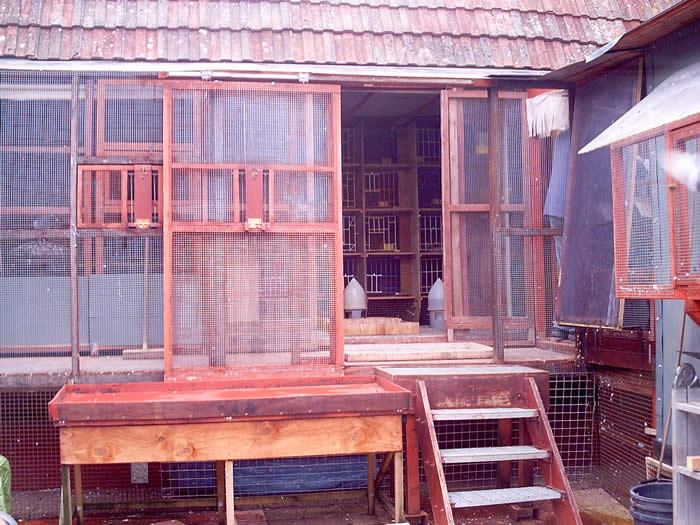
All birds, including young birds, are hopper fed farm beans and peas and these hoppers are placed in wooden trays covered in a thin dressing of cat litter, so that any spilt food remains in the trays and does not drop down onto the cat litter beneath the grids. Ray also hand feeds a special home made “sweet mixture”, the constituent grains of which are supplied by R.O. Davies of Crumlin, who also supplies all the usual grit, minerals and any other specifics used. The birds seemed to be extremely content in their home environment and are kept under control by judicious use of the “home made sweet mixture” which is fed in pots in the boxes.
All race birds, which are mated in March, are allowed to rear a round of youngsters and are then separated when the babies are 16 days old. The cocks then finish off the rearing process before racing starts. Once on the roundabout system both cocks and hens are exercised twice per day for 1 hour on each occasion. The birds are not forced to fly but are allowed to do as they please. This gentle home exercise is supplemented by two weekly training spins from 30 miles, always against the prevailing wind. After a couple of inland races the team are ready for channel racing and are sent across every two weeks unless circumstances dictate that individuals need a longer recovery time between races.
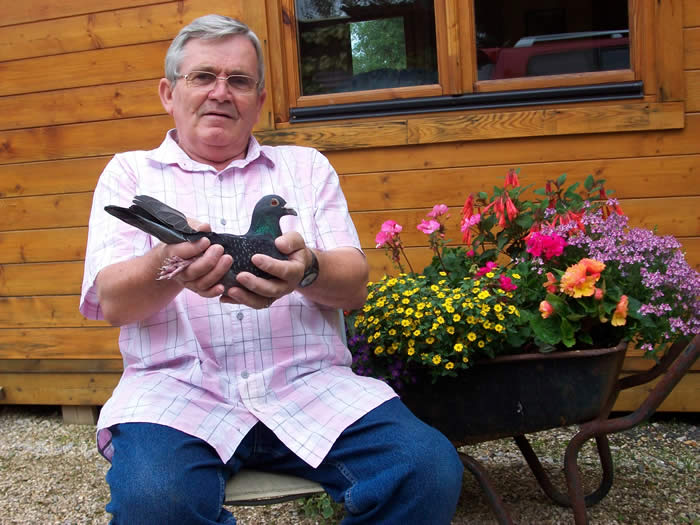
The family developed by Ray are like “peas in a pod”, mostly dark chequers with the occasional w/f and pied. They handled medium sized with silky feathering and a good length in the keel. They were all calm and placid around the loft and were constantly clapping off and on throughout our visit. Despite a hard channel programme they were in excellent condition and I can see them adding to the Strawbridge coffers in the extreme distance races still to come from Tarbes, Perpignan and Barcelona.