A & I McFENTON
of Swansea
WINNING WELL AGAINST THE ODDS
by Gareth Watkins
The above partnership now consists solely of Andrew McFenton as Andrew’s father Ivor passed away some time ago. Nevertheless, despite working long hours and being away from home for most of each day the McFenton team of racers regularly rack up 12 to 14 firsts each season in club and Federation racing. However the 2011 season proved to be exceptional, even by their standards, as the team won the following positions at Combine and National level:- 1st Welsh SE National Lillers plus 2nd Combine; 2nd &3rd Welsh SE National Reims plus 1st Combine; 2nd Welsh SE National Pont-a-Mousson plus 1st Combine. These positions won racing to a loft location far out west at Swansea with more than 90% of the convoy in each race flying to loft locations up to 40 miles to the east in a predominantly westerly air stream. Impressive stuff!
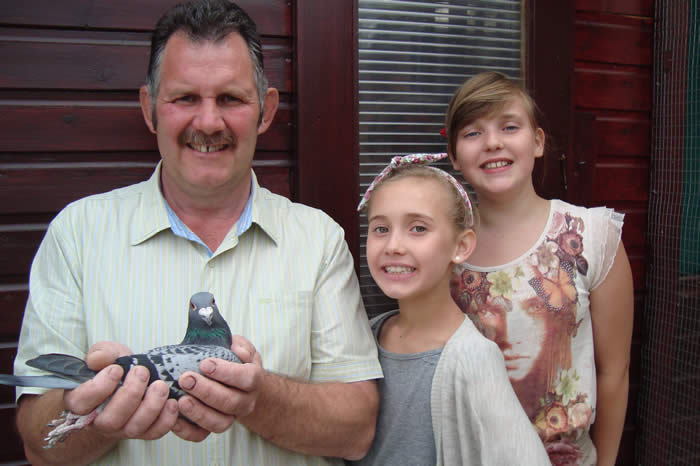
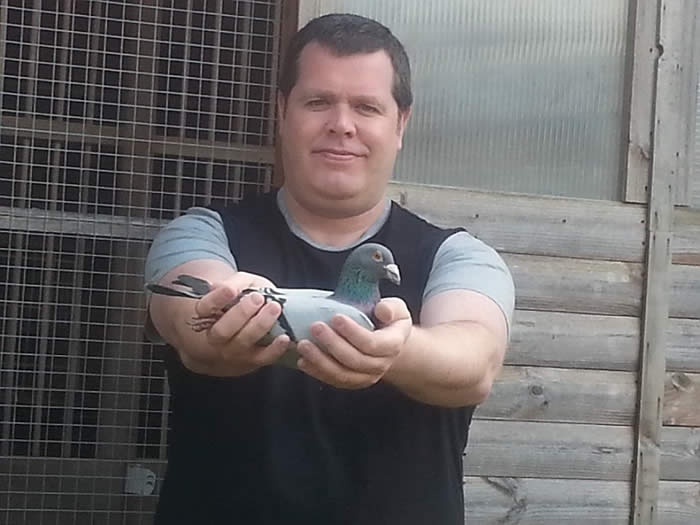
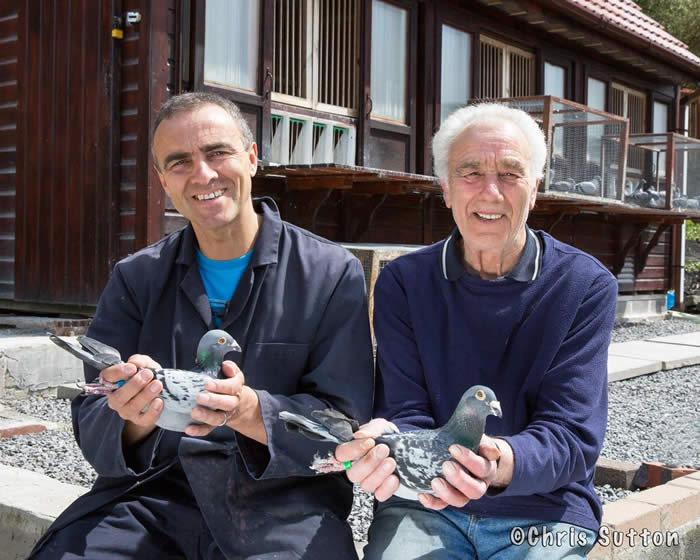
Andrew and his daughters
As a result of not only the 2011 season’s excellent results but more importantly because of the loft's consistent success over many years I decided to approach Andrew Mc Fenton to see if he would like to share his thoughts on the sport with fanciers nationwide. He kindly agreed and the following is the result of my approach.
When did you start in the sport.
I first started in the sport in 1978 flying as a young bird member in the Swansea Central HS which at the time was the biggest and strongest club in Swansea. Before that I became interested in racing pigeons when visiting my friend’s loft after school.
Who was your first major influence.
When I came into the sport I was lucky to have three major influences. First there was Georgie Lewis who was a neighbour of mine and a very good fancier, especially from the longer races from Scottish race points. Another fancier was big Griff Williams who gifted to me many top pigeons which took me to the top of the prize list early on in the sport. Finally, the father and son duo of Tacky and Keith Evans who kept tipplers at the time, they had excellent stock sense and were experts on feeding and conditioning racing pigeons.
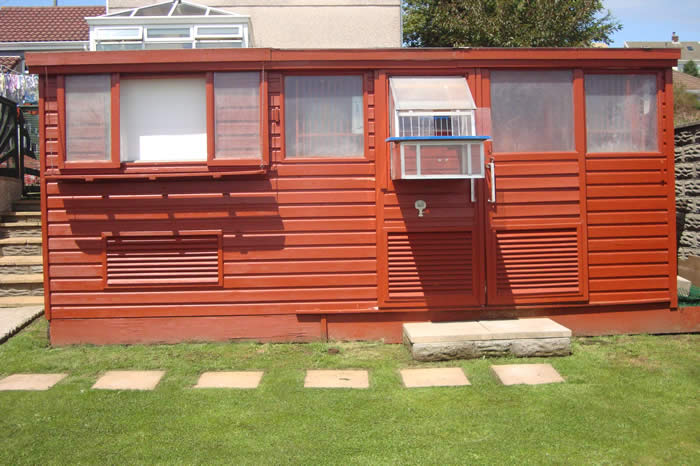
Main racing loft
Can you give brief details of your first loft, birds, management etc.
The first loft that I started off with was a loft measuring 8ft x 4ft costing around £5 to build. Then a young bird loft was constructed measuring 9ft x 5ft. Then a double decker loft was built measuring 15ft x 6ft. This was constructed in my very small garden in a terrace house in the centre of town. The first pigeons I started off with were pigeons from Griff Williams, Georgie Lewis and a fancier from Sowerby Bridge in Halifax by the name of Benson Burns. I had spent some time at his and other lofts around his home in Halifax in Yorkshire. Every year pigeons were sent down by train to me as gift pigeons, including my first ever winner. My methods at the time were flying the natural system, eight pairs of old birds, twenty young birds, four pairs of stock birds. These were fed on chicken corn and tick beans and conditioner seed and Johnson’s tonic was given in the water.
How long have you raced to your present location.
At my present address I have raced since 2001 after spending a few years rebuilding the house I live in now.
Stock loft
Can you give details of your present loft set up i.e. overall dimensions, orientation, number of sections etc.
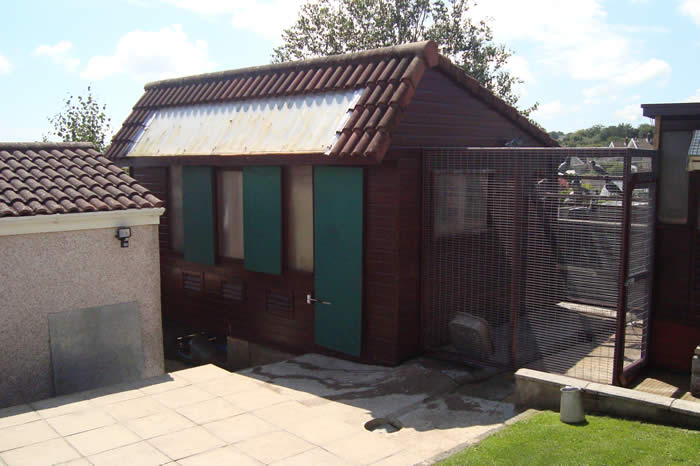
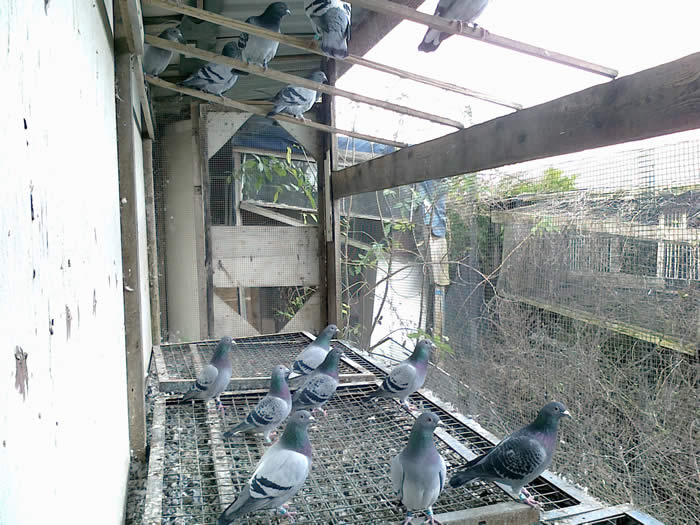
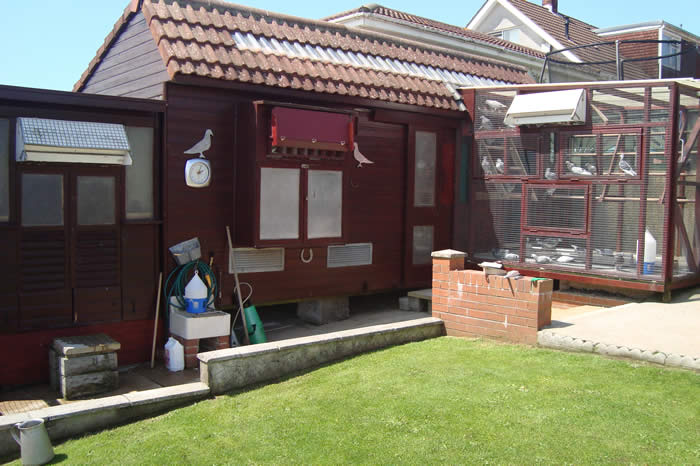
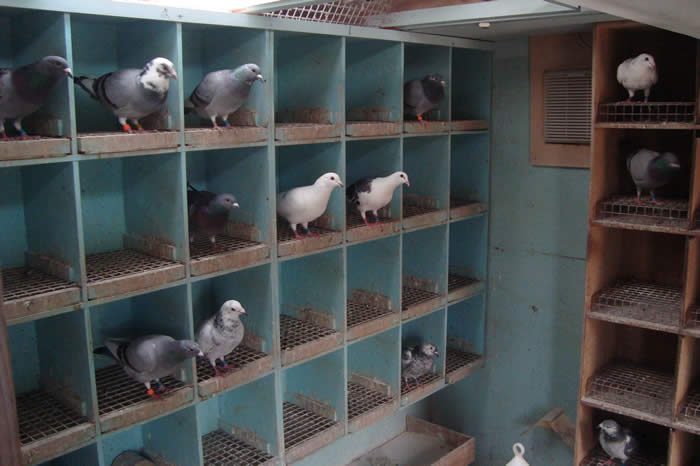
My present lofts consist of four lofts. My stock loft measures 20ft x 12ft with two sections and large aviary on the side. This is of a wooden construction with tiled roof with skylights in the roof for plenty of light and also ventilation is fitted in the roof tiles. There are twenty nest boxes fitted in this loft, all specially designed and made by myself. My main racing loft is 19ft x 9ft consisting of two sections with a 3ft corridor in a 12ft section with plenty of ventilation and light entering the loft. This is of a flat roof construction and faces south to get the full benefit of the sun which helps to keep the birds in form for much longer. The young bird loft is approximately 12ft x 9ft with two sections and a 10ft x 10ft aviary attached where the young birds spend most of their day. The interior of this loft is kitted out with pipo boxes and deep box perches approximately 12inches x 12inches deep to make the young birds more content. Attached to the young bird section is a 9ft x 6ft widowhood jealousy system with a tiny corridor leading to a small 6ft x 6ft loft which is called the peeping tom loft where the hens are kept. This loft is of a tiled roof construction with perspex skylights and roof vents fitted.
Do you use deep litter ,grids or clean daily / regularly.
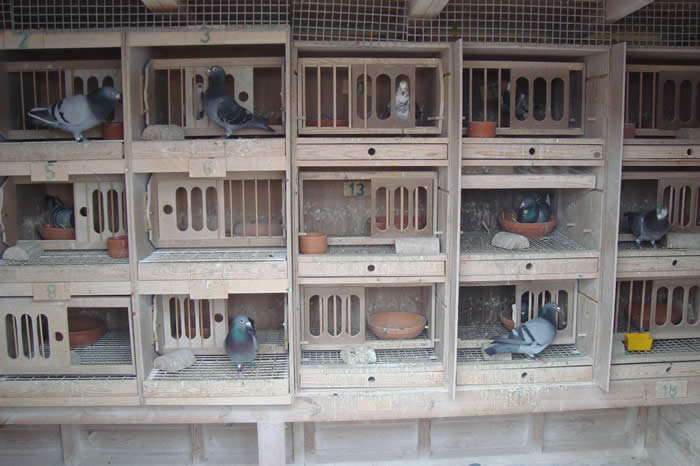
I never use deep litter as I find it too messy and unhealthy for myself and I find it very unsightly. I use wooden grids for every loft floor, except the main racing loft which I clean twice per day. In the near future I hope to install wooden grids in this loft as well. Every nest box and all perches contain pull-out trays to make it easy for myself as I often work seven days a week and I find that it is easier to manage.
Inside the main racing loft
How many birds do you keep:- stock. racers, young birds.
I keep approximately twenty pairs of stock birds. The race team will consist from between 36 to 50 old birds and the young bird team is usually around 60.
What system do you use to race the birds e.g. widowhood, round about, natural etc.
My old birds are raced on a roundabout system with a small team of cocks raced on my jealousy peeping tom system which is still in the early stages of experimentation. So far it has worked with fantastic results.
When do you mate your stock birds, racers.
My stock birds are paired around the same time as the races any time from the end of December to the beginning of February, depending on weather and work commitments. In the 2011 season they were paired at the end of January/beginning of February. My roundabout team are paired the same time and a percentage of the eggs are floated from the stock pairs to some of the race team.
Young bird aviary
Do you mate the birds you intend for the longer races at a different time to the other racers.
I mate the birds for the longer races one to two weeks after the yearlings are paired to get another round of eggs from the stock birds.
What is the preparation of the racers prior to the first old bird race.
My racers are prepared for the first old bird races by the following methods. They are allowed to rear two young birds each. When the young birds are approximately 20 days old they are put into another section along with the hens from the pairings and these will finish off the hard work of the last week of heavy feeding. In the meantime, the cocks start to begin their exercise regime which at this time will be approximately three weeks before the first old bird race. They are then paired back with the hens after the young birds are weaned and allowed to sit for approximately five days then parted for the racing season. Nothing at the loft is over-complicated. Everything is kept as simple and as easy as possible.
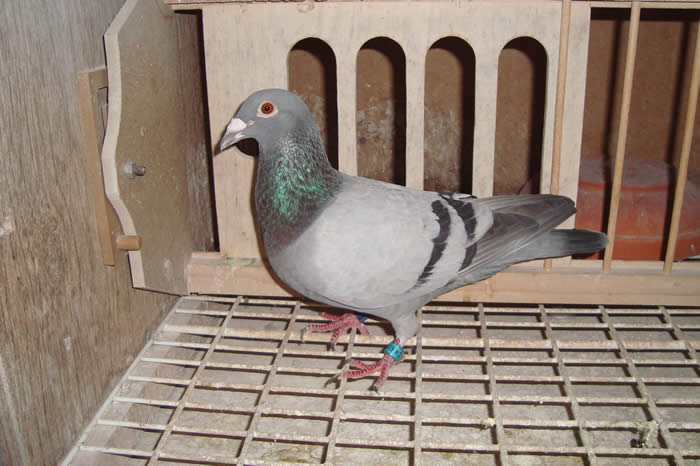
2nd National Pont-A-Mousson 2011
Do you force fly your birds during exercise or are they left to do as they please.
My pigeons are sometimes forced to exercise, but once they get into the routine they fly freely from 30 minutes to two hours. At the start of the season they are never let out for exercise if it is raining or high winds as this will take the edge off them before the big races come around. These pigeons start exercising for the racing season approximately two to three weeks before the old bird season starts.
How often do you exercise the race birds.
My old birds are exercised, cocks and hens, in the mornings from 4.30 am to 7.30 am. Evenings 5 pm to 7 pm. Young birds are exercised in the evening only until the old bird season is over then they are exercised twice per day unless they are being trained by car. No strict routine is kept to the above as work comes before pigeons and everything is kept simple.
Young bird loft
How often do you train the race birds before and during racing.
Training for the old bird team will take place about one to two weeks before the first race, weather permitting. They are never trained if the wind is a cold northerly wind as pigeons will be spoilt before the season starts. The old bird team will receive approximately three training tosses before the first race. Once racing starts, no training is given.
How far do you usually train.
The old birds are usually trained between 10 and 18 miles.
Is there any specific preparation for the birds before National races.
There is no specific preparation before the National races. They are raced to the coast and raced every fortnight for the channel races unless they have a difficult race and they are confined to the loft with plenty of food and rest to build up their form again.
2nd National Reims 2011
How much racing do your young birds receive and how many training tosses do they have in the year of their birth.
My young birds are raced every week to the coast which is approximately 220 miles to my loft. With a strong team picked out after that for the only channel race of the young bird season. My young birds are normally split into two teams just in case of high losses and I’ve always got another team to fall back on in case this occurs. I normally have to miss the first two young bird races because of lack of time and the old bird season is reaching its peak with the big races clashing with the young bird season. I think, personally, that there should be a fortnight break between old and young birds to give the working people a chance to train their young birds properly as at this time of year everybody is rushing to train young birds and the losses could be reduced if we had a break between old and young bird racing. My young birds will receive training tosses from approximately 1 mile to 20 miles and they will be trained once or twice per week weather permitting during the young bird season.
Do you race your young birds on the Natural system or Darkness / light system.
My young birds are raced on the darkness system as they mature better and are in better feather condition. This is a must if you wish to race young birds successfully.
Inside the young bird loft
How do you feed the racers, stock birds, young birds – hopper / by hand. How do you gauge how much they need at each feed.
The racers are all fed communally in clean troughs by hand as much as they want, as hungry pigeons will never win for you. The stock birds are fed in troughs, also in the nest boxes in pots when the young birds start picking. The young birds are also fed in troughs as much as they want. These are fed in the young bird aviary. Once the racing is finished, every pigeon is hopper fed to make things easier for myself and they don’t gorge themselves as they know there is food there all the time for them. Everything is kept as simple as possible and this is done to suit the individual fancier.
What mixtures do you feed.
The mixtures I feed are all commercially mixed and not mixed by hand. Breeding mixture is used for breeding. A widowhood mix is used for racing and a young bird mix is used for young bird racing. These mixtures are marketed by Versele Laga, Gem and Beyers.
Do you feed any differently in the build up to National races.
The build up to the national races is the same as the inland races, except that the pigeons are given a special cake which I have used since the 70s.
What are the main bloodlines that you house now and which lines have proved the most successful.
The main bloodlines I have are the grizzle family from Lambert and Davies of Abergavenny which are bred from their number one pair. These are probably responsible for more national and BICC winners in Wales than any other strain. I was fortunate to obtain them from Raymond Lambert and my good friend, John Smale, of Abergavenny and John May and Son of Surrey who was one of the principal buyers at Ray Lambert’s entire clearance sale. These grizzles are very much sought after and they are flown by many top fanciers in Wales including the great Denis Ford or Blaenavon. These pigeons are easy to condition, need little work and will win from 50 to 700 miles. I have crossed these pigeons with the Vandenabeele pigeons of Jimmy Bauress of Liverpool and Derek Jones of North Wales with great success. Another family of pigeons I have are Sheldon Leonard of Southern Ireland who owns some of the top pigeons in Europe. These are mostly Janseen Hofken lines. The Syndicate cross Ganus pigeons from Syndicate Lofts direct, Phil and Neil Bates of North Wales and Jimmy Bauress of Liverpool. A small, but very select team of Jos Thone pigeons are housed for my good friends, Brian and Jack Davies of Swansea, these being bred down from Marathon Lofts of Charlie and Natalie Bradshaw. The last family housed are Fishlock and Harding bloodlines that have been with me since the early 90’s. When obtaining my stock I always try to purchase from the champion producers as I find the nearer the champion, the better the chance of success in the big races. As my good friend, John Smale, always says “you can’t play with the boys if you haven’t got the toys”!
Do you line breed, inbreed or outcross when breeding. Which method has been most successful for you.
I line breed my grizzle family, grandparent to grandchild then outcross. My family of pigeons that I house are not always kept pure as I pair them as I feel necessary to have a strain that I can call my own that will win from 70 to 600 miles with the least amount of work and time and give the best possible performances.
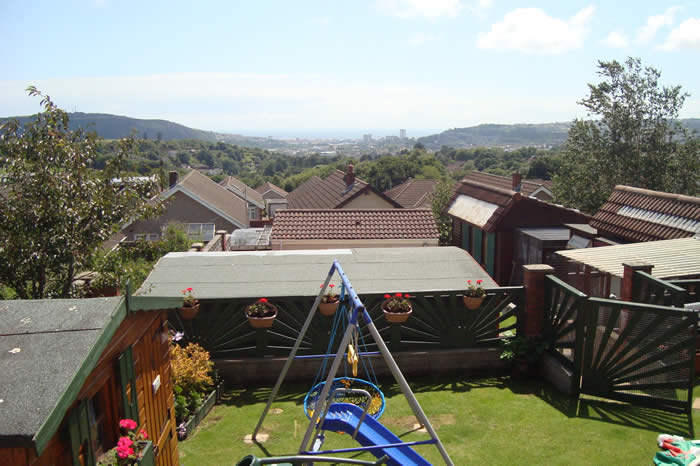
Overview of the lofts
Is there any fancier who has helped you more than any other.
I must say that the fanciers who have helped me more than any other fanciers were Griff Williams and Georgie Lewis who helped me when I first started up in the late 70s. Also, my late father, Ivor who supported me in my wish to race pigeons as a teenager and became my partner. He would have been so pleased and proud of my fantastic performances in the 2011 season. One fancier at present who is my chief adviser is John Smale of Abergavenny who is one of the great characters and great fliers that make the sport such a great hobby. The Fishlock boys of Cardiff and my great friend and flier from Southern Ireland, Liam Fitzgerald. I would also like to mention a local gent and ex-fancier, Ralph Morgan, who always helps me when I am away on holiday.
Can you give an outline of your many top class performances and those that have given you most pleasure.
I have been very fortunate to have owned and raced some champion racers in my time. Living in the west of Wales we find it very difficult flying against the fanciers situated in the east when it comes to flying for open positions in the National and Combine. The 2011 season can only be described by myself as fantastic for me considering the location we fly in west Wales having an extra 40-50 miles further to fly from the shortest flying members into Wales. To write all about my top performances I could fill this article and write all day about my winning pigeons. My Lillers national winner 2011 is a fantastic racer being bred in 2008, winning four 1sts as a young bird, including 1st Federation Ramsgate, 3rd Federation 8th National Lillers, also winning 1st Lillers as a yearling and many top positions in the Federation and National races, many times being beaten by loft mates. My 1st Welsh Combine 2nd National Reims 2011 is only a yearling and has a fantastic future ahead of him, being a very consistent racer as a young bird and a yearling. My 1st Welsh Combine 2nd National Pont-A-Mousson being the only bird in the Federation on the day when only 15 birds made it into Wales on the night and the pigeon that beat her was flying nearly 40 miles less. So she had probably flown the last 40 miles on her own after nearly 14 hours on the wing! - a performance that will stay with me for a very long time. My good blue hen, No. 32, a winner of over £2000 and 12 1st prizes. These are pigeons that have put up top performances over the past two to three years. Since restarting in 2001 my family of pigeons have been winning between 10-14 firsts and many federation wins and National and open positions. In September 2006 tragedy struck at my loft when a fox killed all my race team that had won between 30 and 40 firsts between them. Including the great John Kirk pigeon who had won 12 1sts for me, the grizzle Lambert & Davies cock who was 1st section 15th open Liege. “Reynard” also killed many other top winners that I have raced since I started in 2001 during his night of carnage.
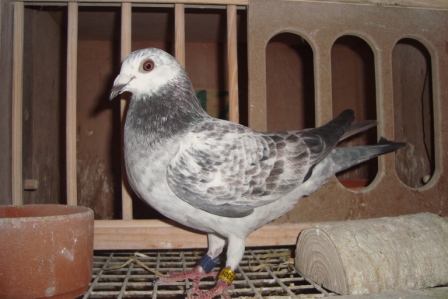
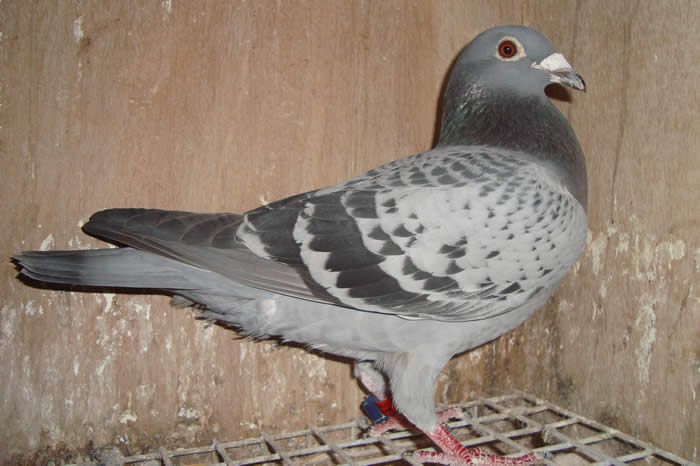
The Liberty Hen - the National winner from Lillers in 2011
Can you give details of some of the top pigeons that you have raced.
Before 1997 when I was flying at my old address I was privileged to race my great White Flight Cock that won 19 1st prizes from 23 races that I entered him in, also winning 2nd in the Versele Laga world championships sprint award. He was sold at my removal sale to Spence and Nichols who renamed him the Prins White Flight Cock and he became a famous stock pigeon worldwide. One of my top distance hens was a chequer hen named Game Lady who as a yearling in 1995 was 1st club, 1st federation, only bird on the day flying14½ hours on the wing in a strong south westerly wind from Thurso, nearly 500 miles. As a two year old she was 1st club 2nd federation only two birds on the day again almost 14 hours on the wing. Another great pigeon I raced was a chequer cock named the Quiet Man, a winner of 10 1sts winning Perth three years in succession for myself.
Do you have any views on how the sport can be improved and how we can attract new members into the sport.
The only way that I think the sport can be improved is that all small federations in the area amalgamate and the hobby of racing pigeons should be promoted amongst school children.
Do you have a specific programme of medication.
I keep to a strict programme of medication. After the moult is finished the pigeons are treated for canker and respiratory before pairing and are treated when I find necessary during the racing season with the help of a microscope when needed. Young birds are vaccinated at approximately 18 to 21 days and are treated for canker and respiratory when needed. All medication that is used is purchased from a reputable vet and not from unknown sources.
Do you use any supplements such as vitamins etc.
The supplements I use mostly are multivitamins, Johnson’s tonic and sometimes Gemthepax. Most of these are purchased from Gem as I find them an excellent product.
Do you feed any supplements in the build up to long distance / National races.
The supplements I use in the build up to a long distance race is Johnson’s tonic, Gemthepax and my special cake mix which I have used for a long, long time.
How does your ideal pigeon look / handle.
My ideal pigeon must be well balanced with a nice shallow keel and should fit well into the hand. Having written that, I have won many big races with all different shapes and sizes. One thing I must say is that a pigeon must have plenty of brains and a good, strong heart and also plenty of luck with the obstacles that it must come up against during their racing careers.
If you could only use one product / supplement what would it be.
This product would be Johnson’s tonic which has been on the market since well before I started racing pigeons.
That then is a “from the heart” description of the management methods and thoughts of one of Wales’ top fanciers who, with limited time and the responsibility of raising a young family, has won consistently at the top level for more than two decades. Congratulations Andrew on your birds’ many fine performances.