WINNING CONSISTENTLY AT THE DISTANCE
LEE & KEVIN BUDDLE of DOVER
by Gareth Watkins
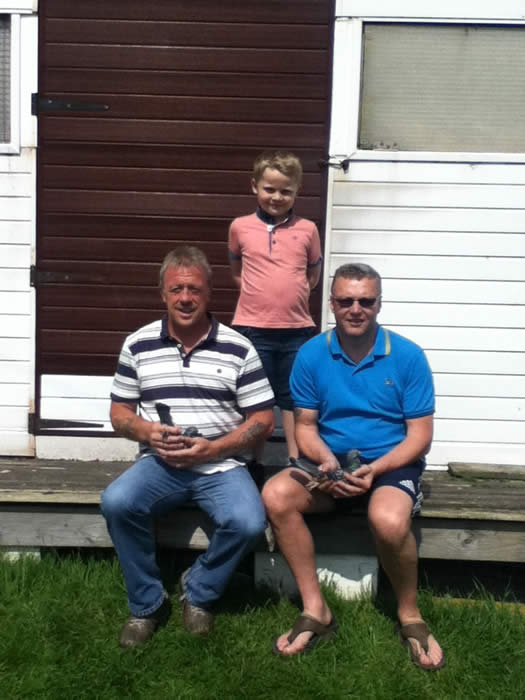
As the title suggests, this father and son partnership has been consistently successful over a period of years in extreme distance competition whilst competing with the BICC and NFC. Lee and father Kevin are totally dedicated to long distance pigeon racing. As a result of this focused mindset, all races leading up to the distance events are regarded as merely preparation for their long distance team so that they are in tip top condition to compete against the best of British and the Continentals in long distance National and International races. This single minded approach bore fruit in no uncertain manner in the 2009 Pau International race, when Lee and Kevin clocked the only two pigeons on the day into the UK. I recently spoke to the partners at the BICC prize presentation in Bournemouth and the following is a transcript of our conversations over that enjoyable weekend.
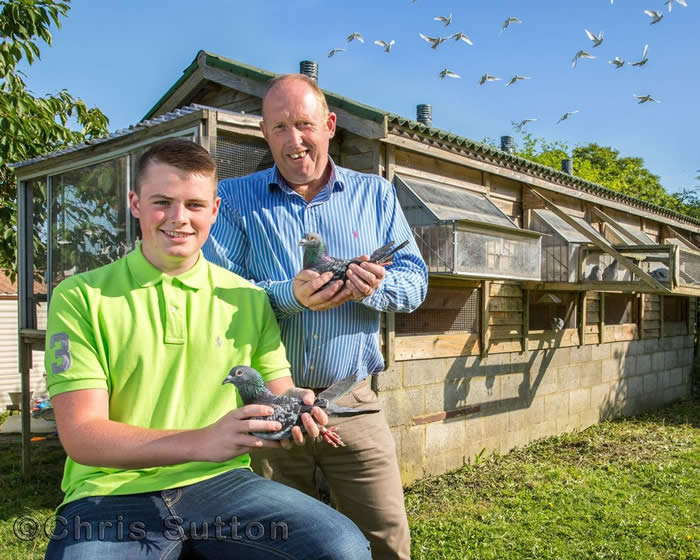
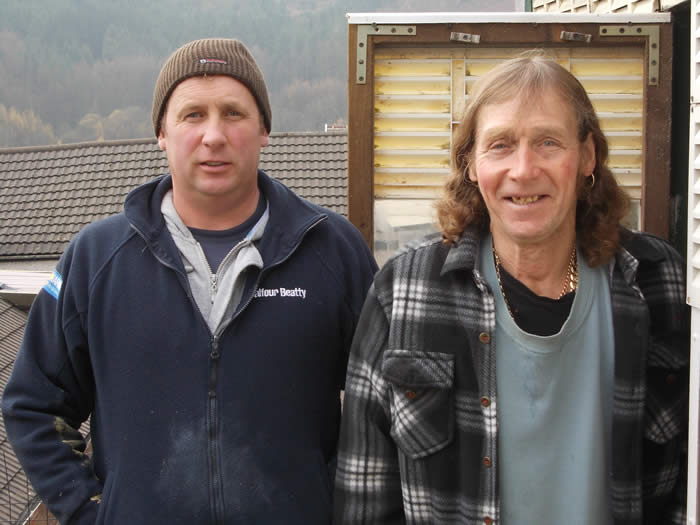
Kevin & Lee
When did you start in the sport?
We Started in 1996 with a couple of babies from a local fancier although my dad Kevin used to keep pigeons with his father in the late 60s and early 70s but gave them up when he got married. However, we didn’t really get into pigeons properly until 1997 when we built our first small loft in the back garden of my parents house.
Who was your first major influence?
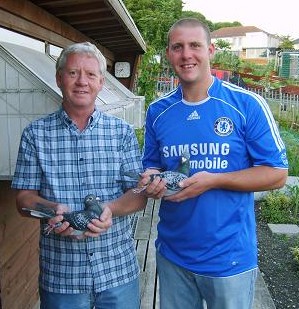
From the start of our time in pigeon racing we have been mainly interested in Long Distance racing. This was brought about by the late B C Williams of Westmarsh in Kent who was always thereabouts in the Internatonal events. After staying up at the club late one evening while some of our club members were having their Classic clocks read, I met Brian Williams and he said to come over to his place the following weekend. So a week later I went along to Brian’s and he gifted us 6 young birds. A couple of these youngsters are still the base of our family of pigeons today along with a few other select introductions.
Can you give brief details of your first loft, birds, management etc?
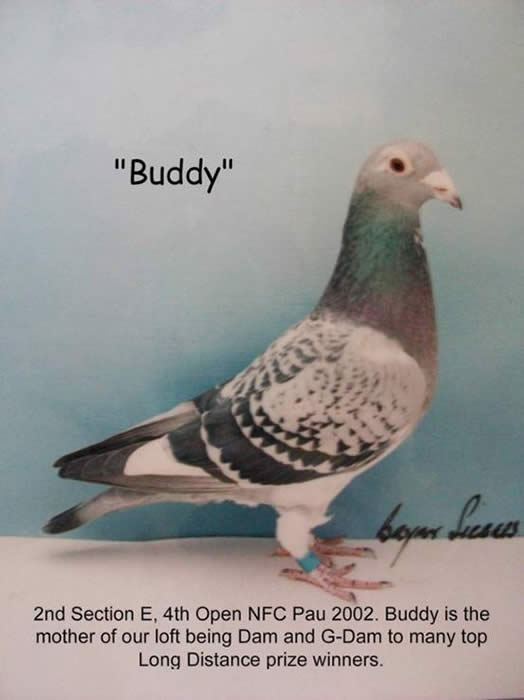
Our first loft was built in 1997 and it was a 12x6 loft built by my dad up the top of the garden. We had a few good performances to this little garden loft. One that really sticks out is 2nd Section E, 4th Open NFC Pau 542 miles in 2002. We moved from this loft to our present location in 2004 as we had “outgrown” the original loft. We felt that if we were to compete in all the International and National Long Distance races we would need to have a few more pigeons around us.
Can you give details of your present loft set up i.e. overall dimensions, orientation, number of sections etc?
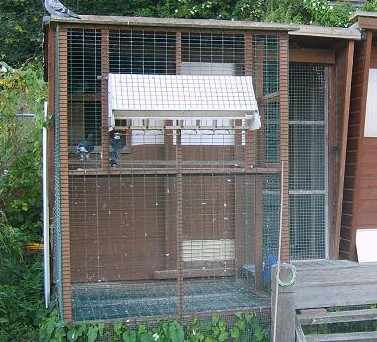
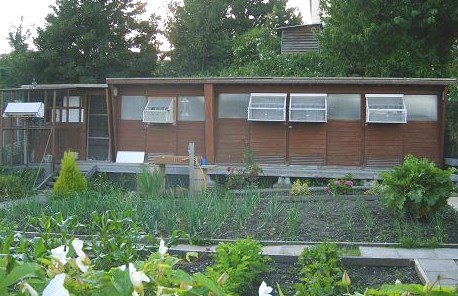
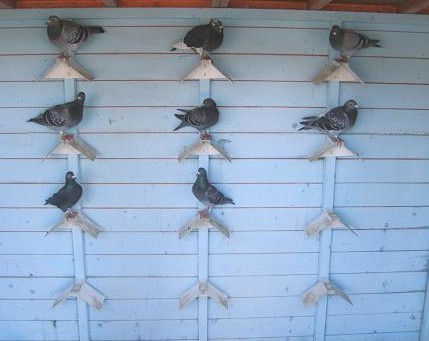
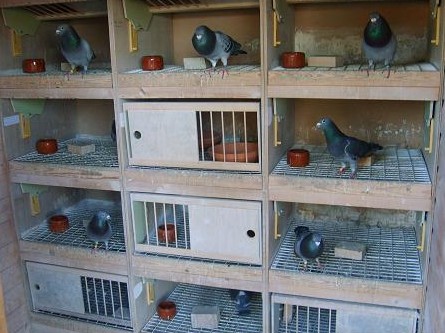
The current loft construction is tongue and groove timber with a felt pent roof. Sputniks are used on all the old bird sections for trapping and a stall trap is fitted to the aviary on the front of the young bird loft. The loft is raised approx 2ft off the ground with a timber decking veranda running along the front of it. It is 34ft by 6ft with three 6ft sections for the cocks, one 8ft section for the hens and another 8ft section with aviary for the young birds. The ventilation in the loft is achieved through 1ft by 2ft louvers on the lower front of the loft and a 2 inch gap all the way around the top of the roof, this allows fresh, cool air in low and the warm stale air out at the top. We have dowel doors on the front of the doors and if the weather is good and we are about we leave these open.
The lofts of Kevin & Lee Buddle
Do you use deep litter, grids or clean daily/regularly?
All of the sections are scraped out twice a day 365 days of the year. During the racing season this is done during the birds exercise period.
How many birds do you keep:- stock. racers, young birds?
Ideally we like to keep 32 cocks and 32 hens for racing. This is made up of yearlings and older birds. We breed about 40 young birds each year for ourselves and they have very little racing in the year of their birth, just mainly training out to 100 miles. We keep no more than 8 pairs of stock pigeons and these are proven Long Distance racers or children of proven Long Distance racers.
What system do you use to race the birds e.g. widowhood, round about, natural etc?
Both Cocks and Hens are raced on widowhood for the whole season, having said that there have been a couple of occasions when for the last International of the season, which is Perpignan in early August, we have paired the race team up as we felt they were getting a little bored of widowhood.
Widow hens' section
When do you mate your stock birds, racers?
This year we will pair the racers on 26/27th Febuary and the stock birds were mated a little earlier than that, about Mid January.
Do you mate the birds you intend for the longer races at a different time to the other racers?
All of our pigeons that are 2 years old and over will go to at least One Long Distance event so the whole race team are paired at the same time.
What is the preparation of the racers prior to the first old bird race?
After weaning the youngsters they will be left for a few days then they will start to be let out around the loft twice a day. After a week to ten days of this exercise we will give them a few 20 mile warm ups before they have a 100mile inland race/trainer.
Do you force fly your birds during exercise or are they left to do as they please?
We let the birds out and leave the traps closed until we want to get them in. I must say though that our birds are not the best at exercising around home! When we let the hens out they fly for 5-10 minutes then they are down and finished and spend the rest of their exercise time trying to get into the cocks sections.
Widowhood section
How often do you exercise the race birds?
The cocks and hens are let out to exercise for 30 minutes each in the mornings and 45 minutes each in the evening.
How often do you train the race birds before and during racing?
Before the racing season we give the old birds 3-5 20 miles trainers before they go to a 100 mile club trainer. But during the racing season they get very little in the way of training as both my father and I work long hours?
How far do you usually train?
We very rarely train the pigeons ourselves further than 20 miles due to time.
Is there any specific preparation for the birds before National races?
Before a long race we do like the candidates to have had a couple of “East to West” inland races of 100 miles then 2 channel races of about 150 miles and then a final channel race of about 220 miles 10 days prior to basketing.
How do you feed the racers, stock birds, young birds – hopper /by hand. How do you gauge how much they need at each feed?
We feed our cocks individually in their boxes with 2x 25ml spoons in the morning and 1x 25ml spoons in the evening. The hens are fed in a hopper on the floor at a similar rate.
What mixtures do you feed?
We have up till this coming season always fed 100% Verselle-Laga “Best all Round” mix but this year we are going to introduce a little of the Verselle-Laga Plus mixtures to this.
Do you feed any differently in the build up to National races?
A few days before the basketing for a long distance race we give each pigeon a little extra sunflower hearts.
What are the main bloodlines that you house now and which lines have proved the most successful?
No specific families are kept but the pigeons we do keep we see as our own family built up over the years, bred from good long distance pigeons from Jim Biss, Brian Williams of Westmarsh in Kent, Paul Kendall, Jimmy Roy, Brian Denney and J & R Wills with some new introductions from Dave Hales and our good mate Mike Mitchell also from Dover.
Do you line breed, in breed outcross when breeding. Which method has been most successful for you?
As for breeding we just put good pigeons to good pigeons. We don’t ever inbreed too deeply though.
Is there any fancier who has helped you more than any other?
Well the one fancier that really sticks out for helping us is the late B C Williams of Westmarsh in Kent. He was the first person from who we got Long Distance pigeons from and from the very start they have been successful for us.
Can you give an outline of your many top class performances and those that have given you most pleasure?
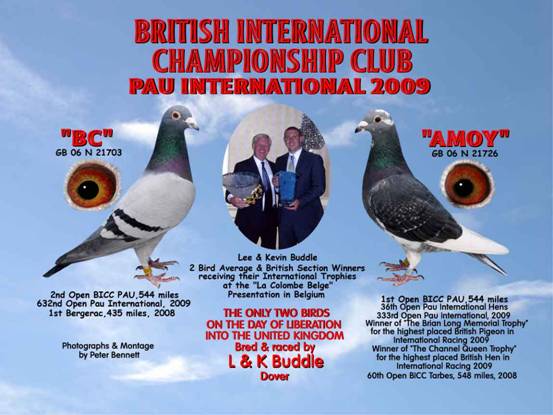
Top of our list has to be winning 1st and 2nd Open Bicc Pau in 2009 with “Amoy and “BC”, these two birds were the ONLY two birds home on the day of liberation into the UK. Another really memorable performance is winning 2nd Section E, 4th Open NFC Pau in 2002 with a really good hen called “Buddy”, this hen has become the mother of our loft and she is the Grand mother to “Amoy” 1st Open Bicc Pau 2009 and “BC” 2nd Open Bicc Pau 2009.
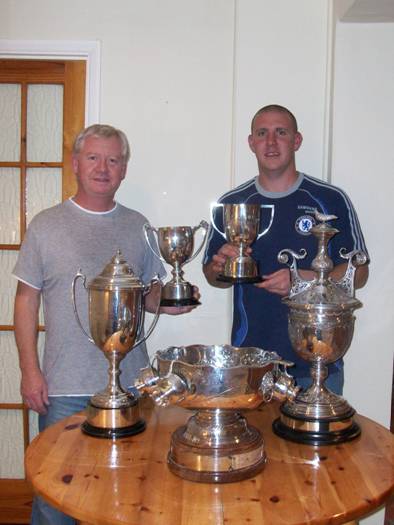
National Positions Won By Us (All Over 500 Miles)
1st National BICC Pau 2009 (Clocked on the Day of Liberation)
2nd National BICC Pau 2009 (Clocked on the Day of Liberation)
3rd National BICC Perpignan 2008
4th Open NFC Pau 2002
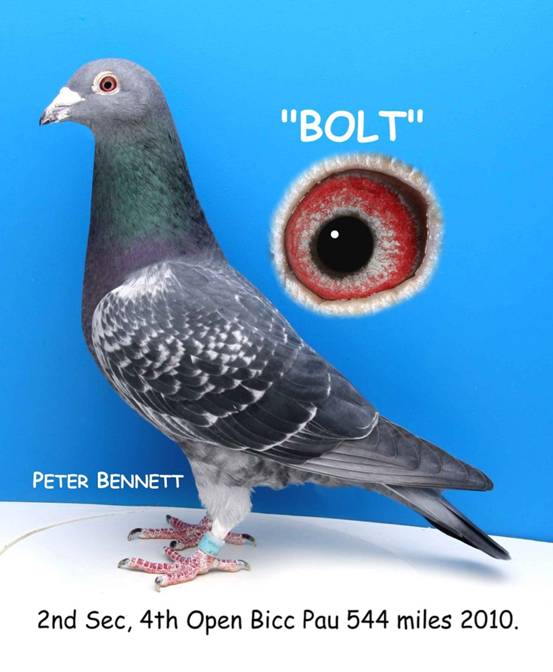
4th National BICC Pau 2010
6th National BICC Dax 2003
7th National BICC Perpignan 2009
7th Open Single Bird NFC San Sebastian 2001
14th National BICC Pau 2007
14th National BICC Perpignan 2010
15th National BICC Pau 2009
17th National BICC Pau 2007
19th National Narbonne 2010
26th National BICC Barcelona 2009
27th National BICC Pau 2008
38th National BICC Pau 2004
39th National BICC Pau 2004
47th Open NFC Dax 2005
41st Open NFC Tarbes 2007
41st National BICC Perpignan 2010
42nd National BICC Tarbes 2008
43rd Open NFC Tarbes 2010
44th National BICC Barcelona 2009
48th National BICC Pau 2005
51st National BICC Tarbes 2009
53rd National BICC Pau 2008
60th National BICC Tarbes 2008
74th Open NFC Pau 2004
81st NFC Tarbes 2005 (Clocked on the Day of Liberation)
85th National BICC Dax 2005
90th NFC Tarbes 2005 (Clocked on the Day of Liberation)
105th Open NFC Pau 2004
137th Open NFC Pau 2004
177th NFC Tarbes 2008 (Clocked on the Day of Liberation)
Please give details of some of the top pigeons that you have raced.
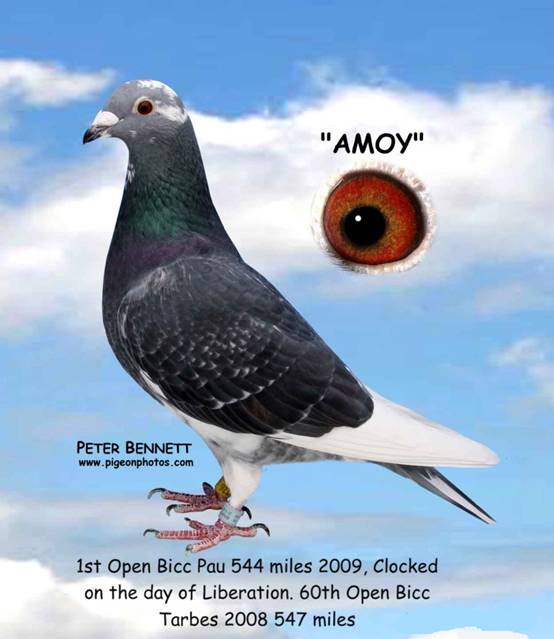
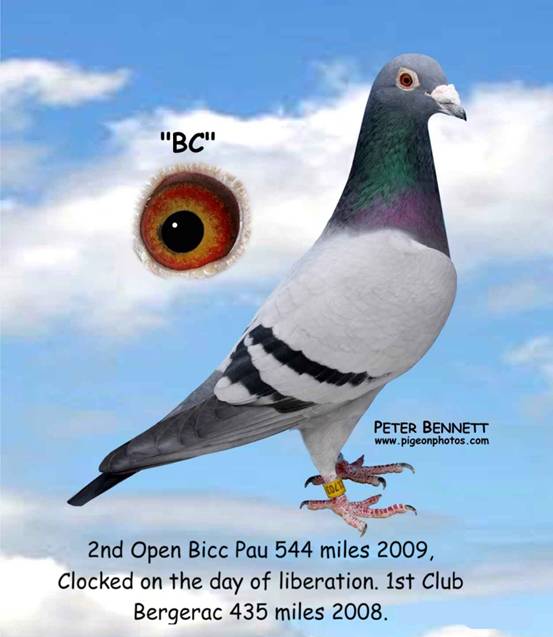
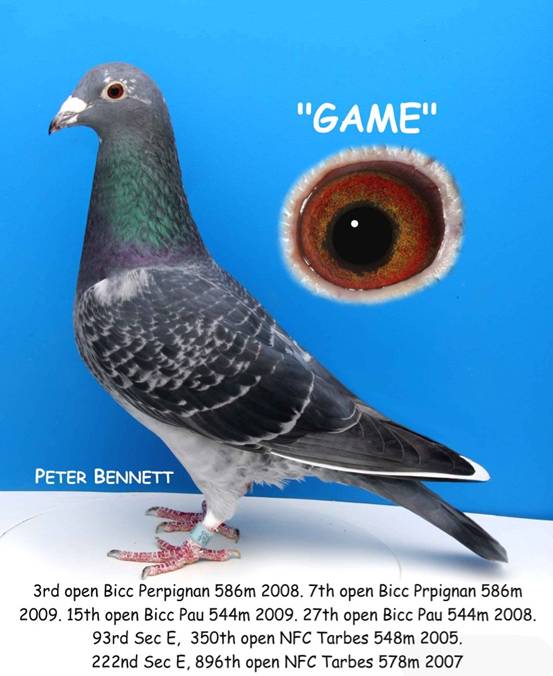
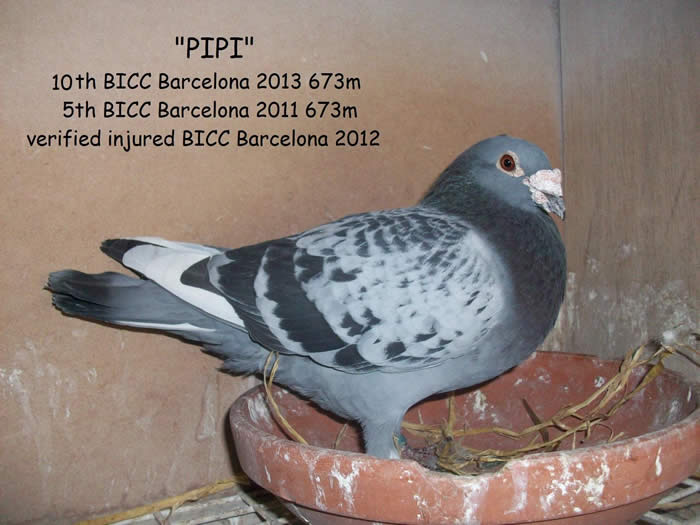
We feel that this hen is one of the best pigeons we have ever owned and raced.
OTHER TOP PERFORMERS
** “Miss 45” Winner of 4th Sec E, 41st Open NFC Tarbes 548m 2007. 34th Sec ,177th Open NFC Tarbes (clocked at 19:19 on the Day) 2008, 98th Sec E, 426th Open NFC Tarbes 2009. Dtr of “Buddy” 4th Open NFC Pau 2002 when paired to a son of Brian Denney's “Dark Peron”
** “Portia” winner of 14th Section E, 43rd Open NFC Tarbes 548 miles 2010. 79th Section E, 314th Open NFC Tarbes 548 miles 2009.
** “Thirty8” winner of 41st Sec E, 137th Open NFC Pau 542 miles 2004. 19th Sec E, 81st Open NFC Tarbes (Clocked at 20:55 on the day) 547miles 2005. 75th Sec E, 203rd Open NFC Bordeaux 438miles 2006.
** ” Jack” winner of 28th section E 105th Open NFC Pau 542m 2004, 23rd section E 90th Open NFC Tarbes 548m 2005 Clocked at 21:05 on the day of liberation, 22nd Section E 29th Open NFC Falaise 2003
** “A Ring” winner of 9th Sec, 14th Open BICC Pau 547 miles 2007. 54th Sec, 97th Open BICC Bergerac 435 miles 2006. 53rd Sec, 84th Open BICC Dax 523 miles 2005.
** “D900” Winner of 27th Sec, 53rd Open BICC Pau 547miles 2008. 1st Club, 1st Fed Le Mans 2008. 2nd Club,15th Fed Le Mans 2008. 12th Sec, 17th Open BICC Pau 547miles 2007. 27th Sec E,31st Open NFC Chale (oh) 2006.
Young bird loft
Do you have a specific programme of medication?
Before the racing season starts we give all the race bird a full treatment for canker using Ronidazole, During the racing season we canker every 4 weeks for 3 days. They are also wormed while they are sitting on there eggs.
Do you use any supplements such as vitamins etc?
We use on a weekly basis a product called Ropa-Dair twice a week to keep their gut in good condition usually on a Wednesday and Thursday. They have vitamins and amino acids on a Monday and Tuesday, Oh and Glucose on return from any training toss or race over 100 miles.
Do you feed any supplements in the build up to long distance / National races?
No extra supplements are given in preparation for Long Distances races, we just stick to our weekly routine.
How does your ideal pigeon look/handle?
We don’t really have much of a preference but we don’t like them to be too big or heavy! A bright eye is always a must.
If you could only use one product / supplement what would it be?
Vitamins and Amino Acids as we feel these are essential to a bird’s muscle and fat build up. We give this as most Amino Acids are not readily available in the birds’ every day grain mix.
There you have it, the management methods of two fanciers who, in a very short time, have built up an exceptional team of long distance pigeons that have competed against and beaten some of the long established aces in both the UK and continental Europe. I should also like to add here, that Lee and Dad Kevin are two of the nicest people you could wish to meet. Congratulations to you both on your past successes and here’s wishing you continued success in the future.