PAGES FROM THE PAST
Highlighting the performances of past winners of the BICC
The incredible performances of the Delea Brothers of Rainham
by Gareth Watkins
Over a 30 year period, the brothers Dave and Paul Delea [pronounced delay] have consistently produced outstanding results at the distance both with the BICC and the NFC. Flying separate teams of pigeons to two lofts just a mile apart, both brothers have won the Barcelona race with the BICC on two occasions. Add to that fact, the winning of 1st Open NFC Pau King’s Cup race against 5,378 birds with a yearling, by Dave and 1st Open BBC by Paul and literally scores of other top ten finishes by both in International races with the BICC and you have ample evidence that these are two of the finest lofts of long distance pigeons in the UK.
DAVE DELEA
Dave Delea had his first pigeons as a schoolboy and once he started work as a 15 year old he set about acquiring top class long distance racing pigeons from top local fanciers, all of whom were winners of Combine races at the distance. Birds were obtained from Gerald McAllister plus Stassarts from another local ace Jim Montgomery, with the addition of Osman x Kirkpatricks and Savage Barkers from Bernie Spencer and Champion Major bloodlines from Ray Wilson. Since those early days only one outside introduction has stood the test at the Delea loft and that was a bird bred by Geoff and Ian Hunt of Westmarsh in Kent. The only other birds to come in and make an impact have been those obtained from his brother Paul as the brothers regularly swap birds and often mate one brother’s Barcelona winner with the others Dax winner for example. Obviously this breeding policy has resulted in a very inbred family but Dave is not too worried about this, because as he said, “I let the basket sort out the weak and stupid” so that type are not with him long!
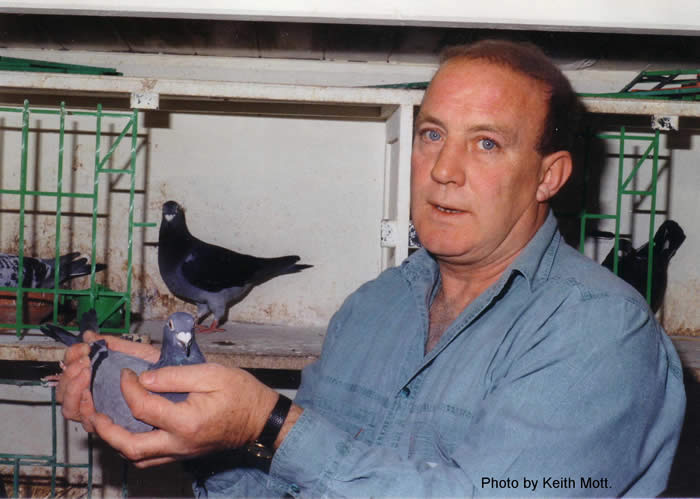
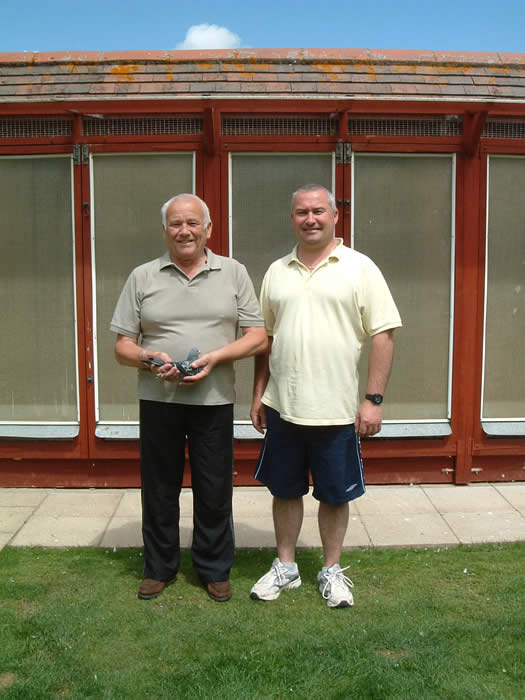
Dave Delea
For most of the 60s and 70s all Dave’s racing took place on the north road through to Lerwick at 600 miles and following years of selective testing at the distance, Dave clocked a blue hen after 16 ¾ hours on the wing to win the Combine from Lerwick. He knew then that he was on the right track! A move to south road racing then took place in 1977 and he set his sights on winning the Barcelona race with the BICC and indeed, he and Paul were two of the early members of this trail blazing club.
The policy of severely testing each generation of pigeons at the distance, especially yearlings, was soon to pay dividends and the name of Delea was hardly ever off the results of the BICC in long distance races throughout the 1980s and 90s. This terrific consistency was achieved by the strict application of the Darwinian theory of “survival of the fittest” as, for season after season, Dave sent his complete team of yearlings to 565-600 miles. This ensured that virtually every pigeon in the loft older than a yearling had flown from 565-700 miles, as the two year olds and older were expected to compete from Barcelona at 704 miles.
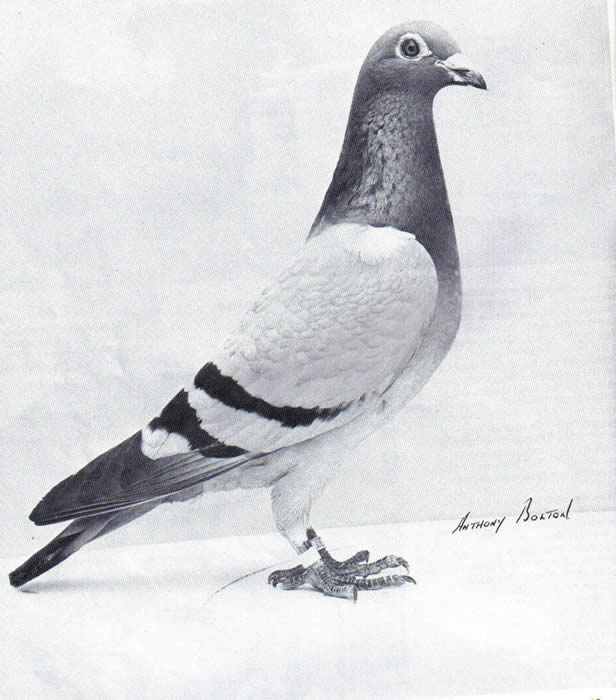
Dave Delea's 1st Combine Lerwick 599 miles
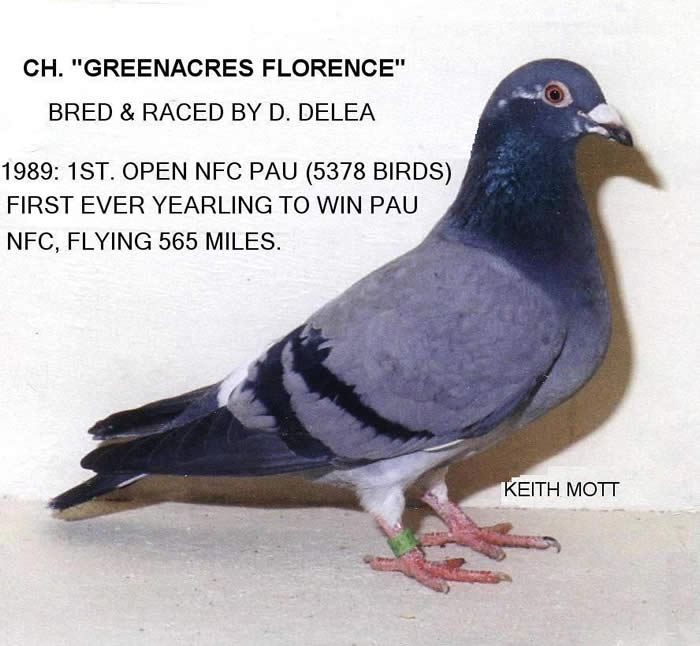
This policy of sending yearlings to close on 600 miles was to bring about the King’s Cup winning performance from Pau at 565 miles in 1988, the first year that the NFC allowed yearlings to be entered in the King’s Cup race. Dave’s Pau National winner was a yearling blue hen “Greenacres Florence” so the previous years of testing all of the yearlings at the distance provided ample dividends.
The Delea team of yearlings are only expected to compete in two races per season, that is the NFC Nantes race [or equivalent] at 300 miles followed a month later by the Pau/Tarbes King’s Cup race. They are never really hammered but kept fresh and eager with plenty of private tosses from the south coast of England at 50-70 miles and then jumped straight into Nantes at 300 miles for their first race of the year.
Dave is only really interested in three old bird races each season and therefore sets his stall out hoping to achieve peak form in the old bird team at the beginning of July which coincides with the NFC King’s Cup and the Barcelona International which are usually held on the same weekend.
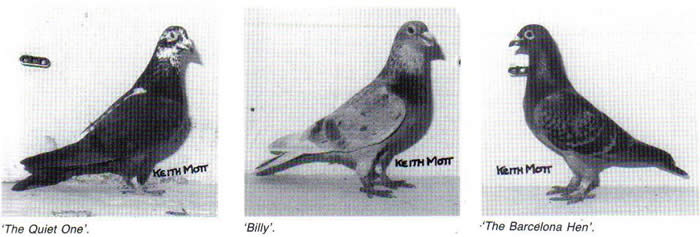
Some of Dave Delea's long distance winners
THE LOFT
This is an ordinary self-built back garden structure measuring just 16ft x 6ft facing north-east. It is dry and well ventilated and the birds obviously love it as the results achieved at the distance demonstrate. At one time Dave employed a deep litter of wood shavings in one section and the birds used to nest comfortably in this litter. Since retiring from work he now has the time to clean out more regularly but is still not a slave to the scraper, preferring to leave the birds alone as much as possible.
MANAGEMENT
In order for the team to reach peak form in early July Dave usually mates the birds in late February or early March. They are then allowed an open loft to come and go as they please whilst rearing the first round of youngsters. The birds are allowed to nest where they like as it is their home and everything possible is done to ensure that they are happy and content.
Feeding at this time is good quality beans and maize purchased straight from the farm. When racing the birds get a 50/50 mix of beans and maize with the addition of Red Band conditioner in the last week or two leading up to Pau and Barcelona.
In winter the birds are fed a mixture of beans and barley once the moult is complete and the birds are never separated until they are through the moult. All food is hopper fed but the amount is strictly monitored with no food wasted – once the birds have had their fill any food remaining is removed until next meal time.
When Dave is happy with their home exercise he then starts training with brother Paul and this is usually in early May which gives him a month to get the yearlings ready for their first race of the year from Nantes at 300 miles. During this month the race team are tossed regularly from the south coast between 50-70 miles but only on good days when the weather is favourable. The brothers like to train against the wind so the birds might go to Brighton if there is east in the wind or Folkestone if there is west in the wind. Every effort is made to keep the birds fresh and eager without taking the risk of them having a knock in training which might sabotage their preparation for the bigger tests ahead.
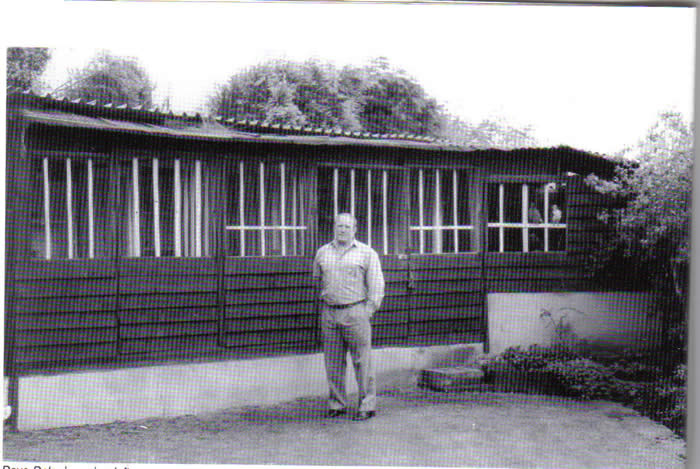
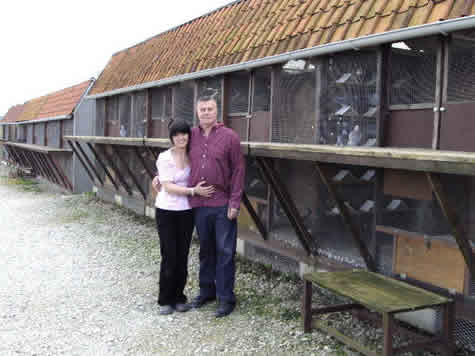
Dave in front of his 16ft x 6ft loft
MEDICATION
The Delea team are treated as a preventative for cocci, canker and worms at certain times of the year. As mentioned earlier the birds are allowed an open loft as much as possible and as such, spend a large amount of their time in the neighbouring fields that surround Dave’s loft.
YOUNG BIRDS
These are left to grow on until the end of July /early August. They are then subjected to an extensive training programme in preparation for the two races in which they are entered later in the summer, in early September. The youngsters are allowed an open loft to come and go as they please with the old birds and are kept under control by feeding just once daily at 5pm prompt. They are then allowed to eat their fill of the same mixture fed to the old birds and any leftovers are quickly removed.
The youngsters' training starts at around 15 miles and then in increasing stages to 50 and 70 miles along the south coast. Dave likes them to have at least a dozen tosses at 50 or 70 miles before being entered in their first race which is 250 or 300 miles across the channel with one of the specialist clubs. Two to three weeks later they will get the second channel race at the same distance and those that get home are left to mature for the following season. Losses under this regimen have been reduced to almost zero over the years as the family of pigeons housed has developed into one of extreme reliability.
RESULTS
I do not intend to bore readers with an exhaustive list of the Delea wins but feel that the major prizes attained in the acid test of International racing should be highlighted so here goes:-
Barcelona: 2 x 1st, 2 x 2nd, 3rd, 4th, 5th, 2 x 6th, 2 x 8th Open etc, etc.
Narbonne: 1st Open with a yearling.
Lourdes: 1st, 8th Open Hens International.
Dax: 1st Open.
Marseille: 2 x 2nd, 3 x 3rd, 4th, 5th, 7th, 8th Open etc.
These are just the BICC Open results. There are a lot more prizes with the NFC to add to these. As you can see, the above are only positions in the first ten of the Open. I can assure readers that there are many more and all this to a 16ft loft that in the peak of the season houses no more than 70 pigeons - old bird racers, youngsters and stock birds.
ADVICE
Dave Delea is firmly of the opinion that National and International birds are a distinct breed apart from ordinary club and federation pigeons as they have to fly many miles on their own if they are to succeed on the National and International stage. If you are to produce this type of pigeon then the fancier must test each and every generation at the distance and what survives will then go on to make good reliable long distance racers.
PAUL DELEA
Paul Delea was introduced to the sport by elder brother Dave and the two brothers have been at the top of the sport as far as long distance pigeon racing is concerned virtually ever since. Paul’s first domestic club was the Chadwell Heath Midweek Club and with members of the quality of Alf Baker, Cyril Drinkwater, Eric Ruffel, Ted Faber and F.W.S. Hall you had to be at the top of your game just to get a “come again” card.
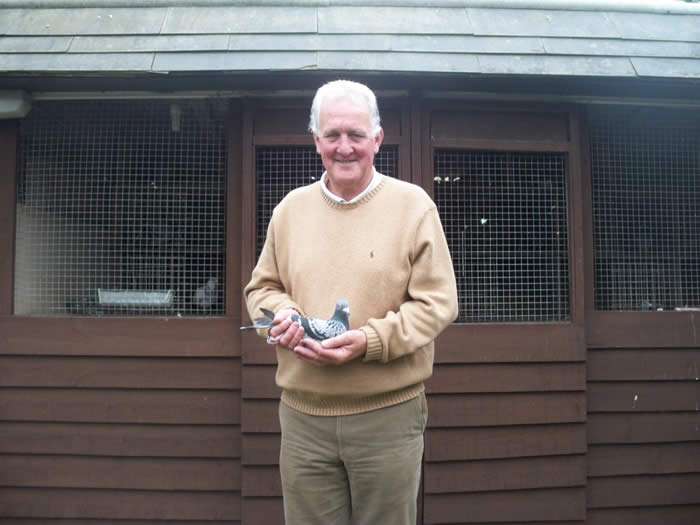
Paul Delea
THE PIGEONS
The initial birds housed were obtained in 1969 from Louella Lofts and contained the bloodlines of Stranraer Simon, Grizelda, Champion Snowball, Fairlight King [1st Open NFC Pau for George King] and the incomparable “Twilight” – all old British bloodlines that had stood the test of time when racing long distances into England and Scotland. One grizzle cock bred from these originals was responsible for more than 20 pigeons to score in NFC, BBC and BICC races including the winner of 1st Open BBC Rennes Young Birds.
In 1974 two late-breds were obtained from the King’s cup winning loft of George King and both were in fact closely related to the 1952 Pau King’s Cup winner “Fairlight King” mentioned above. The King pigeons were of predominantly Kenyon bloodlines and these were crossed with the birds already established and they “knocked” immediately, producing top class long distance racers right from the off. As a result of this initial success of the King crosses Paul wisely went back to George King and obtained more of these outstanding long distance racers, some of which had four generations of Barcelona pigeons in their breeding.
Since 1974, when the last of the George King pigeons were introduced, only three other pigeons have been brought in and these from Paul’s brother Dave. They include Dave’s Pau NFC winner “Greenacres Florence” which was subsequently mated to one of Paul’s top racing cocks. The winner of 1st Open Dax for Dave is the second bird and she was mated to Paul’s Barcelona winner. The final pigeon to be brought in from Dave’s loft was a son of 1st Open Barcelona when the Barcelona winner was mated to a daughter of 1st Open Barcelona x winner of 1st Yearling to be clocked in NFC Pau. With breeding like that he couldn’t fail!
This breeding policy of mating best to best of proven long distance winners over successive generations and letting the basket sort them out, has proved successful for both brothers over more than 30 years.
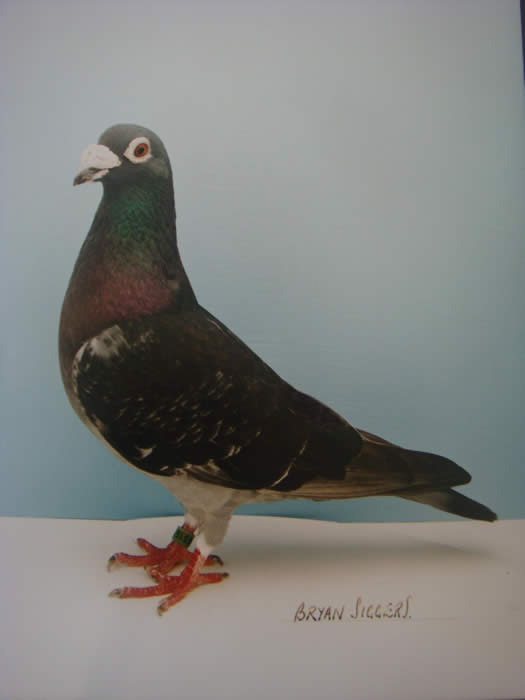
Paul Delea's 1st BICC Barcelona 1996
MANAGEMENT
Is almost a mirror image of that employed by Dave Delea in as much as the birds are raced natural. They are not separated until the completion of the moult in early January and are then re-mated in late March and allowed to rear a round of youngsters. The old birds are allowed an open loft whenever Paul is around to keep an eye on them and once he is satisfied with their level of fitness they are started in training, which is usually in early May as long as the weather is favourable. The old birds then get 3 tosses at 30 miles followed by 3 tosses at 50 miles and finally 3 tosses from the south coast at 70 miles. This usually brings the birds up to “match fitness” and then it's straight into a channel race at 250 miles. The 2008 Barcelona winner was treated in this manner with 4 tosses at 50 miles followed by 3 tosses from Portsmouth then jumped into Tours at 280 miles and finally topped up with a further two tosses at 50 miles before being packed off to Catalonia to win 1st Open BICC.
The birds are never over worked but are kept fit and eager with the private training as Paul does not race in any local clubs only specialist clubs such as the BICC and NFC.
Most yearlings go to 565 miles, with the two year olds and older expected to race from 565 miles twice in a season or alternatively one crack at Barcelona at 704 miles. However, Paul insists that the birds must be fit and well to undertake these tasks.
All birds are fed a home made mixture of beans, maize, wheat, barley and chicken layers pellets, the constitution of which varies at different times of the year according to what the birds are doing. Paul likes to send the birds to the Internationals with plenty of body on them as they are a long time in the basket and certainly won’t gain any weight when there.
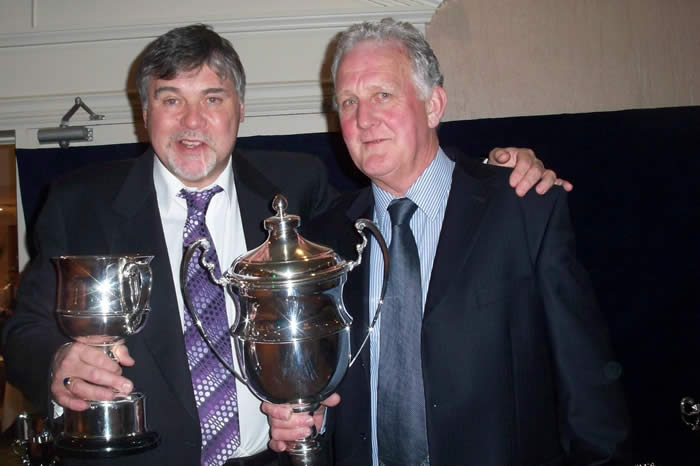
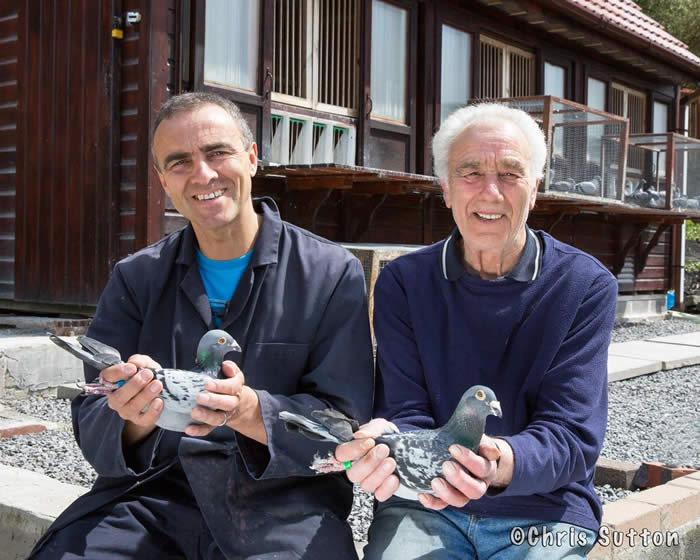
Paul Delea (rt) collecting the BICC Barcelona Trophy from Alasdair Muir
YOUNG BIRDS
Paul has not raced young birds for a number of years now but the babies reared each year are well trained in a similar manner to the old birds with plenty of tosses from various points along the south coast. They are then set aside for next year well educated but definitely not blighted by over exposure to the race basket. As yearlings they are trained alongside their older loft mates and then lifted straight into a channel race at around 200 miles for the first race of their life.
THE LOFT
This is an ordinary 22ft x 7ft sectional structure that houses no more than 60 pigeons at the height of the season. Paul likes to keep it spick and span and so cleans the whole loft daily.
RESULTS [With yearlings]
1st, 3rd, 8th Yearling Pau NFC including 29th Open at 565miles.
2nd & 7th Open Lourdes BICC 581 miles.
4th & 5th Open BICC Dax 541 miles.
4th & 12th Open BICC Marseille 618 miles.
OLD BIRDS [two years old and over]
2 x 1st, 2nd, 5th, 7th, 8th, 9th Barcelona 704 miles.
2nd, 3rd, 3rd, 3rd, 7th, 9th, 10th & 10th Pau 565 miles.
2nd, 2nd, 9th, 10th Perpignan 621 miles.
3rd, 4th & 8th Marseille 618 miles.
4th, 6th, 6th Dax 541 miles.
9th Biarritz.
Add to these 1st, 4th, 6th, 7th, 10th & 10th in NFC and BBC young bird Nationals and you have an excellent record in classic racing. Pretty impressive stuff when you consider that no more than 60 pigeons are housed here at the peak of the season.
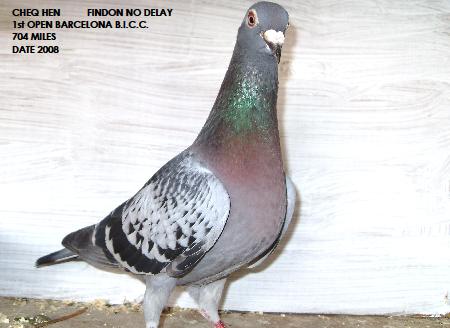
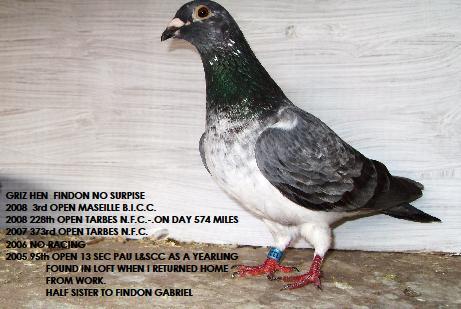
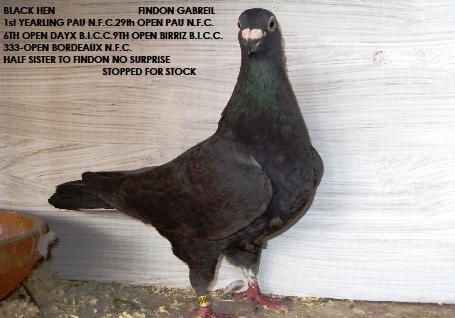
One of the loft’s top individual performers was the chequer Hen “Findon No Delay” winner of 1st BICC Barcelona; 2nd Open BICC Perpignan; 66th Open NFC Pau. She is a great grand daughter of 2nd, 9th & 12th Open BICC Perpignan, 3rd Open Pau BICC & 16th Open BBC Rennes. No Delay’s half brother was 2nd Open BICC Pau and a half sister was 4th Open Dax. Yet another half-sister was 24th Open Pau & 48th Open BICC Dax plus 102nd Open NFC Pau.
ADVICE
The late George King advised Paul when purchasing his initial stock from the King loft that when you have a good family of long distance pigeons you will have good years and bad years but when you have the bad years don’t go looking for crosses into the family as you can ruin years of hard work. It takes years to build a family of long distance racers and as Paul said, “I took a short cut 35 years ago!”
My grateful thanks go to Keith Mott and Pam Gladwin and all at the RP and BHW for use of the photos that accompany this report.
---