From The Chair
By
Chris Williams
Before starting the article for this week let me say how nice it was to see my mate and fellow scribe Barry Pearce on the other side of the pen for a change in the fancy press this week, it’s great to see stalwarts of the sport getting some much deserved recognition for their efforts “well done BP”.
Enter the loft at this time of year and you are immediately emersed in an environment of contentment that is the hope filled prologue to the racing season. It is the 7th of February 2022 and things are progressing well in the lofts, all our stock pairs are down on eggs and the last of the natural team have laid. So now the wait begins for the arrival of the youngsters, fingers crossed all goes well. Aside from the racing aspect of the sport this period in the life cycle of our “racehorses of the sky” is one for us the fancier to relish, yes, its hard work but you only get out what you put in. The young bird team are the future of any loft and so reason dictates that you must give them your all. Pigeons are not robots nor are they “dumb animals”, if there is such a thing? The natural world really is a wonderous thing and we fanciers have the privilege of being given a front row seat to its working, year after year season after season and yet despite this there is still so much which mankind fails to understand.
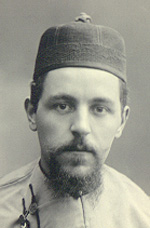
I cannot whistle to save my life, sounding like an asthmatic sparrow, so I have decided to give using an ACME whistle a go, the sound of which is just right for the birds to hear but won’t disturb the neighbours. As we know the only means at our disposal in terms of controlling our pigeons is via the food source, the use of a whistle at feeding time helps to create what is known as “Classical Conditioning”: Discovered by Russian physiologist Ivan Pavlov.

Ivan Pavlov 1849- 1936
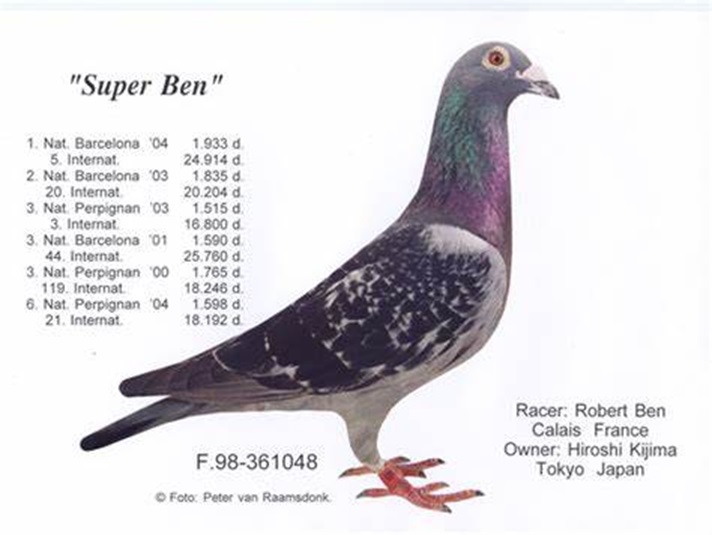
Classical conditioning is a type of unconscious or automatic learning. This learning process creates a conditioned response through associations between an unconditioned stimulus and a neutral stimulus, in our case the corn and the whistle. In Pavlov's classic experiment with dogs, the neutral signal was the sound of a tone and the naturally occurring reflex was salivating in response to food. By associating the neutral stimulus (sound) with the unconditioned stimulus (food), the sound of the tone alone could produce the salivation response. In terms of pigeon sport, it is hoped that the whistle will provoke the pigeons into trapping faster, of course only time will tell. The late Jos van Limpt-de Klak was a prime example of just how deadly Classical Conditioning can be, when it was time for his birds to exercise, he would enter the loft and tap on the floor with a stick and all the birds would leave their nests quickly and fly outside. Then the flag would be used for roughly 45 minutes, and it was back inside as any longer he considered to be too risky, as the eggs would get cold, and the youngsters may die. {Remember this iconic fancier raced natural his whole life, a system which obviously worked well for him as from the period of 1948 to 1972 Klak reigned unbeaten as 1st general champion of the competitive and prestigious centre - Reusel. A staggering achievement especially when we consider not only his advancing years but also the advent of widowhood racing.

THE LEGEND JOS DE KLAK
When studying the concept of Classical Conditioning the importance of routine really strikes home, then again, the racing pigeon is no different to any high-performance athlete. I came across one or two interesting articles recently that delt with this subject stating that: Consistent routines lead to consistently high sports performance. This is something that every serious fancier is striving toward and therefore it should not be overlooked, nor its impact underestimated!
Pigeons possess my thoughts morning, noon, and night. They are a greater benefit to me in more ways than I ever imagined possible, and it is my sincere wish that others in the same or similar circumstances to myself were aware of. It came as no surprise to me that studies have found that keeping pets has major psychological health benefits, for example: they can help you be more active. They give you a reason to get outside, get some fresh air and get active, which is proven to improve your mood, sleep, and mental health. This is something I am aware of from my own personal experience having delt with depression first hand, which leads me to ask the question if people had more encounters with the natural world would such occurrences be as prevalent as they are today? For me pigeons are not a hobby but a way of life, all of which in one way or other revolves around the sport. Long before having pigeons of my own and subsequently forming partnership with my dad, on a race day regardless, I always sat with him waiting for birds I think even then “the pigeon bug” began to bite a little and the magic of it all still mesmerises me today more than ever.
The dangers of ticks to humans have become more well known in recent years, with increasing public awareness of tick bites and the risk of getting Lyme disease, Lyme disease is caused by the bacterium Borrelia burgdorferi and rarely, Borrelia mayonii. It is transmitted to humans through the bite of infected blacklegged ticks. Typical symptoms include fever, headache, fatigue, and a characteristic skin rash called erythema migrans. I am sure this is a great concern to all involved as ever before and long may it continue. I read recently that a Merlin Falcon had been found dead in Hampshire, upon examination the cause of death was found to be a large, engorged adult tick attached under the birds left eye. Pathogens passed from the tick into the bird causing the demise of an otherwise healthy bird which weighed 165g and was otherwise feather perfect. The pathologist remarked “This is an all-too-common occurrence sadly, due to warmer winters and tick prevalence as a result.

Merlin hawk killed by Tick bite
Well, I think it’s time that I went to the loft and saw the birds, until next time remember to enjoy your pigeons.
Chris Williams