Brian Dearn of Darwen
The "Masterpiece" Family
Twenty years in the making!
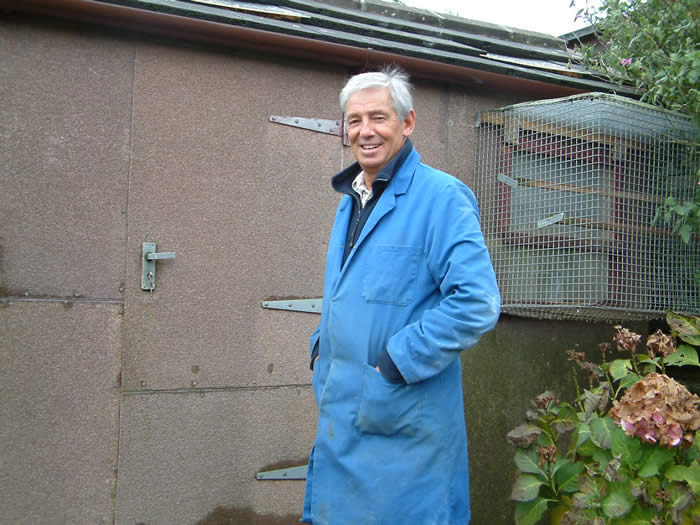
It has been my intention for some time now to make the journey to Darwen in Lancashire and visit a fancier who, although forced out of the racing side of our sport by continuous Peregrine attacks, is one of the best administrators that our sport has and is the creator of a “family” of pigeons to be truly admired! Knowing Brian as a fellow member of the Lancashire Social Circle of which Brian is the very hard working Secretary, I have been able to compose my thoughts and opinion of Brian’s contribution to this sport over a number of years. My recent visit was the opportunity to gather the fine detail about his family of pigeons and to dot the I’s and cross the T’s for my article.
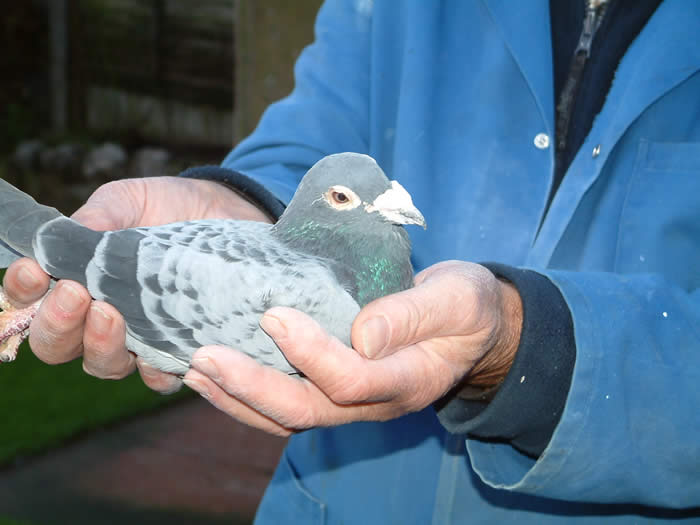
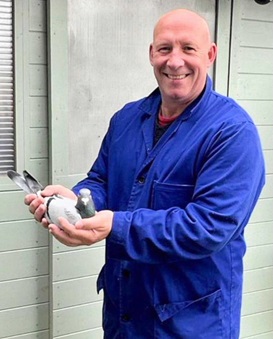
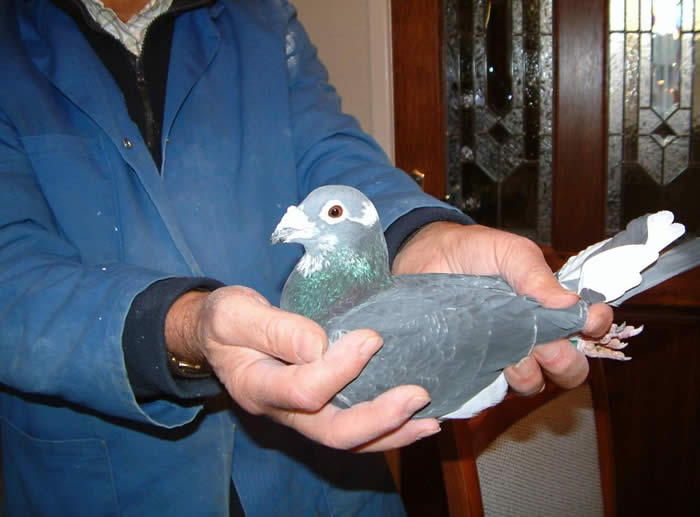
Brian holding his foundation stud Sire Chamoin Producer "Masterpiece".
Bred in 1996 by Cyriel Lambrecht in Belgium
One of the original consignment of Lambrecht pigeons in 1996.
Picture taken in December 2015, this fabulous pigeon sired youngsters this season.
One aspect of significant interest for me on my visit to Brian was the genetic element of how he has developed this family over almost 20 years, producing winner after winner, year after year. I will touch on the finer detail of this later but first of all I must relate the detail of how the foundation stones of this fabulous family of sprint pigeons, came to Lancashire.
It began in 1995 when a small trip of around a dozen fanciers from the Lancashire Social Circle along with a couple of guests, embarked on a trip to Belgium, visiting several lofts, one of which belonged to Cyriel Lambrecht. Four of the LSC members Brian Dearn, Colin Hilton, David Sowerby and Ian Duckworth, got their heads together and decided to purchase a round of youngsters for the 1996 season. All four fanciers topped their respective Federations the following season with youngsters from these original imports. Early signs of what was to follow.
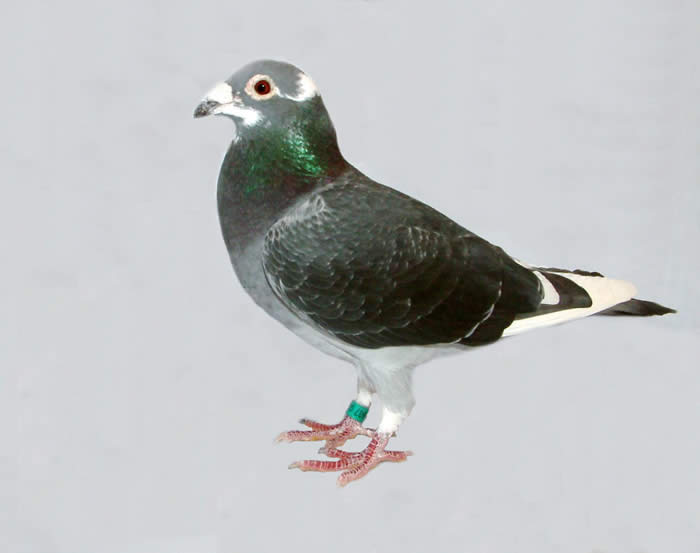
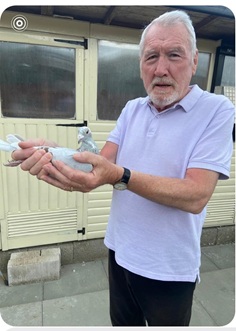
Dark Pied Cock “Brian” bred by Brian Dearn in 2008 and raced by Colin Flemming of Southport.
2009 Winner of 1st Southport Fed. 1st NW & WL Amal. 1st NW Combine Portland 8.043 Birds.
Above is a pigeon that has now returned to the place of his birth, with Brian Dearn.
A winner of 12 x1sts, dark pied cock “Brian” carries the winning genes emanating from the “Masterpiece” family.
I will relay the methodical introduction of such a multi winning racer, a little later, when covering Brian’s approach to breeding and maintaining his family.
In The Beginning
Like most fanciers of his generation, Brian had a love and involvement of some kind with pigeons going back to his boyhood. Older brother Dereck was gifted a pair of racers with which, both brothers were infatuated and in Brian’s case that is where he was bitten by the bug! Dereck eventually moved on to interests new but for Brian the passion remained. This was at around the age of 14 years old and from there Brian later moved on to become a partner with Len Waring, a fancier who kept and raced his birds on an allotment adjacent to that of Brian’s father. In 1965 flying to a new loft location, following a council forced allotment move, Waring & Dearn as the partnership was now called, were quick to strike success when they won their first YB race. The Waring & Dearn partnership had a couple of lapses over a period of time when Len had business commitments which took him away from Darwen and then years later after returning and having another spell in partnership, he finally left the sport, becoming involved in the pub trade.
By this time Brian had now had his first taste of the administration side of the sport, becoming President of Darwen Homing Society. From there he attended meetings of the Region, firstly the old North-East centre and then the newly formed North West Region, where he was a delegate for two years. To follow was appointment to the position of committee member and auditor. During the several years that Brian held these positions, he was also Show Secretary for the region, organising and running the annual shows. In what seemed no time at all, Brian was elected President of the North West Region and became the youngest ever President in the history of the region. In case you may be thinking that he spent all his time with pigeons, this is not quite true as he was employed as a senior manager with a large wallpaper manufacturer and his involvement with the business eventually meant that the long hours did not allow him to carry on at the region. With the commitment of work, the seasons from 1978 to 1981 proved hard going for Brian with his pigeons.
In Search Of Excellence
It will not come as I surprise I am sure, when I tell you that over the next few years, Brian took steps to rectify the deficiencies that he saw as necessary, in his pursuance of better and more consistent results in the sport that he loved so much. One major step was a new loft configuration, to which he was mainly now racing the Busschaert pigeons of Gordon Sinclair plus one or two other sprint introductions. Needless to say results were improving season by season. Time is now fast approaching the 1995/1996 seasons which, as I mentioned earlier, saw the arrival of the base of Brian’s family of today the Lambrechts.
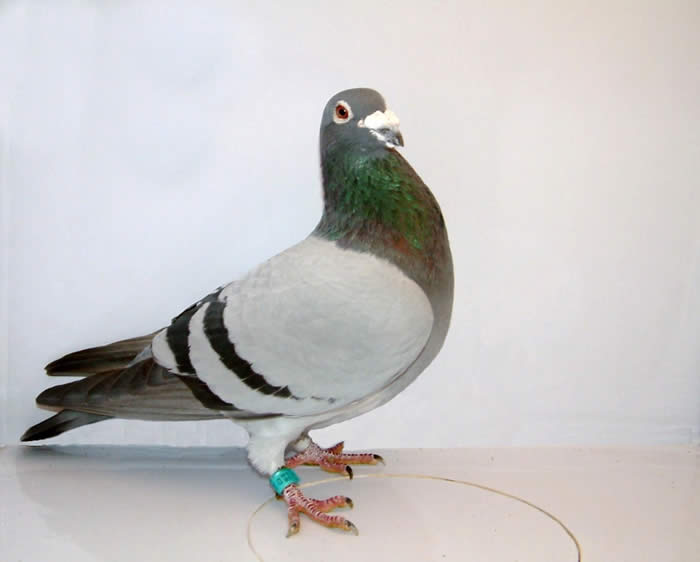
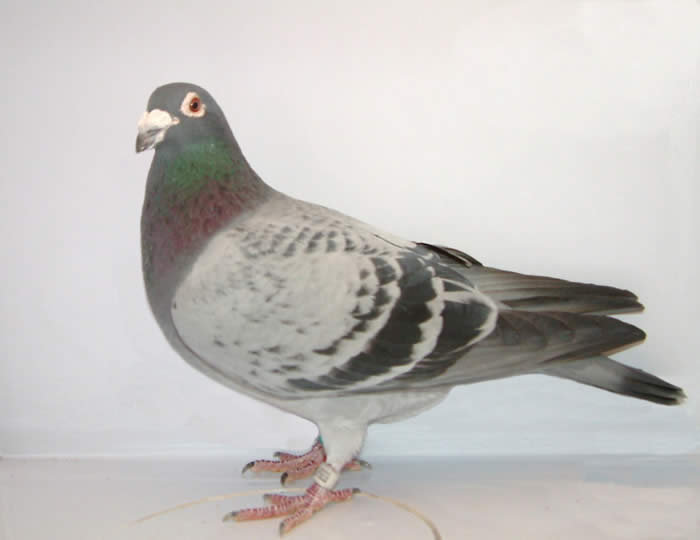
GB 10 SKYMASTER - GB 10 MAESTRO
DIRECT SONS OF "MASTERPIECE"
Even before the arrival of the present family Brian was a practitioner of a very “Business Like” management system, covering all aspects from Breeding to Feeding. The OB race team were two sections of widow cocks, one of 9 and one of 16. About 80 YBs were reared and housed, also in two sections. The section of 9 cocks were targeted at the early season races, given a rest and then their focus the turn back races, the races in between Channel races. The section of 16 cocks took over from the 9 after the first few races to ensure a continuous team of well prepared cocks for ALL the inland races. The management of the race cocks was synchronised with the 8 stock cocks that Brian housed and from which he bred 10 YBs each year for racing.
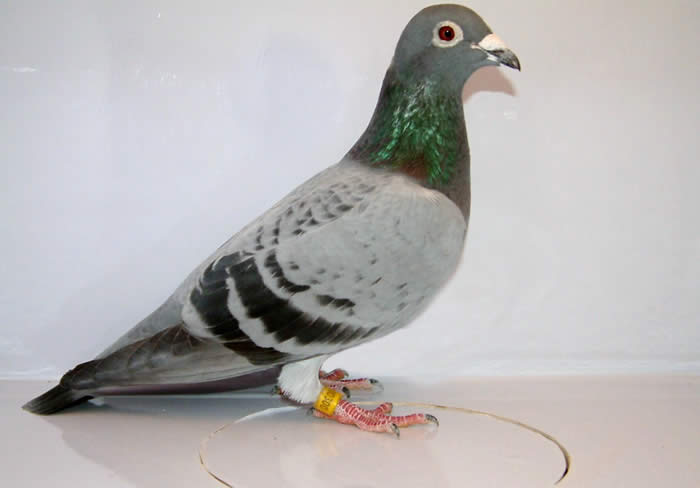
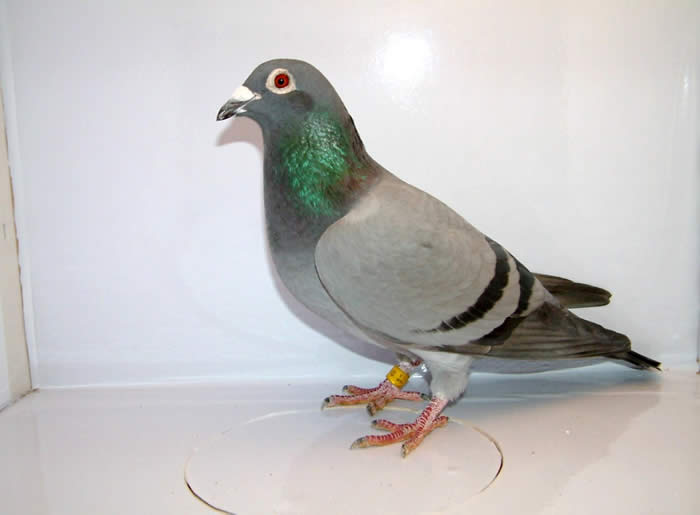
GB 11 NIKKI GB11 PRIORY PRIESTESS (DAM OF 1ST COMBINE WINNER)
DIRECT DAUGHTERS OF "MASTERPIECE"
Breeding
The stock section is set up the same today as it was when Brian was racing. A simple 8 box layout with a purpose of breeding from 8 carefully selected cocks. The stock cocks that have complimented "Masterpiece" and the No.2 stock cock, another of the original 1996 imports, have been selected over the seasons via a stict methodology to arrive at the 8. At the end of each race season, the top race cock or sometimes two, would be paired to the best two stock hens and from these matings Brian selected what he considered to be the best son/s to add to the stock team. This method ensured that there was contiuous use of "winners" within the breeding plan when paired to proven producer hens. A policy which from day one ensured that the gene pool produced for racing was structured and measurable. The “Business Like” system becomes most evident at this point. In mid December Brian pairs the 8 stock cocks to 8 equally carefully selected hens and rears a round of youngsters. As the stock cocks approach the point of drive on their second round, the section of 9 widowers are paired with the objective of floating the eggs from the stock to the racers after about 5 days of incubation. In certain instances at this juncture Brian introduces new mates to the stock cocks for the third round. During the rearing of the third round, Brian repeats his earlier practice and pairs the 16 widow cocks, so that they can sit and rear the fourth round of eggs from the stock. The stock pairs then go on to rear a fifth round themselves which, gives Brian a crop of 10 youngsters from each cock, with the exception of an odd one or two. The timing of this breeding plan is such that it has the widow cocks at a state of readiness for the races for which they are targeted.
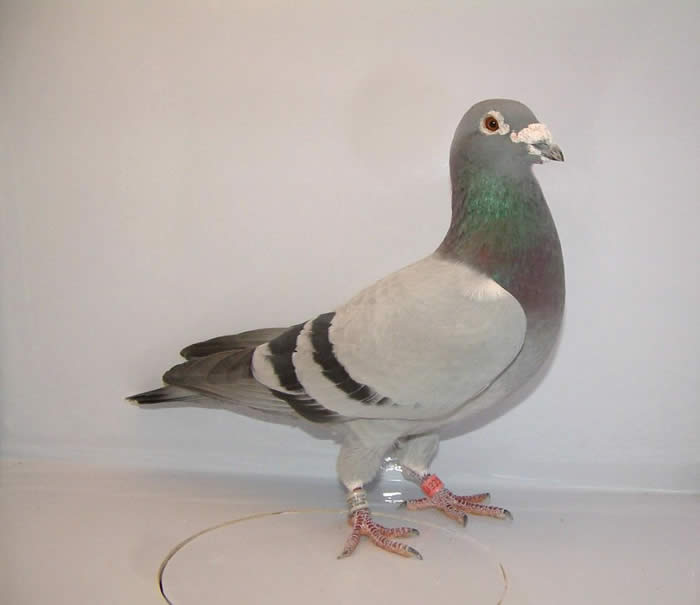
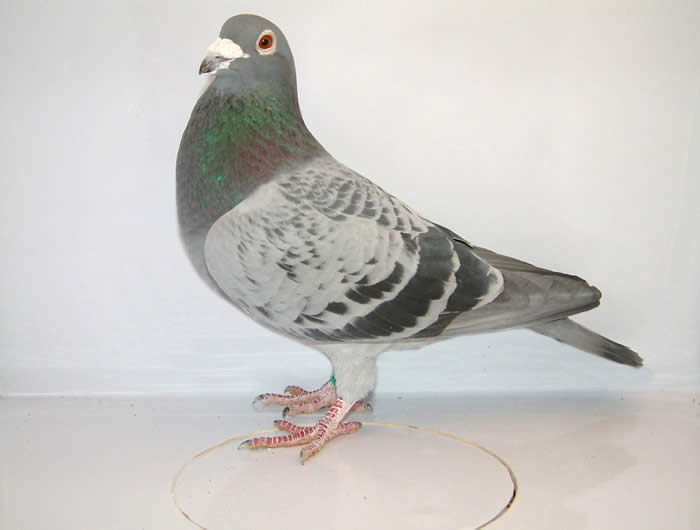
(GB 09) MASTER KLASS (GB 08) 700
DIRECT SONS OF "MASTERPIECE"
ALL IMPORTANT - SELECTION
Perhaps the major benefit derived form this “Business Like” plan, is that over two to three seasons, each stock cock will have been coupled with 4 or 5 hens and produced 20 to 30 offspring. Any cock that is not producing the type of quality offspring required, it is quickly disposed of. I admire the sound sense of this policy, basing selection on a reasonable number of offspring in a relatively small loft. The first phase of selection of hens for stock is based on performance when racing as YBs. Careful scrutiny of their race results, with first prize winners and multiple winners becoming stock hens. Phase two of the selection for stock hens was the same as it was for the cocks. Anything not producing the required quality of progeny, disposed of despite having good race results.
For me the main benefits of Brian’s policies are, early detection of breeding potential and fair evaluation based on a reasonable number of offspring from each pigeon. Through this policy and it application over many seasons, Brian has afforded himself the luxury of having a stock loft where most of 8 cocks are proven producers, most of the time. The only exception is when a young cock is introduced into the team. Now that Brian is unable to race anymore, selection of hens has had to change and is mainly based on their genetics in the first instance and then on their breeding capability. It is important to note at this stage that from time to time Brian brings in a performance pigeon or two and always from the same original gene pool. An obvious example of this is one of the current stock cocks called “Brain” who as you can see from his picture(earlier in the article) and caption is a winner from over 8,000 pigeons. One fancier that Brian is able to obtain the same bloodlines from is friend Mike Simpson of Yorkshire. I know from speaking to Mike that he has children direct from “Masterpiece” that have produced multiple winning pigeons for him. Brian also confirmed that winning pigeons raced by Mike had fitted well into his breeding programme and had themselves produced winners when paired with his own. This type of exchange Brian says is necessary as he is not able to race himself anymore and produce his own winning pigeons. With regards to performance Brian is always keen to receive feedback from fanciers who have had his pigeons as it is vital to his overall evaluation of the stock that he now houses.
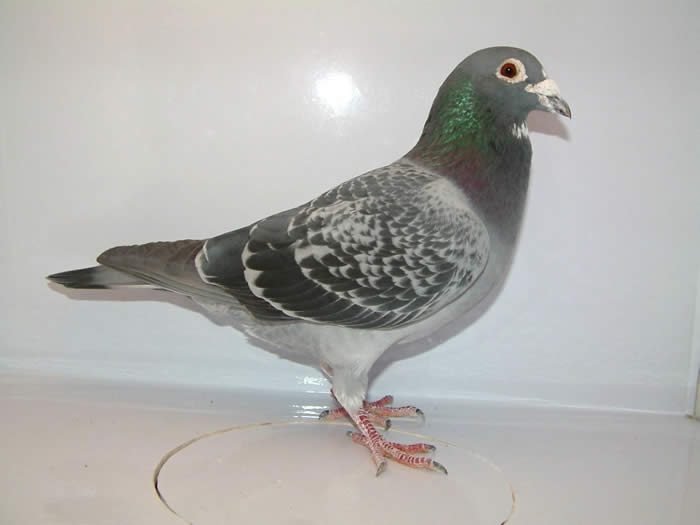
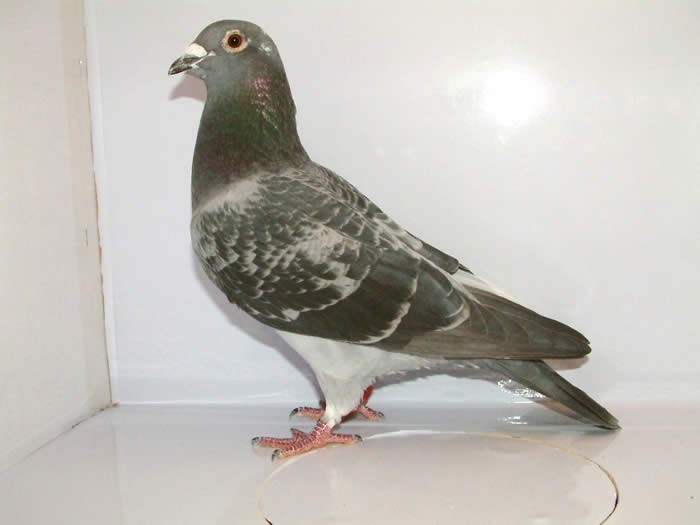
BELG 12 SMALL FRY - BELG 12 NEW RECRUIT
RECENT IMPORTS DIRECT FROM LAMBRECHTS
Whilst Brian was still racing, his selection for his widow cocks was carried out immediately at the end of the OB race season. Points were awarded on a 6, 5, 4 etc. basis in relation to position to the loft. Nest box accommodation was allocated based on analysis of the race returns and even older cocks that were slowing down due to age were disposed of despite previous race wins. Somewhat harsh you may think but there was no place for such pigeons in the “Business Like” methods of Brain Dearn. One thing that Brian said to me which made me smile was “That Racers win races and Breeders breed winners” and it pretty much sums up the approach used in the building of this super colony of sprinters at this Darwen loft.
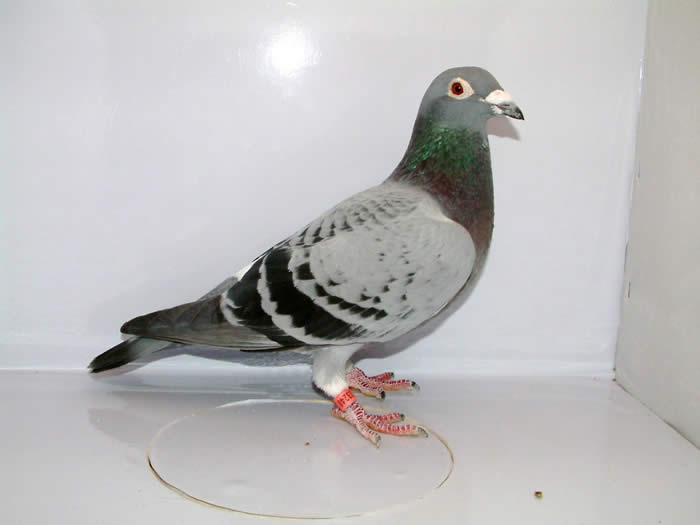
GB 09 KLASSY LASS Direct daughter of "Masterpiece" Brian holding his namesake, first prize winner from over 8,000 birds
DONE WITH A PASSION!
In this article I am not writing about the methods employed by Brian employed when racing, although as a fancier winning over 30 x 1sts in a season, it would be a great reading. I have to say for the record, that everything he does in connection with the sport is done with a passion. I see examples all the time through his role of Secretary with the Lancashire Social Circle or even organising an event to support a local fancier/club or charity. This passion is evident when talking to him about his pigeons, whether it is about seasons past when he was a very successful racer or today where breeding and maintaining his family of winning pigeons is his main priority.
It may be an old saying but it certainly is a true one “You only get out of this game as much as you put in”. Along side this healthy portion of passion that Brian has been blessed with sits an equally valuable quality in the form of enthusiasm. This is the catalyst which has mobilised so many fellow fanciers and members over the years in his many administration roles. Quite rightly Brian is widely recognised, especially across the North West as being “Top Draw” when it comes to organisation and administration within the Pigeon Sport. His talent is showcased perhaps best when the Lancashire Social Circle hold their twice yearly gatherings and which take place over the course of a full weekend in Southport. There are anything from 120 to 160 members and guests on average at each function where, Brian plans and organises everything from minor detail like car parking on arrival at the hotel to the major activities such as accommodation, entertainment, guest speakers and menus etc.etc. Trust me; if you have not had the privilege of attending one of the L.S.C. functions, there are none better within the pigeon sport in the U.K.
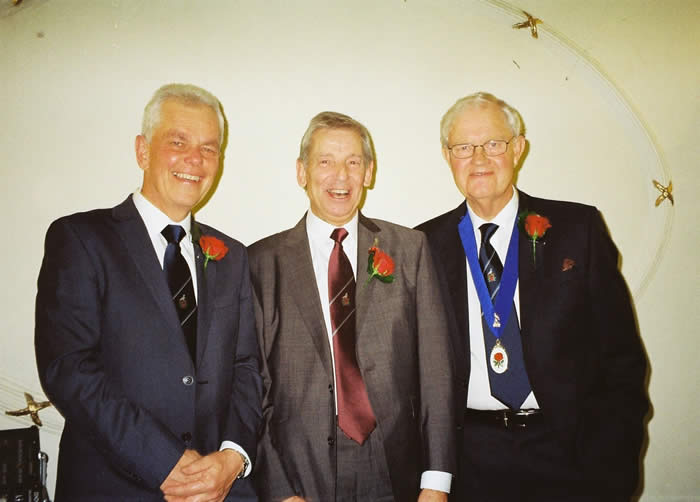
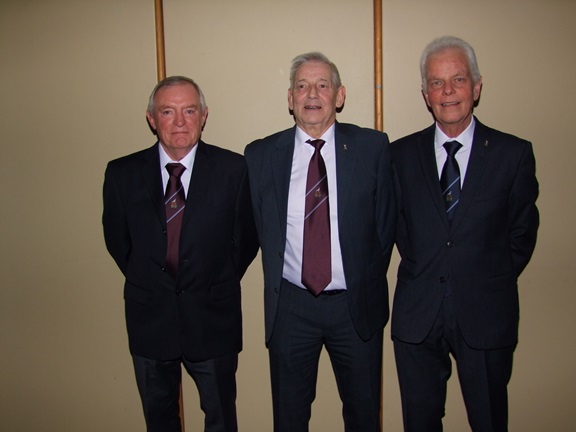
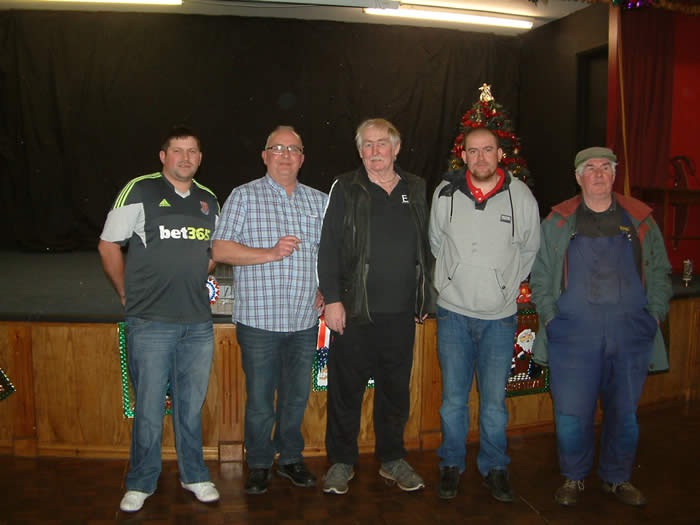
Chris Knowles (Vice President), Brian Dearn (Secretary) and Bob Smith (President) at L.S.C. in November 2015
THE MASTERPIECE DYNASTY
The outstanding success of this family of pigeons has been the main reason for my desire to compile this article. What makes them a bit special for me is the fact that they are close to a true family of pigeons as you are likely to find anywhere in this day and age. My main interest within pigeons these days is the role played by genetics in the reproduction of pigeons to achieve specific goals. In Brian Dearn I found something that not too many fanciers that I meet possess, a crystal clear goal. These are my words not Brian’s but they sum up what Brian works so hard to achieve;
“To produce pigeons which win and breed winners generation after generation after generation”. To support this goal he has in place the necessary component of measurement to aid the all important selection of stock. The “Business Like” system of management adopted by Brian from his early days in the sport has stood the test of time and produced the desired results. The actual model being used by Brian for breeding is one that he recognised as being deployed by Cyriel Lambrecht, when he first obtained the Belgian imports back in 1996. The pigeons and the genes from these original pigeons are the foundation stones of the current day Dearn family. One pigeon in particular has played a major role and inflicted more influence on this family than any other but the key to success has been a well managed gene pool.
The pigeon in question is a light chequered cock who 19 years old and going on 20, still has the look of a special pigeon and has an eye to make any eye sign enthusiast drool with admiration. Brian tells me that as a YB he was a pencil blue but as he has matured his plumage has evolved into that of a light chequer. He has been paired to numerous carefully selected hens over the years and bred very many winners and more importantly winners who breed winners. His capability to pass on the key genes for racing, runs through his children, g.children and g.g.children. For the fans of Lambrecht strain, you may be interested to know that his Sire is a ace pigeon of Quiverain 1990. In turn bred from a son of Oude Asman when paired to a daughter of Oude Gerard, two of the 3 foundation cocks of this strain. The Dam of “Masterpiece” is a full sister to ace pigeon Noyon 1992 being a g. daughter of Oude Dillen the third of the 3 foundation cocks.
From the original 6 imports that Brian had in 1996 “Masterpiece” was paired to two hens that Brian called his No.1 and No. 2 hens. These hens or their progeny can be seen in all Brian’s current pedigrees and are linked genetically to the same 1988 daughter of Oude Gerard and who as in the breeding of “Masterpiece”, was paired to the same son of Oude Asman.
At this point I relate to a fact that is stressed by any professional geneticist. If you are going to adopt breeding plans of a line breeding or inbreeding nature, you MUST use quality individuals in the process.
Earlier I referred to a breeding ploy that Brian uses and had noted years before, that it was also used by Cyriel Lambrecht. This is to follow a policy of breeding from related pigeons over 4 or 5 seasons and to then introduce an unrelated pigeon into the equation. As most people are aware this practice is used to boost vitality which becomes suppressed when inbreeding. When extensively studying the pedigrees of Lambrecht pigeons, it is easy to spot that this policy has resulted in a number of auto winners for them. Perhaps not all fanciers in the UK realise that the race points of Quiverain and Noyon are respectively approx. 63 and 100 miles to the loft of Lambrecht. They race from early April to mid October and on average will compete in over 50 races from the two above race points. So you can see how selection of pigeons that excel at sprint racing can be achieved by a dedicated fancier in that part of Belgium.
The same genes in the North West of England have produced consistent winners within typical Inland programmes from 80 miles to 200 miles and in some instances individual pigeons to win from the channel. Brian has used the performances of the winners that he has produced over the years to help home in on a number of other key pigeons within the Belgian Lambrecht family and as such has introduced a few more directs to add to his original gene pool. One such pigeon is a BELG 2012 chequer pied cock named “Small Fry”. As his name suggests, he is not a large pigeon but he certainly has a big personality and rules the roost. He is a g.son of Lambrecht’s chequer pied cock of 1993, ace pigeon of Quiverain and known as Fries. He has a very heavy influence of Oude Dillen in his pedigree, once again one of the 3 foundation cocks and a genetic link to the 1996 imports.
The Dearn family of pigeons are what it says on the tin, they are a family. There is a high level of uniformity in the pigeons and Brian tells me that even beyond their looks (Phenotype)
most pigeons display the characteristics and traits (genotype) that he first saw emerge in the early years through “Masterpiece” and then his children. A geneticist friend of mine who resides in America rightly says that most good pigeon fanciers are aware of and apply good practices in relation to methods of feeding, training etc. so in this day and age if you wish to gain an advantage, the only real opportunity is via your breeding. I don’t profess to be an expert in genetics but I think that I know enough to say with confidence that it makes a real contribution to continued and sustained success if you know what you are doing and have the quality stock to do it with. The 20 years work invested in this area of pigeon racing by Brian Dearn is proof in itself. It has been a pleasure to take a close look at the construction of this fabulous family of sprinters and I must thank Brian for allowing me access to any breeding details that I asked for. It was a very enjoyable day spent with Brian and certainly was enlightening from a genetics view point.
Chris Knowles