LES J. PARKINSON'S
NEWS-REPORTS-ARTICLES
Last year I was very pleased that I had the pigeons so much under control that when I stood with my hand on the landing board that is only a couple of feet by 14inches they would drop to me without a problem. Some thought that I was keeping them hungry but that was not the case they always had as much as they wanted. I started the same this year and they were fine with the majority used to it or in the case of the yearlings following the older pigeons that had done the same thing last year. What I did notice was that I started to sneeze a great deal when they were dropping by me and as Elizabeth pointed out the bloom was going straight into my face as they landed so I shall not be doing that again. However the point I was making to people who visited was that even though you do not keep your pigeons hungry you can still control them with a bit of patience and love of the loft. I did put a lot of the keenness to go into the loft down to the ETS, I was no longer catching them as they entered the loft and they were not in the least bothered about going in when I was standing there.
Rings
Received my new Unikon ETS rings for the 2010 young birds and they are much better than using the big ones on the opposite leg from the required ring. I don’t know what all the fuss is about they were easy as an individual to put on to the pigeon and are no different to register on the ETS system. I have a wire pen on the landing board in front of my young bird section and as I picked each one up and fitted the ring I then put them in the pen. All you do is push them down between your fingers into the slot and they click into place. I have seen other ETS rings that are nowhere near as good as these and these do have a good clean line when they are fitted. Yes I do know that they have the lugs on them when they are not used for the ETS ring but on the other hand there are fanciers who have two and three plastic rings on they will more likely damage eggs when they are sitting but no one bothers about them because they are not related to the ETS system. If they change the design again for next year and it looks as if they are going to I wonder what the manufacturers are going to do with all those that will no doubt be left over from this year and made after the RPRA decided on this years rings.
Charity
A good friend of ours Neville Flett has been selling a few sales pigeons to pay for pigeons to be entered into the South West One-Loft race on behalf of charity. This is the letter he sent after the pigeons were sold. “Hi Richy, I went into Barclays Bank at Whitehaven and asked the Bank Manager if he would kindly make the Draw for our young bird raffle, he said he was delighted to be asked -- he checked the bag of disc’s against my list of numbers and the carried on with the draw, result as follows 1st. number 62 purchased by a Mr S Homan, Ashlawn Court, Bray, Co Wicklow who wins the pair of Blue Pieds. As we have had such a good response to the raffle I decided to give a second prize of a pair of `De Klak` youngsters, these where won with the number 68 and the winner is a Mr Alf Parker of Flymby Nr. Workington, Cumbria. We would like to thank every one who participated in the event, the proceeds of which will go into the `Activation Fund` for The British Heart Foundation’s Team of Birds. Once again thank you all so very, very much. Kind regards, Neville Flett & Richy Elliott”.
Europa Classic Loft Manager's report March
Well after another hectic Blackpool show followed by the annual visit to the Million dollar pigeon race at Sun City South Africa, which was another tough but fair race when I was able to meet up with friends old and new from around the world, enjoy the sunshine and take in some new tourist stuff like a visit to see the new soccer stadiums just built for the forthcoming world cup and indeed a visit to the site of the famous battle of Rourkes Drift all in all a very pleasant holiday. Anyway It was soon back to work at the lofts in Cardiff, firstly to clean and disinfect the young bird loft and then to oversee the construction of the new old bird loft, we were hoping to get this done by one of the professional loft builders in the UK, but as the quotes we were getting were up to £60,000! I was convinced we could get as good or in fact a better job done by using local tradesmen under the supervision and design guidelines of our own management team, for a good deal less than this, and indeed it has cost us a lot less than even the cheapest quote we had from the loft builders. Is it better than we could have bought well I certainly think so, but we will let you decide yourself, however every single visitor has had nothing but praise for it and we at the Europa are indeed very proud of another top class facility we have provided for our owners top class racing pigeons! We have 250 old birds (150 paid and 100 venturers) all now paired up to breed a youngster each to settle them into this purpose built roundabout loft of 141 nest boxes in three sections and 150 hen perches in 2 sections all connected by corridors and an aviary, With entry and exit through one rear way out and one front trap in fitted with a Unikon timing system separate from the Europa Classic young bird system.
The main race for these old birds is Thurso 500 miles with the Welsh Grand National To be flown Friday July 9th with hotspots from Hexham 250 miles in May, and Crieff 330 miles in June both also flown with the Welsh Grand National. Anyway back to the Europa Classic 2010 young bird race the first intake of a hundred and odd birds are now out flying and the second intake of also a hundred and odd are in the settling aviary we are open this Friday for the third intake which is when the bigger numbers start to arrive as the first couple of intakes are just for the very early breeders amongst our fliers whereas the vast majority send us their birds in April and big numbers arrive right up until the final entry dates in mid May this year again we have entries from China, Australia, and from Dave Clausing in Florida as well as all the usual countries that compete each year, in this the biggest and longest established one loft race in Europe, indeed the European race with the proven track record, it is also a matter of public record that we had the best race on many levels in 2009 in the entire world our 2009 race was best of all not only in Europe but I also include the whole World and such great races as the top races of South Africa China the USA and Thailand we without doubt had the best race in particular our percentage of birds entered that we actually get to the main race consistently over the years is the best by miles. So get yourself a nice 3-bird team picked out and get them and your £200 sent down to us at the Europa Classic remember YOU HAVE TO BE IN IT TO WIN IT.
Just as a footnote if I could add to the advice given by RPRA Manager David Bills recently who says you should be careful in your choice of One Loft Races that you enter, I would endorse this whole heartedly but add to this, choose your race from one that has operated over several years with consistent good results and good management, that has always paid out prizes at least to an amount described in the rules and in many years indeed more than those promised, and steer clear of any race that consistently loses up to half the entries before they even get the birds trained to 50 miles. Best of Luck to you all for the 2010 season. The Europa Team 07810 323827”.
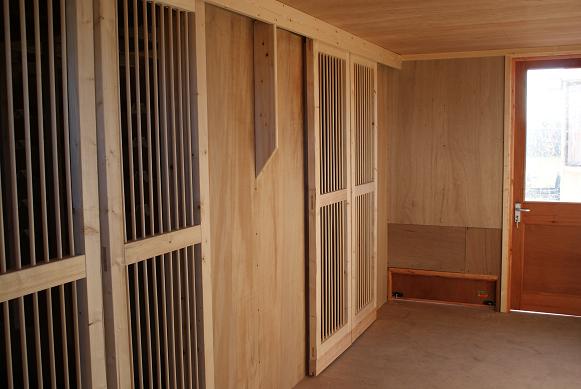
Europa corridor in the newly finished section for the Europa 500 old birds
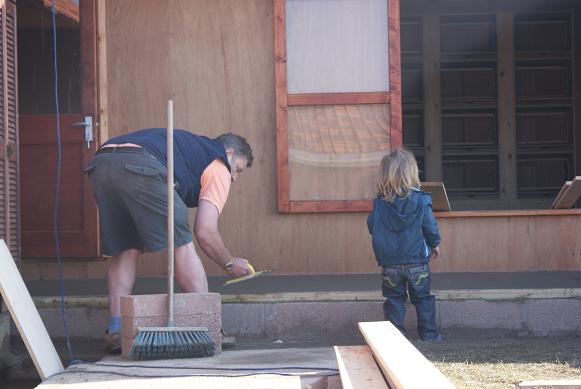
Derek & grandson Finn putting the final touches to the platform of the new loft

Derek's grandson Finn taking a break
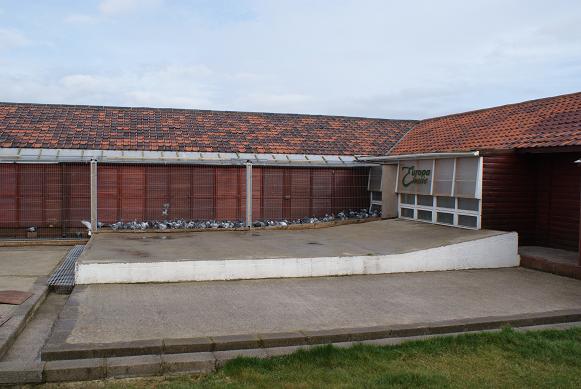
Landing strip for the 2010 young birds
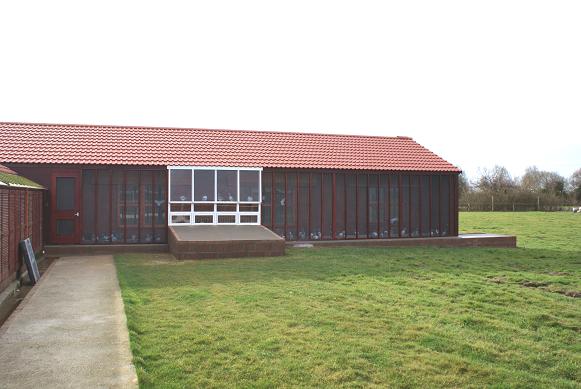
New loft for the Europa 500 birds
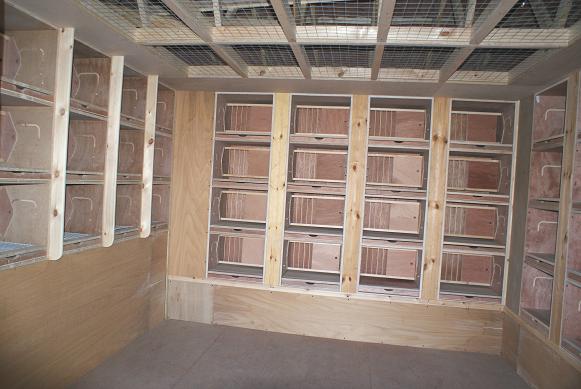
Inside the new loft for the Europa 500 birds
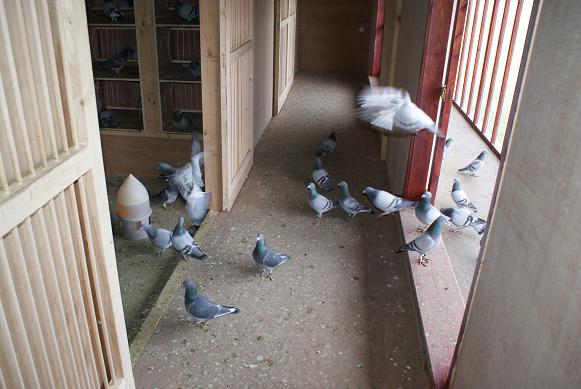
Old birds trapping into the new lofts
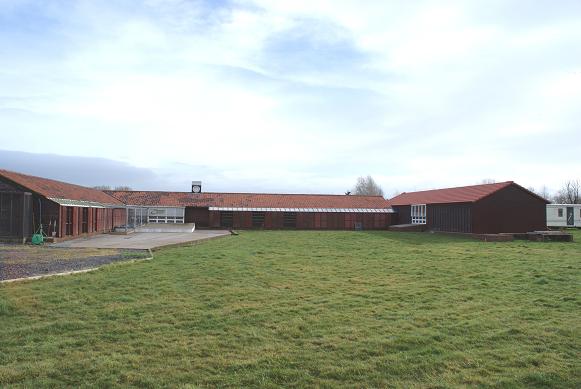
Overview of the extended Europa lofts
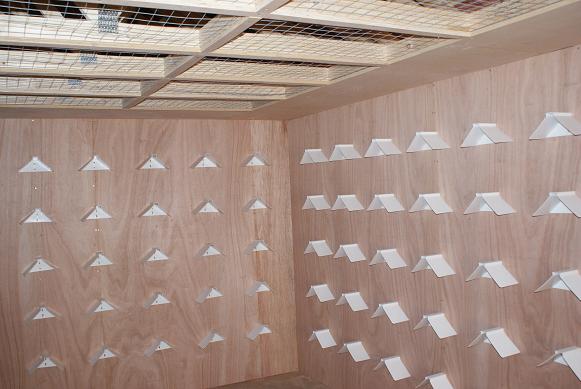
Inside the new hens' section
Health
The ideal world of pigeon racing is where there are no diseases to affect the pigeons at any time of the year but we all know that is not going to happen. But when it comes to racing disease no matter how small the problem they do cross over from pigeon to pigeon in the basket. We are now getting to that time of the year when we are mixing pigeons in the race panniers and when there are unsuspected carriers in the basket we can all get into a bit of trouble. For that reason at the slightest sign of an illness I go to the PLO where there is a great programme for illness within our racing pigeons. There are 90 different listed pigeon ailments and you can treble that because when you click on to an ailment it goes through another section and there can be several linked to the same symptoms. At a guess I would say that you can treble that number and they are all related to problems with racing pigeons. This is where a good vet comes in because they can get the droppings or throat swabs analysed and tell you what is actually wrong with a pigeon. However this piece of work can help you a great deal and is well worth looking at because it does give you some idea of what to look for and something to work on. There are a lot of problems with pigeons and I see this as a great help in keeping your pigeons healthy. However I do think that there are some good ranges of natural products on the market that can help you to keep your birds healthy in the first place and just remember that natural products are far better than antibiotics. Trevor Hughes called to collect a couple of youngsters and we were talking about treatment of the pigeons and as I pointed out to him I no longer treat the pigeons for ailments apart from paratyphus and the regular paramyxo. They no longer get a preventative like they used to as I have found that it is no longer necessary. The stock birds have nothing whatsoever because they are not here and there are no pigeons on that property that are raced. They get absolutely nothing at all, I must admit that at one time I did use a preventative but no longer.
Disease
I get asked so many questions about disease in racing pigeons I have always tried to get the best information available. For some time I have been seeking permission to use information from the PLO and now Irek has given that required permission to use information from the system so many thanks for that. Over the next few weeks/months depending on how often I use the information I shall include a disease and all about it.
We start this week with the Paramyxovirus infection occurs in pigeons as an acute disease, taking an epidemic course. Pathogen: The paramyxovirus is related to the Newcastle disease pathogen, but not identical. The virus is highly pathogenic for pigeons, but not for other domestic bird species. Course of the disease: Within just a few days of infection, both visibly and latently affected birds shed the virus in secretions from the conjunctiva, nose and throat, as well as in the faeces. The incubation period ranges from 3 to 21 days. Up to 30% of affected pigeons may recover spontaneously after around 4 weeks of illness. Symptoms of the disease: The initial signs of paramyxovirosis are increased water intake combined with reduced feed consumption, emaciation and diarrhoea-like faeces due to a pathogenic increase in fluid excretion (= polyuria: puddles containing floating particles of faeces are formed in the loft). This is typically followed by uni- or bilateral paralysis of the legs, timidity, torsion of the neck, twisting movements of the body, overturning and walking backwards. Most pigeons die. Recognition of the disease: The virus can be demonstrated in specially equipped laboratories by virological examination of organ samples (brain, kidneys) from dead pigeons. Antibody demonstration is performed by serological examination of blood samples taken from affected pigeons not earlier than 2 weeks after infection. Similar conditions: Salmonellosis. Treatment: As with other viral diseases, there is no effective treatment for affected pigeons. If infection is suspected in a flock, emergency vaccination can be carried out in all pigeons that appear healthy in order to prevent the infection spreading (see annual prevention plan: paramyxovirus vaccination plan, starting on day 4 = vaccination day). Visibly affected birds should be excluded from emergency vaccination and removed from the loft, since by shedding the virus they put the remainder of the loft at risk until vaccine protection is acquired. Administration of livimun® and multivitamin EB12 is recommended to boost the birds' natural resistance. Prevention: Only active immunisation (see annual prevention plan: paramyxovirus vaccination plan) protects the pigeons, which then develop a stable immunity within 3-4 weeks. I am also adding the following disease because it is similar in the path it takes.
Salmonellosis (paratyphoid) has one of the highest mortality rates of any infectious bacterial disease of pigeons. Pathogen: Salmonella typhimurium var. copenhagen, designated as the "pigeon type" salmonella strain. Given the right conditions, the bacterium can remain infective in the environment for 1 year or more. Salmonellae are spread by: inhalation of dust containing the pathogen contaminated feed (insects, mice, rats) dirty feed troughs and water bowls mating transmission from the hen to the egg feeding the nestlings with infected crop milk and billing chronic carriers: pigeons that appear healthy after surviving salmonella infection, but shed the pathogen at irregular intervals and thus pose a risk to the current flock and their progeny. Clinical signs: Acute form (mainly affects young pigeons): Enteritis with pulpy, mucoid, greenish droppings; once organs (liver, kidneys, spleen) have become infected, there is growth retardation, emaciation and (in isolated cases) death. Embryos infected with salmonellae frequently die in ovo or during the first few days of life. Chronic form (mainly affects adult pigeons): Inflammation causes a thickening of the joints, especially the elbow joint, wing or leg lameness, disorders of balance and torsion of the neck. Recognition of the disease: Bacteriological examination of faecal and/or organ samples. An antibiogram is performed to determine which medication is suitable for treatment purposes. Similar conditions: Paramyxovirus infection, ornithosis, coccidiosis, worm infestation, organ form of trichomoniasis. Treatment: Upon appearance of the symptoms described, treatment with chloramphenicol-N should be started immediately. In some cases it is necessary to change the treatment (e.g. to ampicillin-t) when the results of the bacteriological examination and antibiogram become available. Treat the entire flock rather than individual birds. Cull severely affected pigeons before beginning the treatment, since it is unlikely that they can be cured. To check the outcome of the treatment, carry out bacteriological examinations on faecal samples. These should take place at least 14 days after termination of treatment, and then repeated twice at 3-week intervals. Bacterial secundary infections. Pathogens/Cause: Bacteria, like streptococci (Streptococcus faecalis, Streptococcus gallinarum), staphylococci (Staphylococcus aureus). Streptococcosis is an uncommon acute or chronic bacterial disease that can occur in pigeons. Contaminated feed or water and infected birds transmit the streptococci. The bacteria enter through body openings and breaks in the skin. Generally only a few birds in a flock become infected at any one time. Staphylococcus organisms occur worldwide. They commonly reside on the skin and mucous membranes without causing infection. The potential for bacterial infection largely resides in the degree of resistance that the host is capable of mobilizing. Symptoms of bacterial infections: Salmonellosis-like symptoms. Diarrhoea, listlessness, paralysis, emaciation particularly in young pigeons. Abscess-like nodules in all organs, especially the intestine. Recognition of the disease: Bacterial examination of droppings and tissue. Treatment: See treatment plan "general bacterial infections". Prevention: Hygienic loft conditions. Observe general rules of prevention (e.g. disinfection by using desinfectans). Again this next one is included again because of the course the disease takes.
Bacterial secundary infections. Pathogens/Cause: Bacteria, like streptococci (Streptococcus faecalis,Streptococcus gallinarum), staphylococci (Staphylococcus aureus). Streptococcosis is an uncommon acute or chronic bacterial disease that can occur in pigeons. Contaminated feed or water and infected birds transmit the streptococci. The bacteria enter through body openings and breaks in the skin. Generally only a few birds in a flock become infected at any one time. Staphylococcus organisms occur worldwide. They commonly reside on the skin and mucous membranes without causing infection. The potential for bacterial infection largely resides in the degree of resistance that the host is capable of mobilizing. Symptoms of bacterial infections: Salmonellosis-like symptoms. Diarrhoea, listlessness, paralysis, emaciation particularly in young pigeons. Abscess-like nodules in all organs, especially the intestine. Recognition of the disease: Bacterial examination of droppings and tissue. Treatment: See treatment plan "general bacterial infections". Prevention: Hygienic loft conditions. Observe general rules of prevention (e.g. disinfection by using desinfectans). By courtesy of plosoftware.
Training
As I send these notes off Easter is four days away and probably the time when there are more than likely going to be batches of pigeons going in all directions. Those fanciers who have a regular job will see this as their best opportunity to go out and prepare their birds for the coming season. Unfortunately if the weather is good there will be a lot of pigeons as the saying goes pulled from pillar to post. This will cause pigeons to have nights out and even many will not see their home loft again and yes the birds of prey will have a field day. Let’s hope that this weekend is going to provide us with some good weather and a platform for a good racing season ahead. The problem is the weather is so unpredictable.
Action group
Some time ago as a study I spent a couple of weeks on Facebook to see what reaction you could get from the pigeon fraternity and there was a lot. I see this as a good way to get the publics attention to the pigeon racing as is the same with the other site UTUBE. The sport needs to draw attention to what we do and how parents can use pigeon arcing as a way of entertainment for their children. I say entertainment because racing pigeons certainly entertains me and has done for the last 50yrs or so, which is why I stick to it. Richard Shepherd has now taken up a project and this could bring in a great deal of attention to the sport and here is an extract from a letter he had in this magazine, you cannot give too much publicity to a good cause. “The Facebook Action group is an attempt to bring to the publics attention the plight songbirds, pigeon fanciers and the farming community are having with increased predator levels. The site will be seen by literally thousands of the general public, and every post by a member will be displayed to the general public directly onto their Facebook homepage. I currently have 36 members and on average they have 70 friends each, so that is 2,520 members of the public that will see the horrendous sites we have to put up with! What a great way to raise awareness! How else would we get 2,500 people to take time to look at pictures of attacks etc?? It takes 5 minutes to register, how easy it that? It will be 2,500 members of the general public for just the 36 people that are currently registered, think how many people will see our experiences if 5,000 joined? I believe we have to move forward and Facebook is massive and what better way to highlight the songbird/pigeon plight. It is available to hundreds of thousands of people and if we all pull together we can help raise awareness and help bring about a change in the law. There is an online petition that has been set up as well and is also available on the site (currently has 200 signature, but many more required.) I will be emailing Newspaper editors, news agencies, MP's and RSPB with all the pictures and the petition we have on a regular basis and each time we achieve an article, write up will be a huge success in our fight. The site address is www.Rasbull-lofts.co.uk and then follows the links on site. I ask if you as a pigeon scribe for the fancy would help promote the site and help me to achieve my aims of raising awareness in the general public. Thank you, Richard Shepherd”
From the past
One of the most prominent lofts when I started was that of Paul Smith who flew his pigeons in Letchworth with great success. It was the Dordins that drew my attention to his loft and the reason why I compiled this article some 30yrs ago. “My sister recently got married down in Hertfordshire so I could not miss this great opportunity to visit the lofts of Paul Smith at Regency Lofts. Paul Smith a name known throughout the pigeon world for both his great team of racing pigeons and stock loft which he has with his good friends Bruce McAllister and Michael Boulton. When Paul flew his birds at Letchworth he won more than his share of prizes with the result being a breakaway club. Why fanciers get like this is beyond me as is this area you do get the moans about anyone that does win out of turn, but as for splitting a good club up I cannot understand. Attitude change from area to area, but when all said and done better competition does make better pigeons and pigeon men. I do know several fanciers from the surrounding area who do prefer to fly in the smaller clubs so that they have a better chance of winning a card. These are not pigeon men competition is what one needs to make it worth while winning. Do not get me wrong even small clubs can have a good competition as can be seen in the fed results. The club mentioned which is of course Letchworth has some 40 odd members which is good competition in anybody’s eyes, so why break this kind of club up, surely no one is unbeatable, that is if one try’s hard enough. Why do some shy away from strong competition, I suppose shy is a wrong word, what about fright, yes that’s the word. On the other hand why do fanciers shy away from work with there birds and blame our feathered friends when they do not reach the prize table. Work is very valuable, but most of all the fancier must know when the birds have either had enough or need that little bit more.
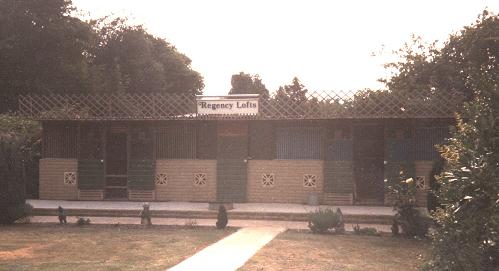
Paul Smith's racing loft
This is where such fanciers as Paul excel, they know there birds and how much or how little of everything they require. So why go around having a go at good, if fact 1st class pigeon men, or is it a case of jealousy. Anyway if Paul should ever decide to move to this part of the country he would find all the competition he could cope with. Just because he has a stud loft do not get the impression that he has a lot of rubbish because he hasn’t if fact I will challenge anyone to find me a loft any where near this size with as many good winners in. Only the best are housed and purchased whenever possible as Paul has a reputation to live up too, which he intends to. The first class pigeons that are handled in the short time I was there is fantastic. Pigeons like Regency Rocket have got to be seen and handled to be believed with eyes that like the pigeon performances are magic to the human eye and some fanciers say that there is nothing in the eye-sign theory. I will not go on with endless names of winners and the eye-sign that can be found at these lofts as it is something that has got to be seen to be believed, a fanciers dream, to visit these lofts, they do not come any better. I know that there has been quite a lot written about Paul Smith, but there again one can never write enough about someone who is good at there chosen sport. So for the new comer to this great sport of ours lets start at the beginning where Paul was born. He was born in 1944 to a family of pigeon men as his father and grandfather were and in fact his father still is a fancier. So pigeons were nothing new to the family, which does go a long way towards helping one to get a good start. Paul in fact first kept birds of his own as a young lad but did not begin to race then until 1959. The first stock was obtained from numerous fanciers, but Pails late grandfather gave him 8 pigeons when he packed up. Also the late Ralf Morris of Essex gave him another eight in 1960, other than this no particular fancier helped Paul on the road to great success that he has synced achieved. During these early days lots of mistakes were made and her was told that the only way to learn was by ones own mistakes. An interesting point that Paul made was that was the way that fanciers arte friendly to you when you are a novice, but we all know that when one is successful things soon change. Other interests were football and rugby where Paul was school captain as well as playing for the county teams; there again to Paul all sports are interesting. As most will know this fanciers is through and through a pigeon man as his present occupation is pigeon breeder as owner of the regency racing and breeding stud. Back to the pigeons where the first fanciers two draw Paul’s attention to racing pigeons was his grandfather who was a great pigeon man also Ralph Morris, which as I said earlier was where the first racers were obtained. Then several were purchased from the Atwell Bros from Wales which brings us to the family which have now proved that they can win and win well at all levels of competition the Dordins. This is the family that Paul has blended so well together not only for himself but for fanciers up and down the country. The first birds were raced in Stotfold RPC in 1959 with very little success for his first team of youngsters, but in 1960 things started going better getting some really good results together. Later local clubs were Letchworth then Bishop Stortford, which he has been in since 1976. Present day clubs include as I said Bishop Stortford RPC North and South, Hearts and Essex (N/W) Specialist club (North), NFC, NRCC and the BBC. The present day loft is 32ft long with the open door trapping with all birds up to the present day have been flown on the natural system. But for 1980 the widowhood is to be tried what success this will bring we shall no doubt friend out. The most important factor of the loft design is ventilation and as our Edd likes to use a Sharpe sand as a deep litter in both the stock and racing lofts. 15 pairs are housed in the racing loft but it is a different story with stock loft which is 100ft long and houses 96 pairs which consist of some of the finest birds that I have had the pleasure to see and handle. Pairing up is done around the 1st Feb this is of course depending on the weather, which must be taken into consideration. Peter trains his birds hard taking them as far as 25 miles every day if possible with the young birds having as many as 40 tosses prior to there first race. This is where most fanciers in his opinion go wrong, they couldn’t fly a kite on a windy day, which is putting one way, which is mostly the reason why they never visit the prize table. Old birds and yearlings go right through to Thurso (487) miles with the youngsters going as far as Northallerton (183) miles and all must earn their perch for winter. Work them hard feed them well and you shouldn’t go far wrong, good stock and dedication for 365 days of the year. Strains kept are Busschaert’s, Van he, Kempeneers, but as most will know the Dordins are the main stay of these lofts. The Dordins have been winning all along the line for a good many years, but as Paul said the others are now also getting in on the act. To keep the birds in tiptop condition Paul uses well know conditioners as well as specific to ensure those first class results. Corn is beans purchased direst from the farm which to me looked very good indeed. Best performances to date must be when he won the first 14 open positions in Haver Hill Selby open 1974 this is considered by many to be a world record in an open race. Another performance, which must rate, was when he sent 6 to Leagrave, Doncaster open and took the first 6 positions. The most thrilling experience was winning 5 gold and 2 silver Olympiad medals in the last 4 pigeon Olympiads. Not forgetting winning 5 RPRA awards in 1975 including an RPRA gold medal fantastic. As well as winning such awards for racing there have been many good results in the show pen such as twice 1st old comrades show breeder class plus many times BIS and BOS. On eye-sign Paul says that is interesting to compare and study breeders and racers from different families as they can vary from one family to another as many eye-sign enthusiasts find out. Paul is lucky as his wife Diane does take a lot of interest in the pigeons as do his children when ever they are let loose around the lofts. Paul is Club chairman in both Saturday and MW Clubs as well as being chief clock setter so one can see he does not just look after himself. How does one go about asking a top class fancier whom he considers the top fancier in his area? Well it was a question that was answered with no hesitation although he did add that when one considers who is the tops one must take into account the attitude of the fanciers to the sport. Roy Wilton’s name came out on top who also races bionic Dordins with great success, Roy was chosen because he has won 3 x 1sts at Combine level in 4 years. Even though Paul rates Roy so highly my own personnel opinion is that there is nothing to choose between them as they have both proved to be first class fanciers. A few hints from Paul for the novice are “when you are selecting producers as with the racers get the right balance, but I must admit that they come in all shapes and sizes. When you have selected your bird’s stick to line breeding and in breeding, this is where most of my best birds have come from. Do not try to get all your birds into a certain condition for racing, as for myself they have won in all conditions. One always learns by mistakes so I personally think it pays to go wrong some where along the line. Mistakes are made because most novices don’t wish to miss a race. As for the moult I do not think that one has to spend extra on feeding, as it should take care of itself. So to the novice I say go to a success fancier and purchase stock or young birds to breed a team from the following year. Late breeds are as good as any as many fanciers have purchased late breeds from us and bred top pigeons from them. My theory is you only get out of the sport what you put into it, just the same as any other sport”. As to the political side of the sport Paul says “I would like to make a rule regarding breakaway and invitation clubs, these are all formed because certain fanciers can’t win and others can’t take being beaten each week. I also think that the RPRA should protect the successful fancier, after all he pays his fees the same as others. The sport has progressed very well over recent years so much more at stake in any sport make competition much keener, pigeon racing is no different”. Paul has made his name at both breeding and racing. Since 1963 he has won the following 170 x 1sts 175 x 2nds 158x3rds 148 x 4th 139 x 5ths 148 x 6ths 128 x 8ths, 100 x 8ths over 170 cups and over ten and half thousand pounds. The most successful year was undoubtedly 1975 when no one could live with his performances, need I say more? It was a great pleasure to visit the Bishop Stortford Lofts and I know that we shall be making the trip down there again in the near future so it thank you Paul for a most enjoyable visit not forgetting the hospitality from Michael Boulton and his good lady. Mrs Boulton also races pigeons with success so we shall have to see just how high up the prize list she gets in the coming season.
Club/Fed news
The local Middlewich clubs had a good season with the show series and as always they have show races with the following prize money to be flown for. 1st £68 65p. 2nd £51.39p. 3rd £34.33p. 4th £17.16p. The races allocated are with the Mid Cheshire fed from Lulworth on the 15th May. Lessay 29th May. Lulworth for young birds on the 4th September. Marking for these races is at your local club if you race with the Mid Cheshire or you can take them to the Boars Head Hotel Middlewich where marking is from 6 to 6.45pm. The marking days are Friday for the land races and Thursday for Lessay. Still with the Mid Cheshire area we have Anthony Evans training pigeons from the 6th April on Tuesday, Wednesday & Thursday each week with pick venues from the front to the rear of the Mid Cheshire Fed. Further enquiries on these training tosses is available from Anthony on 01606833177.
Photos
Still a few photos to go that were taken at our very good night out in North Wales for the N.E.W & W.W Federation.
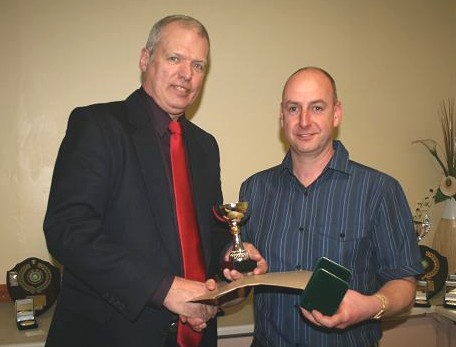
Nigel of D Wright & Son
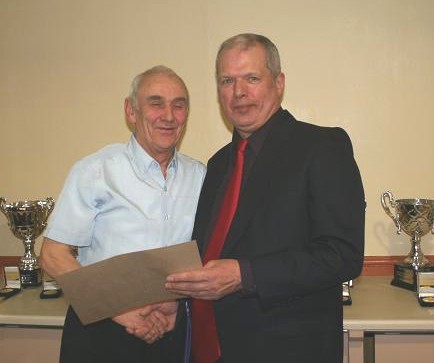
Des Thomas, the fed's number 1 fundraiser
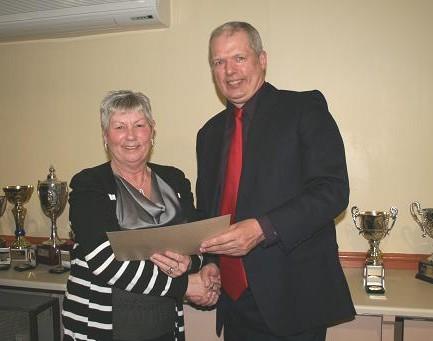
Gladys Roberts, the lovley wife of the fed Chairman Kevin
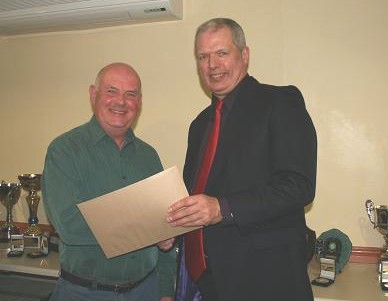
Dave Beadle
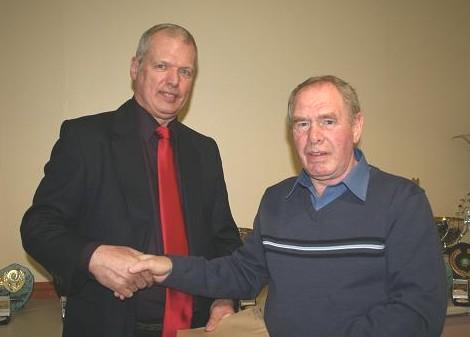
Ken thomas of Thomas Bros & Son
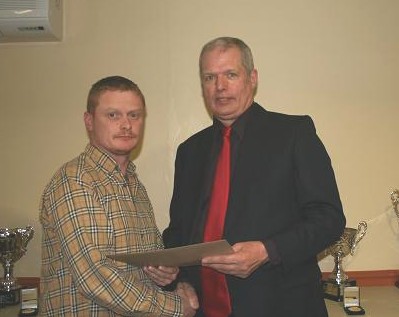
Shaun Cooke of B Cooke & Son
Les J.Parkinson. Elimar, 11 Rushton Drive, Middlewich, Cheshire, CW10 ONJ. Tel/Fax; 01606 836036. Mobile 07871 701585