O’HARE & WOODWARD
of Middlewich
Section L average winners 2014 & winners of the Lancashire Rose Trophy
by Les Parkinson
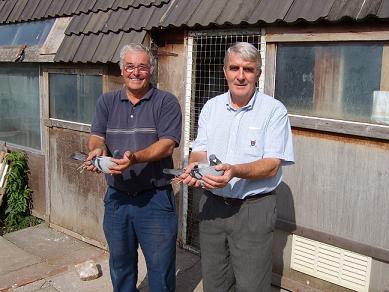
Mike O'Hare & Ron Woodward
One of the Premier winning lofts here in Cheshire in recent years is that of Mike O’Hare & Ron Woodward. I say premier with ease because they are winning in club, fed, classic and national racing and have just won the averages in Section L where there are many top fanciers competing.
2014 has been another good year for Mike & Ron whose classic & national performances have improved year on year whilst still being a dominant team racing in the club races. As a scribe it is quite easy to judge fanciers on their club performances because there are some in small clubs and big clubs alike who win but we then have the federations and combines to make further judgements on just how good they actually are. Making that judgment on Mike & Ron is quite easy because they are local to me and I see their performances week on week. The next stage of assessment is to look at them against other lofts who also keep a bigger than average team of stock. So taking into account the number of races they compete in from club to national level they are on par with the top lofts in the country. They have reached the point where they can send a team that can compete against anyone and be confident that they are really competing for top honours in top competition. They are no doubt the modern day loft to beat in the local clubs and if you are looking for any races through to national level theirs is the one to look at.
Ron has always been in pigeons with his father being the late Albert Woodward who raced successfully into Winsford. Mike is a staggered affair with pigeons because he used to have them in his early days and as many do when they have a growing family he parted with them. It was not until some 30yrs later that he made the decision to come into the world of racing pigeons once again. It was 1992 when Mike rejoined the sport but it only lasted for 3yrs before he took up a contract to work in Hong Kong. That spell lasted for two and a half years and then when he returned to the UK thoughts were once again with the pigeons. His first choice were birds from the likes of George Litherland, Tommy Shaw and Jim Dutton, the latter being purchased while Mike was on leave at home in 1997. While Mike was working in Hong Kong he was receiving the Pigeon Sport so kept abreast of the times in the sport. The pigeons from Jim Dutton were obviously quality pigeons because the 10yo “Witte Cock” was a real class pigeon. Other pigeons introduced were those of the late Frank Garner off his Mike Fitzhugh lines that had flown so well for Frank. By this time Mike was becoming keen and he visited lofts on the continent where he inspected pigeons from lofts in Belgium, Holland & Germany before making any purchase. Mike was impressed with the De Klaks of Borgman Bros and also the much sought after Houbens. There was no doubt that on this trip Mike was getting more and more into pigeons and eventually purchased three De Klaks from Arnold Lietzing. The tour carried on and when he retuned home he set his mind on the Houbens so went looking to see who had the pigeons he wanted. His search ended at the lofts of Martin Mitchell where he purchased 5 Houbens for stock and ordered a further 6 young birds to race in the 1999 season. These new introductions performed well and started Mike on the road to success with several prizes won in his first year back racing after working in Hong Kong. This first success was with the Mid Cheshire fed where he won the young bird average in 2000.
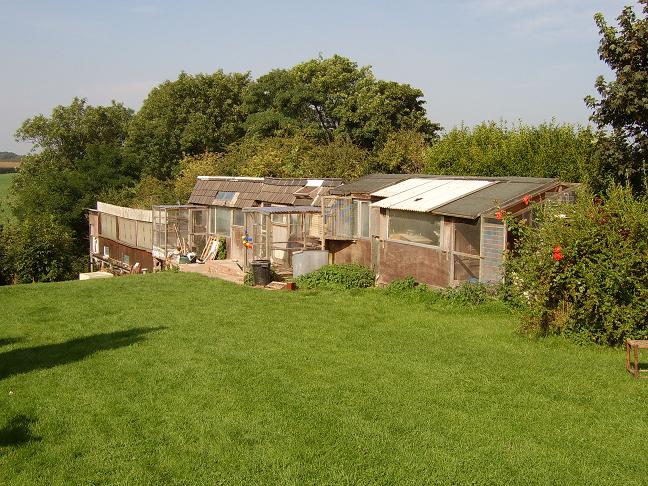
Home to a host of winners at all levels
The winning ways continued into the 2001 season where he won the inland and old bird combined averages in the South West Cheshire fed. Mike had now built up a good team of racing pigeons but wanted to move forward in a demanding hobby. So after discussions with local fancier Ron Woodward they formed the partnership of O’Hare & Woodward and moved into a new era of racing pigeons. This was not the first time that they had worked together because they had shared the stock birds since 1997. The reason for the racing partnership was because the intentions were to join the big clubs and race in the likes of the NFC, MNFC, NWCC etc. The winter of 2001 saw them move birds and start to establish a team of racing pigeons that could compete against the best.
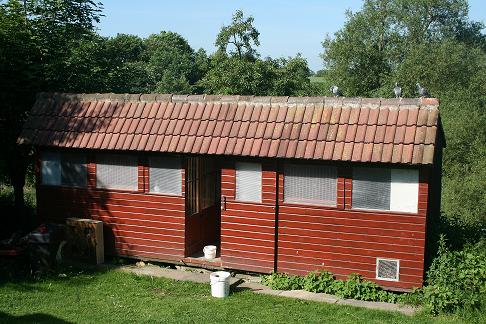
The stock loft
So when 2002 started they had a team of 36 widowhood cocks in a loft that had clocked many winners at all levels of competition. The top man in Middlewich at the time, Denis Gleave, had sadly passed away so they purchased his loft and made that their main racing loft. With the change there was obviously going to be a bit of mixed racing amongst the pigeons because of the broken stock from Ron’s loft. Although Ron’s own racing loft was some 400yds away they were not going to settle as easy as they hoped. Breaking pigeons was nothing new to Ron because when he moved to Middlewich it was a broken Black cock that won the first race. As long as the pigeons have the right head on then they are going to at the very least hold their own.
The first thing that was noticeable in this first season was the way the broken pigeons from Ron’s home loft reacted to the new system. We have to remember that these pigeons had previously been raced on the natural system that Ron was brought up on and that was bred into the pigeons so a change to widowhood was not going to be that easy. Pigeons are very intelligent and do cotton on to what is going on and by the time the fifth race came around they had realised what this new system was all about. This was when Ron’s “Good Cock” came home to finish 2nd club 3rd Mid Cheshire Fed and started the ball rolling when the following week another popped up to let them know that they were catching on. This time it was the good “Splash Cock” who led the way to collect 1st club 3rd Mid Cheshire Fed Wincanton. By now the pigeons were in excellent form and were beginning to show their intentions by showing that this new partnership were going to be the ones to beat.
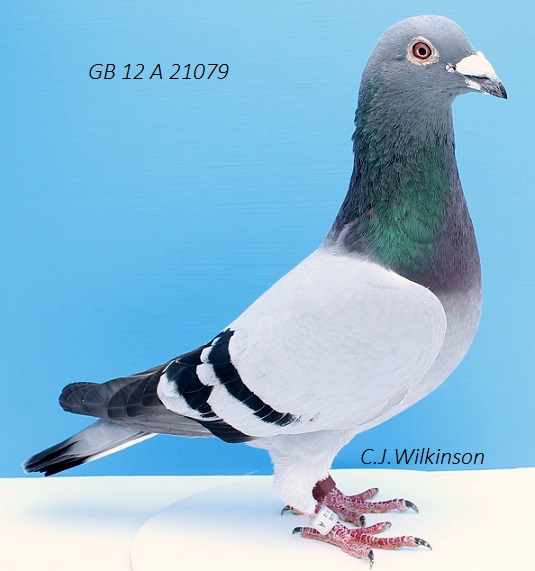
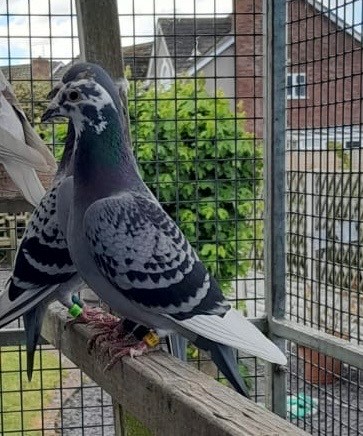
7th NW Sect, 131st Open MNFC this year and 1st Cheshire Combine Carentan last year. Sire to 1st M/W 5 Bird Club Falaise this year.
The pigeons were coming so well in the club they decided to move up a gear and enter 6 cocks into the North West Classic Club race from Portsmouth. With the way the pigeons had been racing hopes were high and a good performance expected. With the broken pigeons it was always going to be a case of selection but one particular cock had three firsts to his credit so he was selected as the main pool pigeon. There was not a big problem in selecting this pigeon because in all fairness he had selected himself during the week leading up to the race. As we all know, when a pigeon is on form it shows amongst the other inmates around the loft and he was bouncing all around the loft. The race turned out to be slower than expected and the birds were flying into a light north-east wind. Mike & Ron were disappointed when three other fanciers turned up to see the pigeons race home to this in form loft. Visitors have become part of the scene at these lofts especially when the bigger races come around. Their disappointment was short lived because when they got to the clock station and looked at the other times they were amongst the leading times for the race. This North West Classic race from Portsmouth was probably their first big race as a partnership. So when the result was published this cock turned out to be the outright winner and this first big win made people take notice of this new partnership. The breeding of this first big winner was via a George Litherland hen when paired to a Frank Garner Cock. Frank had a good team of pigeons and one of his prime pigeons was this grandson of “Blaze” a real good quality pigeon for Mike Fitzhugh. It is great to have a good winning pigeon but when that pigeon goes on to breed winners it is the icing on the cake. It is very often the case with good pigeons and in this case the Classic cock who went on to reproduce top pigeons including their 5th sec MNFC.
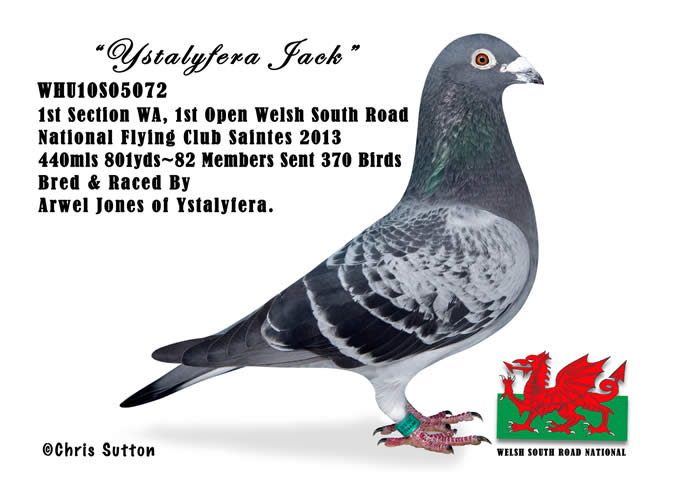
10th Sect L, 112th Open NFC this year.
We now move on to what their aim is with their racing pigeons and how they race them but like so many more that has changed over the years. When this partnership was first formed Mike was the sprint to middle distance fancier while Ron was always known for going after the longer races. A number of years ago they went after every race and with that came the Club and Federation Averages as a consequence they have won more than their share of those over the years. Now the partnership is thinking more in terms of Classic and National Club racing and they have moved up a gear and are well on their way to achieving their aim. When they purchased the loft of the late Denis Gleave this was turned into a full widowhood loft where they do most of their racing. Although Ron was a natural flyer he has changed over the years and is now happy with the widowhood system and even the roundabout that is working well. The hens have been raced with success and put in some very good results.
There are so many ways to race the pigeons and these lads are not afraid to make changes if it means that they will keep ahead of the game. They take one round off the widowhood team before racing starts but the stock birds probably three rounds, after all they are their to breed the race teams of the future. The stock birds are rotated to try and find the best possible pairings you could leave them together but they know that the pigeons are bred right so they need to get the best out of them. When the young birds in the nest are about 17 days old the hens are removed with one of the youngsters and the cocks are left to finish rearing the remaining young bird. Although they have a good team of pigeons there is still plenty of room; they are nowhere near overcrowded and that makes for a happier team of pigeons whether stock or racing. This racing loft is cleaned out daily while the stock lofts are either deep litter or grills.
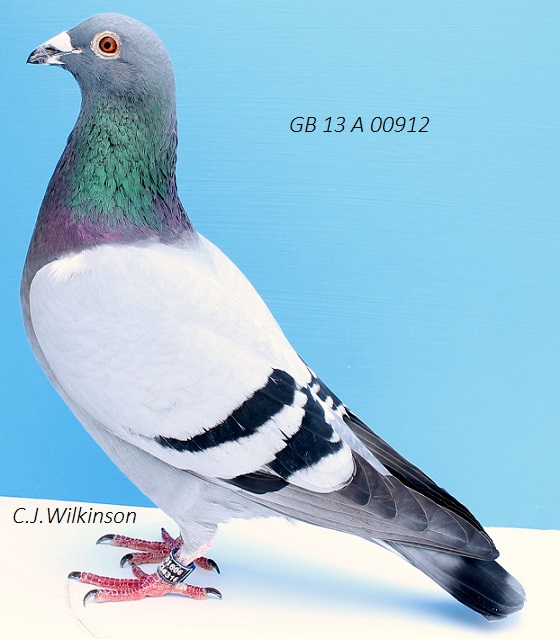
1st M/W 5 Bird Club Falaise this year
Mike and Ron necessarily spend a great deal of time with the pigeons one way or another since the racing team need to be exercised twice per day morning and evening and the young birds exercised in the afternoon.
Feeding systems are tailored to suit the distances being raced as you cannot use the same feeding methods to cover all distances. On this subject they said, “There is a difference between distance and sprint birds in general but there will always be exceptions. Lynford Christie would never beat the Kenyon runners over a marathon no matter what he was fed.” Feeding pigeons is very important no matter what distance you are racing the pigeons at. At one time the pigeons were hopper fed but that has all changed now because the feed is tailored to the needs of the pigeons depending on what races they were being prepared for.
The race team are treated for Canker, Cocci and Respiratory at the start of the season and are then routinely treated approx every 3 weeks as a precaution. The day after the race they are treated for one day with a broad spectrum antibiotic such as Nyfuramycin, especially after two or more days in the basket because infections passed on in this type of racing can be a major problem.
When Mike first started his aim was to win a club race which was achieved with young birds and after that to win an old bird race which was far more difficult to do. Federation wins was the next target and from 2003 to 2007 they won 74 x 1st Club and 19 x 1st Feds. They joined the National Flying Club in 2005 and had immediate success in their very 1st race when they were 1st and 4th Section L 4th and 11th Open from Fougeres.
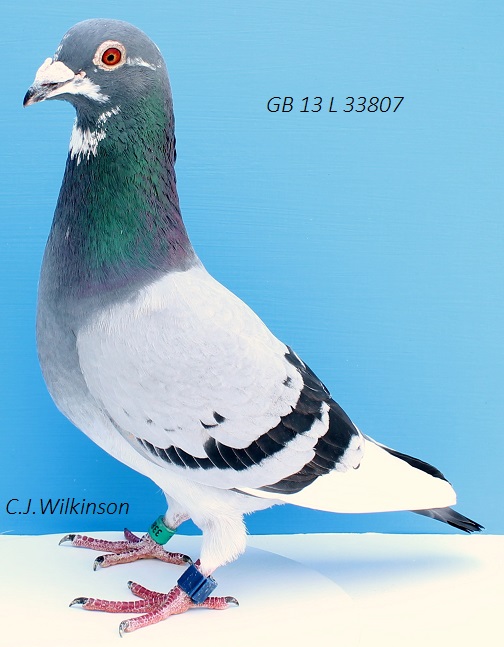
6th Sect L, 32nd open NFC Carentan this year and also sire of the Preston West End B/B winner 3 weeks ago also from Carentan and winning nearly £2000.
The partnership decided to bring new stock in so they decided on the Gaby Vandenabeeles and made it their goal to go to Mark and Dick Evans and bought a complete round of young birds for their stock loft. They ended up with 30prs in the stock loft and out of these 27prs were from M&D. Not wanting to put all their eggs in one basket so to speak they also housed 10 pairs of Mardon Van Reets, which were bought in 2003 and were by now producing winners. They also had two pairs from the original Jim Dutton F.V.W. that they purchased in 1998 and even though they were getting on a bit they were still producing the goods. To these they have added the odd pair of several strains and like so many fanciers they do not seem able to go to Blackpool and go home empty handed. This is even though every year both Mike & Ron state that they are definitely not going to buy anymore! With this amount of stock they have quite a few young birds to sell every year and for this reason they try to keep them pure as the British fanciers prefer them bred this way. However they do like to try them pure and crossed so in 2009 they decided to cross about 20 pairs and the results of this crossing were indeterminate as the dreadful returns from both the N.F.C. and M.N.F.C. young bird races gave them very little data on the success or otherwise of the crossings. Having said that they have produced many excellent race birds that have been bred from both pure bred and crossbred in their stock loft over the years. If they see that good birds are being produced each year from a particular line they will obviously continue to line breed. The main problem with this method is the length of time it takes to establish a good line. Typically 5-7 years and at that stage the base pigeons and some of the outstanding race birds from that line are no longer in the loft. They have not had very good results from close inbreeding but one has only to look at the exceptional results of Slim Timmis obtained from a father x daughter pairing to realise that there are no golden rules for breeding winners.
They rarely breed specifically for the stock loft but in recent years they have set aside a several birds from the good F.V.W. Witty hen as she is now 9yrs old and has just finished racing so it would be a tragedy if she was lost and they had none of her progeny left in the loft. Also in recent years they have taken a round of young birds from the race team whereas in previous years they have only taken from selected race pairings. The reason for this is that they were rarely, if ever, breeding from yearlings and there is evidence to suggest that many champions are produced from the first nest. The other reason is that the race team have been selected on performance and it seems therefore logical to breed from performance pigeons as opposed to stock birds most of which have never flown out. They have not conducted any scientific statistical study of young bird performance but their observations suggest that a good percentage of winning young birds are bred from the race team.
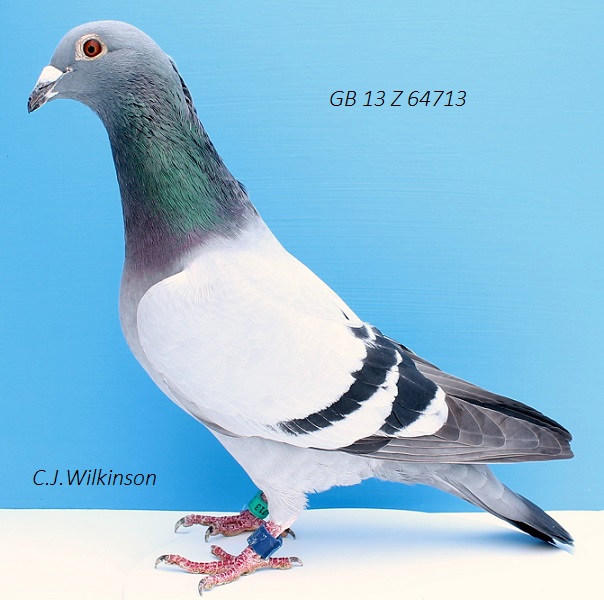
6th Sect L, 32nd Open NFC this year.
As far as Mike is concerned if you establish a stock team packed with winning genes and continue to line breed and cross then good birds will materialise. From their own loft they have a pair of M & D Evans Gaby’s that bred a bird in 2007 that won Section C in the NIPA and two other top prizes and in 2009; the same pairing produced a bird to win the NIPA with 22,000 plus birds competing for a fancier in Northern Ireland. With these wins they decided to check their own records for young birds from this pairing and were surprised that they could not find one young bird that had survived training to even make it to the first race. As far as they are concerned this pair is still an exceptional pairing and the complete random nature of producing good birds and the vagaries of training young birds have conspired to mask this fact.
They have two stock lofts. One was purpose built to house the M & D Evans Gabys in 2006. This loft is 32ft x 8ft with a large aviary running the complete length at the rear. This loft was converted to race young birds this year following the sale of stock birds in 2010. All the stock lofts have aviaries as like most fanciers they consider it essential that stock birds can have the benefit of sunshine. Their main racing loft originally belonged to the legendary local fancier Dennis Gleave and the body of the loft was 34 ft x 6 ft with a 4ft overhang at the front. They have made changes and have installed perspex windows at the front of the overhanging section to make a 4ft wide corridor. The loft is divided into 4 sections and houses 40 widowhood cocks at the start of racing. There is an 8ft square enclosed aviary at the end of this loft which houses the roundabout hens and these numbered 50 at the start of the racing season. These lofts are cleaned twice per day during the racing season. The young bird loft is a similar size 34ft x 8 ft wide with two large aviaries at either end. This loft is in 4 sections with 3 sections fitted with floor grills. One of the centre sections has a solid wood floor with sliding doors at the front, the birds exit and enter the loft and are fed in this section. If, as some times happens they race the young birds on semi widowhood then they are separated into each end of the loft and are exercised and fed separately and allowed together on the afternoon of basketing. This separation does not normally take place until the training programme is completed and this usually coincides with the 2nd or 3rd young bird race at which point they will enter a few birds into the melee of young bird racing and that is usually the start of a hectic few weeks until the end of the season.
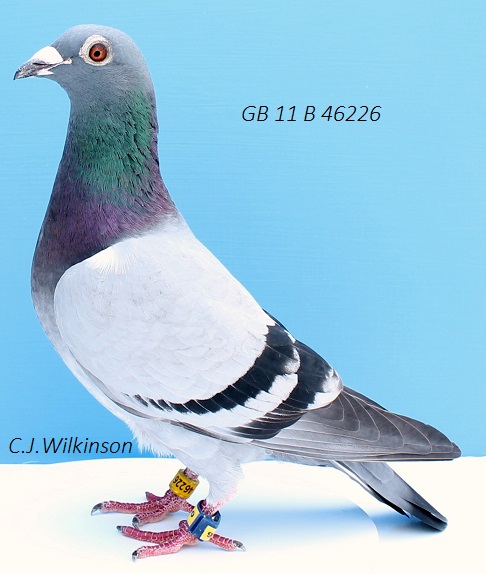
4th NW Sect, 35th Open MNFC Fougeres this year.
Now we move on to the feeding system which is done to suit the distance they are racing, as far as this is possible, given that not all the birds in that section of loft will be going to the same race point or may not be racing at all some weeks. They try to overcome this by feeding the base mix in hoppers on the floor and then feeding additional rations in the cock bird boxes in accordance with the distance to be flown. The hens are all fed together whether they are racing or resting as they are all housed together in an enclosed aviary and it is not practicable to separate them. As a consequence they put on condition very quickly and ideally they need to be trained often or raced regularly to stop them from pairing together. They have tended to race on the Vanrobaey mixtures this year and have been very satisfied with the results. They use maize straight plus three basic mixtures, diat, build up and fats mix and will hopper feed these. A typical middle distance feeding system would be two days on diat, followed by 3 days on build up and the last three days before basket they would feed the fats mix. Tit bits used are peanuts, which need to be of human consumption quality, or granular peanuts, which they mix with a good quality seed. The boys have found that for their purpose the best seed mix is probably Beyers and although it is expensive being about £20 plus for 20 kg, it will last for a long time.
Medication where necessary is administered in the water and the treatment regime used is that of Dr Van Der Sluis, which is sold under the Pharma label. Essentially this comprises a 6 day treatment before the start of training with T.D.C. which is a total disinfectant combination for the treatment of coccidiosis, trichomoniasis and ornithosis and then 1 day per week after the race with the same product. They sometimes use a probiotic, normally Flightpath, or Orego Stim and have had good results with both.
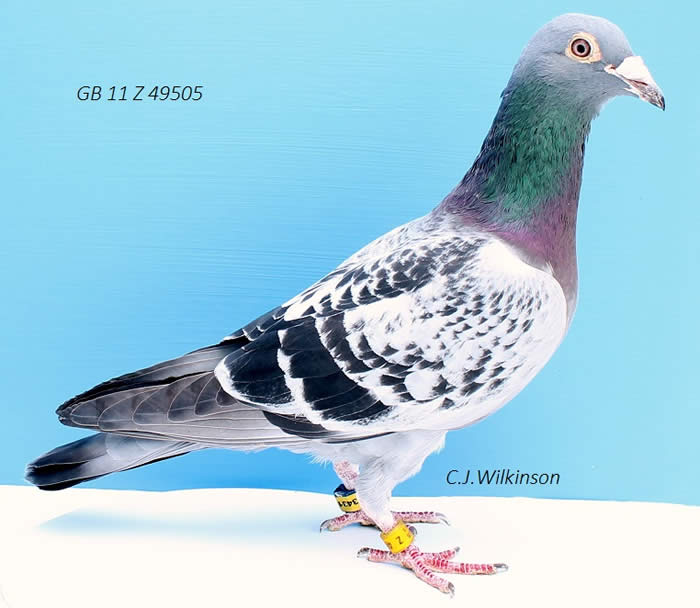
8th Sect L 96th Open NFC this year
The young birds are fed a breed and wean mix for about 1 week when they have been removed from the parents, and then they are fed for one week with tic beans followed by a week on maize. This is done to ensure that none of them are just picking up the small grains when feeding a mixed corn. After this they are fed 50% tic beans fed straight followed by 25% mixed corn and topped up with 25% depurative. They are fed like this until training is completed and then they reduce the beans and introduce a widowhood type mix. For the longer races they are fed as they would feed the old birds. Breeders are fed a breed and wean mix during the breeding season and after this will go on to farm corn, which will comprise at least 50% barley. They also maintain this mix during the moult for all birds as Mike said he always remembers the advice of the late Les Hollinshead who maintained that in nature (wood pigeons etc) would eat barley and wheat from the fields during the moulting season.
Training for old and young birds is normally as far as Penkridge on the M6, which is about 32 miles as the crow flies. Old birds will be trained 2 or 3 times per week before the season starts and after that once per week is sufficient. When the channel is reach training is stopped unless they feel that a toss is necessary to assess the fitness of particular pigeons. If a bird is not fully fit you normally find that it will be a few minutes behind the batch. Young birds will be trained at least twice a week from this point during the season and occasionally they may take them as far as 60 miles when the longer races come around. This is a good experience for them as they do not send all the young birds to the club races. Young birds are raced as far as Fougeres with the N.F.C. and will go to similar race points with the M.N.F.C. and the Classic clubs. Yearlings are generally raced up to 400 miles with a few going to Niort 483 miles. Older pigeons were flown up to Saintes 520 miles until this year when the decision was made to try and compete the full NFC programme after several times leading the section L averages in the National FC up to the Tarbes race. The problem then arose that they had no suitable pigeons to race from this distance. Competing in the National’s longest race had been planned in 2010 when they purchased 9ybs from Roy Harding of Tarporley in Cheshire. They then introduced the Bruggermans in 2011 plus a selection of Supercracks, Van De Wegans and the Roger Florizoone from Tony Merrick in 2010. So this year a small team of birds were prepared for the Tarbes race following the advice of roger Sutton and they finished 6th & 11th section L 268th & 331st Open flying 698mls with the first clocked being a 4yo cock from Roy Harding.
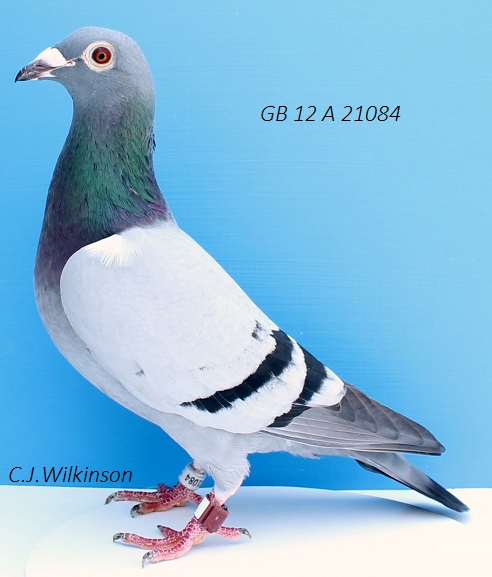
9th Sect L 85th Open NFC yb race in 2012
To say that Mike & Ron are delighted with their 2014 performances is an understatement. They win the Lancashire Rose Trophy for winning the Section L averages with the r/u being Roger Sutton, who the partnership would like to thank for the continued help and advice that was freely given and without which their success would not have been possible (Roger is always the helpful one - LJP). Isn’t it great when everything comes together to achieve your ambition in the sport we love so much. Thanks to Mike and Ron for their help in compiling this report and all the best for the future.
---
Elimar - November 2014